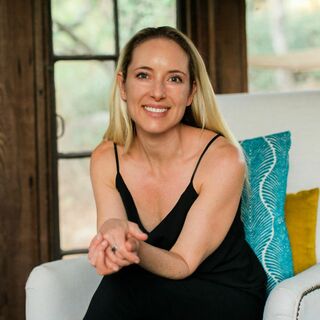
How can you use lifestyle and mindset to change the impact of stress at the cellular level?
That's what we're going to be exploring today with Dr.
Elissa Eppel on Your Life in Process.
We all know that chronic stress is toxic to our body,
But according to Elissa Eppel,
We are approaching things a little bit wrong when it comes to stress and rest.
Stress isn't all bad.
Our bodies actually love acute stress,
And Dr.
Eppel will talk about why and what type of stressors are best for you on this episode.
And not all rest is the same.
There are ways in which we are resting that aren't really restorative and ways that we could rest more effectively to help our body recharge and really reset.
Dr.
Eppel has been studying aging and stress at the cellular level for decades.
She's the co-author of The Telomer Effect with Nobel Prize winner Elizabeth Blackburn.
She's also the co-author of The Stress Prescription,
Which is a book out this December.
And she is a professor and vice chair in the Department of Psychiatry at University of California,
San Francisco.
She's the director of Aging Metabolism and Emotions Center,
Member of the National Academy of Medicine,
And past president of the Academy of Behavioral Medicine Research and Mind and Life Institute Steering Council.
Dr.
Eppel studies how psychological,
Social,
And behavioral processes accelerate biological aging,
As well as practices that can slow aging.
She leads national NIH networks on stress and emotional well-being,
And she has won many awards for her research and her work has been featured in venues such as Ted Med,
The Today Show,
CBS Morning Show,
60 Minutes,
NPR,
New York Times,
And The Wall Street Journal.
Dr.
Eppel also practices what she preaches.
She enjoys leading meditation retreats at venues such as the World Economic Forum,
Esalen,
Blue Spirit Costa Rica,
1440 Multiversity.
And I'm really excited to have her on the show today because we're going to break down how stress impacts you at the cellular level,
How it impacts aging of cells,
What she's actually measuring when she's measuring people's cells.
And then we're going to talk about seven evidence-based practices that she has demonstrated through her research actually have an impact on the aging of your cells as well as your well-being.
I'm so excited for you to listen to this episode right at a time when many of us are stressed,
And I really hope that you will take some of these practices and apply them in your life to benefit you,
But also benefit those around you.
I'll meet you on the other side with your daily practice.
I want to let you know about a few events that I have coming up in the new year.
I love teaching in person.
It brings me so much vitality to see your faces and your living,
Breathing bodies.
And so there's some places that we could meet up if you want to meet up in the new year.
First in January,
Starting the third Friday of January,
I'm going to be leading a morning meditation at Yoga Soup on Friday mornings,
8am to 8.
40.
And that's going to be live and online.
So you can sign up for that at yogasoup.
Com.
On February 19th,
2023,
I'm going to be offering a live in-person workshop at Yoga Soup,
Body Image Flexibility,
Finding Freedom in the Body that you have.
We're going to be using ACT,
And it's going to be experiential.
And then April 15th to 22nd,
I'm in Costa Rica,
Blue Spirit,
Come with me.
I just have like two spots left.
And I know that you're on the fence about it.
Get off the fence and come with me to Costa Rica.
It is a life changing and life enhancing and life lengthening experience.
So hope to see you there.
So Alyssa Epple,
Welcome back.
We got a chance to talk about the stress prescription a little bit when we did the summit with Alexander Croswell.
But this was our reserved time to really just dive into stress,
Your research,
What you've learned about it,
And this new book that you have out that breaks it down into the seven days,
Which I was just saying,
I need a week on each one.
But I've been practicing for the past week,
So I can share about my experiences.
But also,
Let's dive into the research and as much as we can get into in an hour,
And then people can go get your book to do more.
Diane,
I'm so happy to be here.
And so thrilled that you really did the seven day trial.
And with your background,
I just can't wait to hear what your experiences were.
Even before we get into the seven days,
Let's just get a little bit of grounding around stress and the body because you have such a depth of understanding about how stress impacts us at the cellular level.
Your first book was on the Telemar effect,
Which is one part of how we're looking at stress.
But give us a little bit of a sense of what's happening in our cells in terms of the impact of stress and not to demonize stress,
Because you definitely talk about good stress as well,
But the impact of stress on cells.
Yes.
Thanks for asking.
The body really is always my first question.
How do our emotional,
Mental,
And spiritual experiences get under the skin to affect the body?
And all of my publications almost always have something about the endocrine system,
The nervous system,
Cellular aging or health,
And really trying to understand how to slow aging and keep a healthy homeostatic capacity,
Healthy resting states,
Really thinking about what is the ideal balance in our nervous system that we want to walk around with all day,
Every day,
So that we are not wearing out ourselves.
I did spend over almost 20 years really looking at people's blood and understanding first the dark side,
How does toxic stress and trauma get under the skin?
How does that speed up aging?
And I can give you that fast story,
And then we can talk about positive stress.
The quick story is that there is a tremendous literature base at this point showing that trauma exposure,
But particularly PTSD symptoms,
When we become sensitized or imprinted from trauma,
We have exaggerated emotional stress responses,
But also our body doesn't recover from stress as quickly.
We tend to anticipate more,
So we come in with a high baseline,
We recover more slowly,
And then in the cell,
We see that all of the important players in aging that are related,
The epigenetics,
The telomeres,
The mitochondria,
The level of inflammation,
These are all an intercorrelated system that drives our aging.
And these are all accelerated or weakened when we experience chronic stress or,
For example,
Early trauma,
Significant early trauma.
We see an imprinting in the cells,
And that doesn't mean that we can't change things.
I mean,
The beauty of these systems are that they're malleable,
And so what we do every day matters.
Can we talk a little bit about just,
Again,
Getting the foundation down,
Telomeres,
Telomeres?
Do you say telomeres or do you say telomeres?
Either way is fine,
We say telomeres.
Telomeres.
It's like Stevia or Stevia.
Telomeres and mitochondria.
Mitochondria is a newer one,
Seems like a kind of hotter topic these days of you want to protect your mitochondria or get your mitochondria as efficient as possible,
But help us understand what those two factors are.
What are they in the cell?
Where are they in the cell?
And why do they matter in terms of our aging and our energy and other things?
There are many different ways our cells age,
Many different mechanisms,
And they are all kind of best friends and talking to each other.
So if you measure one,
You're getting a little glimpse of the others.
We've been focusing on telomeres because they represent what we call replicative aging,
Which is how many times can the cell replicate?
If your telomeres are too short,
They reach their end stage of life.
They can no longer replicate,
And they can become inflammatory or die.
So we're really interested in the length of our telomeres.
We want them to stay stable and long.
Telomeres are the caps at the ends of chromosomes that are made up of DNA base pairs,
But they don't code for genes.
They have a different function.
They're really sensitive to,
Well,
They protect our genes,
But they're also sensitive to the biochemical environment.
So they shorten with age and as the cell replicates,
But they also are very interested in what is the level of stress in the cell?
What is the biochemical environment telling me?
And if it's too stressful,
Oxidative stress,
Cortisol,
Inflammation,
The number one,
The telomerase,
The enzyme that protects telomeres is going to shoot up.
It's going to try to protect the telomere,
And that's part of our acute stress response that we want.
We want that protective response.
But if the stress goes on too long and it's chronic,
We see low telomerase eventually and shorten telomeres.
And so the telomeres are both looking out for stress and saying,
Guys,
We're calling it quits.
There's too much danger in this chemical environment and it could damage the DNA and create catastrophic events for the cell,
Cancer,
Et cetera.
And then what about mitochondria?
How is that measured?
And the mitochondria are newer.
And my wonderful colleague,
Martin Picard,
Has devoted his life to really understanding mitochondrial health and mental health,
Stress,
Depression.
He's been finding ways to measure the overall activity of our mitochondria in our cells,
The battery,
The energy source in each cell that gives off ATP.
And so with him,
We showed that caregivers tend to have lower batteries.
Their mitochondria's enzymes are significantly impaired or lower.
But of course,
The beauty of being human is it's not the situation that terms our biology.
It's actually what meaning,
How we're interpreting it,
If we're perceiving chronic stress.
And in our study,
It was really about daily mood.
And even if you're a caregiver,
If you were ending the day feeling positive and not a lot of negative affect,
That was related to higher mitochondrial activity.
So we think that daily mood is the target.
We can control daily mood much more than we think.
We can have practices that are partly about what the seven-day prescription is about that help us really focus on joy and gratitude and help us shift away from the excessive feelings of stress that most of us feel on most days.
I would say we have an epidemic of high stress right now.
Okay,
So making the connection here,
You research what's happening at the cellular level.
And you can see these changes in mitochondria enzymes.
You can see the changes in length of telomeres as well as telomerase,
Which is an enzyme that rebuilds our telomeres.
And then you look at other factors too.
But you're connecting that to,
Okay,
That's a measure of your cell aging and stress,
But you're connecting that to lifestyle and how we can actually intervene at the cellular level by how we're thinking,
How we're acting,
What we're doing.
And that's really what the stress prescription does for us is it gives us seven days of that.
So I want to go through each of them because- And let me just add,
I will never measure my own levels.
I know that a lot of people love to monitor these things and I'll monitor my heart rate or heart rate variability because we can see how those change in the short run.
But I don't want to know where they're at because they also reflect epigenetics,
Prenatal stress,
Early life trauma,
Genetics,
And not just these malleable lifestyle factors.
So the point is you may have short telomeres,
But we know what protects these systems,
What rejuvenates them,
And it really comes down to how we live our day.
And so I'm big on these daily practices and not big on wanting to get the metrics and track them.
We're just not good enough at measuring those anyway.
So you're not like one of those biohacker people that's sending your blood in to- Even though you study this stuff.
Yeah,
Exactly.
I'm not,
But I do wear the Aura ring.
So I do like the daily easy stuff,
The sleep and the nervous system.
Yeah.
So what's important to you in the Aura ring?
What are you looking at?
I really,
I love to look at heart rate variability and deep sleep.
Mm-hmm.
Deep sleep is the most restorative state we can be in and we get the brain cleaning,
We get a lot of rejuvenation in the cells,
Our heart rate variability is very high.
We have no idea how to improve deep sleep.
There's no research saying you can increase the amount of slow wave sleep with this and that.
So we're studying those questions and I'm personally experimenting and I do things like,
Let's look at how heart rate variability responds to this meditation or this retreat or this breathing exercise.
And those are fun exercises.
And I encourage people to experiment with themselves because that's what it's all about.
We're all so different in what we respond to and the doses that we need.
Well,
We've both been to Blue Spirit,
Costa Rica,
That retreat center.
And I can see in my Aura ring a significant change.
You can look on my,
I go in January and you can look on my data to see that my sleep is different.
It almost doubles in terms of the amount of deep sleep.
And then my HRV,
I've seen it triple while I've been there.
And I do think it's,
When we're on retreat,
We're sort of doing all of the seven practices that you talk about.
So let's dive into some of them because some of them are mindset,
Some of them are behavioral and some of them are unexpected.
And the first day is really about uncertainty.
And you talk about some research around our tolerance to uncertainty.
And it's almost like if you have a lower tolerance with uncertainty,
It impacts your stress.
Can you talk to us a little bit about that?
Like how we can accept uncertainty and change?
Yeah.
It's such a great one.
It's a mindset shift that we can make so that feeling intolerant of uncertainty,
Not feeling like we can relax when we don't know exactly what's going to happen,
We all get,
That's how we're wired.
We want predictability,
We want control,
But it's a vulnerability factor.
So the more intolerant we are of ambiguity and uncertainty,
The more vulnerable we are to depression,
Anxiety when times get tough.
And we've been following codes during the pandemic and seeing that.
But on the flip side,
The more you can try to be comfortable with uncertainty and really embrace it,
That's a resilience factor.
So how do we do that?
How do we stretch our uncertainty muscle so that we don't bristle up?
And I would love your ideas.
I don't think this is a well-developed field.
Certainly it's important in anxiety disorders and you can prescribe people trying out situations and seeing what happens.
And usually it's better than what we catastrophize about when we have a lot of anxiety.
But the ability to check in with a mindful check-in and simply ask ourselves,
What am I holding right now?
What am I expecting?
What am I uncertain about?
Those are questions I think that can get at naming the unconscious or subtle stress that we hold due to the uncertain future.
Yeah.
For me,
And this is I think probably just having been around Dr.
Jett a little too long because he often talks about curiosity like that's his shtick.
And I've been making that little shift from uncertainty to curiosity helps me.
If I have a curious mind,
It's more like,
Huh,
I wonder what's going to happen versus an uncertainty mind of,
Oh no,
What's going to happen.
And that helps me with uncertainty.
But the place where I feel uncertainty the most is usually around parenting.
That's where I tend to grab a hold of things pretty quickly and jump to conclusions.
Even this morning,
My son and I got into a little,
My teenager,
Got into a little head-butting situation.
And I could tell that the reason why I was bristling up and the reason why I was becoming more controlling of him was because I was forecasting into the future all these negative things that could potentially happen.
So there is something about our attempts to control through worrying that makes things worse.
But yeah,
I guess it is a practice of,
It's a letting go practice.
It's a physical letting go.
And then maybe just beginner's mind,
Sort of curious beginner's mind that feels the most effective for me.
Absolutely.
I love that asking,
Just being curious instead of trying to predict.
And the I don't know mind,
Saying it's a little bit of releasing control because you don't know and reminding yourself of that because we all struggle with wanting to control the future.
And embracing a Buddhist philosophy is helpful because that's so inherent to the philosophy that we always have an uncertain future.
And yet it's not enough,
Right?
We know that we need other strategies too besides the I don't know curious mind.
Which lends to the second part,
Which is what can you control?
The second day is about letting go of what you can't control,
But choosing to control the things that you can.
And that's where we do have some agency and there's some research in terms of the link between control and stress.
And it's helpful to have a sense of control,
But it's like you have to have the right kind of control.
Yes,
Exactly.
That discernment between in each situation,
What is under our control?
And how can we use that to help us self-regulate or improve the situation?
Self-regulation is always something,
Even in uncontrollable situations that we can optimize or work on.
So there's always some aspect of our response that we control,
But really looking carefully at what are situations where I'm spending a lot of mental energy trying to solve and think about,
And really I can never change them.
So identifying those is a really valuable insight because then you can practice the letting go or enact the dropping the rope.
Do you have an example for yourself of how you practice?
I always think of your job as being really stressful.
I don't know if you experience it as stressful,
But I think of academia as extremely stressful.
That was my experience of being in academia the short time I was there.
In terms of work stress,
We don't control our results.
We don't control whether we get grants or not.
So it's good to love the process.
You have to love the work and the process.
That was my problem.
I did love the process.
Yeah.
And those are great when they come,
But you can't base your happiness on those events because we have no control over them.
So it's the relationships and the daily work and who you get to work with and hoping that the work has a positive impact.
So it's that kind of purpose that matters,
Not the outcomes that we hope for,
But we don't grasp at them.
And that makes it a soft money life of research enjoyable and fun.
And I couldn't think of doing anything else.
I would say parenting is a good one because there's especially a certain point when your child is older that you really have to learn you don't control who they are,
What they do,
What they choose.
And so the sooner you realize that and foster that agency,
The better.
That's been a long lesson of giving up control over and over again.
Yeah.
I think that's what I'm hitting right now in terms of parenting is the instinct is to control more when you feel out of control,
But actually for me to step back,
Lean back more than even I'm comfortable with is probably going to enhance our relationship,
Which is actually the thing that I do want to put my energy into as a parent is putting my energy into our relationship.
Okay.
So the first two days are really about mindset in terms of letting go,
Kind of leaning back,
You say with uncertainty,
Controlling what you can,
Maybe sometimes with stress,
It is taking things off of your plate because there's just too much on your plate.
We had Dr.
Maslach on the podcast in terms of looking also at like,
There's some things that are in our environments that are contributing to our stress that are not under our control.
And finding places where you have autonomy is really helpful for things like burnout.
But after those first two days,
You start to move into good stress and the way that we perceive stress and the messaging that we've been all sort of imbibing for a long time is that stress is bad for you.
It's going to age you.
It has all these negative things,
But there's actually a way in which we perceive stress,
Which can help us manage stress.
And then things that we can do to stress ourselves on purpose to build their resilience.
Can you talk about those?
Yes,
We can deal with stress in a lot of ways.
We can increase our resilience in certain ways and reduce our resting baseline and focus on the positive joy and purpose,
Things that buffer stress.
But what if we're in the moment or right before we're having to cope with acute stress?
That's an interesting little window because there's so many things we can do that can change our stress response,
Either feed it so that we're in a frenzy,
Catastrophic thoughts,
And we go into a big survival response,
Too much cortisol,
Too much of a vasoconstrictive response where we're not getting the full oxygenated blood that we would get in a positive stress response.
So our thoughts are shaping our physiological response to stress in so many ways.
And there's so many ways we can work that for good.
So as you mentioned,
There is simply the belief of the stress mindset is being stressed out terrible for me and is going to make me do worse.
That is going to escalate the threat response or rather acknowledging all of the beauty and benefits of the acute stress response,
Which actually bolster our coping and our ability to problem solve.
So like the threat response will help us run where our life is threatened.
The challenge response can really actually,
With the type of biochemical and hemodynamic changes,
Can help us cope better and still hold on to some enthusiasm,
Hope,
Positive affect.
So there's a lot of different statements we can say to ourself.
And there's,
I can't tell you what to say to yourself.
It has to be meaningful to you and you have to believe it.
So there's our stress shields or strength statements that we can have in mind and have on a post-it or in our phone.
We can do for each other,
Say them to a friend when we know that they're in a red mind state and a stress state.
You mentioned this study in your book.
And then I went and found it and read it because I was curious,
What were you actually doing in the study where you talked about caregivers,
Chronically stressed caregivers who had sort of anticipated either a threat or anticipated more of a challenge in terms of when they were experiencing stress and those that anticipated,
Who thought of stress as a challenge actually had,
Didn't have the same impact of stress on their telomeres.
Is this right?
Mm-hmm.
Exactly.
And so partly why we looked at this,
My colleague,
Wendy Mendez,
Started this,
Really kind of fostered this whole area of threat and challenge.
And not only did she not only saw that it's correlated to different responses in the body,
The vasoconstriction being threat and that positive cardiac output response that's more like oxygenated being challenged,
She manipulated it.
So by telling people the stress response is good for you right when they're about to take an exam led to better responses on the exam.
So we wanted to understand why caregivers tend to have shorter telomeres.
And is it that the chronic stress has really sensitized them so that they're having more threat responses to any stress?
That's what we see with trauma,
With early life trauma,
That we see these exaggerated daily stress responses.
And so what we found was that the caregivers who had more of this challenge response,
Excitement,
Enthusiasm,
Positive affect to our lab task,
They had longer telomeres.
And so it's a clue,
It's just cross-sectional,
But it's a clue that this response really matters for the long-term,
That our stress response is shaping our body and our aging over time.
And that can become sort of a habit.
So if you have the habit of having a stressor shows up and you say like,
Ooh,
This is kind of interesting,
Or how am I going to,
This is a challenge,
How am I going to take it on versus,
Oh no,
Something bad is going to happen,
This is a threat.
Just that mindset can shift your stress response and then shows up in your biology.
Right.
And I'm wondering,
Diana,
What strategy you tried for that chapter of like that positive,
You know,
Be the lion mindset.
There were other options.
So I'm not sure if you chose values,
Affirmation or.
.
.
Yeah.
Well,
That one was interesting.
So I just,
I,
Because I was doing it really literally for seven days and whatever showed up on that day,
That day landed on the day,
The morning.
So I take my son surfing early mornings on Thursdays and like six,
45 in the morning.
It is cold in Santa Barbara.
It's not that it's always warm here.
So the water is cold,
But I,
Whenever I go and I go for a run first and then I jump in the water,
But I always take on the mindset of this is hard and this is good.
And I'm excited to go get cold and go out there and do this kind of cool,
Hard thing with my son.
And so I have that excitement,
Challenge mindset to that type of hard thing.
But then I tried to translate it because something that I've been procrastinating is working on this,
This book that I'm trying to get these edits for.
And that,
If I,
I kind of started to think about,
Okay,
I'm seeing this book that I'm writing as a threat and it's completely a choice,
Just like going in the water is a choice or going for a run as a choice.
Why am I seeing this thing as a threat?
And so I tried to shift that mindset of like,
No,
This is a challenge.
This is something that I'm choosing to take on.
So that was one way that I shifted it.
That's a beautiful example.
I love it.
And I love the cold ocean too.
And that is our mindset there matters so much.
So we know that cold responses are not always the best.
Cold responses can be good from a physiological anti-aging standpoint,
But it's miserable.
Like if it,
If you're a small mammal and you hate the cold,
It's just torturous.
It's like,
Why would I ever choose that?
But if you take on that mindset of like,
This is good for me,
I can relax into this.
I can try it instead of clenching up and suffering.
I can actually say,
Focus on the excitement of doing this positive stress for your body.
And that's where I think the magic is.
It's that relaxing into discomfort that can help us with the mental resilience too,
Not just body resilience.
Yeah.
So whether that's,
You know,
Even something like taking an exam,
I have a postdoc right now that's getting ready for her EPPP exam.
And this isn't a threat.
This is a challenge.
We could also do it with unwanted things that it's not just things that we're choosing as stressors,
But also when stressors happen to us,
We can shift that mindset.
What could we take on as a challenge?
And I do think that's where values come in because the challenge can be,
How am I going to show up in alignment with my values while I'm in a conversation with my boss or when I'm,
You know,
At this event with my in-laws,
Which is a challenge and it's discomfort like a cold water.
But the challenge really becomes how do you want to show up and feel proud at the end of the day of how you were in this relationship or in this experience?
Okay.
So you talked about cold water,
Which is another day,
Which is choosing stressors on purpose.
And the question that I am thinking about is what was it like with this Wim Hof Iceman situation when you were researching this?
So you actually have done research recently into stressing our bodies on purpose and the benefits of that.
Tell us a little bit about that research and then also just the behind the scenes.
These were our pandemic studies.
I don't know if you know these.
I did these with my colleagues,
Wendy Mendez and Eric Prather.
And this really helped us get through the pandemic because it felt like such a mission.
We had so many people with stress and depression wanting to get into our stress resilience study.
And so we compared different ways of bringing on stress resilience with a morning practice,
15 minutes.
HIT,
So high intensity interval training,
Slow breathing,
Wim Hof breathing,
So extreme breathing,
That kind of hermetic stressor plus cold showers,
And mindfulness.
So really just the mental training,
Not consciously slowing our breath,
Although we know that happens a bit.
And what was amazing from this study is that everyone felt great at the end of the three weeks,
Regardless of condition,
There's many paths.
I think they're all good.
Yeah,
Exactly.
They're all good.
So many paths to reducing stress and depression and big changes.
So within three weeks,
15 minutes a day was really improving their level of depression.
And no one was,
I believe no one was moderately depressed by the end in the study we ran where we recruited people with depression.
Not that it's a cure,
But this is one way that we can use our body,
Our body mind to really work or hack the stress response body.
So we know the mind changes the body and those are the more psychotherapy oriented and other meaning making types of therapies,
Many,
Many,
But the body changes the mind.
And so why not use that?
We really are these primates in clothes,
These monkeys in suits,
Like we don't realize how much we respond to changes in our body and changes in our physical environment.
Those change the mind.
And so this just yet another strategy that we can use.
Lots of people preferred the slow breathing.
It feels great.
It's gentle and it had great effects,
But the people who stuck with the Wim Hof breathing in the cold showers,
They had more positive emotion on a daily basis.
So that was super interesting,
Energizing.
Can you describe the Wim Hof breathing for us what it is?
Yes.
And he shows people in a really entertaining and dramatic way on any of his little videos for free.
I love that it's for free.
He has this class online.
The shirt is off for most of them.
Yes.
Yes.
Yes.
He is the ice man.
So it's some cycles,
Four cycles of hyperventilating and then breath retention.
So we're really playing with and changing our CO2 tolerance.
And a lot of biochemical responses are happening during that extreme stressor.
Epinephrine goes up.
In some studies,
The more epinephrine went up,
The better immune response people had to an immune challenge to being injected with endotoxin.
And there are small studies,
But they're very interesting and it's now been replicated in at least one other study.
So it really needs more study,
But it really feels like there's something there.
So your research was looking more at mood and the positive impact on mood,
But there's some studies around immune function and potential benefits.
And I'll link to Wim Hof.
Yeah.
I think I would prefer to relax and breathe lying down in a slow breathing any day than doing the Wim Hof,
But it doesn't take that long to do.
And you said 15 minutes a day,
15 minutes every day.
Okay.
Right.
And I wouldn't recommend HIT every day in general.
Yeah.
People do it really intensely.
This was an at home seven minute workout.
So I would say it was moderate.
Yeah.
And that's also a free app.
So I'll put both of those links in the show notes.
The seven minute workout,
It was like a New York Times thing many years ago.
And it's things like air squats and pushups and jumping jacks and all things that you could do in a hotel room with no exercise equipment.
And it does change.
I find that it changes my mood and it's short.
It's not like you have to go out for 45 minutes for a run.
And in some ways,
Probably better for you to do this intensity.
So why don't we all do it?
Right?
Wow.
It's intense.
Right.
I think that the literature on exercise and depression is phenomenally convincing.
There are so many studies showing aerobic exercise improves depression.
And we know HIT short term in intervals does as well.
But getting people to exercise and getting them over the hurdle is monumental for many people.
And that's why we need different options.
Can you give us a sense of hormesis?
What is hormesis?
What's happening at the cellular level?
Why are these acute stressors particularly good for us?
And then we'll do the flip side of that.
So we're talking about good stress right now.
Then we do the flip side of that,
Which is the restore,
Which is just as important as the good stress.
But what's happening with hormesis and the cellular level?
So our body likes to be stressed out for short periods,
Especially when we feel some control over it.
And we know from these cellular studies and rat studies that short term bursts of stress make the animal actually younger and more resilient.
And that's because while there is this big stress response,
What that's doing is activating the counter stress response,
Which turns out to be anti-aging.
So it's activating a lot of cleanup in the cell,
Autophagy,
And reducing the amount of damage in the cell,
Damaged proteins,
Oxidative stress.
So we're really triggering a really healthy counter regulatory response that has been really studied in the aging world,
Has not been studied in the mental health world much at all.
So the flip side of that,
That you spend a good amount of time in your book on,
Which is a concept that you've coined deep rest,
Which is such a nice term,
Is that not only do we need to stress our body acutely,
But we also need to get better at actually getting into rest.
And rest is not plopping on the couch with your phone.
It is actually something different that you're talking about when you talk about rest.
Those were day five and six when you talk about nature as well,
Nature and how to restore.
Yes.
So the idea of going from red mind to what's the opposite state,
This kind of deep restoration when rather than actually needing to respond to anything,
We're completely relaxed.
We've let go.
We feel safe.
And that ability to lie down or be doing a mind-body activity that is also slowing our breathing and increasing our heart rate variability,
These are very unique and precious restorative states.
And there are very few studies that have ever said this mind-body activity is better than that one.
There's this underlying commonality.
And Alexandra Croswell,
Who you've interviewed for Striving to Thriving,
She led us in this amazing paper that we can link to the preprint for where we reviewed all the evidence showing that there is a deep rest state that's better than rest and relaxation that is different physiologically and different psychologically.
And it can be different things for different people,
But mainly creating a meditative state,
Doing slow breathing,
Being in nature when you're not being physiologically demanding.
Those are all these kind of green blue mind states.
It's so interesting because when,
And someday I'm going to,
I think you should go to Plum Village and look at the blood of the monastics there,
Because the way that they've built their day is fascinating where they wake up and they start with a meditation and it's silent in the morning.
So it's like continuing that sort of restorative state from the night before from your sleep.
You don't talk until you have breakfast,
But then you have like your morning activities where you have a Dharma talk and your groups and all that.
But after lunch,
They do something called total relaxation and you go into this meditation hall,
They have mats all lined up and it's like an adult nap.
You lie down on the mat and for an hour,
Everyone moved as this total relaxation where you have a monastic that will guide you through this like really sweet,
You're kind of in that daze of you're kind of halfway there,
Halfway not there in between sleep and wakefulness.
And then at the end,
You know it's time that it's over because the nun or the monk will start singing.
You're like,
Oh,
I'm here.
And then you come out and they do that every day at two o'clock,
Which is the time when all of us could have an adult nap and probably do well.
But I can feel after I would get out of that total relaxation,
The amount of energy and alertness that I would have for the afternoon.
It was phenomenal.
And then just the feeling refreshed,
Like everything was just fresh and alive and good.
So there is something to be said about this total relaxation or this blue mind state,
But many of us don't feel like we have time for it.
And we don't necessarily have communities that support it in the same way.
How do you practice?
What do you do to get into that state?
Well,
I'm just envious.
I wish I could live there like that is what that perfectly describes what we know our body loves.
And you described it so well,
That prolonged shavasana,
But in the right time of the day when our circadian rhythm is dipping and we want to digest and that's just the most fitting and appropriate thing to do.
So for me,
It's yoga and I wish shavasana was longer,
Right?
You have to peel up and move on.
And as well as meditation retreats,
And we of course can't have those as a lifestyle,
But I do feel like the deep reset that we can get from a meditation retreat,
The more days,
The better,
Right?
In the middle so that you can really peel the layers of the onion and really let your body sink into a much more restorative mode and focus in your mind on the present,
On the impermanence,
On the reality that like this moment right now with you,
Diana,
We're never going to have again the preciousness of this.
So easy to forget.
So easy to feel like we have all the time in the world.
Yeah.
Yeah.
Removing of a lot of stimuli can help us remember that.
Right.
And remember is the key word,
Right?
Like bringing that into our busy day.
And if we're just too busy,
We can't do it.
We've set ourselves up for a day without green or blue mind states,
Unless we have them on the bookends of the day.
And I mean,
I have days like that.
Today's one of those days where my schedule is literally back to back,
No breaks.
And you just can't live like,
It's not very sustainable.
And just rushing through everything is such a obstacle to how our body wants to live and how we are when we're at our best.
Yeah.
Yeah.
Some of the languaging that we hear,
Like I'm fried,
I'm burned out,
I'm at my limit,
Right?
Those are some of the words that we've kind of developed over time to describe our experience of being chronically stressed.
And the short inserts can make a big difference,
Even if it's five minutes.
But I agree with you,
The longer retreats,
I feel like a one week retreat,
I keep with me for months.
And some of your research suggests that it even sticks with people for like over a year,
The impact of going on a retreat.
You did some research on like a luxury spa or something that people went to.
How do you get into this research study?
But you did a study of comparing just being on a vacation versus actually doing a meditation.
Yes,
That was one of my favorite studies.
And that was at a retreat that Deepak Chopra used for his week long transcendental or primordial sound meditation.
So it was a concentrated meditation with a lot more self-growth and yoga.
So when we advertise,
People are like,
What,
Is this real?
Is this a scam?
How can I get into the study?
And so we did randomize people for a week to either experiencing the meditation training or being at the resort.
No computers,
No phones,
No work,
Everyone slept better and had great Ayurvedic food.
So it was quite a big intervention.
And at the end of the week,
People were,
Their scores on had improved around 60%.
I've never seen such dramatic changes in stress,
Depression,
Vitality.
And that's what it can do for us.
It's a huge reset.
And then we looked at the gene expression in their cells and that had also changed so dramatically.
We could,
With machine learning,
We could classify people correctly and guess,
Determine whether the blood was from day one,
They arrived from busy life,
Or the end of the retreat.
We classified them over 90% with accuracy.
So with over 90% accuracy,
We could say this person just went through the retreat.
Just all of the activity in our cells that is meant to defend ourselves from the environment,
Stress-related and immune-related,
They just dropped dramatically.
So that was beautiful.
The differences really were 10 months later when we examined well-being again.
And that's when we saw that there weren't identical patterns anymore of improvement.
There was lasting or durable maintenance in the meditation group.
So they were less depressed 10 months later.
They didn't bounce back.
Wow.
Just from one week.
I mean,
This is a unique experience,
Meditating with Deepak Chopra.
We're not all going to be able to have that experience,
But it does show that it's sort of like how they talk about just stopping smoking six months later,
Your lungs to do all these wonderful things to repair themselves.
But doing this type of restorative retreat where you remove yourself and you allow yourself to have this deep rest,
A lot goes on.
Your body is very intelligent and knows how to heal and knows how to repair and knows how to do all these things,
But we often don't give it time to do that.
So the benefits of what you call deep rest,
The blue mind.
And what did you do on the deep rest day?
I did a total relaxation.
I have an app that,
For me,
Because I have such a conditioning now to having been in that Plum Village space,
That just listening to a total relaxation meditation,
24 minutes long,
Is good for me to get there.
So I come down to,
This is my office,
But also my meditation space.
I have a little place on the floor there where I lie down.
I'm so happy to see that.
Now I know.
I love the corner,
But now I know what you do there as well.
It's beautiful.
Yeah.
And I have all my things.
I have the Palo Santo that is the smell that gets me there.
I have the particular mat that I like to lie on and things like that that are a lot of classical conditioning,
Which I think is important to get us there a little bit quicker in some ways.
And my body remembers and it can get there pretty quickly.
So that's what I did.
It was a busy day.
And honestly,
Because I was doing your seven days,
I was locked in.
I was like,
Okay,
I'm going to figure out how to make this happen today.
And I carved out these 24 minutes.
I made dinner,
Came down and did this,
And then came back up to have dinner with my family.
And it did feel different having had that little 24 minutes of deep rest.
You point out the conditioning so beautifully with all the senses.
And many meditation studies show that the physiological benefits are,
They exist or they're much greater for the experienced meditators.
So the practice,
The trained mind really does get right down to business of letting go and the body's responding.
And the other piece is those safety signals that you're planting.
The body can be so well conditioned to those sensory changes,
Visually seeing the environment,
The music,
The smell,
And boy,
Do those help.
We need all of those,
All those cues and supports that we can.
So that's just a perfect example of having a part of your house be the restorative corner where your body's trained to start letting go and you can get there more quickly.
Yeah,
Absolutely.
I mean,
I definitely think about my home yoga studio.
I feel the same way.
As soon as I walk in,
I can feel my nervous system shift.
It just feels different.
And so it's already getting started even before I've done any yoga at all.
Okay.
So the last day seven,
Which was yesterday for me,
And even kind of led into today because I was thinking about it this morning when I woke up,
Which is about starting and ending your day full.
And you make some recommendations based on some of the research that you even talked about earlier in terms of what we see from caregivers about how they end their day.
Just to start our day with a certain mindset and end our day with a mindset.
So can you tell us a little bit about that research and what your recommendations are?
The bookends of our day are really important.
The mind-body state that we can foster as soon as we wake up can set the trajectory for a day to be one of more intention,
Feeling more purpose,
And not overshooting with our stress response first thing in the morning.
We're very vulnerable to stress in the morning.
We already have a big blip of cortisol to mobilize all the glucose.
And we find that caregivers who wake up with,
Rather than feeling alarmed and having that go button hit,
Who feel more joy,
That's associated with more of a healthier diurnal cortisol waking response,
Not an overshoot,
And higher telomerase,
That anti-aging enzyme.
So this waking up seems like an opportunity for us to put ourselves on that trajectory.
Even if we wake up with an alarm and feeling alarmed and we look at our phone and we see this to-do list,
It's not too late.
Put the phone down,
Take a few minutes to do slower breathing,
And then query ourselves.
Do a gratitude query,
Let our body actually welcome the day gently rather than jumping out of bed.
And certainly,
I don't follow that every day,
But things are better on the days that I do.
What do you say to yourself first thing in the morning?
When you woke up this morning,
What was the first thing your mind went to?
One of my questions is,
What are you looking forward to today?
And I was looking forward to seeing you,
Diana,
And having this conversation.
And I think that's a really important question.
Having this conversation and thinking of also other things.
How might we make someone smile today?
And those are also random things that can happen in the moment,
But just setting that intention of helping someone in some small way,
That those can also increase positive emotion,
As well as just set us on a path of looking for connection and ways to elevate our day and look around and see what we can,
The beauty that's in front of us and noticing it.
So that's a mindset.
And that's also having our sensory gates open.
It's really hard to do that when we jump out of bed and we get right into rush mode.
Certainly with my clients that are depressed,
As soon as their eyes open,
It's dread or guilt or I can't handle this.
And so that shifting,
Just the mindset of,
It is a habit as well of,
Okay,
I'm going to get into the practice of what I look forward to today.
Or some people do vows.
A vow that I've been practicing is just waking up,
I smile,
24 brand new hours.
And that's a Tignath Hans vow,
I vow to practice compassion today of just having a little repeat that's almost set of lines that you recite in the morning can be helpful.
But I love what are you looking forward to?
Our mind can't help,
But find something to look forward to,
Even if it's my cup of coffee.
I was going to say,
That's a really common one.
There's nothing wrong with that.
Nothing wrong with that.
It's a good thing.
And then,
Yeah,
The way that we end our day too,
Because many of us ruminate in bed or worry about the next day,
Or we sort of have habits around bedtime that are not the most helpful,
Or we read stuff that's not the most helpful for our mind before,
Right before bed.
Well,
What I love about your book,
And I said that this is,
I said on social media,
This is my book of the new year.
The reason why this is the book is because it has all of the sweet things that come together to make it work well.
So it has the resources,
So it has the research,
You kind of drop that in.
You give us the reasoning behind these practices.
And then it has the story.
So you give lots of personal stories,
But you also give stories of friends and anecdotes that are really relatable.
But then it actually has the concrete,
This is how you can do it.
And it's doable.
It's not overwhelming.
And it's not oversimplified.
It's that sweet spot of like,
This is going to be a commitment to do these practices.
And I need to actually put some effort into it,
But it's not too much.
So even on a busy day,
Even on I just picked seven random days,
And I was able to do every single one of them.
And it made me think,
Okay,
I want to keep doing this.
We talked about having days of the week on your underwear.
I want these practices on my underwear,
Like when I was a kid,
With the days of the week.
And I felt the change,
Even in seven days of doing it,
I can feel the change,
Just waking up with a different mindset in the morning,
Or taking on stress as a challenge.
That's so beautiful to hear from you,
Because you already live a pretty optimized life.
And you know a lot of this.
So that's just wonderful.
And congratulations for fitting it in.
And I love what you said,
Which is,
You know,
Do a week with each one.
And I once did a retreat with with Lama Willa Baker.
And she said,
You know,
Take this retreat and unpack it over a whole year.
And that's what she does.
She listens to recordings or,
You know,
Teachings or notes,
And then she digests it and repeats and consolidates.
And that's what it's about is building ritual,
Which is the foundation of relaxation.
If we can't have a structure and these habits,
Then we don't know what's next.
And we don't have routine to relax into and feel certain things,
At least how we plan our day is somewhat predictable.
So I love that.
I love that idea of one day per week,
And to really get deeper and make things a habit.
Thanks,
Diana.
Thank you.
Thank you,
Alyssa.
It's so good to have you on.
I look forward to seeing you too today.
It's what I actually thought about last night is,
Oh,
I'm so excited to,
I've been excited all week to talk with you,
Just because I admire you so much and what you do.
And I,
What I really admire is that you actually are true to it.
You're not doing it for some kind of like accolades or to be on the cover of some magazine.
You're doing it because you really care about this work.
And you care about helping people.
Yeah.
And I love sharing all these passions with you.
And so I'm inspired by you and your work.
Thank you.
For you.
So we are all swimming in an ocean of stress,
Whether it's the little daily stressors of getting through busy lives,
Parenting,
Relationships,
Work,
Or it's the bigger stressors,
Things like our environmental fears or the uncertainty of the world.
And we know that how we respond to these stressors can influence our outcome in terms of our mood and our wellbeing,
But it also influences the wellbeing of ourselves,
Whether our bodies are taxed by stress or whether they can stay resilient during times of stress.
Dr.
Epple talks about how we can stress better.
And she gives us seven practices.
The first practice is accepting uncertainty and change.
We talked about responding to uncertainty with a curious mind,
With an open mind and letting go a little bit.
The second practice is to control what you can make a list of the things that you do have autonomy in choice in.
And sometimes that choice has to do with how you show up in the moment,
How you live and act out your values.
You do have a choice in terms of how you behave.
You don't always have a choice in terms of what is happening to you or around you.
The third practice has to do with changing the way that you perceive stress,
Shifting from a threat mindset to a challenge mindset,
Maybe creating some self-statements.
I can handle this.
I'm excited for this.
This is a challenge and bring that even into situations that aren't your choice.
Take them on as a challenge.
How am I going to show up here?
Number four,
Choose good stress.
Prepare your body by doing things like hit training,
Cold exposure,
Staying in the shower or cold water for about one to three minutes seems to have the best benefit or some of the breathing practices that she talked about.
You can check out some Wim Hof breathing.
And then number five,
Getting into nature,
Letting nature do the work for you.
And six,
Restoring.
Take on that total body relaxation for 20 minutes,
30 minutes,
Whether it's Shavasana at the end of your yoga class,
Or it's just lying on the floor in the middle of your day after lunch,
Listening to some music,
Giving your body and cells a chance to do some of that cellular regeneration.
And then finally,
Looking at how you start and end your day,
Opening your day with what am I looking forward to today or some kind of vow for the day and close your day with gratitude,
Looking back on your day and saying what was most meaningful about today,
How you start and how you end your day impacts your wellbeing,
But also your body at the cellular level,
Which is super cool.
All right.
Thank you so much for listening to this episode.
I hope you are as inspired and motivated as I am to continue these practices.
And I'd love to hear from you,
Which ones do you already do?
Do you have any tips to share?
Go over to Instagram.
I'm always posting on there as a great way to stay engaged and go pick up the stress prescription.
You will not regret it and order it for somebody that you love.
All right.
Take care.
Thank you so much for listening to this episode of Your Life in Process.
When you enter your life in process,
When you become psychologically flexible,
You become free.
If you like this episode or think it would be helpful to somebody,
Please leave a review over at podchaser.
Com.
And if you have any questions,
You can leave them for me by phone at 805-457-2776,
Or send me a voicemail by email at podcast at yourlifeinprocess.
Com.
I want to thank my team,
Craig,
Angela Stubbs,
Ashley Hyatt,
And thank you to Ben Gold at Bell and Branch for his original music.
This podcast is for informational and entertainment purposes only,
And it's not meant to be a substitute for mental health treatment.