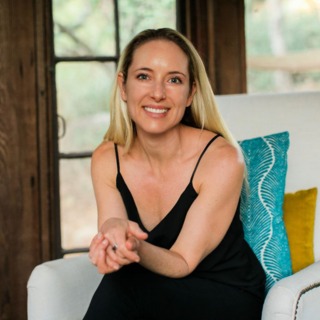
How do you pick the right person when you're starting out on a romantic relationship and how do you make your relationship last in the long run?
That's what we're going to explore today with Dr.
Rick Hansen on Your Life in Process.
So there are things that we can do every day to make our relationships better and in particular our romantic relationships better.
Whether you're looking for a new relationship or have been in one for decades,
Dr.
Rick Hansen says that our relationships take a little bit of effort.
Rick Hansen is a mentor and good friend of mine.
He's a psychologist,
Senior fellow at UC Berkeley's Greater Good Science Center and New York Times bestselling author.
His seven books have been published in 29 languages and include Neurodharma,
Resilient,
Hardwiring Happiness,
Just One Thing,
Buddha's Brain,
Mother Nature,
And his newest book is Making Great Relationships.
I'm excited to talk with him about this new book and some of his ideas around relationship.
He was a couples therapist before he became so well known for his work in the area of neuroscience and behavior.
In this episode,
I actually got pretty curious about what's going on behind the scenes in Rick Hansen's relationship.
So we talk a bit about that.
I share a little bit behind the scenes on my relationship as well.
And as always,
On the other side,
I will give you the nuggets,
The takeaways that you can use to make your relationship better today,
Hopefully,
And for the long term.
And for those of you that are more life in process members,
I have an extra bit for you.
After we ended this conversation,
I told Rick that one of the questions I really wanted to ask him about,
But that we didn't get to was the question around how do you know when to stay in a relationship and when to go?
So we pressed record again,
And he answered that question for me.
So we'll be uploading that into the more life in process membership,
And you'll get to hear that extra bit.
For those of you that are not members yet,
You can become a member of more life in process by going to yourlifeinprocess.
Com.
Okay,
Thanks so much for listening.
I think you're going to like this one.
This season has been a lot about relationships.
We started out with Stephen Porges talking about neuroception and how we co-regulate each other.
We talked with Dr.
Waldinger about the physical health and mental health benefits of maintaining relationships.
So this one feels appropriate,
Giving us some skills and ideas of how to improve our romantic relationships.
And stay tuned because we will also have an episode on friendships coming up in the near future.
I'm Dr.
Rick Hansen.
We're going to talk about your book,
Making Great Relationships,
And it's 50 little chapters.
Each one is a teaching,
A standalone teaching,
But then they're grouped together into these themes and sort of six broader themes.
And I listened to you and Forrest talk about the book on your podcast.
I loved what Forrest had to say about it being almost like three sections of one is your relationship with yourself,
And the second is the relationship with each other,
With your partner or whoever you're trying to be in a relationship with.
And then the third is the bigger,
Broader relationship with our planet.
So it does also just boil down to those three.
Making great relationships,
You use the word making and it's an active thing.
It's not something that's passive that just comes to you,
Even though people like to believe it will.
There's some effort involved.
Well,
Thank you for having me.
You're one of my favorite people.
And so it's just a pleasure to be here.
Yeah,
The whole word making,
I wanted it there.
And I got some pushback from the publishers,
Which I think in a way is a little sexist.
They were saying,
Well,
You know,
Would women be interested in a book that's about making?
And I thought,
Wow,
That's kind of old school,
A little sexist.
But to me,
It's about empowering people,
Many of whom have been pushed around way too much by life or made to feel that it's not okay to claim their power and to realize that we're not stuck in our relationships,
But we actually have agency.
There are things we can do that are authentic and practical,
Evidence-based,
They're effective with what we think and what we say.
Each day,
Mind and mouth,
You can really make a big difference in all of your relationships.
And I find that incredibly hopeful and respectful to respect the power that people really do have and to show them then how to use it skillfully in these 50 really three-page chapter kind of ways.
So I want to rewind because this is your seventh book.
Is that correct?
Well,
It was our thinking.
Well,
Your thinking.
And if you go back to the first book you wrote.
Mother Nurture.
Mother Nurture.
It was actually with your wife.
Yeah,
That's right.
And an OBGYN named Rikki Polykoff.
Yeah.
Yeah.
And so you're in this long-term relationship.
And I know that a lot of this book came out of your work as a couples therapist and out of your contemplative practice and the research on relationships.
But I've got to imagine that some of it's come out of having been in this long-term relationship and the ups and downs and all sorts of things.
Tell me a little bit – we don't know much about her.
We're curious.
Tell me a little bit about how you've made this relationship.
Seven books in a career,
Very successful career,
And obviously a successful relationship as well.
What's it been like?
Oh,
That's great.
You know,
Actually I've done a million interviews.
No one has ever asked me about this.
So tip of the hat to you.
Well,
I think success in a long-term relationship,
Whether it's formally married or not,
Is probably the result of three things.
Selection,
Who do you pick in the first place,
Effort,
And luck.
And I picked a really good person,
And I've been lucky,
And I have made some efforts.
So we could talk about the efforts part for sure.
Jen is one of these people who had a wholly benign childhood,
Loving parents,
No aces,
Tons of paces,
Positive childhood experiences.
She herself is just a deeply sane,
Balanced person who has a hard time understanding neurotic people like me,
Right?
You didn't have such a good childhood.
So that's her.
She's even-keeled.
She has a kind of,
I think of her as sort of a combination Earth Mother and Cray supercomputer.
She has this very strong analytic part that makes her very good helping people with functional medicine.
She has a practice doing clinical nutrition under an acupuncturist license.
Anyway,
We've had two kids.
She's tied for first place as the world's best mom.
You could be tied there with her,
I think,
But there's no getting better.
And she's just been really good.
So I could tell you some things that I've seen are really helpful in a long-term relationship,
Which is,
Had its challenges.
You bring along two kids.
We're in that group of people that research has shown have the greatest challenge to their relationship when kids arrive in a variety of ways.
There've been other challenges as well that we've grappled with.
So yeah,
We've had to come through things,
But I love her dearly.
Every day I just think,
I love you so much.
That's the truth.
That's the truth.
So you talked about picking effort and luck.
I want to rewind to picking because you said at the beginning,
Some people are either in the position of actively seeking,
Trying to get the right person.
And then some people are,
How do you maintain the good relationship?
And some people are in the,
Should I leave?
Let's start there with the picking of a relationship because it actually maps onto the first step first section of your book around your relationship with yourself and how you choose a person or the relationship that you step into doesn't always have as much to do with the other person as it does with the space that you are in when you choose.
Some of the chapters that you,
The little mini dormettes that you give have to do with being loyal to yourself,
Feeling cared about,
Trusting yourself,
Forgiving yourself.
Tell me a little bit about those early days with Jan,
How you picked her,
And then what do we need within ourselves to be able to pick and choose the right person?
Lots in that.
So in yourself,
Obviously,
You all know,
Feeling worthy as a person of someone who would be a good match for you.
When I was in college,
I did not feel very worthy.
And so I chose people who,
To put it in a certain way,
I was running more amps through my wiring than they were.
I had a bigger vision of life.
There was more going on,
But I just felt kind of comfortable playing small in effect.
And obviously,
There are pitfalls around getting judgmental or elitist or things like that.
On the other hand,
There's kind of an honesty in which we can really face the fact that we're just scared of reaching out.
If we're trying to get into a relationship,
We're scared of reaching out to people that we might feel a little uncertain around.
Part of what I had to do,
I think,
In my 20s really was to work on my own sense of worth at a deep level.
And for a lot of people,
They have high self-esteem and low self-worth.
They can list positive qualities.
They perform really well in lots of ways,
But deep down,
They don't feel very good about themselves.
Deep down,
There's a lot of self-doubt or feeling less than others,
Even residues of shame from experiences they've had,
Including very unjustly experiences they had of being abused in one way or another,
In which the shame is on the abuser properly,
But yet naturally,
Children tend to adopt it for themselves.
So for all those reasons,
Not that I was abused,
I actually wasn't as a kid.
I was just pretty unhappy for a variety of reasons.
I had to work on that.
So I think that's one part.
That's absolutely true.
And then you think about who you're looking for.
Maybe a little later,
We'll talk about my three-part plan for dating and mating.
It's always popular,
And one of which has to do with marketing.
We can get to that.
And going through a process of ending up with someone who is a good fit for you.
So how I first met Jan,
Drugs were involved.
I came home one night and my roommate was high on acid with this other fellow.
And there was this young woman there in college,
Maybe 19,
Long wavy hair.
And who is this lady?
I was about a year and a half older.
I'd just graduated.
And that was how I met Jan.
So then we dated for a while.
Then we worked together.
We had a personal growth company that we co-created when we were incredibly young.
I was leading personal growth workshops when I was 22.
23,
24,
We had a successful company in Los Angeles,
Had hundreds of people going through it,
And pretty cool.
And then for various reasons,
I ended it.
We kind of drifted apart.
And then after a few years passed,
We had stayed in touch.
At that point,
I had left a kind of cult-like personal growth organization I'd been involved in,
Was kind of at loose ends while working for a mathematician doing probabilistic risk analyses of things like the odds of a nuclear power plant melting down.
And then she called me out of the blue.
She tells the story maybe better than I do.
We should get her on the show at some point.
But she called me out of the blue.
We'd stayed in touch.
And the last time I'd seen her was six months before.
And there was a little bit of a rockiness there between us.
And she just called me out of the blue.
She had heard I was maybe a little bit of loose ends,
And she wanted to know if I wanted to become a Hellerwerk bodywork practitioner because she was doing sales for them at the time.
And my opening line was,
Oh,
Hi,
Jan.
I've been making you wrong for the last six months.
And her response was,
I get it.
I don't blame you.
And then on the basis of that kind of open communication,
We really connected on the phone.
She invited me to this party that she was gonna be down in Los Angeles for.
She was up in San Francisco at the time.
Later that weekend,
In a few days,
And she hung up the phone,
Turned to her friend,
And said,
Wow,
Something really interesting is happening.
Because she had pursued me for quite a while,
Actually.
I think something's really clicking here.
Man,
I think it's okay to share this too.
On her side of the street,
Speaking of people being loyal to themselves and coming into their own fullness and being comfortable with that,
She had recently gone through a very intense personal growth experience that was about really claiming all of herself,
Including her,
I don't like the term because it has implications,
But I could say her dark side,
I really mean broadly her shadow,
Her interior,
The disowned,
The intense,
The nasty,
The powerful,
The witchy,
The wild parts of herself.
She had gone through,
This was the 70s,
Of course,
She had gone through an intense experience of integrating that part of herself.
And I could feel there was something going on that was different on that phone call.
So we connected on the phone,
And then I saw her at this party five days later,
And this and that happened there,
And boom,
We've been together ever since and got married about a year and a half later.
I love the wild witchy and the boldness because I think that sometimes when we're putting ourselves out there in the beginning,
We actually do the opposite.
We don't put out our wild witchy,
Bold self.
We put out our perfect,
Tamed- Contractive.
.
.
.
Neutral,
Contracted self.
Actually the way that I met my husband in a wild witchy way as well,
Not on acid.
Yeah.
Well,
That was the first one,
When we really connected on the phone.
But you connected later.
But actually,
We met in yoga class,
And this was before yoga was cool,
Before people were going to yoga class to meet people.
And my yoga teacher,
She was doing partner yoga,
And I was with this really tall guy,
And she went across the room and grabbed my husband and pulled him up right next to me,
And said,
He's a better size for me.
And so we did this whole yoga class of pulling each other through each other's legs and getting into balance pose.
Really intimate,
Up and close in a- Yeah,
Yeah.
I don't know this guy,
But- He's a total stranger,
Yeah.
Total stranger.
He could be a serial killer.
You never know.
Yeah,
And I was fully just how I used to be when you went to yoga,
Which is in your sweatpants and your pony tail and no makeup.
And that was it.
It was sort of this raw,
Wild,
Witchy way of being intimate and bold.
And then it opened the door to,
It doesn't really matter from here on out.
Yeah,
So that's one part of it is actually allowing some of your shadow to come in to that first part of the relationship.
And as you talk about in making great relationships,
There's sort of this calm inner strength that's necessary as well.
And I think that folks are drawn to you because that's one of the things that you help people cultivate,
Sort of the inner traits of the good within themselves.
And what are some tips for folks that are in those early stages to help them find that calm strength and self-acceptance and all the good stuff that- That's a great practical question.
Before we go,
I do want to underline the other headline,
Which was that Jan and I were and have always been really very open in our communications with each other and have been willing to say things that people don't normally say.
Like for me,
As soon as I picked up the phone and heard her voice,
The opening truth for me,
And it was not a manipulative move,
It was just real,
Was,
Oh,
Wow,
An apology.
I've been making you wrong for six months.
And I meant it apologetically.
I wanted to cop to it and to do so in a really straightforward way.
And just that one of the chapter titles,
Each of the chapter titles in the book is a practice.
So one of them is admit fault and move on.
And right there,
Admit fault.
Or another chapter title is give them what they want.
That might go to something later we can talk about,
About realizing that one of the fastest ways to be in harmony with my wife is to go to maximum reasonable responsibility about whatever she wants from me,
Knowing that I'm the ultimately autonomous person who can decide what I consider to be reasonable,
As it were,
That I can deliver.
But to do that,
I think that's really important.
And then she responded.
She didn't pile on.
She didn't do what a lot of people might do,
Either brushing it off,
Which is a distancing maneuver,
And I would then feel a little put off.
And hey,
I confessed something here in a vulnerable,
Real way,
And you just kind of act like I didn't do that.
That's weird.
So I'm going to take a step back right there.
She didn't do that,
Nor did she pile on.
She even took some responsibility for her side of the street.
Like yeah,
I can see why you did.
I understand that.
Right there.
You can just think right there.
I've thought a lot about relationships are built from interactions,
And interactions are built from turning points back and forth,
Like a little volley here.
You've given me permission,
In effect,
To not yet answer your question,
But to go down this little alleyway.
So it's okay.
We're okay.
We're in harmony with each other.
And I just think about how often we blow those turning points.
Or on the other hand,
How we have the opportunity at those turning points to maximize the odds of things going well in the next turn from that other person.
And you could just see right there in 30 seconds or less,
Rick and Jan,
These two characters in a play,
They were real people,
Did good stuff at those early turning points when it could have gone badly.
I could have been superficial when she first called me.
I could have been holding onto my grievances.
I didn't do that.
So I maximized what I could possibly do,
Including for my own sake,
Because it made me feel better to coptimize stuff.
She maximized her opportunities right there instead of doing all kinds of other things that would have led to it going badly.
Right there in 30 seconds.
That's our relationship.
And we've been married for 41 years now,
Coming on to 41 for exactly that reason.
Well,
There's also a little bit of a flirt in there too,
Rick.
Well,
Really?
I didn't feel very flirty in the moment.
Well,
It sounds a little.
It does.
When you kind of are that direct with somebody and you own that.
Or hauling someone between your legs in yoga.
Yeah,
In yoga,
Yeah,
That's flirty too.
But there's a directness.
There's something about that little vulnerable direct edge that you're willing to step into that keeps things fresh and alive and interesting.
Because I imagine when you did that,
That made her turn around and look,
Ooh,
This is interesting.
He's doing something that's different.
And then she responded in a way that was interesting as well.
And that's the spark that starts a relationship if we can show up that way.
The question then becomes,
How do we keep that going?
Because 41 years in,
If I have number one complaint in my clients that are in long-term relationships is they are just bored or they've changed and they feel like their partner hasn't changed.
And actually,
A lot of times they come in and they're doing all this work in therapy and they're starting to pursue all these meaningful things in their life and their partner's not.
And they feel like they're evolving beyond their partner.
So you started off on a path together,
But then you branched out.
You started writing your own books separately and she has her business.
I know I completely lost the first question,
But it's okay.
We can leave it behind.
Oh,
It was about calm strength.
And I want to add though that that honesty,
That realness,
I think about moral people,
Michelle Obama.
I think about Nelson Mandela.
I think about Tecton on people who they're just very grounded and they're very open with the straightforward truth.
And it doesn't have to be about romance.
In other words,
It can be,
But it doesn't have to be.
And yet it has tremendous authority and credibility when people are that comfortable in simply resting in their truth,
Feeling it while they say it.
So maybe we should land on that for just a little bit.
What are the skills and strategies?
So in the beginning,
What's really helpful,
I think are several things.
One is to do what you do so well and teach is to be in touch with yourself,
Just in touch.
Be literally in touch with your internal sensations,
A feeling of being present in your own body.
That's very reassuring.
Neurologically it's reassuring because it foregrounds and highlights the signals coming into your brain that are telling you you're basically all right,
Right now in the present.
So that's really helpful thing.
I think a second thing is to honor your own experience in its own right,
With its own inherent validity as simply what you are experiencing.
Not blaming others for it,
Not trying to manipulate others by it.
It's simply the truth of your own experience.
That has tremendous power and comfort.
And then I think it's also really helpful to disengage from the kind of weird stuff that sometimes other people do.
Some people are like you,
Diana,
And they'll drop in,
They'll connect,
They're awesome.
You know what I mean?
But sometimes other people,
When you're actually being real with them about what's true for you,
Maybe what you'd really like is a partner who's more of a co-enthusiast for you,
For the stuff you're learning about,
The workshops you're taking,
The books you're reading,
At a minimum that they enter your mind about it.
But rather than simply tuning you out or even being kind of snarky about it and dismissive and devaluing.
All right,
Maybe you really want that.
And there you are,
Let's say,
Openly,
Vulnerably sharing that with them.
And then they get weird with you.
They try to make a joke out of it or try to laugh at you like,
Oh,
You just came back from Blue Pearl or wherever that place is.
Blue Spirit.
Blue Spirit,
The Blue Pearl.
I'm thinking about Muktananda,
But anyway,
Blue Spirit or wherever.
Have you listened to Rick Hansen too much lately?
Who knows what?
Anyway.
And then the trick is to just stay in your zone and to realize that they're just doing what they're doing.
Stay in your zone.
Keep your eyes on the prize.
Keep resting in what's true for you.
Keep speaking your truth,
Knowing you can't make them do anything.
And you'll observe what they do.
And I find a lot of times that if you just are willing to hang in there past the initial fluster or resistance or weirdness from the other person,
Maybe it takes three times to really kind of come to some agreement or come to some harmony with them.
And if you don't,
If you really kind of laid it out like,
Hey,
I'd really love it if we could just mobilize interest inside your own mind.
That's often what the ask really is.
So let's say the ask is,
Hey,
Could you just be interested in this?
You don't have to do it.
You don't have to believe it.
Can you be interested in me and what it's like to be me?
So I feel like we're still connected,
Especially as we grow older together.
An element that I work with clients on as well to add to that,
Which is being clear in your request and doing for them that which you are wanting them to do for you.
Because you may want,
You have a big intention to get them to come to your meditation retreat,
But your eyes are glazing over when they're talking about something they're interested in.
And that oftentimes,
Sometimes I'll share with clients,
Like you're trying to get people on the same page as you,
Or if we're pulling them onto your boat,
As opposed to finding a landing ground for both of you to get on together.
And I love Terry.
We both talked with Terry Reel,
But his whole philosophy around the us and the we,
And how sharing interest in each other actually creates a stronger we.
It creates a stronger us,
As opposed to you just need to get interested in my stuff.
Yes.
Because my stuff is obviously more interesting than yours.
And that requires some perspective taking,
And it requires getting behind the eyes of your partner and willingness.
And something that Jack Kornfield said that I've been thinking about a lot in relationships is the difference between patience and steadiness.
And he talked about patience being this state in which you're waiting for something to happen,
And that people can feel that.
Or even in meditation,
If you're being patient,
You're waiting for some outcome,
As opposed to just being steady.
And that we can be steady in our relationships,
As opposed to this,
I'm patiently waiting for you to get on my side.
I can be steady with myself and steady with my partner.
But I like that perspective on clear communication.
And that's not always the easiest,
Especially when there's conflict.
So I am curious,
Going back to Jan,
Healthy marriages actually have conflict.
And it's sort of concerning when I have a couple come in that doesn't have any conflict.
I'm like,
Oh,
That means you've lost your ability to speak up around each other.
But tell me about conflict and how you navigate conflict in your marriage and some of the effective ways of navigating conflict,
How to repair.
Couple things.
One is that when we had,
Prior to children,
So we were married for almost seven years,
I think,
Roughly before we had children.
And when kids arrived,
Prior to kids,
We kind of lived in separate bubbles in parallel,
Like toddlers,
The parallel play.
And maybe there were things we disagreed about.
I tend to be fairly orderly.
She's kind of messy.
I work a lot.
She doesn't.
I like wilderness.
She likes shopping.
I don't care.
So it doesn't matter.
When kids come,
You have to make agreements.
And there were two things about that that I'll just share here that were helpful to me.
One was that soon after our first child was born,
My friend Bob was coming to town.
And I said,
Oh,
Honey,
Bob and I are going to go sailing on Saturday.
I said this to her with Forrest,
Who was about a month old at the time in her lap.
Oh,
Honey,
We're going to go sailing on Saturday.
We'll be back and then let's go out to dinner.
And she just stared at me like I was insane,
Because I was.
I was clueless.
And I looked at her and I looked at Forrest in her lap and how completely dependent on her he was and how therefore dependent on me she was.
And I realized that my life had changed and I had to take her into account in a totally new way.
So one thing that really helps resolve conflicts is to expand the field of what we take into account on both parties.
And we can take more into account ourselves and we can ask our partner to take more into account.
I think of privilege at bottom.
A major aspect of privilege is not having to take something into account.
I had male privilege.
I did not have to take into account how my hair looked,
You know,
In Iron It.
You know,
That's a small example.
And they're bigger ones.
So right there,
How do we deliberately take more into account that our partner is dealing with that we don't have to take into account?
Maybe they have health issues,
Maybe they have ambitions,
Maybe they're still grappling with issues from their childhood.
And also,
How can we ask our partner to take more into account?
In effect,
I've had to ask Jan to take into account the fact that I'm a wilder character.
You know,
People tend to know me in fairly buttoned down ways.
I'm just a wilder character than she,
Many people are.
And I really need a certain amount of the wild in my life,
Typically achieved through wandering through wilderness or sometimes turning up the music.
And she had to take that into account.
So I'm going to pause on take into account.
There's a real gift that we have in our partnerships where we know our partner's raw spots and vulnerabilities in a way that no one else knows them.
And it's our job to protect them and to take them into account.
One thing my husband does every single day is make the bed every day.
And he's made the bed for the past 13 years,
Every single day.
And it came from the birth of my son.
When I had my son,
My first son,
I had such intense postpartum.
And I remember in the mornings,
I would feel so overwhelmed with the mess of the house for whatever reason that was like the thing that would put me over the edge.
And I just turned to him and said,
I can't do it.
I cannot make the bed.
And it was from that moment on,
He's like a little soldier.
He wakes up,
He makes the bed.
And when I see that bed being made,
I see it as a little gift that he's giving me and an acknowledgement of I'm doing this for you.
And it's not just to have a made bed,
But it's I'm doing this because I care about your mental health.
And I know for you,
A made bed is a mental health move.
So knowing each other's raw spots,
Taking them into account.
And there actually is some interesting research on sacrifice that sacrifice in relationships enhances relationships.
So that is sort of an interesting phenomena that when we give a little bit of ourselves.
Now,
There's that fine line,
Right?
It's sort of a bit of a paradox because you don't want to sacrifice yourself in the sense of your self-worth.
But the giving to another person is important.
And I think about the ways in which,
Particularly in long-term relationships,
People drop out relationship tasks.
They don't sustain interest in each other for more than a few seconds in a row.
Think about how rare it can be in a long-term relationship to feel that your partner is listening rapidly for a few minutes in a row.
They're totally with you.
And think about how small a gift that is.
And yet what an incredible impact it can have on another person or on you when you're the receiver.
You're the other person's serious interest in you.
Do a bit of an inventory on so-called relationship tasks,
Not as burdens,
Not as something that's going to deplete you,
Not even as sacrifices.
They're just kind of gifts.
But also in terms of if you're at all motivated in this way,
What kind of a partner do you want to be?
One of the things I talk about in the book is unilateral virtue,
The 80-20 rule,
Where sure,
Spend 20% of your attention on getting them to do better.
Fine.
But the rest of it is on what you have control over,
Which is yourself.
And for a lot of us,
I think,
Honestly,
We could raise our game.
I've been a therapist a long time.
It's made me kinder and in some ways blunter.
Because you can just see that people really could raise their game often.
Not always,
Not always.
But they could actually deliver more to their partner in terms of relationship tasks.
So what do you think about that?
Absolutely.
I definitely can raise my game.
And when I'm aware of it,
I do.
Sometimes I'm not aware of it.
One of the places where relationship tasks get missed,
People don't do them,
Is because of the influence of technology and social media,
To be honest.
And it's a vicious cycle.
And there is research to show it is a vicious cycle,
That the more that you are on your social media,
The more dissatisfied you are in your relationship.
Because you're not tending to your relationship and you're also comparing your relationship to all the other stuff out there.
But also,
The more that dissatisfaction happens,
The more likely you are to pick up your phone.
And we have almost like a new person in our bed with us,
A new person on the couch with us,
A new person even on a phone call,
Where people will be on a phone call and they'll be texting someone else while they're still talking on the phone with their own partner.
It's an increasing problem amongst couples,
Especially I would say younger couples in particular who tend to be even more on their phones,
But all of us.
And I see it in my own relationship too.
If the phone is in the bed or if the phone is after work in our conversation,
I'm not as present.
And so making that a real commitment that you're investing in this most important thing,
Which is right in front of you,
Right by your side,
Which had Dr.
Waldinger on and your health,
Longevity,
All of that.
There is no wealth greater than the wealth of a healthy relationship.
I think of two kinds of motivation for doing this.
One is a motivation that appeals to me at least,
Maybe to you as well,
To want to enjoy what the Buddha called the bliss of blamelessness,
To really want to feel like you're standing on the moral high ground,
You've hit it out of the park today,
You've fulfilled your job description.
So when you kind of clock out,
I put my card in the time clock there with my gesture,
When you clock out and just zone out at the end of the day,
Boom,
You can feel good about yourself in that relationship.
So that's a kind of motivation,
Right?
I thought of it as like the impeccable husband job description.
I didn't need to be perfect,
But I did want to be close to it.
Other much more fundamental and maybe more accessible motivations are when you look at your partner,
You just care about them.
If you look at your partner and you just don't care about them,
That's a huge issue to really sort out what you're going to do about that,
Whether you can find a possibility of rekindling the caring,
Or maybe there's caring that's under the surface of your grievances and resentments that you could get back in touch with.
But usually we do care about our partners.
You look at them,
You just at a human level,
Even,
You see the weariness in their face,
You find kindness for them,
You find compassion for them,
And that then moves you into these relationship tasks.
One of your chapters is about seeing the good in your partner,
And a lot of your life's work is about taking in the good,
And this is a little bit of a pivot on that,
Which has to do with cultivating that good feeling by seeing the good in your partner.
That's one of the things that I've experienced from you,
Rick,
Just having known you,
Even how you opened today.
You open every single,
Whether we're on video or not,
You open every single conversation that I've ever had with you with some kind of seeing the good in me,
Without a doubt.
It's just your nature,
Your habit.
It's probably true.
And you express it.
And it always makes me kind of boost.
I sit a little taller and I feel like,
Yeah,
Okay,
I can sit in this space with Rick Hansen because he's so good in me.
And you can feel that energy that you just gave to me,
And then it helps me be more present for you,
And it's rocking races,
Right?
Oh,
It's sweet.
It's enlightened self-interest,
Isn't it?
And related to that,
Because I grew up in a fault-finding home with loving but domineering parents who,
Out of their good intentions,
Were trying to protect me with a lot of overcontrol.
So I don't like being controlled,
And just in its own right,
Plus it gets into that more wild spirit I have deep down inside.
So for me,
It was revolutionary to turn it around that the criticisms of me from my wife or the complaints,
The stuff she wanted me to do certain things a certain way,
That actually,
I could do a kind of judo move with it and give her what she wanted to the maximum reasonable extent and one by one,
Zero out her complaints,
Which paradoxically put me in the most powerful position and freed me up of complaint and got me off her radar and got her to quit bugging me about the balls I was dropping.
And I find that that is a really,
Really powerful thing for people to do,
To just zero in on what your partner wants that you're going to do.
We all pretty much know our partner's top three of what they want built on what they're currently getting.
They want us to stop doing some stuff or to start doing some stuff typically.
And we have our own little list,
Right?
You know what they want that they're not getting.
If there's room for improvement,
Maybe there's not.
Maybe you're already hitting it out of the park,
Right?
Hey,
Maybe you really are.
Some people would say about the other person that they're fully satisfied- I'm looking for top 10 that my partner wants from me.
Ah,
Okay.
Start at the bottom of the list or the top.
It's amazingly powerful.
I'll cut to the chase.
When you're having an argument,
Which is almost always about the past,
What happened?
Try to get to the bottom of,
Okay,
Okay,
What would it look like if you got what you wanted from me?
Because I want to deliver to the maximum I can of what you want.
What would it look like?
What could I do going forward?
What can we do so that we never argue about this again?
What can I do?
That's incredibly powerful.
And the only thing that makes it work though is those early chapters in the book that are about respecting yourself,
Standing your ground,
Not being bullied,
And taking care of your own needs and being prepared to talk about them really directly.
But on that foundation,
It's amazingly powerful to just quit arguing about stuff and to drive to solutions with a kind of generosity.
Give them what they want.
Admit fault and move on as much as you can.
What do you think about that?
Oh,
Yeah.
I was kind of wandering into my list of things that he wants.
I agree that there's going to be a sort of pushback to what you're saying by our listeners of like,
Wait a minute,
If I just always give my partner what they want,
Then I have no sense of self-worth.
But you are talking about building your worth.
And I guess for me,
It's our wants.
Your wants are my wants because I want harmony.
And I know our households,
When people are getting their needs met,
We just have a more harmonious household.
We all are more enjoyable around each other.
And it feels really good to give someone that you love what they want.
I was reading through an old notebook that I had from this emotionally focused therapy retreat that I went on with my partner a long time ago.
I don't know.
We had babies.
And it said in there,
It asked about these wants,
What do you want?
And it said in there from him,
He wants a hug when he comes in the door.
And I checked myself.
I'm like,
Am I hugging him when he comes in the door?
I've gotten a little bit lazy on this hug upon entering the door.
But just remembering that,
Sometimes those little waterings of the relationship,
Like tending to those little wants,
Is almost enough.
That opens the door to the softening and the connection and the being seen and all the things that we want,
Just the little things every single day.
So I know that when we talk about wants,
People are thinking about big things like,
Oh no,
That means I have to do something crazy.
But we're talking about little wants too that meet those needs.
The mortality rate on marriages is 65% in America.
In other words,
50% of the legal marriages end in divorce.
But if you add legal marriages that end in a de facto divorce or relationships that never got legally married but were a functioning marriage and then,
That there are two chances in three that the people walking back down that aisle on the day they got married are not going to make it long-term.
So I don't say that out of doom and gloom,
But out of a clear-eyed take on,
Hey,
Suck it up.
Coach Rick here,
Sorry.
There's stuff to do.
And none of this means putting up with someone who's bullying you or a jerk or is just not willing to do a little bit inside their own mind to sustain interest in something that you're into these days like yoga or whatever.
No.
But I just see again and again,
There are people who with very little cost to themselves could make their relationships a lot better and elicit much better treatment for themselves from their partner.
For example,
With a little effort to kind of work their way out of that grinding resentment that's almost hypnotic inside their mind,
That case they have.
Being angry releases reward neurochemicals in the brain,
Unlike being sad or anxious or feeling ashamed or inadequate.
Anger as a metaphor,
The proverb put it,
With its honeyed tip and poisoned barb.
So people can do sometimes inner work.
They can do a little more about talking about little things early so they don't become big things or they can be brave enough to deliver some of their undelivered communications and in skillful ways.
I go into a lot of how do you set that up skillfully,
Drawing on tons of research,
Things you're familiar with.
People can do a little more of that.
If people in a long-term relationship were to budge and deliver the goods,
To put it bluntly,
For that extra 20 minutes a day,
20 minutes,
It would transform their relationship and it would put them on a really solid position to ask for their own 20 minutes.
Maybe what they want is more presence and listening.
Maybe what they want is more erotic contact that doesn't necessarily lead to sex.
Maybe it does.
In a context of safety and closeness and emotional intimacy and teamwork,
Maybe they want that.
Maybe they want the person to just make a little effort to make the freaking bed or to do the dishes a little better or to be more engaged with the kids or,
Gosh,
To carry more of the load about figuring out their family's healthcare or to drive a little more slowly.
That's my wife's main ask for me.
Please,
Rick,
Drive more slowly.
Right?
It's 20 minutes.
Close my mind.
Yeah.
Well,
We put a lot of time in a lot of other places,
Right?
And if we took the energy,
This is my new concept of wise effort that I'm thinking about,
Rick.
I'm excited about it.
You are about,
Yeah.
Just that's wise effort right there.
That's watering the wholesome seeds of your relationship.
And it does take time and it does take intention and it does take clarity and it takes awareness to know what you're and ask what your partner wants and then be clear on what you want and to share that with them.
Yeah.
Yeah.
Yeah.
With a kind of generosity.
Part of it is a generosity and a lot of it is enlightened self-interest,
Which also makes you much more able to say to your partner,
I'm going to be blunt,
Okay?
And this is going to be a little gender normative here around sexuality.
Is that okay?
My observation is that as a generalization,
Many heterosexual couples,
You know,
After kids come along,
Very often what happens is that she feels that they're not as emotionally close as they used to be and that he's sort of lost interest in her inner being.
And he feels that they're not as connected as lovers than they used to be.
And she's lost interest in him in that way.
There are all kinds of understandable reasons for this,
Biology,
Evolution,
Gender socialization,
Different roles.
For whatever reason,
That's often the situation that many couples find themselves in.
What do you do about that?
Well,
You just think about it for a minute.
How far,
Let's say,
Would he have to extend himself to ask her about her inner world and actually listen and blow her mind by,
I talk about asking three questions a day about the inner world of the other person,
Including,
Could you say more about that,
Dear?
Tell me more.
That's it.
That's all you need to say.
Yeah.
Tell me more.
Wouldn't that blow the minds of a lot of women in America,
Right?
Tell me more,
Please.
And to really show up 20 minutes a day,
Maybe 20 minutes straight,
Maybe five minutes here,
12 minutes there.
Big deal.
Flip the other way.
You know,
How hard is it to,
Again,
It's in a context of safety.
I'm a staunch feminist.
I'm really strong on that.
But in a context of safety,
Respect,
Good foundation and so forth,
How hard is it to initiate a little physical contact that's more than or co-parity?
How hard is that?
How hard is it to make time at some reasonable pace given your age and your nature and all the rest of that to actually make love?
It's not that long for most long-term couples.
Oh,
20 minutes or whatever that time amount might be.
How hard is that,
Really,
To just extend yourself in that way?
Never doing something that's false,
But finding your way in volitionally,
Bringing a little bit of deliberateness to it,
To an authentic presence,
An authentic interest that's real,
Which for me,
Sometimes people say,
Oh,
You're faking it till you make it.
Like,
Not at all.
There's no fakery involved.
It's doubly loving.
Whatever you're delivering,
Whether it's listening or physically connecting,
It's loving what you're delivering.
And it's doubly loving that you brought your will to bear.
Okay.
Well,
We got our top three list there for many people.
And included on that list is that 20 minutes of either more physical attention,
Interest,
Or more emotional attention and interest.
I'm sure that makes pretty much everyone's list of either wanting to give a receipt.
Yeah.
Yeah.
And I'll tell you one little detail.
I used to do these workshops for new couples,
And I still remember this couple that I had stereotyped in a foolish way.
And so he was a big,
Burly,
Macho man kind of guy.
And his wife was very attractive.
And I was giving this little rap like I kind of gave here.
And he said,
Well,
Really,
Dr.
Hanson,
What I would really most like is just getting my back scratched.
Oh,
My God.
I'd exchange back scratch for sex any time.
I was like,
Okay.
That's okay with me.
To each their own.
To each their own.
And I often will remind folks that you're never going to be this young again.
Whatever age you're at,
You're never going to be this young,
This vital,
This alive.
So we don't know when things are going to change for us.
We don't know when our relationships might shift.
We don't know when that person's not going to be there anymore.
So capitalizing on that in the here and now,
And that 20 minutes means a lot when you start to see that it's not always going to be available to you.
We often think that they're always going to be there and they're not.
So that's pretty heavy duty.
Yeah.
I do think about that when I lie in bed with my husband at night.
I was actually thinking about that last night.
And it was like sometimes he'll come over and he'll hold my hand at night.
And he held my hand last night and I was thinking,
You know how nice it is to have somebody in my bed to hold a hand with.
Not everybody has somebody in their bed and I won't necessarily always have somebody in my bed to hold the hand with.
So when we think about it that way,
I think sometimes it can shift our willingness to put the 20 minutes in.
Yeah,
That's right.
Yeah.
And to know deep down inside yourself,
Whoever you're with,
That at the end of the day,
You really have given your heart.
For me,
That's just been really important.
And even as an ultimate practice of awakening,
Which I know is an interest that you have and probably many people listening,
That ultimately lovingness can carry us all the way to awakening.
Because in it is a release of self,
Release of selfing,
An openness,
A spaciousness,
A kind of a woof moving out into reality,
Right?
Coming into allness in that love and which can feel increasingly in terms of a shift even of identity,
That it is love which is living you broadly and ultimately a kind of transpersonal,
Transcendental,
Mysterious ground of love that's living as you.
And that's a profound practice,
Which of course has huge practical implications in everyday life.
Well,
Thank you,
Rick.
Congratulations on your seventh book.
Oh,
Thank you.
And your 41 years of marriage.
Yeah,
Come Valentine's Day.
I think this episode will post after Valentine's Day,
But yeah,
I will have been married 41 years by the time people listen.
Nice.
So making great relationships,
Simple practices for solving conflicts,
Building connection and fostering love.
And it talks about romantic relationships,
But also some of those more difficult relationships in our lives and our acquaintances and all of the above.
At work.
At work.
Kids.
And the best part of it is that you can read like three pages and then go to bed and that's enough because there's short little digestible practices that are super applicable as you always teach in that way from the heart and very practical as well.
It's an honor and delight to share another hour with you,
Rick.
Thank you so much for spending this time with us.
I look forward to more.
Well,
If you've been listening to this podcast long enough,
You know that I will tie psychological flexibility into pretty much about everything and relationships are not excluded.
Actually,
It takes a lot of psychological flexibility to do all the things that Rick and I just talked about.
The psychological flexibility of staying present,
Seeing the bigger picture,
Taking your partner's perspective,
Knowing your relationship values and acting on those values.
And there is a good amount of research that psychological flexibility in relationships makes your relationship better.
There was a meta-analysis in 2020 that I'll link to in the show notes from the Journal of Contextual Behavioral Science that included over 43,
000 people,
174 papers,
And the conclusion that when you are psychologically flexible in relationships,
It is associated with higher satisfaction about yourself and your partner,
Higher sexual satisfaction,
Higher emotional supportiveness and less negative conflict,
Physical aggression and attachment,
Anxiety or avoidance.
So psychological flexibility,
What does that look like?
It looks like some of the behaviors that Rick was talking about on the show.
And your daily practice this week is a sort of distilled down six point bullet list of things to try out with your partner in your relationship.
Number one is to build your own base of self-worth.
It's really hard to be in a relationship if you're depending on the other person to be your foundation.
So respect yourself,
Stand your own ground,
Know what matters for you,
Take care of your own needs.
Number two,
Be open and honestly communicate what you want.
The guy that wanted the back scratch,
I imagine he never said that to his wife.
I just want you to scratch my back.
Sometimes it's that simple.
I just need a hug when I come home from work or a back scratch or I need you to clean up the kitchen counter because it's driving me nuts.
Number three,
Admit faults and move on.
Don't get stuck in being right.
Don't get stuck in resentment.
Say my bad.
I'm sorry.
I was wrong.
Let's move on.
Number four,
Know your partner's raw spots.
You can care for your partner's vulnerabilities and needs in a way that nobody else can.
So take care of them.
And number five,
See the good in your partner.
Look for their strengths,
Verbally appreciate them rather than being patient and waiting for them to change.
Just be steady in seeing the good.
And then finally,
Number six,
Something that Rick talked a lot about is be generous.
Give your partner what they want because you love them and it creates more harmony in your household when you do.
Okay.
Build your own base of self-worth.
Be open.
Admit faults.
Know your partner's raw spots.
See the good in your partner and be generous.
That combination of things is going to radically improve your relationship if you do all of them this week.
I will be very impressed if you do.
I will be working on at least a few of them myself,
My long list of things my partner wants from me.
And I look forward to hearing how it goes for you.
Let me know on social media or share this with somebody that you love.
Thank you so much for listening to this episode of Your Life in Process.
When you enter your life in process,
When you become psychologically flexible,
You become free.
If you like this episode or think it would be helpful to somebody,
Please leave a review over at podchaser.
Com.
And if you have any questions,
You can leave them for me by phone at 805-457-2776 or send me a voicemail by email at podcast at yourlifeinprocess.
Com.
I want to thank my team,
Craig,
Ashley Hyatt,
And thank you to Ben Gold at Bell and Branch for his original music.
This podcast is for informational and entertainment purposes only,
And it's not meant to be a substitute for mental health treatment.