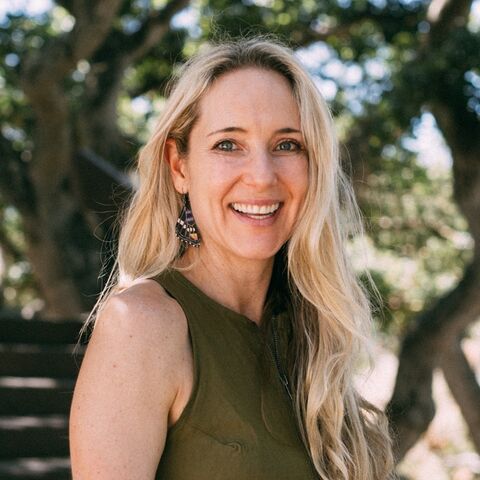
What can we learn from process-based therapy and ACT to adapt and evolve to our changing times?
That's what we're going to explore today with Dr.
Joseph Sirochi on Your Life in Process.
Whether we like it or not,
The world around us and within us is constantly changing.
And learning skills to adapt is central to your success as a human.
As Joseph Sirochi says in this episode today,
Change is not your enemy.
You need to learn how to harness it for the good.
Joseph Sirochi is the co-author of the new book,
What Makes You Stronger,
With Dr.
Louise Hayes and Dr.
Anne Bailey.
And he has published over 150 scientific journal articles and many influential books,
Including The Way to Escape,
Your Life Your Way,
Emotional Intelligence in Everyday Life,
And Mindfulness Acceptance and Positive Psychology.
He has been rated as one of the most influential scientists in the world.
And today we are going to be talking about change,
Its inevitability,
How to shift your mind and sense of self and behavior as change occurs.
And he's going to be giving us a glimpse into the future of a more integrated psychology,
Where we have a common language and we step out of academic boxes into a more consilient view of well-being.
This is the second time I've had Dr.
Sirochi on the show.
And you'll notice that if I bring someone back,
It's because I really,
Really like them and I'm really excited about their work.
What I love about Joseph Sirochi is not only is he at the cutting edge of psychological science and one of the big players out there in ACT,
He also really stays open and humble and willing to evolve himself as an academic.
He talks a little bit about that on the show today,
And he talked about that in the past in our conversation about ego.
We're back and forth.
We jump into each other's conversations and it's because we've gotten comfortable with each other.
And I like that as well,
That it doesn't feel so interviewee.
So as you go through today's talk,
Maybe you're a therapist,
Maybe you're not.
Maybe you help people change in other ways.
Maybe you're going through a significant change yourself in your life.
Stay open and listen to the nuggets that are in here,
Little offerings that will help you grow stronger in the face of change.
And I will summarize some of those for you at the end of the show.
And then finally,
If you are interested in deepening your ACT practice,
I will be in Sedona the first week of November,
Offering an intensive retreat in ACT for health providers,
Mental health professionals with PESI Continuing Education.
And come with me to Costa Rica in April.
I know I talk about Costa Rica a lot,
But it's because these retreats have been so impactful for me personally.
And I just want you to get a chance to go to one of them.
So if you're on the fence,
Get off the fence,
Go learn more about it and sign up.
We just have a couple more spaces left.
I hope to see you there.
So welcome back,
Joseph Sorochi.
Good to see you.
Yeah.
Good to see you too again.
We were just chatting about what this podcast is going to be about,
But before that we were chatting about weather.
And I'm sweating it out here in Santa Barbara and you're cold in there.
I'm freezing in Australia.
Freezing in Australia,
Which is not something we usually think about,
Right?
Our minds have stories about Australia.
It's hot and there's kangaroos.
That's about it for you.
I've never been.
So correct me.
Both of those are true sometimes.
That's actually a good line.
Both things are true sometimes for our minds.
So last time we spoke,
We talked about ego and attachments.
And we are going to broaden our conversation a bit today to talk more generally,
I think,
About change and also individualization of our approach to life.
Like how we can look at ourselves as individuals,
But then also have some commonalities in terms of our ways that we tend to avoid change.
Yeah.
So we have a new book out,
As you know,
Called What Makes You Stronger,
And its focus is on coping with change.
And it's with Louise Hayes and Ann Bailey.
And the main thing we realized was that there's been huge change with COVID and society is changing right now.
It's in one of these highly accelerated state of change.
People are going online.
People aren't going back to work.
People are quitting their jobs.
They're demanding more from their jobs.
They're suddenly realizing that they didn't have to work as much as they thought they did.
The Great Resignation has happened.
This is a time of massive change.
You look at other times in history.
Like there was a time when people were traveling by horse and buggy.
And then I just saw this image of New York City,
And it was just filled with horse and buggies.
And then 10 years later,
It's filled with cars.
It's that kind of change that's happening now,
Where the way we live is just radically different.
And that can be scary,
And we can resist it.
And so What Makes You Stronger is fundamentally about how do you not turn change into an enemy,
But harness it.
And I guess the key idea is that we see change as a disruption to normalcy.
But actually,
Change is constantly happening,
Even if we don't realize it.
And we're either changing for the worse or the better,
But we're always changing.
So for example,
If you don't do anything to strengthen yourself,
Say with resistance training or any kind of exercise,
We know that you will get weaker.
If you don't keep what you have,
You lose it.
If you don't use your brain and train it and think hard,
You will become less sharp.
So it's not like you ever get to hold on to things exactly as they are.
They're either constantly decaying or evolving towards something better.
So that was the realization was,
Whoa,
Okay,
So this is happening all the time.
How do we help people to harness it?
So I'm going to pause you there,
And we'll walk through this model,
This DNA-V model of how to respond to change in a more effective way than maybe some of us respond to change.
But I want to personalize this to you,
Joseph.
Yeah.
Since we're talking about personalization,
Tell me about a time when you've resisted change or you tried to control it and it sent you sideways.
Yeah,
I mean,
This is probably related to the ego talk.
I was going through a very tough time.
I'm now 54,
But I was 50,
And I had always been a successful academic.
And then suddenly I found my workplace became kind of hostile to me,
Not the people around me,
But higher-level management.
And it was as if I wasn't doing a good enough job based on some metrics that they had.
And it was extremely threatening to me.
And I just spent a good four or five months resisting that,
Saying that there's something wrong with them,
Making up stories,
Being resentful and angry.
And it was just brutal.
It was just brutal.
And while I was doing that,
I wasn't adapting to the changing situation in my workplace.
And I was just basically tearing myself up,
Being resentful,
Ruminating.
I'd go home and I'd be thinking about it,
And I wouldn't be able to connect with my kids or my wife.
And it was just a terrible time.
And I think I almost had to have my ego destroyed where I was not this big,
Important academic,
But somebody who,
Just like anybody else,
Could suddenly have their source of pride and dignity torn from them.
That's just life.
Once I started to deal with that,
It wasn't easy,
But I started to adapt.
And that's probably what led to what makes me stronger,
This book,
Because I decided I would double down on doing what's important,
Even if it got me fired.
I just said,
Look,
Maybe I had gotten comfortable before that and wasn't doing what I thought was most important.
Maybe I was just kind of cruising and I was successful as an academic,
But not maybe doing enough for my fellow humans.
And this just broke that down.
And suddenly,
When I lost that,
The job insecurity came,
And I lost the sense of,
I guess,
Over-attachment to that,
Being a successful academic.
I became more human,
I think,
And I started to change for the better,
Even though it was not a change I wanted at all.
And so now I'm doing much more work to be of direct benefit to people.
I feel like I'm much more connected to that.
Like,
Everything I do now,
I'm thinking,
Okay,
Would anybody care?
And who would care?
So that was a pretty big change for me.
It was horrible.
It was a terrible time.
And I've come to the other side now.
Everything's fine on that front.
But I'm not going to go back to the comfortable academic I was,
So I've permanently changed,
Even though I'm no longer under fire.
And I'm more engaged.
Yeah.
Well,
Gosh,
I feel such a parallel with you in terms of why I started this podcast.
I think it was a similar feeling and how excruciating it is to actually extract yourself from something that maybe you've locked into for a long time and you have stories about yourself around,
And then to kind of go back to sort of ground zero of your life.
And what makes you stronger,
Some of the reasons why we resist change,
These four primary reasons for resisting change that have to do with discomfort with uncertainty.
We don't know what's around the corner.
So even if we don't like what we have,
At least we know what it is.
Yeah.
I mean,
People stay in bad situations because it's just unimaginable what is around the corner.
A lot of people stay in bad marriages because they just can't imagine what it would be like to be single.
And then we also don't want to change because the next reason was because it threatens our sense of competence.
And for me,
Moving from a place where I'm very established,
Or for you,
Very established as an academic,
To go into this new territory where you may be a beginner again at something.
And being a beginner,
You kind of fumble and it doesn't look so good and you don't look so competent all the time.
Exactly.
Yeah.
That's another thing to resist change.
As we get older,
You'll notice younger people more willing to try stuff until they hit teenager,
And then they got to look cool all the time.
But we do lose that ability to just be playful and make a fool of ourselves as we learn.
I mean,
But that's the crucial skill for change.
It's like being willing to destroy your reputation,
Light it on fire,
To try something new.
And that's the only way you keep evolving.
A lot of us have become set as we get older in doing the things we know how to do.
We've taken all these years to figure things out,
And then we kind of settle in on that.
We just rely on our knowledge,
And we're not learning new things anymore.
And I think maybe 300 years ago,
200,
Even 100 years ago,
That would be perfectly reasonable.
You get a skill,
And it takes you years to develop that skill,
And you just stay with it.
And you teach younger people that skill.
I mean,
You could imagine somebody who was an expert blacksmith,
Say,
500 years ago.
That skill would be useful their entire life.
It would take a while to become an expert blacksmith,
And then they could train other people.
But in today's world,
It's like suddenly blacksmith disappears.
People don't need that anymore,
And there's something else in it.
So you can't be one of those people that settles in to your skill set and just expects it will be relevant for the rest of your life.
Because things are changing so rapidly,
You just have to be in a state of change yourself to kind of evolve with the rapid-changing world around us.
So as you're talking,
It kind of makes me anxious.
It makes me feel like I need to speed up.
And I don't think that's what we're saying here,
Is that you need to speed up to be able to be with the current times and to be current.
You're talking about something different,
Which is more of like leaning back and allowing change to happen and going with the flow of change than speeding up to stick with it.
Yeah.
I mean,
The young people in your audience say under 30 aren't going to have a problem with this because they're evolving themselves now and developing their skills.
I'm talking more about over 30s,
Where what it's about,
I think,
Is that,
Like I said,
It used to flow one way.
The older,
More wise person would teach the younger person.
I really think you have to stay connected to young people now because they're actually ahead of you in some ways if you're older,
Like me.
So I need to stay connected to the young people so I can see what's coming and they can help me to evolve.
So I think it's kind of cool because it's a much more bi-directional community.
I have knowledge that they can use,
But they're now pushing me to learn new things.
I've had to completely learn.
Everything I'm doing now,
I've had to learn.
I didn't learn when I was in the university.
So I had to learn new stuff,
And I'm still learning new stuff right now.
And young people will let you know that that's happening after they make fun of you for using old technology or whatever.
You'll realize,
Oh,
That is old technology.
Yeah,
Bi-directional is the key there because there's also,
I think,
Deep respect for wisdom that comes from life experience.
So it's both ways.
Okay,
We've talked about two of the reasons why people don't like to change.
The other two have to do with,
One,
We don't like feeling that others are controlling us.
So this is like the classic health behavior change.
As soon as your partner says,
Maybe you should change,
You should exercise a little bit more,
Then your motivation to exercise plummets,
Right?
That we don't want to change if we think it's someone else's idea for us to change.
Absolutely.
And that's what happened with my workplace is it wasn't wanted change.
And it was like the person who was trying to do it to me,
I was really angry with,
Like the higher level manager.
So I didn't want to change because it felt like I was giving in to him.
It felt like he was winning.
And yeah,
So that's a barrier because when it comes to your own well-being,
Those kinds of mental games are irrelevant,
Aren't they?
Oh my gosh,
Yeah.
Feeling like someone else is going to win,
So you just keep on making yourself lose in the present moment.
So you torture yourself with all the hormones that come along with hostility and anger and frustration and hopelessness,
And you don't evolve.
Yeah.
And then the last one is that change is effortful.
There's a degree of strength and persistence and committed action and energy that you need to have in order to get – it's like activation energy and a chemistry experiment.
You have to get over in order for it to move forward.
That's the case for making changes in our lives.
Yeah,
That can be a barrier too because it's not – it is kind of cruisy when you've solved things.
And you can just rely on your old knowledge.
But the good news is people – like you think of this ideal of when you're under stress and under pressure that you'd like to just go to a beautiful island and drink and relax and do nothing.
And that's probably true for a short period of time.
But imagine this kind of calm,
Peaceful,
But unchallenging environment.
Imagine just living there your whole life.
I mean it wouldn't take long before – there's only so many margaritas you can drink.
There's only so many times you can look at the ocean.
There's only so many relaxed days you can have where you'll start to say,
You know,
Actually,
I want a challenge.
So I think the good news is once we own the change process as something that is beneficial and we need,
Then the challenge can be kind of exciting.
It's not boring.
I mean you can – like this is the same thing I find with therapy.
I like to talk to people from different therapies and see how they do things because as an ACT therapist,
I get bored of doing that stuff eventually.
I get bored of doing passengers on the bus or whatever.
And so I like to be pushed and keep growing.
So once we can kind of overcome that initial hurdle of this is terrible,
Change is dangerous or bad,
Then it can actually feed our need for challenge.
And we do need that.
We could not live on that holiday island forever and be happy.
Oh my gosh.
My husband and I,
We were – our honeymoon,
The only time we've done one of those Club Med things.
We were in graduate school and both getting our PhDs.
We were so burned out.
We got married and we're like,
The only thing I want to do is sit on a beach and just have someone like feed me.
I don't want to even like move from my beach chair.
And we were on this little island of St.
Lucia and we never left it.
We never left our little Club Med and we wondered,
Gosh,
All the culture that we didn't experience because we were in this Americanized community.
So it sounds good,
But really,
Yeah,
Only for a short period of time.
Yeah,
Humans are – we love challenge and that's that need for competence.
We love improving ourselves.
It's just inherent.
And there are barriers to it like just the fear of change and all that.
But if we can overcome that,
Then it's very natural to improve and get better at stuff.
So ACT itself has undergone a lot of change over the past number of decades since it was developed.
And it's been kind of a wild ride to watch and even kind of a little scary as an ACT therapist because things keep on changing on you and you have to stick with it and stay up on the current research and evolve with it as it evolves.
And one of the evolutions of ACT that has come out more recently is this process-based approach.
Yeah,
Yeah.
Now,
Not everyone is a clinician who's listening to this,
So we have to be careful we don't go too far into the clinical realm.
But it's super applicable to the general population to understand what's happening in the field of psychology and what this sort of new shift is all about.
And you've been right at the cutting edge of that.
So I'd love to talk about that a bit in terms of shifting as well.
Yeah,
Well,
So just to use a medical metaphor so you can see what we are now and where I hope we'll be in a decade.
So a medical metaphor would be like you have all these therapy islands.
You have psychodynamic therapy,
You have ACT,
You have schema therapy,
All these different names of therapies and each of them is like a trademark package.
And if this was medicine,
It would be like you went to one doctor and they would use one set of terms and then you go to a different doctor and they use a completely different set of terms and you'd have no idea what's going on.
Every doctor would have their own little model and the doctors wouldn't communicate with each other.
So like they wouldn't be able to share information and make improvements.
Imagine that was the situation in medicine.
That would be terrible,
Right?
Well,
That's the situation.
And they kind of dislike each other too.
And they dislike each other,
Yeah.
That they're wrong,
Even though they're saying the same thing.
Yeah,
That doctor,
He doesn't know what he's doing.
He's like,
Don't use leeches.
I use,
You know,
I like to directly bloodlet with a knife rather than using leeches.
So that is where we are now with every therapy having its own seemingly trademark package and approach.
And that's not good for people.
Because people need to want to find what works for them.
And there's a lot of different ways that you can work with another person to improve your life.
And this is the personalized side of process-based therapy is that what works for one person isn't going to work for another.
And we know this in medicine because we know that the doctor often is like,
Well,
Let's try this.
They don't know what the answer is ahead of time.
So what process-based therapy is trying to do is trying to bring to give a common language to everybody,
A way of talking about whatever they do so that we can share our best methods for improving people's lives.
And people can also,
As a consumer,
Understand what they're getting,
You know,
Because we use the same names at different offices.
You know,
We don't just have a completely different set of terms.
So the idea is that,
You know,
Just like in medicine,
There's universal terms.
There's a periodic table that says what the chemicals are that are being used.
Psychology needs the same thing.
What are the processes that benefit people?
What are the things that people need to do to thrive?
And let's agree on the terms at least.
You know,
Like we know that people suffer and struggle with anxiety and sadness and anger and depression.
And we know that therapy helps.
But the amount that therapy helps hasn't been improving for the last 30 years.
Like it's pretty much helping.
It helps,
But it's not like we're improving our effect sizes.
I think if we can unify and bring together everybody who's working in these different trademarked camps to work together,
I think we can start to see improvement again in how much we can help people and reduce loneliness,
Reduce anxiety,
Improve engagement with life.
I think we can start improving at that again and hopefully start to evolve the human race.
Well,
What I see happening,
And I think is even expanding that understanding of process-based approaches within psychology,
Is that psychology itself has also been siloed off.
Now we're starting to look at contemplative,
No,
Psychology is bringing in contemplative practice.
But it hasn't looked at even sort of beyond the realm of psychology,
The aspects of well-being.
Like how about some conversations between psychologists and nutritionists,
You know,
And psychologists and body workers.
And that's where I see a similar thing that's happening.
Dan Siegel,
Who's got a book coming out,
IntraConnected,
He's doing a lot of this kind of work where he's bringing in more conciliatory perspective.
And I had a conversation with him about that book and how,
You know,
There's just this overlap that we're all saying similar things.
There is a,
I'm not saying everything is the same,
Because there is differentiation and then there's linkage.
That's sort of the concept of an integrative model or a network model is there's these discrete parts and then they're linked.
But once we can start to look at the linkages,
It helps us.
So let's talk about some of those processes that are showing up in lots of different therapies and different approaches.
I mean,
I hate to say it,
But I wonder if academics have been part of the problem.
Yes.
You know,
Like we're so cognitive and we teach all our practitioners that you have to have one protocol.
And we're trying to be like doctors and physicists because we're insecure.
And so what that means is that people in academia and clinical graduates,
As you know,
Probably are a bit heavy on thinking.
And there's less on the body.
There's less on spirituality just because academics are afraid to touch those things.
Well,
I think they come in with some of that and the academics squeeze it right out of them.
Yeah.
They're like,
Oh,
That's not.
Yeah.
I came in with a lot of that.
You know,
People that go into psychology,
They come in because they've had this like often like a life experience that has shaped them and they want to come in and help people.
And then academia kind of like funnels you down this really narrow,
Specific research route.
Yeah.
So it's to do with their own researches and their academics tend to be very intellectual.
And I think one of the biggest mistakes we've made is this idea.
Academics have trying to say that there's a protocol that's evidence based and you've got to use that or you are not doing evidence based practice.
And so what that did was it straightjacketed a lot of practitioners into,
You know,
And I think the talented practitioners kind of would leave that behind and personalize their interventions and change the protocol.
There's no protocol for each person.
But I think it did hurt people because they would keep trying to do the same thing with every single client.
And so like like in the old days,
Say,
90s and 2000s,
It would be what are the irrational thoughts?
And,
You know,
What are the how do we challenge those thoughts and,
You know,
Get people thinking differently?
And well,
That kind of approach doesn't work for everybody.
Some people are much more in the body.
Some people are much more spiritual.
Some people are much more physical.
You know,
It's so I think the revolution that is coming,
I think will open the door to all those approaches will allow us to have some of the stuff you're talking about,
Which the academics thought,
Well,
That's not part of my therapy.
So you can't do that if you're doing ACT.
Well,
Why not?
Why not body work?
Why not yoga?
Why not spiritual practices if that's what you do?
You know,
And it all comes down to what the client needs and being sensitive to that,
Not just trying to put that one size fits all ACT protocol onto a client.
So now we're going to do values.
Now we're going to do acceptance.
Now we're going to do this.
No,
It's not that it's it's being open to the full range of human experience and being able to kind of customize what you do to the person in front of you.
Just to kind of concretize what that looks like for me as a practitioner,
Just this last week,
I had someone come in who has cancer.
And so if you were to walk into my office for that session,
At the end of the session,
You would see this person lying on the floor,
Like on the cushion behind their head,
And I'm leading them through like a guided visualization of perspective and compassion on themselves,
Like their past self and looking back on their past self and then their current self and working on compassion for their body in this moment.
And then making contact with the fear and the anxiety around that particular body part and lingering around a little longer.
And so that's one example.
But I've had other experiences of clients coming in with cancer where there is no lying on the floor,
Because if I asked them to lie on the floor,
They'd think I was nuts.
Yeah,
That's very curious.
Yeah,
For somebody else,
We may be doing similar processes or targeting similar processes,
But maybe through a writing exercise or through a dialogue between the two of us.
And so that's where the individualized,
It's like the process is the same that I'm targeting.
And both these examples,
I would be targeting self-compassion and actually moving towards the fear,
But doing it in really different ways based on the individual and based on my skill set.
Yeah,
That's a fantastic example of the creativity that comes from letting go of the surface quality,
The actual thing that you've been told to do when you were trained and understanding the deeper process underneath.
And then suddenly,
If you focus on the process,
Which is in this case might be accepting fear and treating yourself with kindness when you feel that fear,
Then there could be 500 different ways to do it.
And I could imagine,
Like you say,
Some clients would be very reluctant to lay on the floor.
But boy,
If you do have a client who's willing to do that,
It's a real disruption of the normal context,
A really nice way to kind of signal that you're doing something new,
That this is different from what's come before,
A chance for you to have a new direction in life.
Yes,
That's a great example.
Let's talk more about the processes of change,
Because we just talked about one or maybe two,
Self-compassion or being able to be present with fear.
What are some of the processes of change that you're finding through the research are ones that are key for growth and strength and resilience in our life?
Yes,
So you can think of them in different dimensions.
So we were just talking about what I'd call the affective dimension,
Which is how well do you respond to your emotions,
Learning to not be as reactive to anger or to have fear but still keep moving forward.
So that's I would call those emotional processes or affective processes.
We have all the cognitive processes,
Which I'm sure you're very familiar with.
So that is helping people get so caught up in their minds and their ideas and helping people to let go of unhelpful thoughts and to get some distance from their minds so they can get back into the world.
So that would be like a cognitive process.
And you could imagine helping people to get out of their minds and into life,
How many different ways you could try and do that.
You know what I mean?
Like that's diffusion and act.
We have all kinds of names,
But that process,
You know,
Schema therapists might have an empty chair technique where you have imagine talking to a version of yourself.
You know,
Maybe the person that's really throwing a fit and very angry,
You could talk to that person and that's diffusion.
Or you could do a traditional diffusion exercise where you have people write down thoughts on a whiteboard and,
You know,
Do that.
So once you understand the processes,
OK,
Getting some distance from my own mind and getting back into the physical world of my life,
You could do it with yoga.
You could do it with counting.
I do it with I play piano and learning to count as I play and learning to kind of do better with music is for me a very mindful and difficult practice.
That gets me out of my mind and into my life.
So there's millions of ways that this can be done.
I really like also some of the contemplative practices of using gathas.
So using statements that you practice with your breath.
One of my favorites is just the really simple walking gatha where you just say,
Yes,
Yes,
Thank you,
Thank you with each step.
And it's sort of just changing,
Changing your mind to being a more open mind and a more grateful mind.
But we're not challenging the thoughts.
We're just shifting our attention.
So that's an important distinction and act.
And I know I've talked about this on the podcast,
But going back to that concept of control,
Our minds don't like to be controlled,
Just like we don't like to be controlled.
So this is a different way of maybe shifting your attention to more helpful thoughts.
You've got that monkey mind that you're taking for a walk and you're not trying to beat that monkey mind up or get rid of it or throw it into the water and hope it drowns.
You're living with your monkey mind and you're noticing it,
But the monkey mind isn't going to be in charge of you.
So that's a kind of process.
You're right.
And you could have a process where,
And if you're talking about cognition,
Where you actually do try and change people's minds.
So the great example is where people think they're having a heart attack because of their hyperventilation.
And you can tell them,
Look,
This is what's going on.
This is called a panic attack and you're breathing really fast and carbon dioxide is this and that.
And you explain it to them and you've changed their mind in a way that really dramatically changes their life.
So sometimes,
So this is the thing that we do in DNAV a bit.
Like we do acknowledge the two types of processes.
One is the changing your relationship to thoughts,
But also you can change people's minds too when that's useful.
So that's a process where people have new insights and understand life differently.
So it's not just changing your relationship,
But actually changing how you think.
And that can happen,
But you just don't want to get stuck in that.
Well,
That's okay.
So that's an important distinction.
I think how ACT has evolved a bit because I was trained in ACT and an older ACT.
And we were so like changing thoughts is so CBT.
We're over that.
And I think that it's really been influenced by the self-compassion research has kind of massaged ACT to being a little bit more open to shifting.
There are some thoughts that could be helpful to us,
Especially self-compassion ones.
And there's this classic study around restrictive eaters.
And what we know about restrict,
I'm sure you've heard of this study,
But we know about restrictive eaters.
If you preload them,
Like you have them eat a donut and then you have them sit in a room with a bowl of candy,
People that are super restrictive in their eating are going to eat more candy than people that aren't.
But they did this really cool intervention where they preloaded them with eating a donut,
Which is like breaking your rule,
Right?
You ate a donut.
You are trying to control your food.
And oh,
My gosh,
You screwed up.
And then they put an intervention in,
A self-compassion intervention,
Which is like everybody eats unlawfully sometimes,
A little common humanity.
And it's normal and you're OK and whatever,
Start again.
And the folks that had this self-compassion intervention,
When they put the bowl of candy out,
They didn't eat as much as the folks that didn't have the self-compassion intervention.
And it's only restrictive eaters that overeat after eating the donut,
Right?
The irony is there.
But this is where,
Yes,
There are ways to shift your mind into more helpful thinking,
But being strategic in that because affirmations and positive affirmations and self-esteem affirmations don't really have the same impact.
Yeah.
So the difference is that flexibility with the process,
Right?
So I absolutely agree,
And ACT was right to exaggerate this problem of trying to change your mind all the time because people were kind of getting stuck trying to have the right thoughts all the time.
And they were getting stuck in their heads and they were not in their lives.
So I guess that was needed at the time of change in our culture because it was such a radical premise that,
Wow,
You could have difficult thoughts and do something valued in your life.
At that time,
It was all like your thinking determines reality,
And that was the dominant message.
ACT came in and mindfulness came in and self-compassion.
As you said,
All those approaches came in and said,
Actually,
There's no way to stop your mind from being negative sometimes.
And so if that's true,
Then we need to learn to live with our roommate,
What we call the advisor in our model.
You've got an advisor,
They're like your roommate,
They're living with you for the rest of your life,
And they're going to be negative and say scary things sometimes.
And you can't get rid of them,
So we've got to learn to live with them.
So I think that was a time in our history where we needed that shift.
But now,
Yeah,
There are times where we hold it lightly,
But we can flexibly play with whether we can retrain the advisor to offer more helpful advice.
We recognize the value of the advisor now,
That inner voice.
And so we try to help it to become more helpful.
But we hold it lightly.
When the advisor goes off and throws a tantrum,
Judging and evaluating,
Then we can kind of get a little bit of distance from that advisor.
Maybe go to another room.
You can still hear the advisor,
But it's a little bit more distant.
And then when things have calmed down,
Maybe we try and retrain it.
We find the best way to retrain the advisor to change minds isn't so much with arguing with it but to actually do something new and carry the advisor with you.
So if your advisor says,
There's no way this podcast is going to be a success,
And who are you to make a podcast?
And nobody's going to listen to your podcast.
So you can go and create the podcast with your advisor kind of chiming in with all this negative talk.
And now that it's a success,
Your advisor can learn,
Hey,
Actually,
You can make a podcast.
Congratulations.
So the advisor actually gets retrained,
And the content changes by virtue of you living a different life and going down a different path than what your advisor says.
So to me,
That's probably the most effective way to change your thinking is to actually do something new and let your advisor learn from that.
But arguing with your advisor maybe is not so successful.
And sometimes I think the advisor also needs a little update on what it's paying attention to.
Because if I'm basing the outcome of the podcast on numbers versus I'm basing it on the vitality that I feel or the feedback that I get from two people as opposed to hearts from 1,
000 people,
There can be a shift on,
Okay,
What is your advisor measuring?
Is the measurement actually lined up with your values?
Because if the measurement isn't,
Then you're kind of reinforcing something that is going to send you in a direction that you don't necessarily want or need in your life.
That's a great example,
Diana.
And one thing the advisor does automatically is compare you to others.
So if you're on social media,
If you're on Facebook or Twitter,
Whatever,
You're just seeing everybody's having this awesome life.
And your advisor can be like it's just it can't help itself,
No matter how wise and clever you are,
Your advisor is just this automatic machine that's just going to compare you to others.
And we know this from all the psychological research.
We know,
For example,
If you send kids that are really smart to a gifted school with other smart kids,
What they do is they compare themselves to those other smart kids.
And they actually have lower self-esteem than the same,
Say,
Kid who went to a normal school.
That kid could even be not as good a student,
But they probably have high self-esteem because they're not comparing themselves to a bunch of super geniuses.
So it's just there's just lots of research showing that the mind is just going to compare.
So we can't stop it from comparing.
We can't stop ourselves from thinking,
God,
These people are so wealthy.
These people are so beautiful.
These people have life that's so much better than mine.
Well,
We can,
As you say,
Notice it when our advisor is doing that and say,
You're up to that comparison game,
Advisor.
I think I'll get on with the important thing,
Which was I was going to walk my dogs.
So we've talked about a couple of dimensions.
We've talked about the dimension of affect or feeling and some of the processes involved in that in terms of not trying to change your feelings,
But how to move towards them and be with them.
We've talked about the dimension of cognition and noticing your advisor without necessarily rigidly following it and maybe even shifting some of your advisor's mind a little bit to something more helpful.
Another dimension in this process-based model is the dimension of the self.
And this is what we spent a whole podcast on,
On ego.
So I think we spent a little bit of time there.
But maybe we can talk about that dimension in terms of the processes there.
I find the self a really fascinating one.
So like there's different senses of self.
There's a sense of self where you think you can put a label on yourself like I am strong.
I am weak.
I am just a woman.
I am just a man.
Those kinds of judgments and evaluations,
As if your entire personhood is equal to that.
And then there's the self that is noticing these evaluations.
Gosh,
I'm really judging myself a lot.
That's called selfless process.
And then there's probably the highest level of self is where you realize all my judgments of being worthless or not good enough are just passing evaluations,
And I hold them all.
So the self processes relate to those three things,
The way you judge yourself.
So we call it selfless content.
And then your ability to notice your self-judging.
So in self-compassion,
You see that a lot.
Notice that you're a human being who's going to beat yourself up sometimes.
And then that highest level,
Which is I am not the same as these thoughts.
Just because I have the thought I'm worthless doesn't define me as worthless.
I'm just like the sky,
And this is just the weather passing through the sky.
And so I'm bigger than this.
I'm bigger than my pain.
I'm bigger than my suffering.
And so those are kind of self processes.
And the really interesting thing about this,
You see this stuff with Steve Hayes' work,
Is the close link between self and other.
So we're doing some research on self-compassion,
And we find that just like personalization means that not everybody's ready for self-compassion.
Okay,
So you don't want to try out the same self-compassion intervention for everybody.
And we find that there's a subset of people,
For example,
Who feel like being kind to themselves is in conflict to being kind to others.
And the prototypical person I think of in this case is the mom,
Who feels like they've got to sacrifice everything for their young person.
And so being self-compassionate would be selfish.
And we find for those people,
When they see the self and the other in conflict,
They don't benefit from self-compassion as much.
So self-compassion doesn't bring them relief necessarily.
Is that part of also that they're seeing themselves as sufferant?
Yes.
Because as a mom,
I'm like,
Yeah,
Well,
If I'm not taking care of myself,
Then I'm not kind to my children if I'm not taking care of myself.
So we have what we call the complementarity.
You believe self and other move together.
So compassion towards yourself and compassion towards others move together.
And the majority of people actually do think that,
But there's about 20% or 30% maybe who see it as independent.
And some people even see it as conflictual.
So they see the self as it being in conflict with other.
So this is a really fascinating process,
How you see yourself in relation to other.
Do you see yourself as interconnected and interdependent,
Or do you see it as separate,
Like you're a separate self,
That Buddhist idea of separate self,
The illusion of the separate self?
And the flip side of that could also be the idea that if like some,
We talked about this in the last podcast,
But if someone else wins,
Then you're losing.
If someone else does well,
Then you can't do well.
So that would be the opposite of that.
It's the way that our own advisors make everything into a zero-sum game,
Where if you're in the spotlight with your podcast,
Then I have to necessarily be in the dark.
And you feel the pain through that comparison process.
But if you could get to the point where you recognize that,
Wow,
Diana doing well is me doing well.
I mean,
If I could be happy for you,
If I can rejoice in your success,
Then I've just doubled the number of ways I can be happy,
Right?
It's you doing well and me doing well.
So I think that in this study we're doing,
The happiest people were those for whom self and other compassion moved together.
I mean,
They were happiest when they felt compassion because their compassion for the self and other were together.
And in contrast,
There are some people where it's in conflict,
Where they don't feel it.
And so self-compassion.
I think for those people,
The first thing you need to do is what you just did,
Diana,
Which is to kind of take a look at that premise that me taking care of myself as a mom means I'm selfish.
So you'd have to,
Before you could get to the self-compassion work,
I think with these people,
This is the personalization.
You'd have to kind of help them work through their idea that taking care of themselves is selfish.
The way that I would maybe go about that in the therapy session would be to just look really at an example of the time when you didn't take care of yourself.
And then maybe you could even do like little concentric circles.
Okay,
So here's you not taking care of yourself.
What happened for you?
And then let's put a circle around that.
What happened for you in your interaction with your kids?
And let's put a circle around that.
What happened for you in your interaction with your partner?
And then start to actually look at the cause and effect.
Sometimes that can be really helpful,
Is just to take,
Because we have an idea in our head that maybe isn't even ours.
I mean,
I really do practice and believe in this concept of continuation,
That some of the ideas that we have came from our parents or came from our society.
They weren't ours in the first place.
And then we just follow them as true,
But we never actually look at what's true for us as an individual.
Yes.
That's a really nice intervention.
And it really let the person get into their life and see where compassion can benefit them and others.
So the self and sort of being able to have this different,
Deeper understanding of yourself,
Not as separate,
But maybe as something bigger.
And I would say the self that is even outside of the self of the body,
Like the self that's in your relationships or the self that is part of nature.
A bigger self.
And again,
This is ACT,
But a lot of people are talking about this,
Joseph.
I want to say,
Rick Hansen is talking about this,
A ton of practitioners,
A lot of folks are talking about this.
And this is where we need to have conversations with each other.
Absolutely.
Sharing the research that you're doing and vice versa.
I mean,
I don't want to be in the ACT bubble.
I want to go and hear from those people who have come from a more spiritual history and they practiced quite differently for me.
And they have very different lives and I'll be able to evolve much faster from people that are that different for me.
But up to now,
We haven't really had a good way to talk.
Just to give you an example with this person I was talking about,
Schema therapy,
Three or four years ago,
We tried to do the same thing,
He and I.
And what happened was I would say something,
He would translate it to schema therapy.
He would say something,
I would translate it to ACT.
Oh,
That's just diffusion.
Oh,
That's just the mature adult.
We would go about trying to translate things into each other's language.
But what the process-based approach does,
An extended evolutionary meta model,
That's the name of the theory.
What it does is allow you to go to a common ground that doesn't belong to anybody.
It's meta.
So it's like,
This is a neutral ground.
And we had such an easy time sharing ideas because there was no sense in which I was just trying to turn it into something else.
There was a sense in which we could just talk about what he did and,
Oh,
Okay,
So that's how you manage affect.
That is different from how I do it,
But that might actually work.
I was having those kinds of aha moments.
And I was like,
How exciting.
And so I'm keen to work with psychodynamic people because they do really well with affect and helping people to really process things deeply.
I'm keen to learn from everybody.
Narrative therapy has fascinated me.
Some of the more physical body stuff that you're talking about is really important to me,
The spiritual traditions.
What about more body-oriented work?
Like all of these things I feel like I'm kind of not very strong in,
And I want to be able to learn from people.
How exciting.
What a way to evolve.
Yeah,
I was just speaking with Deb Dana,
Who's one of the folks that works within polyvagal theory.
And again,
It's like I'm always trying to translate,
But then you're right.
It's like if we can move into a different space where we're no longer translating,
We're just connecting around a concept.
And one of the next dimensions is motivation.
So if we have another dimension of motivation of like,
What motivates us?
What allows us to do something like quit a job and go out into the world and enact it maybe values?
And in polyvagal theory,
They call it safeness.
They call it connection.
They call it being in the socially engagement system.
But those are very similar,
Right?
Like when you feel connected with your values or you feel connected with love or whatever you want to call it,
It is a motivation to be able to move freely.
And in process-based therapy,
Like you're doing a good example here of different levels.
So each thing like motivation has different levels.
So there's the physiological level,
Which you're talking about.
Then there's a kind of psychological level.
So when you talk about values,
That's psychological.
You might talk about there's another theory,
Self-determination theory,
Where they talk about need satisfaction.
So in that theory,
They say,
You know,
It's not just any value you can choose.
For example,
I choose to value not interacting with any humans.
I mean,
You could theoretically,
But their idea is that people have basic needs that they need to satisfy to thrive.
And those are the need for connection,
The need for competence.
We were talking about that.
So that's to challenge yourself and become better and more effective in the world.
And the need for autonomy,
Which is the ability to make choices and do what you care about and value,
Which really connects with that.
So for that system,
That's the individual level.
So we have the biological level,
Which is this polyvagal biological system that you're talking about,
The need for safety,
Which is felt in your core kind of hormones and biology.
And then you have the psychological level,
Like need for connection.
And then there's the social level.
There's higher levels for each of these.
So groups can have motivation just like an individual.
So a group can have a motivation that's very different from yours.
You know,
There was a time where I thought,
You know,
Maybe my university didn't have the same motivation as me.
I really wanted to engage with the public and improve people's lives.
And so that group was like,
No,
We need to all we need to do is publish and be very influential as scientists.
But now they've totally the group has changed.
Their motivation is now engaged with the public.
And that's awesome for me.
So you have physiological level,
Which is what you're talking about,
The polyvagal,
The sense of safety that's felt and not understood always.
And you have the psychological level,
Which is that need for genuine connection.
Then you have the social level,
Which is like,
You know,
What is your group?
Your group has needs.
Your group has thoughts.
Your group has,
You know,
There's that.
And you're nested inside that.
So the process based approach allows us to now move fluently between these different levels within each dimension.
In your work,
In your book,
You really highlight values.
Something we've talked a lot about on this podcast is that people are sick of me talking about values,
But it's always good to hear another perspective.
One of the things,
OK,
I would add to the value conversation is like values are something that are totally chosen by people.
But so it could be anything in theory.
And people are always like,
Well,
What if they choose something antisocial?
And the good news,
Though,
Is I think that we kind of know what kind of things people need to be happy.
And it's not infinite.
Like I said,
It's like they need to have genuine connection.
They need to feel safe.
So that's the polyvagal thing.
They need to have people who are soothing and nurturing around them.
That's the polyvagal idea.
They need to have people they trust and care about and who care about them.
So it's not like humans can just arbitrarily say,
You know what,
I've decided today I'm not going to value people.
Like you could do that,
But we know that you would start to kind of lose your energy and vitality.
Generally,
Almost everybody would start to like if you isolate a human being,
I think they'd start to die.
Like we know loneliness is as much a risk factor for death as obesity and smoking 10 cigarettes a day.
Just to give you an example of how much this is a genuine need in humans.
So that even though a value could be anything,
You choose anything,
How you express that connection,
We at least know that we're usually working to help people connect better.
And the more that you develop your noticer,
The more that you're aware of that.
My son's homesick from school today.
And so that means he's like been on a screen way more than I want him to be on a screen because I have meetings and interviews like this.
And I went up there and he said,
Mom,
He's homesick.
He said,
Mom,
I'm going to go take a bike ride.
And I was like,
Well,
You're homesick.
Probably should be taking a bike ride.
But he said,
I just am noticing that I've been on the screen so long,
But I'm starting to get that like law feeling like looking at a screen.
And so he he has that noticer that that it doesn't feel good.
And so he's naturally wanted to go outside and move.
And that's where the more that we develop the capacity to be with ourselves and listen to ourselves,
Then naturally our understanding of our values will will percolate into our experience.
We'll see it and we can use that as a motivation.
I just want to walk.
I want to move.
I want to connect.
I want to be outside,
Whatever it is.
That's a great,
Great example,
Like that ability to tune in to am I sweating the small stuff right now?
Am I just getting caught up in things?
Am I like I think I'm really good at tuning in to burning out.
Like if I start to feel myself burning out,
I will take a break.
I've actually gotten good at taking breaks.
I love to have a 20 minute nap in the middle of the day,
You know,
Like just enough that you don't kind of get so tired that you can't get up.
But just to shut down and have a break in between.
I think that's so important,
Diana,
What you're saying,
Like that tuning into your body and sensing when you're burning out,
When what you're doing isn't vital,
Is destroying and catching that early.
You know,
Not doing the whole week and then realize,
Wow,
What did I spend my entire last five days doing?
I have this thing,
This app that reminds me,
It just pops up and says,
Don't forget you're going to die.
And then you tap on it and it gives you a quote or something like that.
So like that's constantly reminding me to tune into this moment.
And are you are you drifting towards sweating the small things?
We do an app of a bell all over.
All of our devices have a bell on it,
Including the kids that rings every hour.
And so if your phone's off,
It's not going to ring.
But it's the mindfulness bell from Plum Village.
And we stop.
Everyone stops because we spent time in Plum Village together and we got trained up on this bell.
And then we all came home and we collectively said,
We're going to miss that bell because it really helps.
Whatever it is,
I'll be in a conversation with my husband and the bell will ring and then all of a sudden we'll stop and take a breath and are aware of the speed at which we were in conversation and the way in which we were in conversation,
Maybe even disconnected from each other.
That's brilliant.
Sometimes motivation,
We think of motivation as going and doing something,
But sometimes motivation is a motivation to stop or a motivation to slow or tune in and tend.
Those can be motivators as well.
Absolutely.
And you're tuning in,
You're aligning what you're doing more with your deeper,
More genuine motivation.
They call it autonomous motivation in self-determination theory versus controlled motivation,
Where you're just doing things because you have to comply with what you're supposed to be doing.
And you're kind of just going through the motions.
So I really like that link to a noticer to tuning in to what's valuable.
Because you could imagine talking to somebody on Sunday,
Oh,
Yeah,
I value this.
I want to do this.
I want to do this.
I want to do this.
And then the next day comes along and they just get swept along with all the small things and details,
And they just forget the value.
So a lot of value is what you describe really well,
Is just remembering,
Tuning in and remembering.
Oh,
Yes,
My child is here today.
And I'm not going to have the same argument I have every morning.
You know what?
I'm going to try and do something different this morning.
I'm going to try and save this morning instead of making it a big rush to get out the door to school.
I'm going to try and make these five minutes valuable.
And so it's just remembering to value,
I think,
Is such a big one.
So that lends to the next dimension,
Which is behavior and how you're actually acting in the world.
And you talked just a little bit about that,
About the dimension of behavior.
Yes,
So overt behavior is another dimension.
And this is kind of like,
I don't know if you ever had a friend or somebody who is really good at describing how they feel.
They have very optimistic thoughts.
They seem motivated.
Everything seems to be going well,
But they never act.
And so that's where the behavioral dimension comes in.
How do we get people to actually act?
This is my client,
Not my friend.
How many clients do I have?
We talk about it week after week after week,
But nothing really ever happens.
Yeah,
They're massively insightful.
You're like,
Wow,
This person.
And you feel like a super genius.
Like,
I'm such a good therapist.
So much insight.
And then they come back the next week and like,
Diana,
I didn't do anything.
It's like,
Yeah.
So this is like,
How do we get people to act?
And a lot of interventions,
Like if you're sad or depressed or demotivated,
A lot of things require you to act before you have the right,
Quote unquote,
Feelings to act.
So exercise is a classic example of nobody ever feels like exercising before they exercise.
Every single time I go to exercise,
I'm like,
I don't want to do this.
But there must be a way I can get out of it.
I exercised enough this week.
I don't really.
All the excuse making comes in.
So exercise is a great example where you need to act before you have the motivation to act.
And the motivation kind of comes after,
Like,
Oh,
I'm really glad I did that.
And with people who are going through depression or sadness,
The big intervention is activating them to do activities,
Even if they don't feel like it.
So that's the behavioral part.
How do we commit and keep going and trust this process of action,
Even when the feelings and thoughts and nothing's lining up with it?
And so that's essential.
Like,
Every kind of form of achievement and success has this piece where people consistently practice,
Consistently train,
No matter how they're feeling,
No matter how many times they've failed,
They're just showing up every single day and taking action.
And so when we talk about that process,
That's what we're helping people to do,
To help them to take action,
Even in the presence of barriers and distress.
Yes.
It sounds obvious,
But that is a challenge.
And oftentimes,
We've got to make it smaller than even that we think is small.
When I was talking to Deb Dana,
She was talking about when you're in the dorsal vagal,
Which is like when you're in complete shutdown,
And she said,
Sometimes what I'll have people do when they're in complete shutdown is just to visualize in their mind.
Start there by visualizing in their mind,
Taking action.
And then you maybe take the first little bit of that,
But it's hard when you have all the insight in the world,
But you feel like,
Okay,
Leaving my partner would be so devastating,
Or leaving my job,
Or starting an exercise,
Going to an exercise class feels overwhelming because I hate my body so much.
These are big tasks that we're asking of people,
So we have to make it much smaller.
Yes.
I like that example of even just anything.
This is the central idea of process-based therapy.
It's based on evolution.
One of the key drivers of change is variation.
Without variation,
Evolution won't happen because it's like you vary,
You do something new,
And then selection comes in.
Does it make your life better?
Yes.
Then select that behavior.
And then retention is the next part of evolution.
Then keep doing what's valuable to you.
But it all begins with variation.
Even the smallest variation,
As you're describing,
Just imagining yourself acting can be enough to start that change process in motion.
Thinking small in terms of just,
We need to stop doing the same things we've been doing.
We need to just do something different.
And then it's,
At least in my experiences,
It's variation and then staying on top of the variation.
I remember when I was in recovery from anorexia,
I had a nutritionist that she thought she had really succeeded with me because she got me to put one more slice of turkey on my little 200-calorie sandwich that I was eating,
That like 10-calorie slice of turkey.
And I could trick her into it.
I would come in and be like,
Yeah,
I put the slice of turkey on.
And I knew that she'd get off my back if I told her that.
But what she didn't do is say,
Okay,
Then what next?
You put the slice of turkey on.
Now you're comfortable with the slice of turkey.
We've got to expand your comfort zone again.
You can't stay too long in the comfort zone,
But you can't make the expansion too big.
So it's this constant variation.
You've got to always kind of slightly move out of the comfort zone to keep on running.
Exactly.
Yes,
So the variation has to be,
We know,
Behaviorally,
If you just,
Like all of us drive,
But none of us are race,
Most of us are not race cars.
Drivers,
Because we're just in a comfort zone of driving.
We're not getting better.
So to get better,
You have to kind of be right in that zone where it's a challenge,
But it's not an overwhelming challenge.
And it's actually very concentrated.
So with music,
For example,
I had to start counting time,
Even though it's much more effortful,
Because I wasn't improving.
I was daydreaming.
I was drifting off,
And I was practicing.
But when you're on the time,
You have to be there.
And it's been hard,
And it's effortful.
If you look at singers,
The people who are kind of amateurs,
When they sing,
You can see their body,
If you measure their bodily reactions,
They're having fun.
It's enjoyable.
It's like just a pleasure.
It's just relaxing.
The professionals,
The ones who are trying to get better,
You can see in their reactions that it actually looks like an effortful thing,
That they're actually pushing themselves.
It's enjoyable still,
But you know what I mean?
It's still,
It's training.
And that's not to say you can't sing for joy,
But to get better,
You have to go be a little uncomfortable.
Well,
Yeah,
And you can train up the feeling of enjoying the effort.
You said exercisers,
Everyone hates exercise.
I actually enjoy the effort.
I enjoy the challenge.
I've trained myself to do that,
To see growth and that sort of discomfort as something that excites me.
Talking with someone a little smarter than me,
You know?
It's exciting to me.
I found trusting the process,
So just saying what happens is,
Okay,
I'm in the process.
And when you push yourself out of your comfort zone behaviorally,
You fail more,
And it's uncomfortable.
And so there'll be times where you're like,
Oh,
This sucks.
I mean,
I suck at this.
I can't play music.
I'm just terrible.
I have this thought all the time.
But if you just trust the process,
What happens is one day you're like,
Oh,
My goodness,
I can do this now.
You don't even realize it.
It just comes upon you.
So when I'm having trouble and I'm getting negative feedback because I'm doing something that's hard,
I remind myself,
If I just keep showing up and trust the process,
I know there will be a time in the future where I'll be like,
Wow,
I'm doing it.
I'm better.
I'm so much better than I used to be.
I really,
Like,
Wish I had done this with martial arts,
Where I wish I had filmed myself when I first started,
Because it was such a hard process.
And I improved a lot.
And just it would be so good if we could take pictures of ourselves at the beginning,
Before and after,
Kind of for everything.
You know,
This is what you understood when you started university.
And now look at how much you understand.
Isn't that amazing?
So you start to see,
OK,
This was a process of pushing myself out of my comfort zone.
And I just got to trust that process sometimes,
Even if it doesn't feel like I'm making any progress.
Wonderful.
OK,
Well,
We've hit a number of the different dimensions of process-based approaches to change.
We also tapped into some of these core concepts that you're talking about and what makes you stronger.
The concept of values and having a discoverer and having an advisor and a noticer.
And you and Louise Hayes and Failey go into depth in what makes you stronger.
And folks can pick that up if they want to learn more about how to develop these skill sets for themselves.
And if you're a practitioner,
You can also pick it up to use with your clients as well.
And certainly you have a team model that has been well established through research.
Yeah.
And I mean,
What makes you stronger was a real labor of love.
It was very hard.
But we like to write the book in a way that if you're a practitioner,
It illustrates how we actually talk to people.
Because the book is not written for the practitioners.
It's written directly to you and about your life.
But we still think it's useful to the practitioner because they can see how we would use the model.
It's an example of that.
Yeah.
Well,
You don't get so heady about it,
Which I think is off-putting in some of the more clinical books.
So,
You know,
I think I've said this on the podcast before,
But I prefer books that are written for the client because I understand them in a more personal way.
And if I understand in a personal way,
I can use it better.
Well,
Thank you,
Joseph Sirochi.
It's good to talk with you again.
And I'm sure you'll have another book out in the near future because you're pretty prolific.
But I'm sure we will cross paths in other ways.
And it's just a delight to chat with somebody on these big concepts.
Absolutely.
I'm always happy to come on and chat with you.
So I loved at the beginning when Joseph Sirochi said,
We're either changing for the worse or changing for the better.
But we are always changing.
And I am someone that resists change.
I don't like change.
I would like it all to stay the same.
Whether it's my living room,
Keeping everything clean or my kids.
I'd love to freeze them in time because they're just so cute at this age sometimes.
And I don't want to grow old.
And the ways in which I resist change causes more suffering when I do it.
I know that you probably have some resistance to change as well.
And that's just part of being human.
And I really found it helpful to start by talking about the four reasons why we avoid change.
And then going on to the six dimensions of process-based therapy and processes of change within each.
Your ability to adapt and evolve is impacted by your relationship with your thoughts,
Your attention,
Your motivation,
Your sense of self,
Your emotions,
And your behavior.
So here's what I thought we could do this week together for your daily practice.
Consider a change that you are resisting that's already happening or one that you want to make.
And first look at the four barriers for you.
Are you resisting change because you're avoiding uncertainty?
Are you resisting change because you don't want to feel incompetent?
Or maybe you don't like the feeling that other people are choosing this for you.
They're controlling you,
Making you change.
And then number four,
Are you resisting change because it just feels like too much effort?
It's too hard.
Maybe it's one of those.
Maybe it's many of those.
But psychological flexibility is your ability to move in the direction of your values,
Even in the face of obstacles like these.
So once you look at your personal barriers in the eyes,
You can also look at what is one small move that you could make,
Even with these barriers present.
Don't be the person who has lots of insight,
But no action.
Decide on an action and then make it smaller and make it smaller again.
When you think it's too small,
That's usually just about right.
And then take action.
When you do,
It will make you stronger.
And when that action becomes comfortable,
Do a little bit more outside of your comfort zone so that the next time there's a little bit more of a challenge.
Put another slice of turkey on your sandwich and add mayo.
I wish someone had told me when I was 15 because as Sochi says,
And what makes you stronger,
Strength isn't controlling fear.
Strength is making space for fear and responding wisely.
OK,
Respond wisely this week,
Folks,
And I look forward to seeing you again next week on Your Life in Process.
Thank you so much for listening to this episode of Your Life in Process.
When you enter your life in process,
When you become psychologically flexible,
You become free.
If you like this episode or think it would be helpful to somebody,
Please leave a review over at Podchaser.
Com.
And if you have any questions,
You can leave them for me by phone at 805-457-2776 or send me a voicemail by email at podcast at yourlifeinprocess.
Com.
I want to thank my team,
Craig,
Angela Stubbs,
Ashley Hyatt,
Abby Diehl,
And thank you to Ben Gold at Bell and Branch for his original music.
This podcast is for informational and entertainment purposes only,
And it's not meant to be a substitute for mental health treatment.