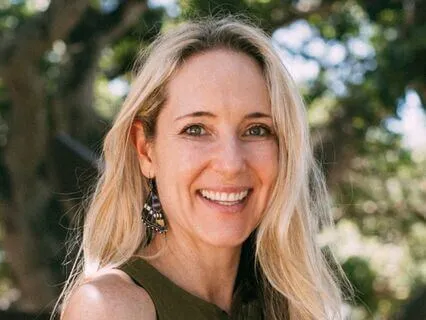
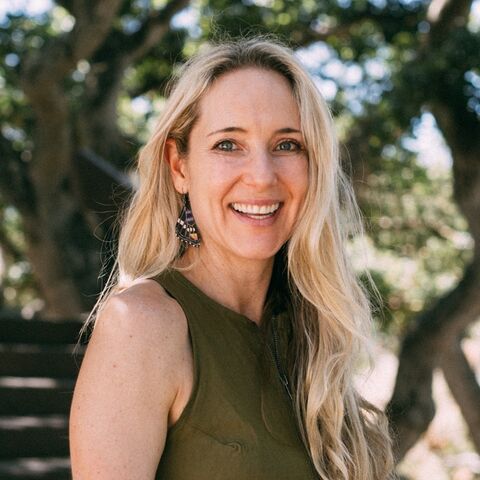
Welcome back,
I'm Dr.
Diana Hill,
Host of the Wise Effort Show,
Author of the book Wise Effort.
And this week I am playing an interview that Rosemary Traumer and Christy Ashwandan did of me about creativity on their podcast.
I am sharing with you the bonus,
The after show when we talked about creativity and I shared with Rosemary this very vulnerable poem.
I've been writing poetry,
Folks,
During this time.
Rosemary inspired me to write poetry.
I share a little bit about how I wrote the poem and how it relates to recovery.
And I love this conversation so much.
Enjoy this conversation about creativity,
Meeting our imperfect selves.
And I just love this conversation about poetry and metaphor and recovery.
Enjoy.
Hello and welcome to a special bonus episode of Emerging Form.
I'm Christy Ashwandan.
And I'm Rosemary Watula Traumer.
And today we're back with Diana Hill,
PhD,
A clinical psychologist,
International trainer,
And a leading expert on acceptance and commitment therapy,
Known as ACT,
A revolutionary approach to psychology that is changing our understanding of mental health.
She is the author of four books.
She's the host of the Wise Effort podcast and her insights have been featured on NPR,
Wall Street Journal,
Psychology Today,
Real Simple and other national media.
Welcome back,
Diana.
Hi.
So good to be here.
All right.
So I want to say that something that struck me in our main episode was that you are an absolute goddess of metaphor.
And I'm thinking about these banana slugs with the two-year-olds.
Said by the absolute goddess of metaphor,
By the way.
This is the highest compliment ever.
High praise.
Yes.
Well,
I really appreciated some of these things that you brought in for us.
You brought in this idea of a rooster as the way that we could be thinking about what's crowing in our minds.
You brought in this example of the banana slug and the way the two-year-old is going to come to it with curiosity and bring question after question after question to it.
And how this kind of line of questioning,
Could we bring that kind of curiosity to our own struggles as we're struggling with the stories that we're telling ourselves or whatever it is that's getting in our way.
And so I just want to praise you.
This is so exciting.
And I know very few people,
I mean,
I really can count on one hand,
People who I think are able to give these kinds of examples.
And I really appreciate it.
Well,
You know,
Metaphor is an intervention in psychology.
And in the type of psychology that I practice called ACT,
It's actually one of the key interventions that we use because metaphor allows us to use language to get around language.
And when we use metaphor,
What we can do is we can come to some kind of universal understanding of something that people aren't going to battle back against.
So for example,
If I were to say,
You just need to get curious about your brother-in-law,
You know,
Like just get curious about why you're so mad at him.
That's different than saying like,
I'm wondering if you could contact that anger that you are feeling and if you could tell me like,
If it were a shape or a color or a size inside your body,
What shape or color or size would it be,
Right?
And then all of a sudden we're relating to it differently.
So there's a whole psychological theory.
If you want to go down a rabbit hole,
It's called relational frame theory,
Which is how language and associations in our mind cause a lot of problems,
But also how language and associations in our mind can be a useful tool in unhooking from our minds.
And so metaphor is a form of that.
But I was telling you,
Rosemary,
That Rosemary's poems changed my life in so many ways,
Continue to change my life.
I read them over and over again.
I have a sangha.
I read her poetry and I read them to clients.
I assigned poetry to clients,
But one of the secret things that I've been doing since I spoke to Rosemary on my podcast is writing poetry in her form.
She suggested this way of writing.
Will you read us a poem?
Well,
Yeah,
I will,
But I also want to say that what she suggested was like,
So I give this to my clients now,
So helpful,
Which is basically take a feeling that you're having or a concept and then something that you see in the room and then write about the thing you see,
The qualities,
And then can you connect it to the feeling that you're having?
Like,
Can you,
Can you make some kind of metaphor for this thing?
And so I started when Rosemary suggested it,
She said that she wrote for a while on today grief is,
Is this right?
This is it.
Yeah.
So there's a few of your poems you can see.
They actually literally say today grief is,
And then other ones you can see that that line is taken out,
But the form of the poem has that quality to it.
Like the Clementine,
The poem about Clementine,
Such a good poem.
So I,
I started doing this around my recovery because one of the things about writing a book on wise effort is that you need to live the moral of the story.
And I was really worried about this book that how do you write about wise effort and engage in wise effort?
How do I not lose myself to striving and overachieving and doing too much while I'm writing about striving and overachieving and doing too much?
And I've had a long,
Like what I write about in the book for the first time that I hadn't ever really shared publicly is my own history of disordered eating and in particular anorexia and bulimia,
Which are triggered by being in high performance settings and under stress.
And so I was like in the very breeding ground for my struggle while I'm writing about how to not engage with the struggle.
And this is like a thing,
I mean,
This is difficult.
So I've been using this poetry to remind me,
Like,
This is the time when I need to remember my recovery.
And so I could,
I could,
I could share one that I wrote the other day.
I would love to hear one.
Yeah.
I would love to hear it too.
And as you're finding it,
I'll just say,
Diana,
That I cannot imagine then a better person to write about it when you are the person who's open to,
To really meeting it,
You know,
To finding,
Like for you to write this book about wise effort while deeply being committed to practicing wise effort,
What a gift that is.
What a gift that is.
I think of my therapist years,
Years,
Years ago,
I told her something and she said,
Rosemary,
You need to find your voice.
And I just laughed.
I said,
Well,
That's what I teach.
And she said,
Well,
Then everything you learn will make you a better teacher.
You know,
Right?
Like I just,
I see that the people who are really struggling with these things are the ones who,
That I,
That I most want to listen to.
Right.
I want to know that you've,
That you're working on.
How do I really meet this overachieving impulse while I'm writing about overachieving?
That's,
That's really powerful.
Thank you for sharing all that.
And the imperfection in it.
Yeah.
You know,
That so much for me of wise effort is catching myself.
It's not that I'm practicing perfect wise effort,
But wisdom,
A key component of wisdom is humility.
And so I,
Oh,
I caught myself.
Maybe I,
Maybe I can catch myself a little sooner.
And maybe I,
Now I have a path because,
You know,
Sort of like you feel lost in the woods and there's a trail,
You find a trail.
And if you find a trail,
I'm going to go into metaphor.
Sorry.
If you find a trail in the woods,
Here's some things you can know about a trail.
So good to find a trail.
It means someone's walked it before you.
Maybe that person was you.
The other thing about finding a trail is that when you walk the trail,
This is how they actually maintain trails,
Trail keepers,
Walk trails.
So when you walk a trail,
You're maintaining it for the person behind you.
And so there's such comfort in getting lost and finding trails and wise effort is always just,
It's like that over and over again.
And sometimes when we're lost,
We find a new trail.
Like,
I've never taken this one before.
Someone else has walked it.
Or sometimes we need to forge a new trail,
But no matter what,
Getting lost is not the problem.
And it's actually,
We're going to constantly move in and out of unwise efforts.
It's I think really for me,
The problem is if I,
If I'm so lost,
I'm running so fast and I start running myself into the ground or into circles,
Or I get so far off track that then I just lie down and say,
I'm done.
And that's more problematic for me.
So here's my,
Uh,
Here's one I just wrote this past week.
This is unedited,
Like not prepared for Rosemary Traumer,
But it's in my notes section of my phone.
Okay.
And,
Uh,
And I was getting ready.
I wake up in the morning early at like five and,
Um,
I do a little meditation and I do a little bit of a read Rosemary's palms and I do a little bit of writing and,
Uh,
And my tennies were on the couch because I was going to go for a run after we share in that love for running.
So today my recovery is an old pair of tennies,
Unlaced,
Battered,
Worn too much at the toe.
I probably need a fresh pair.
They've lost their bounce running the same route,
A hundred,
Maybe a thousand times worn out.
The pavement is hard.
The road is silent.
Recovery has no fans,
No bystanders cheering you on the dog walkers don't know about the fall you had last week,
The ache in your hip,
The effort it takes to get up again.
Some days recovery is stopping right there,
Taking off your shoes and lying knees up on the side of the road.
But just for today,
My recovery is leasing up having faith.
I'll get a second wind knowing that there will be a downhill today.
My recovery is choosing to double knot,
Heading out,
Trusting in the open road.
I love that last line so much.
Trusting in the open road,
Right?
Oh friend,
You're doing that gorgeous work.
Look at that.
That's so beautiful.
And just to see how bringing that creative practice of finding the metaphor in,
How useful it is just and how it opens things up to,
You know,
Recovery has no fans.
There's nobody cheering for you.
Nobody knows.
Isn't that the truth?
That poem just so beautifully captured the loneliness of these internal struggles that we have.
Right.
And I think there's sort of this concept that I think about a lot too,
You know,
You're out in the world interacting with strangers and we never know what they're going through.
Right.
And sort of trying to be open to,
To being empathetic.
Right.
Yeah.
I remember when I used to run a treatment center and these women,
And this is my story too,
Right?
Like these women would be mostly women.
We did have men too,
But these individuals would be 70,
80 pounds and they'd have to gain 30 pounds,
Right?
Or they'd have to gain 50 pounds and talk about recovery has no fans.
Like there's no one that's on the sidelines like,
Congratulations,
You gained 10 pounds.
And I remember they'd sit in my office and I,
And I would be like,
I just want you to imagine like you're picking up a tiara right now and you're putting it on your head and you're like owning this,
Like how hard it was,
Like how challenging it was because no one is going to clap for you in this process and no one's going to know,
Like no one knows what the struggle is like,
But then maybe some people do know if you open up and share about it.
Cause then we also know what that struggle is like.
Cause maybe you're not struggling with recovery,
But you're struggling with grief or you're struggling with social anxiety.
Nobody knows,
But some people do know how scary it is to step into a room when you have social anxiety.
I remember I had a client who used to have panic attacks at Trader Joe's.
I love Trader Joe's.
They wear like Hawaiian shirts and everyone's nice and it's cheery and you like can expect what you're going to get on the shelf is always going to be the same.
This person like Trader Joe's was like walking into like,
Like their worst nightmare.
Nobody knew,
You know,
And I'd give her the assignment,
You know,
Go to Trader Joe's and go buy one item and go through the quick checkout line,
You know,
Eventually we'll get to a whole shopping cart.
So nobody knows that that move has no fans and sometimes we have to develop our own self compassion,
Our own like,
And therefore I am going to be my,
My own biggest fan and I'm going to acknowledge how hard this is and give myself that.
And then I may open up and share with a few people so then they can see that in me because they know it in them.
They have their,
Their version,
Whatever it is,
Whatever flavor of their struggle.
Yeah.
I'm really,
I'm hearing hints of something you talked about in the main episode about acceptance,
Right?
And really being present with the problem and with the struggle and acknowledging it,
Right?
And how valuable this is for all creative practice,
Right?
Really like what could be more vulnerable than writing a poem,
Than making a painting,
Than standing on stage and doing a dance,
Right?
Then,
You know,
Like what could be more vulnerable than that?
And it takes such courage to do that.
And in those,
You know,
In those moments,
Maybe somebody's clapping for you,
But most often as all of us know,
It's crickets.
There's not anything there.
There's zero response.
So do we keep putting ourselves out there?
Do we keep putting on the running shoes?
You know,
Do we keep picking up the pen?
Do we keep putting on our ballet shoes?
Do we keep picking up that brush?
Gosh.
What a gorgeous conversation,
Diana.
The vulnerability.
So I want to say something about the vulnerability for those that are in that.
The more vulnerable it is,
The more exposed you are,
The better it is.
Of course.
Yeah.
I go to Costa Rica in the summer as I take a group of people to Costa Rica on these retreats.
And I got really into hermit crabs.
I was there one year.
And what a hermit crab does is it's borrowing,
It borrows shells,
Right?
And so a hermit crab,
When the shell gets too tight,
It leaves the shell and gets into a bigger shell.
Right.
And I was so fascinated because they all have different shells because they're always just borrowing each other's shells.
So it's a beautiful example of impermanence and all these things.
But then I went to go look at,
I actually Googled like,
What does the hermit crab look like in the,
In between when it's moving from this small shell,
Like the part of it that's in the shell.
And they're like the grossest,
Like white,
Slimy,
Disgusting body.
And they pull it out.
It's like this like vulnerable blob.
They pull it out and then they stick it in the next shell,
Right?
And it's in that moment where they're exposing themselves that it is exquisite.
It's vulnerable.
And when I'm in a group and the person starts to talk,
If I'm in a therapy group,
The person is starting to talk and their voice is starting to tremble.
Everyone's eyes are on you.
I want to hear what you're about to say.
So if you're giving a talk or you're writing something or you're painting something and you're in,
You're at that edge of like trembling,
It means you're moving shells.
It means you're about to get out of this tight,
Stuck spot and you're going to get into this big open spot and it is freaking scary and it's the best.
Like that means like,
Oh my gosh,
You just read your poem to Rosemary.
Like that's my hermit crab.
I'm like,
I know it's not perfect.
I didn't actually prepare for this.
So,
But it,
But it's going to be the good stuff.
And that is the,
That is the task.
I think of the creative process that's so hard and we need our wise effort to do that.
Like that's effort.
Diana,
Thank you so much for,
For sharing that.
I know it wasn't planned and it was sort of spur of the moment,
But that was really kind of you.
And I think it's a beautiful example of that vulnerability that you're talking about.
So thanks for joining us again.
Yeah.
Thank you so much,
Diana.
What a wonderful conversation.
Thank you so much for listening to this episode of the Wise Effort Podcast.
Wise Effort is about you taking your energy and putting it in the places that matter most to you.
And when you do so,
You'll get to savor the good of your life along the way.
I would like to thank my team,
My partner in all things,
Including the producer of this podcast,
Craig,
Ashley Hyatt,
The podcast manager,
And thank you to Bangold at Bell and Branch for our music.
This podcast is for informational and entertainment purposes only,
And it's not meant to be a substitute for mental health.
Thank you.