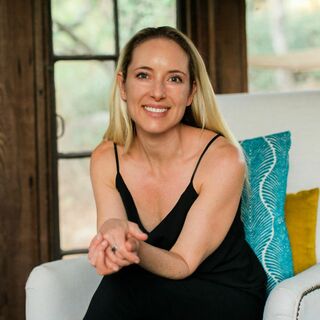
Welcome back,
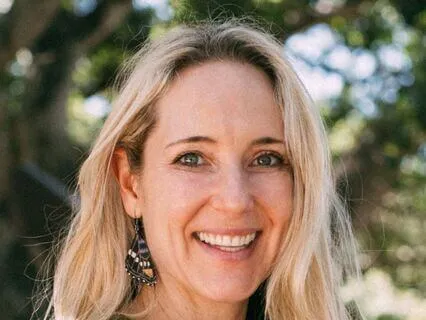
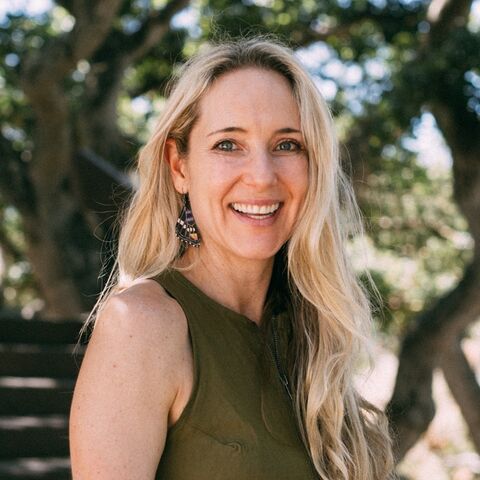
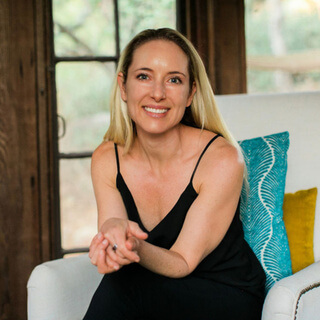
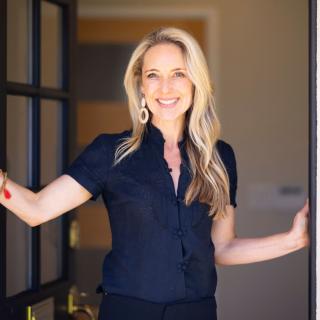
I'm Dr.
Diana Hill,
A clinical psychologist,
And I'm so glad you're here.
This show is about wise effort,
It's about energy use,
Dialing it up in places that matter to you,
Not overusing your energy,
Not underusing your energy,
Discovering what your genius is and how to use it in ways that are a benefit to you but also a benefit to the greater whole.
And wise effort has this duality to it.
Oftentimes,
There's this intersection of more than one quality.
When we meditate,
We may be soft in the front but firm in the back.
When we're at work,
We may be balancing our cleverness with our heart,
Right?
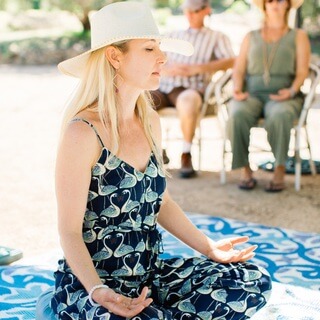
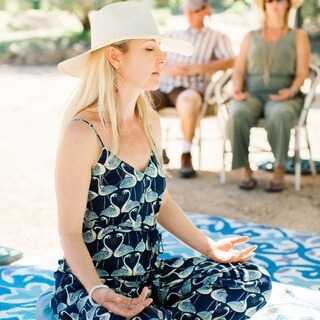
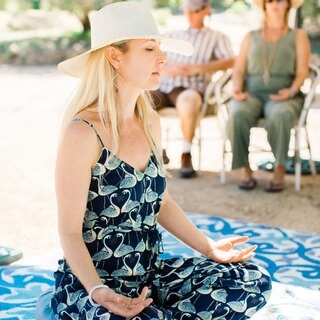
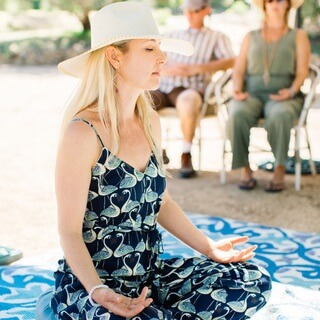
And one of the things that I do every day to practice wise effort is to meditate.
I've learned a lot through a meditation practice over the past two decades about how to expand my heart but also focus my mind.
And I see it as a practice and exercise for my mind and my whole being to prepare me for life's challenges.
So most mornings,
I wake up really darn early,
Ridiculously early,
So that I can meditate before my kids are up.
And I go and I make myself an amazing coffee.
My husband's a coffee roaster,
So it's pretty amazing.
And then I sit.
I sit on a cushion that's made out of buckwheat called a zafu,
Sit on the floor cross-legged,
And I really aim to have my hips,
My pelvis above my knees so that my spine is long and my shoulders are dropped and my heart is open.
And I usually start with reading because for me,
Reading a poem or a little passage can be really helpful for orienting my mind,
Getting myself in the right mind space,
Especially early in the morning when my mind is waking up and I'm drinking my coffee.
My favorite poetry book right now that I highly recommend is The Landing by Rosemary Trommer.
It's a beautiful book of poems that she wrote and incredibly moving about surrender,
About grace,
About courage,
About being present.
And after I'm done reading,
I open up an app,
The Insight Timer app.
I've been using Insight Timer for decades,
And it is a way for me to just keep track of my meditations.
I like the aspect of self-monitoring.
We know that when you self-monitor things,
You're more likely to keep them up.
I also like that I can let go of time and let the app do that for me.
And then there's all these embedded meditations there that I'll try.
Jack Kornfield,
Tara Brach,
Some of my favorites.
And what we know now about meditation is that there are certain forms of meditation,
Ways of meditating,
Strategies around meditating that are most effective.
So we're going to talk a little bit about that today on the podcast.
This interview is with the CEO of Insight Timer,
Christopher Plowman.
Through serendipity,
I've been collaborating with them on this creative project where we're curating resources for clinicians,
Worksheets that are linked to meditations that you can use with your clients.
And it's been just a really fun,
Expansive,
Aligned,
True expression of my genius energy collaborating with Insight Timer on this.
Really fun.
I have those resources available for you in the show notes.
So if you're a clinician,
Go check those out.
And then I've also been starting to upload more of my meditations to offer you on Insight Timer for free.
I like offering stuff for free.
That model of generosity that we talk about in this podcast today is a model that I try to operate on for myself where there's sort of many different levels of resources and ways in which you can learn from me.
My Insight Timer meditations,
Many of them are free.
Go listen to that if you haven't listened to that yet.
And then all these podcasts are actually uploaded in Insight Timer as well.
So you can listen to the podcast from there.
And so part of that growth path was a chance to sit down with Insight Timer CEO.
Christopher is passionate about democratizing mental health,
Making meditation accessible worldwide.
And under his leadership,
Insight Timer has become the largest free meditation platform globally with over 25 million users.
In today's conversation,
We're going to talk about wise leadership,
The intersection of generosity and capitalism,
The future of AI in the meditation space.
And we talk a little bit about our own meditation practice and what the research says in terms of what works,
What's most effective in developing your resilience and your equanimity.
So enjoy this conversation with Christopher Plowman.
I can't wait for you to hear it.
And I can't wait for you to go download the Insight Timer app and to see you there.
And please do share them with your clients,
With your friends.
It's a great way to establish a meditation practice and to be consistent with it.
All right.
Enjoy Christopher Plowman.
Welcome,
Christopher.
It's good to see you.
Thanks,
Dana.
It's nice to be here.
Yeah.
And we were talking a little tiny bit about nervousness.
I was nervous about having you on.
So much so that I had my assistant go into my Insight Timer and delete,
Earlier this week,
Delete any meditations that had a below 4.
6 rating.
Get them off my Insight Timer.
So no one knows that I've had these,
Right?
And here's the thing that happened.
So she deleted them.
And it was like,
You know,
Three or four meditations.
They probably had some sound issues or,
You know,
They just weren't the best.
We all have stuff that's not the best we put out there.
And then I get this email yesterday,
And I want to read you the email that I got,
Because I think it's such a good example of what Insight Timer is.
So I get this email in my inbox,
And it says,
Hi from New Zealand.
I'm wondering what happened with the meditation of yours on Insight Timer that just disappeared.
It's one of my favorites.
I think it was titled something about feeling safe and connected.
It was about 20 minutes long.
I've been listening to it every day for the last three or four months while going through a tough time,
And it's really helped me.
Well,
Let's just show something that we know about Insight Timer,
Which is everyone deals with everyone comes to Insight Timer at different stages of their emotional well-being,
Of their life cycle,
And what might be interesting to someone isn't necessarily interesting to someone else.
What might be useful to someone isn't necessarily useful to someone else.
I think we have 300,
000 guided meditations on the platform now,
And just because it's a 4.
5 to someone,
It could be a 5 to someone else.
So put it back.
Put it back.
Oh,
Yeah.
That was up.
We're putting it back up.
Yeah,
I thought of it that way,
And then I also thought how this community,
This sort of global community of people that are meditating,
And that there's people that are tuning into this every day for three to four months as sort of their lifeline.
Sometimes it's just the lifeline.
This is,
I'm going to wake up in the morning,
I'm going to listen to this to get my head in a different space,
My nervous system in a different space to face my day.
And so I'm excited to talk with you about how sort of my path to Insight Timer,
Your path to Insight Timer,
But sort of this bigger picture of the values and principles behind it,
Generosity and diversity and all of that.
I got asked the other day about generosity,
Whether or not I was an overly generous person,
And I'm not.
I'm just another person who can be greedy and generous at the same time.
We didn't know much at the start,
But we did know that there was a couple of things that were important to us.
One was that it was important that we gave a lot of tools away for free,
And we believed that if we did that,
The universe would reciprocate.
I do genuinely believe.
I didn't know it at the time.
I know it now to be fact that the universe does reciprocate generosity.
It is something that comes back to you.
I do believe that generosity,
Fairness in a way,
They're kind of interlinked,
Is reciprocal.
And that was one of the basises of our platform.
It's not the case,
As some people kind of think,
That that means that we're special,
That the people at Insight Timer are overly generous.
It's just something that we built into our model at the start,
And the universe has been very supportive of us as a result.
Yeah,
Well,
What attracted me to using the app early on,
So early on,
I liked it because it had bells.
In my tradition,
In my lineage,
Bells are sort of part of how I meditate.
You had so many great options of your bells,
So I would just use it for the literal Insight Timer purpose,
To be able to time my practice,
Have a bell start,
And then I'd have these intermittent bells.
I like the Basu bell,
Because it reminds me of the little Zazen bell that we practice with.
But what I liked about it was it didn't have that feeling of clinginess that you were wanting something from me,
And you weren't giving me pop-ups and get this and buy that,
And that you feel or that we feel in the app space.
And then I could just hang out in the timer.
For years,
I just hung out in the timer.
And then eventually,
I found my way,
Like,
Oh,
There's other resources here.
I could do a little Jack Kornfield meditation.
And then when it became a place for me to be able to share with my clients,
Sometimes in session,
I would record something with a client,
And then I could share it with many clients,
Like a meditation with many clients.
It became a real resource as a therapist.
So I appreciate it.
I see that generosity in just the feeling state I have on the app.
But I'd love for you to talk a little bit about how you set it up,
Because it's a different model than a lot of other models that are out there.
And I'd like for us to think about that,
Not just from the Insight Timer perspective,
But just for all of us in terms of the principles and practices we bring to our work,
Like how you could set up a model where you could make money but be generous at the same time.
Well,
It's really hard.
It's really,
Really hard.
If you give your product away for free,
You tend not to make a lot of money.
Yes,
This is a lot of my problem.
It's a conundrum.
I spend a lot of time on this issue.
Yeah.
And I think it's much harder for you as a therapist,
An individual practitioner,
Than it is for a platform,
Because obviously,
If you give away 90,
95% of what you do,
It's okay if the 5 or 10% that you don't give away reaches a certain volume that sustains everything else,
Right?
But you need a big platform.
We have now,
I think,
About 3 million people on the app every month.
There's about 650,
000 people every day.
But of that 3 million,
About 10% pay us.
And that 10% at about $60 a year is about $20 million a year.
And once we've paid Apple their third,
And we've split the rest with the teachers,
The remaining income that we get is enough to pay for our 80 staff and company and rent and Amazon fees to make sure that the platform is sustainable.
But we make a small amount of profit.
Some months it's $100,
000.
It might sound a lot,
But for a company that's generating $20,
$25 million,
It's not a lot.
So the freemium model,
Which is give most of the stuff away for free and hope that you'll get enough people who pay,
Only works if,
Well,
Kind of two things.
First of all,
You need investors to fund the period of time that it takes you to get the company to a point where it's sustainable.
It took us 10 years.
We only became profitable in July,
Six months ago.
Before that,
We were losing lots of money.
And now we're profitable.
And the second thing is,
And this is much harder,
You have to understand how to make money without dismantling your primary promise.
For us,
That's a free and quiet place of contemplation,
Which goes to your comment about sitting in the timer with the bell and not feeling harassed and just being.
And so the challenges that we face every day is how do we continue to grow our business so that it's sustainable and strong and robust without giving up on the original promise,
Which is you can come to Insight Timer,
You don't have to spend a cent and everything you need to work through your,
Whether it's your mental health or it's there for many other reasons,
You can do for free.
And I think so far,
At times we've got that,
We might've tried to monetize slightly too aggressively and we see that in our traffic and our referrals.
But I think generally we've got that right.
And I think generally,
Not generally,
I think our primary principle of generosity stands.
And that's why I think the platform continues to flourish,
But it's hard.
Yeah.
So how do you temper your greed?
Because I could see the temptation to get on the,
Do the stuff that other people are doing that are making more money than you.
And this is something that we all,
I think that many of us maybe experience in different ways,
Right?
Like what you're describing doesn't sound like a path that many people would want to choose.
It takes you X number of years to make a profit and you could have done it faster.
I think that's true.
It might not be,
If I think about some of our competitors,
Strange to use that word in our industry,
But that's what they are,
Calm and Headspace,
For example.
They were very aggressive monetizing and in fact,
You couldn't access,
They were the opposite.
95% of their app was and is paid.
You can't really get a great free experience on their apps.
And I think their businesses,
I don't know too much about their businesses,
But I know that they're at the moment really trying to pivot into health and other things because I think that that model over time,
Especially when a company like Insight Timer exists,
Is very hard to sustain itself because eventually people are thinking,
Why am I paying Calm $60 a year when I can get an infinite amount more on Insight Timer for free?
So I think that those models sometimes might in the short term result in more profits and more users,
But in the long term,
I don't think the universe does support them.
The problem of course,
Is when you get very big like Apple,
For example,
And you have a monopoly and then you can be as greedy as you like.
And that's really what we find now with companies like Meta and Apple is that these companies exist as monopolies without competition and they can dictate pricing and the consumer has no choice.
So we're not at that stage.
We'll never be at that stage.
You have to get very,
Very big.
There are very few companies that can dictate pricing without fear of kind of consumer backlash.
And so the honest answer to your question is how do you make sure you don't become greedy?
I'd love to give you a sort of a moral answer,
But the truth is commercially it just doesn't work,
Right?
If we become too greedy,
Insight Timer is a community of people and communities by definition are people that congregate around a shared set of ideals.
So if I wade into that community and say,
Hey guys,
It's now all super expensive,
Community will disappear as they should,
Because it's generosity and free is one of the foundational promises of our community.
Because we need to show kids coming out of uni,
Younger generations,
That you can build a company that has values and that cares about something greater than money and also make money.
There's nothing wrong with,
I've said many times,
There's nothing wrong with profit.
But profit shared wealth can be very helpful,
Can be very useful,
Can be very powerful motivator and tool.
That orphanage in Indonesia,
If it wasn't for Insight Timer,
Wouldn't exist.
And those kids wouldn't have an education.
The problem we have today is a very small group of individuals that run an even smaller group of companies have absented themselves from responsibility and from fairness and they've become incredibly greedy and taken far too much from everyone else.
They extract rather than contribute.
And so profits become this dirty word and it's not.
Profit's necessary.
There's that great saying,
We tried the poverty model and it doesn't work.
If Insight Timer didn't make money and wasn't profitable,
We couldn't do what we do.
And so I want Insight Timer to be successful.
I want Insight Timer to be the biggest company in the world.
I aspire to that.
I am a capitalist,
But I just want to do it in a way that people,
Especially my kids,
Can look at me and say,
Yeah,
He did that,
But he did it the right way,
Not the greedy way.
And I do,
I said on a podcast the other day,
I said,
I often wonder what I'll be like if Insight Timer does become hugely successful.
Will I be another one of those,
They're always men,
Men that kind of gets rich and sort of throws their values out?
I don't know.
I don't know.
But I know right now I think Insight Timer is very harmonious and a net,
A very positive contributor to the planet.
Yeah.
Yeah,
It's interesting with this,
I work a lot with mental,
Like I have therapists that are my clients,
Right?
And I'm a therapist.
And one of the things about meditation teachers,
Mental health providers is that we're almost like trained up to not make money,
Like that you can't,
You can't be helping people and also want to make money at the same time,
You know,
That there's a sort of a,
Like a minimalist model.
And and so much so that we have at least a lot of the clients that I work with and including myself have a lot,
Have a hard time asking to get paid for our work.
And we'll do a lot of things for free.
And at the same time,
I mean,
I think there's actually a,
There is,
There is some benefit to that perspective.
Like I would do this for free because I love it,
You know?
And and at the same time,
Even though I would do it for free because I love it,
I also deserve to get paid.
So I appreciate that you are paying meditation teachers for their,
For their work.
And at the same time,
I have this,
You know,
As we all worry about AI destroying everything,
I had this worry with you all when a couple,
I don't know,
It was like a year ago,
You were the first company to reach out to me and say,
Can we,
Can we have permission to do this?
I don't know what it was,
Something you were doing where we take your voice and put it in Italian.
Can we,
Can we turn Diana into the Italian Diana?
And I,
And I was,
I was worried that,
Wow,
I'm putting all this content onto this platform and I feel,
I do feel a trust.
You're very clear with all of us when you are,
You know,
Changing things and down payments and all that kind of stuff.
But I,
So,
But I,
I had this trust with you.
And then I had this moment of,
Ooh,
Is AI going to come and take all of these meditation teachers work and,
And not need us anymore?
You know?
So I'd love to get your sense of,
Cause I know you're not a big fan of AI,
But you're definitely using it.
Yeah.
I just want to make sure that I answered that question correctly.
Okay.
Started out,
I don't like the people who,
Who are making decisions about AI at a macro level.
I don't trust them.
Yeah.
I don't think that Sam Altman is,
Is honest.
I think it's important I say that.
I'm not saying,
I'm not questioning him as a person or as an individual,
But I think some of it's clear that things,
Some of these things that he said about AI have turned out not to be true.
I don't think that the people who run the major tech platforms are honest either about AI.
I'm going to caveat that,
Which is,
I don't think that they're necessary.
I don't think it's a malicious dishonesty.
I think that the,
The green eyed,
The greed is kind of sort of presented itself and we shouldn't have something as powerful as AI in the hands of a few private corporate individuals.
We don't put nuclear weapons in the hands of a few individuals.
We have regulation and government and process and politics that determine how these things get controlled.
And it,
It angers me a lot when people like Sam go on podcasts and say,
You should be frightened.
You should be frightened of AI.
It's terrifying.
But trust me to make those decisions on your behalf,
Like absolutely no way.
Certainly not on my behalf,
But absolutely not on my children's behalf.
I have an issue with the governance of AI.
That's a,
That's a,
That's a certainty.
We use AI at InsightTimer because it,
It makes us smarter and better and helps our users connect with teachers more.
There's a whole lot of things in the background that we do.
We call it ambient intelligence.
It's not creating a teacher replica,
Although I'll talk about that in a minute,
Because I think it's inevitable that that's going to happen.
So we use AI for lots of different things.
We have to,
If we don't,
We'll be dead in the water.
There are AI companies popping up all the time,
Trying to kind of build mental health platforms and solve people's problems and put teachers in front of them that are fake.
And they're very sophisticated,
You know,
Very sophisticated.
I have demos that I've built internally with my team where we can take any teacher on our platform,
We can run their voice through a synthesizer,
We can take the guided meditations and then we can say,
Give me a guided meditation about yellow flowers in a vase.
And 10 seconds later,
I can have Diana Hill talking back to me in Diana's voice with a guided meditation and in Italian.
And not only that,
But I can take you speaking English and map Italian and the AI is smart enough now to make sure that it doesn't look like it's being dubbed.
If you look at a dubbed movie,
You can always tell when it's dubbed.
Those days are over.
It looks like you genuinely speak fluent Italian because your lips move at the same cadence as the words.
It's frightening.
I have a video of me speaking Chinese and it looks like I speak Chinese.
You would not know the difference.
I'll get to that in a second.
So I think there's a very exciting opportunity in some parts of AI and a terrifying conundrum in others.
Where it's exciting is the ability for AI to understand whatever challenge you might be going through and then to find content on our platform,
Teachers and snippets of content and mantras and intentions and provide them back to you in real time and then to constantly personalise your experience so that you get genuine help.
And we're doing lots of work in that space and in a month or two from now,
Two or three months from now,
There will be a new feature on our app which allows you to be asked a question and at your optional choice,
You can answer it and the AI will say,
Oh,
That's interesting.
It's not a teacher.
It's designed to get you in front of a teacher.
So it's a support agent,
But it's not someone that you talk to and that responds back.
It just thinks about what the problem is and it will try and connect you with Diana Hill if it thinks that Diana Hill is the right person for you.
And if we didn't do that,
Diana,
We literally will just.
.
.
You can't deny the existence of AI.
To do so would just be to deny the inevitability that our platform would disappear.
Where I think AI is really exciting is if we can use it effectively to create this big,
Vibrant community of teachers.
One of the decisions we made recently is we're going to launch an entirely new version of our live platform.
We think there's so much opportunity inside live for our teachers to,
In real time,
Talk to their audiences,
Promote their courses,
Their books,
Their retreats.
We think there's something big potentially to go on there to charge for people to enter those live experiences so that teachers can start to recreate a recurring income.
And this is stuff that we're working on at the moment.
I promised back in July that we'd start thinking about direct teacher subscription.
This won't be a subscription model initially,
But it's certainly going to create new revenue streams for teachers that sit outside of the subscription revenue.
So people such as yourself that perhaps have bigger followings off the platform will be able to get a lot more money on the platform.
And we need AI to do that.
We just can't scale a business like ours without AI.
Putting that aside,
How long is it before AI replaces Diana Hill?
I don't know the answer to that question.
You've probably seen the movie Her.
When that movie came out,
Have you seen the movie Her with Joaquin Phoenix and Scarlett Johansson?
It's an AI that Joaquin Phoenix kind of falls in love with and Scarlett Johansson is the AI that he talks to.
And he falls in love with her.
And at the time when it came out,
I don't know,
Three,
Four,
Five years ago,
It was like,
Oh,
That will never happen.
And now I can see that happening reasonably quickly.
And I have no answer to that.
I don't know if people will eventually.
.
.
There's something about the teacher-student relationship that's built on the fundamental basis of care.
I have a life coach,
A Pilates instructor.
And the reason why I've been meeting with her now for almost five years is because I know that she cares about me.
And that care is what creates trust.
And what I don't know is,
Will someone feel cared for by their AI teacher?
I think they will.
Yeah,
Absolutely.
I think they'll feel cared for.
I'm not worried about Diana Hill being replaced primarily because I still meet with people in person.
The yellow flowers in my office are there for the person that's sitting on the couch that when they want to look away because they're thinking about something and it's hard for them to look me in the face while they're talking about something,
They have something nice to look at.
And then AI doesn't know why those yellow flowers are there.
The story behind the yellow flowers.
Yesterday I was having a hard day and my husband came home and he brought me flowers.
And then I kind of hated the bouquet that he put together because he put these short yellow flowers with these tall.
It's not the bouquet that I would put together,
But I put it in my office anyways.
And it's kind of awkward.
I mean,
All these things that are the nuances of humanity that I don't think AI quite has or will have.
So I'm not worried about that.
What I worry about is that if we invest all of our energy into that,
I mean,
I'll just go back to listening to the bell.
You know,
If that were to happen,
If all the teachers just become AI,
You know,
Then I would just,
Okay,
Then I'll just go listen to the bell and I'll meet with the teachers in person.
So I think there is an aspect of,
I have a lot of,
I have trust in Insight Timer that that you,
Because you have a longevity to you of making wise decisions around,
You know,
The company.
And I do think as consumers,
We need to start thinking about that in terms of when we're choosing an app,
Just as like as when we're purchasing something or we're choosing where to put our kids to school,
Or we're choosing what books we put in our bookshelf,
Right?
Or what social media we're going to follow or not follow,
That we need to be a little bit more intentional behind how,
What we're consuming.
So we don't get into that matrix of whatever it is,
Her.
Yeah,
We're going to have like,
We're going to have like personal masseuses that have like hands that feel like skin giving us massages that aren't going to be our husbands.
You know,
I see that down the road,
But I still- Yeah,
There was a second part to my comment about the Diana being replaced.
In that instance,
I was referring to the knowledge and the interaction,
But the thing that AI will never replace is sitting in the same room with you.
And this is why we've just launched Insight Time at Retreats,
Because I certainly know that in my experience,
All my transformational moments in life have been when I've met with a counselor or a therapist,
And when I've sat on a beach in a circle with 15 other people and been to a retreat.
And these people experience,
It sounds strange that we need to use the word people as an adjective now,
But these people experiences are really what matters that AI can't replace.
And so what we hope is AI is going to help Insight Timer teachers create many multiple,
More experiences with individuals in real world,
Because the AI will help them organize and manage those relationships.
I'm worried about the planet kind of not connecting,
And our kids kind of not building important social skills and burying their heads in phones on buses instead of talking to each other.
And I've genuine fear for the emotional development of our kids.
And I think there's a big problem coming.
I really genuinely think that there is a huge problem coming,
And we need to kind of start thinking about it now.
And that does mean being intentional about which companies you work with and so on.
It sounds so doom and gloom,
But I just don't want to not say it anymore,
Because the easy thing to do is to kind of hide from the fear and pretend we're all upbeat.
But what's happened in the last three months in the US means that we just,
We have no choice anymore.
We have to kind of,
I was saying to someone the other day,
I'm so tired of the extreme left and the extreme right.
Like the 95% of people who sit in the middle just want happy kids and noodle sellers and coffee.
You know,
They've got no voice because we have these two extremes just shouting over the top of us about their extreme positions.
None of them care about the real issues.
All these two extremes care about themselves.
And no one's kind of standing up and saying,
Well,
This is our planet,
And this is our humanity,
And this is 95% of us.
And I'm not willing to become extreme.
I'm not willing to kind of start playing this extreme position,
But we do have to start talking about intentionality and generosity and right and wrong.
We have to,
Because the two extremes just,
You know,
That great saying,
Hysterical is historical.
When anyone gets to an extreme position on anything,
It's never about the anything.
It's never about the issue.
It's about their own personal issues.
And so we've lost structured discussion about just being normal.
So anyway,
I'm waffling,
But that's how I feel.
Yeah.
So let's talk about the content of what happens when you open up a little app and you take 10 minutes or 20 minutes in the morning to have either a meditation or listen to sound or be in silence with your Bosu bell ringing.
I was happy to see that you had a research paper out in 2022,
And I read through it.
You know,
Critical,
Of course,
Of research without control,
Not a randomized controlled trial,
But a beneficial research paper in that it is,
You know,
When we get this ecological sampling.
So what that means is you're sampling people in real time,
Their mood before they do their meditation,
Right?
And so you're going to track them over time every day.
And it's not like the type of research that a lot of these RCTs are done on where someone does a self-report and then comes back in 12 weeks and does another self-report.
You're sampling every single day.
And some of the findings of that study,
Let me pull it up,
Because you had,
What was it,
Like 12,
000?
I think it was the largest longitudinal study of meditation ever from memory.
Yeah.
So I'll link it.
I hope you're not going to ask me scientific questions.
Yeah,
You know I'm going to ask you.
How many participants were there now?
So 280,
000 meditation sessions,
103 countries,
And you are measuring three things.
And if you go on the timer,
You'll be able to see how they measure this.
So you're measuring mood,
Which is just a really simple mood tracker that you have on the timer.
And if you're a therapist,
You can have your clients just track their mood through the timer.
And then you are measuring equanimity.
You call it equanimity,
But really it is variability of their mood.
Is it going up and down and really big variability,
Or is it pretty stable over time?
And then resilience,
Which was the recovery.
If someone has a low mood,
Does it come back?
And what you found was that when people were consistent with their practice,
So this is good tips for all of us meditators.
When you're consistent with your practice,
When you're meditating four to seven days a week,
That was associated with the biggest outcome on those variables.
Consistency is everything.
Consistency.
And then the other thing that I thought was fun was that when you have a variety of practices and you're doing both the intercept of the inner practices,
So if you're doing some breath work or paying attention to your breath,
But you're also doing the practices of paying attention to something like compassion or loving kindness,
Having that variety was also associated with a beneficial outcome.
And that morning practice.
So I like this.
I like these research because they give us a little bit of like,
Okay,
So if I'm going to start a practice,
I want to do it four to seven days a week.
I want to do it in the morning and I want to sample around a little bit.
And then if you've been in your practice for a while,
So you even had the data on people that had done 20 sessions or more.
Boy,
You got right into it.
That's good.
Of course,
I read the whole thing.
So for those folks,
If you've been in it for 20 sessions or more,
Then you want a longer practice.
You want to go to like the 20 minute or the 30 minutes so that you get that deeper.
I have some five minute stuff that I offer on my inside timer,
But get into some of those 20 minutes.
Like my friend that emailed me from New Zealand,
She's like,
I've been listening to your 20 minute meditation every day that we can also grow with the app and with our meditation.
So I appreciated that study that you're doing that type of work.
And I think it kind of aligns with,
You're collecting data,
But you're using it in a way that is helpful for us,
Not just to sell us more stuff.
Yeah,
Look,
I mean,
The consistency thing to me,
It was good to have some sort of empirical data on that because we thought that was true,
But now we know it's true.
The variety one was interesting to me because I suspected that might be true rather than thought that might be true.
To simplify it,
It's kind of like you've got the sort of the scientific practices and then you've got some slightly more esoteric practices or practice that might be considered a bit woo-woo or things like that.
I know they're not,
But I'm just saying.
Oh,
They are.
And it's okay to say it.
Yeah.
I just don't like the term woo-woo because I think what we're finding actually is that a lot of these things are actually have what we know now have actually have genuine sort of scientific basis of benefit.
It's cliche,
But variety is the spice of life and practices are hard.
I really struggle with my meditation practice.
And I say this a lot.
I can go for months without meditating and I struggle to bring myself back to it.
But I think the best conclusion I can come up with is that other study,
Which is that my children are bilingual,
French mom,
Aussie dad.
And there are studies that show that children that are bilingual from a very early age,
First of all,
It takes them slightly longer to talk,
But they have much more equanimity,
Much more resilience later on in life because subconsciously they realize that there's more than one way of doing things.
They're not attached to this notion that things have to be subconsciously this way.
They know there's at least two.
And if you know there's two- And they're perspective taking too.
They tend to,
They're able to get behind into other people's minds,
Right?
Because they can be in different cultures,
Different languages.
Yeah.
And what we know is we have some people that come to the app and we ask them at the start.
Sometimes we run tests and we say,
Look,
Are you more scientifically based?
Do you have a secular belief system or out on spiritual,
Religious?
And what we usually find is the group of people that start very scientifically,
They can meander a little bit over and they're not as scientific and they're not as anti-spiritual as they think they might be.
And that's very interesting for us to watch at an anonymized kind of level that everyone at some level has a great deal of spirituality,
Some sort of baked in.
Some of that gets hardened out,
I think,
Through whatever life experiences.
But once they start to sit,
Release,
And find themselves in a place such as in Sotoma where it is okay to be vulnerable,
It is okay to just sit and kind of not be observed,
They'll kind of come back to center.
And that's very interesting for us too.
Can we talk about straying from practice,
Struggling to practice?
I'm the poster child.
So yes,
Ask me whatever you want.
I think everyone thinks they're the poster child,
But they don't say it.
It's my responsibility to tell people I run the biggest meditation platform on the planet,
And I stray from my practice.
And I say it often and loudly so people don't sit there.
Yeah.
Well,
What I noticed,
Again,
This is like,
You know,
Jonathan Hay who say everything is the fault of the phone.
I think there is a bit of a fault of the phone around our practice changing and our attention.
I had to reconfigure my phone so that on the main page,
There's only two little icons that I open up in the morning.
I have the Insight Timer app,
And then I have my settings app.
So I can change my settings and go on Insight Timer.
So there's no other things that I see on my main page.
I have to work to get to some of the other ones.
But I think many of us are,
Even if we've been long-term practitioners,
We struggle,
We stray.
So what do you do with that?
Being the poster child means I'm the worst person to answer that question.
Not really.
You're the best person to answer it because that means you've come back if you've strayed.
I do come back.
I do come back.
Variety is important.
I first started meditating through Vedic meditation.
So 20 minutes twice a day with a mantra.
And the truth is I did it because I thought I should do it.
And yeah,
I never really kind of connected with that kind of meditation.
For some people,
I have people who work for me that that's their only form of meditation.
My brother is a Vedic meditation teacher and that's what he does.
I don't like the monotony of it.
I don't like repeating the same word again and again and again.
And actually what we're doing now on the app is we're finding that there are other things beyond meditation that are equally beneficial to mental health.
Deep breath work,
Short reflective moments throughout the day,
Journaling,
Expressing gratitude,
Setting intentions,
Going for a walk,
Chanting,
Praying.
There's just lots and lots of things that an individual can do.
And they're always different to the individual.
And in fact,
We have a release coming out on the app.
You're the first person I've told this,
But there's a release coming out in two weeks time.
It'll be a test.
It'll be a cohort.
It won't be for everyone.
Where we're going back to kind of,
In fact,
There'll be a slide up that says it's like 2018 all over again,
Because actually what we're doing is we're going back to the old version of the app,
Because we've learned a lot in the last five years about how we monetize and what drives habit forming and so on.
And we didn't know those things back then,
But we know them now.
And so what we think we've done while learning these things is we've let the app kind of career off in a good direction,
But not the best direction.
And so actually what we're going to do is we're going to take all those learnings about habit forming and different types of practices,
Some that aren't audio,
Like for example,
Setting intentions,
Expressing gratitude,
And we're going to reintroduce those onto the home screen.
So the home screen will be very different looking.
The map's going to be back on the home screen,
Because that was such a wonderful- I love the map.
You see who's meditating at the same time you're meditating.
That was like- That was the brand asset.
That was.
That was what centered people.
I think that was 50% of the practice.
Yeah.
Well,
So it's coming back.
We've built a new gratitude wall.
So people will be able to express their gratitude publicly.
We have that as a group in the app.
People use it all the time,
But we're actually going to bring that out to the front.
And so I'm going to answer your question slightly differently,
Which for me,
It's not about coming back to my meditation practice per se,
Although that will be the case for many people.
For me,
It's about finding multiple things I can do throughout the day that help me center and reconnect and remind myself of what's important.
I suspect that these non-meditative practices,
If done with consistency,
Will result in me returning to meditation,
If that makes sense.
I think we've reached this point where it's just so hard to maintain 20 minutes of silence twice a day in this chaotic kind of cesspool of life that we live in.
It's really hard to just drop in and suddenly be centered and still.
And I think we need to train ourselves to get there.
If you look at,
Say,
Duolingo,
For example,
I've studied Duolingo a lot.
There are things that they do really well and things that I don't like that they do.
But they have a team of people who work at Duolingo whose primary focus is to shorten the length of one of their language learning courses down to about 60,
80 seconds.
And that's really hard.
How do you create a language learning lesson in 60 seconds?
But what they know is that if they can give someone a good experience when they first land on the app for 60 seconds,
They're very likely to then do another language learning for three minutes.
And then those people that do three minutes will do six minutes or nine minutes.
I'm simplifying because I'm sure it's much more complex.
And so I'm excited about Insight Timer looking at other practices as a way of getting people in,
Getting people to kind of stop for a moment,
To stop the self-judgment,
To stop the chaos.
And we hope that these gentler,
Shorter practices will lead to longer practices.
And we hope in doing so,
We won't undo all of the great work we've done over the last five years with monetization and habit forming and things like that.
We'll wait and see.
Yeah.
So there's parallels in terms of psychology research and what we're looking at in terms of process-based individualized approaches to psychology.
It used to be,
This is probably the 2008 version of psychological interventions,
Was you would choose a CBT intervention or a DBT intervention or whatever it is.
And that would be the type of therapist that you would be.
And you'd follow that.
And now it's much more integrative.
I mean,
Well,
It kind of always was integrative.
Good therapists were always kind of pulling from lots of places.
But now it's much more acceptable to say,
Okay,
You're going to individualize this to the client,
To the situation,
To their needs.
And you're going to draw in lots of different ways of doing it.
So if our goal is to help someone be able to work,
Say we're working with the inner critic,
There's many ways to work with that inner critic.
You could do an IFS intervention.
You could do a meditation.
You could do a mindful walk together and draw the inner critic.
I mean,
All different ways that you could work with that and having that variety so that we can individualize.
And know that everybody's going to maybe need different things at different times.
And over the course of,
At least for me with my practice,
There's some threads because my lineage was so strong and deep and connected to Tai that he'll always be in my practice.
Like I always feel that there.
And there's lots of ways in which I may do that.
It may be on a retreat where we're walking together and we're doing a walking meditation.
But it also may be just right now as you were talking and you were saying,
We all need to get it more into our day.
And maybe we can't practice for 20 minutes a morning.
Someone could listen to this and they could pay attention to what's happening inside their body right now as we've been talking.
And that is a meditative practice.
So I like that there's variety.
I like that you're encouraged.
It doesn't have to be one way.
It's not so cookie cutter.
You can like country music and you can rap.
You can listen to both.
Precisely.
In fact,
There's a direct correlation between heavy metal and classical music I found out recently.
Oh,
Really?
And in fact,
They did some studies in Harvard that people who like classical music and heavy metal are actually more intelligent than people who don't.
Did you know this?
Probably because they appreciate,
Yeah,
It's like they're bilingual.
You know?
Well,
No,
Actually those two particular genres apparently,
Especially heavy metal.
Especially heavy metal because it doesn't have a beat.
It's got,
Well,
It does have a beat apparently,
But it's kind of much more complex than the beats that we're,
When I say we,
I shouldn't put you in my category,
The simpler people.
I hate heavy metal.
I find it so jarring,
But I have a good friend of mine,
My life coach,
Who loves it.
Yeah.
Anyway,
I'm off topic.
Well,
I have two electric guitar players in my household,
So I'm learning to appreciate the electric guitar solo.
Oh,
My son is one too.
Right.
What did we not talk about that you want to talk about?
That's not about,
I'm not getting paid to do this Insight Timer conversation with you.
So it kind of sounds a little bit like this is a promotional Insight Timer hour.
And that's actually,
I didn't want to go in and have that.
I didn't want to have that.
I have no sponsors on my podcast,
But I may ask Insight Timer to sponsor me at some point.
If I do,
I'm not selling out.
But there is something to be said about offering things for free.
And that's what this podcast is.
It's free.
It's just an offering because I have very small practice.
And then I want to offer a lot of stuff for free for people that don't have access.
So I just want to say that.
I'm not getting paid to interview you.
No,
I appreciate that.
I actually believe in those products.
Thank you.
And in fact,
We get lots of people who contact us and say,
I just want you to know,
I just refer you guys everywhere just because I want to.
And we're great.
We're so appreciative.
That's why we get 10,
000 people.
We download the app every day and we don't spend any money on advertising.
There's literally 70,
000 people turn up to our app,
New for the first time every week.
And we just,
They come from people like you talking about us on podcast.
So we're grateful to that.
I wish we had money to advertise.
Actually,
No,
I don't.
That's kind of a throwaway line.
It doesn't sound,
It sounds good.
You know,
You kind of wish you had that.
Like you kind of,
There's that thing of you wish you were big,
But I've seen the other side of it.
It's not pretty.
You're locked in.
Yeah,
Actually,
That wasn't true.
I think what I meant was,
Is I wish,
We know that we need to get to 50,
000 downloads a day in order for us to be kind of do everything we want to do properly to invest in a better therapy platform,
To invest in a counselor platform,
To invest more in our teachers,
More live,
More curation,
Better,
You know,
Bigger guests.
We need more development.
Like we just need a million different things.
And we can't do all those things until we kind of just get much bigger.
So I don't wish we had advertising budget because I wouldn't spend it on ads.
I just wish we had more people so that we can somehow find a way to go from 10,
000 people a day to 50,
000 people a day.
Yeah.
So can we,
Can we talk about this?
We have like just a few more minutes,
But can we talk about this a little bit right here?
Because this is a source of a lot of suffering,
The suffering around wanting to get bigger.
And how do we do that in a way that isn't clingy?
Because I experienced that from,
You know,
Like,
I just wish I could sell more books or I could get asked to speak at this conference.
And then when I,
When I,
If I were just to look at what you've done,
Christopher,
And what,
What you've created,
And yeah,
You may get bigger.
I do feel that what you've created is something that's really good right now,
The size it is.
And that one person from New Zealand sending me that email,
Like it made my day.
Like that for me is like that made my whole week.
Is that one person saying,
I'm listening to your thing when I'm having a hard time?
There's a book that I'm reading at the moment called the 4,
000 weeks.
Oh,
Yeah.
Oliver Berkman.
So and there's the tyranny of the future in it,
You know,
It's like thinking that things will get better in the future.
And just how,
How destabilizing that is to your present happiness.
I don't want to kind of give your listeners the wrong impression.
I do feel very at peace with where Insight Time is at.
And the fact that we built a sustainable platform.
I'm very proud of Insight Time.
And when I meet people like you that teach on the platform,
You know,
It,
It gives me a spring in my step all day,
I'll think about this interview.
And I get very excited that we've created something from nothing.
And we haven't advertised and it's,
It's evolved organically.
And I love that about our company,
And our community.
I just know that we could do so much more if we had more people on the platform.
So it's not about life will be better if we're bigger.
Because I don't think that that,
That inner feeling I have about Insight Time,
That won't change.
Insight Time,
Its contributions,
It exists.
The fact that it exists,
That's the big milestone.
The fact that it exists and it's sustainable now.
But if it was bigger,
We could do more.
My mentor,
Rick,
Rick,
Rick Hansen,
Often he would,
Because I would bring this topic to him,
My struggle.
It's like,
I want to be satisfied in my life right now.
My life is so good.
There's so much goodness.
We had a beautiful little rainstorm.
Everything's glistening outside.
I'm talking to you.
It's just so good right now.
And he would say,
You know,
You could,
It's okay to have aspiration.
Like that is,
Aspiration is part of our practice.
And it's okay to want it to be bigger or to,
You know,
To help more people or whatever.
But the practice is aspiration without attachment.
And that is what I want to,
You know,
Say that I do feel like it's,
Like,
It's okay for us to say,
I want it to grow.
It could be,
You could reach more people.
That would be so lovely.
And my happiness is not attached to that.
My happiness is here and now.
And I can tap into my happiness,
Right?
Like right now,
I can find happiness in this moment without it changing at all.
Yeah.
I think I reached that point maybe a year ago where I realized that I wasn't Insight Timer.
I detached from the brand and from,
And if,
And I said to my investors a couple of years ago,
I said,
If Insight Timer doesn't make it,
I'll be okay.
Do you know what I mean?
I think the minute I kind of crossed that threshold,
Actually Insight Timer started to expand and grow much,
Much faster.
So yeah,
I've really enjoyed,
Diana,
Really enjoyed spending time with you today and talking and thank you for the opportunity to come on and talk about Insight Timer.
Yeah.
Thank you.
Thank you for creating it.
You've been in my,
In this office space with me many,
Many hours.
So appreciate you and the work that you've offered into this world.
And for those that want to go download Insight Timer,
You know,
As you,
If you're a therapist,
This is an intervention that you can do.
You can get your client right there on the couch,
Download it,
Pull up some meditations,
Some,
You know,
Start small,
Some meditations that they may want to try and then assign it for homework.
And especially if you,
You know,
You want to support your clients in doing things outside of session,
Right.
And you can tell them,
You know,
There's research on this particular app,
Four to seven days a week,
Consistency matters and variety matters too.
So you don't,
Don't feel like you have to do just one thing,
Play around with it,
Go explore,
Be creative and see what fits for you.
Everybody is different in terms of what's going to work for them,
Fits for them.
Okay.
Well,
Thank you,
Christopher.
Have a lovely rest of your day.
Thanks Diana.
Thank you.
Thank you so much for listening to this episode of the Wise Effort Podcast.
Wise Effort is about you taking your energy and putting it in the places that matter most to you.
And when you do so,
You'll get to savor the good of your life along the way.
I would like to thank my team,
My partner in all things,
Including the producer of this podcast,
Craig,
Ashley Hyatt,
The podcast manager.
And thank you to Bangold at Bell and Branch for our music.
This podcast is for informational and entertainment purposes only,
And it's not meant to be a substitute for mental health treatments.