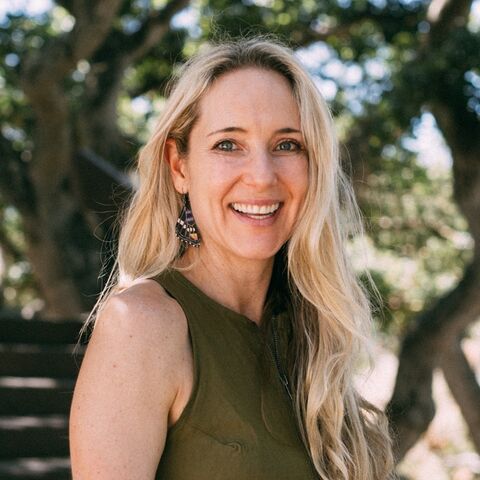
What are your inner demons and how can you transform them by giving them what they really need?
That's what we're going to explore today with Lama Sultram Aliyon on Your Life in Process.
Welcome back.
Well,
I hope that you come to this podcast because you're curious and you're interested like I am in this intersection of contemplative practice,
Process-based approaches to living well and just sort of the practical guides that we can use in our daily life to live more fully and free.
And I have a real treat and experience for you all today.
This is a unique one.
I have for the first time a Lama on the show,
Lama Sultram.
I met her a couple of years ago,
But I have been interested in her work longer than that.
Lama Sultram is an internationally known Buddhist teacher and the founder of Tara Mandala.
She was the first American woman to be ordained as a Tibetan nun by His Holiness the 16th Karmapa before returning her vows to marry and raise three children.
And she's recognized as the reincarnation of the renowned 11th century Tibetan yogini Machig Labdron.
She is the author of three books,
Women of Wisdom,
Feeding Your Demons,
And Wisdom Rising,
That celebrate women in Buddhism,
Connecting the wisdom of Tibetan Buddhism with modern life and explore Buddhist teachings on the empowered feminine.
She focuses on the teachings of Dzogchen and the lineage of Machig Labdron,
The founder of the Chah lineage.
And if this is all sounding very esoteric to you,
This is maybe your first entry point into Tibetan Buddhist teachings,
Don't worry,
You're not alone.
But Western psychology has become increasingly interested in them.
There was a recent study out by Eve Ekman at the Greater Good Science Center and UCSF that was published in the Frontiers of Psychology called Transforming Adversity into an Ally,
A qualitative study of feeding your demons meditation.
It came out in 2022.
And they looked at a group of people that they had moved through this practice that you're going to learn today called feeding your demons and what happened as they did it compared to weightless control.
Some themes that showed up were increased sense of self-worth,
Confidence,
Empathy for the demon or rejected parts of oneself,
Increased self-awareness and active oriented,
Fierce self-compassion and acceptance in the form of self-compassion.
These are all principles and processes that we've been talking about on this podcast in lots of different ways,
Whether it's through the angle of act or the angle of contemplative practice.
We're sort of getting at some of the same stuff here,
Folks.
And today is super special because Lama Tsultrim and I are going to talk about this practice,
This ancient Tibetan 11th century practice of feeding your demons.
She's going to walk you through it.
You're actually going to get to do it in the form of a meditation.
And then we talk about it.
We debrief at the end.
The meditation itself,
I'm going to put as a separate episode so that you can set yourself up.
It's not something to be listening to in the car.
It's not something to do while you're chopping vegetables for dinner.
Don't listen to it on your run.
You actually need to sit down and take the time,
About 20 or so minutes to do the feeding demon practice in a quiet space.
You can do it with someone else or by yourself,
But it needs to be set aside time.
So I've set it as a separate episode.
Okay,
What are we talking about here?
Feeding your demons.
Maybe I need to rewind a little bit.
I'm so excited.
Feeding your demons.
You clicked on this episode because there was something that intrigued you.
You know this term demons that maybe you feel like you have demons inside of you.
Sometimes I certainly do.
There are these parts of ourselves,
These things within ourselves that we don't like.
It can be anything from anxiety or depression or busyness or jealousy to the cravings that we have.
When we fight them,
When we avoid them,
When we push them away,
They just seem to get stronger and they keep coming back.
What this practice of feeding your inner demons does is helps you use these processes of psychological,
Psychological flexibility to turn towards those parts of yourself,
The demons within,
The feelings,
The belief systems,
The thoughts,
And take a look at them for what they are.
Get a little perspective on them and actually listen to what is the longing underneath,
The true need of this demon.
In a Liberated Mind,
Steve Hayes talks about some of the core yearnings that we have as humans,
The yearning for meaning,
The yearning to have a sense of place in the world,
The yearning to be seen and to be connected.
And these yearnings can become misdirected and turn into some of our demons.
So in this practice,
You'll get a chance to look at your demons.
What is it saying that it wants,
But really what is the true yearning underneath that want?
And then how can you feed it what it really needs and it can transform into your ally.
Our discomfort becomes a valuable tool for understanding and growth when you can turn towards your discomfort,
Your demons,
And really listen to them.
You might discover something important you need to hear.
So I'm going to chat with Lama Sultrum and then we'll do a little debrief at the end and then stay tuned for the next episode where you'll get a chance to do this practice with her.
For those of you that have signed up for the membership of More Life in Process,
It's been wonderful to have you there.
I hope that you're finding the resources helpful.
And I want to update you that my weekly meditation from Yoga Soup is uploaded weekly on More Life in Process.
We're moving through the different processes of psychological flexibility.
Friday mornings,
8am,
Yoga Soup,
You can join me live,
Online,
Or in person.
And each Friday links up to the upcoming Monday's podcast.
For example,
On Friday,
I did a meditation on acceptance and that lines up with my conversation with Lama Sultrum today.
Next week,
I will be doing a little mini talk and meditation on cognitive diffusion.
You can sign up for membership at yourlifeinprocess.
Com.
It's $5 a month,
$50 a year,
And it makes a big difference in keeping this show going.
So thank you to all of you that contribute.
Welcome Lama Sultrum.
It's good to see you.
We're joining us from Costa Rica.
That's right.
Nosara area.
I'm looking out at the ocean.
And who's behind you?
There's a big deity right behind you.
Tara.
Tara.
Yes.
She's the female Buddha of compassion.
And right below me where I'm looking is a beach where the turtles come to lay their eggs and have done so for millions of years.
So I love that about this house that it's in that place that the turtles are magnetized to come.
And this house is called Casa Tara and sort of fell into my hands during COVID in quite an amazing way.
And it's a wonderful refuge.
Well,
You fell into my hands during COVID in an amazing way.
I was coming down to Costa Rica for retreat and I sat at a table with you.
I didn't know who you were.
I just sat down and Michael,
Your partner said to me,
Do you know who this is?
And I was like,
No.
He said,
This is,
Have you heard of the book Feeding Your Demons?
And I said,
I just finished a book where I cited you in it.
And he said,
Yes,
This is Lama Sultrum.
She wrote that book.
And it was this shocking moment of,
Wow,
I'm sitting at the table with Lama Sultrum who has had a,
Your book had a personal impact on me so much so that I was able to squeeze it into the psychology book that I think may have been a little bit on the edges of what could fit in the realm of psychology.
Although it increasingly is so.
Now we have a couple of studies out on your work out of University of San Francisco and Yves Ackman.
Today,
I'd love to explore Feeding Your Demons.
And we were just talking about how it's most impactful if you actually do it.
So let's lay the foundation and framework of what it is,
Where it comes from,
And then maybe we can practice together and give that real gift to our listeners.
So Feeding Your Demons comes from the inspiration from an 11th century Tibetan yogini by the name of Machig Lhapra.
She was one of the few women who actually developed her own lineage in Tibet.
And her teaching is based on feeding,
Not fighting.
And so I met her teachings in 1972 and I practiced them and found it very helpful for me.
Doing a traditional practice which is somewhat shamanic,
You actually undergo your own death and are reborn within the practice.
And I practiced it for many years and then my teacher encouraged me to start teaching it.
So when I started teaching it,
I realized that it could easily become a kind of foreign ornament that people would wear because you sing in Tibetan,
There's a drum,
There's a bell,
And so on.
And I wasn't sure that people were really understanding what the practice was really about and that it really was about something personal because you feed the demons during the practice.
And the fear that I had was that it would just be kind of theoretical.
Plus singing it in Tibetan and trying to do the drum and the bell at the same time,
It's kind of like patting your head on a stone.
But with one more thing going because you've got the drum,
The bell,
And singing in a foreign language.
And I realized I could make a kind of experience of basically the content of the practice using more Western psychological modalities similar to Gestalt therapy or psychosynthesis,
Which I was familiar with,
Both of those.
And so I developed this five-step practice to teach people how to experience feeding your demons in a personal way and explain that demons are not Tibetan gargoyles that you visualize,
But are the real issues of our lives,
Like anxiety,
Depression,
Addiction.
But what happened was my students,
Many of whom are therapists,
Said to me,
I've been using that little method that you taught us with my clients and that's all their clients want now is that experience of feeding your demons,
The demon work,
They call it.
And so I realized,
Oh,
This has a life of its own.
It's not just like a teaching tool.
And so eventually I wrote the book,
Feeding Your Demons,
Which came out in 2008.
Now several scientific studies have been done on it and it's translated into 28 different languages.
And that's really interesting to me because it means that all these different cultures can relate to this idea of demons.
And even our culture,
We might think,
Oh,
In our culture,
You know,
We don't believe in demons.
But if you read the newspaper,
Pretty much in every newspaper,
You'll see someone died after fighting their demons of addiction or the demon of fear.
Yeah,
It's actually used,
The word is used much more than you think.
And I discovered that when I was writing the book and,
You know,
I kind of had those ears where I was like,
Well,
There it is on the front page of the San Francisco Chronicle.
It's paradoxical because most of us,
When we think about our demons,
Whether it's our demon of social anxiety or our demon of depression or our demon of jealousy or all the demons that we can have,
Inner demons and outer demons,
Our instinct is to fight them or get rid of them and block them out.
And what's really fascinating about your practice that actually maps on to the third wave psychology now,
Which is the act of fighting is actually putting your energy in,
Out,
Disperses your energy,
It exhausts you,
And it actually makes the demon worse,
Right?
The more you fight your depression,
The bigger the depression gets.
And what attracted me at the time when I was reading Feeding Your Demons,
I was working with eating disorders a lot.
And what attracted me to it was that I had seen in my own practice so many times that when an individual recovers from addiction,
Part of the recovery process is coming to appreciate the gifts of the addiction,
Appreciate the gifts that the eating disorder brought you because there was wisdom in your eating disorder or wisdom in your addiction.
There was a core underlying need.
And your practice helps people get to that,
The allyship with the demon.
And as Eve Ekman in Greater Good Science Center and the work through UCSF,
When you read through their paper,
They're talking about all the different psychological processes that map on to the five steps.
And then as we had a conversation with Dan Siegel in attachment theory,
Where you had a beautiful conversation with him around attachment theory when we were in Costa Rica,
It also maps on to attachment theory.
So there's a consilience here of many different angles of this ancient Tibetan practice,
How you've developed it,
And then also what psychology and psychological science is finding as well.
Walk us through it.
What is it that we do in this feeding of your demons?
I got a chance to do it with Trudy Goodman.
I can give examples between Trudy and me.
And then let's do it together.
So I think before I lead you all through it,
What I'd like to tell you is the difference between a want and a need in the way that I teach feeding your demons.
So you will embody and personify the demon and see it in front of you.
So first I'll have you find it in your body.
Let's say it's an addiction.
Where do you hold that longing most deeply in your body?
And then I'll have you bring that out and personify it in front of you.
And then you'll ask it three questions.
What do you want?
What do you really need?
And how will you feel if you get what you really need?
And so the want with an addiction is pretty simple.
It wants the substance,
Whatever that is.
The need is the underlying deeper need that is pretty primal that we all have.
And Dan described that as safety,
Soothing,
And I think there were two more S's in what he said.
Being seen.
Yeah,
The subcortical needs that we're born with.
To have agency and to be bonded and to care for others.
Usually when we're in a demon,
Let's say a demon of,
You used the example of jealousy,
The demon is wanting control or wanting to destroy that other person who you're jealous of or whatever.
But then underneath that is a need for security.
When you're jealous,
You're feeling insecure and unsafe and not soothed.
Definitely.
So that process of getting from the want to the need is important.
And then the question,
How will you feel if you get what you need,
Is if that primal need is actually fulfilled,
What feeling will you have?
And that's what you will feed the demon.
So that process of what is the want,
What is the real need,
And how you feel if you get what you really need is taking us into the deeper human attachment needs that we have from birth.
And if those are not cared for and taken care of in childhood and infancy,
Then we start to develop these somewhat ineffective and unwise strategies for taking care of them,
Like addictions or depression or anxiety and all the rest of the ways that we act and the sort of methods that we use to try to feel safe,
That usually lead us in the opposite direction.
And you're really right about this idea of how feeding the demons is really the opposite of the whole paradigm of our culture,
Which is to destroy the enemy.
Find the enemy and destroy it.
I mean,
If you think about terrorism,
That's the whole idea.
We're going to root them out and we're going to kill them all.
Whereas what if we met them and said,
What are you so upset about?
And is there a way that we can satisfy those needs that you have without you being violent?
Maybe the war on terrorism would have ended a long time ago,
Because then those parts of society could integrate.
And it's the same thing with our own psyche.
And this is very much also,
I would say,
A feminine perspective,
Right?
Because the masculine perspective is to fight and conquer and get a hold of,
Own,
Take control.
Whereas maybe a feminine perspective,
And this is not necessarily male,
Female,
But feminine,
Right?
Feminine energy is to embrace,
Make space for,
Make room for,
Listen and be with.
And it's a very different way,
A different approach.
And when we do that with ourselves and when we do that with others,
It can be a different result.
And often in the therapy room or in relationships or even in hostage negotiation,
They use things like motivational interviewing to where you actually sit and you listen to the terrorist and say,
Tell us more about what you're wanting and what's this like for you to actually get them to shift.
So the first step is identifying,
Choosing a demon.
You start with one at a time and you said you actually recommend you do it over and over and over again,
That there's hundreds of demons in there,
But just choose one.
And the one that I chose when I was in Costa Rica,
I did this with Trudy Goodman I mentioned,
But the demon that I chose was my,
I couldn't even describe it.
It was like this anxious anxiety of needing to do more.
I guess it was my doing more demon that has been around for a very long time.
And I could really feel it in my body.
So this is part of the embodied interoceptive awareness practice of locating it in our body.
And then what do we do next?
Then we bring it out of our body and personify it with arms and legs and a face and a color and a density and so on.
And then we ask it those three questions and then we change places.
And so for all your listeners,
You might think about where you're sitting now and can you actually stand up and face where you're sitting now or is there another chair you could place in front of you to set it up?
But in any case,
You're not there in that opposite position very long,
So standing up works fine.
And then you become it.
You become the demon.
And you keep going back to the body,
As you mentioned,
Throughout the whole practice.
So in this case,
You've come into the body of the demon.
What does it feel like to be in that body?
And then being in that body,
You answer those three questions.
What I want is,
What I really need is,
If I get what I really need,
I will feel.
And so I'll guide everyone through these one by one,
So you don't have to worry about,
Am I going to have to remember those three?
No.
I'll give them to you one at a time.
And so once that's happened,
You come back into your original position and the demon is in front of you,
And then your own body dissolves into nectar,
And the quality of that nectar is the feeling the demon will have if it gets what it really needs.
And that is really the solution.
That's the fundamental solution,
Is the feeling it gets when it needs,
When it gets what it really needs.
So the nectar has a certain color,
Your body dissolves into nectar,
And then you feed it this quality.
And that aspect of the feeding of the demons is that it's a compassionate relationship with the demon.
When I did it with Trudy,
She fed her bird hot fudge,
And she described it as hot fudge going down,
This is very Trudy,
Going down the throat of this demon bird with this long,
Thin throat.
And it's very actually,
You actually physically feel yourself feeding this thing,
Giving it what it needs.
It's very satisfying to do it,
And they just gulp it up.
So this aspect of perspective taking would be the process in psychology that we would use or being able to observe and offer compassion to parts of ourself is very much what's going on there,
But in an embodied way.
Cool.
So we feed the demon until it gets fully satisfied of what it needs,
Not what it wants.
Yeah.
Yeah.
Yeah.
Because I would say,
Really,
That's what it really needs.
So it's not like,
No,
I'm not going to give you what you want,
I'm going to give you what you need.
It's really,
The need is fundamentally underneath that one and what it's actually trying to take care of with the heart.
Yeah.
So you feed it to complete satisfaction.
And once it's fed to complete satisfaction,
It transforms into the ally.
And there's a couple of ways that can happen,
And I'll guide you through that.
The ally is the same energy that was locked in the demon,
But now it's become accessible as a positive energy.
And then there's a dialogue with the ally,
And you change places and become the ally.
And then ultimately,
The ally dissolves into you,
You and the ally dissolve,
And then you rest in open awareness,
The fifth step,
Which is really the goal of the whole thing is resting in open awareness without all this fighting going on that we have in ourselves most of the time.
Yes.
Yes.
The formless and what I guess Dan Siegel would call the plane of possibility,
Maybe Jack would call loving awareness.
There's lots of different words for this sort of expansive awareness.
We call it the ground of being.
The ground of being.
You just dissolve and you rest and you have an experience.
And really,
There's no name for that experience.
Lots of names have been given to it.
And then you come back at the end with the integrated energy of the ally firmly embedded in all your cells,
And then you go about your life.
Yeah.
And then you have an ally.
It's so great to have your ally with you.
The practice for me that I've done,
I've done it different times,
But when I did it with you this January,
It was one of the most powerful times that I've practiced this in the sense that the demon was so clear.
She was like wearing a pencil skirt and she had rotten teeth and a big bag of food behind her,
But she was perfect on the outside.
And then when she became an ally for me,
She actually was a goddess being.
And to see this demon be transformed into a goddess that also represented my therapist from when I was 14 years old.
So it's just interesting what comes to you.
And it's just,
You don't have any choice around it.
They just come,
These allies and demons.
But if people have difficulty with visualizing,
Will you help us with that?
Like if people can't get a visual?
Yeah.
There's lots of places along the way you can get hung up and wait on that.
It's not happening or not seeing it.
There's a little phrase that you can use whenever you get hung up in the process of feeding your demons.
So remember this everywhere.
If I could see it or if it was happening,
What would it look like or what would be happening?
So let's say you get there and you're feeding it and it's just not getting satisfied.
It's insatiable.
What do you do?
You imagine if it was satisfied,
What would it look like?
Let's say when I say,
Okay,
Now bring it out of your body and see it in front of you.
You can't see it.
If you could see it,
What would it look like?
So that those blockages that we have is the unconscious mind that is sabotaging the process.
And so that if I could,
What would it be is a way around that unconscious touch.
Yeah.
It just opens the door a little bit so that the creativity can come in.
Yeah.
Okay.
Well,
Shall we practice?
Do you feel like that's enough?
This is enough foundation for us to go?
I think so.
And you know,
I think that people can have lots of questions about this,
But once they do it,
A lot of those questions disappear.
So I think just trying it is a good idea.
Okay.
Great.
All right,
Folks,
I'm going to pause us here.
Lama Tsultrim goes on to take me through the practice of feeding your inner demons.
And as I mentioned at the beginning,
This is going to be a separate meditation on this podcast so you can pull it up and you can do it with a lot of different demons.
We all have lots of different demons inside of us that need to be fed.
I've done it with my busyness,
As I've mentioned.
I've done it with core feelings of unworthiness.
I've done it with anxiety.
I've done it with feelings of animosity towards another person.
And every time that I've fed my demons,
There's been a fresh perspective and some compassion that has been an outgrowth of it.
Pema Chodron in her new book that's just come out,
How We Live Is How We Die,
Writes that our pain can become a window into others' pain,
And this helps us to develop empathy.
Our confusion can open our heart to the confusion of others.
Our anxiety can increase our care for others who are anxious.
We start to notice how everyone is struggling in one way or another.
So as you start to practice this true self-compassion of feeding your demons,
I think you may find that your compassion will spread to others as well.
I'm going to debrief with Lama Tsultrim next about our experience together,
So you can listen to that and then take some time for yourself later this week to feed your demons.
I'm going to speak after this practice,
And I'll probably record something a little after to debrief folks.
But it's a powerful practice,
And it's different every time you do it.
It's so amazing what comes.
And then there's moments where I feel like I'm not doing it,
It's not going to happen.
And then it happens.
And my ally this time was so cool.
I didn't think it wasn't going to come,
And then it was this giant eye.
That's all it was,
Was just a big,
Massive eye.
And I was like,
I don't want this as my ally.
This is so weird.
But when it spoke to me about how it was going to protect me or whatever,
Those questions,
And how to remember that you're there,
It was,
Oh,
You just have to look into the eyes of others and you'll see me.
And I was like,
Oh,
This is so cool.
My ally is in everybody I meet.
It was super cool.
Thank you.
Are you doing it along with us when you're guiding it?
How I do it with,
That's how I do the timing.
Of course,
My timing isn't right for everybody,
But at least if I'm doing it,
It's probably better than if I'm just like,
I wonder how long I should stay here.
That's always how I practice,
What I teach meditation.
It's always,
I'm always doing it.
And then I know like,
Okay,
Go to this part of your body or experience this.
So what did you do it with this time?
What was your practice around?
Being busy,
Being like,
And like too many things to do and things flying through the clouds.
And I had an assistant.
We had an Austrian assistant who was very Germanic and very,
Very efficient and she did everything.
And then I went into retreat and then she went into retreat and then I moved and I don't have an assistant now.
So I kind of like it in the sense that sometimes I felt like I was working for her more than she was working for me.
But it's also hard.
And it's hard to choose what to do,
What not to do.
I'm sure you have the same demon because you're doing a lot of things,
But you've got kids.
Yeah.
Yeah.
The doing demon and the busy demon and then the over-complicating things with the solutions,
Right?
The solutions that I put on top of the demon make things even more complicated because then you have a whole team to manage and then feeling that fear of,
Oh,
If I downsize and that means like there's more on me.
But at the same time,
That means I have to have better discernment around what's important,
What I'm choosing to do or not do.
Yeah.
It's true that having a team,
You are working for them.
And then she would always keep reminding me of emails I hadn't answered or requests to teach that I hadn't done or responded to.
And I'm just like,
I haven't found a solution to this.
So I instill a demon.
I don't know if there is a solution to our busyness because it's like a Lucille ball and the chocolates that come down the conveyor belt.
I don't know if you ever saw the episode where these chocolates keep on coming and coming and she's stuffing them in her mouth and stuffing in her pockets.
And that's the solution that we come up with.
And sometimes the solution is letting the chocolates just fall off the conveyor belt because they're going to keep on coming.
And which ones are we going to pick up?
And I'm more and more interested in this concept from Buddhism of wise effort and the wholesome and the unwholesome and what seeds am I abandoning?
Like unwholesome seeds that I do not want to water.
And then what are the wholesome seeds that I do want to water?
And looking at our busyness,
I think is a deeper look at that around the wholesome.
And spending time with you for me is a wholesome seed.
This practice is a wholesome practice.
Spending as much time as we did to meet our demons and turn them into allies,
That practice will sit with me for months.
I'll remember that giant eye and that will be so useful to me.
It's a good use of my time,
Even though it was sitting there,
Quote,
Doing nothing.
And then all the other things that are productive that actually don't feed me in the same way or help have clarity.
So I appreciate you and I understand your busyness and I relate.
And when you have something beautiful to offer,
People want a lot of it.
So that's the other thing that can happen.
Yeah.
And I have students,
You know,
That are all over the world and they're,
You know,
I'm their teacher and that's a big role,
You know,
So I have to show up for them.
And anyway,
It's a thing,
You know,
It's a thing to figure out.
And I haven't really grown something.
And then I'm also like getting older and so like,
Do I want to keep being busy my whole life?
I had,
I attended the other night with Ben from Ben and Jerry's.
Oh yeah?
Oh,
That's so fun.
Is he in Costa Rica right now too?
Everyone's there.
And he says now he's just doing things that give him joy and that's how he decides what to do.
But it's not,
It's different.
Ice cream's different than Dharma.
You know,
You had a business,
That's easy.
Right?
Just get out of the business,
Sell the business.
But Dharma,
You do,
Teachers don't really do it.
Lama Sotram,
Thank you for that beautiful practice.
Thank you for your offerings and your teachings and all you're doing that we get to receive from.
And I know that you receive from me right now gratitude because the practice that you've offered me not only transforms me,
But my clients and all the people that I meet and then the people that they love and the people that they struggle with.
So it's,
It,
It reaches many.
And so your gifts are gifts that are exponential and thank you for those and for who you are.
You're welcome.
Okay.
Take care.
Okay.
Okay.
Bye bye.
So contemplative science has done a lot of work on the empirical investigation of meditation practices,
Things like mindfulness and compassion and mantra practices,
How they impact wellbeing.
There's been less study of Vajrayana Buddhist traditions that use mental imagery or visualization to transform distressing beliefs and emotions.
Feeding your inner demons is one of those practices.
There's been some study of it.
I mentioned Eve Ekman study and I'll link to that in the show notes,
But what's really going on there when you're doing this and when you do the practice later today from a Western psychological perspective,
It's some of the processes that we're talking about in the first steps when you're breathing and you're contacting the sensation inside your body,
You're developing interoceptive awareness,
Being present,
Acceptance.
When you pull the demon outside of you and you personify it with legs and arms and a face and a smell,
That is perspective taking.
It's also diffusion of some of your thoughts and some self-compassion when you start to see your demon differently.
When the demon turns into an ally and actually starts to help you,
It might help you connect to some of those core yearnings and your values.
And then finally,
When the demon dissolves at the end,
We put a lot of different words on it and there's not necessarily words for that experience,
But in act,
We would call that self as context.
When you step into the greater oneness and that sky mine that holds it all.
I really enjoyed doing this practice with Lama Tsultrim.
I hope I'm not too far outside of the box,
But I hope I am pushing the edges of the box a little bit by doing something like this on the podcast.
And I believe that it's a pretty powerful practice and I hope it's beneficial to you and to those that you encounter.
If you would like to learn more about Lama Tsultrim,
She does a Sunday morning meditation at 9am,
Lama Lived.
She's had folks on like Krishna Das,
Jack Kornfield,
Dan Siegel.
You can also connect with her through her Facebook,
Lama Tsultrim Auliyon and her website.
I'll put all of those in the show notes.
If you are a practitioner and you want to learn how to do this offering with your clients,
She also has a course that you can take to learn how to help other people feed their demons.
I hope you found this helpful and may the benefits of today's practice move beyond not only you,
But to all of those that you encounter.
Many blessings and I will see you all next week.
Thank you so much for listening to this episode of Your Life in Process.
When you enter your life in process,
When you become psychologically flexible,
You become free.
If you like this episode or think it would be helpful to somebody,
Please leave a review over at Podchaser.
Com.
And if you have any questions,
You can leave them for me by phone at 805-457-2776 or send me a voicemail by email at podcast at your life in process.
Com.
I want to thank my team,
Craig,
Ashley Hyatt,
And thank you to Ben Gold at Bell and Branch for his original music.
This podcast is for informational and entertainment purposes only,
And it's not meant to be a substitute for mental health treatment.