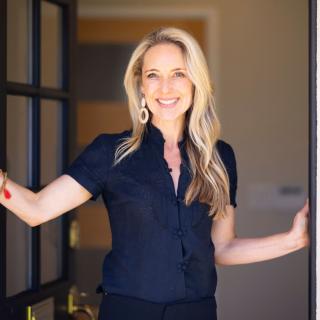
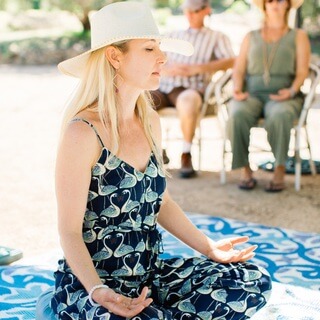
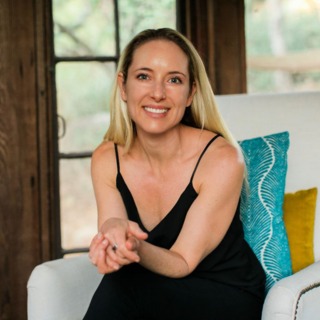
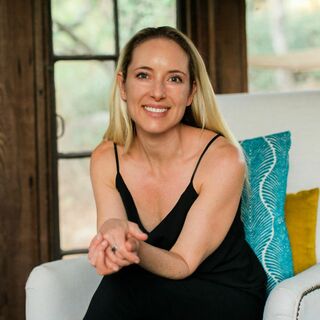
How can you get the right amount of good stress to rejuvenate your energy at the cellular level?
That's what we're going to explore today with Dr.
Sharon Berquist on The Wise Effort Show.
Welcome back to The Wise Effort Show.
I'm Dr.
Diana Hill,
And you've heard me say so many times that Wise Effort is about energy use.
It's about using our energy wisely.
It's about treating our energy as a renewable resource that we can replenish.
When we stress our bodies on purpose,
We are creating something called hormesis,
Which is a good kind of stress.
And today,
Dr.
Sharon Berquist is going to talk about this paradox of stress,
What's called good stress.
She is an award-winning physician and has led numerous clinical trials,
Including the Emory Healthy Aging Study,
The NIH-funded Emory Healthy Brain Study,
And is widely published in peer-reviewed journals.
Her TED-Ed video,
Which is about how stress affects the body,
Has been viewed over 8 million times.
And she completed her degree at Yale and Harvard Medical School,
Which I appreciate,
Right?
She's got a science mind behind all of this.
Sometimes when we go into the arena of lifestyle medicine,
I get a little bit wary of how much of this is snake oil,
How much of this is real,
Who do I trust?
And I think that we can really trust Dr.
Berquist because she's quite the expert in the area of cellular health.
If you were to follow me in my day,
You'd see me waking up early,
And the first thing I do is have a cup of coffee.
Religiously,
My husband's a coffee roaster.
It's so good.
Dr.
Berquist today is going to tell us why that is so great for us.
I'm usually doing some kind of breathwork or meditation in the morning.
The breathwork is also a hormetic stressor.
My favorite when I have a low mood is just to do a simple Wim Hof where you kind of hyperventilate for a minute,
And then you hold your breath for as long as possible on the exhale.
Then I'm doing some kind of physical stress.
Some days it's going outside and battle roping with my dog.
I have a battle rope that wraps around an oak tree,
And I go at it for 40 seconds on,
20 seconds off.
My dog loves it.
It's kind of fun.
I will jump up and down off of a stair.
I'll do push-ups.
I just kind of do this 40,
20 thing for about 35 minutes,
But I try and do HIIT training a couple of days a week,
And I really do find the boost in my mood,
But as you'll learn today from Dr.
Berquist,
It's more than just mood,
That it is benefiting our cells need to be stressed in this way.
At some point in the day,
I'm making dinner.
I love to make dinner,
And I usually send my kids down to go get some cilantro or arugula or a head of garlic from the garden.
There are certain foods that are particularly beneficial to us,
And we're going to hear from Dr.
Berquist which ones create a little bit of stress in our body in a good way,
And then usually at least once a week,
I am jumping in the ocean.
Either that's in the morning while my son is at surf team,
Or it's with a good friend,
And once a week,
I'm climbing into a really hot bath.
Again,
Dr.
Berquist today is going to tell us all about hot-cold therapy,
Why it's so good for us,
And the reason why I'm doing these things is because,
Yes,
I've heard all of the good stuff about hormesis,
But really it's because it brings me energy,
It brings me vitality,
And it allows me to show up better for the people that I love.
So wise effort is all about energy,
And today we're going to talk about how to improve your energy at the cellular level.
Enjoy this conversation with Dr.
Berquist.
Okay,
So we were just talking about this intersection of wise effort and good stress.
I love a good paradox.
And you were saying how much overlap there is in terms of the physiology of good stress and wise effort,
Sort of like using our genius bodies to help us be able to live with the most vitality and heal and vibrancy and all of those things.
Yeah,
So good stress is essentially wise effort.
So it is the high effort,
High value things that not only heal us psychologically but physiologically.
So my background is I'm an internal medicine physician,
And I do research around lifestyle-based behaviors that optimize health.
And this framework of good stress is really what are the highest impact to time ratio things that we can do,
Right?
We are all pressed for time,
Going in a thousand different directions,
And we're trying to figure out how do we implement healthy lifestyle behaviors.
So we want highest impact for the amount of time,
And good stress is that high lever,
High impact based on how it affects our physiology.
Great.
So I want to get into the sort of nitty-gritty of it because you're a physician,
So you're going to know at the cellular level what's happening when we're engaging in good stress.
And I first want to say it's really capitalizing on a system that already exists within our body,
That's already there,
That is the wisdom of our body to be able to respond to stressors that were designed for stress.
And many of us have this sort of negative relationship with stress.
So saying good stress feels like,
What,
Huh?
Stress isn't good.
But really with the stress paradox,
You're saying,
No,
We need to stress ourselves on purpose because that's what strengthens us,
That sort of choice of putting ourselves in those effortful situations because they're aligned with our values,
But also because it's going to make us perform stronger,
Think stronger,
Be more effective when a big stressor comes our way.
So what's happening there at the sort of biophysiological level when we stress ourselves on purpose?
So you can view health as there are certain things that can damage our health and cause harm.
So we know a lot of environmental exposures,
Certainly aspects of our modern lifestyle like sugars being sedentary,
They're harming cells.
And when we're adding good stress,
We're actually building health because we're repairing the damage and we're building our resistance to all these environmental stressors.
So you can think of it more as what you're adding to be healthy.
Like if your cells are a bank account,
You're depositing money into that bank account as opposed to harming where you're removing.
And there are really about seven stress responses that are getting activated by the good stress.
So what is happening at a cellular level is we're taking abnormal cells when we're under good stress and we're essentially all the old parts,
All the parts that are damaged,
We're recycling them.
So when we're in stress mode,
What our body does is it wants to conserve energy,
Okay?
And that's a kind of energy conservation mode.
In order to do that,
The cell has to become more efficient.
It has to use the energy that it has wisely.
And what it's going to do is it's going to be better at absorbing glucose and using like the fuel sources that it has.
It's going to look around and say,
Hey,
There's some older cells and some damaged cells.
I'm either going to recycle those and take the spare parts that are worth salvaging.
Or if it's just too old and it's just draining energy,
I'm just going to kill off those older cells and use them for energy.
It's going to look around and say,
Hmm,
This DNA is damaged or this protein isn't folded properly and that's slowing the efficiency of the cell.
So it's going to repair.
So it's doing a lot of housekeeping where we're in the stress mode.
And when we go into recovery,
Which is just as critical as the stress,
It's in the recovery that we're rewiring and remodeling our bodies.
So it's kind of the yin and yang.
We want to do stress to create the environment in our cell that makes us healthy in the recovery so that we build the adaptations that occur so that the next time we encounter stress,
Our bodies are physiologically wired,
Like functionally,
To make us stronger.
Great.
So we're balancing out the good stress with this other aspect.
Alyssa Eppel calls it deep rest,
The cellular restoration that happens when we do things like a yoga nidra or a shavasana or a meditation or just really good deep sleep.
And stress activates our bodies to get a little scrappy,
Go in there and get rid of stuff that's not working for us.
And then the recovery is really where that cellular regeneration happens.
And you talk about in your book,
I was like,
I love the table of contents of books because it kind of tells you the frame of where an author,
The journey an author is going to take you on.
And so if people want to think about the journey of good stress,
You start by just presenting what you've been presenting,
Like we're hardwired for stress.
It's sort of this modern cure that's based on this ancient solution that our body already has and how to develop,
Why it's so important to develop cellular resistance.
But in the second part of the book,
You talk about these good hormetic stressors and everything from food to exercise to hot,
Cold to fasting.
And the first one about food toxins as being medicine,
I love to think about.
I mean,
I love we like to grow food.
I'm really interested in cooking.
I remember someone telling me once that if you have organic produce,
That produce has had to fight off more pests and has been challenged in a certain way and that it's actually even better for you.
I'm so curious about this.
Like,
Are these myths around how the benefits of food and toxins and stressed out plants are better for us?
Are these true?
Like what's going on there with our food?
Yeah,
It's a hundred percent true and it kind of changes how we think of our relationship with food.
So I'll kind of put this in the context that the hormetins,
What they have in common is these are stressors that were in the environment that our ancestors lived in.
So for 2 million years,
Our ancestors had a hunter-gatherer way of life and they were subsisting off of anything on the land.
And the more plants that they could consume,
Like the more plants that were edible,
The greater their likelihood that they were going to survive.
So our physiology adapted ways where we can rapidly metabolize anything that's harmful in a potentially poisonous plant and it ramps up our antioxidant defenses so that we can resist whatever is in there that can create free radicals and harm us.
And plants at the same time have had their sophisticated way of adapting to the environment.
So just like we have a microbiome,
Plants have a microbiome and their microbiome makes phytochemicals,
Which are plant chemicals.
And the phytochemicals make the plant more resistant against drought,
Against insects,
Against us as humans wanting to chomp on it,
Right?
Because plants can't run away.
They can't flee.
So they had to devise a mechanism to deter us and become more stress resistant.
And just as these phytochemicals make plants stress resistant,
When we as humans consume them,
They make us stress resistant.
So the way we co-evolved is that when humans consume the plants,
Even if that plant has that toxin,
The natural pesticide that it created to deter us,
Our bodies develop ways to rapidly metabolize that toxin.
It activates our own antioxidant defense system.
And here's where there's a critical difference with how we've always perceived,
You know,
Getting antioxidants from food versus what is likely happening.
So,
You know,
I've done a lot of nutrition work.
And for years,
I also thought,
Hey,
If we eat the colors of the rainbow,
The phytochemical is what gives it its color.
The more colors of the rainbow we eat,
The more antioxidants we're consuming.
And that is,
You know,
How we're going to get rid of free radicals.
But it's not like a tit for tat,
Like you consume this antioxidant and it's squelching this free radical kind of like,
You know,
Putting water on a fire.
What's actually happening is that when we have these toxins,
It's activating our own antioxidant defense system.
So we're not just getting the antioxidant from food.
The food is really bringing out our own natural defenses,
Right?
Like you said in the beginning,
Our body has the ability to heal.
And we co-adapted with our environment in a way that we can use these environmental stressors to activate our endogenous natural ability.
And what's really fascinating about this is the way this came to light,
Right?
So for 50 years,
All nutrition research is,
Okay,
Let's get our antioxidants and that's a healthy diet,
Like a Mediterranean diet.
But the amount that we're consuming in our diet is in a kind of nanomolar range,
Right?
But the amount we need to have the right antioxidant defenses is in the micromolar range.
So the pieces just never fit together until we realize that it's happening through hormesis,
Which is from the Greek to excite.
We're exciting our own natural ability to make the antioxidants.
Okay,
I'm going to pause right here,
Sharon.
You're kind of blowing my mind a little bit.
I came into this interview and even into this concept thinking,
Okay,
What are we going to know that's new?
What are you going to teach us that's new?
Are you just going to tell us to eat our fruits and vegetables?
But this is so different.
And what it makes me think about,
Because I'm thinking about my vegetable garden right now,
And we have an organic garden.
We have a lot of pest defense.
And that we put nets on things because we have birds and we have rabbits.
And we also have these lizards that get in and eat everything.
And I forgot to net one of our beds.
And in that bed had three different vegetables in it.
So it had broccoli,
It had an arugula,
And it had a lettuce.
And what's fascinating is everything got eaten down except for that arugula standing strong.
And I actually was thinking,
Okay,
Why is this arugula not getting eaten?
There's something special about it.
It's got some kind of toxin.
Arugula's got some bitterness to it.
It's got some protective.
And what I've also heard about arugula is that of our greens,
It's one of those super amazing greens to eat,
I guess.
You probably know a bit more about this than me.
But we can see it in just our plants defending themselves.
And then also maybe when we consume those foods,
We may want to choose to consume certain types of foods,
Not just to eat the color of the rainbow,
But to get a little bit more dialed in in terms of what are the hormetic foods?
What is it that's going to turn on our own defense system?
So tell me about arugula,
If I'm on the right track here.
Maybe not.
And then about some of these other foods that are the sort of natural toxins that are great for us.
Yeah,
100%.
So wild plants have more phytochemicals or more stressed than organic,
And organic more than conventional.
So organic has about 10% to 50% more phytochemicals than conventional.
And conventional crops that are grown in climate-controlled greenhouses,
They're not really being grown for their phytochemical load.
They're being grown for carbohydrates,
Right?
The plumpest blueberry is not the healthiest one.
Well,
Not only for carbohydrates,
For their beauty.
Yes.
Because I will say,
If you look at my produce in my garden,
There is no pepper that looks like any pepper in the grocery store.
They're all wonky and crooked and have brown spots and chunks eaten out of them.
There is no pepper that looks like a bell pepper that you buy at the grocery store.
So it's a total marketing scheme,
Not necessarily nutrition.
Oh,
Yeah.
And I completely encourage buying ugly fruits and vegetables.
Yeah.
The types are actually healthier,
And they're cheaper.
The arugula,
So really even all cruciferous vegetables,
Have sulforaphane,
Which is one of the plant chemicals,
The phytochemicals.
And sulforaphane is one of the most powerful ways to ramp up our body's antioxidant defenses,
So what we're talking about,
Right?
The bitterness deters us,
But that phytochemical is just so potent.
And what's really critical is when you think about our modern environment,
There's so many potential pollutants,
Like in the air,
In the soil,
In household products,
In microplastics,
Like you named them.
And there's so much effort,
Of course,
Necessary towards figuring out where these potential harmful toxins are and trying to make our environment healthier,
That there are many that we don't even know and won't know in our lifetime,
Right?
Like there's some that we know now that in our parents' generation,
We never knew about,
Right?
So they're indefinite.
But when you are consuming plant chemicals that can ramp up your antioxidant defenses,
You're really helping the other half of the equation,
Right?
How can I become a strong,
Resilient human being?
How can I be like the arugula and be the one that's lasting longer?
Exactly.
Still standing.
Yeah,
Absolutely.
So it's instead of like living in fear of,
Oh my God,
What are we being exposed to?
It's saying,
I'm going to be proactive.
I am going to build my own defenses.
And the cool part is my body has what I need to do that.
Absolutely.
Okay.
So if you're curious what I do with arugula,
Because I grow a lot of arugula,
Is I love it with fig,
Balsamic vinegar,
And a really good olive oil and some sea salt.
And my kids love it.
And it's a very,
If you add a little sweet to the bitter,
It's a perfect combo.
So,
But yes,
Grow,
And it's wild.
We grow wild arugula as well,
Which is different.
It's a,
You can usually see it in the,
If you are getting it like at the farmer's market,
It's like a smaller leaf than the big fat arugula leaf.
And when it goes to flower,
It reseeds itself.
Okay.
Onward.
So give us maybe four top toxic foods that we want to get hormesis going on.
Yeah,
Absolutely.
So there are probably about 10 phytochemicals that have really potent hormetic effects.
And then there are many fruit and vegetable sources for each one of them.
So in addition to the sulforaphane,
Resveratrol is another one.
And we're,
I'll probably have heard of it because it's in red wine.
And for a long time,
Again,
We thought the antioxidant response from the red wine is what made it healthy,
But it's also in grapes and pistachios and dark chocolate.
Those are really good sources.
Resveratrol and red wine is now off the,
It's not considered healthy anymore.
That is again,
One of those things that is outdated.
Yes.
Yes.
So no amount of alcohol is healthful.
It's just the less harm from the product.
There's allicin,
Which is a phytochemical that's in onions and in garlic.
And the really cool thing about allicin is that when it creates a healthy stress in a plant,
It opens these tiny little pores that let calcium in and that calcium flux activates growth factors like brain-derived neurotrophic factor,
Which as you know,
Helps support the growth of brain cells and the connections between them.
So onions,
Garlic,
Again,
Great foods to have for their hormetic benefit.
If you're a coffee drinker,
Ferulic acid.
Hold on.
I'm going to pause on the garlic because the garlic as a gardener,
I'm getting a lot of gardening tips now.
As a gardener,
Garlic is one of the easiest things to grow and also a pest deterrent.
And what I do is I go to the farmer's market and I get a head of garlic,
A really nice one.
And farmer's market garlic looks totally different than store-bought garlic.
When you buy store-bought garlic,
It's all like tight and then you have to like pound it with a mallet to get it opened up.
But a beautiful farmer's market garlic,
They're very easy to peel.
You can just peel it with your bare hands.
And I take out the little pieces.
Each one of those is a potential garlic head.
And I stick it around the edge of my garden bed,
A couple inches apart.
And it's,
Boom,
It grows.
And it also tells all the other pests,
Like,
Stay away.
This is stinky garlic in here.
And then you have all these beautiful heads of garlic that are really fun to pull and exciting to pull and easy to peel.
And raw garlic,
You can chop right up when you don't dry it without even having to take the skin off.
So you get even like some fiber.
But yes,
Garlic and onions.
Start every dish without garlic and onions.
That's like the foundation of everything.
And the flavor is different,
Right?
Because the flavor is proportionate to the amount of phytochemicals.
So a lot of your homegrown fruits and vegetables not only look different,
But I'm sure it's just the flavor and the taste is so much different.
Yeah.
OK,
Coffee,
Another favorite of mine.
Let's go there.
Yeah.
So one of my favorites.
So the phytochemical in coffee is ferulic acid,
Or at least that's one of the phytochemicals.
But you can get ferulic acid in tomatoes and apples,
Avocado,
Whole grain oats.
I mean,
There are many plant sources.
And the cool thing about the ferulic acid is you've probably also felt this,
But when you drink a cup of coffee,
It doesn't just give you a caffeine boost where it energizes you,
But your mood is actually better.
Yes.
And the ferulic acid reduces neuroinflammation or inflammation in the neurons,
Which is linked to like depression,
Anxiety.
It also raises your serotonin level as part of the stress response.
So what's,
Again,
Just so cool is how it activates our body.
It actually changes how our genes are expressed.
And we're enjoying these foods,
But they're making us stronger.
And if we looked at this kind of big picture,
And the reason this is so important is right now about one out of 10 people in America is getting the recommended fruits and vegetables,
Which is like five servings a day.
And it's so profound that we have the ability to use food to become resistant against all these epidemics,
Diabetes,
Heart disease,
Alzheimer's,
Cancer.
I mean,
There are about 250 population-based studies that show that if we get the recommended amount of fruits and vegetables,
Our cancer risk goes down 50%.
I mean,
The numbers are not small.
They're actually far stronger than any medication I could ever prescribe.
And they're just right in your garden because you're growing them.
But people can get them at the farmer's market.
Yeah.
And I think we need to shift our mindset around this.
These are things that we need to add on to our diet versus this is our diet.
My mom showed me this app the other day.
She's like,
I just had this really cool app.
It's from Europe.
And you can scan any package.
And it'll give it a rating.
Because in Europe,
They have all these great ratings on everything,
Although sometimes they're off,
About how many chemicals are in it and how many.
.
.
Is it red?
Is it yellow?
Is it green?
How much protein?
And then I went in the fridge and pulled out a thing of lettuce.
I'm like,
Scan this.
If it doesn't have a scan barcode on it,
Then it's probably a fruit or vegetable or something that's actually just a raw,
Real food,
A whole food.
And you can't really go wrong.
And then you can get really specific like you are getting in terms of which ones of those would maximize,
Have maximum benefit.
Those wild.
.
.
When we go to.
.
.
We get frozen blueberries a lot.
And we buy the wild frozen blueberries instead of the regular frozen blueberries.
They're a little smaller.
They're not as plump.
But I've heard wild is better.
Okay.
So food.
Can we talk about hot,
Cold?
Yeah,
Absolutely.
Yeah.
And I'll piggyback on what you just said.
All of these good stressors are not add-on.
This is.
.
.
They're all how we should be living.
This is how our ancestors lived until about 200,
300 years ago.
And what is our culture is clashing so much with what our biology needs that this is what is taking us down this road of us all getting unhealthier.
So that is such a critical thing.
But yeah,
Hot and cold.
So again,
If you think about the environment that our ancestors lived in,
There were no mats,
There was no climate control,
No air conditioning,
No heating.
So what our bodies have developed,
Again,
It's a stress response.
When we are in extremes of cold or heat,
Our core body temperature is going to change.
So it's going to go down in the cold,
Go up when we're exposed to heat.
And our body has a natural balance that we call homeostasis.
And it tries so hard to restore that natural balance so that we can live in any environment.
When that kicks in,
We actually trigger,
Again,
These stress responses in the process of restoring our body temperature.
So with heat,
It activates heat shock proteins,
Which are one of our cellular stress responses.
Activates really all the things we're talking about.
Reduced inflammation,
Reduced oxidative stress.
With the cold,
It's doing something similar.
And so our bodies,
Through these exposures,
Are making us healthier,
Again,
At a cellular level.
And then there's some health benefits at a more physiologic level in terms of how they affect our metabolism.
I want to put a little caveat on here,
That we can get really scientific about this and sort of biohack it,
Where some people may be like,
OK,
I'm going to take my 30-second cold shower and then make my blueberry smoothie with my scoops of mushroom elixir.
And there's also a way to do this that's not necessarily about biohacking,
But it's also about life enhancing.
And I think hot,
Cold is one of them.
Definitely eating is one of them.
And the life enhancing aspect of it is,
Gosh,
Could you go outside on a really cold.
.
.
I was actually just talking to my friend the other day.
She was on the phone.
She's in Washington.
Her dad is not doing well.
She's like,
It's sleet and rain,
And I'm outside on a walk talking to you.
She's exposing herself to that stress of cold.
She's talking to me.
And she's going to come back a little bit invigorated and stronger.
I have friends here that have done wild water challenges.
I have a friend that's a mother-daughter.
And for 40 days,
They committed to going in,
Head under,
Wild water every day for 40 days.
It's going to be cold.
They went into rivers and creeks and oceans,
And they'd go before school on the way to school.
They'd stop at the creek and dunk in and then get ready and go to school.
So there's ways in which we can also bring back how we evolved,
Which was to do this in community with people in doing things that we love,
Not necessarily in this prescription,
Which is what we tend to do with everything is prescriber thing,
But also make it sort of like a whole being,
Wise effort for your whole being,
Not just your body.
And I've got to imagine that also enhances and motivates people to want to do these things because people don't want to take cold showers,
But maybe jumping in the ocean with a good friend could be fun.
Oh,
Yeah.
And again,
Because I take care of so many people in my primary care practice,
I always think what is accessible,
Simple.
Most people aren't trying to biohack.
Most people are working full time,
Trying to figure out how to do their best and what are simple things they can add.
So all of these,
Just as you said,
Just so beautifully,
It's life enhancing.
And the beautiful part is it doesn't have to be extreme.
I mean,
The hormesis is really a mild to moderate amount of stress.
So people think,
Oh,
My God,
This is so daunting.
And this is for people who are like thrill seekers and really out to,
You know,
Do like incredibly hard things.
But this is just going a little bit outside your comfort zone and then taking time to recover.
And for each person,
That's going to be different.
It's going to be different for the same person day to day.
Like,
How much cold can you handle?
And just being outdoors is enough to activate these responses.
It doesn't have to be a cold plunge.
I mean,
There are studies looking at people just bringing down the thermostat to 60 degrees,
Doing it for 10 days and seeing that that in itself can activate autophagy.
They start to shiver a little bit.
That in itself increases brown fat volume by 37%.
It increases insulin sensitivity.
I mean,
It's these simple things.
And it does not have to be,
You know,
For people who are at that extreme of trying to be,
You know,
Extra,
Extra healthy and live many,
Many extra years.
Brown fat,
That's the fat that's really rich in mitochondria.
So it's like you have more of this sort of metabolically strong,
Efficient fat.
And I've heard that it's like on your chest and the top of your back,
Right?
That's where it grows.
And it's a good thing to have.
More brown fat,
I guess.
But yes,
It's been measured in lots of different ways,
How hot and cold are beneficial.
And then you look at just historically some of our practices,
You know,
Around like being saunas and warm water together and hot springs.
And there's also that benefit as well as being with people.
Okay.
So hot,
Cold,
If you were to give some people some suggestions around how they could incorporate that in their life on a regular basis,
What would the suggestion be?
Yeah.
So one thing like we just talked about,
Just bring down the thermostat to like 60 degrees or so,
Kind of in not heavily clothed.
Do that if you can for just a little bit.
That in itself helps go out on a cold day.
It's winter here for us.
It's different around the world.
That's enough to get some cold exposure.
15 seconds at the end of a shower is another way to do it.
With heat,
Just take a hot bath.
I mean,
A lot of people find heat a lot more enjoyable than cold.
But again,
A warm bath,
If you have access to a sauna,
That's wonderful.
People who do it in Swedish countries,
Like in Norway,
For example,
Or Finland,
We have longitudinal studies that show doing a sauna four to seven times a week compared to a control group that's once a week in itself can reduce cardiovascular mortality by 50%.
It's just incredible how temperature can be protective.
Is there a difference with the infrared sauna versus the heated sauna in terms of that?
Yeah.
You know,
Almost all the clinical studies are done on the traditional saunas.
We don't have a lot of data on infrared.
So wild is better than organic than conventional.
I'm sure the traditional,
Because it's been so well studied,
May be a little bit more optimal.
But if you have access to infrared,
It's going to be far better than not exposing yourself to heat.
Okay.
Movement.
One of my favorite things to talk about.
Exercise,
Movement,
And how to stress our body on purpose.
I was just thinking about my son,
Who's at this enduro bike race,
Mountain bike race over the weekend,
Which is kind of insane,
Where they go down these really,
Really steep hills,
And then they bike back up them,
And they're timed on the down,
And it takes about three hours to get through the whole race.
So it's this period of rush and excitement,
And then hard,
Hard,
Hard,
Hard,
Hard up,
And then this bits of rest and effort,
Rest and effort.
And they're not doing it to have cellular regeneration.
They're doing it because it's so fun.
I feel that actually,
When you get into some of this sort of higher intensity types of movement,
The good stress types of movement,
It can bring a lot of fun back to your exercise,
Back to your movement.
I like a long,
Slow walk,
But I also like the finding your edge a little bit.
Yeah.
And there is a physiologic difference of what's happening when you get that intensity versus the moderate continuous.
With all these stressors,
The difference is when you get to a certain point of intensity,
Your body,
As it perceives it as a stress,
Triggers adaptations,
And that is part of how it's making us healthier in a way that's different from the case of exercise that's moderate or continuous.
So probably by doing this bike ride,
I mean,
There's dopamine that's being released,
Right?
You're,
You know,
From the high intensity,
You're releasing growth hormone,
You're releasing testosterone.
And some people worry,
Oh,
Goodness,
It's going to spike cortisol.
But the key here is that the baseline cortisol of what happens after your body goes through the stress and recovers,
On net,
It's lowering your basal cortisol.
And that's what really matters for health.
And even though it's a stress short term,
The way our body recovers is that we recover with a more parasympathetic tone.
So I don't want people to fear that this intensity triggers stress that's hard on your body.
What we want to look at is what's the net effect?
How does our body respond to it?
And later in the day,
You're going to be calmer.
Later in the day,
Your cortisol level is lower.
So of course,
You're going to feel better,
Right?
It's the hormones that are getting released.
And physiologically,
The high intensity also releases lactate that comes from the pathways that we need when we do sprinting,
The glycolytic pathways when our bodies can't clear out all the lactate that's getting produced.
The lactate is a signaling molecule.
And signaling molecules are how exercise talks to the rest of the body and communicates.
And what it's doing is it's telling our cells to uptake more sugar.
It raises a transporter called GLUT4.
So our cells are uptaking more sugar.
They're becoming more efficient,
Better at storing energy.
It's triggering new mitochondria.
And this is so key because mitochondria really control our cells' energy making capacity.
And we can have anywhere from one to thousands of mitochondria per cell.
And the more mitochondria,
The more energy we have,
Right?
We all want energy.
And so many people come to me saying,
Oh,
I'm eating all the right things.
Why do I still feel fatigued?
And at the end of the day,
It comes down to the mitochondria.
Your mitochondria are converting food to energy.
And if you don't have healthy mitochondria,
And a lot of them,
That's going to be the rate-limiting step,
Right?
So your engine,
Like the cellular engines,
Are where the problem is.
It doesn't matter if you're giving yourself high-octane fuel if the engine is old and falling apart.
You just can't get to that better state.
So the high intensity is a really potent way of triggering new mitochondria and improving your energy-making capacity.
And that kind of high intensity,
You can do in so many easy ways.
I mean,
It can be just as simple as if you go for a half-hour walk every day,
Just sprint up,
Add in some hills or sprint for some of it.
It could be stopping and doing some push-ups halfway through your walk.
It could be taking a HIIT class.
There's lots of high-intensity interval training classes that people take.
What I find is that,
Especially people that have been moving their bodies for a long time,
They just get into this kind of rut,
And they go for what's easy and comfortable,
Which is great because that's going to make you consistent in terms of your movement.
But then you're never really growing in it,
Either also mentally growing in it.
So there's a benefit,
I think,
As well in terms of some of the cognitive benefits of these high-intensity protocols require you to think a little bit more,
Too.
Like maybe you're jumping on a box,
Or maybe you're doing battle ropes,
Or maybe you're doing a dance step that's a little bit different than your usual whatever dance.
These things have impacts on us mentally,
Cognitively,
As well as at that mitochondrial,
Cellular level,
Too.
And you feel like,
As we get older,
We don't chow.
We don't chow.
We're not doing these enduro bike racings,
Let's say,
That much.
There was a lot of parents sitting around with beers,
Watching their kids go up and down mountains.
We want to keep challenging ourselves like we did when we were kids.
We naturally would do some of this high-intensity stuff as kids.
So we want to keep on adding it in.
I add sprints.
I do HIIT training,
Lift heavier weight,
Things like that.
Yeah.
Yeah.
So just like with plants,
You get the most health benefit with a diversity of plants because you're getting more of the phytochemicals.
It's the same with exercise.
The more different exercise,
You're using different muscle fibers,
And you're getting better adaptations.
And just like you said,
The cool thing is that it doesn't take much.
So there's this idea of exercise snacks or vigorous intermittent lifestyle physical activity,
VILPA,
V-I-L-P-A,
And it's just brief amounts of intense activity that's just built into our day.
So for people who aren't actively trying to exercise,
It's like running to catch a bus.
It's running up a flight of stairs.
And they've done studies that have shown that if you do one to two minutes three times a day,
That cardiovascular mortality goes down 50%,
And mortality from cancer and all caused mortality goes down 40%.
So again,
Most of us can do one or two minutes running to do something in our day.
But as you just said,
As we get older,
Very few people hit intensity.
Well,
I mean,
Only one out of four people are meeting the physical activity guidelines.
But I think the intensity gets lost when we get older.
And we need to,
Again,
It's what's intense to you,
Right?
So if a person is deconditioned,
It's what's intense to you.
It may be fast walking,
But getting that back is so important.
Yeah.
Play with your kids,
Sprint with your dog,
All those things.
Try hopping up and down the curb when you're out on your walk,
Whatever it is.
OK,
So we talked about three things.
And you have a whole,
I mentioned there's a frame,
Right?
So you talk about why this is important.
You talk to us about the foods and the movement and the hot,
Cold.
And then you actually have this whole protocol that you guide people through in terms of the stress recover and repeat.
And you give us even kitchen ideas in terms of recipes that people can do.
So people are going to,
This is just a taster of what you have to offer.
And folks that want to go get the stress paradox,
You'll get a real kind of protocol of how to apply this in your life.
It's really grounded in science and doesn't make it,
I guess sometimes we oversimplify things.
So I don't think you,
Obviously you don't oversimplify things,
But then you make it simple that you can actually do it.
It's a nice,
That's a paradox in itself for it to have the complicated science,
But then also the simple practices.
Sharon,
How have you,
I'm curious for you,
How have you done this practice in your life the past week,
The past month?
What does it look like for you?
People want to know what the stress researcher is doing for themselves.
So,
You know,
Some of it are simple things that we can do,
Right?
So I add plant foods.
I have wild blueberries,
Just like you mentioned,
And I add them trying to make sure I get a variety of plants.
I target trying to get at least 30 a week.
Are you counting,
Are you like counting your plants to get to 30 really?
You know,
At this point I probably can eyeball,
I mean,
Just get a gestalt because I have been kind of cognizant for so long that I don't actively count,
But I make an effort.
30 different plants is what you're saying,
Just to have that variety.
Yes,
Because that optimizes your microbiome.
So if I had a smoothie with blueberry one day,
The next day it's strawberries.
I mean,
Just little things like that.
Sides on your plate at dinner,
Different vegetables.
And work on my circadian rhythm.
So trying to go to bed consistently,
Not eating late at night.
These are all ways that kind of create a fasting window that is at least 12 and sometimes 14 hours,
Which again,
Back to what you said,
I hate to call it fasting because this is normal eating,
Right?
A lot of this is normal.
But really the key for me,
Or one of the things that I find most enriching out of the good stress is what it does with your choices psychologically and how that changes your physiology.
So a lot of people in healthcare and other industries have a pretty hard and challenging work environment that can lead to burnout in healthcare.
It's over 50% of healthcare workers.
I think across industries,
That number is also going up.
And in your beautiful framework that you have,
It's because these are kind of high effort things towards things that are low value.
But what I choose to do and what I make a practice to do on a very regular and weekly daily basis is find the things that are in that high value and high effort because the biochemistry of the stress response that we release in that area when we're kind of in that quadrant is very different than just the fight or flight.
So our stress response that everyone thinks is fight or flight interacts with so many other parts of our stress biology,
Right?
When we do work that's really meaningful or aligns with our sense of personal belief,
We release a lot of dopamine,
Our reward hormone.
When we do things that benefit other people,
We release oxytocin,
Kind of the cuddle hormone.
And what these hormones do is that they regulate cortisol.
So the biochemistry is not just harmful,
Right?
It's good,
Healthy,
And they help us work through any type of stress that we can't control in our lives,
Right?
There are things built into our job,
There are things built into our home environment.
So what I make a practice to do is to really define for myself what is it that aligns and creates that self-synchrony where I know that I'm releasing a hormone profile from my stress response,
From my efforts,
That are health promoting,
That are energizing.
And to me,
Truly so much of health is all just,
It's really mental.
It begins with just your psychology,
Your mindset.
And that probably is more impactful than what you're eating,
How much you're exercising.
So I disproportionately do a lot of work that's health promoting.
That isn't your typical diet and exercise,
But it's really more cognitive.
Yeah,
Yeah.
And then balancing that,
The high effort,
High value is the high value,
Low effort,
That rest aspect.
I'm always a little wary of the high achiever folks that listen to this and now they're gonna be doing like high intensity interval training three times a day and growing arugula everywhere.
There's also this aspect of rest,
Giving your body the space to do the work that it wants to do.
And it's not gonna be able to do it if you're constantly stressing it out.
So you have to stress it out and then you gotta give it the rest.
And then there's different types of rest,
Just like there's stress that's sort of junk food stress.
It's not good for us.
There's also the junk food rest that we can do,
Which isn't really a deep rest.
It's not really a deep rest to scroll on your phone,
On your couch.
You may feel like it's a rest,
But that's not the kind of cellular rest we're talking about.
There's the deep rest of,
People probably have experienced this if you've ever gotten like acupuncture and you're kind of in and out of that kind of woozy mind state,
I'm kind of asleep,
I'm kind of awake.
And you're just,
You're letting go.
You're letting your body go and do the work that it wants to do.
Or if you're floating on a floatie in the pool or whatever it is that floats your boat in terms of that rest.
But that's just as an important aspect to this good stress.
And I appreciate that you write about that as well,
That we wanna be in that virtuous cycle of good stress,
Deep rest,
Good stress,
Deep rest.
And then our bodies will be happy.
And that's how we used to live all the time,
Right?
I mean,
This is the ancient,
The nature of our ancestry as well is that there was a point where there was no light.
So you had to go to bed.
We don't have that anymore.
Right.
And that's what it's all about.
Like you said,
I mean,
If you're just doing really high intensity,
Tons of phytochemicals,
You're turning a good stress into a chronic stress.
And that's what we wanna avoid.
So that recovery,
Like you just said,
Is so critical.
And all these good stressors are really,
I mean,
We have just stopped utilizing them.
The lack of good stress is a risk factor for really where we are today in terms of mental illness and physical illness.
And we have to really think about not just what are we doing to ourselves,
But what are we not doing enough of?
Yeah.
And that's really where we are.
Yeah.
Well,
You are fantastic.
Wow.
I could talk to you for a long time and keep on learning new things.
And I appreciate everything that you had to say.
I feel like you're just such a resource of wealth of information.
Definitely a genius at taking complex ideas and then making them accessible without losing the complexity.
Wow.
Thank you so much.
Much appreciated.
Yeah.
Thank you.
Okay.
You are fantastic.
Thank you so much for listening to this episode of the Wise Effort Podcast.
Wise Effort is about you taking your energy and putting it in the places that matter most to you.
And when you do so,
You'll get to savor the good of your life along the way.