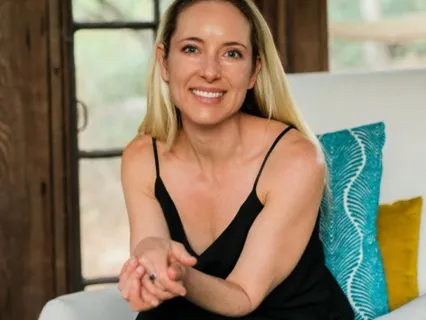
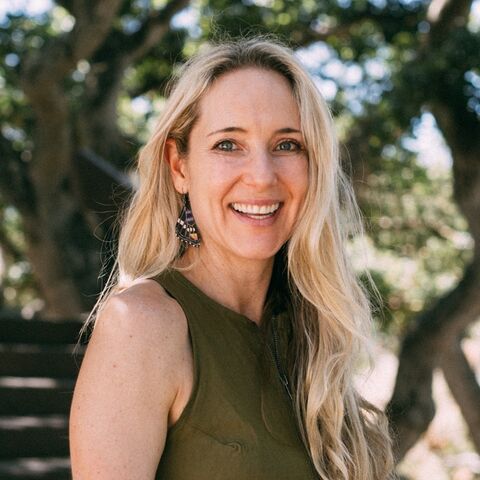
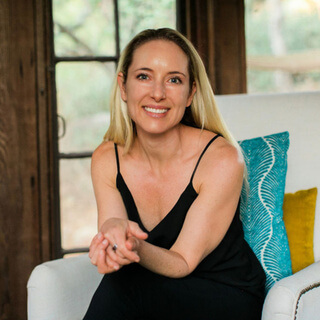
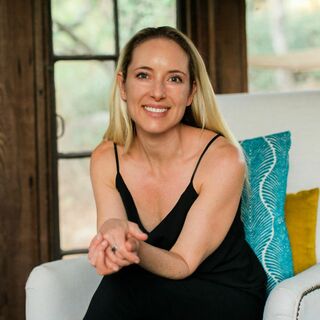
How can we navigate a world that is increasingly designed to addict us?
What is happening in our brains when we are caught in the relentless pursuit of pleasure?
And what can we do to find contentment and reset our dopamine balance?
This is what I'm going to explore today with Dr.
Anna Lempe on Your Life in Process.
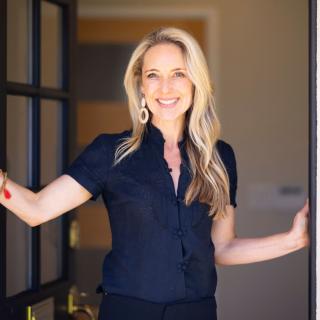
This is Dr.
Diana Hill.
And as a clinical psychologist,
I've really seen the field of addictions change over time.
And what we're beginning to understand is that we can become addicted to many things and the core processes that underlie addiction are really the same.
Whether you're addicted to your phone or addicted to a substance,
Underneath it is a pattern of emotional avoidance and dopamine that's really driving our addictions.
This conversation with Dr.
Anna Lempe is really one of my favorites because she has this beautiful ability of sharing about her personal experience with addiction,
The wisdom that she's gained from her clients,
As well as some of the neuroscience that's driving some of these processes.
You may recognize Anna Lempe as a contributor to the Netflix documentary,
The Social Dilemma,
And she's a professor of psychiatry at Stanford University School of Medicine and chief of the Stanford Addiction Medicine Dual Diagnosis Clinic.
She's published more than a hundred peer reviewed papers,
Book chapters,
And commentaries.
And she sits on the board of several state addiction focused organizations.
Dr.
Lempe's newest book is Dopamine Nation,
Finding Balance in the Age of Indulgence.
And it explores how to moderate our compulsive overconsumption in a dopamine overloaded world.
In this episode,
We share about our addictions,
How we've managed them over time.
We even explore how to raise kids in this world of dopamine overstimulation.
Should you really wait until high school to let your kids have phones?
I hope this conversation helps you stop and think about your patterns of addiction,
But also have some compassion for those that are struggling with addictions in its many forms and the courage it takes to face recovery.
There is a degree of humility and common humanity that Dr.
Lempke brings to the table.
She really teaches us that our brains are primed for this and our world is a mismatch for a modern day environment.
As she describes,
We are cactuses in a rainforest of dopamine.
And the processes that underlie our sex addictions are the same as those that underlie our addictions to diet Coke.
So how can we navigate this world in a way that has a little bit more contentment and a little bit more peace of mind?
Let's listen to Dr.
Anna Lempe.
And I'll meet you on the other side with some strategies for how you can apply what she talks about to your daily life.
I think probably a good place for us to start is just laying the foundation of dopamine and what's happening in our brains.
But even before we do that,
I have to tell you that when I listened to your book,
It was on a car ride,
A five hour car ride with my mom.
And I was like,
Oh,
I'm going to listen to this great book.
I want you to listen to it with me.
And you open with your masturbation machines.
It started some conversations between us.
And by the end,
We were in a place of loving the opportunity for us to talk about our own struggles,
But also really relating to the people that you bring to the book.
So I appreciate all of them for sharing their stories.
Well,
Thank you.
Yes.
So much gratitude to my patients and their willingness to share their stories in the service of helping others.
And there's no doubt that it was a huge risk starting with Jacob's story.
In fact,
I had been advised not to do that,
But his story had so many parallels to my own struggles that I just,
It was the story for me.
And I just,
It seemed dishonest not to open with that,
But I've definitely gotten pushback.
There's even a review on Amazon,
One of the very early reviews that gave me one star out of five that just said,
I started reading this book and couldn't continue because of the sexual content.
And,
You know,
That made me sad,
But I also understand it.
I mean,
That's fair.
And if you stick with it,
You start to see that the thread of Jacob's story.
So it's a story about somebody that has a sexual addiction.
But you start to see that the thread of what he's experiencing is the experience of many that are struggling with addiction.
And you even mentioned your own addiction,
Which you bring up in the book as well.
Yeah.
And the,
You know,
This sort of aha moment for me to know that Jacob's story was going to be the story that would open the book was when I first saw him that very first encounter and he was talking to me and I thought to myself,
By then I had gotten,
Let's say past my,
My,
My personal addiction was I got addicted to I got addicted to romance novels and the Twilight saga was my gateway drug.
And it really did progress,
You know,
To a point where it was interfering with my life,
Not anywhere on the order of the kind of life threatening addiction that Jacob was facing.
But nonetheless,
There were so many parallels.
And I remember as he was telling me his story,
I thought to myself,
You know what?
That could have been me.
I could have been Jacob.
It did not have this kind of otherness to it,
Even though there are aspects of his story that are truly shocking and even shocked me,
You know,
In the moment,
I,
More than anything,
I just identified with his experience,
His process.
And I just thought,
You know,
There before the grace of God go I,
So that that's why I wanted to open with it and draw that parallel between my compulsive overconsumption of romance novels and his very serious sex addiction.
So I'd love to talk about what is that underlying process,
You know,
Like,
Like in a neuroscience way,
What's happening in our brain,
And then also just the process of what it looks like in life when we're caught in an addiction.
Yes.
So let's start with the neuroscience.
You know,
To me,
One of the fascinating findings in neuroscience in the last 50 to 75 years is that pleasure and pain are co-located in the brain.
So that means the same part of the brain that processes pleasure also processes pain,
And they work like opposite sides of a balance.
And there are three rules governing this balance.
The first is that the balance wants to stay level,
And our brains will work very hard to restore a level balance with any deviation from neutrality.
So let's say in my case,
I read,
You know,
Some form of escapist fiction,
A romance novel that releases dopamine,
Which is our reward or pleasure neurotransmitter that we make in our brain.
We're always firing dopamine at baseline tonic levels.
Sometimes those levels go up.
That's when we feel pleasure or euphoria.
Those levels go down.
We feel its opposite.
But basically,
When I do something or we do something pleasurable,
We get that release of dopamine and the balance tips to the side of pleasure.
But no sooner has that happened than our brains will adapt to that to that deviation from neutrality or that increased dopamine in the reward pathway by down-regulating our own dopamine receptors and our own dopamine transmission.
And I like to imagine that as these little neuro adaptation gremlins hopping on the pain side of the balance to bring it level again.
But the thing about those gremlins is they really like it on the balance.
So they don't get off when it's level.
They stay on until it's tipped an equal and opposite amount to the side of pain.
And that's that come down,
That after effect,
That moment for me when the book ends and I feel a kind of a falling away or an urgency to find another book just like it or very similar so that I can maintain that feeling that it gave me that sort of escapist kind of feeling into fantasy.
Now,
If we wait long enough,
Those gremlins hop off and homeostasis is restored.
But it's important to fundamentally understand that the way that our brain restores homeostasis with any deviation from neutrality is to tip an equal and opposite amount to whatever the initial stimulus was.
So if the initial stimulus was pleasurable,
There's a price to pay for that and it's in pain.
And sometimes it's very subtle and just outside our conscious awareness,
But it's there.
The second rule governing this balance is that with repeated exposures to the same or similar reinforcing or pleasurable stimulus,
That initial response to pleasure gets shorter and weaker,
But that after response to pain gets stronger and longer.
So one way to imagine that is that now that tiny little cute gremlin that hopped on the first time has turned into an Arnold Schwarzenegger gremlin and it's like boom,
Or maybe that little gremlin is accompanied by four other gremlins.
Because once those gremlins are created for a certain experience,
They never go away.
They're sort of hiding in the wings and they love to be on the balance.
So they're waiting for that opportunity.
That means for the second novel or the 20th or the 100th romance novel I'm reading,
It doesn't quite do it for me.
But that urge to continue the feeling is even greater because that after response,
Now I've got 20 gremlins on the balance.
And if I continue that behavior over days to weeks to months to years,
I end up with enough gremlins to fill this whole room.
And now I'm in a dopamine deficit state.
And this is essentially the process of becoming addicted.
This is what happens in our brains as we become addicted.
That our brain in order to compensate for the enormous flooding of dopamine because of these highly reinforcing and repetitive behaviors or substances,
Essentially has to chronically downregulate dopamine firing to make up for that.
So we're basically walking around with a balance tilted to the side of pain.
Those gremlins now have brought their tents and their barbecues and they are camped out there for the long haul.
It's not a permanent kind of thing,
But it's very,
Very long lasting because once we've gotten into that neurological space,
It can take a long time to get back to a level balance.
And the way we do that is to abstain.
But even when we're abstaining,
It can take,
If we've been using for weeks to months to years,
It can take weeks to months to,
In some cases,
Years actually,
To restore a level balance.
And when you're talking about using,
That can be using sort of what we think about in terms of addictive substances,
But you've really expanded use to things like romance novels or to our smartphones or even to other types of behaviors to escape the pain of the present moment.
Our definition of addiction has really expanded since when I learned about addiction when I was in graduate school.
I remember having a conversation.
I studied eating disorders and I remember having a conversation with my advisor about whether or not binge eating or eating was an addiction.
And at that time,
There was a very hard line that said,
We do not use the word addiction in here.
And then meanwhile,
I had my own history of an eating disorder.
And I had,
When I was in my twenties,
Gone through 12 step programs as part of my recovery.
It wasn't the whole recovery process,
But it was an important part of my recovery.
In the back of my head,
I was like,
I don't know.
I think this is an addiction.
I love it.
So there is now a huge movement in the world of eating disorders or the clinical world of eating disorders to push for reclassifying,
In particular,
Bulimia to an addictive disorder.
Bulimia follows that exact same cycle.
Also,
The purging releases endorphins as our body tries to compensate for the injury of vomiting.
And then you get this flooding of endogenous opioids.
You get a kind of a buzz or a high,
And that absolutely drives the behavior very,
Very separate from body image per se,
Although body image can be a part of it.
And the classical definition of eating disorders was always like,
Well,
It's about body image.
It's like,
No,
It's really about this compulsive behavior that we use to soothe ourselves,
To numb ourselves,
To escape,
To feel better,
To change the way we feel in the moment.
So you're absolutely right.
That's being reclassified.
And in general,
What I argue in the book is that really everything in the modern world has become drugified.
If you think about what makes something reinforcing,
Really anything that releases dopamine has the potential to become addictive.
But generally,
It's not in the natural world.
First of all,
In the natural world,
Let's say,
Even hundreds of years ago,
But especially thousands and millions of years ago,
We had to work very,
Very hard for our dopamine.
It wasn't ready at hand the way it is now.
But it also wasn't as potent.
It was just like you had to walk tens of kilometers to find water and to find something to eat.
And you were really hungry after that.
So you were in this dopamine deficit state because you were hungry and it just sort of restored the balance.
Now what we have in food is a great example is we have food that is turned into a drug.
It's added sugar,
Added fat,
Added salt,
Added chemical flavors made in the laboratory to create things like French toast ice cream.
Because of course,
French toast alone and ice cream alone are not enough.
So we had to combine them and make French toast ice cream.
So food really,
Like so many things,
Has become a drug.
And now it's releasing a huge amount of dopamine in that reward pathway,
Which our primitive brains were not evolved to manage,
Which is precisely why so many of us are struggling with addiction,
Whether it's sex or food or drugs or behaviors like shopping or gambling or video games or social media or just the phone itself,
Texting.
I even had recently I was teaching some Stanford undergraduates in psychology 101 and afterwards,
I had a long line of students come up afterwards and one of them said to me,
Can you get addicted to a person?
And I was like,
Absolutely.
That easily falls into the category of sex and love addiction.
And you can even add sex,
Love,
And attachment addiction,
Which is definitely where I fall.
That's my bucket,
Which brings up the important point of drug of choice.
So we're all sort of our pleasure pain balance is going to be tipped different amounts by different things,
Right?
What really tips my pleasure pain balance outside of pleasure may not tip yours and vice versa.
At the same time,
One of the things that I hear a lot in my practice is folks saying things like,
I have an addictive personality.
Right.
And I've wondered about that because I actually do think that I have an addictive personality.
I married my partner.
He could drink coffee for two weeks and then just not drink coffee.
He just doesn't get addicted to things.
And I've known this about myself for a long time.
And I wonder what are those risk factors?
And you talk about some of them in the book to being prone to addiction and then even sort of what would be the evolutionary reasons behind that?
Like why would some people be more prone to this tendency of seeking out dopamine in this way?
Yeah.
Well,
Great question.
Let me first validate that we do come to the problem of addiction with differing degrees of vulnerability.
And some of us are clearly much more vulnerable to this process of compulsive overconsumption to the point that we're harming ourselves and others,
Which is essentially the definition of addiction.
If you think about the risk factors of addiction,
You can broadly categorize them as nature,
Nurture and neighborhood.
Nature has to do with our genetic load.
And it's very clear that a significant portion of the risk of becoming addicted is inherited.
It's not clear what it is.
It's complex.
It's polygenic.
It probably has to do with impulsivity,
Emotion dysregulation,
Sort of reward,
Just your general tendency to be rewarded by behavior.
So it might have to do with co-occurring depression or reward insensitivity.
So that's very clear that there's this heritable component.
And it's based largely on family studies and twin studies showing that if you have a biological parent or grandparent with addiction,
Even if you are raised outside of that substance using home,
You have an increased risk of becoming addicted compared to the general population.
But then there's also nurture.
And nurture has to do with things like how you're raised.
So we all know trauma can have epigenetic influences,
Can affect our vulnerability to addiction and many other mental health and physical health problems.
But also it goes the opposite way.
If you're raised in a home and you're raised in a home with a mental health problem,
You're raised in a home where you have a strong attachment to your parents,
Where they actually know where you are and what you're doing and who you're hanging out with,
Those kids and those parents are not modeling addictive substance use.
Those kids are less likely to become addicted.
So that makes sense too.
There are some resiliency factors.
And then there's neighborhood.
And neighborhood is really underestimated.
When we think about neighborhood,
We really think about the social factors of the environment.
And if you are living in a neighborhood where drugs are sold in the street corner,
You're more likely to try them and you're more likely to get addicted to them.
So access itself is a really important risk factor,
Especially in the modern world where we're dealing with nearly infinite access to so many different types of drugs.
Now let me just qualify all of that by saying that I used to think that I was like your partner and really impervious to the problem of addiction.
Alcohol just gives me a headache and makes me sleepy.
Caffeine doesn't wake me up.
Food,
I like food,
But food has never been a big draw for me one way or another.
My escapist thing has always,
Even as a young child,
Been reading,
Reading essentially novels.
But it wasn't until midlife when I got a Kindle and also a confluence of factors in my life combined with this access to a genre of novel,
Which really has been engineered to be addictive.
It's very formulaic.
And all of a sudden I found myself caught up in that behavior in a way I had never experienced before,
Which gets me to my point that we are living in a time and place when even those who are not by virtue of nature or nurture vulnerable to the problem of addiction,
They are now vulnerable by virtue of neighborhood and increased access to so many reinforcing drugs and behaviors.
And some of that neighborhood is in our pocket.
Yes,
A lot of it is.
It's not just our neighbors.
It's in our pocket.
And what I've seen in my practice as a newer form of a sort of a newer form of addiction that definitely feels like it's on the rise is the addiction to productivity and the addiction to,
I mean,
Social media I'm sure is influencing it,
But it's also just access to being able to be productive 24 hours and that competitive drive with others that are productive for 24 hours.
And for the folks that maybe had a high achieving habit and it benefited them for much of their life,
Now it's totally taken over their lives and they can't sleep.
And I will say what I struggle with now is that tendency to lean towards over-striving and overdoing.
And I've had to use some of the same things that I did in my recovery with this.
And that's the thing I also appreciated with you when you talk about your book of how in a lot of ways,
The way that we approach addiction can be the same approach,
Whether you're addicted to a substance or addicted to your emails.
So I'd love to talk a little bit about that,
Like the newer types of addiction we're seeing show up and then how we can actually address it,
Like what are effective ways to address it.
Yeah.
No,
I think that's so important.
And I talked briefly in my book about workaholism in the modern age and you hit the nail on the head.
I think there are so many ways in which not only has work been made more accessible,
Which is part of the problem,
But it's also been drugified.
The ways that there are now built in bonuses and incentives,
Social media,
Accolades.
We have this incredibly narcissistic culture,
Which reinforces narcissism and workaholism in genuine,
Tangible ways with monetary gain.
So you're absolutely right.
This is something that we have to be thoughtful about.
So how do we approach whatever the addiction is we have and how does it relate to that pleasure pain balance?
Going back to that again.
Yeah.
So what I've discovered is that the same approach that I take to my patients who are addicted to drugs or alcohol can be taken to really any addiction,
Whether it's food or your smartphone or something that you get on your smartphone or your work.
And basically it starts with number one,
Honestly acknowledging what the behavior is and writing down or telling another person in specific terms,
What you're doing,
How much and how often.
So this kind of radical honesty around what we're actually doing with our time is an important first step because until we either tell another human being or put it on paper,
It can really hide in the dark recesses of our mind,
Otherwise known as denial.
But honestly,
We can be living this double life even to ourselves.
But once we either write it down or tell another human,
And I really advocate telling another human because I think that works best,
Whether it's a friend or a family member or a professional.
So yeah,
I do this behavior.
I don't like that I do it because typically we have some kind of intuitive sense that we don't like the relationship that we have with that substance or behavior.
I do it this many hours a day,
Or I use this much this many days a week.
I do it in these situations.
And then also being honest about how we're lying to others about that behavior because of course that very commonly accompanies addiction.
In fact,
One great definition of addiction I once heard was addiction is the things we lie about,
Which I think is often very,
Very true.
The next step is to then have some self-compassion and say,
Okay,
Why do I do this?
So I'm going through a dopamine acronym that I have in the book.
D stands for data.
That's where you kind of are honest about what you're doing and telling a human being.
O stands for objectives.
Why do I do this thing?
Why do I read romance novels?
An incredible escape for me just lets me forget myself,
Forget work,
Forget everything for a while.
But people have different reasons.
So what is your reason?
The P of dopamine stands for problems.
What are the problems associated with the use?
And sometimes it's hard to see those problems in all honesty,
But it can be something as simple as my spouse doesn't like that I spend so much time on my phone,
Or it's affecting my health,
Or it's affecting my ability to be present for my children or whatever it is.
And then A of dopamine stands for abstinence.
And this is really the behavioral intervention.
And this is a little bit unusual in the world of mental health today,
Because a lot of times in mental health treatment,
We are told that if we could just discover the reason why we do something,
We would stop doing it.
If we could just understand the underlying trauma,
Then the behavior would dissolve.
And this kind of flips it on its head and says,
You know what?
Sometimes understanding is the booby prize,
And you just need to understand the behavior.
And the abstinence trial is asking folks to take 30 days out of their life and completely stop that substance or that behavior.
And the reason for that is because abstaining from our drug of choice allows those neuroadaptation gremlins to hop off the pain side of the balance,
And for homeostasis or a level balance to be restored,
Which is absolutely essential for two things.
Number one,
To be able to actually widen our lens and pay attention to and enjoy other things in our life.
And number two,
To be able to look back and see true cause and effect between our use and its impact on us and the people around us.
Because the truth is there's an amazing disconnect that happens with addiction.
And when we're chasing dopamine,
We cannot see true cause and effect.
It's very,
Very fascinating.
It's a little bit like being in a manic episode.
How people who are manic,
Like they don't think they're manic.
The same thing happens with addiction.
There's this incredible disconnect between the prefrontal cortex,
Which is that gray matter area right behind our foreheads that allows us to tell the autobiographical narratives of our lives and those lower brain structures,
Including the pleasure pain balance,
That are really reflexive limbic emotional structures that get detached from the prefrontal cortex in essence and start driving things when really it should be a communication in a two-way street between those two brain regions.
So that's the essential intervention.
And that 30 days seems pretty important.
And I love it when different schools of thought kind of come together.
So if you are in a 12 step program,
One of the things that you try and do first is,
Well,
First thing you do is say,
Hello,
My name is,
And I am an alcoholic or whatever.
So you get radically honest,
But then you work through 30 days is your first goal.
And it seems like there's a reason why you've chosen that 30 days.
It's not just sort of a random number,
But actually it maps onto what's happening in our brain.
Yes.
So number one,
There's a very important experiment by Nora Volkow,
The head of the National Institute of Drug Abuse,
Where she did brain imaging scans,
Looking at levels of dopamine transmission in people who had used drugs like cocaine,
Methamphetamine,
Heroin,
Two weeks after they stopped using.
And what she found was in that reward pathway area of their brain,
Their dopamine transmission was still below normal levels compared to healthy controls two weeks after using.
So they were still in a dopamine deficit state.
Their gremlins were still on the pain side of the balance.
That's really,
Really important because what it tells us is that two weeks is insufficient to restore homeostasis.
I'll have a lot of folks who say,
Well,
Can I just stop for a week or can I just stop for two weeks?
And I'll say,
Well,
You could,
But you really won't get to that place where you're reaping the benefits of having re-upregulated your dopamine.
And in fact,
All you may get is the painful parts.
And that will drive you then to think that,
You know,
It's hopeless or whatever.
I always warn patients,
You're going to feel worse before you feel better.
But if you can just get through those two weeks,
By the time you get to week three or week four,
In my clinical experience,
You start to come out of that and really homeostasis starts to occur.
There's also a very wonderful experiment by Brown and Schuckett showing that if you take a cohort of adult males who are using alcohol in an addictive way and also meet criteria for major depression or clinical depression,
You put them in the hospital,
You give them no treatment,
But the only intervention is that they can't have any alcohol for one month.
At the end of one month,
80% of those individuals no longer meet criteria for major depression.
That is to say,
Just stopping drinking led to a complete resolution of their depressive symptoms.
So that's really,
Really important because I have so many patients who will come in and say,
The reason that I drink or play video games or use pornography is because I'm depressed and anxious.
And if you can just help me be not depressed and anxious,
I would stop.
And I said,
Well,
You know,
I know that feels true,
But it actually might be the opposite.
It might in fact be that your use of this substance or behavior is what is making you depressed and anxious by driving down your dopamine levels to compensate for all of that dopamine.
So what feels in the moment like it's a relief is actually just medicating withdrawal from the last dose,
Trying to restore that balance.
And if you could abstain for a month,
You would discover that that is true because you would feel better.
And so the important part there as well is how you navigate those two weeks.
That's right.
And that's the challenge.
And there's actually,
There's some tools that you talk about in the book,
But I also,
I talk a lot about in the realm of acceptance and commitment therapy and more acceptance-based approaches,
Which is knowing your why,
Your values,
Like where,
What is important to me that's I'm willing to experience this discomfort for.
And then also the practice of being in the present moment with discomfort.
And if there's one thing that this overstimulation of dopamine is actually really decreasing our capacity for,
It is the ability to be present with discomfort because we can escape it much more quickly than we've ever been able to escape it before.
And one of my real concerns as a parent is that my children are eight and 12.
And so we haven't given them a phone,
But they're right on that point where the access to escape discomfort really quickly is coming up.
And I would love to talk with you about,
I mean,
Even your own decision-making around not having your children get phones until high school around kids and this,
Around kids and this,
And how we can help our kids basically not become as addicted as we are.
That's right.
Right.
Or at least to know the difference,
At least to know the difference.
Yeah.
So I feel that those early years,
That first decade,
Decade and a half are really,
Really crucial for creating a healthy platform for kids to know the difference and to develop healthy coping skills in the real world.
And those are physical coping skills.
They know how to be in their body.
They know the importance of exercise and movement and connecting with the body as a way of creating good mental health.
They know how to interact socially with people in real time,
In real life,
How to greet people,
How to be socially appropriate,
How to navigate complex social situations,
How to deal with frustration tolerance.
If you don't know the answer to something,
How to sit with it for a while until you can work it out.
All of these things are so important.
And we have a really small windows parents when we can teach our kids those things,
The importance of going outside,
Being in nature,
Connecting with the environment,
Connecting with the world around them.
It's a window.
It's such a window.
And if we give our kids devices in that window,
They are not going to have the opportunity and privilege to learn those building blocks that are going to be so important to them.
So what we decided to do in our family was that we,
Our kids did not have any devices until they essentially started high school.
And we in fact didn't even have wifi to the house.
So that was kind of a radical decision that we made.
But we just kept it very compartmentalized.
My husband and I had our computers at work and we came home,
We had this tech free space.
It worked for us.
And it was almost easier than what we have going on now in our household.
When our eldest started high school,
We essentially had to get wifi and a laptop for her because there's no way to do school.
Now this was all pre-COVID.
It's even harder now with COVID.
And she then went out and bought her own phone and paid for her own phone plan.
By the way,
We have never bought any of our kids' phones or paid for their phone plan.
So that's the other thing.
I think it teaches them responsibility and also how much data they're using and how much it costs.
And we did that for all of our kids.
And I'm so glad that we did because,
And also we've had a lot of open and active discussions about the complexity of our relationship to these digital products and how difficult it is.
I mean,
And not,
And I'm transparent with my kids about,
You know,
How it's hard for me too.
You know,
Even now I struggle.
One thing that's very fascinating to me is even though we kind of,
You know,
Had the privilege and ability to create this kind of bubble for our kids growing up,
You know,
Once they became older teenagers and got their devices,
My kids are on their phones all the time,
All the time.
So that's where I have to practice letting go as a parent,
Right?
I have to,
I mean,
I can,
I've given them the tools,
They understand the science yet they're,
You know,
They're doing that.
And,
You know,
We still talk about it.
We're going on vacation in next week for a week and nobody is bringing their devices.
Of course,
I have to bring mine to even get us on the plane and,
You know,
Into the place where we're going because you need all this and that.
But the bottom line is they're willing to give them up,
You know,
For a week for us.
And I'll be really curious to see how it goes because it's been a while since we've taken a tech-free vacation.
But the bottom line is,
You know,
As a parent,
You can only do so much.
And then at some point they are going to have to figure it out for themselves.
Absolutely.
You know,
I think in some ways though,
Sort of like,
I guess some of your eating habits,
You know,
You go with your parents feed you,
You know,
A certain way over your early childhood,
And then you go away to college and you're just like,
Let's explore everything.
And then,
You know,
You kind of come back to some of the principles that maybe your household had,
You know,
Early on or sleep habits,
Things like that.
There's a little bit of exploratory phase with kids,
But the attunement to how it feels is I think an important part of it.
And if you've been helping your kids along the way,
And even some of the commentary of like,
Wow,
It feels so good to be outside right now.
And,
You know,
I don't have a phone in my hand so I can climb this tree and all these different things.
But I've noticed that we actually have conversations about that in our household when we go on vacation and we don't do,
You know,
Don't have,
They have access,
They don't have phones,
But they play Minecraft craft and they have a little bit of access to technology and how just good it feels to not have that dominating our day.
And the dopamine detox,
I think is actually something that people maybe do,
But they don't know that they're doing.
Things like vacations,
Folks that are in recovery and do a lot of spiritual retreats.
In a lot of ways,
That's what I do.
I really make a commitment to at least doing two spiritual retreats a year.
And during that time,
Everything just settles down back to the basics of when does my body wake up,
What I'm,
You know,
Just eating the food,
Moving through the day and that that's enough.
And in a lot of ways,
I think that we've lost contact with our natural way of living and being in the world,
Which has a lot more movement and a lot more presence to it.
Oh yeah.
I really agree with you.
And I love sort of your image of that thing.
Things kind of settled down and go to their natural resting point.
And that's homeostasis,
Right?
That's really where we want to be.
We want to be at that angle of repose,
That natural resting point.
So the secret I think is how can we,
How can we integrate that into our daily lives?
So I,
You know,
Tech vacations or spiritual retreats,
I think that's really great and important,
But in a way,
You know,
It would be better if we enfolded that into our everyday lives,
If we could figure out a way to do that,
Rather than having to like take a break from,
You know,
Life and then go back.
And I think,
I think that,
I mean,
That's what I'm trying to work toward.
It is really hard.
It takes an intentional slowing down.
I mean,
A literal slowing down,
Trying to have,
I try to have a couple of days a week.
I haven't achieved it very often where I have nothing at all on my schedule,
Not a single appointment.
I try not to rush places.
I try to leave enough time for me to get there and to get there in a calm,
You know,
And centered way.
They're just little things,
But I think we,
As individuals and as a society,
We could work toward that.
And we need to work towards it because everything is so automatic.
I mean,
Everything from,
It used to be,
If when,
If I had clients coming always to my office,
There would be the moment of just settling in the chair and kind of getting here and being just sort of the presence of being with someone.
And we're in this world where you're on a screen and boom,
You're right there.
Let's go.
So the purposeful insertion of slowing down,
I think is it also fosters greater awareness of when we're caught in the craving or the addiction,
If we can be in the slowness a bit more.
Yeah.
I love that.
I love the way you describe things.
It's really nice.
And I think that what we're talking about right here too,
Is also very,
Very important for parenting,
Getting back to that topic,
Because I will have parents so desperate that their kids are spending all day on their phones and on their screens.
And yet those parents will be doing the exact same thing,
Even through the course of the interview,
They'll get,
I don't know how many alerts and calls and things.
So we really need to model what we want our kids,
The behavior that we want them to,
And quite them to incorporate into their lives.
And I do think this kind of centeredness and slowing down and the ability to be present and not be distracted or be in movement towards something else is really important for parenting,
Especially small children,
Because I think they really do dial into that kind of distracted,
Harried,
Kind of restless feeling that we can generate when we're not settled in our own lives.
There are some key processes to healing our addictions,
Including knowing your values,
Acceptance of discomfort like cravings,
And committed action to abstinence or moderation.
And if you want to explore some of these with me,
Then go download the ACT Daily Vision Board.
It's completely free and you can sign up for it at drdianahill.
Com.
The practices that you teach is the detox,
The dopamine detox.
And then the other one you teach is around self-binding,
Which in the way that I would describe it,
Is sort of environmental controls.
Working on that neighborhood aspect of those three.
How is your neighborhood supporting you in terms of your commitments and your values?
Can you talk a little bit about that in terms of the self-binding?
Yeah,
So I think it's really important to acknowledge that if we just rely on our willpower to get us through this,
Presented with the object of our desire,
We are going to fail again and again and again.
What we need to recognize is that we need to change the immediate environment in a way that allows us to press the pause button between desire and our movement toward getting the object of our desire.
So,
You know,
I've learned from my patients many different types of self-binding strategies.
Everything from literally getting,
You know,
Potato chips out of the house and alcohol out of the house,
Not having it there.
People with pornography,
Pornography addiction or alcohol addiction when they travel,
Calling the hotel in advance and saying get rid of the minibar,
Get rid of the TV.
Just really recognizing that I will do better if I'm not even tempted with those things.
And interestingly,
Even on a neurochemical level,
We can do this now.
So there are new medicines that you can take that,
For example,
Block the opioid receptor.
Opioids mediate a lot of the reinforcing substances and behaviors that we use and ultimately lead to the release of dopamine.
But by blocking the opioid receptor,
That can be a way to kind of create an environment where we're less likely to,
You know,
To engage.
I had a patient who said that he didn't even realize he was an alcoholic until he took this opioid receptor blocker and saw a six-pack and didn't have the an urge to drink the whole thing,
Which I thought was,
You know,
Really fascinating because that would be his normal reaction.
You know,
Or patients,
I've had patients who walk into like a break room and see a donut and immediately start craving,
Sweating,
Wanting that donut.
I mean,
People really don't appreciate that that's the intense kind of reaction,
You know,
That people can have to their drug of choice,
Especially in early recovery.
So ways to kind of,
You know,
Put these barriers between us and our drug of choice.
It can also be time can be a barrier if our goal is moderation after the dopamine fast.
So after the 30 days,
Some people want to continue abstinence.
Some people say,
No,
I want to go back to using,
But I want to use in moderation.
Then you can use things like time constraints.
I'm only going to,
You know,
Use two days a week.
I'm only going to use two hours a day,
For example,
With video games or social media or something like that.
Or saying I'm only going to use,
You know,
With friends in celebratory circumstances.
Then you have to be careful that you don't have a celebratory occasion every single day,
Which happens,
By the way,
That happens with patients of mine.
So these are the types of kind of self-binding strategies.
This idea,
Again,
Of anticipating that we will be tempted and then trying to create an environment that limits the kind of willpower work that we have to do because willpower is not an infinite resource,
Right?
We wake up with more willpower in the morning than we have at the end of the day.
And we can only exercise that willpower so long and then we get exhausted and it runs out.
Okay,
So I have a question around this.
And this is,
I think,
Coming from very much my work for many years with eating disorders,
Which is,
On the one hand,
We want to create sort of some of the self-binding or environments that prevent you from engaging in whatever your addiction is,
Right?
So,
For example,
I'll work with clients,
Let's get rid of the scale.
Like first thing,
Get that out of there.
There's nothing helpful that you're going to see on there.
If it's up,
It's bad.
If it's down,
It's bad.
If it stays the same,
It's bad.
It's going to drive you towards your addiction,
Right?
It's a cue.
Yeah.
So we need to look at what's cueing our behavior.
On the other hand,
There's very much a philosophy that I really believe in,
Which is the exposure based approach to our triggers,
To the things that cue us.
And how can,
Because we can't go around all of a sudden I'm in a hotel and,
Oh my gosh,
There's a scale.
And they'll come back and they're like,
I stepped on the scale.
And they're like,
Well,
Maybe what we need to do is keep your scale and we step on it.
And we work with the thoughts that show up for you and how to navigate those thoughts.
We work with the urges.
We work with the story.
We work with all the stuff that shows up in the presence of your cues.
And it's a real kind of choice point,
Like sort of this decision point as a therapist and even in working with my own self of when is the time to work with acceptance,
Allowing moving towards.
And then also when is the time to say,
You know what,
This just isn't safe for me.
So I think a couple of things here,
One has to do with timing where we are in our recovery.
And if we're in the very beginning,
Just that very first 30 day dopamine fast,
Like that's not a time to expose yourself to those triggers.
That's a time to really avoid triggers so that you can make it through those 30 days.
If after that,
When,
When,
You know,
We've restored homeostasis and we've got,
You know,
More dopamine to work with and we're enjoying other things and we've developed some other coping strategies and things are kind of moving along better.
If at that point,
You know,
We want to try some exposure therapy just so we can make it in the world.
Cause as you say,
You know,
You can't sort of,
You don't want to be,
You know,
Avoiding all kinds of things that could be a source of joy in other ways.
You know,
Then I think,
You know,
Graded exposure is I'm a huge proponent and you know,
I write about it in the book with a patient of mine who developed a real social phobia.
And then he goes to this graded exposure and really gets this ability to interact.
And of course I had a terrible flying phobia and my,
My treatment for myself was just to fly a lot.
I still don't love flying,
But it's much better than it was before.
But I do think that even so in our home environment,
It's better if we aren't constantly triggering ourselves.
I think there has to be a place where we can go where things are quiet and we feel safe and it's not like we're not always like the challenge,
You know?
So I guess that that's,
I would think about in terms of the timing and also,
You know,
Exposure in the world,
But really wanting to preserve at least one place where,
Okay,
This is kind of my safe space.
So I've been thinking about that for you,
As you shared about your,
Your own struggle with romance novels and,
You know,
Because reading is something that you've loved,
That you,
You know,
You loved.
You were a kid who read and it would be sad if you couldn't,
You know,
Read or maybe have a little bit of enjoyment of the fantasy.
How have you navigated that for yourself?
Very interesting.
So I did a 30 day dopamine fast.
I experienced quite intense withdrawal.
I was not able to sleep initially,
But got through the first two weeks,
Got to 30 days,
Felt really good about that,
Felt better,
Decided I was going to go back to reading romance novels,
Binged,
Had a terrible binge weekend.
That's called the abstinence violation effect.
I said,
Oh dear,
This is a bigger problem than I thought.
So I gave it up for a whole year.
And when I say I gave up romance novels,
I also gave up a certain behavior that was accompanying those romance novels.
I did that for a whole year.
And something very interesting happened,
Which I hear also from my patients.
I actually can't read romance novels anymore.
They are zero appealing to me.
And it's not because I still have the euphoric recall of what they did for me.
They don't do it anymore.
Like the drug doesn't work.
I've like burned out those,
Those neurons or those,
Those,
Those receptors or whatever.
I will hear that all the time from patients of mine that their drug stops working for them.
If they can't get to where they want to go,
They still crave it.
And I still crave romance novels,
But when I actually pick one up and start to read it,
I'm like,
Oh my God,
This is,
This isn't going to work.
So what I have done,
Because I do love to read is I've changed what I read.
And I've,
I've,
I've espoused what I write about in the book,
Which is if you can't get your dopamine by pressing on the pleasure side,
Get it by pressing on the pain side,
Because what happens when we press on the pain side is that those neuro adaptation gremlins will hop on the pleasure side to bring us level again,
And they'll stay on until we're tipped an equal and opposite amount.
So now I read a lot of nonfiction,
Which is something I never read before.
I read a lot of,
I read a lot of psychology and philosophy and theology.
So I read,
I read more memoirs.
So I'm reading like in a whole different area.
It's not the kind of escapists numbing thing that I used to love every once in a while,
I'll find a mystery that does that for me for a while,
But then I'll still feel kind of hung over afterwards.
It's a weird icky hungover feeling.
Cause almost inevitably once I'm hooked,
I stay up.
I can't stop.
So I'll go the whole day.
Then I'll go into the night until I finished it.
The next day I'll be tired.
So it's a,
It's a very strange loop.
Yeah.
It's a sort of cotton candy experience,
But I can't quite bite into it.
I want that feeling of a bite and satisfaction.
And certainly I've experienced that with myself and with my own clients of the anticipation,
It tells you it's going to be so much better than it is.
And then you get there.
And also when you have awareness,
When you start to have greater awareness of your own patterning and if you're aware while you're binging,
All of a sudden,
It's not quite as exciting anymore.
I wonder about that component of pain and stepping on the pain side and actually Paul Bloom,
Who I interviewed,
He's a experimental psychologist at Yale.
I don't know if you've read his book,
But his book is called the sweet spot.
So it's very much about this,
Uh,
The sweet spot between pleasure and pain and how to balance the two.
You would love his book.
Okay.
I'll look,
Yeah,
Put it on your nonfiction list.
Yeah.
And I think it also maps onto a lot of ancient traditions and ancient philosophies that if you look at Buddhism,
Sort of the four noble truths of our attachment in our craving is what causes our suffering as well as our aversion and the pain side can be everything from being willing to experience discomfort because it's in the service of meaning,
But it also can be things like cold showers and yoga.
And can you tell us a little bit about that?
And some of,
Cause you talk,
You briefly talk about that in the book.
So I've been,
I talk about this whole science of hormesis,
This idea that by exposing ourselves to mild to moderate noxious stimuli,
What we do is trigger our bodies to start to respond to that injury by upregulating our feel good hormones and neurotransmitters like dopamine,
Serotonin,
Norepinephrine,
Our endocannabinoid and endo opioid systems.
And there's lots of interesting science to show that that's true,
That like mild to moderate stressors are actually really good for us.
And the quintessential example is always exercise.
Exercise,
I think in particular is relevant for dopamine because of course,
Dopamine is essential to movement.
Even in primitive nematodes,
Dopamine is released to allow that worm to move in response to food in the environment.
Parkinson's disease is a disease caused by lack of dopamine or too little dopamine in the substantia nigra.
So movement and dopamine and reward and pleasure are all mixed together.
And what happens when we exercise is we're essentially inflicting an injury to ourselves.
But again,
What that does is that triggers our own homeostatic reregulating mechanisms to compensate for that injury by upregulating our feel good hormones.
And studies show that when people exercise,
Dopamine slowly increases over the course of exercise and remains elevated for hours afterwards before going back down to baseline,
Which is really,
Really fascinating.
And in stark contrast to when we like eat a cookie or read a romance novel in my case,
Or smoke pot,
Where we get really a sudden release of dopamine in the reward pathway,
Followed very quickly by plummeting levels,
Not just to baseline,
But below baseline,
That's the dopamine deficit state until we eventually return to baseline.
So there's a really high cost that we pay.
Whereas when we intentionally do things that are painful,
Whether physically painful or emotionally painful,
We're actually making dopamine.
It's money in the bank,
Right?
That we can then draw off of for hours afterwards.
Moving our bodies,
Whether we're children or adults is in some ways a panacea for so much of,
Because we're meant to move.
I mean,
Humans were meant to move.
And if you can move in nature and if you can move with other people,
And if you can move in a way that it's not about the product and end point and more about the process,
Then all of a sudden it has many,
Many nutrients.
And even if you can move while doing something that's meaningful to you.
So I love the work of Katie Bowman,
Who's a biomechanist.
And she really changed my life about 10 years ago to start to look at how we can bring more movement into our daily activities.
Everything from,
Are you whipping your cream by hand and passing it around the table?
Because now we're moving,
But we're also doing what our bodies were designed to do many years ago.
And I see it,
The fascination with fidget spinners and the fascination now it's,
And then the sequin things that they move up and down.
And then now it's these little poppers that kids are doing.
And I'm like,
Well,
Let them move.
Right.
I know.
You don't need a fidget spinner.
So movement is important.
And I will also say,
And you do mention this in the book that we can get addicted to movement.
I mean,
It's just,
It's kind of- I know.
I know.
But we can get addicted to movement because again,
We've drugified movement.
Right.
So like these machines that allow us to track our heart rate and our elevation and our ranking and that's the addictive,
Like Strava or not to call out.
Yeah.
The apple watch is like how many times I'm asked people to take a 30 day detox from that.
I guess I just wanted to say to her,
If I had a chance to say goodbye,
This is what I would tell you.
I would say thank you for modeling radical honesty in your work.
Thank you for standing behind your values as a parent,
Even as the world around you is doing something different.
And thank you for changing so many people's lives.
Thank you,
Dr.
Lempe for being on the show.
Diana,
It has been such a pleasure to talk to you.
I feel like I learned a lot and I really appreciate you inviting me on the show.
I can see how you would be a really excellent therapist.
Maybe I'll come see you someday.
Okay.
Let's take some of these teachings from Dr.
Anna Lemke and apply them to your life.
Here's some tangible takeaways that I would encourage you to consider,
Especially right now in the new year.
Number one,
Get honest.
What are you addicted to?
It might be email or weighing yourself or social media.
Maybe it's a substance.
Get honest and tell someone about it.
It takes some psychological flexibility processes like being present and acceptance to get honest and share about our addictions,
But it's really difficult to work with something or change something if you aren't aware of it.
And then the second part that I encourage all of us to try is to take on the core process of committed action and do a dopamine detox.
Pick something small that you're willing to detoxify for the next 30 days to reset your dopamine balance.
What are you willing to commit to?
You can support yourself by setting up your environment to support your detox.
Create some self-binding,
Maybe change the cues that trigger your use,
Or start another habit that can help you replace the habit that you're trying to detoxify from.
And then number three,
Identify the values behind the change that you want to make.
Values again are another core process in psychological flexibility,
And it's really important for intrinsic motivation for you to get a sense of why are you making this change.
Your values are what I want you to draw upon and remember and bring up close when your cravings set in and open and allow for the discomfort because it's in the service of your values,
Especially in those first two weeks.
Root yourself in your values.
Let them be your ground and your direction to head.
Okay,
So here's the things to focus on.
Get honest,
Make a 30-day commitment,
Set up an environment and self-binding that supports you,
And root yourself in your values.
Let me know how it goes for you.
I want to know.
Thank you so much for listening to this episode of Your Life in Process.
When you enter your life in process,
When you become psychologically flexible,
You become free.
If you liked this episode or think it would be helpful to somebody,
Please leave a review over at podchaser.
Com.
If you have any questions,
You can leave them for me by phone at 805-457-2776 or by email at podcast at yourlifingprocess.
Com.
This podcast is for informational and entertainment purposes only and is not meant to be a substitute for mental health treatment.