The way out of your imposter syndrome,
The way out of your self-worth isn't through achievement.
I hate to break it to you.
Welcome to the unconditionally worthy podcast.
In this podcast,
I will guide you on your journey to connect with the true source of your self-worth.
Each week,
We'll discuss barriers to unconditional self-worth,
The connection between self-worth and relationships,
Self-worth practices you can apply to your life,
And how to use self-worth as a foundation for living courageously.
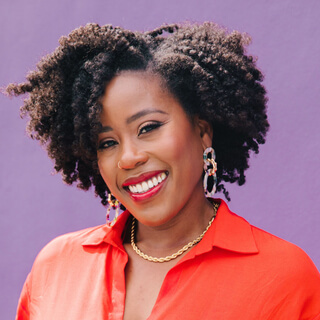
I'm your host,
Dr.
Adia Gooden,
A licensed clinical psychologist,
Dance enthusiast,
And a dark chocolate lover who believes deeply that you are worthy unconditionally.
So,
Hello and welcome back to the unconditionally worthy podcast.
Today,
We are going to be talking about imposter syndrome and the connection between imposter syndrome and low self-worth.
I've talked a lot about imposter syndrome on other people's podcasts,
And I thought it would be good to talk about it on this podcast and to share some insights that I really haven't shared other places in my life.
Which is how I think low self-worth really feeds into and leads to imposter syndrome.
And I'm also going to be sharing one of my favorite strategies for overcoming imposter syndrome.
So be sure to stay tuned in until the end.
So about 70% of people report experiencing imposter syndrome.
So if you have experienced this,
You are not alone.
But let's start by talking about what imposter syndrome is because this term is thrown around a lot.
And I think that maybe not everybody truly understands what imposter syndrome is.
So imposter syndrome was first conceptualized or recognized by two psychologists named Dr.
Pauline Rose Clance and Dr.
Suzanne Imes.
And they recognized this phenomenon in 1978 when they were working with very high achieving women.
And what they saw was that these women were feeling,
Having the experience of feeling like fakes or frauds despite their high achievement.
So these women had their law degrees,
Were getting PhDs,
Were very,
Very successful.
They were very accomplished academically and professionally and still felt like they didn't deserve their jobs or positions or degrees.
And like they were,
You know,
Tricking everyone into thinking they were smart enough.
And that really is the core of imposter syndrome.
It involves questioning our achievements and blaming them on luck.
People who experience imposter syndrome often worry that they got a job that they didn't deserve.
People who experience imposter syndrome often worry that they got a job or were admitted to an academic program by mistake,
Often believing that you're just not good enough and you've tricked people into thinking that you're smart and intelligent.
A core fear of people who experience imposter syndrome is being found out and exposed as a fraud.
And this fear causes people to hide and try to fly under the radar.
And so,
As I mentioned,
About 70% of people experience imposter syndrome.
So if any of this is ringing true for you,
Know that you are in good company because it's very common for people to struggle with these feelings.
So imposter syndrome may show up in just one part of our life or it may be in a lot of aspects of our lives.
We may experience imposter syndrome when things are going well and coming easily to us.
So I often hear clients say,
Oh,
Well,
You know,
It shouldn't be this easy because it's this easy.
I must be doing something wrong or I may not really be getting it or may not be smart enough.
Like I should be working harder.
And people can also experience imposter syndrome when things are challenging,
Right?
So I shouldn't have to work this hard.
This shouldn't be so challenging for me to understand.
It shouldn't be so difficult for me.
That must mean I'm an imposter.
And so even in that,
You can see sort of the trickiness of imposter syndrome,
Which is it can turn anything into evidence that you are an imposter.
It can turn almost anything into support for the reasons that you really don't belong in the job you have or in the academic program you're in or in the relationship you're in.
So overall,
Imposter syndrome holds people back from showing up fully in life and in work and in school and contributing to their teams.
And that really is the most heartbreaking aspect of imposter syndrome to me is that there are all of these amazing,
Beautiful people in the world who are hiding.
And we'll get into that a little bit more deeply in this podcast.
I believe that feeling unworthy of success and feeling like you don't have a place in the boardroom or in the classroom or on your job or in relationship is at the core of imposter syndrome.
And so when we feel like we are unworthy,
When we have low self-worth,
We are more likely to feel unworthy at work and at school.
We are more likely to feel that we are imposters.
When we struggle with low self-worth,
We often feel like we don't have anything to offer.
We just don't feel good enough.
And low self-worth leaves us feeling unworthy of love,
Life and success,
Which makes us feel like fakes or frauds when we experience love,
When we experience life,
When we experience success.
And so no matter what we achieve,
We don't feel we deserve it.
And so we continue to question ourselves and our achievements.
So I think you can see how low self-worth can lead into imposter syndrome.
When we don't feel good enough in general in our life,
We are more likely to feel like imposters at work and at school.
And low self-worth also contributes to the anxiety,
Procrastination,
Overworking and perfectionism that often come along with imposter syndrome.
I know from my own experience,
I anxiously overworked myself and tried to be perfect in order to prove that I was good enough and worthy of my accomplishment.
So I,
You know,
Would stay up later than I needed to stay up.
I would anxiously try to make sure everything was perfect.
I always turned in every assignment on time.
I tried to read every aspect of our assigned readings.
It was just a lot.
And so I was pushing myself and pushing myself and pushing myself because at the core,
I really felt that I needed to prove that I was worthy,
Prove that I was good enough based on academic achievements.
And I felt that if I didn't do things perfectly,
Then I,
You know,
Didn't really belong where I was.
I wasn't really smart enough or good enough.
And after years of trying to feel worthy in this way,
I eventually realized when I was in a doctorate program,
Actually it was probably after I was done with my doctorate program,
That that wasn't going to work,
Right?
That nothing I did or accomplished,
No academic achievement was going to make me feel I was worthy,
Right?
So if I can get all the way through a PhD program and still don't feel worthy,
That's a good sign that academic achievement isn't going to make me feel worthy.
There's nothing that's going to be good enough.
And so it was at that point that I realized,
OK,
This isn't working,
Right?
The academic achievement to self-worth isn't a path that is successful.
And maybe it is temporarily,
Right?
Maybe for a little bit I will feel worthy,
But ultimately,
You know,
It doesn't stick.
And so I realized that and was finally able to start releasing this idea that perfect achievement was what was going to make me feel worthy and what was going to release me of the imposter syndrome that I struggled with at times.
And I wonder if you can relate to this.
I wonder if you can relate to trying to prove your worth and overcome imposter syndrome through trying to be perfect or accomplish things and sort of feeling like you always come up short.
You know,
Another way that I realized this path wasn't going to work is when I started speaking about imposter syndrome to lots of high achieving people.
So college and graduate students at one of the top universities in the US,
Black female law professors,
Women who were surgeons and fellows and residents.
You know,
I realized through these workshops and talking to all these high achieving people that if the way out of imposter syndrome and the way out of self-worth were achievement,
It would have worked,
Right?
They would have done it because they had all of the outside things.
What I'm trying to say here is that the way out of your imposter syndrome,
The way out of your self-worth isn't through achievement.
I hate to break it to you.
Actually,
I'm happy to break it to you because I don't want you to have to go as long as I did down this path,
Trying to get out of low self-worth and trying to get out of imposter syndrome in a way that doesn't actually work.
So I wonder if you can relate to this.
I wonder if you've tried to prove your worth and overcome imposter syndrome through overworking and trying to be perfect.
On the other hand,
You might have experienced crippling procrastination because when we feel unworthy and when we struggle with imposter syndrome,
It can also feel really hard to start projects and do the work that were in front of us because we don't feel worthy or smart enough to do a good job.
And we worry that any work we produce will be evidence that we are a fraud,
Will expose us as fraudulent and potentially cause us to lose our job,
Get kicked out of our academic program,
Et cetera.
So on the one hand,
Some of us sort of overwork,
Try to be perfect.
And then on the other hand,
Some people procrastinate and really struggle to do their work because they feel like they're not good enough.
And for a lot of people,
We actually cycle between these things.
So procrastinate,
Procrastinate,
Procrastinate because it feels overwhelming to start,
Then overwork,
Right?
Pull all-nighters,
Try to get everything done in 36 hours,
Right?
Then feel burned out,
Then procrastinate,
Procrastinate,
Procrastinate,
And the cycle sort of continues.
So just take a moment and reflect what it feels true for you.
Are these things resonating?
Are you saying like,
Oh,
I see myself in that.
That's definitely an experience I've had.
Just notice,
Right?
Without judgment,
You are in good company,
Right?
You are in the company of many,
Many other people who struggle with these same things,
Which is why I think it's so important for us to talk about it.
For me,
The reason I am so passionate about talking about imposter syndrome,
Talking about low self-worth and helping people to overcome these things is because I believe that one of the most heartbreaking aspects of imposter syndrome and low self-worth is that they both cause us to hide.
We shrink and hide ourselves and our gifts and our talents because we don't feel good enough.
And we really don't believe that we have anything of value to share with the world.
And when we hide in this way,
The world misses out on our gifts and we miss out on the joy of engaging with our strengths and talents and showing up fully in our lives.
So often when I work with clients,
They struggle to connect with what they really want to do in their lives and careers because their self-criticism,
Which is fueled by low self-worth,
Blocks them from connecting to what they really enjoy and what their true strengths are.
These conversations often look like me saying,
Well,
You know,
What is it that you most enjoy?
And them saying something like,
Well,
I really love writing,
But that's not going to be a successful career and I'm not really good at writing.
And sometimes I struggle with writing.
So immediately the joy or the love comes out and then it gets shut down so quickly.
And sometimes it looks like I have no idea what I want to do.
I have no idea what I enjoy because before they're even able to articulate what they love or enjoy or what they think they're good at,
Their self-criticism shuts it down.
And so then people struggle to even connect with what do I like in this world?
What do I like to do?
What am I good at?
Right.
And so I'm really passionate about helping people to find the space to connect to that.
And I believe that each and every one of us has something important to share with the world and that when we struggle with low self-worth and we feel like imposters,
We are having trouble recognizing the gifts that we have to offer this world.
And when our work is not in alignment with these gifts,
Life does not feel as good.
In fact,
It can feel sort of miserable.
So one of the things I want to talk about is so many people fear that if you believe you're worthy,
You'll end up being complacent or arrogant or you just won't work hard.
But the reality is that when we know we are worthy unconditionally,
We actually find the courage to show up fully and share our true gifts with the world.
When we know we are worthy and we're tapped into our gifts,
Life and work feel so much better.
Unconditional self-worth gives us a strong foundation to go out boldly into the world because we know that if we falter or fail,
We are still worthy and we will be able to pick ourselves up again and try again.
So I encourage you,
Especially if you're someone who is worried that owning your self-worth and letting go of the idea that you're an imposter will leave you complacent and that you need that,
You need that edge,
You need to continue to prove your worth.
And that's what motivates you.
And that's what makes you good at your job.
If you feel that way,
I really want you to consider these next questions.
What would you find the courage to do if you knew you were worthy?
I want you to consider how you've been hiding or holding yourself back because you're not sure that you're good enough.
Think about that.
What would life feel like and be like?
How would you engage in the world,
Knowing that you're worthy?
If that wasn't a question.
I encourage you to take some time to consider these questions and think about how much more exciting and fulfilling life would be if you stopped hiding and holding yourself back.
You deserve to tap into your gifts and share them with the world.
And I hope that you will because I know the world will be a better place when you do that.
So to close out this episode,
I want to share one of my favorite strategies for overcoming imposter syndrome.
And this strategy is focusing on your gifts and what you can contribute.
Imposter syndrome often causes us to compare ourselves to others.
We look at other people we work with or in classes with,
And we feel that we are not as good as them because we don't have the same comments to share in discussions,
Or we don't work the same way that we do,
Or maybe,
You know,
That mother seems like a better mother or that wife or partner seems like a better partner.
Maybe that friend seems like a better friend.
Oh,
My gosh,
Look at that person on social media.
They seem to be having so much fun.
Their clothes are perfectly styled,
Et cetera,
Et cetera,
Et cetera.
We compare ourselves to others and feel we need to be just like them in order to be good enough.
If you are trying to be like someone else,
Though,
You miss out on sharing who you are.
And we,
The world,
Miss out on the unique gifts and talents that you have to offer.
I want to remind you that you have the strengths and gifts to share and that you are worthy of sharing those things and shining in the world.
I also think it's important to note that no work team or educational environment is improved by having a bunch of people who are exactly the same.
There's actually research that shows that diverse backgrounds and ways of thinking and working benefit our work and our educational environments.
So this way of combating imposter syndrome and the comparison that often fuels imposter syndrome is that instead of focusing on other people and what you like about other people and what you wish you had that was the same as other people,
I want you to focus in on yourself.
What are your unique gifts and strengths that you want to contribute to the world,
To bring into your workplace,
To bring into your educational environment?
So in order to start this,
I want you to reflect on and identify your strengths.
And just hold on for a minute if you're saying,
Adia,
I don't have any strength,
There's nothing I'm good at.
Pause,
Because I know there is so take some time to answer these questions.
What are you good at?
Are you a good listener?
Are you a good writer?
A great speaker?
Are you empathic?
Do you ask great questions?
Are you awesome with numbers?
Do you organize things well?
Take some time to think about what your strengths are.
You might be really creative,
You might be a great problem solver.
Often,
Our strengths are things that come easily,
And which we do naturally,
Without even thinking about.
So I'll give you an example from my own life.
I recently did the Gallup Strengths Finder and found out that one of my top five strengths is strategic.
Now,
If you had asked me,
Hey Adia,
Are you strategic?
I would have been like,
No,
I'm not very strategic.
That's not something I'm very good at,
Right?
And so it was surprising to see that as one of my top five strengths.
But one of the things they said is that because of the way my mind works,
I often sort of cycle through,
Shuffle through,
Look through a bunch of different options,
And choose on a strategy really quickly in my head.
And it's not an external process for me all the time.
And so because this is something I'm really good at and do very quickly without a lot of intentional thought,
I didn't think it was a strength.
I didn't recognize it as one of my strengths.
So even having this Gallup Strengths Finder and realizing,
Oh,
I am strategic,
There are things I'm doing that are very strategic.
I'm just not recognizing it as such.
And so I give you that example because for you,
Some of your biggest strengths may not be things that you recognize.
They may be things that you just do all of the time without knowing.
Maybe it's the listening.
You find everybody always wants to come to talk to you about their issues.
Maybe it's the empathy.
Maybe it's the problem solving.
So take some time to think about this.
And if you're having trouble identifying your strengths,
Consider talking with a close friend or a loved one or a colleague about the strengths they see in you.
And it can feel vulnerable to own our strengths because we worry somebody else will say,
Oh,
You're not really good at that.
But I encourage you to try to do it anyway and write these things down.
What are your strengths?
What are the things that you do naturally that you're really good at?
And once you've identified your strengths,
Consider how you would like to share them in the spaces that you're in,
In the world,
In your job,
At school,
On your teams,
In your community.
How do you want to show these things?
How do you want to show up in these spaces?
Do you want to ask great questions?
Do you want to be a listening ear for people?
Do you want to help people problem solve?
Do you want to organize and plan?
What are the ways you want to bring these strengths?
And I really do want you to write these things down because having a list will help you during times when you feel like an imposter.
This is a list you can return to when you're feeling nervous about something,
When you're wondering if you really belong in that space.
Return to this list and instead of feeling that you need to be perfect,
You need to have all the right answers,
You need to get everything right.
See if you can focus on how you want to bring these strengths.
Often when we're nervous about something,
It's because we're so focused on not wanting to make a mistake.
And I want to remind you that you can do things well and make mistakes.
You may not hear them because they've probably been edited out of this podcast,
But in recording this,
I have made several mistakes.
And I've kept going because I know that this podcast can be impactful and helpful to you,
Not because it's perfect,
But because I'm sharing something of value,
Because I have some insight and wisdom and I use my voice,
Which is one of my strengths,
To share wisdom that helps other people.
So it does not have to be perfect.
Just show up and share your gifts and it will be good enough and it will probably be great and other people will find it valuable,
Even if you make a mistake.
So if you feel like you struggle with imposter syndrome and you feel that I hit a chord with you when talking about imposter syndrome and low self-worth today and you're curious about learning even more strategies to help you overcome imposter syndrome.
I have a 15 day micro course on the Insight Timer app that is all about overcoming imposter syndrome.
And so in that course,
I share 10 strategies,
Including the strategy that I just shared with you about overcoming imposter syndrome.
This is a great course for you if it's something you're struggling with and you're really determined to overcome it.
It's,
You know,
About 10 minute recordings every day.
It's pretty easy to get through and you're going to learn some great practical strategies.
So that will be linked in the show notes and you can check it out on Insight Timer.
I really hope this episode on connecting low self-worth and imposter syndrome has been helpful to you and that you will put the strategy of focusing on your gifts and what you contribute into practice.
I want you to pay attention to what it feels like to show up and share your gifts without worrying about being perfect because I imagine you're going to feel so much better,
So much more alive,
So much more engaged than when you're worrying about doing everything perfectly.
My goal is that this really inspires you to shine in the world because the world needs your light and you deserve to share it.
So I hope this has been helpful and I will see you next time on the Unconditionally Worthy Podcast.
Thanks for joining me this week on the Unconditionally Worthy Podcast.
Make sure to visit my website,
DrAdiyaGoodin.
Com,
And subscribe to the show on iTunes so you'll never miss an episode.
You can also follow me on social media at DrAdiyaGoodin.
If you love the show,
Please leave a review on iTunes so we can continue to bring you amazing episodes.
Lastly,
If you found this episode helpful and know someone who might benefit from hearing it,
Please share it.
Thanks for listening and see you next episode.
This episode was produced by Chris and Tiana and the music is by Waterboy.