The Power of Prayer Hands Sometimes the most simple things never get explained,
Or are explained incompletely.
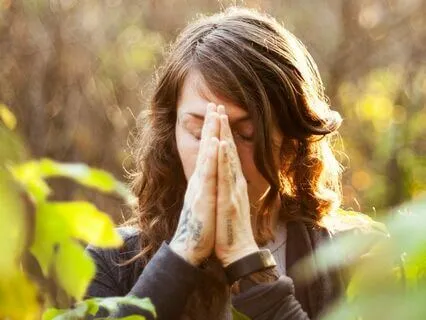
A familiar mudra or hand pose you've probably done a hundred times,
Especially if you grew up in a religious household,
Is prayer pose,
Or anjali mudra,
Prana mudra in kundalini yoga.
It is traditionally known worldwide as a gesture of turning inward,
Or of expressing goodwill and peace.
Do you know the scientific significance of prayer hands?
There are several facets of this special mudra worth understanding.
First,
Let's consider the meanings.
A mudra is a seal,
And anjali could be translated as an honoring.
By forming our hands this way,
Palms pressed together,
We assume an attitude of reverence.
It's considered a daily greeting gesture of respect in eastern traditions.
You're most likely familiar with namaste,
Which literally means,
I salute you,
But it is often translated to mean,
The light in me honors the light in you.
Used in the traditional way,
It is a greeting and not a parting,
However it is often seen used as a closing in yoga and meditation classes.
Perhaps the intention is the most important aspect of its meaning.
The hands and the fingers are filled with sensitive nerve receptors.
These nerves are intelligent enough to help you know when something is hot,
Cold,
Prickly,
Soft,
Etc.
And they communicate that information to the brain's cerebral cortex.
Now,
As you probably know,
Your brain has two halves.
The right brain is our creative and intuitive hemisphere,
While the left is our analytic and logical side.
When we bring our hands together,
The right being controlled by the left brain,
And the left by the right,
We are in essence integrating brain function,
Bringing balance between right and left.
Right brain halves are thus neutralized,
Bringing improved concentration and focus.
But wait,
There's more.
The right side of the body represents the sun and masculine energy,
Pingala,
While the left side represents the feminine and moon,
Ida.
When we bring the hands together in prayer pose,
We are balancing these polar energies as well,
Creating a neutral space in the body's electromagnetic field.
I want to briefly mention the thumbs and the significance of pressing them into the breastbone.
This activates a reflex point of the vagus nerve,
Which is one of the longest nerves in the body,
Traveling from the head,
Ears,
Through the neck,
Linking our heart,
Lungs,
And abdomen.
The vagus nerve is associated with our ability to rest,
Relax,
And regenerate.
And with our often overused habits of shutting down,
Running away,
And disconnecting when we sense a threat.
The vagus nerve helps to regulate our breathing,
The body's anti-inflammatory response and heart rate.
It also affects our memory and ability to tap into our gut sense.
Research has shown that stimulation of the ventral vagal nerve along the front of the body activates the feelings of safety and calm,
So crucial to our yoga or meditation practice.
So when we press into the sternum with our thumbs,
We are activating the ventral vagal nerve and its positive aspects.
Let's practice Anjali Mudra.
Begin seated in an easy pose,
Or if uncomfortable on the floor,
Sit in a chair or a stand in mountain pose.
Bring your palms together in front of your heart,
Thumbs lightly touching the sternum.
Feel the outer edges of your palms and fingertips.
In some traditions,
Leaving a gap between the palms is recommended,
While in others,
The entire surface of the hands and fingers touch.
Experiment to find what feels right for you.
Sometimes I even let my fingers cross slightly.
Now release unnecessary tension through your arms.
If you like,
Apply a gentle pressure through the hands to feel them coming together.
Notice the balance of tensions from left going right and right moving left.
Now relax.
Close your eyes and lift your awareness upward,
Slightly above and between the eyes.
Be aware of any sensations or phenomenon.
Breathe full,
Relaxed breaths.
Pray if you want.
We'll remain like this together for a minute.
Now to come out,
Bow the head with reverence and release.
Maybe Anjali Mudra is now making more sense to you,
But in addition to the linguistic meanings and the science behind it,
There is of course,
The spiritual implication,
Described by Krishnamacharya,
Well-known yoga teacher and scholar,
Who wrote,
This gesture signifies the potential for an intention to progress to the greatest spiritual awakening.
When done properly,
The palms are not flat against each other.
The knuckles at the base of the fingers are bent a little,
Creating space between the palms and fingers of the two hands,
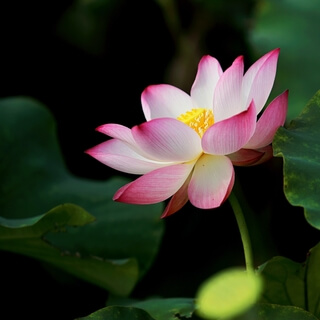
Resembling a flower yet to open,
Symbolizing the opening of our hearts.
In summary,
Anjali Mudra aligns us with the right attitude to center ourselves and pray.
It inspires our posture upward and it also brings calm to the emotional body and mind,
Bringing balance to the brain and opening the heart.
Furthermore,
It signifies our spiritual aspiration and prepares us to receive spiritual awakening.
So next time you find yourself in yoga or meditation,
Placing your hands together in prayer,
May you have an enriched experience by recalling some of what's behind it.
If you've enjoyed this content,
Be sure to follow my profile here on Insight Timer.
Thank you for listening.