Didnt all the Lord make this Stephen Steve This is Kabbalah 99.
I'm Deborah Sophia.
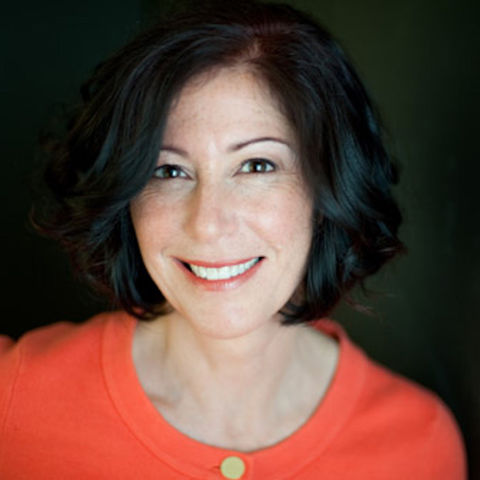
Today we are speaking with Marilyn Saltzman,
Who has co-authored several award-winning books including Building School Communities,
Strategies for Leaders,
And a very heart-rendering book David Sanders,
Columbine Teacher,
Coach,
And Hero,
A book that she wrote with his wife Linda Sanders.
Most recently,
Marilyn,
You have published the book Your Love is Blasting in My Heart.
It's such a wonderful title,
So let's start there.
What is this book about?
I have been studying Musar or Jewish ethics for about a decade,
And in 2011 and 2012,
My daughter adopted two children,
One from Ethiopia and one from China.
The book is about how the children have helped me on my Musar journey,
How they've taught me about the soul traits like patience and humility and responsibility and gratitude and of course joy.
Ah,
Joy.
I imagine having grandchildren would be very joyful.
It is.
Tell me where that title came from,
Your Love is Blasting in My Heart.
The title came from a letter that my granddaughter,
Salamnash,
Wrote me when she was in third grade.
She wrote,
Dear funnest grandma,
You are a spectacular fun grandma.
You bring us on amazing adventures.
You give us many,
Many freedoms,
Such as go places like Eliches,
Jump Street,
Big Time,
Parks.
Your love for me is blasting in my heart.
I love you so.
Sincerely,
Salamnash.
Well,
That's beautiful.
So how has studying Musar helped you be a better grandmother?
I think it's helped me be a better person and be a better grandmother.
So Musar is as ancient as the Bible.
It's mentioned 51 times in the Bible.
And Musar means it comes from the root word to turn or change direction.
And it's translated as moral conduct or instruction or discipline.
It's based on the soul traits.
And there are many soul traits,
As I mentioned a few of them before,
Compassion,
Humility,
Loving kindness,
Honor,
Responsibility.
So my grandkids have helped me learn those soul traits.
And I think working with Musar and studying and practicing Musar has made me a more patient,
Humble,
Grateful human being,
Which makes me a better grandma.
In your book,
You mentioned that there are four principles for Jewish ethics.
What are those four principles?
Now,
The four principles I talk about in my book are one is be aware,
Mindful,
And in the moment.
Because really,
You can't practice Musar if you're not aware and mindful.
You can't choose to act with patience or with kindness or with respect with another person if you're not mindful of how you're acting.
And that leads to the second one is life is full of choices.
And in Hebrew,
It's called v'chira,
Points.
So we have choices.
We have choices of reacting with anger or reacting with understanding.
We have choices about being patient with somebody who is doing something more slowly than we would like or blowing up at them.
So when we are mindful,
Then we realize we have choices about how we behave.
So the second one is behavior,
Choices about our behavior.
The third is bearing the burden of the other.
And that's really trying to understand where the other person is coming from.
An example I used in my book is when I looked down at my dashboard driving very fast on I-70 in the mountains,
And suddenly there was a car right in front of me and I hit the car and it was going very slowly.
And I was angry at myself,
Of course,
But also angry at the other driver and then came to find out it was an elderly person.
He had just left at Scenic Overlook and hadn't gotten back up to speed yet.
And so by saying,
Okay,
You know,
Not blaming him for the accident,
Blaming my own inattentiveness for the accident and bearing the burden of,
No,
It wasn't an old man who was too slow to be on the highway.
He had just gotten on the highway and it was really my fault.
I hit him.
So that's an example of bearing the burden of the other.
And then the fourth one is judging on the side of merit.
So how do we assume that the other person that we are interacting with or other persons are really acting with best intentions,
With good intentions and not assuming that they're out to hurt you or damage you or do harm to the world,
But that everybody is doing the best they can at that moment in time.
That's really lovely.
The first one,
Mindfulness.
So can you think of a way that our listeners can remember to be mindful in their day?
For me,
That has been something that has been an ongoing struggle.
I had a demanding job and career and I was rewarded quite a bit for multitasking.
It was expected and it was rewarded to do several things at once.
What I've had to learn is that multitasking is not always the best way to go.
But if you can focus and be present and think about what's important right now in this moment,
I think that that's a mindfulness practice for me.
And then meditation and journaling have been two practices that I've used to try to become more mindful and aware.
Instead of multitasking,
What I like to call it is switch hitting.
I focus on one thing fully,
But I can switch quickly to something else when I need to.
And the second one you said was making good choices.
Can you talk about how we can remember to think before we act or speak?
One of the LUSAR teachers,
Alan Marinis,
Talks about putting space between the match and the flame.
So we get a stimulus and rather than responding immediately to the stimulus,
Taking a minute or a second or however long it takes to step back and say,
How do I want to respond to that?
What is my highest self and what is my highest self's response rather than just knee jerk reaction and not thinking about it.
And that's where the mindfulness comes in.
If you are aware and present,
You can make a choice about how you want to respond rather than react.
I heard a woman in a webinar one time we were talking about the space between the match and the flame.
And she said,
Rather than that lighting a fuse,
Why don't we light a candle and shed light on the situation?
And I really love that image.
And I try to keep that image in my head when I make a choice.
How am I shedding light rather than setting off an explosion?
One of the qualities you mentioned was discipline.
I can see how this takes discipline to think and put a little space between the match and the flame.
Absolutely.
And then it's practice.
And sometimes for me,
It's two steps forward and one step back or one step forward and two steps back.
I think it's a journey and that's why the subtitle of my book is a grandmother's journey,
Because I think we're never done.
It's a lifelong practice.
That's so true.
I noticed that I'm more likely to react quickly when it's somebody I know and when they're doing something that I would expect them not to know or to know better.
That's my short fuse right there.
It's like,
Why do I have to tell you this?
Exactly.
Don't you know?
Haven't we done this a hundred times?
But it's still not helpful.
It's still not a helpful way.
So the third one you mentioned was bearing the burden of the other.
And so how can we become more attuned to doing that?
Because that's,
Again,
It's a choice,
But that seems like a weighty thing,
Something weighty.
I think it's difficult and I think we make a lot of assumptions.
So we assume what somebody is meaning or what they're thinking or what they're trying to accomplish rather than maybe taking the time to ask and pay attention.
And again,
They all build on each other.
So how are you being present and mindful to the other person?
And we never know.
I worked in an office where people would call and be angry about something that happened in the school.
And we had a wonderful secretary who was able to listen,
Even though she probably most of the time couldn't solve their problems,
It was about listening and really understanding that this person's issue,
Whether it was big or small to us,
Or seemed really silly or really serious to us,
It was serious to the person who had the issue.
That's a very kind,
Very kind way to respond to someone else.
It's a good thing to remember.
And then my favorite one of all is judging on the side of merit.
I think that's really useful because sometimes we can come out of fear and project things on other people.
And even if there's a twinge that that might somewhat be a little bit right,
It feels so much better to let go of that and just ascribe positive values to that person.
It really is very freeing.
And I remember to do that,
It's very freeing.
Yeah.
The example I give in my book is a man in the,
I was walking with my dog in the woods and a guy started,
I heard somebody rushing up behind me and I got really scared and thought,
Is this guy going to attack me?
Because I,
You know,
I did have an experience like that when I was teenager in New York city.
And so,
You know,
I didn't know what to do and I just kind of froze.
And then he came up behind me and he had actually found my car keys that I had dropped.
So he was doing a favor.
He was doing me a very good deed.
And I realized that I didn't have to use my past experience and be bound by that experience to assume the worst.
How much anxiety that would save us if we could live that?
There is a saying in Buddhism,
Drive all blames to one,
Meaning if you're going to blame someone,
Look to yourself rather than to project it on someone else.
And so I find that they're similar to these last two.
I appreciate the tips that you're giving us to live these qualities more fully.
And is there a difference between living an ethical life and living a spiritual life?
And the reason I ask is because I am reading the Torah portion each week and writing about it in the blog.
And I find that there are role models for us like Sarah and Abraham,
And they were living spiritual lives,
Noah before him.
Is there a difference between a spiritual life and an ethical life?
Well,
It's interesting because the Musar movement in the 19th century with Rabbi Israel Solanter,
He was the one who started the Musar movement as a communal movement.
And one of his motivations from what I've read is that he felt a lot of his Yeshiva students who were studying the Torah,
So maybe that's a religious life,
A spiritual life,
Were not exhibiting very ethical behavior toward each other.
Interesting.
And so he created the Musar movement and had them studying less Torah and more ethics.
It's not to be taken for granted,
Is it,
That just as we mature,
We become kinder and more ethical and more patient.
Exactly.
And I think,
Not to get political,
But I think a lot of not such good things have happened as a result of some religions.
There have been wars as a result of religion.
There have been divisions in society because of religion.
So I think ethics and religion certainly are not,
You would like to think they're hand in glove,
But I'm not sure they always are.
When I think of spiritual,
I think more of the heart and when I think of ethical,
I think more of the mind and this all about this,
About making choices.
That's very good distinction,
How we act in the moment versus spiritual,
Maybe our connection with the divine.
Exactly.
And I think also for me,
Spiritual is more my experience with the divine,
Whatever that is the universe,
A God,
Whatever.
And ethical is more my interactions with other human beings.
That's lovely.
So how has the long time practice of Musar changed you,
Marilyn?
I hope it's made me more aware,
More kind,
More patient.
I hope it's made me a better person in the service of others.
So I think what's different between Musar and the whole self-help movement is that self-help does not focus quite as much on tikkun olam,
Healing the world.
So I hope that Musar has made me a better person in service to others.
Right.
You mentioned that in one of our conversations that self-help,
When you focus too much on developing yourself,
Forgets the connection with others and that we actually can make more progress when we think in terms of serving and being of service.
Yeah,
I really believe it.
And I think it's each interaction with each human being.
I think we don't realize sometimes that we may have had an effect on somebody by a kindness that we don't realize that lasts a long time.
I remember when I was in sixth grade or fifth grade or fourth grade,
I think it was,
And this young woman had run for class president and she had lost.
And at the end of the school day,
I saw her in the hall and I said,
Hi,
How are you?
And I was being a shy little girl and thought this was an important sixth grader.
And about five years later,
I met her again and she said,
You know,
I had lost the election that day and your smile and you were asking me how I was really helped me get through that day.
And that wasn't even intentional on my part.
So think about intentional kindnesses,
How we can make a difference in somebody's life through intentional patience or kindness or joy or gratitude,
Saying thank you.
It's such a good thing to remember that gratitude,
Gratitude in action,
Not just thinking it's a good idea to have gratitude,
But really to live it day to day.
When COVID first started,
I made a practice of writing an email or a letter to somebody every day telling them what they meant in my life.
How did they respond to that?
It was amazing.
People wrote back that they were so touched and how much it meant to them.
It's very uplifting.
And what about other people?
You've had your book out for a while and you've been doing some presentations with it,
Some talks.
What has that been like for you?
It's really exciting to hear people excited about what I've written and the thoughts.
So for example,
I gave a Zoom workshop to a synagogue in Schenectady,
New York.
And after that workshop,
They started a Musar class at their synagogue.
So that felt really good.
And then people,
Some of my friends or other people on Amazon have said,
Each chapter of my book ends with a journal prompt questions and one person wrote,
Each chapter ended with general prompt questions which gave me the opportunity to reflect on my own similar life experiences.
What would I do?
How would I react?
How would I feel?
How did I leave somebody else feeling?
So that's what one person wrote.
Another person wrote,
Anyone with a desire to become a better,
More mindful person can benefit by her words.
So that made me feel really good.
And then another person said,
I read it cover to cover in almost one sitting and now I'm going to go back chapter by chapter to use her journal prompts.
Excellent.
Very useful.
It's a very practical type of book.
I hope so.
I want to turn back to another book that you wrote that was an award-winning book,
Building School Communities,
Strategies for Leaders.
You used to work in school communities?
Yeah,
I worked for Jefferson County Schools for 20 years in the communications services department.
So I was doing communications for Jefco schools.
And I co-wrote that book with my friend BJ Meadows,
Who is a principal and administrator in Jefco schools.
And the book is really about collaborating,
Collaborating with teachers,
Collaborating with parents,
Working together to build community.
So it really,
In some sense,
Fits in with the Moosar because it's about building partnerships and treating each other with respect.
Right.
Can you talk a little bit about your understanding of how we're not so separate?
We look like we're all separate,
But are we really that separate?
No,
I think we all came from one and we all have a responsibility to work together and to cure the world together,
To serve the world and to serve each other.
You used the phrase tukunulam,
And not everyone might know what that means.
What is tukunulam?
It's healing the world.
So it's not necessarily charity,
But coming together to solve problems,
To be kind to each other,
To make the world a better place.
And you wrote about Dave Sanders,
That Columbine teacher,
As a coach and a hero.
And you collaborated with Linda Sanders.
How did you come to write that book?
Well,
As I said,
I worked for Jefferson County Schools in the communications department.
And when the Columbine tragedy occurred in April of 1999,
Our office was really front and center in terms of dealing with the media.
And one day the attorney for the school district called me and said,
Linda Sanders,
The wife of Dave,
Who was killed,
The only adult killed at Columbine,
Was really struggling.
The media were camped out on her front lawn and they were asking for interviews and really making it life difficult for her.
And they said,
Would you go and meet with her and give her some hints and advice and kind of be by her side as she does interviews?
And so I did.
And I went to her home and we became friends.
And one day she said to me,
You know,
Everybody knows how Dave died.
I want the world to know how he lived.
And so she and I worked together to interview students and fellow teachers and family members to write a biography about who Dave Sanders was.
And can you tell me just one point about him that is really memorable?
Well,
It was a hard book to write.
I would come home from interviewing his fellow teachers.
I remember,
You know,
These big,
Burly coach type of teacher guys.
And I come home and say to my husband,
I made another grown man cry today as he told me stories of Dave.
I think Dave was a very kind,
Loving teacher.
He really cared about his kids.
He cared about his students.
He wanted,
You know,
He ran into the line of fire trying to protect kids,
Trying to get kids to safety.
And I think that describes who he was.
Yeah,
It's like you say,
A hero.
That is heroic to have the courage to do that.
And that goes back to that service.
You're forgetting yourself in the moment and doing what you can to protect others.
It is a quality we carry as human beings.
Exactly.
Exactly.
He modeled that.
He modeled that.
So,
What would you recommend people do if there's no mussar class near them?
How can they work on those qualities you spoke about of mindfulness and making good choices,
Thinking before you respond,
Not blaming others?
How can people develop those qualities in themselves?
Where can they go for more help with that?
I think there are a lot of good books out there.
Alan Marinus,
Who's really one of the leaders of the mussar movement in the last 20 years in America,
He founded the Mussar Institute.
And they have a website that is wonderful.
And they also offer a lot of online classes.
So,
If people wanted to delve more into mussar,
That would be a great opportunity.
There's also a man named Greg Marcus who started American Mussar.
And he has a book and he also has a website and a blog.
I have a blog and then I often write about mussar related topics.
So I think there's a lot of reading out there available.
But I think mussar is more than reading and studying.
It's really about practicing.
So it's really important,
I think,
To either have a partner or a friend you can work with.
And I've taken classes.
I've also studied on an individual basis with friends.
And we'll take a soul trade and we'd like patients,
Let's say.
And we'll spend a week doing some study about patients and then reading some text about patients and then coming up with our own practice.
How are we going to be more patient in the next week?
And then getting back together and talking about,
So how did it go for you?
Or maybe journaling at night and saying,
Okay,
What went well today?
Not to beat myself up,
But what,
You know,
If I could do it over,
What do-overs would I have?
And it's about learning.
It's not about beating yourself up.
So you're saying there are resources out there for someone who wants to develop these qualities and it's best done with a partner,
But the resources are there.
And if they wanted to get your book,
How would they go about getting that?
The best way is through Amazon.
It's available on Amazon,
On paperback and Kindle.
And if they wanted to find your blog and read your updates?
MarylandSaltsman.
Com.
All right.
I'll put that in the description so that they can have that easily.
Thank you.
If anything else you'd like to say,
Any parting thoughts of encouragement for everybody?
Thank you,
Deborah,
For having me on and doing this with me.
I've enjoyed studying with you and I value your friendship.
So I really appreciate this.
Thank you.
Oh,
That makes me feel great.
Thank you.
I very much appreciate you too,
Marilyn.
I always look forward to our conversations.
For more Mind Heart Awakenings like these,
You can follow us on this podcast and on our blog at Kabbalah 99.
That's where we discuss the weekly Torah portion through the lens of today's challenges and offer practices to stay sane,
Grounded and connected.
If you like this episode,
Please remember to tell one friend about it.
Next week,
We'll hear from another thought leader who will help us to explore our experience of life and our place in this universe of wonder.
Thanks for listening.
I'm Deborah Sophia.
See you next week.
Bye.
Equation theory