Wants MX World to be a which domestic that.
So.
So this is Kabbalah 99.
I'm Deborah Sophia.
We have on the call today a very dear friend that I am delighted to have a chance to speak with and for you to listen as well.
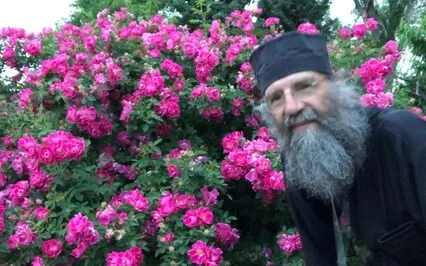
So today we have on our call Archimandrite Christo Doulos Papadeis,
A Greek Orthodox priest who lives in Denver.
We've always made our friendship easy by introducing yourself to me as Father Chris.
So I'm going to call you Father Chris because not speaking Greek gets much easier.
So welcome Father Chris.
Thank you very much Deborah.
It's my privilege.
I'm humbled that you would even consider to have me speak with your people and on your podcast.
Thank you very much.
Well I have been very touched by the sincerity of your services.
When I go to your services I feel that it's reaching across the aisles to me and I greatly appreciate that.
The only point I can make about that is that I don't think anyone,
Especially me,
Has a monopoly on God,
On the things of heaven and the goodness of the Creator of the universe.
So hopefully when we worship and when we gather people we do it with some level anyway of humility and awe for the one who has made all things the heavens and the earth.
Beautifully said.
So a little bit about your background.
You graduated from Holy Cross Greek Orthodox School of Theology and took your monastic vows in 1989 at the Archangel Michael Monastery in Rhodes,
Greece.
You were ordained and made a spiritual father and Archimandrite in 1994.
So I'm not familiar with that title Archimandrite.
What does that mean?
Archimandrite literally means the leader or the head of a flock.
Mandra is the corral where we keep the sheep.
Archi like archangel or archdiocese or what are the arch words?
Leader of.
So a leader of a flock is the real meaning of the word.
And monastic clergymen of the church are sometimes given this title and higher responsibility to be more fully responsible for guiding the people.
One of the things you said was a monastic and so someone could be a priest in your order and in Mary.
That's correct.
Yes that is absolutely correct.
Most of our priests in fact are married.
I see.
There are many of course men and women who either at a young age or a later age want to devote themselves completely to Christ,
To the church.
And so they take monastic vows.
Monastic is comes from the Greek word monos,
Alone,
Alone with God,
A monk or a nun as we call them in English.
And from those ranks are chosen Archimandrites and archbishops even from the monastic ranks.
Right.
Right.
Maybe that's in your future.
Well,
I don't know.
Yes.
So I was interested in reading about your background.
So many things I don't know of course.
You don't talk about these things when I meet you but you once worked as a design artist for Disney as a young man.
Tell me a little bit about that.
Right.
That begins with the loving warm sincere care of my mother and of my father of course.
But when I was a boy 10 and 11 years old mother observed that I had an inkling or a talent in the area of arts,
Visual arts and so forth.
And I too realized that I was able to draw things.
I could draw a person,
I could draw houses and flowers and paint and so forth.
And so my dear mother,
Whom I love and who's a very holy woman in my eyes,
She found here in Denver where I was growing up a very,
Very wonderful artist.
His name is William Tyler Marks.
God bless his soul.
And he was a well-known Western artist here in Denver.
And he took me on as a student.
And I was I think 11 and 12 somewhere in there.
And so for two years I took oil painting lessons from him.
So I was able because of my mother's good art to cultivate my gift of visual arts.
I couldn't decide what to study because I was one of these kids that was thinking broader and what can I do for the world and so forth.
So I couldn't set on the area of study.
Finally my father said,
Well,
Let's just get a business degree and finish up and then you can go to your next step.
And I did that.
And so I got a business management degree with an emphasis in marketing.
Marketing knowledge,
Shall we say,
That I gained in studies in school along with a portfolio of many,
Many of my artworks landed me this job.
I just did it on a hunch.
I always appreciated the work of Walt Disney when I was a boy in family entertainment and positive and encouraging joy and so forth.
And I threw my hat into the or my whatever into the hat.
And sure enough two weeks later I was hired.
So I took it.
Great.
Great.
Hand of God.
Right.
Even back then.
So how did you decide to become a man of cloth?
A man of the cloth.
That's a nice phrase that we use,
Isn't it?
I wonder where that comes from,
By the way.
Do you know?
Man of the cloth.
In other words,
What cloth are they speaking of?
The garb or the I don't know.
I never analyzed.
I again,
Because of my parents goodwill and their love for God and their fellows brought us up in the church.
So in fact,
My father was very wise.
And the second home or third home actually that we own,
Which is the home primarily that we grew up in was right across the street from the Greek Orthodox Church here in Denver.
And something in me more than my siblings actually had me going to church a lot.
And not just for worship services,
But for activities and so forth.
And from a young boy,
I became quite involved.
And I loved that.
I saw the things that were happening in a secular vein.
Of course,
At school,
I was in sports and music and drama and so forth.
But I always felt that something more was happening with what we were doing or was trying to be cultivated in us at church.
So my sister,
God bless her,
She's a very good,
Devout woman herself.
But she used to when we were little,
She was younger than me.
She called me the churchy one.
Because I always wanted to get everybody to go to church.
So maybe that's what they call sometimes some groups,
Some religions and so forth call this calling.
Maybe it was like a calling for me.
I don't know.
And let's see,
You've done a mission trip in India and Albania and Canada.
And then you were sent to Denver to be in an urban hermitage where you are right now.
You're sitting in your hermitage right now,
The Brotherhood of St.
George.
And I've been to services there.
They're really lovely.
Was this the home you grew up in?
No,
No,
Here's another little.
I became a monk as you listed before there on the island of Rhodes.
It's where at 28,
29 years old,
I decided to find what I'm going to do with my life.
And that was to devote myself to the Greek Orthodox Church.
And as a monk.
20 years later after solitude at the monastery,
Some mission activity,
Becoming the Archimandrite and being sent here and there to preach and to console people and so forth.
My elder,
The superior of our monastery,
Thought it was time for me to go back home as it were.
And so he sent me back to my birthplace here in Denver to help here,
Our bishop,
Our local bishop and the faithful here.
And where would I stay when I first got here?
I stayed with my mother and father,
Of course.
And then mother again,
There's family,
An important family.
She said,
Well,
I know it's a little bit,
You know,
You're a whole Archimandrite and you're staying at your mom's house.
She said,
Why don't we let you stay at grandmother's house who had passed 10 years prior and they were renting the home.
And so this is my grandmother's home.
They gave a few due notice to the people who were renting here.
And then we came in and I had two brothers with me at that time.
And little did I think then I never dreamed of it,
That this would become the hermitage and the place of spiritual gathering and joy that it is.
But by itself,
So to speak,
It just kept growing and growing and growing.
And we did some changes and we added this and took away that.
And before you know it,
People are coming and coming.
And here we are,
The hermitage called the brotherhood of St.
George.
I wish people could see it because it's very ornately rich in icons and colors.
It's,
You instantly feel,
You know,
The presence of community and of,
And the warmth of God in your hermitage there.
So I thank you for.
.
.
I'm happy to hear you say that,
Deborah.
Yeah.
You are a person of God and you see that.
Yes,
Very much so.
And I think the people who come do,
That's why they come.
One of your favorite quotes is from Romans 11,
18.
Remember,
It is not you who holds up the root,
But the root that holds you up.
Right.
Very beautiful,
Isn't it?
Yes.
It's,
I've stated now a couple of times already how important my parents are to me.
I would be nothing if it weren't for my birth and my good birth to responsible parents.
And this is basically what that means.
But St.
Paul was writing that generally in his book to the Romans to remind all people or would be people of God that we're not alone.
We come from somewhere and we have forebears who have either planted or watered.
And now we,
He says in another area,
Continue to make growth.
No one is alone.
No one is an island.
We don't do what we do because of ourselves.
It helps lead us away from the general tone of egocentricity in our world sometimes,
Me only and so forth.
And I like the quote.
I just like it.
That's right.
And it is not you who holds up the root.
So when you are doing your prayers and you have your congregation with you and you're chanting,
I never feel it's Father Chris doing this.
It is coming through you in the most humble way,
The most beautiful humility with your lovely voice and the bells and the incense.
Yes.
This is why we in our church,
Every time we finish a service,
We make a whole litany to Christ,
Our God.
And we say by the prayers,
Lord,
Of your mother,
Of your grandmother,
Joachim and Anna were the grandparents,
The mother and father of Mary,
By the prayers of the apostles,
By the prayers of those early martyrs that stood for you,
By the prayers of,
We make a whole litany.
It just takes a couple of minutes,
But every service ends by making that litany,
Thanking God for all those others who came before us that we now stand on their shoulders,
So to speak.
Right.
I appreciate that.
And then I got,
Let's see,
Yesterday was a holiday,
Saint Nectarios,
A light shining bright in a world that continually suffers from darkness.
I think we all are familiar with that.
This holy man's devotion to Christ and his church is such that all the otherwise worldly virtues of self-confidence,
Self-esteem,
Self-promotion lose their luster.
That is something that comes up in these podcasts quite a bit that we in our culture are taught from an early age to develop yourself.
And it's all about my advancement and my self-confidence and my self-healing and all this is really about me separate.
And yet I find that to be a big barrier.
I wonder if you could speak about that.
Yes.
It's a,
There's a place for the sort of self-centered way.
Of course,
We grow out of that though,
When the child is a child,
Of course,
All our attention is on the child to make sure the child is well and fed and safe and so forth.
And as it grows,
We keep the child close and we're concerned about it.
And so the child can,
If we're not careful,
Develop a real big ego.
So that's why we like to guide parents to not overly compliment and love and adore their children with compliments.
But in a level,
We have to be responsible in level to give confidence and encouragement to our young people.
And then when they come 11 and 12,
They do well in a race or in a school pageant,
Or they do well in their school and so forth to encourage that,
Of course,
There's a good place about encouraging the self,
But to a point so that we won't become egocentric,
But that we'll become responsible in building ourselves and using our gifts and our talents to ultimately help others.
And it's not easy to manage that.
Parents have a very,
Very difficult job.
Right.
So it's service to others and connection with others that really gives us our happiness.
Yes,
It is.
But of course,
I again emphasize,
Debra,
That it's not self-confidence and self-esteem that are bad in and of themselves.
There's a certain level that we should have self-confidence and self-esteem.
But ultimately,
Back to even St.
Paul's word there about the root,
Not holding the root.
Remember it is not you who holds up the root,
But the root that holds you up.
That has to do with that.
We don't want to go too far in our self-esteem and our self-confidence.
Separate.
Right.
We want to know that we belong to a bigger world and we have help.
Yes.
Even you and I talking now,
Isn't that great that we're helping each other?
Yes.
You're helping me,
I'm helping you because we want to be open and sincere and try our best.
Right.
And hopefully that there'll be something in here that people will hear,
A person will hear and say,
Oh,
That gives me an idea or that makes me feel better or something.
Certainly there are people listening and I just send my deepest love and appreciation for anybody who might be listening to this and for your happiness and your struggles,
Whatever you're enduring in life and enjoying in life.
May you all be well.
And if it's one person listening to us,
I want to make sure that I accentuate the reason we're having this for them and for all of us to learn to grow.
Thank you for that blessing.
One of the wonderful things about technology today is that we can truly see time and space are temporary.
They're not obstacles.
You give me an idea about by doing this to maybe want to do something similar and with others,
Maybe even with young people,
I might take this idea and do something similar to what you're doing with some teenagers or young adults and have a conversation with them that others can tune into.
What do young people need today when you work with them?
What's missing?
What's missing?
It's a beautiful question.
It's loaded,
Of course,
With so much.
I think ultimately,
If I may,
What's missing in most young people's lives as they wonder,
As they mature and become 15 and 17 and 21 and so forth,
This real,
Real truth,
Un-hypocritical,
Sincere life from others.
If they can see un-hypocritical sincerity in somebody,
I would like for them to see that in a lot of people,
But sometimes they never see un-hypocritical sincerity.
Of course,
That's what inspires us to want to try to be other than that,
Un-hypocritical.
The kids need to see that.
Genuine.
That's one of the words I said about you and you seemed to like that word,
But it's so true.
It's absolutely genuine and sincere and there's no question where your devotion is.
Thank you for the compliment.
Of course,
I have a lot.
I don't say this just to say it.
I have a lot of work to do.
I know I have many,
Many weaknesses and many areas in my life that I still have a lot of work to do.
I hope God gives me enough years to at least make some headway in those things I wish to have done and in myself for others.
Thank you,
Lord.
It's incredible to give.
That's the good thing about SIFU for instance,
Even to me,
But to young people,
We need to compliment and we need to encourage.
You're doing good.
You're doing a great job.
Good work on that,
On this and so forth to a degree.
And then also adding with a grain of salt,
That humility that we belong to a whole society and more than that.
I think what we're saying speaks to the truth that we don't have to be perfect without flaw within ourselves in order to be a lamp and to share and to inspire.
As long as we're in this physical body,
We're going to have things that we're more advanced in than others and relapses and mistakes.
Oh,
I didn't perceive that correctly.
I was distracted or had a momentary,
In Buddhism we call it klesha,
Something grabs me and I act out of it.
But despite that,
Which every human being has,
We can be a tremendous light.
True.
I agree.
I agree.
Sometimes lights are less dim or more dim or brighter and so forth.
Yes,
I agree with you completely.
We're working on it.
Right.
Right.
That's a little quip they say about somebody when they want to put them down.
He's not the brightest bulb in the group.
But he's got a big heart.
Okay.
So,
One of the things that struck me when I was getting to know you was that I'm Jewish and you have totally accepted me and I've never felt from you any pressure to be anything other than Jewish.
And I really appreciate that.
And it leaves me free to go and be totally absorbed in your services.
I always leave,
You know,
And sense it intuitively because some of it's not in English.
I don't think any of it's in English that I recall.
But anyways,
A lot of it's not in English.
But I seem to know when to leave because you're going to do communion.
So I want to understand the Greek Orthodox Church,
How can you be so accepting of me being Jewish?
Our Savior,
The one we call Christ,
Jesus,
The Son of the living God,
The second person of the Holy Trinity is Jewish like you.
Why wouldn't I be able to speak with Jewish people?
Of course,
It's roots.
Let's say back to St.
Paul's roots.
Yeah.
I remember one time we were on one of our first journeys to New Zealand with my elder.
And we were 17 in his entourage,
Shall we say.
And we were taken to a hotel to stay for the first week that we would have been there in New Zealand.
The entourage were there just for his installation as a new archbishop there.
And so at the reception desk,
The woman who was taking care of us was nice enough and so forth.
And my elder grabbed in his pocket an icon,
An image of the Virgin Mary holding the Christ child.
And the woman who was in our party receiving us there,
One of the ladies,
One of the Greek Orthodox ladies,
Said in a hushed manner,
She says,
Oh,
No,
No,
Elder,
She's Jewish.
And my elder quickly said,
Please accept this.
Mother Mary is Jewish like you.
Like you.
That's right.
That's right.
We're just in the earlier part of the scriptures.
Yeah,
Go ahead.
Come on now.
And people who might be listening,
We're all human beings,
Right?
We're all the same.
We're all the same.
We're all brothers and sisters.
We're all creations of one God.
And I have at least enough if it's called humility or gratitude or shame even to try to be kind and welcoming and open to any person that I might meet.
At least I have a little bit of that.
That's what I've experienced with you,
Father Chris.
And the other thing that I really love is the total engagement of your services because you've got bells and chanting and incense and the little chapel up in the mountains is just so engaging in the wood.
And sometimes you'll walk in front of the icons swinging the incense.
What does that mean to you when you're doing that?
Incense of course is commonly used to Judeans,
Jewish people and to Christian people.
We have that as a part of our tradition for thousands of years and our Jewish background and our Hellenic roots.
Incense,
Many things.
It's a beautiful fragrance and a fragrance to add to the atmosphere because we are tangible material beings and so we need those encouragement.
So it's a beautiful fragrance.
Other than that too,
When the smoke of incense is rising,
It rises in a very poetic way slowly.
It rises upward because of gravity and there's physics to it,
But smoke from the incense rises up.
Where does it rise up?
To heaven.
And we say,
As it says in the Old Testament,
Like smoke from the incense rises upward,
Let our voices rise upward to God.
So when we're using the sensor and going around,
We incense the images of our holy heritage and then we incense each of the people who are present at a worship service so that they feel the blessing of that intention that all of our prayers rise up like incense.
Also do we remember the qualities these people embodied so that by honoring the image,
We are honoring it in ourselves and awakening it in ourselves?
Of course.
When I know at least of the obedience of Abraham that he even listening to God,
Wanting to be obedient to God,
Was willing to sacrifice his own son,
That comes to my mind when I see an image of Abraham.
It just comes to my mind.
I don't have to go analyze and so forth.
It just comes because I've seen his image.
I've read the story.
I know what happened.
And I know the result of that,
That God was just testing him and he didn't have to offer his son Isaac as a sacrifice,
But that obedience.
And it reminds me to also be thus wise obedient to God.
Of course.
Right.
There's a very interesting passage in that portion about the binding of Isaac.
That's how we refer to it.
And that is when Isaac asked,
We have everything we need except the offering.
Abraham didn't say,
You're the offering.
He said,
God will provide the offering,
Which God did.
So maybe Abraham had a sense that even at the very last minute,
This wouldn't be carried out or who knows what was actually happening.
But it certainly shows us that the ancient practice of offering,
Human offering is not part of Judaism or Christianity,
Obviously.
But back then,
It was a big shift.
The offering of our ancient roots were offering a lamb or a goat as a living sacrifice.
Right.
Right.
But this was really huge.
Of course,
We're talking about Abraham,
Not just anybody.
So Abraham was a great leader called by God as he was,
Showed us by his valiant example.
He really knew God.
It wasn't like many of us who have ideas about God.
He was in touch with God.
So he trusted God ultimately,
Even with the call to maybe sacrifice his son.
Right.
Right.
So he chose the sacrifices were called from God to make will not be too great in our life.
That's a good point,
Too.
Yes.
Remember,
Too,
That we mentioned,
It just comes to my mind that Abraham did not see the promised land.
Interesting.
It reminded me,
Too,
Back to my roots here in the secular world,
Walt Disney never saw Disneyland.
But he had it in his mind and he knew and he told people how he envisioned it.
Something similar was going on there,
Of course.
It's not exactly in the same vein.
But I draw a comparison there parallel.
Abraham was of God,
Even Martin Luther King,
Don't we say,
You know,
He didn't get to see much of the progress that had been done.
Yet,
He had so much to do with it,
Of course.
And so I draw the comparison anyway.
Some of us,
People listening,
You and me,
Deborah,
May not see all the things that we're hopeful in life.
But they're there.
They're they're kind of already there.
Like God says in the Old Testament to Solomon,
He said,
I knew you even before you were in your mother's womb.
That's the God we serve.
That's the God we humbly try to stand now,
Right this moment in the presence of.
That's how far God is.
What words of encouragement can you share with our listeners right now?
I think it's very wise for us to try to live one day at a time.
An old man recently told me that again,
It's something we commonly like to help our people to ascribe to.
Life isn't in the past,
Nor is it in the future exactly.
But it's today.
We rise.
We try to give up a prayer of thanksgiving to God as we rise in the morning.
We do what we must do in the day and our struggles and our difficulties and our joys and our sorrows.
And the end of the day comes at some point where we're going to lay our heads down to the pillow.
We give up thanks and ask for forgiveness for the things that we didn't do exactly correctly.
Then we rest and then we try again.
But of course,
I don't forget that many,
Many,
Many,
Many people,
Millions live in dire straits living very,
Very difficult circumstances.
So I don't want to say too much because it's easy for me to say as we say.
So I want to encourage all people do what we can to live each day as fully as we can,
Primarily reaching out if we can to give in a day good.
You know,
What do they teach the Boy Scouts even to do one good deed a day?
Well,
As people of God,
It would behoove us to at least try to do something good to outreach to somebody in need,
At least once a day.
Something in our connection with others.
Because as your favorite quote says,
It is not you who holds up the root,
But the root that holds you up.
That is so beautiful.
And you really live that.
Well,
Thank you,
Father Christopher,
I appreciate your time so very much.
And I always enjoy speaking with you.
And I look forward to seeing you next time I'm in Colorado,
I will definitely come by.
You're a bright light in my life.
You didn't tell your viewers or your listeners that we met perchance,
Which I call the Providence of God in a small coffee shop up in the beautiful mountains of Rocky Mountains in a place called Evergreen.
And I'm grateful for all the providences of God that happened in my life,
And you're one of them.
And I'm grateful.
Thank you.
You bought me coffee.
And we sat and talked.
Yes,
You did.
And I was like,
Oh,
Okay.
And we got to know each other.
And then from there,
I've been to your services and the heart to heart heart to heart connection.
You wondered very graciously what I am when you observe my guard my way,
And your gracious wonder won me over.
Okay,
Well,
Glad you threw in that word gracious.
But I remember I knew you had to be of some order from the way you address but I didn't know I wasn't familiar.
And so I wanted to know but anyone that has that demeanor that you have,
And it's not just your clothing,
But it's what you radiate out.
And as you you are a light to all of us and I appreciate you very much.
God is good.
God is good.
That's all I know.
Thank you.
Thank you.
For more mind heart awakenings like these,
You can follow us on this podcast and on our blog at Kabbalah 99.
That's where we discuss the weekly Torah portion through the lens of today's challenges and offer practices to stay sane,
Grounded and connected.
If you liked this episode,
Please remember to tell one friend about it.
Next week,
We'll hear from another thought leader who will help us to explore our experience of life and our place in this universe of wonder.
Thanks for listening.
I'm Deborah Sophia.
See you next week.
Transcribed by https://otter.
Ai you