Today we are going to explore meditation and how to begin incorporating it into our lives even if we've never done it before.
Even if we've tried and quote unquote failed.
This is a common question I hear.
How do I start adding meditation in if I've never done it before?
So we are going to cover that today.
In our fast-paced often chaotic world,
Meditation helps us feel more calm.
It promotes the ability to focus and improves our self-awareness.
So first of all I want to kind of help you understand meditation if this is something that's new to you.
It's a new idea or a new concept or you've heard people talk about it you've been listening to me for a while.
At its core meditation is a practice that involves training the mind to focus and redirect our thoughts.
So it's not about stopping our thoughts altogether but it's learning to observe them without judgment.
That that's the key.
That is the thing that is so hard for most of us to do.
Most people believe that meditation is sitting there with no thoughts and that really isn't possible.
I could elaborate on that but I'll leave that for another time.
The idea is to let these thoughts pass us by and not allow them to take over our attention or our focus.
So again we're training the mind to focus and redirect our thoughts.
So when we have these thoughts come up we're able to put them to the side.
We're able to acknowledge them but not allow them to take over.
So when you're starting anything new but meditation included,
Setting your intention is a key part of that.
It's important to ask yourself why do I want to meditate?
Are you seeking stress relief?
Are you seeking mental clarity?
Are you seeking emotional balance?
Emotional regulation?
What is the purpose behind you trying to practice meditation?
Defining your intention will guide your meditation practice and it will keep you motivated.
So when you feel frustrated that again like quote-unquote it's not working,
Come back to this why.
What is your intention?
What is your goal with adding meditation to your life?
And if you're not sure about that I can help you identify what it is you're hoping to get and how to proceed.
When you begin meditation start small.
So starting meditation does not have to be committing hours and hours of your day,
Hours and hours of your time to practice.
Begin with just a few minutes each day and once you have that consistency built you can grow,
You can add on.
It's like going for a walk for 10 minutes and then maybe you're running for 5 minutes and then you're running for 10 minutes.
You're building that slowly.
No one sets out to run a marathon the first time that they start running.
Okay so think about it like that.
These small pieces as it becomes more comfortable you can grow that time,
You can grow the amount of space you have for meditation.
Five to ten minutes is a great starting point.
If that seems hard start with one minute,
Start with 60 seconds,
Set a timer and then build off of that.
With meditation we're training the brain and kind of as I mentioned like any kind of training,
Like building any kind of habit,
It takes consistency even if it's short bits of time.
It's easier for the brain to take one minute and turn it into two than it is to take no minutes and turn it into 20 because it's something we've never done before.
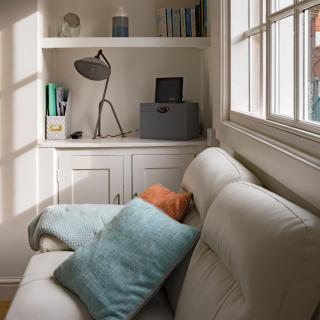
It can be helpful to find a comfortable space.
So a quiet and comfortable space to meditate could be a corner of your room,
It could be your favorite chair,
It could be sitting outside on the porch,
You could go to the park,
Whatever that looks like but a place you won't be disturbed.
And eventually you may be able to meditate anywhere but it's helpful if you start in a space that you can meditate in consistently.
And again this helps the brain knowing like when I sit here I meditate and there's less resistance.
So when we can trigger like it maybe it's a pillow or a cushion you sit on or you have like a favorite sweatshirt or a blanket or something that you can attach to your meditation practice,
Your brain starts to put those pieces together.
So choosing a comfortable space.
Posture and position are often a big question that I get.
Do I have to sit like we like picture people who meditate sitting?
And really you want to be comfortable but you want to be alert.
So as I mentioned you could sit on a cushion,
You can sit on a chair,
Sit on the grass and the ground.
You can lay down if you need to but be careful of this because a lot of people do fall asleep.
Again it's just because our brain,
Our mind knows that when we lay down we're usually going to bed.
So we it's just triggers those things and we start to feel sleepy.
Keep your back straight to allow for easy breathing.
So I always remind my clients to stack their head over their heart.
So head over you know like your chest and then your heart over your hips.
So as you're seated you're not slouching forward,
You're not arching your back,
Leaning backward.
That impacts our breathing.
So you want to be mindful that you're leaving space in the front of your body to get those deep breaths.
And then lastly if you're sitting in a chair to allow your feet to touch the floor.
That is helpful so they don't fall asleep.
If you're sitting for just a short session probably not as big of an issue but as you grow if you were to sit that way for a while it becomes uncomfortable.
So when you're thinking about posture and position just sit in a way that you feel supported so you don't become uncomfortable.
And then one of the simplest ways to start meditating is to focus on your breath.
So you can just close your eyes and take slow deep breaths and paying attention to the sensation of your breath as you breathe in,
As you exhale.
What does that feel like?
What do you notice happening in your body?
And this is a good practice to learn just taking these few deep breaths because we can do this anywhere,
Anytime.
So anytime something stresses us out,
Anytime we are kind of triggered so to speak,
We can come back and we can breathe and we can just help our body and our mind stay calm.
And then a few other things.
Be patient with yourself.
I always say that patience and persistence are the key to mindfulness,
The key to meditation.
Your mind will likely wander.
It will.
Like I scratched that.
It will wander.
And that's okay.
Allow that to happen.
When you notice your thoughts drifting,
Just gently bring your focus back to your breath.
The act of returning to that breath,
To those few deep breaths,
Is a way of redirecting and getting control and focus again.
Not letting those thoughts of,
I need to pack lunch,
I need to do laundry,
I should be,
You fill in the blank,
Right?
When we go to those things,
Come back to your breathing.
Don't let those thoughts take over.
If you are starting on your own,
Using guided meditations.
Lots of resources available to all of us all across the world and ways that we can access guided sessions which provide instructions,
They provide support,
They give you kind of that thing,
That place to focus on as you're listening to the teacher's voice and their guidance.
If you need help finding a place to start,
If you're like,
There are so many I don't even know where to begin,
Then I'm more than happy to chat about that with you.
I've mentioned this a couple of times,
But being consistent.
So this,
This is crucial when it comes to any new habit,
Any new thing we're trying to bring into our lives,
Being consistent is where you see the progress.
So make it a daily habit,
Just like brushing your teeth,
Just like eating,
Just like getting ready for bed.
Over time,
You'll begin to notice the positive impact on your well-being,
On your mental wellness.
Sporadic practices are not going to have those long term results.
And again,
I like to think about this in connection to training or going to the gym.
Once a week,
You might feel a little bit better that day.
But if you only do it once,
You're probably not going to see long term results as you would if you were going four,
Five,
Six days a week,
Right?
We are we're getting close.
These are hopefully really helpful tips for you.
Embracing non judgment.
So I mentioned before,
To allow our thoughts to come without judgment.
And what does that what does that mean?
Your experience from day to day will vary.
That is completely normal.
Meditation is a journey and every session is an opportunity to learn and to grow.
Like everything in life,
It looks different for each of us.
And so just keep trying until you find what feels good to you.
And,
And don't deem yourself a failure if you try once and and it doesn't feel good.
Try again,
Try something different,
Reach out for support.
If you try for a couple of days,
And you're like,
I don't really know if I'm feeling this,
Keep going.
Don't allow those thoughts that doubt creep to creep in where you're like,
Is this really working,
You will start to feel it the longer that you're practicing.
And that kind of leads into exploring different techniques.
So it's not one size fits all.
There are so many options.
I like to think about this,
Like the radio,
Music,
We don't all like the same things.
Reading books,
We don't all read the same things or enjoy the same television shows.
And so that's the like the luxury of having so much available to us.
It can be overwhelming,
But it's also such a great thing that we can access different tools to figure out what works for us.
Lastly,
As I mentioned,
Patience,
Patience and compassion.
So progress in meditation is gradual,
It's going to take those little baby steps every day to build up where you start to feel like this is something that I miss if I don't do it.
So celebrate those small victories,
Be kind to yourself.
It this is a journey of self discovery and growth.
If you are trying to add meditation into your life,
You are a person who is pushing for some growth,
You are a person who's discovering more about themselves and who they are and how they want to show up in the world.
So every day is a new day to explore.
It's a new day full of opportunities,
And I invite you to embrace that.
Starting meditation is a gift that you give not only yourself,
But those around you.
A lot of times it's hard to do something for ourselves.
And when we realize the ripple effect that when we find more peace in our days,
When we're able to stay calm,
That ripples into everyone around us.
So meditation is that opportunity to create a place,
A space of calm and clarity amongst all the crazy chaotic hustle and bustle of life,
Like that's life,
Right?
It is the one time.
Meditation,
Taking that space is the one time of day that you have nothing to do,
Nothing to do.
So set your intention,
Start small,
Embrace the process of learning meditation,
Of adding this into your life,
And you will gradually experience the benefits of this practice.
So I encourage you to take these first steps,
Whether it's just for a few minutes or a little bit longer,
Your journey,
Your practice is yours,
And you are really worth investing in your mental and emotional well-being.
You're worth it.
It's a journey worth taking.
So I hope that this was helpful.
If you have any questions,
You know where to find me.