Hello,
My name is Sean Rams and welcome to this short lecture on how to be a healthy vegetarian.
This lecture is based on clinical experience and not any form of academic research or medical research.
It is just my observations over the last 15 years.
When a vegetarian walks into the clinic,
You tend to notice the same common symptoms and problems.
Normally if it's a female,
They have a very bad menstrual cycle or have no menstrual cycle at all.
If it's a man or a woman,
They tend to have a lot of pallor,
Even anaemia.
They also tend to fall sick easily and appear to have a weak immune system.
Many are fatigued and those who live in the northern hemisphere have extremely cold hands and feet,
Sometimes to a point where even the hands are so cold that it goes all the way up to the elbows and the feet are so cold it goes all the way up to the knees.
These negatives tend to outweigh the positives,
But it doesn't need to be like this.
You can be a vegetarian and you can be extremely healthy.
When Marco Polo was in Jammu and Kashmir in the 12th century,
He noted that the longest lived people on earth were the yogis of Kashmir.
And he spoke about how in the same times he thought it was strange that nobody would kill their own animals,
Even if they were eating meat.
He explained that people who ate meat still refused to kill their own animals.
So in terms of the history of vegetarianism,
It does appear that other groups have done it such as the Greeks,
But at the end of the day it really came out of India.
The two reasons for vegetarianism in India is firstly that it was spiritual.
There's no doubt that people thought it was bad to kill sentient beings,
And they thought that by eating animals you could sometimes take on their attributes and other such things like this.
The other reason for vegetarianism was that in that climate they of course had lots of fruit and veggies and the grains grew very well and they didn't want to kill the cows.
Cows became a sacred animal as everybody knows,
But the reason it appears as though it became sacred was that they didn't want to kill the animal that gave grains to the entire nation or allow them to get the grains through the help of the cows.
So these are the most likely origins of it.
When Buddhism came about,
Things also changed slightly,
Not within India,
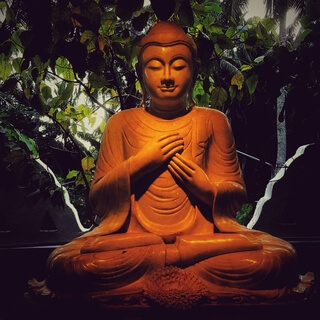
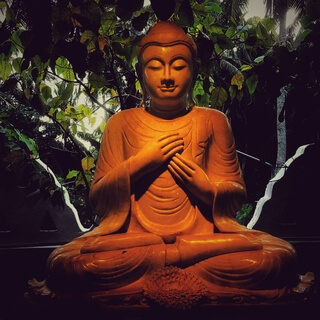
Because it appears as though in India that Buddha did eat meat,
That he used to just go on the rounds,
Arm rounds and get food and if it was meat put in his bowl he would eat meat.
I'm sure he didn't go out of his way to eat meat,
He just ate what was given to him.
But as those who know the Buddhist precepts,
You cannot kill.
So when Buddhism went out of India and went to China for example,
This caused a problem.
Why?
Because as it is today,
As you can guarantee it was a very long time ago,
When you are a Buddhist in a place like China,
People tell you to go away and they don't give you food and they tell you to get a job.
Therefore you have to cook your own food and make your own food.
Now the precept says you cannot kill,
Therefore you're obviously never ever going to touch meat.
So when you can't touch meat,
You end up becoming a full-fledged vegetarian.
This is what happened.
The issue though was that when you become a vegetarian or you eat very little meat and you're not on an Indian diet,
You have problems.
So if you want to be a healthy vegetarian,
It is paramount,
Absolutely paramount that you eat an Indian diet.
This means two things.
First of all,
In an Indian diet they tend to eat a lot of pulses,
Of course providing you with a lot of protein.
Now if you've never had pulses or beans before as a part of your diet,
There is an art form in terms of cooking it.
Some need to be soaked,
Some don't need to be soaked,
Some are drying,
Some are not drying.
So two of the neutral pulses that are commonly eaten because they don't cause you stomach cramping or other issues are green beans and red lentils.
The second part of the Indian diet that really separates it from a,
Let's say a Western vegetarian who is eating salads,
Fruits and raw vegetables or cooked vegetables,
Is that the Indian diet incorporates an immense amount of spices.
Now if you ever look into the ancient traditional herbal functions of spices,
They're all very similar and that is that they stimulate and warm the organs.
In particular,
They stimulate and warm or let's use the word strengthen the function of the digestive system.
This means your digestive system is able to absorb nutrients excellently but also it is able to take raw foods without it becoming sluggish and weak.
So just to recap here,
The Indian diet included high protein pulses and it also included lots of spices which warmed the body,
Stimulated organ function but in particular it strengthened the digestive system.
Now we just need to pause here for a second and just talk about spices.
Before Chile came to India,
The historic evidence currently says that they did still have a spicy diet long before the advent of Chile and that it was actually very peppery,
Heavy use of pepper.
Now we need to also pause here because the ancient yogis used to have a very specific diet which was called the sattvic diet.
This diet had kind of strict rules to it.
They didn't want you to have tamasic foods which are sedative foods.
They didn't want you to have too much rajasic foods which are stimulant foods but they wanted to be sattvic.
Now that means in terms of a sattvic diet,
No chili,
No garlic,
No onion,
No eggplant and a few other foods.
The sattvic diet is still predominant to these days among the yogis in India but it seems as though that chilies have snuck in there.
It is commonly said that you can have green chilies but not red chilies.
But at the end of the day,
All chilies are heavily stimulating and really chili should be used as a – nearly as a medicinal food because it's very powerful in its effect.
For example,
If you feel you've got stomach bloating and your digestion is all not working well because you're living in a humid climate,
Then chili will work well for you to bring back your digestive fire and get the digestive system moving.
Anyways,
This is going off topic.
So it is very important that as a vegetarian,
You don't eat a western diet.
If you are vegetarian and you want to be healthy,
You must stick to a vegetarian diet that is based on the Indian diet.
Whenever Indians have come in over the last 15 years in clinic,
You always see the same thing.
I've been vegetarian my whole life,
They always say,
And you look at their tongue and under their eyelids and there is no pallor,
The tongues are very nice and pink,
The limbs are warm,
The menstrual cycle is fine and everything is normal.
It is really important that as a vegetarian,
That one tries to grasp this idea and understand it and change their diet to follow the correct diet so that you can be a healthy vegetarian and therefore gain benefits for your sacrifices of not eating meat instead of losing all benefits just because you are doing the wrong vegetarian diet.
It is my sincere wish that this message is passed on to all vegetarians so that they can live happily and healthily.