Swan's Way,
The captivating opening volume of Marcel Proust's In Search of Lost Time,
Embarks on a profound exploration of memory,
Love and the elusiveness of the past.
The narrative unfolds through a dual structure,
Weaving together the childhood experiences of the unnamed narrator in the idyllic town of Cumbrae with the passionate yet tormented love story of Charles Swan.
The novel opens with a seemingly mundane act,
The narrator dipping a madeleine,
A small tea cake,
Into his cup of tea.
This simple gesture triggers a powerful involuntary memory,
A gust of memory that transports him back to his childhood in Cumbrae.
The taste and smell of the madeleine evoke a flood of vivid recollections,
Bedtime rituals with his loving mother,
The comforting routine of his small world and the yearning for a place called Bobbeke,
A seaside resort that becomes an object of intense longing.
These memories are deeply embedded with a sense of place.
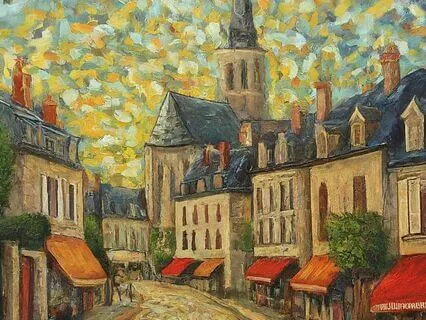
Cumbrae,
With its familiar streets,
The church steeple and the Germantes Way,
A path leading to the prestigious Germantes family estate,
Becomes a microcosm of the narrator's childhood.
He finds solace in the routines and rituals,
The goodnight kiss from his mother,
The stories told by his beloved Aunt Lenny,
But also grapples with a fear of night time and the anxiety of losing himself in sleep.
Swan,
A family friend and a figure of fascination for the young narrator,
Enters the narrative.
The narrator obsesses over Swan's social life,
Particularly his infatuation with a beautiful woman named Odette di Cresci.
Initially,
Odette exists in the realm of rumour and innuendo,
Seen as someone outside the respectable social circles.
However,
The narrative takes a surprising turn when it delves fifteen years back in time to recount Swan's passionate love affair with Odette.
Swan's love for Odette is a consuming fire.
He is captivated by her beauty,
Her enigmatic smile and the way she embodies a world unknown to him.
Yet,
Their relationship is fraught with jealousy and possessiveness on Swan's part.
Odette's past and her perceived lack of social standing fuel his anxieties.
He becomes obsessed with deciphering her every move,
Analysing her conversations and interpreting her silences.
Proust masterfully employs the motif of music,
Particularly the piano sonatas composed by a fictional character named Vintel.
The music becomes a powerful symbol,
Capturing fleeting moments and embodying profound emotions.
For Swan,
A particular sonata by Vintel becomes inextricably linked to Odette,
Encapsulating the joy and passion of their early love.
This association becomes a potent reminder of the past and a source of both pleasure and pain.
As Swan's love for Odette deepens,
Social pressures and societal expectations cloud his judgment.
He succumbs to societal norms and marries a woman from a respectable family.
However,
His love for Odette becomes a persistent undercut,
A constant reminder of what he has lost.
The passage of time does little to alleviate his anxieties.
He continues to obsess over Odette,
Even after she enters into a relationship with another man.
Meanwhile,
The narrator experiences his own awakening desires.
He develops a deep fascination with Gilbert,
Swan's daughter,
Idealising her and projecting his childhood fantasies onto her.
The sight of her at a walk with her mother becomes a source of intense longing.
Swan's way concludes with a bittersweet atmosphere.
Swan,
Disillusioned by love and weary from his emotional battles,
Withdraws from society.
The narrator,
Still a child,
Carries the seeds of his own future anxieties and disillusionment.
The ending leaves the reader anticipating the further exploration of love,
Loss,
And the complexities of human relationships that will unfold in the subsequent volumes of In Search of Lost Time.
Throughout the novel,
Proust explores the elusive nature of the past.
Memories are triggered by sensory experiences like the taste of the madeleine or the sound of music.
However,
These memories are not always reliable.
They can be distorted by time,
Emotion,
And the lens of one's own perspective.
Proust's masterful use of language and his intricate descriptions create a dreamlike atmosphere where the boundaries of time and space blur.
Swan's Way is more than a love story,
It's a profound exploration of human consciousness,
The power of memory,
And the search for meaning in a world that is constantly in flux.
It sets the stage for the vast journey that awaits the reader in the rest of In Search of Lost Time.
With its introspective themes and evocative prose,
Swan's Way remains a captivating introduction to one of the most influential literary works of the 20th century.