I have a very,
Very active mind that is constantly going.
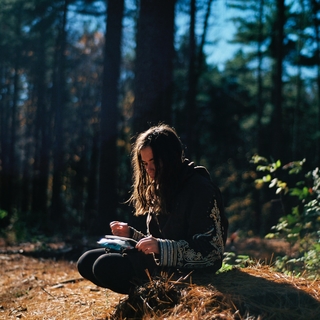
And I think that's why I'm drawn to contemplative photography,
Because it helps me still that mind that's going all the time.
Welcome to The Art of Attention.
I'm Darren Larson.
My guest today is contemplative photographer Kim Manley-Ortt from Canada.
Kim has been leading online and in-person workshops since 2010.
Her book,
Adventures in Seeing,
Came out in 2016.
It's a beautiful collection of insights and exercises to help people explore and dive deeper into contemplative photography.
Kim and I talk about the role mindfulness can play in contemplative photography and exercises you can try out using your camera or smartphone.
We even talk about the challenges of sharing photos on social media and why they're worth navigating.
I hope you enjoy my conversation with Kim Manley-Ortt.
Kim Manley-Ortt,
Welcome to The Art of Attention.
Thank you for having me,
Darren.
So the podcast is a response to how distracted we all feel.
And in addition to that,
Not waiting for the world or technology or social media to change before we decide to maybe exercise our attention or do something in response to the level of distraction we're living in now.
So before we start talking about contemplative photography specifically and the work that you're doing,
I would like to kind of have a little chat about this notion of the world being so distracting.
And as you think about in your own life,
This could be within photography or even more broadly just your life in general.
Do you find that it's the external things that the distractions of the world,
The news and the constant inputs,
That can be so challenging?
Or is it something more internal that makes it hard to stay focused on the things that are important to you?
Is it external or internal that's the bigger challenge?
Yeah,
That's a good question.
And my first thought is to say that it's definitely both,
Especially in the world we're living in right now.
But for me personally,
The internal distractions are definitely more of a challenge for me.
And the reason I say that is because the external distractions,
I tend to be a pretty disciplined person.
So I've really made a conscious effort to let go of some of those external distractions,
Like not having notifications on my phone,
Taking social media off my phone,
Making time for work without any distractions,
Which I know is not easy for some people to do.
And when I say the internal distractions are more challenging,
It's because I have a very,
Very active mind that is constantly going.
And I think that's why I'm drawn to contemplative photography,
Because it helps me still have that mind that's going all the time.
Yeah,
My first response is to kind of get excited that you're the perfect guest for this podcast,
So,
Confirmation.
And I can relate to the busy mind,
Which is why I sought out exercises for my attention as well.
You were saying that there's several things that you're actively doing already to mitigate the external distractions.
How long has that been a project?
How long would you say you've been consciously deciding how to,
What I hear is regulate the flow of all what's coming at you?
Yeah,
Well,
It started back near the end of 2017,
Because I found myself getting kind of sucked into checking in on social media all the time.
And I read a book by Cal Newport about deep work,
Which a lot of people have been talking about.
And so I set aside three months at the beginning of 2018,
Where I went off social media completely,
Just to experiment.
And that's when I took all the things off my phone,
And I set aside time for deep work every day and deep reading,
I call it.
And it was a phenomenal experiment,
Because I got so much done during that time.
And I did go back into it,
But I set some more limits on how I use those platforms.
Well,
That's what I was going to ask next,
Is he then recommends,
Once you've had kind of this detox period,
That you can gradually add things back in more intentionally and treat that as something you're actively monitoring and deciding for yourself.
So,
Sounds like you've really taken to heart the principles that he shares.
That's awesome.
Yeah,
It's not easy,
But I do.
Really,
The only platform that I'm very active on right now is Instagram.
Okay.
So,
The other question I have is talking about small changes.
And maybe something you've already mentioned would count for this.
What would you say is some small change that you've made that has led to a big result,
A big satisfying result,
Maybe over time?
Well,
There's one that immediately comes to mind.
And I moved back to Canada seven years ago,
And I moved to a small town that's very walkable.
And it's also 15 minutes from Lake Ontario,
A 15-minute walk.
So,
That makes it easier for me,
But what I've built in is a daily walk that is more like a wander.
And that has become a practice for me that's not only good for my health,
But it's become a practice that really helps me put into practice what I do in contemplative photography.
And is that something that you don't bring your camera or your smartphone along with you?
Or you do?
No,
I do,
Because I treat it as a chance.
You know,
I will take a photo.
I usually just take my smartphone.
Well,
Not all the time.
Sometimes I take my camera.
But I'm not going out with a purpose to get a photograph.
There are some walks where I take no photographs.
And then there are some where a switch goes on and I'm seeing something.
Usually it's a theme that comes up over and over again,
Depending on how open I am.
And then I'll take that opportunity to take photographs.
Okay.
Something I refer to in some of my mindfulness practice groups,
That when we get together,
We compare field notes.
And what I hear you is going out with openness and question marks and just curiosity.
And then it's like a naturalist or someone just exploring the world,
Right?
Right.
Engaging your senses differently.
So,
Okay.
So this is a great segue we can make into the specifics of contemplative photography.
But I would like to start with something,
A passage,
A really short passage from your book,
Adventures in Seeing.
And I'm just curious to maybe ask you about it.
But let me start by reading it to you.
You wrote,
Learn to trust and honor your unique way of seeing and share it with the world.
Our world needs people who pause before reacting,
Who focus on what's really happening,
See the possibilities,
And then act from this place.
It needs people who don't feel helpless,
Who don't rush to judgment,
Or dismiss people or situations as unworthy of attention.
The world needs you to see this way,
And your camera or smartphone can lead the way.
So I really like that,
But I'm curious about what is behind it.
What,
Starting with,
What's,
What led you to this perspective or this insight,
Would you say?
Well,
I think it was when I discovered contemplative photography itself,
Which was about nine years ago in 2010.
And in contemplative photography,
They focused on perceptions,
Which that word means different things to different people.
But in the world of contemplative photography,
It's how and what we see before our conceptual mind jumps in to tell a story or create an idea or a concept about what we're seeing.
So it's completely how we experience the world with our senses and with our bodies before the thoughts jump in.
And so a lot of contemplative photography is about being in that space of perception before concepts take over.
So I started thinking about,
And that's the pause.
See,
My book is divided into three parts,
Pause,
Focus,
And connect.
And the pause is such an important part of seeing all the possibilities that are available in any given moment and not rushing to judgment.
And if we look at social media and the news today,
It's just a sea of people coming to conclusions quickly and rushing to judgment.
Or if you look on comment pages,
Websites or articles,
The pause isn't there to kind of see all the nuances that may be in a particular situation.
In fact,
I think it's the opposite.
It's not only not there,
It's the opposite is there.
The pressure to react quickly and strongly as if it feels like an opinion or interpretation or even better,
Taking a side seems to drive so much of experience right now.
How we take in information,
I guess.
Right.
So that's part of my practice is to really notice when I rush to judgment on something or say,
I like this or I don't like that and just kind of like let that go and sit in that space of non-judgment for a little while longer.
There's also something about your earlier responses that I would call intentional planning ahead.
There's something about my experience as a parent and this goes way back to some of my early work.
I worked as a social worker.
I did child abuse investigations for a time and there's something I observed a combination of that work and then classes I had taken in child developmental psychology classes and then the actual challenge of parenting a human into becoming,
Right.
Raising a child to become an adult.
There's something I notice again and again,
Which is it's hard work,
But we sort of act as if we get an exemption from the challenge of that work.
And there's some,
It's seductive to think somehow it's not doesn't have to be that hard for me.
And so what I found is that parenting is hard no matter what,
But you can either plan your strategy up front or you can put all your energy into untangling things,
Untangling or cleaning up messes or trying to restore order,
Right?
You don't get an exemption from the work,
But it's really interesting to try to do the work up front so that you kind of change maybe work.
I mean,
There's always work,
But maybe not all of the emphasis goes into the problem-solving or the disciplining after.
It's kind of like a discipline that comes first.
The discipline is sort of sets the tone,
The expectations.
I also think that also has to do with expectations being realistic based on where the child is developmentally.
So as you talk about how your intention,
It reminds me of that this this approach to how you are deciding how you want to consume social media and also your contemplative photography is sort of a up front investment.
Would you say that's fair?
Yes,
There is an intention to be open and curious and non-judgmental up front.
And then you never know what's going to happen in that space.
Yeah,
But I think it gives you a better place to respond from.
Yeah.
Well,
And it's something if we think of it as a skill that can be developed through practice,
We have to practice it.
It's like we have to make time to develop that pause,
That impulse to pause is maybe not our first impulse.
But if we practice cultivating it,
What we know is going to happen is someone's going to push our buttons or there's going to be a headline or there's going to be an issue being discussed.
That's inevitable.
But if we've kind of prepared ourselves to pause,
It's a really powerful thing to cultivate and that can be cultivated in a number of ways,
But we have to do it.
We have to do it.
It's not just reading about it,
Right?
It's something we have to put into practice.
Yeah,
And that's why I really think that this idea of contemplative photography and which focuses on staying in that perceptual space a little longer.
It's a fun thing to do and practice in terms of visual images,
But it also carries over into the rest of your life.
Yeah.
When you learn how to do that and it is a practice that can be cultivated.
I totally believe that.
Well,
I love that in your in the passage I was reading that you say your camera or your smartphone can help and I think some people would maybe bristle because I think there's a tendency technology and smartphones and Instagram even.
They would say that there's something about it as the tools themselves are problematic.
What do you say when you say that there's a way to explore with your smartphone and even engage in Instagram,
For example,
In a way that's contemplative?
How do you?
Yeah,
It's tough.
It's even tough for me still.
Like it's so easy to with a camera to lift in quick very quickly.
And so,
You know,
I have for example,
I have exercises in the book where we practice a form of visual listening where you sit and observe a scene and take it all in for at least 15 minutes before you even lift the camera or touch it.
And it's really really hard for photographers to do.
And so you have to kind of push against that tendency all the time.
There are some artists who say that that's one of the drawbacks of photography and that it is too quick that way.
Oh,
Yeah.
But I think you can cultivate a different way of using your camera.
Yeah,
And I think that what you're saying though,
There's room for I see that as kind of a challenge that switches me back into honing my perception.
So I can take in the service of taking a maybe a better photo or a photo that resonates with people or that I'm glad I took maybe as opposed to just this jumping in.
But yet there's I think room in contemplative practice in general.
That doesn't have to be the only mode we have.
We can we can sometimes just grab it and click.
What I'm thinking of is a few times in my experience,
I've something's caught my eye and I thought well,
I should just be in the moment and enjoy it.
And then a couple minutes later,
I think you know what?
I really wish I had taken that picture and now it's gone.
Something about the way the light hits the clouds or something and there's this tension between am I really am I truly trying to grab it instead of experiencing it fully and I think a few of those experiences can kind of actually reinforce that tendency to not pause and just kind of become automatically snapping snapping away.
Do you find any of that to be do you find that you run into that tension?
I do I do and I found that I actually tend to take fewer photographs now than I did before and also my plan my intention when I go out is to experience first and if a photograph comes out of it,
That's great.
But I'm not taking photographs to please other people at all and perceptions are in the moment things that you see uniquely.
They are not necessarily going to be and if you photograph one,
They're not necessarily going to be something that you're going to hang up on a wall.
They're not a typical type of photograph.
They can just be you know,
For example this summer I saw now this was a graph a photograph that I wanted to take because it was quite beautiful,
But it was blue morning glory and it was there was a bright blue sky with no clouds in it.
It was the exact same color and it just if you looked up you could just get half of this blue morning glory in the picture and then the half was the sky and they just melded together.
Wow.
Now that's something I'd say.
Yeah,
I want to remember that perception and so I took a photograph but some of them are just very ordinary things after a storm the way debris comes together on the ground and creates a little little piece of art.
Yeah.
Yeah.
And sometimes I'll want to take I'll take a picture of that just to remember it.
I see it.
I see it as an encounter that you have in the midst of your day in the midst of an ordinary day and the photograph becomes just a memory of that encounter.
Right and it's there's I don't I there's something also I love about your approach that resonates for me that there's room for experimentation and it's not about getting it right.
And I also hear this the point is not to have a product but sometimes there can be something can can live on after the fact which is cool.
And maybe over time we're kind of calibrating or regulating getting better at recognizing this is a good time to snap,
You know,
It reminds me of what's the is it Dorothea Lange the quote about the camera teaches people to see without the camera.
I don't am I getting that right?
Right.
Yes.
And so I hear you is trying to learn to see photography is helping to teach you how to see.
That's right.
And that's that's kind of the main point of my classes is and I see this that as my kind of mission in life is learning how to see and it sounds you know,
Sometimes people don't understand what that means because everyone sees but they're seeing and then they're seeing.
Yeah,
That's right.
There's this depth and richness to everyday life that often gets overlooked and that's the point of this contemplative photography practice.
It allows me to be more present during my day.
And there's something very enlightening about that.
It's kind of like an antidepressant in a way.
Just having those moments of presence and more often.
The way I think of it is regardless of the sensory domain we're exploring.
You could we could make an argument we could do something similar with listening to music and listening to ordinary sounds around us,
Right?
But there's something about becoming a connoisseur of our perceptions is an acquired taste.
It's not immediate.
I have to I have to hone that in the same way.
Someone can learn to distinguish different flavors in a glass of wine.
It pays that there's a payoff to practicing and giving yourself room to experiment and not do it perfectly but have curiosity driving the show.
Right.
One thing I found after years of practicing this now is that I see very differently in terms of relationships,
How things come together rather than focusing on particular objects.
I see how everything fits together.
It's just been an interesting observation about how my seeing has changed.
Visually,
The composition of that,
Right?
Yeah.
And that's just something that emerges with practice over time.
That's part of the richness though,
Too,
Right?
It's starting to see that it's not just what you're deciding to foreground.
It's the relationship,
The whole or the gestalt,
I guess.
Yeah.
Yeah.
And I think that's that's really what life is.
It's it's how everything is connected.
Everything's interdependent.
Everything is about relationship.
There's a messy relationship between the thing we're noticing and what we're trying to allow to be in the periphery.
I think that's a constant theme for me in the work that I do is that just because we're paying attention to the sensations of breathing or sounds around us doesn't mean that the other sensations go away.
We're cultivating a relationship for what it is we've decided to notice.
We're also curious or allowing of what's happening in the background.
That's tricky when to convey.
I think that's very it requires its experiential kind of thing to get.
I think what gets in the way of seeing is a another kind of seeing or a subjective seeing that we call thinking and specifically the kind of thinking that's visual.
I find this happens.
Let's say if I'm taking a picture of a tree,
I have all kinds of things in my mind including other pictures of trees or other trees or the lighting being a little different or or maybe even picturing other people knowing how to take a better photo or someone judging my end result.
All that's happening on this little theater screen in my mind,
Which I think makes it hard to see what's right in front of my eyes.
Yes,
Exactly.
That's where the mind kicks in and there's judgments about your own abilities,
Whether other people will like what you've come up with.
All those are judgments that get added on to what you're seeing and they do prevent you from seeing.
Yeah,
You can only see so much.
You can only see right and I do think we by default we tend to go.
We tend to prioritize the mental the mental movie the the story we're constructing and I do think it kind of gets down to that.
What are some exercises I can do to let that be there in the background while I really see this tree and look at what's in my viewfinder or you know,
Bring my attention back out and I think that is a trainable skill.
That's a trainable skill.
Yeah,
There's another piece though.
I wonder where the body weighs in because there's something that's hard to put into words.
You said that there's the pause.
What's the next piece of your you've got the three components?
Pause,
Focus and connect.
Okay,
And I think a way of looking at it is in contemplative photography.
They say you're aligning your mind,
Eye and heart.
Okay,
And that came from I think Henry Carcier-Bresson who was famous for the decisive moment.
He came up with that phrase and you know,
He has a famous picture where there's a woman I think leaping over a pond in an urban area and it's called the decisive moment,
But he spent a lot of time waiting.
Like he had his camera ready.
He knew the lighting situation.
He was waiting for that for a moment to occur.
He didn't know what it would be.
Okay,
And then he lets his body tell him.
It's all instinctive when it happens.
He lets his body tell him when the time is right to click that shutter.
So that's the thing I was the component I was going to the perception I was going to bring in here.
The approach to mindfulness that I teach and practice when I hear the word heart and in that quote,
I translate it to an awareness of emotion in the body.
So sensations that are signaling emotionality and something like pausing to take in the visual perceptions and then deciding when I'm going to click a trigger.
It's very subtle,
But I think it's right.
It's the essence of art.
I think is being able to regulate that you just feel it.
It's a gut or intuitive people call it.
That's part of your work as well as having people start to recognize.
Okay.
Yes.
So when I think of mind,
I and heart and I look at in terms of pause focus and connect the pause is kind of the state of mind the openness open to anything open to any possibility.
So it's creating that clear mind.
That's the waiting part.
So that's the mind part,
Right?
And then the focus is where your eye goes.
Where what is your eye seeing?
It's where is your attention going in this scene?
And then the connect part is where the heart comes in and the feeling part and it's where the encounter happens.
And one of the terms that I use is noticing resonance.
Okay,
So that's something maybe you use in your mindfulness exercises too,
Because it's felt like a vibration in the body resonate with a particular scene in front of you.
You might see like a family of ducks in the water and you and you kind of feel it feel this resonance in your heart,
Right?
And so when you feel that that's something to pay attention to.
That's where you're trusting your own unique response to a situation.
Well,
And I think the waiting that the first two parts,
I think it's well,
That's all a practice but there's the waiting makes room for I think the challenge there is that resonance is very subtle and it tends to be something we just we're not very aware of it.
Let's say this is actually something I do kind of in my life in general and something I encourage for people is to notice how they feel in their body at random points throughout the day,
Let's say at a red light or in line at the grocery store,
But it really gets interesting when it's something like when you read a headline on Twitter or you are watching a news program that that is maybe provoking you or or when you're watching a news program that you disagree with.
There's a lot of opportunity to to calibrate that resonance,
But it's tends to be very subtle but not always so subtle.
One thing that makes me wonder might it might apply here something I think about watching movies is movies and TV shows.
I guess it's really a variety of sources,
But there's a sense that an emotion is earned in an artistic way.
I feel like that the whoever created the movie or is acting in the movie has done something really challenging and they've worked and honed and I'm having a complicated emotional response to it versus I feel manipulated and I feel yeah,
I think manipulation is the word I try to notice the difference between I'm moved and I'm manipulated.
So I don't know what you specifically suggest to people when they're thinking about resonance,
But when it comes to photography,
It's not exactly the same kind of response we get from let's say drama.
It's more at what I hear the potential is when I look really closely at the ordinary or what's right in front of my eyes.
There can be a vitality or a richness that it's easy to miss and I wonder if that would be a similar kind of exercises to catch that to notice that that difference between something is just sort of flat or something feel I think it's what you were describing with the ducks,
Right?
Yeah,
I think you're I like the when you said there's an enlivening.
It does it's something that this vibration makes you feel more alive in the moment and it makes you feel connected somehow.
And I remember a time when it was a summer.
I think I use this in my exercise on resonance,
But you don't usually see the color red in trees in the summertime and there was this tree that was the sun was shining through it blue sky.
There was greenery and then there was these red leaves and they were just just everything came together and this colorful thing and it's just like well,
Sometimes they say,
You know,
You'll feel a jolt or you'll feel startled by something,
You know,
It feels like electric and that's something that you should pay attention to.
Yeah,
Either to just experience it as it is or to take a photograph.
So the pausing is staying open and that's what you said something about the mind,
Like letting your attention kind of wander and be curious and open.
The focus component is when you're starting to engage your eye that what you're actually seeing.
Am I getting that right?
Yeah,
And I was thinking of this in terms of the difference between contemplation and mindfulness.
Okay,
Because I think there's a lot of overlap.
They're both about being present,
But some of my favorite definition.
So the contemplative monk Thomas Merton,
He called contemplation a long loving look at the real.
Oh,
Yeah,
And and I see that as the pause part.
So it's where you're open and receptive and it's you have an awareness,
But you're not latching on to anything and it's more passive,
Right?
You're just you're just in this mind space.
Okay,
And then one of my favorite definitions of mindfulness is by Ellen Langer,
Who said mindfulness is actively noticing new things.
I love that.
Yeah,
I love her.
So that contrasts with the contemplation part in that it's a little more active and to me that's the focus part.
So that and then the habits that we develop in that section in the book is attention.
Where's your attention go getting curious and experiencing wonder.
Okay,
And then we don't even click the shutter until we get to connect.
So there's something that happens.
So I'm staying open,
But then I'm starting to bring my attention to my perceptions.
I'm starting to get in the move in the direction of framing a shot.
And then what happens is the connect part where the resonance happens when you're listening or feeling for a response that's a signal to you that this could be a good shot or is it that am I getting close?
Yeah,
I think once you've decided you've stayed in that perceptual space for a while,
You've identified what the perception is and then you decide how to connect how to take the shot.
Okay,
And yeah,
You see the possibilities and you know,
When you're successful in doing that other people can see what your perception was to a certain extent.
So they get it.
Yeah,
Or you hope they do or they might.
Right?
They might not.
They might not.
So your book is full of exercises for each of these component parts.
So breaking down these steps and I take it that over time if we were to practice in this way,
We sort of find our own way.
We find out what exercises really click with us,
But then it starts to become habitual that you're sort of bringing.
It's like any other skill development.
You're starting to bring that openness and then that attention and then the recognizing when to take the shot.
Maybe at first that's a little bit clumsy feeling as you're learning it,
But then it sounds like it probably starts to just become a new kind of autopilot.
That's a refined.
You're in the mode of being open to capture a photo.
Am I getting close?
Yeah,
There's different terminology that they use in contemplative photography and that's more about receiving a photo rather than capturing it.
Oh nice.
I knew I liked that.
Yeah.
Yeah.
I mean,
It's important to know how your camera works so that you'll be able to take a photograph and express what you've perceived.
Yeah.
But the seeing part is the hardest part.
Right.
That's what requires the most practice,
I believe.
So do you have a go-to,
Like if someone was listening and they wanted to give this a shot and they think,
Well,
I think I'm already seeing what's right in front of my eyes,
But is there an exercise or two that you like to give people to send them out with their smartphone or their camera to play with this pause focus connect model?
There are a number of them,
But first I usually encourage people to practice opening the sensors,
Which I think you do when you are practiced too.
So when I go for my walk,
I usually focus on a couple of senses.
I think listening is really key for the pause part.
So usually listening is a part of what I focus on and to just be open to anything.
So that's one practice I do is just go out and wander and see because you see more when your senses are alive.
I mean that's been scientifically proven that you do see more when you're stuck when all of your senses are open.
So I encourage people to just go out and do that on a regular basis and see how it changes what they see.
So would you say like me taking a walk like and sort of drawing from more of a childlike curiosity and just engaging,
You know,
Like you're saying like Ellen Langer suggesting,
See if I can discover something new or how many different sounds I could hear.
Sort of making a game out of the walks not to get steps on my Fitbit.
It's to kind of reconnect with my kind of natural childlike curiosity that's still in there somewhere.
Right.
I mean,
I'm not,
I will say I focus on the sounds that I'm hearing or maybe the feel of my feet touching the ground.
And that's a way of keeping me present.
Okay.
So then being open to whatever comes up in that space when I'm doing that.
So that's one practice you can do.
And then in a lot of my workshops,
One of the initial exercises we do is to just notice the light,
The way light,
The effects of light for an entire entire week,
Or you could do it for a day,
Whatever.
And to me that is just one of the most exciting.
People are usually just amazed when they actually pay attention to light,
How good it makes them feel.
So when I do that,
I would just like throughout the day random points when I remember just pausing to notice the quality of the light or how much light or the play of light.
How do you describe that?
Well,
One of the exercises is called look for light paintings.
So for example,
Right now the afternoon lights coming into my office and it's painting this picture of light and shadows on the wall right beside me.
So normally we wouldn't pay much attention to that.
Or if you're walking down the street at noon,
There might be tree shadows on a brick wall.
Or there might be circles of light on the sidewalk in front of you.
Ah,
Right.
They're everywhere.
It's everywhere.
Like yesterday I was walking under a tree and the sun just lit up two leaves.
And everything was dark around it.
And so I just noticed that.
I took a photograph of it.
It's just kind of fun.
Yeah,
No,
And it sounds.
.
.
Playing.
Yeah.
It's Even Beautiful is also one of my ways.
I hear that someone's engaged in what I would consider mindfulness,
Which I call attentional fitness.
Mindfulness is such a loaded word.
We know we're talking about the same thing.
But when people start describing their experiences of mindfulness,
It's just got a poetry.
And as you're describing these exercises and what you encountered,
It's not narrative,
It's poetic.
It doesn't have to have conflict or a character or a result.
It's just a close awareness,
A direct awareness of something that's happening.
There's also the element of impermanence.
The light is a great.
.
.
Especially since the sun is constantly moving,
That you catch these things that are unrepeatable,
Right?
And right in front of your eyes.
And they're not dramatic.
Yeah.
Right.
The reason I have trouble with the word mindfulness is because it has the word mind in it.
And it trips people up.
That's one of the reasons.
But what I really think it's about is sensing.
Mind is not the point.
Sensing is the point.
Like you said,
Perceptions.
And what I think is our default mode in the world is that we are.
.
.
We're trying to make sense of things.
And we're trying to understand or solve problems.
And while we're doing that,
Which is basically how we go through our day,
In the background,
There's all kinds of sensations.
Like things I feel in my body,
Like you said,
My feet touching the ground,
It's something that's in the background because I'm busy thinking.
And the play of light is happening constantly.
So it's what we're doing is inverting that so that sensing becomes foreground.
And making sense temporarily recedes to the background,
I think.
And I love this exercise of playing with light because it gives.
.
.
One of the problems is the pull of narrative and of making sense is so strong that we just forget to do it.
We forget to put it on hold for even a few seconds.
But if you have a theme or a project or an exercise like,
Okay,
I'm just gonna.
.
.
For this week,
I'm gonna become a student of light that.
.
.
What are some different.
.
.
I don't really know what that means.
I'm just gonna play with it and see where it leads.
You have a trigger.
It'll start to catch light and it eliminates that open-ended.
.
.
If it's too open-ended,
We just forget to practice.
So if we connect it with something,
I think it can really help.
It's also a reminder that we have a choice where we place our attention.
We can choose to focus on life and being present or we can watch the news.
We can choose and I think it's never been more.
.
.
Back to the theme of this podcast is that when we say that the world is distracting,
I think what we're saying is there's a lot of companies and there's a lot of different sources who are demanding my attention and it's easy to forget I can control it.
I can decide where to put my attention.
I would say one definition of mindfulness is just deciding to habitually notice things that don't demand our attention would be one way to go about it.
So let's go back to Instagram because I agree with you.
I think Instagram might be the most satisfying social media currently that I'm using because I think it's so visual and I think it tends to be pictures of people's vacations,
Their kids going first day of school,
Even a cake they made.
It gets a reputation for being posturing and showing off and influencers and things.
I think again that's a reminder that we do have choices about how we engage,
When we engage,
How we engage.
I don't know if this.
.
.
I guess I'm kind of asking you what you think of my approach to Instagram.
The thing is you never know how other people perceive your approach,
But I kind of have an intentional plan that I want to share something that caught my eye or like you're saying that I found rich or enlivening.
And I would like you to see that too.
And I think that it's easy on Instagram to.
.
.
And maybe all social media,
The impulse is look at me,
Look at the cool thing I'm doing.
Look where I am.
Look at the Niagara Falls behind me.
And look at me.
I don't know.
Do you have.
.
.
I don't know.
Do you have contemplative photography kind of guidelines for possible ways to engage in social media that helps navigate the kind of challenges we run into with it?
Well,
I do.
I think I'm pretty intentional about it.
I think I approach it more from my business side.
Right?
So I post mostly photographs that I consider contemplative.
I don't photograph too much from my personal life.
I mean that is part of my personal life,
But I don't photograph people all that much from what I'm doing.
And I also am very intentional about who I follow.
And there are a lot of really great,
Thoughtful photographers on Instagram.
And so I really enjoy seeing what they post and what they write.
There's one contemplative photographer in particular,
Helen Fink.
She's from the Netherlands.
She doesn't just post a contemplative photo.
She writes about perception and what it means to see.
And it's such a beautiful way.
So those people like that are models for me as well.
Yeah,
That's a great tip.
Yeah.
But still,
You do get that feeling sometimes that it's just,
Hey,
Look,
This is what I'm doing now.
And it's so easy to flip through and just like,
Like,
Like,
Like,
Like,
Well,
I can't be commenting on every little thing.
I want to let people know that I've seen what they've posted.
I try to comment every once in a while when something really blows me away.
Yeah,
I agree.
Do you have the challenge of when you do share something that's personal?
I think we don't talk about this enough when we talk about the problems of social media.
That I do like it when people like what I've shared because it indicates kind of a closing of a loop.
I've tried to share something and then it's been seen.
And the only way we have this seems to be little hearts and emojis.
But I do find myself feeling a sense of satisfaction when I get a few acknowledgments that it's been seen.
Do you feel like that you,
How do you navigate that?
Or do you find that challenging?
I think that's a very natural feeling.
And I do appreciate it too when people like what I posted.
But I've also learned because I post things that are not necessarily normal,
Beautiful,
Exotic photographs,
That not everybody's going to get that or like it.
So I just post what I think is worth sharing.
There's lots of days where I just say,
Well,
I don't really have anything that I want to post today.
Yeah.
I took some pictures,
But I don't feel a need to share it.
There is that tension there all the time.
Yeah.
Yeah.
I think it comes back to the resonance though.
Maybe on the other end,
There's the resonance we feel when we take a picture.
And then there is,
It's a natural human thing to want to connect with other people so that even the word connect still kind of fits there.
And I have found like just being on the internet for the last nine years or so,
In terms of blogging and having a website,
That I've met so many people through the internet.
I agree.
Some that I've never met that are just fantastic people that I really enjoy and feel a kinship with.
Yeah.
Well,
I think we should wind down,
But I did have this one question to ask and I don't know how,
I'll just toss it out there.
There's a photo on one of your biographical pages.
I love your visual CV.
And there's a photo of,
I think that you have different questions or different categories and then the answer is a photo.
So maybe it's not fair to ask you to speak to this,
But would you describe the photo that says,
I think it's,
Who am I?
It's blue and I see you there in it.
Can you describe that photo?
Yeah.
So that is a reflection of me in a painting at a winery.
So it's an abstract painting and I don't know if you want me to explain it any further.
I'd be curious to hear anything you want to say about it.
Well,
I would say that I put that one up there because I love the color blue.
I love water and I'm kind of an enigma to a lot of people.
Oh,
I love it.
I love it.
I have to have a whole other conversation to unravel that because I'm not picking up on the enigma,
But I do say,
I would say I pick up on the theme of blur and abstraction,
But really stunning shots.
I'm going to put links in the show notes too,
So people can see for themselves some of these stunning shots,
Which are truly artistic.
And I think validate this notion that there's something to this idea of staying open to receive a photo and cultivate some skills to really capture what ends up being very artistic.
So I appreciate your work you're doing and your willingness to let me pry into your process.
I hope it's of benefit to other people listening.
I hope so too.
And I'm so pleased that you asked me.
Yeah.
Thanks so much for your time,
Kim.
It's great to talk to you.
Okay.
Thank you.
All right.
I hope you found this conversation interesting and that it gave you some ideas for using photography to learn how to see.
If you want to learn more about Kim Manley-Ortt's book and workshops,
You can visit her website at kimmanleyort.
Com.
It's K-I-M-M-A-N-L-E-Y-O-R-T.
Com.
You'll also find links to things we mentioned in the show notes.
Look for other episodes of The Art of Attention through the WCBE Podcast Experience at wcbe.
Org and wherever you listen to podcasts.
You can email me at darren at attentional fitness with feedback about this episode or to suggest future guests.
Until next time,
Don't wait for the world to get less distracting.
Find ways to exercise your attention.
I'd love to hear about it.