Blessings and welcome to the path to freedom and this beautiful space today,
Whenever we are,
Wherever we are,
Whoever we are,
Welcome to this beautiful journey of allowing for ever greater and grander expressions of ourselves,
Allowing for the peace,
Ever-expanding peace,
Ever-expanding love,
Ever-expanding joy,
Ever-expanding harmony and wholeness and beauty and abundance and creativity and expansion and progression and bliss and intelligence and all these beautiful and magnificent qualities that is the truth and essence of who and what we are.
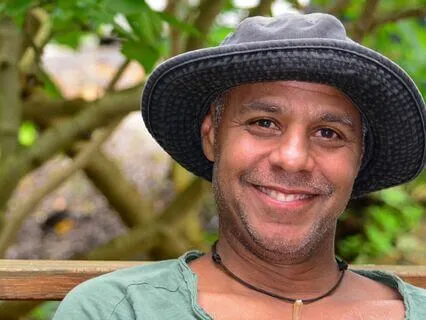
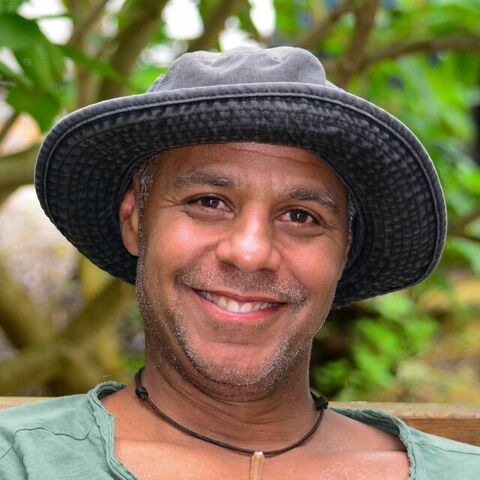
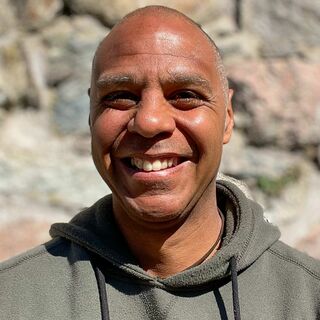
My name is Daniel Rocchio and thank you,
Thank you for joining me,
For participating,
For saying yes to immerse yourself,
Thank you for saying yes,
For investing in the evolution,
The unfoldment of your soul,
Of who and what you are.
I'm very grateful that you're tuning in.
The topic for today is discipline,
The hallmark of unfoldment,
Of awakening,
Of freedom,
Of excellence,
Of mastery.
And this has to do with the work that we're all being called to do.
As we say yes to this path,
As we begin to move toward freedom,
Toward awakening,
Toward enlightenment,
Toward sanity,
Toward releasing and letting go of our attachments to stories and opinions and judgments,
As we begin to step out of being hijacked by our minds,
By the world,
All of this is inner work.
All of this is inner work.
Someone once said that a hundred percent of awakening,
A hundred percent of unfoldment,
A hundred percent of growth on this spiritual path is about releasing and letting go of something small,
Limited,
A sense of not being enough,
A sense of not having enough,
A sense of separation from spirit,
From source,
From God,
And from the good that we desire.
So nothing is ever added onto ourselves.
This is not about us acquiring knowledge.
This is not about us memorizing passages,
Or affirmations,
Or realizations,
Or insights,
Or wisdom,
So that we can parrot them back.
But this is about embodying,
Integrating,
And embodying the realizations,
The insights,
So that we gradually,
Sometimes very suddenly,
Most of the time incrementally,
Begin to move from these,
That we give our insights and realizations permission to change us,
To transform us.
And along this path,
There are a number of beautiful tools that we have in our toolbox,
That we can lean into,
And that we're wise,
And that we actually need to lean into on a regular basis.
So there's meditation,
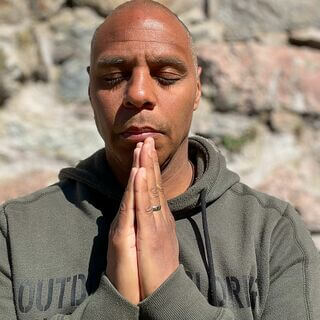
There's prayer,
There's hanging out in high fellowship,
There is observing and witnessing our minds,
There's the embracing and allowing of the content that flows through our minds,
And then turning our attention toward the good that we do desire,
Toward that which we wish to experience,
As opposed to that which we don't want to experience.
There is hanging out in high fellowship,
There is generosity,
There is practicing the presence,
Which is when we,
Just in the spur of the moment,
Moment to moment to moment,
Seek to anchor and ground ourselves in this now moment.
So there are so many tools that we can use,
But having them in our toolbox will do no good at all unless we use them,
And unless we use them on a regular basis,
Unless we allow for a habit of using them to emerge.
Every single one of us is practicing something.
I mean,
We are habitual beings,
So we're in the habit of doing something on a regular basis.
But the question is,
Does that something serve us?
Is it standing in service?
Is it in alignment with who we wish to be and how we wish to show up in life?
And if it's not,
Then we're being called to allowing for new habit and new practice to emerge.
And here is where discipline comes in,
Because as we are doing this,
We all are familiar more or less with the egoic structures that are projecting fear and worry and doubt and all these things,
A number of excuses as to why we shouldn't or why we needn't or why we can't move into particular practice.
This is a waste of time,
This is useless,
This is meaningless,
This is stupid,
This is I don't have enough time to do this crap,
I don't have enough energy to move into meditation right now,
Maybe tomorrow when I'll have more time,
That's the perfect time for me to move into meditation.
But now,
Oh,
Oh,
Oh,
No,
No,
No,
No.
There are so many things I need to do.
So the ego has all these excuses.
Someone once,
An old teacher of mine,
Once said that discipline is giving yourself a command and then follow that command.
And I'm oftentimes leaning into or being called to use the analogy of an Olympic athlete to illustrate this concept of discipline.
Now,
An Olympic athlete,
And let's take Michael Phelps.
I mean,
He was one of the greatest Olympic athletes of all times.
I recently read somewhere that he won like a staggering 28 medals in the Olympics,
Out of which I don't know,
Like 23 or 24 or something like that.
They were gold medals.
So he kind of made it.
He really found a way to peak his performance at the Olympics.
By that peaking his performance at the Olympics,
It was obviously not about only the Olympics.
I mean,
There were hours,
Countless hours and hours and hours of practice,
Of training,
Of aligning his life in preparation for that one brief moment in time that is the Olympics,
Right?
So I would imagine that in collaboration with his team,
His coach,
His maybe a nutritionist,
I don't know,
Mental coach,
All these different people,
They had come up with a training schedule,
A training program for him,
Probably starting like right after the Olympics.
So to lead him into the next Olympics or at least a few years before the Olympics.
A very rigorous,
Detailed training program.
So here's when discipline comes in because I would also imagine that there were many moments when he did not feel like jumping into the pool or he did not feel like going for that run or he did not feel like doing whatever it is that was on his plate to do that day.
But as he was honoring and as he was very serious about peaking his performance at the Olympics,
Of being his best,
At his best in that brief moment of time,
He did whatever he was called to do anyway,
Whether it was swimming like 50 laps at a slow pace or racing for five laps or,
I don't know,
Doing push-ups or pull-ups or sit-ups or whatever he was called to do in the moment,
Whatever his program told him to do in the moment,
He'd do it.
He would not skip practice just because he didn't feel like it.
He would not skip practice just to sit on the couch or lay on the couch and eat potato chips.
And I'm not dissing potato chips.
I kind of like them myself.
So it's not about that,
But it is about us doing what we need to do to remain sane,
To allow for that ever-expanding peace and freedom and joy and harmony and wholeness and abundance and all of that.
And much of it comes down to us turning our attention away from what we don't wish to experience.
Stop talking about what we don't wish to experience.
Stop complaining about what we don't wish to experience and turn our attention toward what we do wish to experience,
Even in the screaming face of what we don't want to experience.
So we can be in a condition and in a circumstance of lack of or separation.
It can be a financial condition.
It can be a health condition.
It can be whatever.
So the condition is screaming.
It's in our face,
Right?
Even in that,
We need to,
We need to turn our attention toward what we do wish to experience.
So thinking more about financial prosperity and financial abundance than lack and scarcity.
Thinking more about,
And talking obviously,
And feeling.
And the feeling tone is the most important one.
But thinking and talking more about health and wholeness than illness and disease and diagnoses or prognoses that we have been given.
Or if it's whatever it is that we feel we're lacking,
We need to find a way to turn our attention away from that.
If we're being called to sit in meditation every day,
Or to move into prayer every day,
Or to give thanks every day,
Then that's what we need to do.
I know that the mind,
I know that the egoic structures of the mind is not going to let us.
It's going to do everything it can.
It's going to throw at us everything it's got to keep us from moving into practices that raise our vibration and expand our consciousness.
But just like Mr.
Phelps and anyone who's been,
Who's ever excelled in anything,
They have leaned heavily into discipline.
Doing what needs to be done to get from here to where we want to get.
And this spiritual path,
It's no different.
It's no different at all.
We need to,
We don't have to,
But we need to take a good look at ourselves that are habitual ways of moving through the world.
And we need to ask ourselves on a regular basis,
These choices that I'm making,
Or this choice that I just made,
Is this in alignment with who I wish to be?
Is this in alignment with how I wish to show up in life?
Is this in alignment with what I wish to experience in life?
And if it is,
That's beautiful.
Then we can allow that choice to expand,
To take us to the next level,
So that the next great and grand version of who and what we are may emerge.
And if it's not in alignment,
Then we're wise to find a way to release and let go of these choices and begin to move in a different direction.
Begin to make choices that actually are in alignment with the good that we desire,
That actually are in alignment with how we wish to show up in life,
Who we wish to be,
And what we wish to have or experience in life.
And make these more and more and more frequently.
It all takes discipline.
Someone once said that this work that we're being called to do,
The work of the mind,
Taking our mind back,
Strengthening our presence muscle,
Strengthening our attention muscle,
Not giving power to the world to dictate where we turn our attention,
But to continuously and repeatedly and consistently come back to the nowness of this moment,
Affirming,
Just being with breath or whatever the case may be.
This work,
It's the hardest work there is,
Because we are so pulled by the world.
The world,
Which is now picturing of the collective human consciousness,
Which reminds me,
Someone once said that the world is like a Rorschach test.
We see what we're looking for.
And of course,
A Rorschach test,
It's that thing,
I don't know if it was Freud or someone else who came up with it,
But they just put a blot of ink on a piece of paper and asked the patient or asked the individual,
What do you see?
As you're looking at this blot of ink,
What are you seeing?
Obviously,
There were no clear images.
It was nothing.
It was no painting.
It was nothing.
It was just a blot of ink.
And depending on,
Or actually,
The way that the individual answered,
What they saw gave an image as to what they are looking for in the world.
It gave a portal.
It provided a portal into the subconscious mind of that individual.
So the world is like a Rorschach test.
We see what we're looking for.
So we are wise to begin to look for that which we want to experience over and over and over again until that has become a habit.
A habit is something that is formed over time through repetition.
We repeat the same story,
Or the same belief,
Or the same complaint,
Or the same regurgitation,
And over time,
That is all that we see.
That is all that we see.
So we need to strengthen our disciplined muscle and begin to look for what we don't know,
For what we do wish to experience,
Until that is what we habitually and unconsciously are looking for.
So that is our invitation today to take a look at,
Actually,
The invitation seems to be dual.
First of all,
We are wise to take a look at our lives and the choices that we're making,
The practices that we're having,
The habitual practices that we're leaning into,
And ask ourselves,
Are they serving us?
Am I served by doing this over and over and over again?
And then,
Obviously,
We need to utilize our disciplined muscle to begin to allow or create for habits that do serve us,
That are in alignment with the good that we desire to emerge.
And no,
So it's not dual.
It's all the same thing.
That is the invitation for today.
Until we meet again,
With much love,
Many blessings,
I absolutely bless,
Bless,
Bless your day,
And I bless,
Bless,
Bless your way,
Knowing,
Feeling that right where you are,
All is well,
That something wonderful is happening,
That everything is working for your highest good.
Namaste.