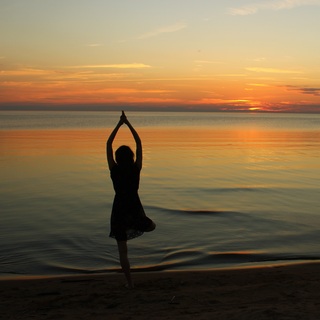
This is nervous system nourishment.
We meet every other week on Wednesdays,
In the afternoon or evening,
Depending on where you are.
And we offer our body an opportunity to tend to it.
We're not here trying to like force it or manipulate it or control it.
We are literally just nourishing it and supporting it.
And for the current time and place,
That can be a pretty radical thing to do.
And I would like to encourage us to think like,
Is it really so radical to tend to our bodies?
Let's sit with that,
Right?
We don't have to make any judgments or ideas,
Right?
But if it's something that we genuinely need to stay alive,
Is it really so odd or strange to offer a space to tend to ourselves,
Right?
And that's what we do here.
For those who are new,
We do a little bit of chatting.
I share a little about the nervous system because I love talking about it.
We learn a little bit and then we do a little exercise and then we carry on with our day.
If at any point you feel uncomfortable or uneasy,
This is your practice.
So do whatever feels accessible and works for you,
Particularly because today we're talking about discomfort.
I read a phrase this week and it said,
Discomfort means the brain is right on the verge of change.
And it got me thinking,
It got me thinking because we hear a lot like anger is signaling something,
Something deeper,
An unmet need or a boundary being crossed.
We also have heard that conflict is not the end of connection.
In fact,
It gets you closer to a resolution,
Right?
And so these phrases that seem kind of like they blurred out and they sound really pretty,
I've wanted to sit with them a little bit more this week and they've been a little uncomfortable.
And so there's been times where I dove in and sat with it and really thought about what was going on.
There's times where I was like,
Not for me,
Not right now.
And lucky for you,
If you are watching this and you're like,
I don't want to do this right now,
It's going to be up on the interwebs later,
Right?
Of course,
We'd love to have you here,
But I also want you to tend to your body.
This is very important that your body is cared for.
And that's really difficult to do,
One,
Because we get these signals,
Right?
We get this discomfort,
We get this anger,
We are in situations of conflict.
And whether we intend to or not,
Oftentimes we suppress it.
And what happens is that we're left with this discomfort and this comfort,
We are now given an opportunity.
Do we sit with it?
Do we stay with it?
Or can we possibly work through it or even navigate with it,
Right?
Not letting it stop us.
And hi,
Welcome.
I like to make sure that I keep the chat going,
So if I jump in and out,
That's what's going on.
So yeah,
This exploration of discomfort is what's really going to be our exercise today.
And that's why I really wanted to say,
As we get into our exercise,
That there may be sensations,
There may be thoughts,
There may be ideas,
There may be physical responses that you may have today,
But also throughout your meditation practice,
If you are a meditator.
And also,
I just like jump straight to it.
Hello.
Hello.
My name is Day.
A couple of things that we do here is we talk about the nervous system.
I am a movement instructor.
I offer breathwork activities,
All up and down,
Inside timer.
I focus a lot on somatic healing,
Although my personal practice stems from Tibetan Buddhism.
So I put a mix of all these things together,
And that's one of the many schools of thought that create these nervous system nourishments.
So I'm going to pretend that was in the beginning,
But if not,
That's okay.
So anywho,
This may happen,
These discomforts,
These just uncomfortable feelings,
And that is often one,
A part of our meditation or breathwork practice,
And two,
A part of life.
And so what we think about a lot in the Buddhist philosophy is that meditation is a mental practice,
Right?
And what that means is that we come back to challenge ourselves.
We come back to,
And that can be anything.
It can be challenging ourselves to think of a debate.
It can be challenging ourselves to calm down.
It can be challenging ourselves to give ourselves an opportunity to rest,
Right?
That's my personal take,
And that's what I really like to share with others.
The meditation isn't necessarily just like blissing out.
Everything's okay,
Because the second you get off your cushion,
Off the mat,
If you're sitting on a couch,
On a bed,
Wherever you're meditating,
You're still in this world that we live in.
So it's not going to make everything better,
But it will give you the tools to work with this discomfort to continue on with your day-to-day.
And working through a discomfort is actually something that our brain does all the time.
These signals,
These external signals and our internal signals work with our nervous system.
Our nervous system then has the ability to change or to reorganize connections in the brain.
And this can be in response to learning something new,
To a very positive or even very traumatic experience,
As well as an injury.
And this has a name.
It's called neuroplasticity.
Neuroplasticity is beneficial because it helps support recovery from injury,
Which is often what it's associated with,
But it also helps us learn new skills.
It also helps us think of different perspectives.
It also helps us try over and over again till we find a way that actually works for us,
Right?
And so I really want us to think about discomfort in a different way,
Rather than like,
I don't want to deal with this anymore,
Or this isn't something that I care about.
More so,
What is it telling me?
What's the signal?
What is the idea?
What is the topic?
What is it showing me?
And how can I incorporate that so that I can rewire,
Essentially,
These little zaps in my brain so that I can live with ease,
So that I can learn a new skill,
So that I can recover from an injury,
Right?
So overlap,
Or rather recap.
Discomfort is a very natural response.
It happens all the time,
And it is usually a response to stress,
And it can be physical or it can be emotional.
Now,
Stress is a specific identifiable situation or event,
And your response to that specific event.
Now,
When we have prolonged stress,
That's when we turn into this anxious feeling,
And that is the persistent uneasiness,
It's the worry,
It can sometimes trigger,
Or rather we can feel it sometimes without even knowing what triggered it,
And it pretty much lingers.
That's kind of the deal.
So although we have these tools to rewire,
Right,
We have the capacity of neuroplasticity,
It unfortunately takes a bit of time.
It's not something that happens from one day to the next.
It is something that is with consistent growth,
With consistent processing,
And that does not mean that it is speeding,
Speeding,
Speeding,
Speeding,
Speeding.
It can speed up,
And then it can slow down a little bit,
And then it can speed up,
And then it can slow down.
I don't know if anyone has heard of that phrase,
Healing isn't linear,
Right?
Most things in life are not linear,
That's actually just how that goes,
But particularly healing is not a linear thing,
Just as grooving is not a linear thing,
Just as processing our emotions is not linear,
Right?
So I really want us to have some grace and some patience with ourselves,
Especially as we're dealing with discomfort,
Because it's not necessarily going to switch.
As much as I wish it did,
And as much as I could make that happen,
That's not necessarily the case for many,
Or in fact,
All of us.
So that is our nervous system talk.
Again,
Our nervous system is the command center of the body.
It literally manages everything that makes you function,
Whether it is intentional or not,
Whether it's voluntary or involuntary,
And whether we really fully understand it.
And this sort of signals that our nervous system is constantly sending us are there for a reason,
And it's important to offer your body and your mind,
Which is the same thing,
They're connected,
Although we often like to separate them in our Western culture,
But they're the same,
They're one.
Find that translation,
And that's something that I really love offering for us to do,
And that can actually be in so many different ways.
I just like to share it through movement and meditation,
Or rather breath work.
These are things that I like to do it in,
But it can be anything.
So if this was interesting for you and you want to keep doing it,
That's fantastic.
If you want to return back,
Amazing.
If you have something else,
Another practice,
If you will,
That feels good,
And it doesn't necessarily have to be spiritual and what we call culturally spiritual,
I think meditation is,
There is definitely a spiritual practice,
But there's also breath work.
There's going to the gym,
Working out your body.
There's also formal prayer,
Right?
So you can do any of these things that help you be more in tune with the messages in your body,
But today we're going to do some breath work.
With that said,
I'll invite you to get into a comfortable position.
Comfortable and supported.
I say supported because sometimes comfortable can be like slouched over or not really feeling present in our body,
And so I encourage you to figure out what that is today.
Whatever is accessible to you is perfect.
You want to be sitting on a cushion,
In a chair,
Laying down,
That's up to you.
If you are laying down,
I would suggest keeping your eyes open just to make sure that you don't fall asleep.
If you want to fall asleep and you need that sleep,
You need to sleep,
But if you want to maximize,
Right,
Whatever we're doing here to maybe gain some tools to take with you outside of this,
I encourage you to stay awake.
Okay,
I'll let you all have a few seconds to do that,
And so you know,
If you need to move at all throughout our meditation,
Throughout our breath work,
You can.
You can scratch your arm,
You can sneeze,
You can adjust yourself.
That is not against the rules.
Do what is ever so comfortable for you.
I would ask for you to do it mindfully,
Right,
So you don't,
Sometimes when we're meditating we'll get a little like itchy as a little distraction,
Right,
And then we kind of scratch and then we lose our focus.
So if that's the case,
You know,
Gently try to ease the itch slowly and then return back to your breath.
Yeah?
Okay,
Sweet.
So if you're in a seated position or on a cushion,
I'll invite you to lift your shoulders up,
Back,
And down,
Allowing you to open up your chest.
If you are laying down,
Find a way to position yourself where you feel like you are not hunched forward or back,
Your chest is available and open to breathe.
Finding a neutral pelvis.
Sometimes it may help to imagine your belly button touching your spine without sucking in your belly.
We don't necessarily want to cause any more force or discomfort,
We just want to find a little bit more support so that we can sit comfortably for the next 10 minutes or so.
Finding a last-minute adjustment for your feet,
Whether that is flat on the ground or with the top of your feet pressed against the floor beneath you,
And finding a place for your hands.
And at your own pace,
You're going to inhale and exhale.
Now your inhale,
I would recommend is always through your nose,
Your exhale can be out through your mouth,
Especially if your body is feeling tense,
But if you're looking to focus a little bit more on your mind,
I'd encourage you to exhale out through your nose.
Your body actually cannot tell the difference how you exhale,
So it is really up to you,
However,
Exhaling out through your mouth and even adding a sigh will help relax your body.
As I said earlier,
So many sensations may arise,
There may be noises in your environment,
People may talk to you,
You have to-do lists and ideas that pop up,
And when that does happen because it's inevitable,
All you have to do is acknowledge it.
There is nothing else that you need to do,
You don't need to examine it,
Just say a little hello if you're feeling it,
And then kind of let it pass.
And if it continues to show up,
Maybe just give it a little nudge of like,
Hey,
I'll get back to you right now,
We are focusing on our inhale and our exhale.
So we'll start with a brief body scan at the bottom of your body.
Slowly moving your attention up from the bottom of your feet,
From the top of your feet.
Up your ankles,
The lower half of your body,
Moving up your legs.
Once you get to your hips,
Take a deep,
Deep breath here.
This part of our body holds a lot of emotion,
It can hold a lot of tension.
It's also known to hold our creativity,
Our sensuality.
Take a few more breaths in this space before moving up your torso,
Up your abdomen.
Breathing into all the organs in this part of your body.
Giving it a little extra love because it keeps you alive,
It keeps you here.
Breathe now into your chest,
Allowing this oxygen to flow through the top half of your torso,
And all the way down to your fingertips.
So through your shoulders,
Biceps,
And your triceps.
Your elbow,
Your forearms,
Your wrists.
Your fingers,
All the way to the tips of your fingers.
Breathing in once again,
And moving your attention now over your neck,
Your throat,
Your jaw.
This is another place of tension,
And really our whole face holds quite a bit of tension,
Especially if you are looking at a screen all day.
Breathing into your eyes,
Your cheeks,
The top of your head,
And even the back of your head.
Now at your own pace,
Do about two more body scans starting at the bottom,
And moving your way up to the top of your head.
Breathing in through your nose,
And exhaling in the way that feels most accessible to you,
Whether that's out through your mouth,
Or out through your nose.
And if at any point one feels uncomfortable,
You can try the other.
If you've lost track,
That's okay.
All you have to do is return back to your breath.
On your next inhale,
I'm going to invite you to think back to a particular point in time,
Whether that is the last month,
The last six months,
The last year,
Or even the last few years.
And think about all the many signals that your body may have been telling you.
Now this can feel a little complicated,
Because where are you going to find particularly one signal?
So although it may feel overwhelming,
There may be things that are coming up.
Stay with us.
Breathe in and out of your body.
If that may feel like there's too many signals,
Think about just one.
What is one thing that my body tells me?
Now it may be easy to think about,
What is one thing my body tells me when I'm stressed?
And I encourage you to explore that,
If that's what is the first thing coming up.
Also think about,
How does my body tell me when it's happy,
Or when it's excited,
When it's nervous?
And thinking about these signals,
Can you invite them to be in this space with you,
Without judging them?
Just let them be with you.
If you feel comfortable offering them a tea,
Saying hello,
Maybe even hugging,
Or maybe it's a little bit more reserved and quiet,
And that's okay too.
These signals are here to offer you insight,
And they're just trying to communicate with you.
Once these signals have presented themselves,
And they're with you,
I invite you to make an action plan.
So what are these signals saying,
And how can I tend to these signals?
How can I work with the discomfort,
Should discomfort be one of the signals that are arising?
Now it's very possible that none of these signals even really showed up,
And that's okay.
If that's what happened,
That's completely fine,
There's nothing wrong with that.
Allow for your body to show you what these signals are when it feels comfortable.
But in the meantime,
You're more than welcome to continue to breathe,
And connect with your body.
Now,
With the signals,
With the signals,
Think about what this action plan might be.
How can we work with the discomfort?
Could it be journaling?
Could it be movement,
If that's accessible to you?
Could it be asking someone that you trust for help?
Could it be getting an accountability partner?
And it can be anything.
Imagine anything that you want in the world as possible.
Offer that as a space to your own body and mind.
Remembering to turn back to your breath,
If you got lost along the way,
That's perfectly normal.
And if an action plan right now feels a little bit too overwhelming,
That's also okay too.
This is a great opportunity to sit with your body,
And allow for that plan to show up whenever it's ready to do so.
Our brief meditation is going to come to a close soon.
So let's offer ourselves a deep inhale and exhale of gratitude for showing up,
For honoring our body,
For honoring our minds.
And can you maybe offer this opportunity to others?
An opportunity to sit for a few minutes,
To connect,
To consider what the signals are in their own body,
And what can they do to tend to those signals.
At your own pace,
Become a bit more acquainted with your space,
Allowing in any sounds,
Any temperatures that you may not have had in focus before.
So,
The feeling of the fabric against your skin,
Or your skin against the ground,
Against the cushion,
Or if you're laying down,
That pressure,
Taking a little bit more note of your space,
And your body within the space.
And if you haven't done so already,
You can invite in some movement,
And slowly open your eyes.
Become more acquainted with your inner world and your external world.
Thank you so much for joining.
As always,
It is such a pleasure to share,
And I'm looking forward to seeing you next time.
Take care.