Hello,
My name is Curtis,
And I want to welcome you to Walking Home,
A few minutes where we reflect on life's most meaningful lessons—love,
Grace,
Forgiveness,
And the courage it takes just to live.
The story I'm about to share comes from a weekend retreat I once held for U.
S.
Army service members stationed in South Korea.
It also comes from my own journey of learning what love truly means to me.
It's a story about clay,
But also about people,
Expectations,
And the difference between holding on and letting go.
My hope is that as you listen,
You'll hear echoes of your own story within mine.
Maybe try a new way of thinking about love—not as something that we cling to,
But as something that we embrace,
We nurture,
And we release when it's asked of us.
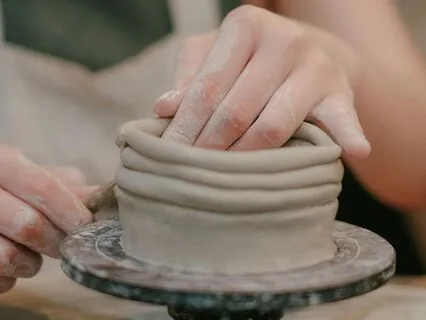
The Lesson from Clay The air in the room was cool and earthy,
Carrying that strong,
Familiar smell of wet clay.
Sunlight slipped in through a few windows,
But the space inside felt more like a quiet cellar than a classroom.
It was grounded,
A reflective place where the outside world seemed far away.
The light was soft.
It was not bright.
It fell gently across eight tables arranged neatly with stools tucked beneath them.
At the far end of the room sat a potter's wheel,
And on each table rested large,
Unshaped lumps of clay waiting to become something more.
It was the second morning of a four-day retreat that I had organized for single service members—a time to step away from duty,
Distraction,
And routine to focus on the deeper work of the soul.
That morning's activity was simple but meaningful.
Work with the clay and shape it into something of your choosing.
A master potter stood ready to guide them,
Gently helping hands find form.
Under steady pressure and patient movement,
Bowls began to emerge,
As well as cups,
Vases,
And even small animals slowly took shape.
The room was filled with the quiet joy of creation.
Some pieces were simple,
Others surprisingly detailed,
And I was impressed.
Yet every piece bore the unmistakable imprint of the person who had shaped it.
After an hour,
The tables were covered with wonderful clay creations.
Everyone stepped back to admire what they had made.
Smiles spread easily as people snapped photos and took turns appreciating one another's work.
It was at that moment that I spoke the words that changed the energy in the room.
Leave everything on the tables when you leave.
The room fell silent.
At first they thought I was joking.
Then there were a few nervous laughs that broke the tension,
But when they realized I was serious,
The mood shifted.
Confusion turned to disbelief.
The disbelief turned to anger.
There was demand.
Why?
They couldn't take it home.
Why?
They couldn't take it with them.
I offered no explanation,
Only that this was part of the exercise.
We would talk more about it in the morning.
The next day,
As we gathered in the classroom,
I could tell many were still unsettled.
A few people were visibly frustrated.
Others were just curious.
The conversation started slowly,
But quickly gained momentum when I asked a simple question.
Why did it upset you to leave this clay behind?
One by one,
A few answered,
Because they had spent time on it,
Because they had shaped it with care,
Because they had invested part of themselves into it.
To them,
The effort alone seemed to justify their ownership.
I pressed the idea further.
Did anyone tell you that you would be taking your creations home?
Did you pay extra money for it?
Does the time that you spent on the project,
Does that give you the ownership,
The effort that you put in?
What about the care that you put into it?
Some heads nodded yes,
Others stayed silent.
Most believed that it did.
Then I asked if that same belief carried into their relationships.
Did they feel that time,
Effort,
Or the care invested in another person entitled them to ownership of the other person's choices,
The direction that they take in life,
Or their independence?
The room grew very quiet as everyone reflected on this question.
Slowly they began to see the connection.
As the conversation deepened,
We talked about the human impulse to claim ownership over things and people that we invest ourselves in.
It's an instinct most of us carry quietly and unquestioned.
We assume that if we pour our time,
Energy,
And care into something,
We have earned the right to hold onto it.
And if we have invested deeply in someone,
We begin to believe we have a say in how they live,
Think,
Choose,
Or grow.
The truth is,
The clay was never theirs to begin with.
It came from the earth before they touched it,
And it would return back to the earth long after.
Their efforts shaped it for a time,
But that didn't make it theirs to keep forever.
And neither,
I explained gently,
Are people ours to own.
They may walk beside us,
Share our homes,
Touch our hearts,
But their lives,
Their choices,
And their future ultimately belong to them.
For some,
This realization was unsettling.
It was the first time that they had questioned the idea that love and ownership are even connected.
Yet,
As we discussed the idea further,
Something began to shift.
They began to see that the most enduring love is not born from control,
But from freedom.
The freedom to grow,
To make mistakes,
To change,
And to become.
True love,
The kind that endures life's challenges,
Is more about invitation than it is about the demand for possession.
I often think back to that morning with the clay and how much it mirrored the way we tried to express our love.
Most of us never set out to control anyone,
Yet without realizing it,
We tighten our grip on the people and the things we cherish.
We cling because we care.
We hold on because we're afraid to lose what matters most.
But love in its truest and most enduring form doesn't require us to grasp.
It invites us to trust,
Even when we know that trust may one day be tested.
It asks us to create space for growth,
For independence,
And for the unfolding of someone else's journey.
I'm showing my age a little when I recall the words from 38 Special's 1981 song,
Hold on loosely,
But don't let go.
If you cling too tightly,
You're going to lose control.
Maybe it's not the most poetic,
But the truth is there.
I referenced that song when I introduced a group activity during the retreat called The Human Knot.
Everyone stood in a circle and grabbed the hands of two other people,
Creating a tangled web of arms and bodies eventually.
Without letting go,
They were to work together to untangle themselves.
It was a physical reminder that humans often find themselves in complicated,
Messy situations,
Ones that require patience,
Communication,
And above all,
A loose grip that allows for movement for change and growth.
When we cling too tightly,
We only make the knot harder to undo.
Today I want to invite you to look closely at the people and relationships in your life.
Are there places where you're gripping too tightly?
Are there expectations that might be confining someone else's growth?
Or fears that are keeping you from letting them become who they are meant to be?
True love,
The kind that endures life's challenges,
Isn't about control or ownership.
It isn't about holding on so tightly that another person cannot make mistakes,
Or shaping them to be more like ourselves.
It's about creating space for them to become their own creation,
And choosing again and again to accept them just as they are.
Love is more about invitation than the demand for possession.
And when we learn to love this way,
We discover something beautiful.
What's meant to stay in our lives will stay,
Not because we held it captive,
But because we welcomed it freely.
The Norwegian writer,
Arne Garborg once wrote,
To love a person is to learn the song in their heart,
And sing it to them when they have forgotten it.
Thank you for spending this time with me.
I'm Curtis.
I am the wayward son,
Still walking home,
One story at a time.