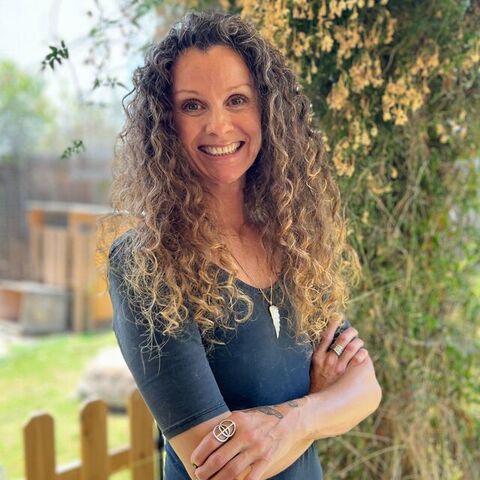
My name is Corrie.
Are you ready to sit down with me with a pen and a piece of paper and start to make changes in your life to set healthy boundaries?
First,
Before we get into the actual exercise that I'm going to teach you,
The exercise is something that I do with my one-on-one clients all the time.
I want to just explain what a healthy boundary is.
Healthy boundaries are very different.
Some people think that a boundary feels almost like a barrier,
Like a protection.
And in a way,
Boundaries are there as a form of protection,
But it's not really about protection when you're setting up a boundary.
A boundary is so that you can actually be more vulnerable.
You can be yourself,
You can be open-hearted,
You cannot worry so much about how people treat you in different situations because you have set healthy boundaries.
You can kind of relax into your way of living and know that you'll not be mistreated.
A barrier is very different.
Setting up barriers so that we think that we're protecting ourselves against people and certain behaviors is very different because a barrier is always there.
And when something is always there in front of you or dividing you from a situation,
Then it kind of makes you feel on the defensive all the time rather than being open and easygoing and vulnerable.
You're not.
You're defending your territory.
You're defending your wall all the time.
That's the difference between a barrier and a healthy boundary.
So that being said,
Let's get into the exercise.
Some parts of this exercise you can do separately without me because they take a little bit of time.
And then other parts I'm going to coach you through right now as you listen with me.
First of all,
Get your pen and a piece of paper and at the top of the paper write down setting healthy boundaries.
You can put the date on the opposite side if you like because it's always helpful to do this exercise in maybe two,
Three months time just to check in with yourself again.
So you have the title setting healthy boundaries and the date.
Then underneath that write down another subtitle.
Where do I need boundaries?
Now we're going to break down your life into prominent areas.
So just make a list at first.
Write down family members.
Underneath that write down friends.
Underneath that write down work.
Then under that write down partner.
And finally underneath that if you have children write down children.
Now underneath all of that starting at the top of the list write down family as a title.
This is why you do this part of the exercise without me.
It's going to take a little bit of time but sit down and think who is it in my family meaning brothers,
Sisters,
Mom,
Dad,
Uncles,
Aunties,
Nephews,
Nieces,
All of that.
Not your husband or your wife or your partner,
Not your children for this particular part of your family.
Every one else in your family that you have contact with.
Who in my family do I need to set healthy boundaries with?
And you write down a list of the names.
Once you've done that,
Like I said,
This is the part that you do without me.
And we're just going to take family as the example.
But you're going to do it with friends,
Work,
Partner and children all separately as well.
But family,
Who in my family do I need to set healthy boundaries with?
And what I mean by this is what is happening with someone in my family that makes me feel unappreciated or used or makes me feel small.
Something I'm doing with a family member that makes me feel uncomfortable,
Unhappy.
And every time you do it,
You regret it afterwards or you pick on yourself because you didn't stand up for yourself or you didn't say anything.
You didn't speak your truth.
Sit down and think about it and write down the name of the person in your family or persons in your family that you need to set different healthy boundaries with.
When you've done that part of the exercise,
Then I want you to write down this question because you're going to ask this question for each one of the family members and for each one of the subtitles,
The subsections.
First question is,
What is it that needs to change or stop?
What is it that needs to change or stop?
So for example,
I wrote down my mum.
Underneath my mum's name,
I'm going to write down the first question.
What is it that needs to stop or change?
So then you would think about the behaviour that's taking place that needs to stop or that needs to change in some way or another.
Once you've got that behaviour in mind,
Make a note of it.
Not right now,
Separately.
Just write,
Make a note.
Then once you've done that,
You've established,
I need to stop letting my mum tell me what to do all the time.
When she tells me what to do all the time,
It makes me feel like a child.
It makes me feel she doesn't think I'm capable.
It makes me feel small.
I need to somehow tell my mum to not do that.
Which comes to the second question.
The second question that I write down under the first question is,
How can I enforce a healthy boundary in this situation?
Write that down.
How can I enforce a healthy boundary in this situation?
This is the part that I'm going to help you with.
When you're setting healthy boundaries,
It can be very challenging because we get nervous.
We don't want to upset the person that we're going to communicate with.
Especially when it comes to family.
We automatically have a certain role in the family that's established from when we're small.
Our brothers and sisters know us for being the way that we were when we were a kid.
Mum and dad seem to,
In many cases,
Think that we're still a child.
It's very challenging to have a different adult,
Mature role with family members.
The way that you communicate your new healthy boundary is with a form of communication called non-violent communication.
Non-violent communication is basically a whole process that you can buy books on and you can learn about.
It's a very good topic if you're interested in learning in depth how to do non-violent communication.
For now,
I'm just going to learn you the basics.
The basic form of communication with non-violent communication is you communicate from an I-feel perspective.
I feel communication is just simply your truth.
It's not correcting the other person.
It's not defending yourself against the other person.
It's definitely not attacking the other person during communication.
Let's be honest,
That's the way that most of the time we communicate unless we're being conscious about the way that we talk to someone.
An example of non-violent communication would be,
Mum,
I love you,
But I want to share something with you.
When you tell me what to do all the time,
I understand that you think you're trying to help me or you're trying to teach me something.
But from my perspective,
It makes me feel like you don't think I'm capable of working myself through a problem or a situation.
It makes me feel like you see me as a child still when I'm 30 years old,
For example.
It makes me feel like you don't trust me.
You don't think I'm capable.
You would go through all the different emotions and feelings that come up when your mum tells you what to do all the time.
Remember,
We're establishing healthy boundaries.
A healthy boundary is a form of communication,
A form of action that you're taking that is going to stop people treating you a certain way that you would not treat others.
You love yourself,
You respect yourself,
And you are no longer going to be treated in a way that doesn't feel good for you.
It doesn't matter whether it's family,
Friends,
Or your boss.
You can establish healthy boundaries using nonviolent communication in all situations.
So then,
That's how I nonviolently communicate with my mum what I'm feeling.
After I've shared that with my mum,
Of course,
She's going to act in a certain way,
But I'm not going to get into that right now.
You have to follow up with I would appreciate it if you no longer do that to me.
I would appreciate it if you stop telling me what to do.
Like I said,
I love you and I understand that you're trying to help me,
But I'm asking you to stop doing that please.
Can you see the way that I am communicating?
I am just merely speaking my truth.
I am not saying I hate it when you do that.
I am softly,
Very firmly,
And clearly communicating what I would like to change in my relationship with my mum.
Because the truth is,
When this action changes,
I'm going to love her and want to be around her so much more.
I'm not going to be annoyed by this particular action that she does all the time.
I'm not going to be resentful because I didn't have the courage to say something about it.
Whenever we're resentful at someone,
We're always walking around with this bag of being defensive,
Just waiting for them to say something so that we can attack,
We can defend,
We can get some of the wound out of our body.
Non-violent communication will allow you to do this.
Now,
Let's get into how your mum might react.
She might be upset.
She might be shocked.
She might be a little bit hurt and taken back.
She might handle it really well and say,
I'm sorry,
Honey.
I didn't realise I was doing that to you.
All of the reactions that your mum has are honestly not your problem in this situation.
What I mean by that is,
If your mum is very hurt and upset,
It's okay.
Your mum will calm down.
She will soften and she will hear the words that you said to her.
She might not take it very well right then in that moment,
But she will hear and she will probably try to change her behaviour because she loves you.
So this might take a little bit of time and you may be tested with your boundary.
What I mean by that is,
Your mum may completely forget or the first time you tell her,
She might even completely ignore you.
If that's the case,
The next time mum tells me what to do,
I say again,
Mum,
We've talked about this before and I'd really appreciate you not telling me what to do.
It makes me feel like you don't see me or you don't trust me.
It makes me feel like you think I'm still a child.
Mum,
Just give me the chance to work through this myself.
I'd really appreciate it.
Thank you.
Healthy boundaries,
Spoken with compassion,
Spoken with your authentic feelings in a way that you're communicating that is not an attack,
That is not a defence and not an accusation.
Practice your tone.
Practice communicating if you want to go through the conversation in your mind before you tell someone your new healthy boundary.
That is really overall the exercise.
So when this exercise sharing is over,
Break down everyone in your family and then ask yourself those two questions.
What is it that I need to stop or change?
How can I enforce a healthy boundary?
Do that with each person and then when you finished your family,
Move on to friends,
Make a new page,
Write friends at the top of the page,
List your friends and list under each friend the boundary that needs to be established and the action that needs to take place.
Do that with family,
Friends,
Work and work colleagues,
Partner and your children.
This will give you a clear overview of the things in your life that need to change so that you can be a happier person.
And trust me,
We all need healthy boundaries to be happy because when we don't communicate our needs,
That's when we start to feel abused,
Disrespected,
Unappreciated and so on and so on and so on.
I hope this exercise really helps.
Please share with me how you do,
How it changes things.
Namaste my friend.