Welcome.
So perhaps you've heard of a container exercise,
Or your therapist has recommended it,
And you might be thinking,
A container?
For my big feelings,
My unprocessed trauma,
My intrusive thoughts,
Isn't that suppressing them?
Isn't that what I'm already doing?
I thought the same,
But here's why I love the container exercise.
So when we avoid,
Or suppress,
Or numb our feelings,
You're right,
It doesn't feel very good,
And it doesn't work very well.
Positive containment is designed to establish consent,
Safety,
And respect with ourselves,
And that's what makes this container different,
And that's what makes it work.
So first,
We're going to operate under the understanding that everything our mind does is trying to help us.
Yes,
Literally everything.
I didn't say it's always helpful,
But its intentions are to help.
When we have worries,
That's the mind trying to problem solve.
When we get activated,
Or get a wave of big feelings,
That's how our brain tells us that we need to get to safety.
So some days,
It might feel like there is so much well-intentioned stuff going on in our minds that it's hard to focus,
Or function.
While the brain is trying to help you,
Parts of our brain that understand threats and fear don't have a sophisticated sense of timing.
When we have intrusive thoughts or memories,
That's a part of the brain saying,
Hey,
Can we process this now?
Uh,
How about now?
It wants healing and safety just like you do,
But it doesn't know that during a work meeting is not actually the most effective time for unprocessed emotions to show up for healing.
For those moments,
The container we're going to build together is going to be a secure space where you can temporarily hold overwhelming thoughts or feelings.
The container is not going to get rid of your emotions or memories,
They will certainly still be there.
But until you can give them the appropriate time and attention to be processed,
It addresses them with kindness rather than inflaming them further.
Remember the parts of our brain that perhaps fill us with worry,
Dread,
Intrusive thoughts,
Flashbacks?
Those parts of the brain understand fear really well.
And so we need to address that fear.
So the container can help you live your life while giving your survival and problem-solving brain some reassurance,
While keeping your most vulnerable emotions safe until it's the best time for them to come out.
It's a win-win-win.
So we'll design a container with its end user in mind.
Worried thoughts,
Distracting,
Unprocessed emotions.
We'll build a container that they would feel safe and secure in,
That they want to spend time in.
Think of the container as a cozy corner or even day spa for your unprocessed stuff.
It's a waiting room where they will feel cared for.
Your container will be completely unique to you.
It can be whatever you want,
As big or as small as you want,
But I would recommend it's not something you see every day,
Like a coffee mug.
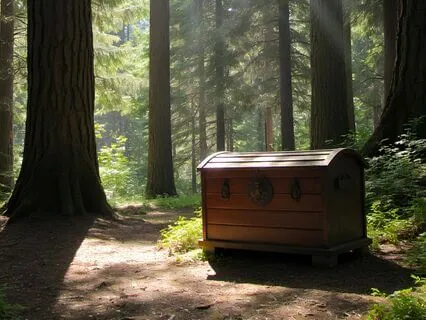
It can be a chest,
A safe,
Or even a magical submarine.
The important thing is that this container feels strong enough,
Secure enough,
And big enough to hold whatever you need it to.
So if you're ready,
Let's begin.
I'll invite you to start by finding a comfortable position and take a moment to get curious about what would be supportive to you today to help you dive into an imaginative space.
Perhaps you need a little shift in how you're seated to feel more grounded.
Maybe you need just a little stretch.
And I'll invite you to either rest your eyes unfocused on the floor in front of you or closing your eyes.
Give yourself a moment of space to just bring the attention inward to where your imagination can spread out,
Create.
So what is your container?
I'll give you a moment here to make sure you've found one.
And don't think too hard about it.
Remember that it can be a magical container and have all the features you want.
And once you have your container,
See if you can visualize this container in as much detail as possible.
What color is it?
How big is it?
Imagine its texture,
Whether it feels smooth,
Rough,
Metallic,
Soft.
Does it have a smell inside or out?
Either way,
This container is sturdy and it's designed just for you.
Only you have access to it and you know that it will safely hold whatever you place inside.
And where is this container?
It can be wherever you wish.
Perhaps in a beautiful wooded area or a cozy house that only you know about.
Make sure it's somewhere pleasant and private.
Again,
Somewhere that your worries will want to spend time.
Now we're going to add a few custom features.
First,
What does your container have for a lock or a latch?
What will feel like it keeps these things safely in?
You can close the door after them and even lock it.
Just imagine whatever kind of lock or securing system you want your container to have.
Now we need a controlled way for memories to come out.
So this will be a separate exit.
It could be a spout on the side that will let a slow trickle out when you're ready.
It could be a tiny door to retrieve memories one by one.
Great work!
So let's practice using the container.
And to grow this skill,
Let's start small.
And just a note,
We can put situations,
Thoughts,
Feelings,
Memories in the container.
But we cannot put people.
It just doesn't work.
So to practice,
Bring to mind a feeling,
Thought,
Memory,
Or worry that you might be carrying with you today.
Any stress or anxiety that are on the smaller side,
Let's say a 3 or 4 out of 10 on a distress scale.
And you don't have to analyze them,
Just notice them.
So as these thoughts or feelings come to mind,
Just pick one for now.
Pick one that is relatively inconsequential if you can.
And label it.
To use a small example,
Let's say a parking ticket.
Again,
No need to analyze the problem or change how you feel about it,
Just label it.
In this example,
Stress over a parking ticket.
I'll give you a moment to find yours.
Alright,
Now that you've found it and labeled it,
We're going to thank the mind for trying to keep us safe.
Again,
Our brain is just trying to problem solve.
And remember I said this was about consent,
So we're going to just invite that memory into the container where it's cozy and inviting.
And communicate to it however you like that you will come back to it when the timing is more optimal.
And you don't have to do anything,
So just imagine that your container is open.
And the situation goes in all by itself.
And once it's in,
You can close the container behind it.
So just do that now.
Great work.
So let's scan for what happened just now when you used your container.
Any little shift in the body state,
Any little shift in the mind,
In the mood.
Notice even the tiniest change if it is pleasant or positive or useful for you.
Was there a small sense of lightness?
Of space or ease?
Or maybe a bit of permission to turn your attention elsewhere.
And by noticing and enjoying these small shifts,
You're enhancing the skill and how well it works for you.
And now this last step is moving the attention to what is important.
So rather than letting the distress take over your attention,
Take over your day,
After putting it in the container,
Shifting your attention back and fully participating in what is happening now.
So you can turn the attention to your surroundings or a pleasant or neutral sensation in the body to bring you to the here and now.
And this will usually be the case.
Bring your attention back to a task that needs your focus right now.
So we'll just try that now for a moment.
You're leaving the memory in the container.
You can even see yourself physically taking a step back from the container,
Leaving it where it is in this safe,
Private place all to its own.
And step back into your life right now,
Your aliveness right here and now.
Maybe taking a refreshing breath in and out to reset,
To signify shifting the attention back and distancing yourself from the container for now.
See if you can notice the body on the surface that's supporting you right now.
See if you can more fully participate in this activity right now.
Sitting,
Noticing yourself,
Noticing my voice.
Good.
Just notice.
See if you feel any little bit freer,
Any lighter,
Any more space thanks to your container.
You can return to your container any time you need to,
And it gets stronger and better the more we practice.
See if you can keep practicing with small things.
Then after you've established some trust with your container,
Work up to heavier or more distressing content.
Your container is always there for you,
Ready to hold whatever you need it to.
Take a moment to appreciate yourself for doing this today,
For creating this powerful tool.
Take a moment to thank your container,
Too,
For being here,
For any good that it offers you.
When you're ready,
Begin to give yourself some movement,
Reconnecting with the space around you.
When you're ready to open your eyes,
Maybe take in anything in your space that anchors you to here and now.
Thank you for practicing with me.