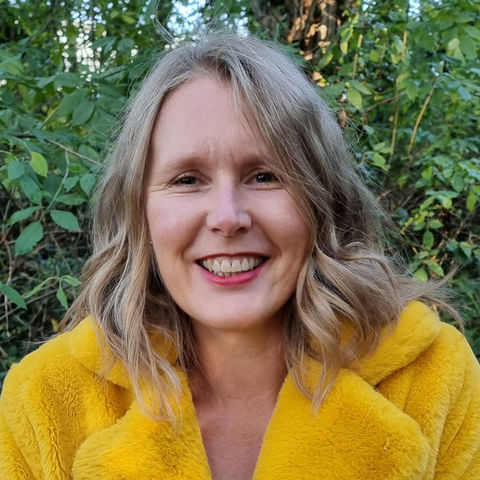
Hello and welcome to the Calmcast,
A time to feel calm and think clearly.
I'm Claire Downham,
The Queen of Calm,
A Transformational Life Coach.
I was a burnt out headteacher who finally made the journey to calm after years of trying and I want to prevent you from having to do the same.
The Calmcast is a series of short explorations gently guiding you back to your natural state,
Which is calm and clarity.
Just listen like you would listen to music with an open mind and curiosity.
There's nothing else to do.
Now let's relax into today's episode.
So today I'm going to talk about rules.
There appears to be a lot around in the outside world right now,
But those are not the rules I'm going to talk about.
As we're growing up,
Our little brains are like sponges,
Aren't they?
We learn when you watch a little child growing up,
You can see how rapidly we learn new things.
It's a really,
Really quick process and happens a lot of the time,
Almost without anybody having to do anything.
Obviously there's guidance from parents and things like that,
But a lot of the learning that's happening to children is just happening.
But as we're going through life,
We learn some really helpful things about the physical world.
So we learn that a flame is going to burn you.
And that's a really useful thing to know because then you can avoid getting burnt by a flame.
And we learn things like vehicles are hard and fast,
And if you step out in front of them,
That's going to cause you some damage to your physical body.
And you know,
Gravity is a great example.
We learn that if I drop this,
It is an object,
It's always going to fall down all the time.
And those things are useful in the first place.
And secondly,
They are true.
So flames always burn,
Cars always hurt if they hit you,
And you know,
Things always fall down if you let them go.
There are some things about the physical world that are really helpful.
And then of course,
When we start school,
Or even before that,
We start to learn some other things,
You know,
Counting kind of generally goes in the same order,
Two plus two equals four,
And all sorts of other kind of useful things,
Ways to spell words,
You know,
Appear to be largely inconsistent in the English language.
But anyway,
So we're learning all this really useful stuff,
Like little sponges.
And those things are useful.
So there's some really useful things.
However,
At the same time,
Almost implicitly,
We are learning some things about ourselves.
And those things are A,
Not true,
And B,
Not consistent.
But it's really easy to start to think that they are.
Now that learning that's happening.
First of all,
I want to say everybody who's involved in the learning that these children are doing,
The children that were us and our children and every other child are all innocent.
Every adult who is in contact with a child is really doing the best that can with what looks real to them in the moment.
So this is not about criticising parents or teachers or anybody else before I start.
But we've learned a lot of things as we've grown up that appear to be true about us.
And we,
Myself and my other half,
We saw this in real time recently and were shocked by how quickly it had happened.
We know a little boy,
I'll just say that.
And his mum had been upset with him and said that he was out of control.
But we didn't know she'd said it to him.
A few weeks later,
We're chatting to him about his behaviour and what he's been up to and why he's been in bother.
And we said,
Why?
And he said,
Because I'm out of control.
So it went from a parent upset in the moment,
Shouting something at a child to that child believing that and saying it about himself as if it was an absolute truth.
And we were stunned really how quickly that had happened.
My jaw literally went,
You know,
It opened and I was in shock.
Now luckily,
Because we have the ability to have this conversation with a child,
We could point the child towards the understanding that in the moment when we're learning this information from the outside world,
It is the stuff that stuck.
It's generally the stuff that's come from a high emotive situation.
So a parent upset with us,
Us being told we have to do something in school we don't want to do or being humiliated or being bullied or whatever those things are.
I don't want to go into the specifics of it.
But there's something there about seeing therefore the quality of it,
The quality of it,
That those things you think about yourself right now are made of somebody's angry thinking about you and what came out of their mouth directed at you.
Or from a misunderstanding like,
You know,
For example,
A couple splits up,
The dad leaves the home and somehow along the way,
Because there's a lot of emotion or a lot going on,
The child blames themselves.
And from that moment forth,
There's a belief that the child has about themselves,
About abandonment or whatever else.
And the thing is that once those beliefs get hold,
They're really easy to reinforce because although they are not true,
Because of how they form our perception of the world,
They start to look true.
So for example,
If you're that child whose father's left,
And then you get into a few relationships where you're kind of a bit wary because you think that person might leave you and you don't want that to happen,
Then your behavior kind of comes out and then the person leaves and that keeps happening.
You can see how it starts to look like you're a person who's unlovable or whatever the story might be.
And the word is story.
I mean,
The word is story.
None of that is really who we are.
The stuff about the physical world that is unchangeable and true and fact is really helpful,
But nothing,
And I mean nothing,
That passes through your head and tells you anything about you is true.
As one of my favorite teachers,
Michael Neill says,
It is not the voice of God coming into your head because God wouldn't say that to you,
Would they,
If there was a they that was God,
Rather than believing my belief is that we are all God.
But it really looks real and it's really easy to see how it gets perpetuated through our lives.
But when we can start to look,
Not look at the detail of it,
I don't care who did what in my childhood anymore,
I just don't care.
It's got nothing to do with me.
But I do know that if I've got a niggling,
Unpleasant,
Negative thought in my head about me,
I know that that isn't true.
It is something I have learned and it's not just the thoughts about me,
It's my thoughts about other people and situations and what might be frightening and all those things because they're all made of the same stuff.
It's all about the self,
Which is a collection of thoughts looking out into the world or connecting to ourselves and trying to interpret through that cloud of thought.
And I didn't realize I was going to go so deep this morning but from the place of seeing that,
There's nothing to do but what tends to happen is there tends to be an opportunity to take more of that stuff less seriously because actually it's made of this angry parent voice,
Bully voice,
Misinterpretation of the child as a little sponge.
It's all coming from this place.
It is not the same as what we've learned about the outside world,
About the physical world,
As in fire being hot and cars being hard and hurting if they hit you.
It's just not the same.
And the guide,
The guide that you have inside you,
Which is so powerful and so helpful and will keep tapping you on the shoulder until you listen to it,
Is the feeling.
If you're feeling off about yourself,
That isn't telling you a truth about you.
It's telling you that some of that old habitual,
Rubbishy thinking about you has come up in your head.
That's it.
That's all it's telling you.
That simplicity is what is transformational because we've spent a lot of time,
Well I have,
I'm fairly sure you have too,
Misunderstanding our feelings.
Really misunderstand.
I mean you look at the suffering in the world and the psychological suffering is a misunderstanding of feelings and what they actually are.
Like they're just the energy of thought being brought to life through consciousness and that's what you're feeling.
But they're a beautiful guide.
They're going to say to you,
Excuse me,
Excuse me,
Your thinking's a bit dodgy at the moment.
And then in that moment of realisation,
What occurs to you to do will be what occurs to you to do.
Because that's the place where we can redirect our awareness,
Our consciousness,
Our attention.
The feeling's off,
The thinking's off.
It's a place to give yourself space in whatever way works for you in the moment.
So yeah,
I hope that's been helpful.
Take care.
Thank you so much for listening.
There's nothing to do now but bring some awareness to how this is working out in your life.
Listen regularly to experience longer and longer periods of calm.
This has been The Calm Cast with Clare Downham,
Queen of Calm.
Take care and keep listening.