Hello and welcome to the Calmcast,
A time to feel calm and think clearly.
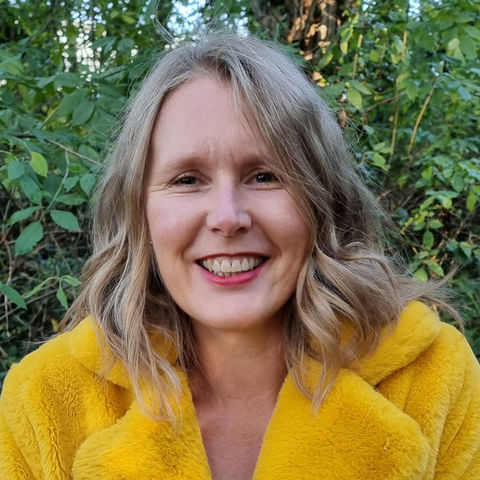
I'm Claire Downham,
The Queen of Calm,
A Transformational Life Coach.
I was a burnt out headteacher who finally made the journey to calm after years of trying,
And I want to prevent you from having to do the same.
The Calmcast is a series of short explorations gently guiding you back to your natural state,
Which is calm and clarity.
Just listen like you would listen to music,
With an open mind and curiosity.
There's nothing else to do.
Now let's relax into today's episode.
And today's episode is about resilience.
I often speak about resilience in and amongst talking about other things,
But I thought today I would really focus in on resilience.
And I started with a little Google search.
I quite often do that when I'm considering a subject.
So my Google search was something like,
How do I build resilience,
How to build resilience.
And I got 206 million hits.
I'm going to say that number again,
206 million results on how to build resilience.
And I thought I'll have a little glance through what's being shared here.
And what came to me really quickly,
And it's not something I've seen before,
Is that all the things I saw seemed to come from a place of lack.
The ideas,
The tools and techniques that are being shared are coming from a place of lack.
The idea really being that in some way we don't have enough resilience and it needs to be added in to us because we don't have enough of it,
That it's lacking in us in some way.
And I absolutely used to see it that way.
I used to lead workshops on resilience.
Even back in the day when I was a headteacher,
We would have a focus each half term for the children in terms of their mental wellbeing.
And one of the focuses of one of the half terms was resilience.
This idea that even in children we needed to add it in because they didn't have enough of it already.
But I don't see it that way now.
You're still standing or sitting or lying down wherever you are.
There is something innate in you pulling you through life day after day after day.
It's like an invisible rope tied around your middle.
It just keeps pulling you forward.
It keeps you taking the next step and the next step and the next step over and over and over again.
It's amazing.
And the only thing really that stops you seeing that is thought.
Do you see the difference?
The model that's out there is a model of lack.
The idea that you don't have enough resilience and therefore you have to go do some things to add it back in.
Mine is a subtractive model in many ways is the resilience is there.
It's just when your head's noisy and when you've got some ideas about what you might look like when you're resilient,
You just can't see it.
And one of the things I heard once in a conversation with a client was that there are things about our behaviour and our feelings that might make us think that we're not resilient.
So for example,
If you have a serious loss in your life,
A tragedy,
Something that is quite clearly sad and you're upset about it and tearful,
That doesn't mean you're not resilient.
If you get angry about something,
That doesn't mean you're not resilient either.
But if you think it does,
Can you see how easily you can stop seeing your own resilience,
How it can be almost hidden from you by your own thinking and by the ideas you've got out there,
That you've got from out there about what a resilient person actually looks like,
How they actually behave.
That's all made up just so you know.
Your resilience is always there.
But if you don't think you're doing the right kind of doing,
Feeling the right kind of feeling,
Being the right kind of person that you think out there's resilience looks like,
Then you might not see it.
But the really great thing about resilience is that it's really easy to see it in babies and children because they're there.
How many times does a little person fall down and get up before they learn to walk?
How many sentences of utter gobbledygook do they spill out before they actually finally learn to talk?
It's all happening all the time,
Isn't it?
Now why would that be able to be taken away from you?
I don't think it can.
But your head gets full and busy and you get some ideas about what resilience should look like and then suddenly you can't see it anymore.
But it is always there.
And as always the invitation here is to just look.
Look at everything that you have overcome in your life,
Everything that you have come up against.
And yes it has been hard and yes it hasn't been perhaps how you prefer life to go.
But can you see how many things you have overcome right from learning to walk and talk and all the other practical things that you learned to do as a small person right up to the losses that you've had?
And I hope you can see your resilience in the last 18 months because I see it literally spilling out of everybody all over the place.
And I suppose that's why this conversation is so different is that I am not here to point out your lack.
We don't need to have any more conversations about lack in people.
There's enough of that going on.
Too much of it actually.
And it's moments like this when I feel quite emotional.
We are all perfect and we're all doing brilliantly but we are just looking out into the world and seeing things that are telling us that we're not as individuals as a society.
We're being encouraged to not see the resilience in us because we're being told it should look like something else.
And so that invitation as always is there and an emotional invitation today it turns out to keep looking in the direction of what's amazing about you.