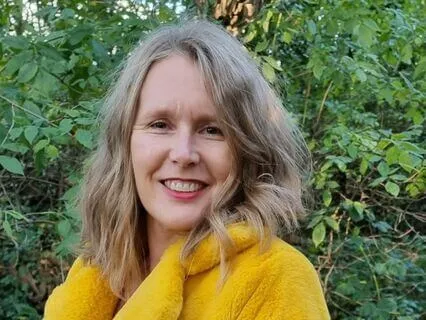
Hello and welcome to the CalmCast,
A time to feel calm and think clearly.
I'm Clare Downam,
The Queen of Calm,
A Transformational Life Coach.
I was a burnt-out headteacher who finally made the journey to calm after years of trying,
And I want to prevent you from having to do the same.
The CalmCast is a series of short explorations,
Gently guiding you back to your natural state,
Which is calm and clarity.
Just listen like you would listen to music,
With an open mind and curiosity.
There's nothing else to do.
Now let's relax into today's episode.
So,
Today,
An exploration of perfectionism,
And this is a subject close to my heart,
Unfortunately.
And I had,
Kind of the reason behind this session is I had such a big realisation about this the other day.
Because in my relationship right now,
Remember this,
You know,
This series of sessions is all about relationships.
I have found myself often in a place of criticism,
Me being very critical.
And I kind of focus on that being about criticism,
And I guess it's about that too.
But what I realised the other day was that it's about perfectionism,
And maybe all criticism is.
The idea that,
You know,
The criticism is coming from the idea that somebody or something should be,
Or somebody in particular,
Either ourselves or somebody else should be different,
Isn't it?
Should be more of what we want them to be,
Or more of what we want us to be.
And I really get the sense that,
I got the sense very suddenly for me,
Like in an insight,
That the reason why I am so critical is that I am looking,
I'm looking for perfect.
And the irony of that is,
Is that it doesn't exist.
And I recently looked up the origins of that word perfect.
And it's from the Latin perfecer,
I think it is.
Excuse my Latin pronunciation.
I do actually have Latin O level grade B.
But my Latin pronunciation is a bit rusty.
Not least because it's a dead language and doesn't exist anymore.
Not sure why I learned it in 1980.
Did a test in it in 1987.
But anyway,
It was a thing.
And it just means to complete,
To finish.
That's it.
And I was looking at the origins of the word and how it had changed.
And I briefly looked at a website where,
You know,
That origin of the meaning of the word.
So if you think the Romans were in the UK,
Helping to form the English language for about 400 years,
From,
I think,
From 400 BC to maybe from,
Maybe from zero to 400 AD.
And then I found that there was a bit more about,
More about this unflawed,
This idea of something not having any flaws,
That came in about 1300.
So somewhere between those two,
Somewhere between the Romans and the medieval times in 1300,
Some transference happened,
Some change happened in the meaning of that word.
And isn't that interesting?
Because we are basing our judgment,
Our criticism,
Our sense of us not being good enough,
Of somebody else not being good enough on a word that is in fact,
Well,
It's a word and all words,
All language is an illusion.
And so we're basing all of that on inherited psychology,
Transferred down from generation to generation.
And so even when we talk about something called perfectionism,
It's all an illusion.
And so when,
When,
You know,
You consider this title from perfectionism to authenticity,
And of course,
For all of us,
Being authentic in our relationships,
Being connected to who we really are is what we're looking for,
Isn't it?
And so maybe the route for that to happen is to realize that perfect doesn't exist.
It's psychology.
And psychology isn't our authentic selves.
It's something else.
It's deeper than that.
It's more,
More illusory than that.
It's not seeable or touchable.
It's formless.
And so I'm kind of saying it's unattainable,
But in a way I'm not.
I'm saying it's to look towards.
You know,
What if we just let go of even the idea that there was a such a thing called being perfect or something being perfect?
What if we just let that go?
What kind of freedom would there be there?
And that's not,
You know,
That's not,
It's not easy,
Is it,
To let it go.
And so for me,
That movement away from perfectionism is about realizing that the uncomfortable sensation,
The uncomfortable emotion that comes with us looking towards something being perfect is telling us that it's a lie.
It's telling us what a load of old bunkum.
Because good feelings,
You know,
And I,
When I say good feelings,
I,
I've just had a lovely conversation with someone where there's really pointing to the idea that our psychology is very good at creating good feelings and unpleasant ones.
But there's an energy in those feelings that are psychologically created.
So I can sit here and think thoughts about happy things and,
You know,
Or think excited thoughts and really kind of wind myself up into a really happy state,
You know.
And I often,
I often say,
You know,
You know,
You hear about people who've fallen in love,
I'm going to say in inverted commas,
On holiday and then like got married in two weeks or something on holiday or had a crazy,
Very short romance and then got married or engaged or moved in together.
And,
And,
You know,
How often those relationships don't last.
I would have said,
You know,
If the divorce rates one in three,
The divorce rate for people who have,
You know,
Jumped in very soon is probably much higher than that.
And that's because that the thinking is that this is the perfect relationship,
That this is,
It's,
You know,
The thinking is into the future,
Isn't it?
And I remember myself being,
When I was on online dating and I met some,
If I started,
Even started chatting to somebody who was,
Who seemed like they were a good prospect.
So they were about my age,
They looked like they were reasonably healthy.
Sounds like I'm looking at a dog,
Doesn't it?
You know,
They seem to be interested in physical activity,
Like I am,
And active and,
You know,
The kind of personal circumstances look like.
As soon as I started chatting with them and they seemed quite nice to chat.
And before I'd even met them,
I'd be off into the future.
Oh,
They've got children of similar age to mine.
So let's hope they all get on together and,
Or they've got little children.
So let's hope,
You know,
My children built a babysit for their children.
We'll be able to go out and just immediately into a story,
An overexcited story about that.
And so,
But the feeling I'm pointing to this,
This formless essence of who we are,
This formless sense of something deeper than our psychology is that comes with a different feeling.
And it's just like that sheep recognizing its baby scry in the field.
You know,
The sheep recognizes a lamb,
The lamb recognizes a sheep and all the sheep look the same to me,
But they know each other.
And there's something about looking towards a recognition of that authentic truth.
And in that space,
In the space of authenticity,
In the space of connection with that,
That's where the connection with other people happens.
Because really we're then in that space that is moving away from separation where,
Because perfectionism is just separation,
Isn't it?
It's just,
There's a me and a you and you need to be different for me to have an okay relationship with you.
And if you don't stop doing that and be more perfect,
Then we're through and we're not connected.
And for me,
That manifesting as criticism,
None of that is,
That's psychology,
Isn't it?
And as we're saying,
Psychology is rooted in some past nonsense from literally from hundreds of years ago,
Where a word changed its meaning from just something being finished to something being free from faults and free from flaws and therefore perfect.
So it's wherever,
Like it's always this conversation about noticing when it's psychology and when it's not.
And psychology just comes with erratic feelings because it is,
It's a flow,
Isn't it,
Psychology?
It's something that passes through us and it's just a direction to look in.
It's a direction to look in with awareness.
It's a noticing.
It's not about beating ourselves up.
It's not about going,
Oh no,
I think my fiance is supposed to be perfect and that's me out of order.
And why am I being like that?
It's not that.
It's just,
Okay,
I'm in that thinking he needs to be perfect thing.
You know,
Where,
How do I,
What do I notice about that and what do I need in that moment?
How do I look after myself?
How do I step back from that?
It's just that simple.
So,
Yeah.
And then there's movement towards this authentic space and this connection with other human beings because we're not connected by our psychology.
That's what separates us.
We're connected by this authenticity.
So thank you so much for being here.
I'd love you to join me on one of my live sessions on Insight Timer.
They're running.
I'm nearly getting into a routine of them being the same kind of time each week.
So at some point I'll start sharing that on these preview sessions too so you can get,
You know,
Come and join me hopefully on one of them.
So I hope you come and explore with me soon.
And of course,
I've got loads of courses as well that you can have a look on Insight Timer and I do hope you do that.
It's a great place to do some interacting and have some chats together through typing and voice notes,
But it's really good.
So thank you so much for being here and listening to this.
I hope you find it helpful.
Lots of love.
Take care.
Thank you so much for listening.
There's nothing to do now,
But bring some awareness to how this is working out in your life.
Listen regularly to experience longer and longer periods of calm.
This has been The Calm Cast with Clare Downam,
Queen of Calm.
Take care and keep listening.