Hello and welcome to the Calmcast,
A time to feel calm and think clearly.
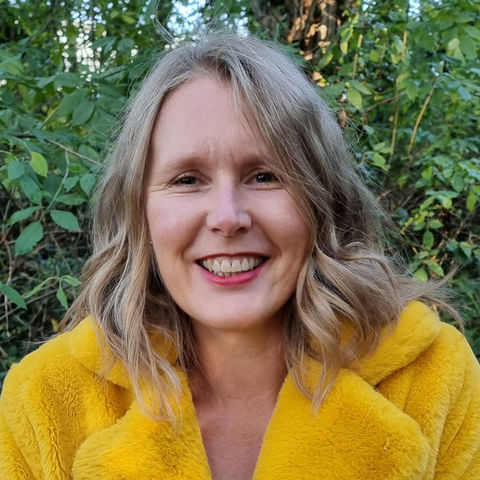
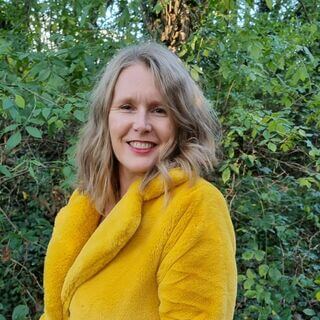
I'm Claire Downham,
The Queen of Calm,
A Transformational Life Coach.
I was a burnt out headteacher who finally made the journey to calm after years of trying and I want to prevent you from having to do the same.
The Calmcast is a series of short explorations gently guiding you back to your natural state,
Which is calm and clarity.
Just listen like you would listen to music with an open mind and curiosity.
There's nothing else to do.
Now let's relax into today's episode.
So today,
As I'm recording this,
Is World Mental Health Day,
The 10th of October 2022.
And today I want to talk about innate mental health.
I know that today many of the things that are spoken about on social media will be about mental illness.
They'll profess to be talking about World Mental Health Day,
But they will talk about mental illness and they will talk about it a lot.
And they'll talk about problems with our mental health and call those things like anxiety and depression and all the other things that we call those.
I in fact did a bit of research this morning about the DSM,
Which is the book that's used in diagnostics for mental illness.
It's an American book and it was first created in 1952.
I didn't realize it was quite that long ago actually,
But that was the first time people kind of wrote down in a manual the mental illnesses that they could diagnose in people.
Yay.
So that's 70 years ago.
And they're on their fifth version with additional amendments.
So they review it and then they review it and then it's like anything else eventually they'll get to the point where they read it so much that they need to call it version six,
But at the moment they're on version five point whatever.
So version one in 1952 had a hundred and a very few,
103 or something diagnoses.
And there's now 300.
So apparently there've been 200 more mental illnesses that have appeared on the planet since then.
But I don't know.
Maybe that's true.
Maybe it's not.
But what I've seen,
What I'm seeing in terms of how that is playing out is that the more we point people towards trying to find out what's wrong with them,
The more they see what's wrong with them.
And so we can end up with people who may well end up being hospitalized with multiple different mental illness diagnoses.
They're not mental health diagnoses.
They're mental illness diagnoses.
And what seems to be happening as a result of that,
As a result of continually talking about mental illness,
This is what a mental illness looks like.
These are the symptoms.
This is how you know you've got it.
We seem to have more people with mental illnesses.
And where I see this the worst really is in our children.
We now have children who apparently have anxiety ages six and even below.
What's happened?
I don't believe that the world has created this.
Like I don't think it's our circumstances because the world,
Our life,
Our life isn't created that way.
Our experience is not created that way.
But if you are an anxious parent and this is not leveling a criticism anybody,
Or you know enough about mental illness,
You've learned enough about mental illness to have some kind of idea about what that looks like in yourself and in another person,
I guarantee you will see it in other people,
Including children.
I'm not downplaying what it feels like to have full blown anxiety.
I've not had it many times.
I have in my life felt anxious and would have in the past caught anxiety.
I'm not underestimating well that feels like what I am saying is that we all feel that way sometimes.
And that is a huge part of being human.
Now the problem occurs is when we think that's a problem.
Feeling that feeling is a problem.
Why have we learned that feeling something,
Which is what mental illness is,
It's feeling a way that we don't want to feel.
Where have we got the idea that that makes us sick?
Now where I want to talk today really is about innate mental health.
Innate that means it's in there all the time.
It doesn't really matter how you're feeling in any moment underneath that feeling state is your innate mental health.
And I suspect you've seen that in yourself and in others because I have I've suffered from depression and I've still laughed at funny things on the telly or funny things people have said or done.
I felt anxious one minute and then felt calm again the next.
We all are a variable.
We're variable in terms of how we feel and think and behave.
We're not one thing all the time.
And that's that's the thing to see about these labels.
I am anxious.
I have anxiety.
I have depression.
I am depressed.
No you're not.
You have some depressing thoughts which result in depressing feelings.
You have some anxious thoughts which result in anxious feelings.
But you will notice that even at the lowest of the low periods of your life or the most anxious periods of your life you're not that all the time.
So how can that be your label?
How can that be who you are?
How can that be a thing?
It's not like physical health and I think this is one of the other problems that has occurred is that we've decided that mental health needs treating like physical health.
It isn't like that.
If I have a broken leg I have a broken leg.
If I have a cold I have a cold.
That virus is in my body all the time and I might have phases when I feel a little bit okay but the virus is there.
If I've got a broken leg I've got a broken leg all the time.
But have you noticed how your the mental illness label isn't there all the time?
You can be depressed and laugh and feel joy.
You can be anxious and feel calm.
You can be really stressed out about lots of different things but you can have moments when you have pure joy and happiness.
Because that's not it's not a constant.
It's not a solid thing.
It's not a thing that you are even for a period of time.
You're just caught up in whatever you're caught up in in that moment.
And what I would love people to see is that underneath all that underneath your thoughts and your feelings which is the thing that people call mental illness is the light and energy of the universe the constant.
It's like we've got it upside down.
We have inside out.
We've got it outside in when it's inside out.
It's seeing that inside you there's everything you need and that thoughts and feelings are passing through.
They're transient.
They're not constant.
They are variable.
You go up and down.
You like the weather.
That's how it works.
Whereas what I think people see is the alternative.
They see I am this broken thing.
This broken person.
This depressed person.
This anxious person.
But every so often I do something or something happens in my life and I get to feel better for a bit.
That's the wrong way round.
That's not the right.
Your essence isn't depressed or anxious.
Your essence is innate mental health.
Your essence is peace love and wisdom.
And as Jack Pransky says the capacity to create the illusion that you are not peace love and wisdom and the illusion is created via thoughts and feelings and subsequently often behaviors.
But that's not who you really are.
All those thoughts,
Feelings and behaviors are not who you really are.
And the real way is I've been seeing on my course this week,
I'm on a course,
A three week course,
This is week two,
With Michael Neil about effortless success and he spoke deeply on Friday about constants and variables.
What is constant about you is your ability in any moment to go.
So take a breath,
Feel your feet on the floor and fall into the present moment.
What's constant is your ability to access the present moment because sometimes you just fall into it,
Don't you,
Almost by accident.
You don't realize it's happening.
Or you fall into calm or you fall into fits of laughter.
The reason that just happens is because it's always there.
Because it's always accessible to you.
It can't be taken away.
It's not something that can be destroyed or taken away or damaged.
It's there all the time.
You have innate mental health.
We all do.
No matter what some doctor or non well-meaning therapist or anybody else is saying,
Whatever your diagnosis says,
That's not who you are.
Because if it was who you are,
It would be permanent.
It would be constant.
It would be there all the time.
It's not there all the time.
So it can't be,
It can't be you.
It's tricky this because it's such a shift,
Such a shift from where we've been taught to look.
We've been taught to look in the wrong direction for years and years and years.
You know,
For 70 years now,
There's been this book that tells you what's wrong with you.
And so this is a shift.
It's a look in a completely different direction.
But my goodness,
It is transformational when you start to see it.
So that's the invitation is always to look.
What if you just imagined for a week that you had innate mental health and you just started to look for it,
To notice it,
To be with it.
That truly would be transformational.
Lots of love going before I cry.
Thank you so much for listening.
There's nothing to do now,
But bring some awareness to how this is working out in your life.
Listen regularly to experience longer and longer periods of calm.
This has been the Calmcast with Clare Downham,
Queen of Calm.
Take care and keep listening.