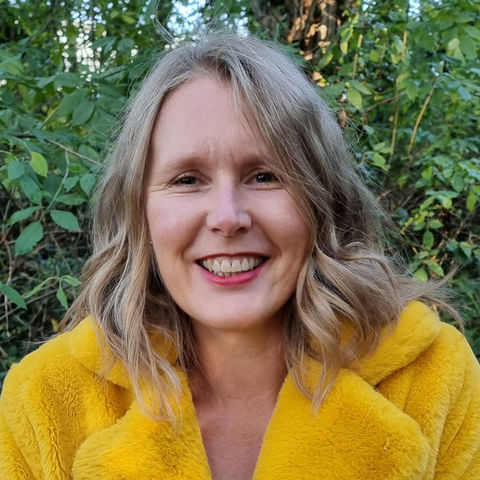
Hello and welcome to the Calmcast,
A time to feel calm and think clearly.
I'm Claire Downham,
The Queen of Calm,
A Transformational Life Coach.
I was a burnt out headteacher who finally made the journey to calm after years of trying and I want to prevent you from having to do the same.
The Calmcast is a series of short explorations gently guiding you back to your natural state which is calm and clarity.
Just listen like you would listen to music with an open mind and curiosity.
There's nothing else to do.
Now let's relax into today's episode.
So today's,
The title of today's episode is a new psychological model but I need to start by saying first of all this model was not invented by me and second of all it's been around for nearly 50 years,
So 49 years this year.
It was uncovered I guess in 1973 so it's a little bit younger than me because I will be 51 in February,
Not many weeks away.
And this model is very different to what we have been led to believe about our psychology.
Now I'm not talking about neuroscience although neuroscience probably pays a little bit of a part because that's not my area of expertise.
I'm talking really about how we experience life on a moment by moment basis and the model that we understand that works by at the moment,
Particularly when we're talking about when we don't feel okay,
When we don't think we're okay,
When we think there's something wrong with us.
The model that I see which pervades society and social media and everywhere and a lot of therapy is that there is the potential for a human being to be broken,
Psychologically broken.
Clearly we can break our bones and physically things can happen to us but that almost really and maybe this is a bit where it's come from that our psychology is like our physical body,
It can get broken.
And I wonder a little bit,
I remember when the movement around mental health and really that really is a conversation about mental illness but when that movement first began to gather steam,
It pointed to this idea that when people are mentally ill,
We should be treating them in a similar way to when they're physically ill in the sense that it was that idea that you can see a broken leg so you kind of know somebody's struggling but you can't see a mental problem,
A psychological problem.
And maybe that's where this all started,
I don't know really but there is an idea that as we go through life,
Kind of bits of us get chipped off and get broken off and damaged in some way.
And I guess that model is analogous with thinking of ourselves like being a car,
Like being like a car that you buy your beautiful new car and it's all shiny and it works perfectly and then you set off into life and it gets scratched by a bush when you go down a narrow lane and somebody,
You drive it on the curb a little bit too close and your wheel hub gets damaged and the engine gets wear and tear and you might get bumped in the side by somebody and you have to go and get all those things repaired like physically there's something to do because the vehicle has been damaged in some way.
But you're not a car,
You have something much more about you than a car does but the model at the moment is this model of lack,
This model of damage,
This model that says that if you're not feeling okay right now you best find a way to fix yourself.
That somehow you're,
You know,
What you're maybe,
What you were maybe born being okay but bits of that have been chipped away.
So here's something completely different to that.
It's a move away from this model of lack and I don't know what you can see in the world around you right now in terms of human psychology but it is,
It seems to me that it's deteriorating quite rapidly actually.
So when we look at that there's something not working about this model that we're using at the moment isn't there?
There's something,
It's just not working.
In my,
In the,
You know,
Nearly 51 years of my life we've gone from barely seeing anybody with mental illness,
It being quite an exceptional thing,
To it just being everybody.
It seems to be most people and,
You know,
The statistics will point to that won't they,
That most people or a vast majority of people will seem to suffer from some kind of mental illness at some point in their life.
It seems quite difficult to avoid.
So the model we've got right now isn't quite cutting it for me.
There's a new conversation required and it isn't pointing to a model of lack.
So the model of our human psychology,
Which I fundamentally see to be true now and I know there'll be lots of people who don't believe what I'm saying and that's fine too,
That we are born whole and well and if you've ever spent time with a baby or a young child you will have seen that,
You know,
How many times does the little child get up after falling down,
You know,
That resilience when learning to walk and talk etc.
The confidence of a small child,
Who's first on the dance floor at a wedding,
You know,
It is definitely the small child isn't it that is on the dance floor first because nobody else has had enough wine yet so they're not on the dance floor.
So there's this innate power,
This innate well-being,
This innate drive forward,
There's this innate resilience,
Confidence,
Calm,
All those things that we look for and also this innate ability to go through an emotional cycle,
Several emotional cycles in an hour if you spent time with a toddler you'll have seen that without really having much on that,
Without seeing that there's anything wrong with that.
And then we learn,
We learn things from the world outside us but that is a diamond,
That that we are made of is solid,
It is unbreakable like a diamond,
It can't be taken away,
Nobody can steal it or chip away at it,
However obviously we learn stuff about the world,
We learn things to believe about ourselves,
We learn things to believe about other people,
We learn our relationship with the rest of the world and how we work in it,
We may learn some really quite unpleasant things about ourselves that we start to believe and I really think that that happens so,
It happens,
It's not deliberate learning,
It's not like when we go and study something,
It's just happening,
It's not a deliberate thing,
It's not deliberate on the people who are saying it to the child,
It's not deliberate in the part of the child but it's just happening.
And so we end up with this layer of noise,
Thought,
Belief but I invite you to see that really as not as solid as you might think,
That thought has this propensity to pass when we allow it to.
So I see it really as a layer of horse manure shall we say to avoid swearing,
Horse dung,
Horse poop,
I quite like the word poop,
It's just a layer of horse poop and if you think about what horse poop is like,
You know actually it's not very solid is it,
You can get a bit of a hose pipe and you can wash it off,
It's not really very solid.
And but the model right now says that the horse poop isn't horse poop,
It's not this kind of fluid thing that can be washed away,
It's much more solid than that,
It's chipped away at the diamond,
Of course you can't really chip away at a diamond.
And it says,
The current model says well once we're broken we have to go outside of ourselves but then what happens is if you go back to my model which isn't really my model,
It's a model I've pinched mostly from Michael Neil I think,
I love it so much,
There's the diamond and there's the layer of horse poop and then on top of that because you're looking outside of yourself for the answer,
There's a layer of sparkly gemstones and nail varnish and diamond little diamond,
Little plastic diamantes and glitter probably,
You know it's kind of putting polish over the horse dung but it's not helping you to get back to who you really are to reconnect to the diamond.
So all there is really is for you to remember you've got that diamond and when I say that I feel a deep sense of emotion because if everybody could see that that diamond was inside them all the time,
Can you imagine the difference that would make that even in our darkest moments we would know we were okay and I'd love for all of you to see that for yourselves.
It's just something to start looking towards.
Thank you so much for listening,
There's nothing to do now but bring some awareness to how this is working out in your life.
Listen regularly to experience longer and longer periods of calm.
This has been the Calmcast with Claire Downer,
Queen of Calm.
Take care and keep listening.