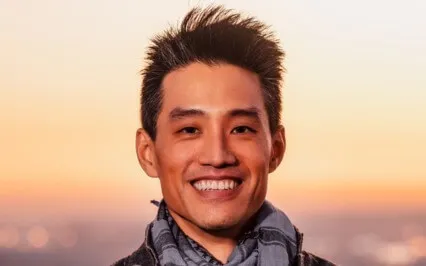
I'm so excited to introduce my next guest.
My guest is Roger Love.
There are no other vocal coaches in history has been more commercially successful in both the speaking and the singing fields.
Roger has coached the who's who's of our iconic actors,
Entertainers,
Speakers,
And authors,
Just to name a few,
Right?
Reese Witherspoon,
Joaquin Phoenix,
Keira Knightley,
Angelina Jolie,
Zoe Saldana,
John Mayer,
Eminem,
Nia De Listos,
Tony Robbins,
John Gray,
Brendon Bouchard,
Suzi Orman.
And Roger is looking to make the world a better place,
One voice at a time.
And his superpower is to listen to the way people speak and sound and find ways to make them even better and be more influential.
And personally,
I listen to Roger almost every day for years.
And there's so many questions I want to ask Roger.
I can list,
Go on and on and on.
I'm a huge fan.
Welcome to our conversation,
Roger.
Thank you for having me.
I'm excited to be here today with you.
So I want to dive right into it.
You had said the secret to being a great speaker is how many emotions you can make people feel.
And this is very different than what's been taught elsewhere.
And personally for me,
As you can tell,
I'm very cerebral.
So this whole modalities of emotions is still relatively new for me.
How would you recommend to someone like me who is super cerebral,
Who wants to be better in connecting to the people or the person that they're speaking to in an emotional way?
Any suggestions for me?
Lots of suggestions.
Let's start at the beginning.
Let's start at the awareness that for thousands of years,
People have communicated with a system that I believe is now outdated.
Aristotle,
When he started to explain the rules of rhetoric and how we should communicate with one another,
Those rules are still in place.
And basically,
All around the world,
No matter what language you speak,
You're using a word-based system of communication,
Thinking that if I have the right words to say to you,
CK,
That we'll have great communications and that you'll know how I feel and you'll know what I think and you'll see the best parts of me and my authenticity and we'll connect,
All on words.
But the science proves that oral communication,
Spoken communication,
Is first processed in the brain for emotions and words by themselves do not have emotions.
So if I say,
I love my wife,
I hate my wife,
I love chocolate,
I hate chocolate,
You know how.
I have been accused of being very robotic.
So I understand that very well.
I'm sure part of my audience tolerate my monotone.
Well,
We'll talk about you specifically later.
But one of the ways to sound robotic is to just use words.
Machines know words.
Machines don't understand the emotions that are supposed to be attached to the words.
So when I just said,
I love my wife,
I hate my wife,
I love chocolate,
I don't love chocolate,
You have no idea how I feel about my wife or chocolate.
You only heard the words that I said.
So I say we have to throw away the old model of communication and we need to replace it with a sound-based system.
Sounds are emotional.
The brain processes emotion.
The brain processes spoken communication first for emotion,
Not logic.
Sounds are emotional.
I say,
I love my wife.
I love being with you here today.
CK,
I attach the right sounds.
I hate chocolate.
I love basketball.
I attach the right sounds to the words.
The brain says,
Oh,
I understand how you feel,
Roger.
Now I can process it.
I can think about that.
How do I feel?
Should I take your feelings and make some decisions on them?
Should I store them into memory?
But we have to move communication from just word-based to sound-based,
Emotion-based.
And that's where we have to start our discussion today.
So I have a follow-up question there,
Roger.
My brain is very active,
Very fast,
Right?
So for years,
I'm basically trying to catch up to my thoughts and I've trained myself to finally let go of some of the internal resistance to just speak.
So my speaking pattern is long and I repeat synonyms because I'm trying to basically say everything out loud,
Right?
And as such,
That it sounds just,
It's just words versus my emotions and also my body needs to catch up to my words.
So since my brain's working at one speed,
My emotion's working a little slower,
My body works even slower,
What do I do?
Okay,
I gotcha.
Your brain is working fast.
So your brain is thinking not only about the words that you're saying right then,
But you're thinking about what words you're going to say on your next sentence.
So you're at the very least one sentence ahead in your brain of what you wanna say next.
You know your listeners are impatient.
The average attention span is maybe eight seconds,
Eight to 12,
If you're a super incredibly attentive,
But you realize that people's attention spans are light,
Short,
You wanna communicate in a way that you feel like you're giving value and that you're not wasting people's time.
So your brain is,
Like I said,
Thinking about the sentence you're saying and then thinking about the next sentence.
You have to stop doing that.
You have to focus on exactly the word you're on from word to word and then you shouldn't be thinking about what you're gonna say in the next sentence until you get to the comma or period of your first sentence.
And when you take a breath in,
You're thinking about what you're gonna say next.
And when you have it,
You jump right in and say,
What's next?
Stop thinking ahead,
Start thinking word by word.
I say,
I love flowers.
I love the color yellow.
If I'm not thinking about yellow when I say yellow,
How could I?
Green or pink.
I have to be focused on the words I'm saying,
The sounds that are attached to the words,
The emotions that I'm feeling while I'm saying those words and making those sounds.
And then I get to a comma and then I think of what I'm gonna say next.
I'm gonna say next,
Your listeners are processing what you just said.
People with fast brains think that they have to speak,
Speak,
Speak,
Speak,
Speak,
Like they're getting paid by the word.
But here's what the audiences actually need from you.
Audiences are not processing the information and feeling about it until you stop speaking.
So when you say,
I really like red,
I really like yellow,
I really like green,
They didn't have a chance to think about red,
Yellow and green.
But when you said,
I really like red,
I really like yellow and I also love green.
And then when you stopped after green,
They were thinking,
I like green,
Money,
Grass,
Fields of Ireland.
When you're speaking,
They're just gathering the words but when you stop and there's silence,
They process those words.
So you giving the sentence then jumping into the next sentence,
Then jumping in the next sentence because your brain works so fast,
You're robbing them of the silent places where they're supposed to think about what you just said.
I appreciate this.
So yes,
Slow down just a little bit.
But don't slow down during the sentence.
The idea is go at it during the sentence and then take a breath.
Oh my gosh.
Don't just slow the whole computer down.
So,
Okay,
So here's my,
I have a follow up question there,
Is this our mutual friend,
Ken Wachowski,
Right?
He's saying to me,
CK,
You're way too slow.
You gotta keep the pace going,
You know,
And keep it energetic.
So basically I have two speed.
I either go too fast or I go really slow than just being present.
So then for someone,
Again,
Someone like me who was,
Well,
Not so adapt to this,
Just keep practicing the middle speed,
Trying to find them.
No,
I wanna be very specific in everything that we do today.
We can isolate a problem and then I'm gonna give you a solution for it so that it isn't just woo woo,
Yeah,
I gotta think about my voice or yeah,
I spent some time with Roger today.
No,
I learned these things.
Okay,
You believe you have two speeds,
Fast and slow.
And you believe when you speak fast,
It's hard for people to understand you,
So you sometimes have to speak a little slower.
But the problem is is that it isn't the speed of your voice that is causing the disconnect.
It's not,
I know that Ken maybe said,
He didn't say you have to speed up or slow down.
What he said was you have to make your voice maybe more interesting.
And I'm telling you,
Let me decode this.
You speak with a monotone.
So what happens is a monotone voice stays on the same note a lot of the time.
So if I'm a piano,
So if I'm a piano and I gotta just stay on this note the whole time,
That would be called monotone.
So whether I went really,
Really fast on it or whether I went really slow on it,
If I just hovered around the same note,
Basically what happens is when people hear the same note over and over and over again,
They think they know what you're going to say next.
And so you lose their attention and you sound boring.
When they think they know what you're going to sound like next,
They think they know what you're going to say next and you've lost them.
Your issue is that you stay too much on the same note.
So then it's harder to get excited about this that you just said or this or this if everything sounds the same.
If I say basketball,
Hockey,
Football,
Soccer,
Then they're like,
Whatever,
You're not showcasing any emotion that you feel different.
But if I say basketball and I'm like golf or like football,
Football.
So you actually need more melody in your voice so that you don't sound robotic.
Again,
Robots,
AI do not have a lot of melody.
A lot of times they stay on the same word,
They stay on the same note.
So the more you stay on the same note,
The more you sound robotic.
Actually machines are learning to speak with more melody now.
So you don't want to be left behind machines.
You don't want to sound less human than the machines that are already not human.
Oh my God.
Here's what you need to know about melody.
Cause this is a big thing.
When people record themselves and they listen back,
They don't even realize that they're staying on the same note the whole time.
Cause they think they're so full of emotion and passion and I'm so smart and I have all the right words and look,
Now I'm excited and look,
Now I'm sad.
Look,
I'm angry now.
But they listen back and it's just one note like that.
So here's what you got to get better at understanding.
All right.
There are three types of melody that you should use when you communicate.
And some of them showcase great emotion and some of them showcase no emotion.
Monotone showcases no emotion.
I love this,
I hate this,
I'm bored,
I'm excited.
This is the greatest day of my life.
I just lost my left toe.
Just so that you know,
I'm sweating a lot.
That's okay,
That's okay.
Okay,
Monotone you understand.
Boring,
Emotionless,
Makes you sound like you,
Like we don't know how you feel about things cause it's all too even.
Now there's a thing called ascending melodies.
That's where you go from a low note to a high note.
Check this out.
I really like golf.
I really love my wife.
I love the color green.
This is an ascending melody,
Just like a song.
I'm going up,
I'm going up,
Just like I played from left to right on the piano.
That's an ascending melody.
Ascending melodies make you sound excited,
Make you sound happy.
I just won the lottery.
Ascending melodies are great.
You need to use more ascending melodies,
Especially when you're talking about happy things.
You need to sound happy when you're talking about happy things.
If you just do it monotone,
I just won the lottery.
They're like,
It wasn't that much of a ticket,
Right?
What,
Five bucks?
You won a scratcher?
I just won the lottery.
Wow,
How many thousands of dollars did you win?
Ascending melodies make you sound happy.
Descending melodies,
The ones that go from high to low.
It's my birthday.
I just won the lottery.
Nobody got me any presents.
Those are the ones that go from highs to lows.
It's okay.
It's only my birthday.
Those are descending scales.
And we were taught in elementary school all around the world.
The teachers didn't know that they were teaching this,
But they were.
We were taught to go down when we got to a comma.
And when we got to a period,
We were supposed to go down.
And that the only time we were supposed to go up was when it was a question.
I have to take a nap?
I have to eat that lunch?
So we understand what going up is,
Ascending melodies for questions,
But all the rest of the time,
We're going and using descending scales.
Every time we get to a comma,
We go down.
Down in melody,
Down in volume,
Or we stay on the same note.
We need to lose that whole misconception of the only time we can go up is when it's a question,
Because that's bologna.
We should be going up every time we're excited,
Everything is amazing,
Every time that we're happy,
Every time we wanna showcase energetic,
Powerful,
Positive emotions,
They should all be ascending scales.
We should stop going down because we're making people sad,
We're making ourselves seem like we're sad,
We're telling people we're done,
Every time we get to a comma,
We wonder why people are interrupting us,
But we keep getting to a comma and stopping.
So they think,
Roger must be done,
Maybe it's my time to speak.
So lose the monotone,
Add a lot more ascending scales,
And lose all of the descending scales that make you sound sad until you want to sound sad.
Yeah,
So one hack that I have for anyone who's learning a new language that I used when I first came to this country is emulate,
What do you call those,
Sitcom actors,
Who are literally right after them,
That's how I was able to acquire their American accent super quickly,
Within 12 months I was able to be pretty fluent.
So are there actors,
I know you have a program,
We'll definitely talk about your program,
Deep communication,
Are there actors,
Someone who is very animated,
Who is very happy that you think that I should listen to and find the clips and perhaps repeat after them?
Yeah,
I mean there are so many great speakers out there,
Patrick Stewart,
Sir Patrick Stewart,
Great speaker,
Kelsey Grammer,
Great speaker,
Oprah,
Great speaker,
Obama,
Great speaker,
The voices that you're,
Martin Luther King,
Great speaker,
You can find speeches of these people and sitcoms of some of these people all over the place.
Those,
The great speakers don't do all descending scales,
They don't do monotone,
They have melody in their voices,
They have volume changes,
You sense when somebody's going from happy to sad,
From sad to angry,
To all of the different emotions.
So the thing is that most people,
First of all,
Need to realize what they sound like.
They don't record themselves enough,
So they don't know that they're going down,
They don't know that they're using all monotone,
They don't know that they're speaking in a whisper the whole time,
And they wonder why people just think that they,
They're a pushover because they're so airy.
I really want to follow these ideas during this meeting today.
And then somebody stands up and goes like,
No,
No,
No,
Sit down,
Sir,
Because this voice just,
Air came out and dissipated in the air,
Nobody takes it seriously unless what?
Hi,
I'm your massage therapist.
And then what are you thinking even?
Well,
That massage therapist has such a nice voice,
But they're thinking,
Probably doesn't have strong hands,
Probably can't do deep tissue.
So we got to learn what we sound like now and what those sounds are making people perceive us to be.
If I spoke all airy all the time,
People would just think I was weak.
If I spoke like a squeaky hinge all the time,
Then people just,
They think I don't have any power because there's no real sound coming out.
We have to record ourselves,
We have to listen back.
And that's what I'm teaching today.
What sounds should you be avoiding and what sounds should you be driving your voice towards?
I love it,
That's awesome.
And actually I have a quick question for you.
This is a little bit separate,
But I think it's still interesting.
One of the recent projects I started taking on is to record narrations of my future self,
The vision that I have for myself.
It's a more elaborate vision of basically affirmation.
So I'm trying to articulate not only to my mind,
But to my heart,
But also to the body.
So I wanna evoke the experience of gratitude and joy.
So I'm assuming the same skills that you've been teaching applies to even the self,
Not just to others as well.
Is there anything you wanted to say about that?
Yes,
When we speak,
We hear the sounds that we make.
If we sound sad,
The brain thinks we must be sad.
If we sound happy,
The brain thinks,
Oh,
Maybe we're happy.
If we have whatever emotion that the brain hears in our own voice,
It sort of keeps us in that emotion.
So the way we speak not only makes other people feel things or not feel things,
The way we speak makes us have low energy or be sad or not realize that showcase happy.
Do this for me.
Roger says,
I don't use melody.
And go up higher on melody.
Roger says,
I don't use melody.
Roger says,
I don't use melody.
So that when something amazing happens.
So then when something amazing happens,
I,
For example,
Went higher.
I,
For example,
Went higher.
So I can say,
I really like strawberry a lot more than butterscotch.
I really like strawberry better than butterscotch.
I've interviewed other guests for my show.
I've interviewed other guests for my show.
But today,
But today,
We have a real treat.
We have a real treat.
My teacher is here.
My teacher is here.
Some other times where we did interviews.
Some other time when we did interviews.
I didn't like that person as much.
I didn't like that person as much.
I still ask them questions.
I still ask them questions.
But you know,
But you know,
I just wasn't excited to do the interview.
I just wasn't excited to do the interview.
So now this is an exaggeration,
But you see how foreign that feels?
You're forcing yourself to go up there and you don't think you sound believable or authentic anymore.
I do not.
But what's the alternative?
Showcasing the same emotion?
I really love doing this show.
Everyone's my best friend.
But what about those people that didn't really do good interviews?
How do I feel about them?
I love them.
Or I don't love them.
No,
You have to use melody.
You have to change it.
You have to go up and down just like a good song.
You have to use volume changes.
Another thing that you need to understand and everyone does.
You can't just keep it the same volume because there's a microphone there and you feel like I've found a signal that works and now my voice,
This is the volume I'm going to have.
Great signal,
Listeners can hear me.
No,
You wanna change your volume sometimes.
Oh,
I gotta tell you this secret because everybody else doesn't know this.
All the other podcasts will not tell them this.
So sometimes you change it and then sometimes you're louder.
I can't believe that.
I can't believe Roger just said that.
I should be louder?
I thought I was loud enough.
Oh no,
It isn't about that.
It's about making changes.
Changing how loud or soft you are.
Changing how fast or slow you speak.
Changing how high you are or how low you are.
Changing the melody because it is in those changes,
In those sound changes that people feel emotional changes and then they're never bored.
I do events where I'll spend three days.
I just did one a couple of months ago,
My Voice of Success Live.
We did it virtual this year and I had 1500 people start with me on Friday morning at 9 a.
M.
And 1500 people end with me on Sunday at three o'clock.
Wow.
And the only time they left is when they had to go to the bathroom.
Wow.
Well,
If I would have had the same voice for those three days,
I would have lost them before lunch on the first day but they were always expecting something new.
They were expecting the unexpected.
Speakers don't realize that they're entertainers,
That they have to move people emotionally.
I say a great speaker can do three things.
Number one,
Control other people's perceptions of them so that I open up my mouth and I speak and I want you to perceive the best parts of me,
Not the worst parts of me.
I can influence the way you perceive me based on the sounds I make.
Second,
I wanna move people emotionally like we started this discussion.
I want someone to spend five minutes with me or five hours with me and I want them to move from emotion to emotion because that's how they learn,
That's how they experience,
That's how they get excited.
And the third thing is I want to be able to influence the outcome of every conversation that I enter into.
So if I can move people from emotion to emotion,
Guess what?
I can roadmap my way to achieve the end emotion that I want them to feel at the end of the conversation.
Then I'm a great speaker,
I've showcased the best of me,
I've moved people emotionally,
I'm an amazing listener and we all got to a fantastic outcome at the end of a communication.
That's what great communication is all about.
So question there.
The podcast is called Noble Warrior.
I used a lot of dojo type of metaphors,
Right?
So for me,
A dojo would be kind of like studying your own recording and then deconstruct in this case,
The tonalities of my sound,
Do I get excited or something like that?
Is that something that you teach as well to help people basically deconstruct what they did as well as also watching great speakers,
Entertainers,
Actors and so forth and see how they have different ranges and so forth,
Do you?
Yes,
When I first started teaching voice,
I was a singing coach.
I was 16 years old and I was the voice coach of the Beach Boys,
Of the Jacksons,
Of Earth Wind and Fire and I was working with all these amazing superstar singers because I was brought in as a junior partner to the senior partner who already was the most famous voice teacher in the world.
So I was literally thrown in to teach all these famous singers.
So a singer,
When they are learning to sing and trying to find their own style and everything,
They imitate other great singers.
There's nothing new out there.
There's just a little bit of what was before.
This singer sounded like this,
This music sounded like that and you put it together and you make something new.
So singers always grew up imitating other people.
John Mayer was sitting in his bedroom for hours and hours and hours since he was in junior high school and imitating different guitar players that he loved and trying to play the solos exactly like those and imitating singers that he loved and every other singer has done that.
It's part of becoming a singer and finding your own voice is learning from the people that you love listening to.
But speakers somehow lost that and they don't do the same type of work.
Speakers need to identify other speakers that they love and they need to listen to them and they need to become great at impersonating those sounds and then put that on a shelf and then pick another speaker that they love and imitate them and see when do they go,
How do they go higher and higher and when are they clean and when are they rough and when are they airy and when are they nasal and try to imitate it and all of that imitation helps you learn new sounds that you didn't know you had and eventually after imitating a lot of great speakers,
You become your own great voice because all of those influences end up combining together and you have like a potpourri of all the people that you love inside of you and then when you open your mouth,
It all sort of mushes together and it sounds unique.
So you've worked with a lot of famous iconic people.
Would you say some are,
Let's say great technicians and some just have a voice that's able to not only connect to themselves but also be able to amplify and articulate and impact millions for generations to come.
What's the differentiation between someone just good,
Technically,
But someone who is iconic and just have that prowess to be able to connect for generations to come?
Beautiful,
That's a great question.
It's great to be born with an instrument.
Like all of a sudden you say,
Daddy,
And your voice resonates more than the person next to you.
Your twin brother who says,
Daddy,
And the voice sounds different or your sister who sounds different.
So it's great to be born with an instrument but I say every one of us is born with an instrument.
But then what happens is,
What do you do with that instrument?
So even if you're born with an incredible instrument,
If you're Pavarotti and you are born with this amazing voice that could end up being the most famous tenor opera singer in history,
Well,
If you don't decide you like music and you don't like to sing,
Then you're just the one 30 years old at the birthday party singing happy birthday in Italian or English.
And you sound a little louder than the next person and maybe a little better,
But you didn't end up growing up to be Pavarotti or Christina Aguilera or Celine Dion or Bruce Springsteen.
You didn't grow up to loving music and working on your instrument and learning how to play it.
If your grandmother unfortunately passes and she's in heaven,
But she left her Steinweg piano to you here on earth,
You have a choice.
You can learn to play the piano and love the music that it makes,
Or you can turn it into a frame holder for pictures.
So that's the choice we all have.
We were born,
Those of us that can speak,
Some people have problems,
But those people that actually have a voice,
How do they learn how to use it?
They imitate the sounds that their parents make,
The people in their environment.
So I grow up and I'm learning words.
And if my mom speaks really airy,
Roger,
You're my favorite,
Forget about me loving your brother,
I love you so much.
Then when I can speak,
I talk to my mother that way,
Mommy,
I'm really hungry,
Stop beating my brother and give me all the food.
If my dad talks like this,
Very nasal,
And he says,
Ah,
I'm going fishing,
I'm going fishing,
And he comes back from fishing and he looks so happy.
And I'm growing up and I see this and I wanna go fishing,
Then I say to my dad,
Daddy,
Fishing,
Take me fishing.
I try to sound like my dad.
So they'll say,
Okay,
Let's go fishing.
And then we go out.
We imitate the voices that we hear.
And then suddenly we're young adults or adults or older.
And we think that's the voice that we were born with,
But it's not true.
We were just born with an instrument.
And some of us imitate the right people,
The right sounds,
And some of us don't.
I love that.
That's a big idea actually,
Because most people,
And you have mentioned many times as well in your different podcast interviews that most people hate their voice.
And I think that's a really terrible idea to even to have,
Because if you hate your voice,
Then you don't wanna speak anywhere,
Right?
So I love that,
That you're teaching that it's an instrument and it's a learnable skills based on who you listen to and imitate and so forth.
Love it.
The position we're in as just speakers,
And I say,
Everyone's a public speaker.
If you're speaking to your dog,
That's your public.
You don't have to get paid or have a podcast to be a public speaker.
I say that we open our mouths and if other people hear us,
We're the speaker and that's our public,
Okay?
So the world has speakers in a difficult position.
The number one fear in America is speaking in public.
The number one fear.
A lot of people would think that's silly.
Maybe a hurricane or famine or shark bite or anything else would be a bigger fear or an understandable fear.
Fear of speaking in public,
And yet the only way we can survive is opening our mouths and speaking to people.
The only way we can have relationships,
The only way I can get hired for a business,
The only way I can do anything is to have communications.
And so I have to speak all day.
And yet the number one fear in America and pretty much around the world is fear of public speaking.
That's a problem.
So what's everyone so afraid of?
They're afraid of opening up their mouths,
Speaking what they think,
And having people disagree or not like them.
So it's very painful when all of a sudden you say to someone,
I love you,
And they look back at you and say,
Thank you,
Thank you,
Thank you.
I don't like that.
So just judge it from that.
How good does that feel?
Does it feel good?
When you say I love you to someone,
The only thing that's gonna really make you feel good is when they say,
I love you too.
So we're afraid of being rejected.
We're afraid of being judged harshly.
And human nature is that when you hear someone speak,
You're making value judgments about them.
You don't know them.
So when I hear anyone speak,
I'm thinking,
How old is that person?
Is that person married?
How much money do they have in the bank?
Do they have any kids?
Where'd they go to school?
Why'd they pick blue to wear?
We're always trying to,
We're making value assessments of people.
So the goal is,
The reason you don't love your voice is because you know it.
It sounds too monotone or it sounds too boring or you sound too sad or you don't have enough emotion in it.
So your job,
Each of our jobs,
Is to make our own voices sound better so that we like the sounds we make,
So that we feel better about the sounds that we're making,
The conversations we're having,
The communication we're doing that is more authentic and real and trustworthy.
And then with sounds like that and with those feelings,
What are people gonna feel when they talk to us?
They're gonna love speaking to us.
If we're good at showcasing what,
If I'm good at showcasing that I'm funny,
What are people gonna think?
He's funny.
If I'm good at showcasing love,
What are people gonna think?
Such a nice guy.
If I'm good at showcasing empathy,
People are gonna be like,
He's so nice,
He's so kind.
So I'm saying it's our fault that we're afraid of speaking in public because we haven't learned to create a voice,
To tune the voice in a way that showcases the best of us.
And then when you're showcasing the best of us,
When you know you're the best gift,
You know how that gift is gonna be received.
You give love,
You're gonna get love.
You give happy,
You're gonna get happy.
So a great speaker doesn't worry about being judged harshly because they're not putting that out there.
So there's a spectrum,
Right?
There's the beginners who is worried,
Who is concerned,
Who has a fear of speaking,
Who doesn't wanna express.
There are people who is pretty competent with their voice.
They can speak their mind and they kind of have a pretty good impact.
And if I feel sad,
I speak it's sad and then people receive sad,
So forth.
And then there's the iconic people,
The Pavarotti's,
The Andrea Bocelli,
Who can just have very iconic voice.
That's what lasts for generations.
So I'm curious to know what's the difference between the iconic voices versus just a technically sound voices.
The iconic voices learned technique.
They made the most out of their instrument.
And then they kept bouncing themselves,
Their thoughts,
Their sounds,
Whether it's speaking or singing,
Off of people.
And then they would judge how people were responding to it and then they'd make changes.
And then they bounce it off of people and then they'd make changes.
It's the thing you do when you're doing any business.
You build a widget company and you think this is what people need and you make the widget and you give it to people and they say,
Oh,
Well,
Your widget does this,
But I'd really like it to do this.
And you take it back and you tweak it.
And then you fix your widget and you give it back to the people.
And they were like,
This is good.
This works better.
But now could you make it do this?
And you take your widget back and you're just trying to perfect your widget to be what the people want.
Also here's something very interesting.
The difference between incredible presenters and performers and influencers is that when they speak or sing,
They're able to showcase confidence.
They're able to make their listeners believe that that's exactly what they wanted to say,
That that's exactly what they wanted to sound like.
They're able to showcase confidence.
That doesn't mean that they're more confident than anyone else.
It means that they've managed to train themselves to showcase confidence.
The singer who gets up has to make the audience think that's how,
Oh,
He must really want it or she must really want it to sound like that.
Seems like this exactly the way that the performer wanted it to come out.
Then the audience thinks,
Well,
Then that must be amazing.
Cause that's,
It sounds like the singer's confident.
It sounds like the speaker's confident.
So then the audience thinks,
Okay,
Well then that must be good.
So it's the ability to showcase confidence more important than the ability to actually have confidence.
And if you,
And how do you showcase confidence?
By making the sounds of confidence,
By showcasing in your voice that you're confident.
You're never gonna come off confident if you're all airy.
You're never gonna come off confident if you have no melody.
You're never gonna come off confident if you don't have enough volume in your voice.
You make the sounds of confidence.
People perceive you as confident.
Eventually you become confident.
Because part of confidence is playing it out,
Giving of yourself,
Giving yourself and having people receive you so positively that you start to feel confident about your abilities and about your traits and about your product and about your content.
I love it.
So in the startup world,
We have this phrase called product market fit,
Right?
So similarly,
What I'm hearing you say is,
So imagine your voice is a quote unquote product,
Right?
Or a character,
Right?
So you can,
As you get good at channeling an aspect of who you are,
Sadness,
Pride or confidence or whatever the thing is,
Then as you get better towards the spectrum of unconscious competence,
Then you can tune the character,
The aspect of you that you wanna bring out.
Hey,
As a professional,
I wanna project confidence.
Let me bring out my confidence voice,
This character,
Right?
So then you can then train,
Be more precise in the way you project your intention to whoever you're speaking to.
Is that a good reframe of what you just said?
That's a great reframe.
I only wanna make one change to that.
I believe that this pursuit for unconscious competence is overrated.
Say more about that,
Please.
Okay.
Bruce Lee was amazing at martial arts.
So he became what you might say,
Unconsciously competent at martial arts.
But the people that become unconsciously competent can really basically only do it with one thing,
For sure one thing at a time,
Because it takes that much focus and that much energy and that much time to be an expert at that one thing.
I say it is much more beneficial,
Certainly for every entrepreneur who's listening.
But I believe as a human being,
It is much better to be consciously competent at many things.
The brain is very,
Very powerful and compartmentalized and can do lots of things at once.
I'm saying that this idea of,
I need to,
Let's say,
Find my voice and it just becomes consciously incompetent.
I open my mouth and all the right sounds come out and people love me and they write checks to fund all my ventures.
What's the problem with being consciously competent?
And using your voice and thinking about how you're using your voice in conversations,
As long as that doesn't take away from everything else that the brain can do at the same time.
So I say that it's great to have conscious competence on voice and many other things that all can play out at the same time in your life.
You have a greater chance of being successful.
You shouldn't only think that,
Unless this is on autopilot,
I can't do it.
It's wasting the brain.
Your brain can do a thousand things.
The brain probably could do a hundred thousand things.
It's doing millions of things at the same time.
So what are you saying to me?
You can't concentrate on two things or three things at the same time?
Come on,
Brain's doing millions of things at the same time just to keep you alive from breath to breath.
We have a question from an audience.
It says that,
I think you've answered that already,
But I wanna make it specific.
You know,
Hey,
My voice sounds judgmental,
Even though I don't intend for it to be judgmental.
Do you have anything to say about that?
Yes,
A judgmental voice is a loud voice that doesn't have any melody.
I've heard that.
I understand that.
I'm not interested in that.
A judgmental voice has volume,
Does not spend a lot of time listening,
Not a lot of silent spots.
A judgmental voice is loud without any melody.
A judgmental voice uses short words.
Fine,
That's okay.
I don't care.
I get what you're saying.
Short words.
If you want to sound non-judgmental,
Add more melody,
Especially ascending scales.
Slow down your words and hold out some vowels.
When you hold out vowels,
It sounds a little more sing-songy,
Which is less judgmental.
Pull the volume back a little bit.
Judgmental.
Short words,
Lots of extra volume,
And monotone.
So don't do any of those things.
Slow down your words.
Pull back the volume a little bit,
And slow down the words,
And also spend more time at commas,
Listening,
And then speak a little bit,
And then listen,
And speak.
If you do any of those,
If you add melody,
You're gonna sound less judgmental.
If you pull your volume back a little,
You're gonna sound less judgmental.
If you stop using short words,
You're gonna sound less judgmental.
I will take that on personally as well.
Add more melody.
So on this podcast,
We talk a lot about going from the first mountain of success to the second mountain of legacy and purpose.
And then throughout our conversation,
You've touched upon it,
But I want to ask a direct question.
How can you use voice and singing and speaking to discover the authentic heart of who you are as a human being?
When you find your voice,
You decide,
You don't just sound like the people that you grew up with.
You start with a blank slate.
You create your melodies and your volumes and the right air in and out.
You see how easy it is to showcase emotions with using the right sounds and the right words.
You are operating from a place where your voice,
The things you say are more tied to your values,
Your core values,
Your beliefs,
Your wants,
Your desires,
Your hopes,
Your heart.
It's more heart-based.
Words,
If you're just learning a lot of words and you're just using words,
It's all just tied to a non-emotional place.
But as soon as you start making the sounds and attaching the right words to them and hearing them and bouncing the best of yourself off of other people,
It's a lot easier to realize that you're becoming the person you wanted to be and that it's tied to,
Like I said,
Your beliefs and your morals and your values.
And communicating on that emotional level always keeps you moving in the direction of legacy,
Future,
Happiness.
The voices that are stifled,
The voices that are all logic and no emotion,
How can they ever reach the legacy place or how can they look forward to a future because they're not even enjoying moment to moment.
They're not emotion-based and they're not authentic tied to the emotions and wants and desires.
They're just word-based,
Thinking that words can be attached to goals that you think you can achieve in communications,
But that people lie and words lie.
So you gotta get to a place where this is how I feel and I'm good at expressing it.
Do you know that the number one skillset that's asked in all businesses now,
The number one skillset they're looking for,
LinkedIn did a survey.
Companies want people to be great oral communicators.
People are graduating from schools and they're looking for jobs and they're good at technical skills,
But they're not good oral communicators.
They're not speaking.
You go into a break room at a big place of work,
Nobody's talking.
They're sitting there on their phones.
Used to be some years ago,
You walk into a break room and people would be talking.
People would be communicating.
The internet,
Texting,
Everything that we created,
Fantastic devices,
Except they've all little bit by little bit stripped us of actually communicating sound-wise.
So,
You know,
When you said I'm trying to save the world,
I am trying to save the world one voice at a time because I believe that we've all basically learned languages but they're word-based.
So people all over the world are learning English as a first language,
English as a second language,
Or whatever language they're learning as a first or second language.
And they think that when they learn the words that they'll be able to communicate effectively.
And what I'm saying is they're missing the whole point.
You'll learn the words,
But then you have to learn the sounds that are attached to those words.
And if you attach the right sounds to it,
That's the only way the conversations are gonna be emotional.
That's the only way you're gonna have the life you want because what's a life?
One communication that leads to another communication that leads to a relationship that leads to a bigger relationship that leads to you creating a life that you want.
So follow up question there.
In the writing modality,
There are free writing exercises that you can do in morning pages and things like that as a way to just allow the mind to come through you.
In the speaking modality or for singing modality,
Are there things like that?
Let's say I'm just kind of conjuring up an image like,
Hey,
Happy,
And you just kind of throw out sounds.
Are there things like that?
Kind of like free writing before singing and speaking?
Yeah,
The simplest thing is do vocal warmups.
All of my students,
Hundreds and hundreds of thousands,
Millions of people all around the world are actually doing my vocal warmups every single day.
Takes minutes.
I'm one of them.
And they're warming up their voice and they're actually using,
That controls the breath,
That gives them low range and middle range and high notes.
So it gives them all this melody to play with that opens up the whole system.
It creates all of these vibrations,
Gets the energy flowing all over your body.
So the vocal warmups actually set you up for your ability to speak using your instrument and hitting and using more sounds filled with emotion.
A dancer would never think of dancing before they stretched.
An athlete would never think of not physically warming up their body before they did their athletic feet.
Nobody at the Olympics is just hanging out and then they walk out and do their thing.
They're working out,
Working out,
Working out,
Warming up the body and then they do the pole vault and then they throw the javelin and then they run the race.
So why is speaking any different than that?
Why do people think that you can just open up your mouth and sound comes out,
But it's the sounds that you should make?
No,
You could warm up your voice like an athlete warms up their voice.
I say that we should all be Olympic speakers because we're speaking all day and our lives sort of depend upon those conversations.
So people should warm up their voices.
It's fun.
I've had people explain to me,
Like for example,
John Gray,
One of my students,
Not only was he super successful at writing books like Men Are From Mars,
Women Are From Venus,
But before he was doing that,
He was a monk for like 10 years.
Did you know that?
He was a celibate monk for 10 years.
And his job as a celibate monk was to meditate.
He would tell me he would travel around the world.
He'd meditate and his mind would travel all around the world and he'd spend hours and hours and hours meditating.
And he told me when he started doing my vocal warmups,
He could get to the same place of energy and focus and calm after about 15 minutes.
And it used to take him six hours to do that in meditating.
That's how powerful warmups are.
Yeah,
I love it.
So let's follow up on that question.
And we'll ask,
Do you mind a couple more questions?
Is that cool?
No,
No,
Let's go.
Awesome,
Thank you.
So one question that was submitted to me was how can you use singing to further the advancement of the soul?
Because in my mind,
You were never woo-wooing your speech at all,
But in my mind,
I'm thinking like chakra alignment as you're trying,
You know,
Activating different parts of the chakra kind of a thing.
So are there even more specific tactical things as a way to perhaps modulate,
Develop specific advancement of your spiritual development using singing or voice and so forth?
Yes,
All that.
One of my favorite discussions was I taught Bradley Cooper to sing for the movie A Star Is Born.
He and Lady Gaga,
It was a great film.
Okay,
After we started working together,
He goes,
I love singing.
He never sung before.
I love singing.
I said,
What do you love about singing?
He says,
You can't lie when you sing.
When you sing,
People know whether you're telling the truth or not.
You can't lie.
So he connected immediately to this authentic true place that when you sing,
That people know when you don't feel it,
When you don't believe it,
When it's all just baloney.
So,
I mean,
I don't believe there's any difference between singing and speaking.
When I was,
I was a singing coach for 17 years,
And then speakers like Tony Robbins and Suze Orman,
All these actors started coming to me.
And in the beginning,
I thought,
Well,
I have to create completely different techniques to teach the speakers.
And I tried to create all those techniques.
And as I would do it,
One after the other,
After the other,
I realized that the same techniques that I had been doing for 17 years of showcasing,
Telling a singer how to use their voice to influence and move millions of people,
I could use the same techniques for speakers.
So sort of what I do is I put the music back into the speaking voice,
Because there's already emotion and there's authenticity and all kinds of connective tissue in singing.
So I make my speakers as if they were singers and they have control over the same things,
The pitch,
The pace,
The melody,
The volumes,
All the things that singers did.
And then I realized that my speakers were becoming the most famous speakers in the world because they were doing exactly what singers were doing.
They were choosing the sounds that came out of their mouths and picking the ones that would move people emotionally to the emotions that would help them,
That would make them feel better,
That would connect them more with themselves.
Do you have any specific,
So for example,
Again,
My mind is thinking,
Maybe there's a,
Your vocal exercise goes to the full range,
Right?
So let's say,
Could one make a happy warmup just with the ascension sounds as a way to activate the mind,
The body that way?
Or?
Sure.
Even simpler than that,
I literally have figured out what are the sound components of all the major emotions.
And then when you learn how to use pitch,
Pace,
Tone,
Melody,
And volume by learning the techniques that I teach,
When you learn to control the sound variables,
You can choose to make the sounds of happy.
You can choose to understand the sounds of angry.
So for example,
What sounds does your voice have to make to be perceived angry?
Well,
You have to be louder because that's one main component.
You have to be monotone and you have to say the words really fast because when you're angry,
You don't have time to think about the words you've been stewing on these words for so long and they just spew all out.
So volume,
Fast pace,
And monotone are the sounds of angry.
What are the sounds of happy?
Ascending melodies,
Going up a little higher,
Speaking a little slower.
When you're happy,
You want that happiness to last so you don't rush through it.
Ascending melodies,
Happy.
Also happy has a little more air in it.
Happy has a higher pitch.
Nobody's happy down here in the bottom part of the range.
I'm happy up here.
So higher pitch,
Ascending melodies,
A little more air in the tone.
So if you knew that you could actually make really simple sounds that your voice could learn how to make and that you could showcase any emotion that you want and that you could tie those emotions to the things you were talking about when you were presenting,
I have people look at,
For example,
If they're realtors,
I have them look at this whole script that realtors like to use to try to sell homes.
And I say,
Okay,
What do you want them to feel in this section?
Well,
I want them to feel excited.
Okay,
What do you want them to feel here?
Oh,
I want them to feel this.
I want them to feel that.
Or a car salesman.
What do I want them to feel?
They're not walking through the,
Let's say two people walk in through the door at the car showroom,
One person is there to buy a car and they bring their friend to help them pick the right color.
What do I gotta say to the friend?
What emotions might I have to lead either of them through so that both of them buy a car that day?
Trust?
Well,
First thing is,
Yes,
I have to take them through the emotions where they can trust me.
I have to take them to emotions of being excited about the possibility of that vehicle changing their lives.
I have to get them to a place of thinking hopeful that this is exactly where they want to go and they wanna drive that.
I have to take them through a series of emotions.
I have to get them to a place of calm so that they know that I'm not rushing them through any process.
They have to feel like they have all the time in the world.
They have to feel at peace.
They have to feel excited.
They have to feel happy.
So that I have to lead them through all kinds of different emotions so that they both can't wait to sign the contract and they both walk out the door thinking,
I didn't know I was gonna buy a car but I didn't know I was gonna feel like that.
I know,
Neither did I.
Let's drive someplace now.
So it's just that people are entering into conversations not thinking about what emotions might help them achieve the outcome.
People are entering into conversations not even thinking what they want that outcome to be.
I don't waste any time communicating unless I have already decided what would I like to happen at the end of this conversation.
Maybe it's just I wanna have coffee with someone and I want them at the end of the conversation to say,
To believe that we really connected and that they wanna get together again with me and have coffee another time.
Maybe it's just something simple.
Maybe I just wanted that person to know I really care about them and the problems they're having in their lives and then I'm here for them.
But I enter into conversations thinking,
How does that person feel?
And how could I help that person feel?
Yeah,
I love it.
Last question and before we talk about your program and also a huge acknowledgement to you,
That is this.
And if I don't ask this question,
People are gonna get upset at me.
So you have taught millions of people from the Oscar winners and all these famous musicians and celebrities all the way to executives in Fortune 500,
Fortune 100 companies.
And mothers and fathers and students and everybody who uses their voice.
That's right,
Anyone who has a voice.
So if you think about the best students that you have,
The best ever,
Who really like immersed in your techniques and who just take it in and have your techniques and your teachings enhance the professional life and who they are as a human being,
Their spiritual development and so forth.
What are some of the common traits that you see that they just embody such that they can really take in all your teachings?
Well,
First of all,
They are patient enough to take time out of the equation.
Time is such a manmade constraint.
If I don't have a beach house by the time I'm 23,
I'm not successful.
If I don't have an apartment in a high rise on Fifth Avenue by the time I'm 26,
I'm not successful.
If I haven't already sold my company by the time I'm 28 for this 10 X of what the annual thing is,
Then I'm not successful.
And we have all these time constraints.
The best students take time out of the equation and they realize they're there for betterment of themselves.
And then we work really fast.
Sometimes I may only have days to turn someone into a great voice or minutes before they go out on stage.
But you take time out of the equation.
The best students take time out of the equation and then work hard every moment until they've learned the techniques and until they feel comfortable.
Also,
I found that the best students are heart-based.
And that is that singers like John Mayer didn't become singers and guitar players because they wanted to make money.
They wanted to make music and making music makes them happy.
The people that,
The greatest influencers in the world,
The Tony Robins of the world,
The people that I teach like that,
They're purpose-driven.
The money is in fifth position.
When you change the world,
When you help people,
That's your gift.
And when they gift you back money to help pay for the programs you make,
That's their gift.
It isn't selling and buying.
It's the greatest presenters are giving themselves away as the gift,
The greatest gift that they can give.
And then the audience is just saying,
Well,
Thank you for that gift.
And here,
I'm gonna pay,
I'm gonna gift you back some money so that you can keep making those gifts.
So they're heart-based.
They want things to happen fast,
But they don't fault themselves and put them in a window where they only give them the smallest amount of time.
And then they're unsuccessful if they haven't achieved it at that moment.
We can't control when fate opens up a door and a miracle happens.
All we can control is being ready for any door and every door to open so that when that door of opportunity opens,
We're ready to do it,
To do that task,
To be that person.
Then a miracle happens.
Miracles don't happen to people that are not ready to accept,
Aren't ready to do what they've got to do when the door opens,
When the light shines,
When the opportunity presents itself.
I love it.
Well,
I can speak to you for hours,
Roger,
Really.
I would love to one day just hang out and just chat,
But I know you gotta go.
So let's talk a little bit about your program.
So you had talked about the five skills and the different sounds one can make to elicit certain emotions that one wants to project.
What program should they first get to learn all that?
Great,
I have spent my life creating content that people can learn and me guiding them through it and have results,
Immediate results.
And I don't wanna choose for your people what program they want.
What I wanna do is literally,
I came here today because I wanna help people use their voice to unlock a new level of success in their life.
So maybe they wanna speak,
Maybe they wanna sing,
Or maybe this interview has inspired your listeners to want to do both.
So the gift I brought today is a $50 gift certificate that's waiting for you at rogerlove.
Com forward slash CK,
The CK is lowercase,
Rogerlove.
Com forward slash CK.
You're gonna go there,
Claim your gift certificate and use it to get your hands on the training program that's perfect for you at this moment and what you want to achieve with your voice and your life.
So by the way,
I made sure that the $50 is good for speaking training or singing training or both because many of your fans are learners and they always wanna be learning and growing and exploring new things.
So I don't wanna limit any of your people in working on their singing voice or their speaking voice.
I'd love them to work on both.
So just go to rogerlove.
Com forward slash CK,
CK lowercase and use that $50 to buy any of my programs.
The good news is that $50 is gonna pay for a great deal of the program.
My job,
My goal in life,
And the only way I can change millions of people's voices is to make the programs affordable and they work.
So $50,
When you go to the website,
You're gonna realize that $50 really gets you in the game and just start to explore how easy it is to become aware of the sounds that you're making,
The ones that are working for you,
The ones that are working against you,
And then start working using my warmups because buy one of the programs,
For example,
Like the Perfect Voice,
Which will give you the warmups that you're gonna use every day or several times a week and you're gonna do it in the shower,
You do it in the car,
And then all of a sudden your voice is strong and thick and powerful and more present and people will be like,
Wow,
Did you just come from the gym?
You're like,
No,
I just did my vocal warmups.
So you gotta start with awareness.
In this world,
People are trying to figure out how to be happier and how to be more successful.
And they've tried almost everything they can think of.
And unfortunately,
Voice has somehow ended up on the end of a list that they never even looked on.
They're not thinking about if my voice was better,
Maybe I could be more successful.
If my voice was better,
Maybe I could be happier.
If my voice was successful,
Maybe I could be confident.
If my voice was successful,
Maybe I'd be already on that second mountain instead of just trying desperately to hold onto my position on the first mountain.
So people aren't thinking about their voices except when they lose their voices.
Those are the people that are losing out.
I'm telling you that voice is the greatest makeover you could do for yourself and for everyone that listens to you.
So go to rogerlove.
Com forward slash ck.
Jump in,
Pick any program that excites you,
Start working on your voice,
And you watch how that changes you from the inside and how that changes how everyone perceives you from the outside.
Well,
For anyone that's watching this and who's listening to this,
I'm a student.
I used Roger Love's warmup for years.
And some people have said to me,
Hey,
Your voice sounds really good,
Sounds really strong,
Sounds,
You know,
I can speak for a long time without really tiring myself.
I mean,
My teacher right here,
Right,
Mr.
Roger Love,
Is the reason why,
How I have a resonant voice,
I have a good tone,
Right?
So I'm happy to be a testimonial for Mr.
Roger Love here.
And I was also saying this,
Having a strong,
So my podcast is my own journey of finding my voice,
Right?
Of expressing my thoughts,
You know,
Without any kind of shame or guilt or anything like that.
So I so appreciate you,
Roger,
For being here and really just demonstrating body,
This very esoteric skill.
Because if you try to look for,
Well,
How do I,
You know,
Make the right sound?
How do I,
There are lots of singing teachers,
But I don't necessarily wanna be a professional singer,
Right,
So the fact that you are able to make these mechanics more relevant to the everyday people who just want to,
You know,
Be better using their voice,
Finding their voice and expressing themselves in a way that's authentic to who they are.
It's a beautiful thing.
So I really,
Really appreciate you being here,
Having this great conversation with me.
Thank you so much.
Thank you for everything that you're doing to,
On your journey to find who you are to help so many other people.
You're a great example of what's on a higher plane once you find your voice.
When you find your voice,
You wanna share it.
You find your voice and you realize you can help other people.
You become the gift.
You feel great about it.
They feel great about it.
That's what changes the world.
One person who finds their voice at a time and then shares that with other people and then becomes great listeners to the other people that are using their voices.
So you lead by example.
Thank you so much for having me today.
And I look forward to the next time that you and I are gonna talk.
Awesome.
Guys,
Go get the courses,
Whatever course you get,
Rogerlove.
Com for a slash C-K.
Roger is so generous with the discounts.
It's worth it.
I,
You know,
I'm a student.
I'm a testimonial.
Roger,
Until next time,
Thank you so much.
I'll see you soon.
Bye again.
Bye.