So hi there,
Welcome to the session today.
So today I'm just going to run us through a kind of a practical exercise for a technique that I like to call befriending emotions.
Now I've done a track,
I've uploaded a track already on befriending emotions,
Talking about how it works and the kind of idea,
But there was no kind of practical element so I thought I'd just do a little track on the practical element in a kind of meditation setting just for those who like it or for those who find it more useful.
So that's what we're going to do today.
So just to explain a little background about the befriending emotions technique.
Essentially this technique,
The idea is that if we have difficult emotions that arise a lot,
They're quite difficult to deal with.
That's why they're difficult emotions.
So one of the best ways that I've found to kind of deal with them,
At least in the short term,
Although you can practice it to become a more long term thing,
Is this technique that I call befriending emotions.
So the idea of the technique is essentially that you need to be a little bit practiced already,
A little bit have a little bit of experience with mindfulness already.
But the idea is that whenever a difficult emotion comes up,
You notice it,
If you can,
Because obviously it's not going to be possible all the time,
But as much as you can you try and notice it,
Just mindfully aware of it.
And you essentially meet it with a greeting.
You actually greet the emotion kind of in your head or out loud if you'd rather.
And in this way,
The idea is that we cultivate this kind of more kind of balanced approach,
This more kind of almost actually loving approach to what is normally a difficult emotion.
Maybe it's anxiety,
Maybe it's stress,
Maybe it's kind of PTSD,
Minor PTSD or something.
And so like I say,
In this way,
We cultivate more kind of equanimity towards this,
What is usually a difficult emotion.
And in so doing,
We short circuit the response of kind of anxiety about the emotion,
Nervousness,
Fear of it,
All of this stuff,
The usual response that makes the difficult emotion difficult and not just any old emotion.
And so in practicing this technique,
The idea is that,
As I say,
We can remove or at least subdue this difficult aspect of the difficult emotion.
So I hope that will make sense for now.
If not,
Hopefully it will make sense once we have done the exercise.
But with that said,
Let's now jump into the exercise.
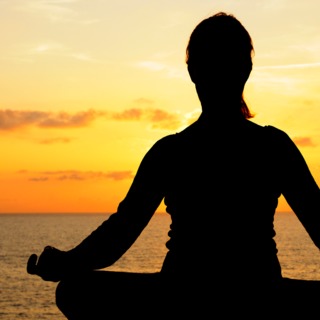
So let's treat this today a little bit like a meditation.
Okay,
We're not going to be sort of,
You know,
Doing the usual meditation things,
We're not going to be kind of necessarily focusing so much,
You know,
This and that,
But you'll see how it works.
We're just going to use a kind of meditation context,
As it were,
To practice this technique more clearly and to be able to actually put it into practice rather than just thinking about it in theory.
So find yourself somewhere comfortable to sit if you haven't already.
It can be a chair,
You can be sitting down in sort of half lotus or something,
Or you can be lying down for this.
If you're likely to fall asleep,
Then maybe that's not the best idea.
But you can take whatever position you feel most comfortable in.
We're going to be remaining quite alert in this anyway,
Because it's not so much a meditation,
It's just a kind of meditation context for practice.
So as I say,
You found somewhere comfortable to sit hopefully,
And slightly to take a couple of deep breaths in through the nose out through the mouth just to kind of get yourself in the zone a bit.
And after a few breaths with the exhalation,
Just gently closing the eyes,
Just again to get into that increased awareness of what's going on in the mind and in the body.
And to start with,
We're just going to,
I always like to just sort of scan around the noises in my surroundings,
Maybe a quick body scan or something that's really up to you not required,
Just like I say,
It helps you to get a bit more into the zone a bit more into that awareness.
So let's then start by focusing,
Allowing the attention to rest on the breath once you've kind of found your way into the zone,
Just focusing on the breath as it goes in and out,
Just breathing naturally now.
Allowing everything to settle a little bit.
And I'd like you just to see if you can think of something that makes you anxious or stressed,
Something that inspires a difficult emotion in you,
But one that's relatively manageable if you can.
Maybe it's going to the doctors,
Maybe it's going to do a test of some kind,
Something that induces this difficult emotion.
And it can be the thing itself that you're trying to deal with at the moment.
It can be anything as long as it's just small.
So hopefully you've thought of something by now.
Absolutely no worries if you haven't.
And if you can't think of anything,
Or if you can't think of anything that will,
That seems to be working,
Just listen to what I'm saying and sort of just sit back and relax a bit still in the meditative kind of situation.
And just listen to what I'm saying and see if you can sort of understand how it would be if this difficult emotion comes up.
So returning any attention to the breath.
Let go of this and return to the breath.
We'll come back to it in a second.
But for now,
Just focusing on the in and the out of the breathing.
And now,
Like a droplet touching the surface of the water,
Just thinking of that thing that inspires that emotion,
That difficult emotion.
And when you see it come up,
You want to say hello,
Emotion,
Name it.
Thank you for coming to me today and making my life a richer experience.
You may stay as long as you like.
And then letting go of it so it can settle wherever it wants.
And then just coming back to the breath again,
Letting go of that as we come back to the in and the out of your breathing.
And then just once again,
Just thinking of that stimulus,
Like a droplet just touching the water,
Just and see it and then hello,
Emotion,
Whatever it is.
Thank you for coming to me today and making my life a richer experience.
You may stay as long as you like.
And then allowing it to settle wherever it needs to settle.
And coming back to the breath.
Just following the breath.
And then let's do it once more.
Just thinking of that stimulus,
Seeing the emotion and then hello,
Thank you for coming to me today and making my life a richer experience.
You may stay as long as you like.
And then letting it go.
And coming back to the breath.
And by the way,
It's really up to you if you want to change the greeting at all.
I would say that the you may stay as long as you like bit is really kind of optional.
I find it useful myself because it again helps to cultivate this kind of equanimity.
But if it makes it too long,
If makes too complicated,
Or if it doesn't work for you,
That's absolutely fine as well.
And as I say,
Feel free to just change the whole greeting if you need to whatever works best for you.
So I'm going to give you a little time now.
Just practice that by yourself.
Without my prompts on what to say,
Or when to say it or when to do it or anything.
And you may want to use this time as well.
If you can think of your own greeting to practice that or if you'd like to think of your own greeting but haven't maybe try and think of one and practice it and see how it works.
Just remaining in this kind of meditative environment to do so.
So have some time now to just try that.
Okay,
So I hope that was a useful time to be able to practice that.
And so,
As we come to the end of the meditation kind of stage of our practice today,
Just starting to deepen the breath in through the nose and out through the mouth.
Just a couple of times.
And when you're ready,
With the inhalation,
Just opening your eyes gently,
Moving your head to the left,
Moving your head to the right as you look around the room softly with this meditative kind of calm.
And now let everything go that you just did.
Get back to your day and next time that difficult emotion comes up,
Hopefully you can remember this practice,
This technique,
And you can apply it and it can help you with dealing with that.
So I hope this has been helpful today.
Like I say,
This is for dealing with difficult emotions in the kind of short term,
But you can kind of with a lot of practice kind of get it up to be effective in the long term as well.
And just generally,
If a new difficult emotion seems to come up out of nowhere,
It can be quite useful as well.
So that,
Like I say,
I hope it's helpful.
Please do let me know if it is or if there's anything you think is missing or could be made better,
Please do also let me know as well.
So thank you very much for coming today.
Best of luck with the technique.
I hope it works for you and I'll see you next time.
Bye bye.