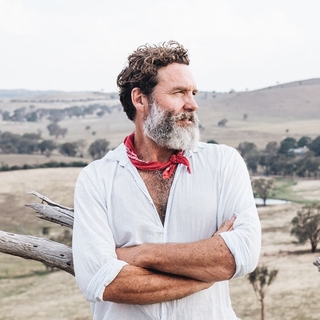
We're talking about revolution at the end of the day and revolutions start individually by individual people making those changes and so again it comes to us to have the bravery and the tenacity to make the change.
And courage?
Absolutely.
You know if you're going against the norms,
The family norms,
The social norms,
The community norms,
That takes courage.
You could get a lot of pushback from people.
That was Brian Warburg and you're listening to The Regenerative Journey.
We acknowledge the traditional custodians of country throughout Australia and internationally and their continuing connection to country,
Culture,
Community,
Land,
Sea and sky and we pay our respects to elders past,
Present and emerging.
G'day I'm your host Charlie Arnott,
An eighth-generational Australian regenerative farmer and in this podcast series I'll be diving deep and exploring my guests' unique perspectives on the world so you can apply their experience and knowledge to cultivate your own transition to a more regenerative way of life.
Welcome to The Regenerative Journey with your host Charlie Arnott.
G'day this episode of The Regenerative Journey is actually a bit of a combination,
Or compilation I should say,
Of a number of interviews I did,
Short interviews I did at the 2021 Farming Matters conference.
It was in Albury on the 29th and 30th of March.
Hang on,
Am I on the right one?
Yes,
March it was.
Time is flying by.
And I attended that and it was a wonderful conference put on by Land O' Market team.
And Tony Hill who's my first guest is the Executive Chair of Land O' Market.
If you don't know about them look them up,
It'll be in the show notes.
He is the Executive Chair of Land O' Market and one of the key organisers of the conference and having had to postpone it from last year given the whole COVID show,
His team and many others pushed on and put on a rip-roaring conference this year and it was fantastic.
So I just grabbed who I could,
Some of the presenters and others who weren't actually presenting but that I know and knew could hold the conversation for a good 10-15 minutes.
Plenty of them,
Grabbed them and put this together.
So this is actually part one.
The first interview was with Tony Hill as I've just mentioned Tony's role with Land O' Market.
Second was Peter Richardson who's actually the CEO of Myer Grazing.
And if you haven't heard of them,
It'll be in the show notes as well.
A grazing management piece of software and tool which we use and Peter was presented.
So I had a chat about him about Myer Grazing and sort of the benefits of it which are many.
Then we had Brian Wahlberg who is actually part of Land O' Market as well on the board and wonderful holistic management educator inside outside management is his business and he is just prolific in the holistic management scene.
A lovely,
Lovely bloke.
So I had a good chat with him.
And then Rachel Ward who many of you may already know.
I did interview Rachel previously for a proper episode of The Regenerative Journey and I caught up with Rachel Eyre just to catch up on what she was up to,
A few projects she's been working on which we talk about.
So you'll just have to listen to find out.
And just before we jump into the interview,
I just want to let you know and remind you that we will be,
Hamish Mackay and I will be down in South Australia with all those wonderful Crow editors down there at Barossa.
The Barossa Valley on the 3rd and 4th of May at the Alkina Wine Estate there with Dan and Amelia and all those wonderful people.
Now just to make a note of that we are just talking about how biodynamics applies to wine and viticulture.
It is about horticulture,
It's about broad acres,
It's about small scale garden,
It's whatever you want to,
However you want to apply biodynamics to your world and your life.
So there on the 3rd and 4th of May in the Barossa Valley at the Alkina Wine Estate and on the 7th and,
Sorry 6th and 7th of May,
That's later in that same week at McLaren Vale,
Gem Tree Wines there with Melissa and Michael who produce some amazing wines as does the Alkina Estate.
So just to reinforce that,
You don't have to be a wine grower,
You might want to be a grape eater,
But not a wine grower or a wine maker to come to these courses down there in South Australia.
They are open to everyone so spread the news far and wide,
We'd love to see you there.
Tickets available on charliearnett.
Com.
Au and get all the details and tickets there.
Love to see you down in South Australia,
Cannot wait to get down there and haven't been there for a while so looking forward to it.
But look I hope you enjoy this combo episode as much as I did putting it together.
It was a bit of a last minute thing but I think it actually worked really well and good to grab some insight and snippets from people at the conference and hope you enjoy it because I certainly did.
G'day I am coming to you from Albury,
Sunny Albury at the entertainment centre here at the Farming Matters,
The Lander Market Holistic Management Savory Institute.
It's a mouthful Tony,
Conference here and I am putting together a few little snippets from some of the presenters and other people here at the conference today and I've been lucky enough to grab Tony Hill who is one of the lynchpins behind the conference and tirelessly getting through the cancellation of last year's conference and he's fronted up again this year.
Tony welcome,
It's appropriate that you're kicking off our little collection of interviewees here.
How are you going?
Absolutely.
So excited I think is the word for that.
Excited to be here.
Just to correct you on one point,
We never actually cancelled last year,
We postponed.
You postponed it.
And over that,
I have never been in this situation with an inaugural conference.
We're branding this as Australia's discussion of regenerative agriculture,
A central place where everybody can come,
Express their views,
People can listen,
Make their own choices.
We're not trying to push any messages down anybody's throat.
We know that there's fantastic interest in regenerative agriculture and that's why we took the decision to postpone.
And over that 12 months so many of the delegates,
All of the sponsors,
All of the speakers,
They've all stayed with us for that journey.
It's fantastic mate.
And there's a few of that Alan Savory is currently presenting via,
Or digitally,
Remotely,
That's the word I'm saying not in the lingo,
Remotely which is wonderful.
And I guess any of the other international speakers that might have been here,
The slots have been filled by locals.
Tony,
A wonderful crowd of people,
There are 300 delegates and hangers on.
Tell me,
Just explain to us what you're doing.
Tell me,
Just expand a little bit more on why,
Or what you do,
Like just start there.
For people who don't know Tony Hill,
What are you doing Tony?
It's time to embark on a new mission.
That's what I've been engaged with.
I can't say that I was there for the early days of this journey for a lot of people and so we are building on some really heavy work by a lot of people here.
What those people did,
They worked so hard to get awareness of holistic management and regenerative agriculture out there into the farming community.
And that's reached thousands of farmers across Australia,
Farmers such as yourself Charlie.
And you've all taken your own creative approach to this.
It's fantastic.
It's a lovely story.
But it's so much in-house amongst those farmers.
And what I wanted to do was embark on that new section of the journey where we do the really quite difficult task of reaching out to the wider community and saying everybody can get engaged in this.
And I might have heard this from you,
But let me repeat it again.
If you eat,
You're engaged in farming because where does that food come from?
And it turns out that we can no longer sit by and let huge problems go unattended.
It turns out also that farming can be a crucial part of the solution.
I think the challenge has been that the wider community sees farming as almost an anathema of caring for the country.
And that's such a destructive thought really,
To say that we have to make things worse in order to get our food.
That's an awful kind of prospect.
It's a crazy notion,
Isn't it?
Yeah.
And so that's been the working implicit hypothesis of the community.
And now we can turn that around if we can do this challenge of communicating our world.
And so many people,
It's easy to sit in your own head,
Have your own ideas,
Convince yourself that you're right,
Whatever,
But to go that extra mile and say no,
I have to go out and talk to the wider community now about this and get them engaged.
And I'd seen some people who were working on that,
Who'd had success of it,
Who'd had success at looking at their land.
And I said,
Yes,
This is possible if we do that hard work.
And so the haul that we've got downstairs is full of a very wide group of people.
We haven't kind of sectioned out,
We haven't been didactic in this,
And we've just catalysed everybody around the idea that farming matters.
The delegate list,
Tani,
There's a few people there I sense that aren't necessarily squarely in this space,
Which is great.
There's just not like the preaching to the converted and we're seeing all the same faces and saying the same thing.
Was there an effort to sort of try and embrace those outside of the circle as it were?
I've had a long experience of getting groups from a different perspective to try and talk to each other and particularly in the space of scientific researchers trying to talk to people from the community and industry.
And whenever you start that conversation in the room,
It's almost like they've got nothing to say to HR.
They're just so far apart in their thinking and their attitudes and their language that the communication doesn't work.
And so facilitating that discussion,
Moving it forward,
Giving people the confidence that they can talk.
And so what we've done in this conference is said,
Yes,
We'll have those farming voices.
We love to have them.
But we've got other voices.
We've got from the Indigenous perspective just had an amazing welcome to country from an Indigenous perspective about how we nurture the seeds of the discussion.
From the artistic perspective,
How do artists look at this world?
How can they open our eyes to see things differently and more interesting?
But the really hard one is going to be the finance community and the consumer marketplace.
Those people are very hard bitten and have to be.
Their businesses have to survive.
But in a sense,
We also need to get them in touch with what this farming is all about.
And the sponsorships for this conference speak that language.
So we have people here.
We have Provanier,
The innovative on-farm processing company.
We have Harris Farm Markets,
Made us really serious effort.
And I know you've worked with them now for about 18 months,
Getting their understanding of regenerative agriculture and how that feeds into their own business,
But also their own personal concern about how they work.
Congratulations on that work,
By the way.
No,
Look,
Tony,
I know you're involved as well.
And I think what Harris Farm has done really well is sort of collaborate and round up people in different parts of the industry that are coming together and working together,
Which is really a bit of a theme from the presenters that I've seen today,
That we will see today,
That it's just not farming.
You've got the sort of the Patek Plate into the spectrum.
You've got Harris Farm in terms of retail.
There is,
You know,
Harry Youngman is doing sort of the finance investment sector.
And this is the wonderful thing is that it touches so many different industries,
So many different professions and people's lives.
And as I keep banging on about it,
It's sort of inescapable,
This sort of stuff.
And if you eat food,
You probably kind of should be interested in this sort of conversation.
Is there anyone that you're,
Any one of the presenters today,
Tony,
Without being accused of favouritism,
That you're really looking forward to hearing today?
I want to get back.
Can I put you on the spot?
I want to get back and hear them all,
Actually,
Charlie.
I'm fascinated in all the discussions.
And because we've had this process of kind of postponement for 12 months,
I feel as if I know them all,
You know,
Quite well now,
Because we've been talking to them a lot.
But again,
What I want to hear is the way in which the ideas interact on the stage,
How they join up,
And how we can get that conversation and bridge those gaps in language and understanding and interests in a way that's trusted for the future.
And,
You know,
The stakes are very high here.
If we can get this to work,
We deal with those crucial issues.
And just recently,
I've been coining the phrase of,
You know,
Drought,
Fires,
Pestilence,
Floods,
What's next?
You know,
We're all nervous.
We've got to be prepared.
And someone said,
Have we got to the last book of the Bible yet?
But what happened in that one?
Was there like,
Was there tornadoes,
Cyclones?
There could be more down the track.
But one of the points that I want to make is that while all of those kind of natural disaster elements can all be seen as a failure of ecosystem processes,
Whether they're in the atmosphere or whether in the ground or wherever they are,
They can be seen as a failure of ecosystem processes.
And we might think,
Well,
That's something that's external to people.
In fact,
It's a result of our management.
And if we can get that conversation to go right,
Whether it's at the farm level or wherever it's out in the business community or whether it's at the consumer level,
There are opportunities here.
And the one thing that we really want to do is give consumers the confidence that adjusting their spending patterns,
They have to spend money on food.
There's no two ways about that.
But adjusting their spending patterns can help to solve these problems.
And it's also not just,
You know,
Buying fresh food,
You know,
Fruit and regenerative products,
Say from Harris Farm.
And that can often be met with,
You know,
When you challenge people on that,
It's too expensive.
But it's too expensive.
Well,
Let's look at the rest of the shopping trolley.
Do we really need all that crap processed packaged food wrapped in plastic that is,
You know,
So it's not about just,
You know,
One for one replacement.
It says like,
Let's just have a look at the whole thing.
Back to your point about failure of ecosystem function.
It's a great point,
Tony.
You know,
Nature doesn't fail.
Nature,
Failing is not something that nature does.
It's a human induced,
So called failures as a result of decisions that,
You know,
Some might argue are inappropriate for that resource base.
And I talked to Alan obviously,
You know,
On a regular basis.
But,
You know,
He explained to me that that's absolutely his focus now is to get that decision making at our local level for sure,
But at a national level,
Get it adjusted so that it can take account of these things and start to deal with the issues.
Tony conscious of your time,
You need to get to the next bit,
I think.
Any thank yous you want to,
Anyone you want to plug while you've got the,
Got the,
Got the The organizing committee has been doing an amazing job here.
And,
You know,
All of them have worked very hard to keep this show on the road and produce the creative conference that's maxed out our attendance under the COVID rules.
So those rules kept changing.
And we followed closely,
But we've literally shoehorned people into every vacancy that we had available.
So that's been brilliant from the organizing committee.
Of course,
The sponsors coming forward,
And an inaugural conference is always the most difficult one,
Because it's in the uncertainty space,
You know,
When you've got really anything to rely on.
Having seen the success of this conference,
I think we've got a platform to go forward.
How often can we have that national discussion?
Let's see what the future brings.
Well,
I think you've set a set the scene now,
Tony,
There'll be an expectation this will be every year,
Or every six months,
Maybe every month,
We can do this.
You'll have to move around the country.
Taylor,
Thanks for your time.
Really appreciate it.
I know you're busy today.
It is the sort of culmination of,
I guess,
At least two years worth of work or more,
Pulling all this together.
So I trust you now that the thing is underway and the momentum is,
You know,
There's inertia now,
Then you can,
Your pulse,
Maybe a little,
So you've overcome inertia,
Your pulse might be a little more level now.
Yes,
I think I can stop worrying probably tomorrow night.
Because you know what,
It's too late.
Now just before we do go,
There is one thought I want to leave you with.
And as we take this regenerative agriculture out into the marketplace,
There are a lot of risks.
It could be that that doesn't work out properly.
We know that there's a lot of commercial forces out there that'll want to get an angle on this and take their own place.
And the word greenwashing has been used yesterday.
It's businesses who don't want to put in the hard yards and understand what regenerative agriculture is.
And there's a risk that in the kind of frenzy of interest in the commercial world to try and move into this space,
Consumers get a bit confused by the messages.
Even farmers,
You know,
It's a complex area when you get below it and we try and produce the information for consumers in a way that's easy to understand.
That's why we've pursued ecological outcome verification.
I know you've been an enthusiastic supporter on your farm.
That stuff gives us the robust information of whether those ecosystem processes are on the improve or if something more can be done.
And that's wonderful that your,
That helps consumers and eaters as I call them,
You know,
To make those the sound decisions.
It's not just based on some fancy stuff on a website or,
You know,
As you say,
The green,
Potentially greenwashing jargon and hoo-ha that people might read and be exposed to.
There's actually some science around this,
Which is wonderful and it gives people the opportunity to buy with confidence,
Which is,
You know,
What you guys are promoting,
It's what Harris Farm are promoting.
And I guess what this whole conference is about,
You know,
Every decision that's made is based on,
If not science,
It's based on,
You know,
Informed decision making from,
You know,
All the way from the soil,
Food production,
Retailing,
All the way to hit someone else's plate.
So that's our part of the discussion.
That's our contribution is creating that EOV.
It's in no way trying to exclude anybody else from the discussion.
It fits with so many perspectives on regenerative agriculture.
It's really nice,
But it does give the opportunity for businesses and consumers to have that confidence that what they're spending is doing good.
And it's going back and it's contributing in many,
Many ways.
Tony,
Thank you for contributing in many,
Many ways.
I've stolen 15 minutes of your time now and I should let you get to the next,
Whatever the next activity you have planned,
The next task that you have planned.
So thank you for your time.
Thank you for putting in so much hard work for this conference and really excited to be here and be able to hopefully nab a number of other people for a quick 10 minute session.
I'll whack all this together for a future episode.
Great to be talking to you,
Charlie,
And thanks so much for your efforts.
We're back.
I've managed to wrangle Peter Richardson from My Grazing who did a wonderful presentation this morning,
One of a few.
We're really rolling through the presentations today,
Peter,
Aren't we?
It's high rotation.
Yeah,
No,
It's been fantastic.
Good vibe too.
Great vibe.
Wonderful group of people and so many wonderful messages and things that we can take home and implement,
Do,
Think about.
Peter,
What I'm interested to know about is to explore your presentation today.
Can you tell us sort of what the,
I guess the thing that struck me was your opening slide,
Which was basically,
You know,
I'll let you extrapolate somewhat,
But it's,
You know,
If you were,
If you can make this much investment per hectare and get this much return,
Would that be a good thing?
Can you just sort of put that in the context for our listeners?
Yeah,
Well,
I guess I just started with a proposition that,
Let's just say there was this new product that came onto the market and you could put it onto your pasture for say 80 bucks a hectare and it promised to give you a 30%,
26,
30% increase in yield.
And not only that,
You put it on once and you get that increase in yield every year forever.
I mean,
How compelling would that be?
I mean,
You'd buy that product in a second.
Buy the truckload.
Absolutely.
And yet,
In actual fact,
That product is already available and it's a combination of wire and water and better grazing management.
And,
You know,
All graziers can kind of achieve these kinds of outcomes just by working on their own land.
There's no magic.
And so the combination of that infrastructure improvement,
Which you say is a capital input,
You know,
It's an investment in the land and the landscape and in that business,
Combined with grazing management,
Proper grazing management can produce this.
How did you get to these figures?
Where did that come from?
Yeah,
So a lot of people have been talking about this for a long time.
There's no new great news here.
The news is that with the advent of new digital tools,
We're now in a position where we can actually capture the data to validate all of these claims.
And so,
In the example of our tool,
Mite Grazing,
We've been capturing a huge database of grazers all around the world.
And we've also been able to correlate where farmers have subdivided paddocks from one large paddock into a number of smaller paddocks,
And therefore increase the density of the way that they're grazing.
And all the practitioners will tell you that if you can increase the great density of grazing and add an increase the corresponding risk period,
Then you will get a growth in the response of the pasture that will give you a higher yield.
But nobody's really measured it at commercial scale.
And the problem that we've had up until now is that researchers struggle to prove that this happens,
Because if they go and do it at lab scale,
And look at individual interventions,
They struggle to sort of prove out these huge benefits that we're seeing anecdotally from the best practitioners.
And so what we've done is been able to capture all the data through these digital tools,
To be able to establish that this response does happen.
And in fact,
On average,
You know,
The answer is from our database of paddocks that have been subdivided,
On average,
Our users are getting 26% uplift in pasture yield,
Just simply through the active subdivision and increased grazed density,
Which is pretty awesome.
And that doesn't take much mass to work out how much extra grass that potentially is,
Which converts to extra kilos of meat,
Wool,
And extra dollars.
Pretty much flows straight through.
Yeah,
Flows straight through to the gross margin.
Peter,
What,
And the other good thing is you put up a map there of the little yellow dots,
Or where the data sets have been taken.
Sorry,
Can I just interrupt you?
Yeah,
Totally.
Just following on from what we were just saying,
There's another really key thing that comes out of this,
And that is that whilst these interventions,
Paddock subdivision and increased grazed density,
We can show gives this huge productivity benefit.
The really,
The important thing that comes with that is the improved soil condition and the improved land condition.
Because effectively,
What you're doing is stimulating the growth of the plants.
And that's actually enhancing the quality of the soil.
So it's not that you're running down the system to get higher yield,
It's quite the opposite.
You're building it up and improving the soil.
And hence you get these great carbon stories.
It's a compounding effect really,
Isn't it?
Yeah,
Yeah.
And so what it's all about is not just the short term profitability about getting a better yield this year,
It's about the long term sustainable profit that you can achieve by gradually increasing your carrying capacity by improving your soil by encouraging plant growth through better grazing management.
And you put up that map there,
There was lots of yellow dots on Australia and in Northern America as well.
It's not as though you've just,
There's a lot of data points there,
Isn't there?
Data,
Data,
Where we,
What did Americans say?
Actually,
My kids always correct me because I think I switch between data and data.
I always get ribbed at the same data.
Data points.
So there's a lot of them.
Yes,
We've got thousands,
We've got thousands of farms all around the world from which we can draw upon this data.
And so we can filter it down and do things that you can't do in a research lab.
Because what we're doing is measuring what the practitioners are getting at scale at commercial volumes in terms of real outcomes.
And so I guess the only proviso I put on this is we are not in a position to make claims about the causality here.
So I'll leave it to others to talk about why this effect happens and whether it's taking advantage of the sigmoid growth curve of the grass or reducing selective browsing and increased past utilisation and the herd effect of trampling and all the rest of it.
We're not attributing those mechanisms to the outcome.
We're just saying that the outcome happens and we can prove that the outcome happens.
This is what you found.
Peter,
We're halfway through the day.
Any sort of standout without sort of being accused of favouritism,
Any standout presentations,
Any gold nuggets that you've sort of unearthed for you today,
Any paradigms that have been blown out of the water?
Look,
To me as I said before,
I just really like the vibe.
You've got a whole room full of people that have all seen the big picture.
And the big picture is that we've got to do something about improving the way that we farm so that not only we get better quality food,
But we're doing it in a way that's going to improve the world.
That means improving our soils and sequestering carbon and doing something about climate change.
The beautiful thing about all this that's just coming out,
Talk after talk today is that it's additive.
It's not subtractive.
So if you do the right thing by the land,
You will get better production and you will be more profitable.
But at the same time,
You'll be doing something about climate change and you'll be improving the long term value of your own land.
It's just a beautiful win-win.
You don't get to see it very often.
And I've always loved listening to Walter,
Walter Yenna.
And he's,
I mean,
He had some notes there,
But he was only referring to them every now and again.
I mean,
The guy lives and breathes his stuff and not in a,
Not in a preachy way.
I love the way that he's such an intelligent bloke.
He's been at the science for so long.
But the way he approaches it and the way he presents it is just so understandable.
It's really simple stuff.
And that's the beauty of it.
I think this is,
It's not very hard to sort of comprehend,
Is it?
It's like pretty basic stuff we're trying to do.
And in fact,
I find it incredibly frustrating as to how,
Like Walter and,
You know,
Terry McCosker,
These are people that are patient.
They've been at this,
They've been at this for a long time.
Thank God they have.
They are.
I totally admire them.
But I'm not patient at all.
I'm impatient.
And,
You know,
I'm sort of trying to figure out,
Gee,
How do we get this stuff to become mass adoption rather than,
You know,
At some specialized conference in Albury?
Why isn't everybody doing this everywhere?
And how can we get this mass adoption?
And that's why I think it's so important to try and distill down some key messages around the economics of this stuff and the practicality of this stuff without getting too bogged down in the complexities and the philosophies and all the rest of it.
You know,
There's some good hard facts here that mean that everybody should be doing it.
It's pretty compelling,
Those facts.
And I think that the more data that can be collected on grazing management and how that then translates into the economics,
The profitability,
The increased yield,
The number of kilos,
You know,
That's the stuff I think that is top of the top of the list of what,
You know,
Farmers who are looking at this stuff for the first time or considering it,
Or even the ones who are bagging it out,
But probably,
You know,
Secretly curious,
You know,
That they probably want to see.
Just say,
Okay,
Because that's the thing that is most fearful for people to look at this stuff.
And,
You know,
Is,
Well,
What's it going to mean to the bottom line?
I've still got a mortgage to pay,
I've still got school fees,
I've got all those things.
So,
You know,
Well done you guys for,
You know,
Contributing to that data that is now available.
And we can start,
You know,
As you said,
Leave it to other people to start correlating those things.
But at least there's a sort of like a foundational start,
You know,
Numbers there.
Yeah,
Look,
I see our mission is really,
We're not really about breakthroughs here,
We're applying stuff that's been talked about for decades.
But what we can do as a software and services company is we can try to make it easier for everybody to kind of adopt the things that the very best guys have been doing.
And,
You know,
That's what we're striving to do,
Just make it easier.
Peter,
Thank you for your time.
Thank you for your contribution to this conference and your migrators contribution to this space.
It's,
You know,
It's another piece of the puzzle,
Isn't it,
I think,
Just to be able to understand,
You know,
How to adapt this sort of style of farming.
And,
You know,
And we've got a wonderful hall full of people out there,
300 plus,
That are keen to know more.
So thank you for your contribution to the space.
No worries,
Let's work together and just try and get the message out there.
Totally.
Thanks,
Peter,
Good on you.
Okay,
My next victim,
Brian Warburg,
Who walked in saying he was exhausted,
Which is fine.
That's just too bad.
But turn us down a little bit there.
Brian was the,
Spoke this morning and it was fascinating.
I always love listening to your chats.
It was more,
Not some,
Well chats,
Probably the wrong word.
I just love your style,
Brian,
And your approach.
And I wanted to just,
One of the things that really stood out for me was your,
I guess the theme of your talk was daring to be different.
You turned up there with a sort of colourful shirt on the hat and socks pulled over your trousers and so on.
And I think it was a really,
For obvious reasons,
You know,
It was a poignant,
Poignant point.
There you go.
There's a poignant point.
Tautology.
Rex Moss would be proud that you made there.
Tell me,
Why is it important that we do dare to be different?
Charlie,
I mean,
We've got to change.
We've got to turn the ship around.
We know we're heading in a direction that's not exciting.
It's not certainly not good.
So yeah,
We all have to be different and we have to do things differently to make that happen.
And you know,
Change is not easy for us.
Yeah,
We often incur ridicule,
We put people's backs up.
And I suppose,
So the real theme today was,
We have to make that change.
We have to make change because,
You know,
For all the facts that I put up this morning,
Where the environment is giving us all those indicators,
Things are going wrong.
And it's up to us as individuals.
I mean,
We're not,
We're talking about revolution at the end of the day.
And revolution start individually by individual people making those changes.
And so again,
It comes to us to have the bravery and the tenacity to make the change.
And courage?
Absolutely.
You know,
If you're going against the norms,
The family norms,
The social norms,
The community norms,
That takes courage.
You could get a lot of pushback from people.
What do you say,
Brian,
To,
You know,
Whether it's in your,
Your,
Your,
The courses,
Your HM courses,
Or just,
You know,
Comments people make or questions they put to you,
You know,
How,
What are some of the,
I guess,
We call them tips or tricks that can instil courage?
And what do people have to be resolved about and really be clear about to push through that potential ridicule and pushback?
Yeah,
I think having clear vision,
You know,
As I said today,
People are doing amazing stuff if they become passionate.
And it's almost impossible to be compassionate about something you don't have a clear vision of.
So it's getting people to really picture what the community needs to look like,
What the environment has to look like.
One of the exercises we do in classes is just get people to copy and paste and create a vision board of environments that inspire them and stimulate them that make them feel good.
And yeah,
People have put all kinds of pictures up there from there,
From flower gardens,
To veggie patches,
To forests,
To waterfalls.
And it's capturing the feelings that they get,
Because our decisions are all driven by our feelings.
And so just cutting out those pictures,
Putting them on the wall,
Actually really creates a connection between you and the environment and how the environment has to be to make you feel a certain way and to make you feel good about,
About life.
It's the juice,
Isn't it?
Yeah,
Yeah.
It gives you the energy.
And once we have that energy,
Excuse me,
And that passion,
Then we'll do whatever it takes.
And we see that time and time again.
And I often refer back to sport today,
You know,
Self visualization in sport has become such a major component.
You know,
When,
When Marcus is standing on the edge of the diving board completely composed,
And he sits himself,
You know,
He's completely switched off,
And he's,
He's focusing 100% on that perfect dive.
You know,
When Johnny Wilkinson standing there with his fists doing these things,
And he's just absolutely focused,
What is it going to do,
That ball,
Picturing it going through the posts,
How many of us have taken the time to sit down and think,
Well,
What does that picture of a good life look like?
Or,
Yeah,
What does our farm look like,
You know,
As,
As a,
As a vision,
Something to move towards?
And again,
I think we need to,
We need to really shift away from the farm being the focus.
You know,
We,
The farm is just a resource.
It's just a resource to create quality of life for myself,
My family,
My children,
My community.
And,
You know,
Once we kind of divorce ourselves from that and treat it as a resource,
Well,
Then we say,
Well,
What's the farm going to be like to allow me to have these values,
These feelings?
Because a lot of farmers,
I think it's all about the farm.
We pour our money,
We pour our energy,
We pour our health,
And sometimes our lives into the farm.
And we should be saying,
Well,
Hold on,
The farm's a resource to provide me with quality of life.
If I want to feel healthy,
Inspired,
Excited about life,
How's that farm got to operate,
Got to function?
So is the definition,
Not a definition,
But is one of the characteristics of a,
Of a,
Of a vision for one's self and one's family.
It's actually,
It can be applied to any farm or any situation in the environment that we don't,
You know,
It's,
It's irrelevant almost,
The resource space that we're going to use to achieve it.
It's just like,
You know,
It's a standalone concept,
Isn't it?
Yeah.
It doesn't matter where you are.
I mean,
You could be in a high rise in the middle of the city.
Your decisions,
Which are based on your judgment and your vision,
Will have an impact way beyond the city boundaries,
You know,
In terms of the food you buy or who you vote for.
All of those things are going to have an impact.
And that's that ripple effect,
That holistic effect of,
You know,
We make a decision here,
It has those implications further down the track,
And just appreciating those.
So people everywhere,
All walks of life,
You know,
We need to somehow get people thinking and making decisions differently.
Because,
You know,
As I said yesterday,
I think,
You know,
Humans evolved basically to react to things.
So,
You know,
If I was walking down the street,
And I bumped you and I said,
I think you're an idiot.
Most people.
.
.
You did that to me the other day.
That's on airports I went.
Most people,
I didn't say you're an idiot.
Most people just react.
Yeah.
Oh,
I think you're an idiot.
But if you have this clear vision sitting on your shoulder that says my community needs to be caring,
Helpful,
Diverse,
Supportive,
Fun.
And someone comes and bumps you in the shoulder and says,
I think you're an idiot.
How do you now respond?
You respond very differently.
You say,
Sorry,
To hear that.
Can I help you?
That's a very different response.
So I think humans have evolved,
You know,
Responding.
I always say,
If the thing with big teeth and stripes was charging at the forest at you,
You know,
Your whole focus was on teeth and stripes.
You didn't worry about the cockatoos over there and,
You know,
The clouds over there.
But the minute we started managing environments,
The minute we started managing,
Management has that ripple effect.
And so whatever we do here,
We need to acknowledge,
Well,
Hold on,
What's the big picture?
Consequences.
Yeah.
Tell me about that.
I mean,
Because you mentioned it.
Was it your slide there,
There was the reference to the,
There's no punishments,
There's no rewards.
It's just consequences.
Was that yours?
Am I mixing them up?
No,
You're mixing it up.
That was.
.
.
Damn it.
But it was a good one.
Oh yeah.
I mean,
There was definitely a theme there this morning.
I'll just have to think about it.
You might have been out of the room getting changed into your Hawaiian shirt.
But let's talk about consequences,
Because I think that's the thing.
And again,
I'm probably muddling up who was saying what as well.
But,
You know,
It might have been actually Terry saying that,
You know,
It's the consequences that we're not being responsible for,
You know,
Essentially,
You know,
With our farm,
With our health,
With our family's sort of future.
Yeah.
I think one of the big problems with that is,
Again,
That very linear output.
And we assume we're right.
And so it's really hard to assume that we might be wrong.
But when you actually acknowledge the huge complexity of nature,
You know,
I look at a slide of soil and I think,
My God,
You know,
There's so much life all buzzing and creeping there.
And I don't know what half of them did.
Most people wouldn't know,
You know,
What was happening there.
But every single decision we make on that land is going to impact those.
So we need to also acknowledge that huge complexity and the fact that we'll never understand it.
And so if there's a complexity there that we don't understand,
How on earth do we monitor it?
We don't monitor for results.
We're always saying to ourselves,
Listen,
There's a good chance I'm going to be off track.
You know,
What do I monitor to make sure I'm on track?
And so that was,
You know,
One of the drivers in the talk this morning was direction and directions.
You know,
If you don't have a clear direction in terms of context or goal or whatever you want to call it,
Life goal,
You know,
How do you track the directions?
But more importantly,
How do you actually monitor you're heading in the right place?
And how do values fit into that?
Okay.
For me,
Values drive every decision you've ever made.
You know,
We like to think we're logical and we substantiate our feelings with our,
Well,
We probably look at the logic and then substantiate our feelings.
I'm poking Brian's eyes out with a mic.
He's getting more and more relaxed as we talk,
So I've got to follow him around.
Yeah.
So yeah,
You know,
Every decision we make,
We like to think,
You know,
It's based on logic,
But we use that logic to substantiate our feelings.
So every decision,
And it's,
You know,
Simon Seacrest points out,
It's not about psychology.
It's actually biology.
So the limbic part of the brain,
The ancient brain,
That's responsible for our decision-making and our feelings.
So,
You know,
Before we developed logic and technology and all those things that flowed from it,
We basically made decisions based on feelings.
How you feeling?
You'd react to that.
Okay.
As we developed the neocortex,
That outside part,
The new homo sapient type brain,
That evolved for logic and for language.
And so that's one of our big problems in getting people to even think about how they're feeling is we can't express them in language.
You know,
You often say to people,
How are you feeling?
I don't know.
I just don't feel right.
Or I feel good.
You know,
We use good as a blamage word to cover a whole range of things.
You know,
Your dog's just died yet in an accident.
How are you feeling,
Mate?
Good.
Yeah.
Yeah.
Because we're told from a very young age,
Don't express your feelings.
Don't show your feelings.
You know,
Eat some men,
Toughen up,
Don't cry,
Don't be a wuss.
And that hides,
And we put a lot of layers of armour on our feelings.
And then you kind of wonder why,
Well,
I suppose it's no surprise why people hurt people they love,
Destroy the environment that supports them.
Because they're not in touch with the feelings,
Which then create that connection to the other things that are really important around them.
Is that because our head gets in the way?
Yeah,
Clear to be.
Yeah.
But it's the shallow outside neocortex head.
It's not that deep,
You know,
Human head that's all about feelings at the end of the day.
And that's another thing that I,
Holistic management,
When you can get people into that space of actually discovering their feelings and learning about their feelings,
It actually brings people together.
Because there's no one out there who doesn't want to feel loved,
Doesn't want to feel connected,
Doesn't want to feel excited about things.
So when you focus on those,
You can bring people from all walks of life,
All religions,
Doesn't matter whether they're cattle farmers,
Sheep farmers,
Croppers,
They all want the same thing,
You know.
And I've had wonderful experiences where bringing huge diversity into a room,
And I mean,
Literally the rooms in the corners,
Because they're all part of a different tribe.
And if you can get them to open up and start talking about feelings,
You can get them sitting around table and making really good sound decisions,
You know,
Sound socially,
Sound financially,
Sound environmentally,
Just because all the people are together.
We all want to feel the same.
So one of the questions I often poke people with is how do you want to feel when you wake up in the morning?
You know,
And it's that simple.
How do you feel when you wake up in the morning?
How do you want to feel?
How do you want to feel?
Yeah.
But how do you feel?
I want to feel excited,
Stimulated,
Healthy.
And if we can focus on those things,
That becomes the vision that draws you along.
Not how I want to feel in the morning,
I'll tell you tomorrow after drinks tonight.
We'll do a part two tomorrow.
I'll say,
Oh no,
I feel like crap.
Yeah,
But I still know what I want to feel like.
And it's not the first time it's been said that,
You know,
The genders have a different approach to that,
Don't they?
Yeah,
Absolutely.
And that's probably a good news item,
Because certainly in my courses,
I think,
Just about all the courses that we run at the moment,
More than 50% are women.
And again,
You're generalising.
But I think a person who has to look after a home and look after children and make sure there's food on the table and the kids aren't getting bullied at school and that whole complex home life,
There is no end point.
There's no ticking a box saying,
Job done,
Tick,
Let's go home and have a beer.
Yeah.
And then knock off.
Yeah.
Whereas,
And again,
I'm generalising and apologise for that.
The males tend to go off,
We've got a job we've got to do,
We chop down a tree,
Kill something.
We come home,
We tick the box,
Job's done,
And tomorrow it's something different.
And so men tend to be a lot more linear.
Women tend to be a lot more holistic.
And so they pick the stuff up generally quite easy.
And I suppose then it falls back on their role to try and influence the Y chromosome person in the family.
And they know when the gaps open and when to put in those new ideas about how we're going to operate as a family.
It's probably the most important role a human can play,
Isn't it?
Really to be that catalyst for change,
Whether it's around the dinner table,
It's in the yards helping the Y chromosome holder.
And thank God they do and they can.
Absolutely.
And again,
I think because they're in touch with feelings,
They can often do it without offending or hurting the person they're trying to change.
Because so often you see people trying to spread the word,
Create the change,
And they actually offend people.
And again,
That's not taking you anywhere that you want to go.
We're all connected at the end of the day.
It's not in anyone's interest to offend anybody.
You don't know when you might have a flat tie on the road and the person you've just offended who you never knew before just happens to drive past.
It's called karma,
Isn't it?
Instead of stopping,
He gives you a finger.
Brian,
I'm glad that you're in touch with your feelings and that you're here today and you're contributing behind the scenes in front of everyone.
And I'm really looking forward to us catching up in a different forum,
A little more relaxed,
A little more time to chew the fat.
And I'm really keen to do one of your courses as well because I've done the Grazing for a Profit.
I've been circulating in the world of all of this stuff for some time and I'm really keen to just fill a gap,
I think.
Because even Natural Seconds Farming course I did the other day,
It blew my mind.
We had it at Hanamino.
And again,
It was like,
You don't know what you don't know until you get there and you go,
Oh my God,
This is just another layer of good stuff.
Right now we're living in such exciting times.
It's just huge.
Just the array of speakers and presentations and the people here today.
I said to Tony,
Can we do this every six months?
Maybe every quarter,
Maybe every month.
But I mean,
It's a great example of what can happen,
The momentum and the passion and the energy that can be created from the gathering of light minds.
And even as we made the point,
Tony and I,
That we'd love to see more people here who weren't necessarily on the same page or preaching to the converted.
That's a question for you.
One last one before it gets you to have your lunch is how do we sort of approach,
Not that we have to approach,
But what's the key for others who are sitting on the fence or ridiculing or anywhere on the,
You know,
Not necessarily in this sort of regenerative thinking kind of space at the moment?
What do we do?
Do we have to do anything?
I think we have to.
You know,
As I said,
You can be the most successful regenerative farmer on the planet.
But if your neighbours are failing and going backwards,
You will fail.
We'd like to think they're by our fence,
The boundary,
It's not.
So how do we change people's minds?
You know,
Generally,
People's minds aren't changed by arguments,
They're changed by observations.
And so,
You know,
Doing a lot of what you do,
Which is getting people out.
And if we're talking farmers,
You know,
I've had amazing people,
Eye openers,
When you get people out in the paddock,
Down on their hands and knees,
Looking at that soil surface.
And it might be just a question like,
You know,
How much do you pay for that piece of real estate?
I mean,
Looking at a piece of bare,
Algal capped soil,
Dead.
And often it's just that observation.
And if you can just open people's eyes through observation,
Generally you don't get any pushback.
Creating that curiosity,
Isn't it?
It's like putting it on the table and going,
You know,
Just back off.
There it is.
Take a little leave it.
And that's the key.
Well,
What's not just the key,
It's one of the keys.
Brian,
You better go and get yourself a little egg tambour.
I shall do.
I'll round up my next victim and really appreciate your time,
Brian.
And let's make sure we catch up somewhere else other than an airport.
That'll be great.
Thanks,
Brian.
And thanks for all you do.
No worries.
Pleasure.
Having fun.
OK,
Next victim.
You are so spivvy now.
Look at all this.
This is the same kid I had before.
You were just,
I don't know,
You were,
Your observational skills are improving.
It was diffused with all the trees and oh,
I can hear myself coming back.
How do I do that?
I'll just take this off.
Take it off if it's too much.
Maybe I'm too close.
Yeah,
That's better.
So if you haven't already worked out,
I'm chatting with Rachel Ward,
Who is who was on the regenerative journey some time ago.
Yeah,
That's a bit sort of funny,
Isn't it?
What's going on there?
I don't know.
It's a bit of feedback.
I've taken my doodiles off.
It was too loud.
Maybe I got my levels wrong.
Anyway,
So we're here at the Farming Matters conference.
And whilst you're not presenting,
You are doing,
You're on the panel tonight together.
I am.
Yep.
I wanted to just,
I just wanted to tap in,
Rachel,
To your thoughts on,
Well,
Two things.
Let's start with what's been happening with you since we chatted.
Because you,
We were chatted in about August last year.
Almost six months ago now,
Isn't it?
At least.
Yeah.
Oh,
What has been happening?
So much.
I don't know how to start really.
As it is,
You know,
On a farm,
Particularly when you're transitioning to regen.
It's just never ending fun and games.
And running around on motorbikes and,
You know,
Counting grasses and monitoring and getting all excited because you've suddenly found some,
Some new species in there.
And then setbacks and what's going on here.
And then we had the rains and we had a lot of erosion.
And then the one thing I did think I was pretty good on was my water management.
I felt I've got plenty of water.
I've got plenty of rain.
We have about 1200 a year,
Mils a year.
So,
You know,
We're pretty good in that way.
I didn't think really that was my issue.
And then we had this rain recently and we've had some major erosion.
And I suddenly realised I have to really deal with my,
With my,
My water holding issues really.
I have to start looking at holding it higher,
Getting some weaky,
Some weaky,
Some,
What do they call it?
We,
Weaky,
Weaky,
Weaky,
Weaky,
Weaky,
Weaky,
Weirs and yeah,
Sort of starting to really look at my hydration a little bit more seriously.
Hey,
What are you going to do?
What,
What,
What,
What,
What,
How are you going to do that?
What's your plan?
Well,
It's interesting.
I mean,
You know,
You had the conversation,
The,
The question I had today was dealing with my,
I've always got some little local issue I'm dealing with,
Which I will bore your listeners with,
But I've got the camphor laurel issue now,
Where I've got a lot of dead camphor laurels,
Which the fire did,
Thanks very much,
But they're now recolonising and re,
Re-growing.
So it's now they're at their weakest point.
So I've got to do something now or never,
Otherwise I'm going to have the canopy,
The thick camphor laurel canopy again.
So what do I do?
Anyway,
I could either,
I could put them into big windrows and I could burn them because I've got to,
They're just dead trees at the moment and I've got to,
Got to somehow get to that new growth.
Or I could just put them into big piles and put them over the little stream that's running through there and have a sort of my own little beaver leaky weir sort of scenario.
But then that's kind of doesn't play into my aesthetic of the whole thing,
Which is always my conundrum is,
Which I've getting my head around a lot,
You know,
Suddenly a very scruffy paddock,
Which,
You know,
You can tell who are the regen farmers or not because they've got,
They're not all neatly slashed.
We've got a bit of wackiness going on.
But I did want this gully just to be,
You know,
This lovely gentle gully with these grey gums in it and this cattle wandering through and my little stream.
Is that the one above the dam,
Your big dam?
Yes.
Up to the state forest.
That's right.
Exactly.
Yeah.
So anyway,
That's just,
You know,
We get a little bit obsessed about the actual,
The actual challenges that we have of the time.
And that happens to be my weak link at the moment and my challenge,
Which I'm enjoying obviously.
And I took advantage of those boys being up there to ask them the question,
What to do?
Was this yesterday?
No.
I asked them the question.
Which question did you ask?
I asked a question when they had the question and answers,
Weren't you?
Oh,
You weren't here.
You were obviously up here.
Is this just before?
Oh really?
No,
I didn't get that.
I was interviewing a couple of others.
Right.
Okay.
Anyways,
Yeah.
So that was the question I was asking because I knew that Brian Wilberg would say,
Well,
Go through your testing questions and get your answer.
When every time I go through them,
I don't get the answer I want.
Is that because your aesthetic overlay is sort of.
.
.
Yeah,
I have to get over that.
I have to get over that.
It's like,
You know,
In Wilding,
In that book that Isabelle Tree wrote,
You have to get over that nature is messy and it isn't all neat boundaries and foot paths and hedgerows.
It's actually kind of chaotic.
And I'm getting my,
I am getting my head around that and I'm starting to love the chaoticness of it and the sort of randomness of it and the sort of,
Yeah.
What about reframing what is beautiful?
Yeah,
Exactly.
Reframing what is beautiful.
And of course you have it set in your mind,
What is beautiful,
And it comes from years and years of your own culture.
And I am really looking at that.
So maybe I will start to find that those great big hunks of dead camphors over my stream will actually in the end look beautiful.
Because the last time we spoke,
It was the other trees that I'd brought down.
And now I've thrown ceratro all over them,
Which is a wonderful nitrogen-based vine,
And they have crumbled and they are looking fantastic.
So can you do the same with your camphors?
Yes,
Of course I can.
But as you say,
They're potentially an asset,
A resource you can use to,
In the repair of another asset being your riparian zone.
Yes,
Yeah I can.
And maybe it's about,
You know,
Still playing to your aesthetic,
But it's just the way you place them.
They're practical,
But they also can be quite a beautiful.
Yeah,
There's a lot of them,
That's the trouble.
It's like four hectares worth of camphor laurels.
So if anyone out there wants some camphor laurels to build some new shelves,
Know where you can get them.
Breadboards,
Stuff.
Yeah,
Breadbinder,
There's a hell of a lot of breadboards.
Blanket boxes.
Yep,
There's that too.
That was the original.
That's true,
That's true.
But who wants a blanket box now?
Not too many queuing up for that one.
A doona box.
Yeah,
Doona box,
Okay,
Done.
Oh,
We can talk for hours about that.
I mean,
The thing that you got me thinking about just then was a couple of weeks ago we hosted a natural sequence farming course with Stuart and Peter Andrews.
Yes.
And when you said keeping the water,
The rehydrating the landscape higher up in the landscape,
And so it doesn't all drain out and go down the road.
You know,
For me,
That was a total eye opener,
Not the concept of,
You know,
Retaining water,
But the method and the,
You know,
The,
I guess,
The practice of what do you actually do?
Well,
You know,
For them,
It's a mechanical,
Okay,
Which I always had a bit of a thing about,
Like,
I don't want to bloody doze or an excavator or whatever.
But what I now understand is,
You know,
We as humans have damaged this landscape,
And we can wait and it will take some time for us using the tools of cattle and sheep and manage grazing to rehydrate the landscape to a point where it was somewhere near where it used to be.
If we choose to do it quicker,
Basically with mechanics,
Which I'm sort of getting my head around,
We can achieve that immediately once they have done in terms of its,
You know,
This is a succession of fertility cycling and rehydrating the landscape.
You know,
Water being,
Mostly,
In fact,
Resource,
We have plenty of sunshine.
So that's interesting.
So,
I mean,
I'm just suggesting looking to that because that might be,
You know,
Another layer of practice that.
.
.
No,
It would be good.
I just,
I have a hell of a lot of it.
I mean,
It's in a.
.
.
And Terry,
I put the question too,
Terry McCusker,
He said,
You know,
That fire is part of our tools.
And as long as I'm then going to use the land for,
You know,
Building carbon,
Which is exactly what I would be doing with it,
You know,
There's sometimes there's a place for burning.
Putting a match in it.
Yeah,
Putting a match in it.
And I think the important thing,
As you've done with the.
.
.
What did you put on there,
Serratro?
No,
Yeah,
Is getting that covered because the camphor is there to try and cover the ground.
That's what,
You know,
Take out all that scrub,
You know,
I'm talking centuries ago,
And camphor went,
Oh,
I've got a job to do now.
You know,
If one can cover that soil and replace the need for camphor to be there and for it to regrow.
Martin Royds,
Who is here at the conference,
You know,
Martin?
Yes,
I do.
So he has a block,
I hope you don't mind me saying so,
He's a block on the Northern River somewhere,
60 or so acres,
And 40 acres maybe.
And he had camphor everywhere.
And over the period of about 20 years,
He's been replanting rainforest species.
And he is seeing camphor dying without poisoning because it is not needed there anymore because of the rainforest species regeneration and the love and the care and the nurturing.
Geez,
He must be old.
He's actually moving.
He must be really old.
You know,
He practices biodynamics.
He's actually 110.
Yes,
He must be.
Jesus,
That's way,
I'm way too impatient for that one.
Rainforest trees,
Come on.
No,
Get them back.
No,
I've got some great,
Great,
Grey gums.
They're in there.
They're just being smothered by the camphor.
Damn those camphor.
Hey,
We're at Albury,
If we haven't already mentioned that.
And what are your,
What's your,
Well,
Okay,
Without being accused of favouritism,
Any standout little gold nuggets that you've unearthed today were put on the table today for us,
Us the attendees?
Look,
I've just become such a fan girl of so many of the people who are up there speaking,
Lorraine Gordon,
Terry McOsker.
I mean,
I've never met Terry before,
And I've been listening to him a lot on online and on podcasts.
And I have to say,
I'm such a fan of just,
He has done so much to advance biodiversity,
Biological farming,
Holistic farming.
He's done so much for addressing our issues,
Our ecological issues and our biodiversity issues.
And dare I say it,
The climate change issues,
It all rolls into one.
He is just,
I mean,
He's been in it for a long time.
My God,
He was an early adopter.
I just am so in awe of those people who recognised there was a problem a long time ago and have been in this area addressing all,
Getting to the bottom of these problems.
I mean,
I'm just reading for the first time,
I can't believe it,
Rachel Carson's Silent Spring.
This has been going a long time.
We've been aware of these problems and what we've been doing with our biocides and stuff for a very long time and crushing out our biodiversity.
And yeah,
I mean,
Richard Attenborough said it only the other day at the end of his latest programme,
He said,
Our greatest threat is losing our biodiversity.
Now,
These guys have been Walter G.
And they've all been at the cutting edge of this.
And as Charlie Massey says,
The data is there,
The blueprint is there,
Despite the fact that a lot of people are so fearful and use that as the fact that we don't have the data,
We don't have the blueprint,
What is really adding,
What facts are adding up,
It is there.
They do have it.
And it's just waiting for us to really get in there and pick it up.
Thank God they are so patient.
They are extraordinarily patient.
Years or decades.
Do you get that after a while?
Have you gotten the patient bug yet?
I'm waiting for it.
Yeah,
I'm patient because I guess I'm not putting too much expectation on people.
So I'm not sort of,
Not that I'm not aiming high,
But I guess I'm just putting what I'd like to do,
As many people do,
Is put things on the table,
Don't bash people in the head with it,
And so it's there.
And hopefully that incites some curiosity and they pick it up and they run with it.
But you're right,
Those elder statesmen,
If I can use that expression,
In Australia and around the world.
They are rock stars in our world.
There's no question.
I feel the same thing about meeting Terry McOsker as I felt meeting Marlon Brando all those years ago.
You know,
My heart started racing.
It's so ridiculous.
Terry would love to hear that.
I told him.
Terry's more handsome.
I was the.
.
.
He's got a better moustache.
No,
I'm perfecting my role as fangirl,
As major cheerleader to the squad.
I'm just an ageing cheerleader.
Oh,
Stop it.
Now,
Let's talk about one of your projects.
Tell us about the standing on the soilution,
Your.
.
.
My documentary.
Yeah,
Well,
It's getting there.
We have Screen Australia funding now.
We have a lot of private funding.
We have Mad Men as our distributor.
We have Regen Studios with Damon Gamou and Anna Kaplan,
Who are doing our Impact deck and,
You know,
Really coming up with some fabulous ways of having an impact with the documentary.
It's not like it's there in the cinemas for like one week and then gone,
Like a lot of Australian films.
It has an opportunity to really reach target audiences,
To get into education,
To be a catalyst,
A big catalyst for change.
And you need a very comprehensive impact production in order to get that done.
So there's not only am I raising funding for the film,
I'm also raising funding for the impact side.
And that is taking time.
Because as you know,
I met with you at least a year ago and we did a lot of interviews.
And then I basically had to get real and actually start putting the real pieces together and really getting the funding and really,
You know,
There's no point lassoing all you guys and then it just sitting on the.
.
.
Sitting on the.
.
.
Yeah,
Going and being in the cinemas for one minute and racing out the next.
So just need to.
.
.
I'm still raising the money,
But we're very close.
We're very close to getting back on the road again and to filming and anybody who understands the importance of actually getting this message out to the average consumer so that people know the power they have with their dollar,
That they can choose to buy food that is being generated,
Raised by people who put the soil and the ecology first.
So,
You know,
And there are those out there and it is out there whether you get your community books or whether you go to Harris Farm and buy,
Go to the region sector or whether you go to Provenir or we have in Sydney,
We have your friends.
Which ones?
Feather and Bone.
Feather and Bone.
You know,
There are people out there who are doing,
Who are really doing some incredible things with the land and we need to let people know that.
So that is really where the documentary comes in to sort of just educate really people or entertain people or whatever to understand that there is an alternative to the way we've been farming for many years,
Which as they were saying today,
Is basically got rid of 70% of our carbon that is now in the air comes from agriculture.
And we tend to believe that it's from burning fossil fuels,
But you know,
And that's been the excuse all along for us farmers who have been doing the wrong thing and we need to wake up and actually really address where a lot of that carbon is coming from.
That unwanted carbon and get it back,
Get it recycling.
So that's one way of doing it,
Getting information out there and that's what I'm trying to do.
So if anybody out there thinks that they need to support that they can go to DAF,
DAF,
D-A-F,
Which is the Documentary Australia Foundation.
So it's tax deductible.
Any amount will be a great help and come on board this wonderful journey.
I've just been on it and I've never been so,
What's the word,
More than excited,
Kind of just I feel very hopeful.
I feel that there is a hope.
I'm not sure we'll actually rise to the occasion,
But there is a hope.
There is an answer to our conundrums out there.
We just have to know about it.
And I think people will grab it once they do.
Which is what this conference is all about,
Isn't it?
Absolutely.
Even though most of the people there are sort of in the space already,
I think that it's beholden on them to get out of the world and be inspired by what they've heard and then just have those conversations.
But I also think it's important for those in this world that we actually re-energise each other,
Re-inspire each other,
Network,
Get more information.
I mean,
I'm just topped up already and we're only halfway through the day.
But I think it's wonderful for us and for anybody else thinking of coming into this place,
This arena.
We've been told not to say space because it's.
.
.
I've used that a lot.
But anyway,
It's a wonderful world.
I'm enjoying it.
Well,
I'm glad you're in this world,
Rachel,
Because you bring a whole different sort of perspective and your enthusiasm and your creativity and your passion for this that has clearly given you another.
.
.
I don't know.
No,
Serious,
Lisan life.
No,
I'm not going to stand back from that.
It really has given me a huge Lisan life at the age of 60 to feel,
A,
To have this sort of tribe that I love and I'm so interested in and I'm so interested in this conversation about how we fix our problems,
Our ecological problems,
Which is the most important conversation that we can be having today.
Well,
I'm glad you're having the conversation.
Thank you for your time.
I'm glad you're on the team.
And we've got another half a day of this to enjoy and a dinner tonight and a chat,
Panel session tonight.
Yep,
Good one.
Looking forward to that.
We'll be one night by then.
But anyway.
Thanks,
Rachel.
Well,
Look,
I hope you enjoyed that one.
I certainly did bring it together sitting there,
Shuffling people around who actually worked really well.
Not too organised,
But it just seemed to all fall together.
So that was part one.
Part two coming up next week.
We've got Sam Johnson,
Oxicum Grazing.
David Marsh,
You've heard a number of times on the podcast,
Wonderful mentor of mine and good buddy here at Boorowa.
Courtney McGregor,
Who's the sustainability officer at Harrah's Farm,
Who played a big role in the Land and Market Conference in terms of sponsoring the evening,
The first gathering,
And the first evening of the conference.
And also a big footprint now in the regenerative agriculture space with their Tour on the Soil campaign,
Which I'm involved in and loving that role.
And then Harry Youngman,
Who I'll tell you all about him in part two,
Of course,
But he's a very interesting farmer,
Entrepreneur.
You probably hate me saying that,
But he certainly is.
Investor,
Just an awkward guy.
So you've got that to look forward to in part two next week.
This podcast is produced by Rhys Jones at Jager Media.
If you enjoyed this episode,
Please feel free to subscribe,
Share,
Rate and review.
For more episode information,
Please head over to www.
Charlianet.
Com.
Au.