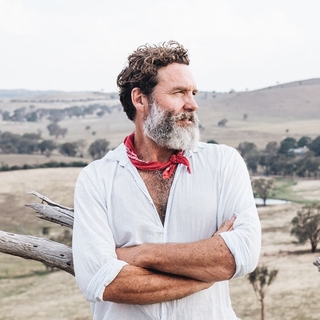
My declaration right now is that if we don't get the best brains to examine the evidence and the impact of the human activity in this landscape,
The introduction of 500 species of animals,
All of the trappings of humanity,
And then the drainage of up to 60% of the daily water and 80% of the stored water,
The people in charge are criminally negligent.
I've put it on my website.
I intend to proceed with it posthaste.
That was Peter Andrews and you're listening to The Regenerative Journey.
We acknowledge the traditional custodians of country throughout Australia and internationally and their continuing connection to country,
Culture,
Community,
Land,
Sea and sky.
And we pay our respects to elders past,
Present and emerging.
G'day,
I'm your host Charlie Arnott,
An eighth generational Australian regenerative farmer.
And in this podcast series,
I'll be diving deep and exploring my guests' unique perspectives on the world so you can apply their experience and knowledge to cultivate your own transition to a more regenerative way of life.
Welcome to The Regenerative Journey with your host Charlie Arnott.
G'day,
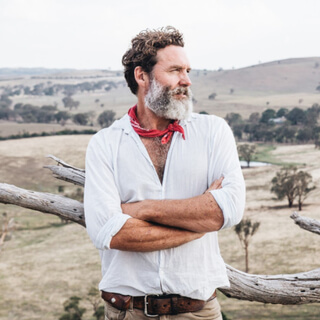
This week's episode is with Peter Andrews of the Australian story fame.
He's the father of Stuart Andrews who runs the Natural Sequence Farming Workshop.
Toowoone Park Training puts on and can I say what an absolute honour it was to sit here with Peter.
It is farm at Bongania and having had a tour of the farm and looked at the practices and the contours and so on that Peter had put in there,
Totally blown away by the impact over the last sort of just a bit over 12 months since he's instigated some of the practices here.
The first thing I thought when I walked in the door,
Sorry,
I drove through the gate,
The front gate,
Was it just sounds different.
There was life,
There was an abundance,
We had a good look around.
We got to sit down.
This is a big one.
I'm probably going to split into two halves which I'm very happy to do because it deserves some consideration in two parts I think because we would cover a whole lot of stuff.
We didn't cover much of the stuff that was covered in Australian story and I still did that on purpose because there's probably no point doing that.
I was really more interested in Peter's life from growing up at Broken Hill,
His formative years and how he got to get onto natural sequence farming,
The practices and the whole philosophy of that and where he's practiced it since.
We talked about government,
We talked about all sorts of amazing things and I can't tell you what an honour I was to sit with Peter.
The conversation flowed,
We had a really good yarn and I trust that you enjoy this fascinating chat with Peter Andrews as much as I did.
I'm pretty hard to manage.
If you hadn't already realised that is,
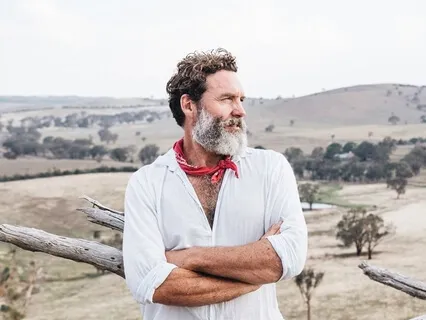
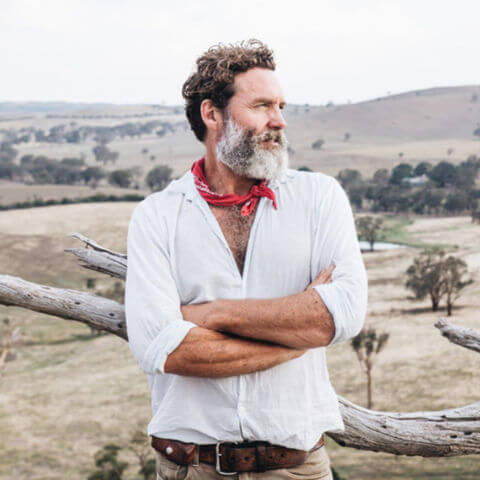
Or this is Peter Andrews.
Welcome Peter.
Good introduction,
Good day,
Whatever it is.
I'm never sure whether this goes to air in the morning or the evening or the midnight but anyway it is a fine afternoon.
It is isn't it and talking about fine afternoons Peter I'd love you to welcome to the show the regenerative journey and thank you,
Welcome to your back porch.
We're sitting outside your house here at Bungarnia.
Where we're trying to demonstrate how we all live on the sun's energy processed by plants.
That's it,
He's pretty much summed up.
Thanks for the interview Peter.
Yeah there you go,
It's all done,
Everything's finished.
We've got chickens,
We've got other activity going on that we'll push through because it just adds to the ambiance Peter.
Let's start,
I'd love to know what this farm of yours here at Bungarnia in the southern tablelands of NSW,
What it means to you to look out across your farm,
What sort of feelings does that bring?
Well I've been coming to Bungarnia for 20 odd years or a bit more and when I first came here I saw the township which is 1813,
It's one of the first towns.
It was actually declared in 1870 as an environmental feature when the Americans declared the Yellowstone National Park and because I've had trouble getting people to realise that this Australian landscape is the most magic place for understanding agriculture and climate and so-called management,
I brought a property close enough where I thought I could set up the practical evidence that everybody could copy and understand and then measure so that it's no point in growing things if you can't turn it into money.
And everything that grows today as far as I'm concerned is adding to your raw material which will produce the very best products in the world if it's correctly recycled as naturally occurred by this landscape.
And you said earlier you took me for a wonderful little tour down to the creek just down to our left,
Downslope as you'd expect the creek to be,
And you also made the comment talking about this farm that this is an experiment,
Is that right?
I think you said it was an experiment as opposed to.
.
.
No I don't like that.
I say this is a demonstration.
A demonstration.
An experiment.
We've got the oldest land in the world,
The biggest land in the world that evolved the singing birds,
The flowering plants and two-thirds of the fish species and this fellow wants me to experiment.
You're kidding me.
I had it asked about.
You must have said demonstration,
Not experiment and I got that asked about it.
You did,
Yes.
So tell me what did you demonstrate to me there this afternoon?
In simple terms the sun manufactures all of our raw material and each plant is a specialist at bringing various components in that make life possible and healthy.
And so what happens is it's lost from the high points by both gravity and crepillary action into the deeper soil and downslope back to the sea.
What I had to set up here was something that said no,
No,
No,
We can recycle every atom of growth that occurs every day and that's what's demonstrated here.
And the fact is then that we can form in the middle of that any form of agriculture we've got from orchardry to agriculture.
So there are no questions here that can't be scientifically assessed and answered.
So both the measurement of the potential and the productivity,
The management of the water that moves and because of our actions,
Human and both Aboriginal and European,
We're losing a minimum of 60% more water and we've drained 80% off the land.
What this is showing is that anyone conducting every form of agriculture can return that to the fish and sea salas.
We don't return an old landscape bank.
We return the processes of that old landscape so that it's available to anybody who wants to use it.
And for anyone who knows Bongonia,
This is a pretty tough environment isn't it?
How would you describe Bongonia?
The Bongonia that you probably arrived at here four years ago on the farm or as a kid I was telling you before I used to go down I'm not sure near the National Park and Absalom was like a cadet thing.
I remember then it was very,
There wasn't much grass,
It was quite,
It was tough country.
Is Shalee the way you'd explain it?
Well it's tough anyway.
Suffering from total degradation simply because there was no access into Sydney for 80 to 100 years,
Not easily accessed anyway.
So this was the avenue and this area was the main road from the city to the Canberra district and so it was extremely overused and mostly because most people didn't really understand any way that this ancient landscape had previously functioned at its maximum level of potential.
And sheep,
Cattle,
Farming in the way that we've been doing it in Europe was destroying all of the surface fertility and the plant production.
And of course some of the scientists that I have taken through this country said,
Well you know we use similar farming philosophy,
Similar plants and animals,
Why is it we expect to get a different result than the Sahara Desert?
You know,
Well we won't if we don't recognise that this is a completely different situation in Australia.
It is the oldest land in the world.
It evolved the singing birds,
Flowering plants and two thirds of the fish species and that in fact if we wanted to understand how this big flat land was able to produce these amazing outcomes,
It's all in the skeleton of the sediments because the plants produce that.
And my point for,
Is it,
They just see us and go we're going to make some noise.
I'm afraid they're humanistic animals and because we're here they're adding to their,
Normally they wouldn't be here you see.
They're just showing off.
Those roosters are trying to do something to those hens that I don't know anything about.
The point I make about Bongania Peter is that what you've done here and the tour you've given me in the last hour or so,
I'm absolutely astonished at what you've done in only a couple of years.
You've been here for?
Well fundamentally it's only a year because when I first came here I had knees that I couldn't walk on and then I had them operated on.
It took me another year to get over some of that because all sorts of things happen and then last February,
A year ago,
Like the February that passed,
I set all this in motion so that I had it all measured so that the foundation of what it was like as you described was measured and now we've imposed the opportunity that exists everywhere in the landscape for people to measure subsequently.
And the element that you're capturing is water isn't it?
Well managing water.
We don't ever control it or capture it but the issue is this land was evolving by the use of plants managing water and in that process they came up with the best climate on the planet under the worst natural conditions and those conditions brought about the biggest examples of living organisms on the planet.
So my simple judgement was we have the best of all worlds,
The best in productivity,
We have the longest hours of sunlight,
This previously had the most efficient use of water against production and what you've walked and seen is how any form of agriculture can reproduce it and manage it at its highest level of potential.
We were just having a look at one spot up there and you showed me within I guess it was 20 metres just on the road verge there and that's the sort of country I'm familiar with and then back in your paddock there you've got tomatoes and corn and pumpkin growing.
Growing in these pioneering plants as well and the issue is that there is an understanding once you understand plant progression and the movement of fertility by the hydrological processes a predictable natural sequence to everything and although we've been naming this natural sequence it is only a descriptive name for the way the landscape used to function.
Which we are or you are or those who are practicing what we call natural sequence farming are trying to emulate?
Absolutely and unfortunately we need a more professional group to analyse this evidence and make it available almost on a daily basis to anybody trying to do this because in a natural sequence things can change and that chain can create the opposite result because our environment is a cycle.
So the positive side is one story,
The recovery of that is another story and they can be very conflictingly delivered and confuse everybody.
Is that the bit that's missing in I guess people's understanding that that other 180 degrees?
Well it's not mentioned and it's not thought about enough and I sort of try when I'm saying these or describing these things and I keep it to a limit so that the ability for a pest to try and say oh well I know it's the opposite and of course he's right.
So I attempt to say look it's this landscape it's practical processes it's about understanding how we can be in step with them and get every result and at a better time frame than naturally because some natural processes take a thousand years.
I talk about the fact that I can pick up a pile of biodiverse mulch down here,
Take it to the top of the hill and absolutely recreate a thousand years of normal development.
And we'll get into that.
When I stopped at your front gate Peter and I opened the gate and like a good boy I shut it but I had enough time outside the car to hear the difference.
It was fascinating.
It felt different but it sounded different too.
You could hear life,
Those frogs and that little contour just off the road.
There was just that sense of abundance which was really obvious to me.
The speed at which this happened has absolutely surprised me.
I did not think that in less than a year this result would be possible.
But now I know that and I didn't do anything because I'm not a chicken anymore.
I let the thing walk around and the main workers here were the damn chooks and a few geese and you know we are an animal here and there.
And then the careful management of all their recycling so that it didn't disappear back to the sea.
The result then is automatic so no one can start to say oh I can't afford to do this or no no it's going to be too difficult for me to manage it.
I'm 80 years old and a bit more.
Somehow I've managed.
Well in some ways you can't afford not to.
I'm sure we can't afford not to.
That was a panic that occurred to me when I first started this 45 years ago.
And some of the really simple pieces of it are just things that we don't even imagine will happen until unusual patch of weather triggers them.
And if you look through previous civilizations mostly they were wiped out by salt but the salt becomes a problem when there's not enough sugar in other words you don't have enough production by the plants.
And then anybody who thinks that salt rises hasn't picked up a salt shaker to tip it on his dinner and expected he'd have to put some sort of lid on it to stop it floating off in the air.
I'm about to do that.
No way.
I'm sure you would have.
There is a thing and we have a little statement saying there has to be another force so if you blow it enough it will rise.
Get under that plate.
Peter I want to just divert back to you Peter Andrews and I want to understand your regenerative journey somewhat,
Hence the name of the podcast.
Can we go back to a time maybe a little Peter Andrews as a boy?
What was he doing back then and where were you?
I was suffering in a desert thinking I'd die each day for about two years.
That was what started all this.
But you were in Broken Hill next to where they'd burnt all the trees in the smelters in the 1920s.
What age were you there Peter?
Well I was born in 1940 so this all really materialized in 1943.
I was shocked into realization of the extremely,
I suppose horrendous changes that occurred and like I would get these storms which would black out the day for as much as two hours and they blasted every piece of living material away in the first three hours of one of these storms occurring.
Then we had three thousand sheep which all got buried alive probably in the next six weeks and I'd go out with my father to try and save some of them and they were so filled with sand that we couldn't even lift them,
Couldn't wash the sand out of them so it got to be a futile exercise after the first week or ten days.
And I remember going out because they'd go out and shoot the ones that were buried and this sheep was breathing under the sand where I felt I'd suffocate an hour before and as it breathed out the dust and the sand would rise away and then it would look like water going down the bathtub into its nose and I'm going we can't ever let this happen so it kind of started me on this silly journey that I've been on ever since,
Poor sheep.
So that was clearly a turning point for you.
It was a trigger to cause me to be more careful and to be more observant and to realize that we did nothing because the thing that happened then in the 60s we had water as far as you could see and under both circumstances you were powerless.
Once you had water everywhere you couldn't move and once you had sand and dust everywhere you couldn't live basically without hiding in some corner where it was a little less unpleasant and of course we didn't have air conditioning and we didn't have water that we could waste and you know for two years there were three of us,
Kids that is,
And there was always an argument as to who had the deep end which was only half an inch deeper than the other end in the bath each day and then we'd take it out and try to keep something alive which generally didn't happen in the end.
So you know living two years of that is a kind of awakening and of course then the war ended in 1943 and it rained and I watched the landscape recover.
Then I've seen it in my lifetime in three vastly different regions go through the same extremes you know fire,
Flood and drought in Adelaide,
New Gourla and in the Hunter Valley and in the Bylong Valley and of course by doing that I has recognized how these pioneering plants were absolutely essential and the faster that they invade and grow the quicker you got from where you were to where you needed to be and so I've tried to tell people that the reason we get rid of them is not scientific it's a process by which someone else is making a lot of money and I was spoken to a bloke who could not stop killing these type of plants and I said to him well you realize that the producers of those chemical control have had their hand in your back pocket for the last 70 years you've probably spent the equivalent of two million dollars and your property is serially degraded whereas if you'd have reversed it imagine what it'd be you'd be living in the Bahamas laughing with whatever you wanted to order at your beckoning.
Two million dollars is a lot of money to have spent.
I'll tell you what there's a hell of a lot of people in the agricultural industry spend a lot more.
And then just reverse that you know two million dollars of chemical and I was a chemical farmer and I sprayed the crap out of my pasture trying to get rid of my thistles,
My cape weed,
You know Adam O'Lusen and stuff and Paterson's curse and I can't tell you how much money I probably spent but you know knowing.
Is your name Paterson?
Well you better start cursing mate because you have shot yourself in the foot.
Boom boom.
Oh totally.
You'd have shot yourself in the foot.
I was a goose absolutely I didn't know any better though you know.
Well the biggest and single challenge for almost everybody on the land and it was including mine but I'd got belted into submission very early is to admit that we've overlooked some obvious stuff.
As soon as we do that this will become mainstream and not only that I've got the best scientific advice that could tell us if 30 percent of the world were taught to use these processes and principles it'll be worth 127 trillion dollars to the community and way back in 1980 seven scientists that looked at this landscape and reported to a fellow called Bob Somerville that it was predicted in the next 40 to 50 years that the world would spend 360 trillion dollars trying to solve what this whole landscape had already solved.
So it's been frustrating for me to go for 40 years or 40 odd years and still have people going yeah he's crazy that but you know he makes water run uphill and grows weeds or something like that and I'm going well it's working.
Not only that it's the oldest science in the world and the most effective and the been the most securely managed and tested.
So why are we doing this stuff you know and my declaration right now is that if we don't get the best brains to examine the evidence and the impact of the human activity in this landscape,
The introduction of 500 species of animals,
All of the trappings of humanity and then the drainage of up to 60% of the daily water and 80% of the stored water,
The people in charge are criminally negligent.
I've put it on my website I intend to proceed with it post haste.
The simple solution is we can be winners all of us.
All of the mistakes have been easily demonstrated to be reversible and the outcomes can be better than the natural original.
Plus we are going to produce the very best products in the world because that's what happened you know prior 1900.
That's the point isn't it we're doing this to grow food aren't we?
Of course and be healthy.
We've got to get rid of disease and you know when I grew up one of the biggest things were even though they were dying of starvation they didn't die of disease and I had uncles in South Australia where they'd ruined all the plants and the sheep would be dying of one disease or another and they'd send them up sometimes a thousand at a time.
They'd all recover in weeks and within 12 months or 18 months they'd be able to going back and returning to the conditions that you know had already caused them a problem.
And I my father you know had a check so I had to go to Gaul.
I didn't have to go but I went to help him and the wheels came off.
I just suddenly realized that the sheep that I'd known for nearly 20 years were just not getting the biological support that the landscape had given them automatically under the some of the worst conditions that occurred over those first 20 years at Brogan Hill and it's just put me on this course and the more people I can get the more science that we can examine the more certain that this is absolutely available to everybody.
Is that a radio is it?
He shut the door.
Peter where so I'm fascinated to know more about I mean that's a significant turning point for you watching those sheep drown in sand.
What was the next point what was your next turning point?
What did that spur you on to?
Oh the disease factor and we never wormed.
We never immunized and suddenly we had to have five or six immunizations and we had to worm regularly the sheep that never needed any treatment.
And then as I've traveled this country and watched the destruction of plants I see the failure of health in the animals and it's gone from five or six required immunized compounds to up to 14.
I can't believe this stuff yet we're not even saying oh wait a minute it's less than 100 years we didn't need anything and they brought out a probably 5,
000 sheep.
We had six and a half million by 1890 and of course many of them three and a half million died in the drought.
Then after that drought we had blow flies which weren't available previously because they lived in the skeleton of these dead sheep and so we bred a new group of flies and if you want to understand the history of this landscape or continent it is brilliant in that almost all of the pieces of evidence we need are visibly there and if we get the best brains and the best science they'll be available to everybody.
And so things were going downhill at Broken Hill in terms of the vegetation had been removed and I was out there a couple of years ago and they've got this you might be familiar with this there's essentially a ring around this around the town called the regeneration zone or something yeah which is which from what I understand is an example of the vegetation that was there originally is that fair to say?
No,
No,
No,
No,
No.
We are talking about a landscape that was highly fertile and had carbons at 14% and some more surface layers even out in the arid zone and as soon as we bought the sheep out within the first sometimes five years that a big mob of sheep went through that area it totally changed and the productivity dropped to less than a fifth of what it had been prior to that you know and there's evidence of Kidman talking about a property where he worked as a jackaroo that ran 65,
000 breeding ewes.
He bought it some 20 years later or less and he couldn't run 5,
000 on it.
That is everywhere in this country now we're running up we're spending a huge amount of money artificially jacking up something that automatically managed itself in the past.
And so where was where was what was the next step for you Peter when the um there was the you know the not good outcomes for your for where you were at Broken Hill you know the as I said the sheep sheep were drowning in sand animal health issues what was where did you go from there did you go to South Australia?
Well actually after the rain occurred and we had the wettest period ever in that 50 to 60 year period then we had the wool boom and we actually had fortunately brought a few only about eight or nine hundred very good quality sheep that some poor old chap had cut scrub for around Warriner and we walked them home basically because we needed at least two or three months before the property would have been recovered from the drought which it did amazingly and then we actually produced the very best quality wool from a broad agar block for the next 15-20 years because we actually did a lot of strange things that people didn't agree with by buying my father paid five and a half thousand guineas for a ram and then we drafted out you know 10% of the very best sheep we had and then we culled down to the 10 or 15 percent each year and kept therefore the rest you know so we actually could cull at a rate that no other stud could do and we ended up with the quality that no other stud had on a broad scale we won the best fleece and championship five years running in Broken Hill and a couple years in Adelaide in the shows and we could send five bales of wool to Adelaide and get a bigger price than most of the studs could do after taking two or three years to get one bale ready so it wasn't something that you know we worked as a failed lot and of course then as the 70s came around the station got dry the wool was being poorly produced because we went to what they call commercial quality wool and my father used to go absolutely crazy saying that's rope he said that's only carpet wool it's not going to be able to be sold for people's apparel and of course that happened and then the plastics came in and that's the session that's the session I mean it's just the basic greed and stupidity that brought us to the situation we're in and my brother took over the station for another 20 odd years we went and I went down to this little property my father died when I was quite young and so I had to work out how to make a business and learn the business I thought I knew a lot about thoroughbred wool and I thought I read horses which proved to be a huge learning curve I worked for 15 years with a fellow called Peter Irwin doing research for ICI and a prostaglandin and then you know five other things about bone density about mineralization about all sorts of body functions and that gave me an understanding that most people wouldn't have had in terms of looking at a landscape and being able to measure its potential.
Can I go back to that boom time 60s 50s what was what were some of the things that made your what were the practices you're engaging with that made your wool there was the gen I guess it was the genetic selection you were well that's not called genetic selection the selection of your flock every year sounding was that was that was a well we went to fine wool sheep that's the first issue secondly they were fed we had sheep that we were able to weigh a coifat of seven pounds and yet people are trying to grow fine wool starving the sheep it's ridiculous stuff you know anyway all of those things still are in the system you know and what was the land management you were you were doing then to to to produce such a such good quality wool and not be starving and to get that final wool using Australia's natural sequence my good fellow only was that your was that I'm interested to know so that was your first um example I'm just I'm I'm I'm I'm anxious to use the wrong word we had very flat country because you know my father said what happened in the 20s any plant that would burn that they could get a wagon alongside they took to the smelters so we ended up with nearly 50,
000 acres wouldn't have a tree on it not a single tree and of course the grass grew and we had mitchell grass and stuff would wave like a wheat field and was managed well my whole family um were traditionally diligent land managers you know and father's family had eight children in it and all of them were very successful in the district so we had a very big influence on that district in western darling but it all sort of broke up by the 70s and the drought and many of the people left the land and of course there was a boom people had a lot of money the people who knew how to manage it left retired and the new people have never been properly informed they've been informed by those vested interests trying to sell them a product to make their profit and all that and all of those people that i grew up with which hurt me greatly were just about destroyed and if it's enough money perhaps just to survive on and their properties are being managed by people that really don't understand them tell me about some of those practices in in those years when you were trying your first not i want maybe not attempts but your first you know okay i've got a sense of what we can do here i'm going to get the i guess a bulldozer out in those days no what we had and this is the biggest frontier that it was about the end of the drought we had about 5 000 acres of clay pans and uh we tried ripping across them and this sort of stuff and then we had the very wet period in the 50s and 60s and we had 10 000 acres of clay pans so i was already fully aware that water was as damaging as it could be beneficial so i had to start working out why it was so beneficial in the past and what we've done wrong to see this thing going the wrong direction and i had a scientist describe it in the most elementary way he said australia's landscape was a stepped diffusion system of broad acre hydroponics it is as accurate a way of describing this land as i've ever heard and seen and that's all i do i just move fertility to the high ground i manage a step diffusion system carefully and everything is automatic from there and so you were looking at the landscape differently then you were you were you identifying these steps in the landscape how did you start because this is i mean this is the this is the fascinating thing that that where was you because well i've just done the natural second farming course with your son stewart and i'm now looking at the landscape with your help and with his help with a totally different lens yeah sure but you no one gave you that lens to look through it back then how did you just go oh shoot i can see a step there um i suppose it started with the clay pans because when we rip through them as they do with this key line farming and all that it will work temporally but i knew that this was a very old and a brilliant landscape so something i was doing wasn't correct so then we realized we had to put steps around the outside of these areas and the more we put through the middle so the more the water was pondered and leaked through the sideways so the step diffusion process repaired all those landscapes in the end in about two years and how did you were using a what machinery we had a little we had an old 1948 land rover and a single tine ripper feeding them and so you were ripping a line was this that is this before you actually make we were following the high water mark around each of these areas which see when the water sits on land it grounds it and when it's diffusing through the soil it can live under drowned conditions there's not the science to support that that this landscape produces the evidence that guarantees it's should be scientifically available to everybody but because it's not we plant trees and plants the wrong species in the wrong place and maybe every 20 to 50 years or even even 10 years the natural sequence changes and all the damn plants die well that's not really good business is it well they get burned well they do because we've actually changed the species mix from a third palms to us and a third pines to really dominant eucalypts which are in centuries and they actually don't manage the thermal heat i had this research project going where the group in europe were monitoring it from satellite and the bylong state forest which was immediately on my boundary was measuring a simple thermal outcome to a plowed paddock just a kilometer away so what we find is a eucalypt tree can wax its leaves and it does nothing to benefit the climate when the conditions are bad why are we doing this and when we've got the science and the scientific capacity to measure that and people in europe know and our blokes still argue that it's not true and what we're looking at and when you asked a question earlier on what plants would you use we are left with fire recovery desert plants they don't manage water what we're looking at here which i suddenly realized we had marshmallows and when they were growing vigorously on a sunny day like today the plants grass plants next to them look like you'd put the hose on them all day so the water vapor from the photosynthetic reaction not this transpiration because that's you sweat and you transpire but when you're manufacturing carbon like the plants do you have to have a lot more water and that then meant that the more water went into the atmosphere that meant that the atmosphere was cooler than the sea and if you sit in front of a fire and you imagine that your heat is filling the fire well that's ridiculous so you know that the heat moves from where it's hot to where it's cool so if we got the land hotter than the sea it rains out the sea and every fool today can sit in front of the television and see exactly that's what's happening but if you listen to columbus he talked about all the islands being shrouded in mist and the plants so wet that they couldn't burn and yet we that science that's it and yet we get people arguing about it we only have to go walking in a eucalypt forest you know hiking you know there's not much shade even if it's even if it's a thick canopy there's bugger or shade because the leaves are hanging down and that's it's a really hot hike if you then go to a botanic gardens and go walking through a botanic gardens where you've got oak and elm and deciduous trees it's a totally different you know in the same day we went to bathys in one of these periods in the main street next to macarthur park i think it is and we were walking in the middle of the street and the temperature was over 45 degrees about 48 degrees we walked over to where the shaded european trees as you were talking about and it was 38 or 34 it's incredible and yet we had breezes and all and then i say to people why do you think the water's gone i'm sorry the heat's gone it's gone into water and it's called latent heat and the thing is that that water vapor expands so much when it's getting heat in it that when it starts to shrink it powers the cyclones tornadoes typhoons all the things we hate it's elementary and most of us should have known that before we finish first year physics but again we still argue about how this system works and it's a gas co2 and when we get to the situation of oh we don't want to have any heat going and we want to hold the heat where it is we take all the gas out we call it the thermos flask vacuum flask and yet we're talking about things that are virtually the opposite and the plants that we are seeing here could accumulate enough carbon to make any other process negative and i know no everyone sort of thinks i'm completely crazy but i'm going to give you the figures sixty percent of the daily carbon is hang on hold on to that i'll get a pen don't don't lose that thought peter i'm just going to read you cross here my fountain pen just ran out of ink i'm just going to write some of this down there we go there we go fire when ready sixty percent is natural daily oxidation which is lost and recovered by the vegetation fifteen percent is what we've destroyed in forests between 15 and 20 percent is what we're doing by destroying the carbon content of the soil and three percent is industry that's figures now if you put co2 and the water particle into a laboratory you will find that the water particle has a hundred more reactions and they're a hundred times faster than a co2 particle that means that in real science the co2 influence which it is they're doing something is 0.
02 of a percent now when everything is examined it cannot be more than three percent it's more likely daily less than one percent and when the european trees come out in the spring the carbon in the atmosphere drops by two and a half percent this is science we all know and here is australia with the longest hours of sunlight the greatest range of plants the most efficient use of water in terms of producing production no one knows how to use it and when i do it they think i'm a crazy man running water uphill or doing something crazy so the more deciduous species of anything we can put in the landscape annual weeds or deciduous trees the better absolutely because of its you always work as if it's a product that you must recycle and good farming should be about producing the sun's energy into a product and then good farming should convert that product to the most valuable product they can produce and that's what we're talking about is a product they can sell for the least cost otherwise you're using your reserves in the soil and all you're doing every day is destroying your asset Peter i'm just going to take you back don't you know i love the fact that you love jumping to the future or the present i'm trying to keep you in the past a bit as you said you said something interesting today you said was it about learning from the was it learning from the past we must if we can't learn from history we'll tend to repeat it that's simple easy one knows that and of course when i was trying to get my head around some of this stuff and when i was seeing things that i couldn't understand i went back and referenced as many of the archaeological history evidence pieces and i was fortunate to be in england and i was able to walk into a museum type situation where the evolution of species water plants like water animals plants crustaceans and then the vertebrates and it's the story that tells us all what we should be able to make decisions about and how and that of course was one of the fundamentals that i used after doing all this research in body health and animals and landscapes and then i saw this evolutionary process and i bring scientists into the landscape and say i'll show you the most extreme examples that this landscape demonstrates and i want you to use your training and scientific knowledge to tell me whether they're all connected or not because i believe they are that's never happened that they've told me that the things i see in this landscape are not connected to the whole process of the way things work so all we need to understand is we have the oldest science in the world we had the best results of that science ever achieved and now we can show that every form of agriculture can use that not as it used to be but the principles that used to be and what i talk about and have done in this is the step diffusion hydrology the movement of fertility back to the high point and out of the soil back to the surface and then managing that to produce the very best products that they were capable of being produced under those conditions i'm going to take you back peter back to broken hill i don't want to go back there it was it wasn't a lot of fun i promise is it so let's go we're back at broken hill you're doing some work on the clay pans you're identifying some changes you you going on there's something going on here you what were some of the telltale sign were you growing more grass was there more water accumulating was there you know if we got it right the first rain event the change was exponential in terms of feed growing yeah rehydration yeah and that and that resulted in in that well when i was really very young i would go into these things and we got it really cold sometimes and of course as kids we used to go out and throw stones and break the ice and listen to it smash up you know and then they'd dry up and you know those desert shrimps used to you know be in bucketfuls sometimes in them where they were deeper than four inches there's a desert shrimp like yeah they look like little stingrays they got a little shell back and a little tail on them and uh were they good at eating well they have average and he used to eat them they didn't really look that attractive to me so i didn't try them but um you weren't tempted you know you could actually dig in the clay pan after the water had been on maybe for two three months and you'd find dry soil two inches down so this surface was so baked from the the drought and the loss of that surface layer of fertility so i saw a few things that you know as you start putting it together you go of course you shouldn't be stupid enough not to understand that but we tend not to and as we bear the surface layer and we lose that organic layer off the surface the wheels come off and then we go biochemical and i say to people supposing if you're in an expressed condition and you take a caffeine you probably will move again for a while but you'll definitely die if you give it up and our landscape is doing exactly that we are just stimulating it running it through and making plant or getting plants to grow in conditions where the balance is not available but they'll grow but disease is the outcome poor climate management is the most extreme circumstance and and the failure to manage the sun's heat means that that energy is going to do something else it'll melt the ice as this old scientist said to me you know if you don't manage that heat by thermal management such as cooling and and and he heating it melts the ice it rocks the seas it breaks the rocks and it stirs up the winds so turn the windmills was his other statement so this is basic stuff this is not something that even a kid in the sand pit wouldn't be able to understand and i do find that when i talk to them they actually get it straight away most of them because they haven't been told other things happen and when you tell them they can see it and so they go well that's true of course it is they haven't got those paradigms to bust already no and they haven't got a history where you know they've been spending two or three hundred thousand a year and and getting a failed crop so then they got to find another way of paying for that the next year to get started again that's just to me it's horrible you know and um at the scientific capacity for people to understand this is always available always has been but some situations which i've mentioned earlier our authorities have to have an independent body like we do with the motor industry the financial industry or medical or whatever industry we need an independent body to see that the best situations are available to people otherwise it just won't happen and there is nothing for a climate and landscape nothing you can get up and say that a willow tree is bad and no one's going to ask you you can tell them that a weed is destroying their soil which is rubbish and then they can say that oh no no we have to have a clean crop because we can't have another plant in it and this this uh czechoslovakian fellow Jan Pagorni and he calls himself rain for climate with about 4 000 other people involved and we had him filmed here a few weeks ago and there was this big paddock of cereal crop harvester and he's looking there and he's saying you know you know that is now a desert and of course if you fly from orange to Perth in October it's usually green most of the way you go there in November and it is a desert and then within the next few weeks the first storms wreck the east coast because when that hot area comes over the sea where there's more water vapor it expands and inevitably it will contract so it wrecks buildings creates on the on the coast on the edge that edge well it can can work inland anywhere we can get enough water that can absorb that amount of heat it means that volume is a huge big bubble and as soon as the condensation begins the heat is carried away by the water that's falling down if it's rain or the ice is accumulating as much as 60 000 feet up and then because it's it's heavy and the thermals that took it up there from the condensing water are unable to hold it there any longer so it comes crashing down and wrecks everything i mean why can't we understand this and this is an effect across the whole continent isn't it i mean it's across the whole world the whole world and you know there is this group of scientists that pointed out that these conditions if the plants are not managing the sun's energy make that process more widespread and when the snow and the ice doesn't melt between summers the opinion back in the 1950s when i was interested in all this because of the hell that i'd been through in the desert the drought that we could go into an ice age within five years of that heavy snow and ice blanketing the earth and you there's a program called life run recently which said when the plants weren't here this land was more often a big ice block this is information that history tells us why is it we listen to all this other stuff other stuff you tell me i don't know i can't understand it tell me tell me about i didn't know you were so funny peter let me tell you it's not funny anyone else knows fortunately yes there's at least four thousand who helped to inform me like i was only a mug coming out of the bush but these people thought i knew a little bit so they used to hang around and and and we spent four periods of 10 days over a period of about five years and i had this philosophy i said i'm going to take you into this landscape because here is the practical solution that everyone who grows a plant can be party to and i want to make sure that the science is sound and the probabilities are available to everybody and of course they went away saying absolutely but you know covered all of these other things have restricted our capacity to work in some coalition but as i said we do talk and this yarn from gone he said recently that you know once the cereal crop is harvested it is a desert and he said you know in the nine years that we've been talking europe has gone back terribly now you know there are examples everywhere in the world the dow chinese have done these things but they have to put a lot of effort into it the terrorist farmers do these things same story a lot of effort what none of them realized until recently and now they want to know why and how that this did all of these things automatically so it cost nothing was powered by the sun and gravity it's just the most amazing thing ever but all we got left is the skeleton and unless we understand how that skeleton can be recognized and manipulated then we don't get the benefit can we re can do you think we can rebuild that skeleton to some degree not any degree we can it is the greatest potential because it used to take water and create in-ground water over huge areas which because we were running agriculture it got too wet now we've got such an eroded process we've got a drainage system in the skeleton of the best possible outcomes we could have and so i've been building models where you can take a controlled amount of water to reinstate the groundwater system automatically run by gravity and we can produce the highest productive landscapes and manage it through all conditions and capillary action too well capillary action is absolutely something that i had overlooked for a very long time and i used to take fertility to a high ground because i wanted to get rid of plants that were where i didn't want them and they would decompose and then this when i produced increase in productivity in that area by say 50 percent right down the slope the increase was 50 percent and i couldn't believe why this was so quick and it could happen in just months and then i started running this little demonstration with salt and capillary action and water that's all as simple as that you can watch it and say well there it is and you're actually getting water through capillary action in the ground to go uphill well we we can do it in increments of well the capillary action is at the very best 30 centimeters you know so we can by the increment of that see it work upstream if the surface layer is in the right condition are you looking for more information to assist you on your regenerative journey we've created an online webinar where you can find out more about the regenerative journey we've created an online community of supporters with exclusive access to interview transcripts live online q a sessions with charlie and his interviewees as well as the opportunity to be interviewed on the show yourself if you would like to be part of this community or would simply like to contribute to the development of the podcast series please make your way to patreon.
Com forward slash the regenerative journey podcast and look forward to you becoming a member of the regenerative journey community let's get back to this week's episode peter what um because a lot of people would be familiar with you through the Australian story which was um really touched on your um your time at tarwin park and post what were you what where were you between broken hill and and dubai long valley there where were you there did you go to back to south Australia were you in south australia i was yeah i did yeah well i i actually went from the station to gaula then when the stupidity occurred over you know running water uphill and all these things i actually did bow back and build two or three properties one at booberowie some in various parts of south australia which when that big fire burnt 170 000 head of animals 2 000 farm buildings and 103 houses the area i had worked with didn't burn this is the fires of uh it's late 19 2019 early 20.
Yeah there you go so we got all these pieces of evidence everywhere the issue is we need a professional recognition that is not my idea nothing that i have said i can't take people to show them the evidence supported by the history and go back to the archaeological processes that related to it and if they're all connected which the very worst brains in the world i've been able to access and assume me they are where's the problem today except ignorance and greed and self-interest what what we're let's let's talk about that for a minute i know that's the favorite topic of yours no it's not it's a bugbear what can you give me some insight um into that without getting too cranky well yeah we don't know we can you give us some insight and why do you think that happens has happened well it happened because um there is a lot of vested interests who think that if you talk about a natural system being automatic that it will compromise them because they're currently running in their natural business but the issue is if you increase the processes exponentially you increase the market at the same rate so it's just nonsense and and what we're doing is allowing commercial interests to try and protect their profit by reducing the potential of the saleability of asset without really looking at it from that perspective as soon as we realize that the better the product the more we produce the more we need another product to assist that the the outcome and therefore there is no restriction to the market or damage to the market it's just the greatest opportunity to build it but i guess for the businesses that rely on selling farmers stuff chemical fertilizer they don't want to see change they've got a really cozy little business business model there haven't they i mean they're not they don't have a long longer term and i'm sure they've got a very long term view but they don't see the way that they their business could benefit by changing the business model to one where they still make profit but they're more supportive of this new way of farming or this this this now it's the oldest on the planet that's not farming in this system the thing that frustrates me the most is i think it's our fault because you know i talk to you and i talk to other people and then they tell me what i've told them and i wouldn't believe them so you know we have to get our act together and we need a more professional group of people to deliver the message as it can be i have an office and done it as well as i should have because it's 40 years and they're still not doing it and they're still arguing about it which is so fundamental as the sun's going to rise tomorrow you know um i can't explain that really well i guess there's the pushback from those who would be fearful or feel defensive about what this would mean for their business model chemical fertilizer i think the biggest single problem is i've written something and it's wrong anyone who's got the courage and it gets up and said we made an honest mistake but we have the physical mental and intelligent capacity to fix it and make it the best it was ever because that was the information that is it's based on the very best opportunity of the manufacturer of the sun's energy in the product there is no better one anywhere on the planet because you want to realize that in an area from nearly here to long ridge there is no real climate i've lived out there we get very wet winters and we get very wet summers and we get neither and then we get both so what it does is give you an opportunity to understand that every scenario is in a model that we can all use and the reasons how we use it is also available to everybody who wants to do it and it's really managing water and understanding that plant progressions is the thing that responds to season and that every plant in the world if it's analyzed for its function and process is available for use you can't bring in 500 species of animals all the trappings from humanity and the influences that we have without bringing the plants that compensate for those problems the repair plants absolutely one thing i took away from the course last week peter was the opportunity which is given to us every day as a whole is to be able to to do something positive in in the context of of this type of farming natural second farming that's called and and that there are there are three significant events that happen you know drought fire flood that are each in there themselves a real change in direction or opportunity to take advantage of not take advantage of leverage those natural and some of the unnatural you'd say because someone puts a match in a big gum forest but opportunities for our farms to change the pattern and to to to instigate some change you know drought you know is an opportunity for paddocks to then when the rain comes germinate all these weeds that all these farmers go and spray which i used to spray yeah well as an example you must understand that the soil life we only know four percent of it and there's huge productivity capable in the soil but it's a process in fact every time a drought destroys that life it's available for the next cycle of growth so cycle of growth so at the end of a drought you get a massive recovery temporally then the next phase is the repair plants have to grow and i mean i was frustrated because people this year after the drought have had helicopters spraying out the recovery and it's been happening now for three cycles that i've looked at you know and the people are saying oh we've got to get more chemicals because these weeds will grow and the old blokes would say to me sometimes and and a cycle when it had rained and the drought had finished well if it keeps raining you know all that rubbish will grow and they used to think it was a mess and a pest well it probably is but it's the most effective recovery we can possibly use and yet we'd haven't taken because it takes time these things can be 30 and 40 years apart you know i've had to get to 70 years to three least 80 years i mean to see three cycles of it now i'm trying to tell people they're not all going to get the chance but the opportunity is still available to them all it's a real paradigm shift isn't it and i know i i didn't struggle but it was certainly something i acknowledged the spring just gone last in 2020 uh yeah 2020 which was the first spring after the break of the drought and i had a shitload of patterson's curse and there was you know lots of comments about that and i was pretty comfortable with it but it was interesting that you know i was really grateful for the fact it was there because if it wasn't if if i'd you know like in the old days sprayed it out something else would have jumped in there was probably going to be worse but it was actually doing it definitely is worse i mean south australia was down to three species of plants when i first went there potato weed in the summer and patterson's curse and soursop's in the window and i just couldn't believe this process after having the station and all the different plants that were there and then of course i went to the hunter where because it was a horse stud and had to import feed it brought in all of these foreign plants and under the worst conditions because it's got sandstone cliffs and a catchment that goes for 40 miles miles i'm saying and the water came down in a torrent and yet here were the best pastures in the world probably because we produced the best equine animals in the world for quite a long time and like the barb was bought there he went back and was a very successful stallion in england and then we had heroic and star kingdom and these are the foundation for the horses that are going out now and breaking world records and of course fundamentally the remount horses that went from australia when it was still functioning pretty naturally were known in europe as the toughest and soundest horses in the world they couldn't have been here longer than 50 years their genetics could not have changed it was only the environment and yet we've never taken advantage of that except now by default we have got a little bit of a change but you know my frustration was i'd taken 20 years to where one really top horse and then when i got all of the biodiversity running and which was allowed everything to grow for a year then in the next three years i produced five of the top horses of their given categories including the top stay around the grand national and he was voted the toughest soundest horse in australia the top two-year-old filly the fastest horse in australia they can all be named they're all on the public record this is not a some sort of a wild dream this is reality and of course because i was still learning a lot and i still am of course i just believe that this was so profound in the information that i'd gone through all of that stuff that we've talked about and here was the solution that produced the very best results in the world why the hell aren't you doing this stuff and pete your horses and the results that you got with those horses were result of the conditions under which they were grown and trained the feed they were on absolutely and that was a result of the practices that you were you were engaging with there at tome park being being that their most fundamental piece was i let all plants grow we had naguru birds up to four meters tall when i first went there and you know i'd nearly killed myself as a teenager with a blow mist on my back spraying esta 80 up for 300 yards with a breeze on it to kill naguru bird nearly killed me fortunately it's destroyed my brother who stayed at it for longer than i did i have seen this and of all the people that were living in that area in the 50s with the blow-fried crossings and these sort of things they're either dead sterile or just existing they're not living right now they're existing they're not living most of them are dead and yet we are still ignoring this stuff which is basically on the public record and people are talking about it what frustrates me is i've been 40 years saying you realize that there is a solution that everybody could use what are you doing charlie what the hell's going on mate i wasn't oh i was around 40 years ago but i wasn't going to be i wasn't listening hopefully this sort of thing is going to make the difference but people have to take it seriously and if you think i'm talking rubbish get the best brains you can find and let me take them into this landscape as i've done many many times but the thing is you show people something that is so fundamental and available to them and they go oh i'm not going to tell you anything about this you know this is this and one bloke said to me the other day oh if you tell too many people the prices will drop i said don't be silly the prices of what land will drop no the prices of the food will drop i said do you realize prior to 1950 we could sell our grain to anyone in the world at a premium and then because our quality dropped and i had a fellow john duncan who was the chairman of the chemist guild of australia and he said you know if we weren't adding vitamins for grain the europeans wouldn't buy it and then of course at that stage the common market came out so we had to pay a crook like saddam is saying to buy our damn grain because it wouldn't suit the european market if we do these things it'll be back in there with spades on it and it's cheaper cost like like an actual the cost it was obtained before the cost of production we'll go down to a tenth yeah can to go down to a tenth you know we've got to understand that these losses of fire flood floating and rushing in the way and or drought usually nothing happens except that you do get a layer of the surface turned into a crop but that's your asset that's gone and if we don't realize that these people that have sprayed out that asset this year we got 200 mils of rain here about uh what was it like 10 months ago not one bit of water carrying fertility left this area that i've managed and i would judge that this district in most cases lost a thousand years of accumulated fertility in that that that rainfall event just took up now it's in the in the shell no i won't get in the show i was down in the sea but this next thing if you have your dam set up in such a way that all the sheep shit goes into the bottom all your asset is out of the reach and it's under the water i've shown people how we can create a filtering system before that gets to the dam and you grow grass and turn the liquid compound into a raw material and you move it to where you can make an agricultural product out of it i don't understand why this stuff isn't pretty basic you know can you no i can't understand why it is not picked up by more i mean i've got my theories about you know it's tip is it's stepping on the toes of people who are making money on the current system basically and there's something it's truly it's and our fault one greed our fault because we haven't had the courage to say here is the history there is the evidence make use of it no no no we're stupid enough to go and buy another bag or whatever and then we get the people who are selling us the bag to think that if we're we're not doing that they won't be able to sell the bag and i said if you can double your potential they'll need double the material because people will still use it but when they use it more wisely they'll increase their asset and the quality of their product but we are currently using it in the most unbelievably stupid ways our products are dropping and i mentioned earlier that we go from four or five needed immunizing compounds to 14 that's the level that i can see in some places today and the last one that i know i was yone's disease and and roger fletcher used to be able to buy sheep that had yone's disease take them to the biodiversity that he had owned in some parts of australia and in six or eight months he could process them again and yet frustrating it defeats me trust me i don't let it no i i mean i think it don't well i can understand the frustration and i know you've had 40 years of frustration but can i just say that you are being heard this discussion will be heard by hopefully many people which should be helpful but you're making some significant impacts you know the fact that stewart's got that natural second farming course up and going four days which i did last week that was a total my i thought i'd sort of not that i knew everything by any means but certainly i had no idea that my lens for looking at landscape would be changed completely your persistence and the impact of the landscape the impact you've made continues and i thank god that you do you don't you haven't given up and it's a it's a real credit to you and your family that you are still here persisting showing some young rooster like me what you've done out there and it's fantastic so don't can you not stop can you keep going please mate i'll tell you something oh i'll help you make this a professional process these sort of things and people even like myself have been around many times in the past i've seen the evidence and if we don't make this a professional system there's been one opportunity on this planet and that's this continent and the way it operated because it used to be three big flood plains from rivers that came out of antarctica then it broke away and moved towards the tropics everything that is happening to parts of the land today under human image and influence diverting rivers into hydro schemes and irrigation systems happen to this landscape and the plants repaired it all to the best productive process ever and yet we stupid enough not even to realize it is written in history for the longest period over the greatest area under the most extreme circumstances why can't that be simple i don't understand i really don't let's talk about fires peter um i'm just writing down a little time thing there because you're just coming up with some gems um talk let's talk about the fire what what do you think you know we had massive fires um was it over a year ago a year and a bit ago now and and they started in i think they started in october didn't they and then they sort of every every month that rolled by for four months they were massive fires we have a great old aboriginal elder here and i've been working with him now for six eight years um he may call him uncle max and i was working with another group on the pill work where they burn all the time and i said to him you know mate you should work with the guys up in the north because he checked all this and he started to go this makes sense he said you know if a plant has been here for 50 years it's a native and i said you're right mate there's no doubt about that and if we're brought in all these animals we need the plants to compensate for them i understand that too he said well i said let's realize that if we all work together um we can make this landscape better than it was when you fellas turned up oh and then they said oh you realize that um he uh you're gonna interfere with our mother and i said yeah but let's imagine she's been in a catastrophic accident we put her into life support and now we're going to give her plastic surgery and make it the most beautiful on the planet oh okay he said but he said we'll have to do more of this controlled burning i said mate haven't we got to feed more people and he said yes well i said can you burn anything and end up with more no he said you're right we're going to learn to recycle that's the issue that's how every civilization was the most effective in the past and that's why this landscape was such a wonderful place until we messed it up i don't understand can i remind you i might have mentioned this the other day when i saw you but about 10 years ago because you've just reminded me of this about when you said about being in intensive care and i chased you up the maloon creek 10 years ago with a little dictaphone thing and i stuck it in your top pocket you probably won't remember awesome topi rooster back then just annoying you probably and i you know there's a little thing you press the play button or the record and i popped it in your top pocket and i badgered you all the way up maloon creek from the bottom right up the top asking you these questions and you said that you said that you know these incisions in the landscape are incisions like a cut and we need to use whatever tools we have to mend it you know and put sutures you use the word sutures the willows the sutures on the landscape we're using to mend this and that has stayed with me for that whole time and i've always been a big fan of willows and at that time there was a massive lot of funds being directed to the removal over 750 million and that was back then and escalated exponentially the thing is that they are the greatest at air conditioning and accumulating and recycling carbon and feeding the aquatic systems in the rivers and systems that then meant that we have shot ourselves in the foot with our carbon commitment every dollar we spent was costing us probably 10 to 20 in that endeavor of our management of the carbon and the landscape and the climate and of course um um i have done these models and at barramore where you were just quoting we had a joint venture with the independent government authorities and they said you know you have to get rid of those willow trees because they're going to destroy the aquatic life and i said well let's see so i planted twice as many as soon as i could get a chance to do that and then they ran their first test at the end of 18 months and it was double the pristine park that they were using as a reference point and they won't measure it again but that's what happened because you proved them wrong of course wrong by 100 percent the power of the willow or the whatever no no i did it at barramore as well so this is not the hunting place but that happened at maloon creek and the same thing happened at barramore stud jerry harvey's property which it's it's the ultimate potential to understand all this jerry made that asset which was multi-million dollar asset attempting to produce the very best horses in the world and it had been very badly degraded and we did the same exercise where we were able to double the aquatic life in less than two years and produce water that had gone from you know three and four hundred parts per million salt back to 150 we were able to stop the sand moving which was in the multi-millions of tons a year today because and one of the big things that you were mentioning about arrow-roaded streams what said what was said by the csiro to the government oh we don't have enough soil to fill the streams of course we don't but the stream is no different than an earthquake or a gully and the fact is that we can turn that hole into nothing more than the valley and by knowing how to manage water and bring a trickle amount off the system upstream we can get the best results that were natural under the most elementary management elementary management system because it's all run by gravity if we don't do it we drain it all to the sea and try and pump it back inland i mean how stupid are we or martin reids who knows a a mentee of sorts of yours and someone who looks up to you and you've done some work with martin he he made the good point there when i interviewed him for the show peter that um the government spent i think it's two billion dollars building a desal plant out on off the coast of woolloongong or sydney or somewhere to to to secure the sydney water supply and if they'd spent two billion dollars on the land you know in the in the catchment then that would have that would have been a much more long-term and effective way to secure the water water water you know just the management of the first cycle of elementary plans if you do it as it can be done you increase your rain availability because you're recycling the daily water 95 mils its worth of of rainfall and you yes and um reducing evaporation see we can convert the precipitation and when you go to transpiration and the cooling of the photosynthetic process and once we plan a landscape to use that it's not even considered unfortunately but here and i mean you probably wonder what the hell is in my back there but they're fat end plants 14 feet high in the tallest of them wow you know for those who can't see the raw material i'll grow a few good carrots for them mate no it's fascinating so for those of you who are watching on youtube maybe on the video um and those who are listening you can't see obviously but behind us is fat hen now fat hen is a a caught fat hen a lot of cockies don't like fat ending because it's like a weed and i want it it's called fat hen because it fattens hens and and it does a great job now in a normal farming i've never seen fat hen bigger than probably four foot you know in sheep yards or in some disturbed area but these ones you say are 14 foot high no are they they're bloody high this ones are they're bloody high well i mean the house is 12 feet and they're two feet above that so you know maybe i'm not a good judge but that's just measurement that i can understand what are you doing you've been doing wee on them every night or something i'm not going to talk about all that now when i talk about bushfires though i sort of prodded you there a minute and then you took it on some other crazy tangent but i'm glad we went there let's go back to bushfires what do you think peter when these fires happen all those by 12 14 15 months ago what what would have been the most effective and appropriate management practice on those areas after that after that fire if you'd had your way if you'd had some you know if you if you'd been out of direct funds but i wouldn't be using fire to kill fire einstein said if you use the thinking that's caused the problem to solve it you are insane and that's pretty much basic what we did find is if you had and i did a lot of work in victoria after those very severe fires when that 120 people got burned at merrimore and they actually lit a burn back in that situation which is really terrible yet there was a house just a few miles from there where there was just five acres of sorghum in front of it and the fire went over it where in this district there were plants that could use a lot of water such as poplars or anything else they lifted the fire over the downstream side and they so took the heat and thermal processes out of that thing that the fires became manageable if we realized that eucalypt trees did not grow in the flow lines where they're planting the damn things today and what we had was angophilus which are very hard to burn and casuarina which don't burn that easily the areas of the street and many fragmighty patches change upon that meant that the fire could not get going in the valley so you could put the stuff out on the hillsides at night with your foot and a very small amount of water and of course we've turned it around so then we've planted eucalypts right up the flow lines and they start a thermal process which makes it impossible because just the hot air turns the trees higher up into gas and no one can manage that and yet that's been available and demonstrated after the fires in Victoria that was the inquiry and the result of the inquiry it was the same in South Australia yet I am watching them still take out things like blackberries and whatever grows in the flow line and planting gum trees that should be a jailable offense.
So and this is a fascinating thing Peter and I totally get it so for those who aren't familiar with the whole natural sequence farming I guess the principles the flow lines were where the wetlands were in their chain of ponds there was as you say these fire retardant as it were plants naturally growing plants and they were the only ones after the animals had taken the more available ones like lomandras and all those there was a huge range of these plants that were fully edible to the animals and they went in the first five or ten years because of domestic the cattle the sheep they came and took them out absolutely so before then if there were any fire events you know and as Stewart mentioned and you had before fire travels very quickly uphill and if it's not because that's just as hot air that's actually what reduces the fire's ability to go out of control so if the fires aren't starting in the gullies because there's wetlands and there's those fire retardant trees or vegetation we don't get those massive fires racing up those ridges which basically get to the top and keep going and then land on the next ridge.
You can't stop because then they lift the thermal like the ash and we were there was a fire started at Golgong we were actually 50 k's away almost as the crow flies and leaves were landing there when that fire was on that was so hot you could hardly touch them so they were so close to the other fire and like I walked around for two days thinking wow where's the next fire going to start but unfortunately it didn't but we did have enough plants and thermal managing systems as I said the Europeans managed it and it was so much better than the National Park that you know day and night was the difference.
And having vegetation like a better mix of vegetation or an original sort of as we might call the type of vegetation on top of the hills where you said there was you know a better mix of vegetation and there's you know there's deciduous trees that are no longer in the landscape because that's where lightning would strike at the tops of hills if you've got that kind of vegetation there's less chance of that burning as well that was something Stuart mentioned the other day.
Well we should realize that if we've got a very vegetated area such as here and we lit a fire at this time of day the damn thing would go out as soon as the sun went down.
Well you do you can't get it going but the point is if you did just had it out doesn't matter where you set it.
No it wouldn't just as soon as the sun goes down the thing goes out.
It's so damp and cool.
Well yet for sure it moisture just stops it getting enough heat within the fire to keep it oxidizing and burning.
I mean I've seen that and I mean I had a place in Adelaide in the Adelaide Hills and back then I was stupid enough to burn a lot of stuff and the old people said to me do you realize that the roots could get a light and five or six weeks later where they come closer to the surface starting with the fire.
Some of these things wall of the learning process if you live long enough and you strike enough smart people they teach you this stuff.
Well you're teaching me now.
Well you're teaching me now Peter.
Well I'm trying to.
Well I'm a bit stubborn.
No I'm not.
I'm an open book.
Well you you've basically how I love it.
I tried to awaken the sleeping and we need to do that and actually it's the most I was advised by Sam McMahon who was Billy's brother who actually went to the best brains in the world and he advised me that the men on the land are very unique people.
They're one percent of one percent of the population but they have an unusual characteristic.
They make their way in the world by not listening to anybody so you can't teach them you can't tell them how to do things you see but he said to me if you can't demonstrate and support it by the most rigorous science don't try to do this.
I'm out there now mate.
Well you are you're using vigorous science and you are demonstrating.
Absolutely.
I'm sitting in the middle of a not an experiment a demonstration.
It's a demonstration.
There's no experiment.
That's all happened a thousands of years ago that experimental part.
Now I want to jump back to I'm wanting to this fire thing is fascinating because a lot of conjecture around you know and blaming of people about oh they should have back burned all these years ago and it's all these fuels getting built up and if they'd back burn it would have taken the fuel load out and would have been if a fire got away it would have been a slower burn so what I'm getting Peter is that we're actually missing the point aren't we?
We're totally on the wrong trend because if you burn an area and there are plenty examples that I know of where it'll burn again in a few months.
Yeah.
It's just and most of these serious fires have been out of control burns and you know there's a situation up in the Pilbara where it's just terrifying and there was four groups of people who want to see a bare ground.
There's the people with the metal detectors who want to be able to get around without plants getting in their way.
There's the blokes who can't manage cattle and can't get them out of the scrub.
There's the fellas that um um what is it this for?
Mining.
No.
No yeah sorry you're right it's the geologists who want to be able to see the landscape to tell the miners what's the best option and then there's the Aborigines who have been told it's the best way to manage the landscape where you know if we go through the history you'll find it reduced the potential of this landscape to less than a fifth of what it had been when it was in its automatic state.
Because I from what I understand Peter it was the use of fire which has created the landscape that over many thousands of years which inadvertently I guess produced a monoculture because the only the species that survived those fires that management style were the eucalypts which so and then it sort of pushed it towards that monoculture as it were which made it more and more fire prone and then we come along with our management.
So that was I guess in a state of some um good management or management that was reasonably stable as we're understanding.
We came along and just accelerated the disaster with with domestic animals and there were no and there were no very few deciduous species left in the landscape at that point anyway.
We had a third palm,
A third pines and eucalypts were four percent of the remnant vegetation not four percent and in numerical numbers and they were the huge big trees that grew above the canopy and prevented the wind from taking the moisture out.
Now what actually happened if we actually go to and the Aborigines could easily build this mother of theirs to the most beautiful on the planet no question but what started it all was the clearing of the west coast there was so much aquatic food there and there's great big piles of shells that main that that definitely happened and as they would live there in larger numbers they gradually burnt out the trees and cleared the land.
When you clear the coast for 100 kilometers around you dry out the inland so what happened after that process which took about 15 000 years the fires started and in their own dream time they said the forest opened up and the large fire happened so they invented the control burning because they had no other method of stopping the fires.
We do today and we have the technology the capacity and within maybe two to three years we could change the thermal management of the land because we have this technical ability once we get over the extremes to manage a fire no matter what.
You know I had them and there was a few people didn't like a few things I was doing in bylong particularly because I was putting a railway line through and they were just destroying my horse stud at the time and they lit me up three times and two of us went up with knapsacks on their back and put every burning ember out overnight and the fires never got away.
Because you had the you had the environment that was for we had the valley system as well that helped yeah but the fact was that the bylong stake forest they tried to burn it while I was there and they said it hasn't been burnt for 40 years well I said it's not going to get burnt now if you realize and I said to this guy well you know I found out where he lived and what he was going to do and I said I can give you a guarantee if there's one ember comes over that cliff onto my place when you go on holidays next I'll either put the hose through the window and flood your joint or I'll burn it out you know and funnily enough he threw all these incendiaries out maybe 20 or 30 of them and all there was a puff of smoke here and he must have thrown on top of rocks with a few leaves on it because I think the bloke was brilliant he did all his job and he never let a fire yeah right so getting back try um maybe I'm not asking a question well maybe I'm trying to lead you somewhere you don't want to go tell me about the what was what would have been the I'm gonna answer it for you I'll answer the question for you so how's this for an idea so when the the dust settled ash settled on those bushfires right and there's there's tens of thousands of acres of burnt eucalypt forest national forest state forest private land would the would one of the best things that could have been done was whether it's by air or by hand or something the spreading of blackberry leucaena bloody acorns like deciduous absolutely true absolutely but the point is I in bylong deliberately build a contour up in the steep country and I could show because it's all been scientifically assessed and it's had nearly 40 years was done in 1980 to show that if we were to trap the water and I've done it on this property and and we walked around looked at it if we trap the water in the top third of a catchment we trigger the beginning of all of the process this Australian landscape actually used to have we could stop a lot of water going down and creating floods in the occupied areas and we could let some of that water down and hydro power and the cheapest possible water storage is a country and the thing is the Australian landscape and I used to watch it after the drought we had a few areas which were swampy marshy areas that kept producing quite a lot longer than the rest of the landscape then when it rained and the flood happened that floating material would get on top of the water like froth on your beer and then it would line up along the high water mark so it created natural contours and that occurred to me wow that is how this whole landscape worked it shifted the fertility of the high point then it created a water management system that slow released fertility I mean we can and we can copy that can't we I've done it here that's what's about you know that's what you walk around looking to the frogs and everything in the yeah pieces but they're very insignificant they don't have to be obviously a massive big structure and you mentioned there just a minute ago you know the the the amount of water that that flows from high to low through you know ever increasing narrow gorges tell me about um Brisbane when those floods went through Brisbane you you were up there weren't you well we'd actually been asked to go and look at the locket valley maybe 10 years before that and we wrote a report which is still on the record that said this is a disaster waiting to happen and in that catchment right next to the reservoir we put a model together with the fen pelico kennel dionaut we were named there and he rang us up after that disaster happened and said yeah they said it's what they've done and and his place had worked perfectly apparently and had no damage and so I've got about three or four examples in that area and I've got about three or four examples in that area where they're fireproof they're flood proof and they're economically viable so in in in in recreating the natural function of the landscape in the way we've been talking about higher up in the landscape can avoid mitigate against those sort of floods that went through the locket valley there which took out homes lives were lost structures devastation that we're talking about significant in a number of ways we're mitigating against those floods happening and if those floods don't happen it's because the water is still up in the landscape being useful growing vegetation growing see we have people telling us and then there's a guy in there's a guy in Tamworth talking about he's been on radio for 25 years I think it is and he said he used to have a colleague up in Nundal or somewhere in that area and he'd tell him that there was a flood coming and he could tell his people that in 24 to 48 hours this flood would turn up at their place he said the last time he rang him up and told him it was there in six hours so you clearly know that very little of that water has been used in any other form but creating a damaging flood and it's carried away the fertility that was soluble enough to be picked up this is not even speculative this is real looking at daily processes that we could all analyze and I've been trying for 40 years to ask people to measure the losses in the water and about once or twice and sometimes it's a huge amount of phosphorus goes huge amount and then you've got all of the other compounds and then there's human requires three million compounds and a lot of them run our brain now we're getting people all stupid because they aren't eating the right food yeah and then we're getting viruses around which particularly the animals precede us because we can shift you know food and compounds around by using herbs and all this sort of stuff and you know when I first started this I had a lot of very intelligent people around me and I was saying to them I can't understand this because you know I believe that 50 percent of people today could not live under natural conditions and this professional scientist come doctor specialist doctor said to me no no make it 70 to 80 percent oh I know and he went through it and he said there's sugar the beat is there's fluid retention there's heart disease and asthma he had the figures no trouble at all that when no one then this is back 40 odd years ago and what I'm loving about this Peter is that you're not just talking about how we can rehydrate the landscape and grow more grass and sort of you know be more profitable farmers and so on you're this for me and what I'm getting I'm really excited by this bit is that and I'm again not surprised knowing you this this gets back to food doesn't it it's about gets back to general health because you see the only thing that I had as a target when I started this was the healthiest animal I could find so it was the fastest and of course that's where I did the research and everything I've done ever since was based on just that process how do I get the best living organisms out of this system and they're very sensitive horses aren't they you know so they're quite the canary in the coal mine as it works oh no question is that a chicken rally or something sounds really close to no problem under our feet um Peter what are you excited about not much today how rude okay what are you going to be so excited about tomorrow tomorrow you see me drive out of here that'll get that to be pretty no no I'm not I'm not accusing you of the problem I'm just simply saying the long period of frustration and putting something as simple as everybody could see and then talking to Angus Taylor I told him I was going to light a fire under him I'm about to do that I said in actual fact he's been talked about this for eight years and that in fact he came out here a few weeks ago and we told him and showed him how it all works and he spoke to Stuart and he said oh it's about the liquid moving in water yes it is Angus and you haven't sent a single scientist to check it so that you could get the best advice in the world mate criminally negligent what can that smirk well I told him I told him what I said is believe me I want to see a win-win for everybody I want to see you as a hero leading the world because it's possible and it's possible within very short order and when he was here this group and Yant Bregoni who I'd said I'd been working with quite considerably he said I want a commercial outcome and I said right Yoan give us a commercial one because he said that this Australian information used worldwide would get us back to co2 levels it less than 10 years ago so this time he said if 30 did this it would be worth 107 127 trillion dollars to the world community when you say 30 percent of Australian landscape Australian farmers what farmers farmers principles um what do you Peter what do you think you mentioned Angus Taylor the local um federal MP Minister for Energy yes what do you think what do you think what do you think what I'm not sure how to pose this question Peter because I'm not sure we probably both go to jail anyway I was going to ask you what what can the government do what would be what would be some simple steps if the government really understood this what would they go what would they what would you suggest they should do could go and do to make an impact as a as a go as the government of Australia it would be as simple as saying we have a reserve bank board and we have all these other boards for main instrumentalities for human management we don't have one for the environment and I can tell you because I've walked people through these things within a day they've got a grip on fundamental processes that the government could be basing their next decision on is that kind of like and um this is probably the wrong way to explain it like a license to farm in a way and the license is not the right word but like a there needs to be some like a verification of the competency of a farmer to farm and and manage the environment um I believe rather than because these are very difficult individuals to play with these damn farmers you know that I'm probably one of them but anyway the issue is if we give an incentive that they could be the best in the world and they would make profits by producing the best in the world and the others who are not doing that are recognized because today from google earth and all these things it is very easy to show those landscapes that are functioning and the next thing is if we stop talking about soil which most people have to shovel off the driveway or out of the damned house and talked about plants which everybody can see the evidence would be available to everybody and if you grow more plants no matter what they are and you recycle them to the high ground the rest is pretty automatic you grow the soil aren't you what do they think well they make the soil make this all yeah so they do everything what's that expression soil grows plants with plants make soil no soil doesn't grow plants their plants are designed specifically to live with or without the soil not all plants but obviously the plants that proceed the next cycle do that they can live off the atmosphere you know everything from the cryptogram through to Spanish moss and those things they live on trees and they they don't need any soil on the rocks and on rocks absolutely and of course when we don't have those plants then the gap starts to occur and that's exactly what's going on today Peter I'm looking at the time and it's why we've been at this for nearly two hours would you believe haven't been so much fun you just didn't didn't you forgot how long oh I know you know it if I could see a solution I would spend every hour waking out of the day seeing that it worked and you know I have offered ever forever that I would take people in and use my 80 years of hell as much as I'm concerned to show them what the evidence is and then they could conduct the science to confirm and then make it available to anyone who is prepared to listen you can't make them do it but if you gave them an opportunity to find the information the information that I've had of these people who are the 1% of 1% 65% of people will do it and 35% will actually improve on the information that other people have demonstrated I can't believe this is not the way we shouldn't go Peter I just want to say thank you for your time you're very generous not just in your time with me this afternoon but also the fact you've put 40 years of your life specifically I know that your training as it were your your understanding is goes way beyond that but your last 40 years you've been you've been at it and you've been convincing and you've been persistent and I just want to thank you on behalf of many many many farmers that I know that have seen you on Australian Story read your book Back from the Brink and have been following you with interest and support to thank you for pushing on because it's been you know the significant the I'm pumping your tyres up here by the way the the the the impact and the influence you've had on many many farmers and non-farmers is been significant and and and it's a real credit to you and I appreciate the fact that it hasn't all been smooth sailing for you but you've just pushed on which is a you know credit well I'm going to thank you because if it's not for people like yourself this will never change and that's everybody within the media and the delivery of sensible information in the interest of the future of this community and if we don't have enough people like yourself this is still not going to happen and if we have some of these broadcasters who are talking about stuff that makes no scientific sense at all there should be an immediate effort to expose that rank stupidity which will happen of course I mean I keep most things on the public record and I've made sure that if I disappeared tomorrow there'd be many of those people here you're talking about publicize the failures of these people within the media people within the scientific community who have misinformed their leaders so you can't expect the leaders to do the best thing if these people who are charged with the responsibility of this information are not doing their part you're trying thank you very much well there's a lot of people trying pair a lot of people supporting you a lot of people on the on the team and I trust that this little chitchat we've had is would be another little little yeah I'm looking for a threshold there's been so many we can talk talk George or we've got to get it to go and I will say something let's make it happen and don't think of anything more of the same because every time we go back to something that was traditionally brought or thought that's been going on for 5,
000 years and every civilization that's followed that process has failed we've got one opportunity this whole landscape which covers every scenario we need to know we better get really serious about understanding how to use it hey there one last question believe it or not take short one if you had a billboard like a big billboard you know poster board thing on the highway just out here near Maroon and you could choose what was on it what it said could be a question it could be a statement it could be for my what would you say on the if all these people drive up the him I could read it what would you what would you want them to read there are two things that are important I can't get up for one plants manage water and they produce every compound that supports life why can't we understand that every plant is doing that in some form and then you see this old landscape as it had massive changes and problems and more and more species of plants it had the greatest species of plants until the burning our hero ever on the planet and as extreme conditions such as Antarctica the biodiversity there is greater because of the extreme conditions and in a place and what happens as this equilibrium is established the biodiversity reduces these are very simple things that we should keep in mind when we get to a place like Western Australia where the carry forests and the hardwood trees and the beautiful mix of flowers and plants it was a land of flowers then the sheep ate all the damn flowers and now all you can't take another plant into Western Australia but this damn sheep and people and all these other stupid things they can't even get the science right that's a big billboard we just have to put another couple in because it all relies on the fact that plants are doing it yeah and that's what the first thing was I had to give them a bit of a wind up as to why plants have to be there to for the result occur otherwise we can't manage water or anything or the climate to the vegans are onto something they look they're very nice people and they're thinking and really dedicated to an outcome why don't they start looking at the most fundamental reasons why and look at this old landscape how it worked why it worked hmm instead of coming up with these ideas that have got no foundation in fact at all cows fighting and burping and ruining it all absolutely rubbish total rubbish and you know when you can find that co2 is called the poison and a toxin hmm when it feeds everything we've got then I mean that's the one issue with the billboard is saying poor vegan and what a form misinformed the poor general person whatever they are on that note thank you very much no I'm all for but those discussions about that and I and I and I'm always open to that but you never you never gonna have it whether it's a you know some sort of me or you and I are you talking to a vegan or something or any discussion with a changes opinion did no one ever no one ever turns around and says oh thank you for that thank you for changing my mind in that discussion of half an hour sort of it's almost pointless to have arguments it's more get this get on and sort of do what we're doing you know they're not getting uppity about it few years ago about three a couple of more or less vegans and very serious and green thinkers came to me and said you know what are you doing and I said well what we've just talked about and now they're sort of some of my most important support supporters and hopefully it's great they don't get too twisted and they keep on the trail that we're following and everyone get bill benefit from it and I totally agree that is the thing and I think there's many people who you know with some understanding and informed decision-making there aren't there's a lot of people I'd be some think we'd be surprised they're actually on the team you know all different backgrounds beliefs because this stuff's pretty compelling well there's no reason not to be because everyone's welcome the information is certain and the outcome is guaranteed because it's the oldest and best on the in the on the planet so I can't understand you know why we ponder about whether it's real I'm not pondering now I'm pondering about getting myself home and Lee and leaving you to it we got some chickens to feed or I don't know we'll go and do with some of those apples hey look at all this stuff they don't need feeding they're all there too fat that's why I was trying being being a pest hello I've been a pest no mate you're welcome later thank you so much for your time and I'm really excited we got to sit down and chat about this and do it here in your home because that's important for me so thank you and I'll look forward to chatting with you and again another time well I'm hoping that this little town I'm going in with its amazing historic background and the fact that it was three beautiful little my maybe four there was a beautiful little set of chain upon that had been sustained and managed by willow trees and by 1890 1870 was declared a barramidal feature I was hoping that the ignorance that caused them to poison all the willow trees and put this on the skids total destruction recognize it and we do something to bring back the three four ponds that were there and the evidence is absolutely certain that that was a situation that existed so what I said to them when I this is 20 years ago you've got some of the oldest information in the world and you've got the greatest opportunity the destruction of humanity and the reproduction of the environment under the worst conditions and at this stage I have high on visually which depresses me daily but this is a wonderful demonstration right here I'd like well absolutely look over the fence and I I know that but you know it would be wonderful if we stay extended from here to the town hmm and I had previously all the neighbors agreeing that we could do this is only five kilometers hmm and we do have a quarry at the top they're very supportive they have agreed they've got a person employed who got a very high credit from the University of National University so the potential is there it won't take much to bring it into reality well I'll be I'll be supporting you anyway I can Peter thank you very much we need that always every sort of let me say every person who's prepared to stand up and be counted and let me tell you Gandhi got rid of the English out of India with ten people doesn't take big hordes of people to do it and so I think five and if we had two good spokespeople to show that we can coordinate this information and then bring together those people in every district who could act as facilitators and and improve us we could start tomorrow let's do it guarantee okay I'm ready yeah money yeah do you well I don't want you can talk a bit all right you have I've been talking too much no I love it Peter listen let's let's sign off thank you what a wonderful interview and what an honor to be interviewed to have interviewed Peter Andrew's there in his any time at his farm after 40 years of you know dare I say a battle to to get people over the line about what he's doing and recreating that hydrological function that has been lost from this landscape of a many many years fascinating chat and just a note there too probably something I should have said the beginning of the of the interview is you know we didn't really get into the nuts and bolts and the mechanics of what he does it was more about him you know his life and and the struggles he's had and the wins he's had as well so if you do wanted to understand more about what Peter's talking about in in the natural sequence farming scheme of things and I would suggest if not listen to Stuart Andrews the episode previous to this one or go to a Tarwin training event check out their website but next week we have Dave Westbrook I met Dave some time ago now he is a lovely fellow lovely family his story is fascinating actually because we all have to listen just to find out why but you know he's had some some tough tough challenges to to get through he's coming out the other side you know family succession issues not uncommon in the farming game and Dave lovely fellow who is now mentoring other farmers and I think that's really important that fellow like Dave who's who's had his challenges is using that to teach others how to navigate some of those challenges Dave I sat down with him at our Hana Minow he came to visit for a few days and I hope you enjoy the interview next week with Dave Westbrook this podcast is produced by Rhys Jones at Jager media if you enjoyed this episode please feel free to subscribe share rate and review for more episode information please head over to www.
Charlianet.
Com.
Au