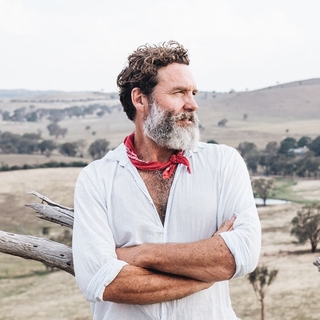
It's really a sad thing that as farmers or landscape managers,
That we haven't seen this because it has held us back.
Had we have seen this on settlement,
We wouldn't be in the dire circumstances we're in now because we would have changed the way we operated.
Instead of going in and trashing everything,
We would have thought differently,
I think.
We would have thought differently about how we approached it.
I mean,
Yeah,
We could be in a massive abundance right now instead.
But it doesn't matter,
We can rebuild that.
We can bring that back if we just have the will.
That was Stuart Andrews and you're listening to The Regenerative Journey.
We acknowledge the traditional custodians of country throughout Australia and internationally,
And their continuing connection to country,
Culture,
Community,
Land,
Sea and sky.
And we pay our respects to elders past,
Present and emerging.
G'day,
I'm your host Charlie Arnott,
An eighth generational Australian regenerative farmer.
And in this podcast series,
I'll be diving deep and exploring my guests' unique perspectives on the world so you can apply their experience and knowledge to cultivate your own transition to a more regenerative way of life.
Welcome to The Regenerative Journey with your host Charlie Arnott.
G'day,
This week's interview is with Stuart Andrews.
He's the son of Peter Andrews,
You may have heard of Peter Andrews in natural sequence farming fame.
He was on Australian Story a number of times now.
Some may call a reasonably controversial figure in the Australian landscape,
Literally,
I'd say he's one of the geniuses of the Australian landscape,
Being able to bring it to life,
Quite literally,
With his courses and his understanding and his reverence for the landscape.
And that's exactly what Stuart Andrews is doing with his training,
Natural sequence farming,
Training via Tarwin Park Training.
I had the pleasure of having Stuart here for four days doing his training at Hannaminno.
And after the course had finished,
The next morning,
I grabbed him for an interview,
Which was fascinating because I got to know him really well in those four days and through the training,
But just personally,
And I knew this was going to be a cracking interview,
And he did not disappoint at all,
Could talk the leg off a table,
Is Stuart.
But everything that comes out of his mouth is absolute gold.
And I'm really excited to be releasing this interview with Stuart Andrews.
And I hope you enjoy it as much as I did.
Stuart Andrews.
Morning,
Charlie.
Welcome to the regenerative journey,
But more importantly,
Welcome to our guest bedroom.
Yeah,
I feel great being in here.
I'm glad I'm in the chair though.
We are sitting in chairs and we're looking at over our dam or some people call it a lake.
And we're here,
It does sound a little bit echoey,
But it's not a bad spot.
It's not the worst spot I've had to interview anyone.
I'm interested to know,
Because we're looking at landscape and you've been here,
We've just done four days of your natural sequence farming course.
And in that,
We learned many,
Many things.
And certainly the lens with which I look at landscape has been totally changed,
I have to say,
Which is no doubt one of the outcomes you're looking for for your attendees.
So that's why we're sitting here looking at some bit of a landscape.
We can't see a huge amount.
We can see a dam,
We can see some of our paddocks,
We can see plenty of trees.
So that's why we're sitting here to be inspired.
And our viewers there on the machine can just see the back of the guest room.
So Stuart,
What I'm interested in before we get into your regenerative journey,
As the name of the podcast suggests,
It's about digging into your life and identifying some points at which you could say your journey,
There was a fork in the road,
Or a catalyst for change or a tension event or something that sort of speed you in another direction,
Because I just think that's going to be interesting.
So tell me when you look at a landscape,
Before we get to your story,
What's the story of that landscape out there?
When you look at it,
What are you seeing?
Well,
With the new trained eyes that one I have,
That I learned through PA,
Peter Andrews,
My dad,
And that I try to instil in all of the people that do our course,
Is to look at what we refer to as an old dinosaur skeleton.
So Australia is a very old continent,
And it's very much like a disheveled dinosaur skeleton.
And so all we can really see are bits and pieces out there of how it used to operate.
And what we're trying to do is to piece that back together again.
So we use very subtle engineering and plants and so forth,
To try and reconnect the dinosaur skeleton so that it works as one again.
We can never rebuild it back to what it was,
But we can regain the function that it once had.
And what parts of the dinosaur are you seeing out there,
As it were?
Well,
I can see a foot and I can see a head,
And that's about it,
Because most of the in-between parts have been removed over time.
And so we go out there and we particularly look at ridges,
We look for steps.
The ridges or the headlands are the major features that poke out that everybody sees.
You can see ridges no matter where you go,
But you don't realize that they're a link to the rest of the landscape and they're a key component to what goes on in the lower part of the landscape.
So those ridges once were joined to the gullies,
They're no longer,
Because the gully has been incised,
Cut through,
And so that linkage is gone.
And so what we're looking at doing is re-linking those back together.
So we link the ridge line to the other ridge line to the gully,
And all of a sudden the landscape comes back to life.
And you see the dinosaur.
You see the dinosaur,
Yep.
Which is a great way to put it,
I think,
Because we're all archaeologists of sorts,
Aren't we?
I don't know how many kids that didn't want to be an archaeologist when they grew up.
But I think it's a fascinating way to put it.
And again,
My eyes are totally different now,
Being able to identify those things.
I was just talking to Jim last night about it,
Driving around.
It's like,
Oh yeah,
Oh now,
If you did that,
And then that went there.
And I've been,
For those who don't know,
I've lived here forever.
It was from day dot,
Well not lived here all the time,
But certainly have been familiar with the landscape for all those years.
And know every strainer post,
Every paddock,
Every fence.
And I knew every gully,
And I knew every flat bit,
And not flat bit,
And every,
You know,
Change of slope,
But now I understand so much better why that was there.
You know,
Those little secondary flow lines and things,
Now I know what they are.
Before I just thought,
Oh that's just a flat bit next to the creek.
It's really a sad thing that as farmers or landscape managers,
That we haven't seen this,
Because it has held us back.
Had we have seen this on settlement,
We wouldn't be in the,
In the dire circumstances we're in now,
Because we would have changed the way we operated.
Instead of going in and trashing everything,
We would have thought differently,
I think.
We would have thought differently about how we approached it.
I mean,
Yeah,
We could be in a massive abundance right now,
Instead we're not.
But it doesn't matter,
We can rebuild that.
We can bring that back,
If we just have the will.
I mean,
That's the,
You know,
And that's the point of our course,
It's just about delivering some simple components for people to be able to take home and use for themselves,
So they can start that process.
And then they become the educators for their neighbours to show them what can be done.
Really,
That's the only way it can happen.
But if we just continue to operate,
Everyone continues to operate the same way,
Then we're going to continue down the slope that we've been going on for the last 200 odd years.
I don't think anyone could argue that we're,
Not sliding down the slope very quickly.
There are some breaks that are being applied here and there,
You know,
With your training,
And I guess what we do and some other practices that are helping slow the decline.
And hopefully,
You know,
At some point,
Turn it around somewhat in,
You know,
In places it's been practiced.
But generally,
We're sort of slipping,
I think,
Aren't we?
Oh,
I think we're more than slipping.
I think we're on a big slide,
And we're not going to be able to do that.
I think we're on a big slide,
And it's ever gaining pace.
That's the problem when,
You know,
When we started on a slippery slope,
Which was probably 200 years ago,
Now the slope is getting steeper and steeper,
And we're slipping faster and faster.
And,
You know,
Starting to see species disappear and all that sort of stuff,
It's really very frightening.
And unless we actually get the landscape functioning again,
We can never get that back.
Even if people don't,
You know,
Completely convert from what we would call conventional farming practices today,
At least if they start to put back the function into the landscape,
It's got half a chance of holding together until they maybe see,
You know,
Whether they want to introduce a rotational grazing system or biodynamics or,
You know,
Whatever it might be.
In the interim,
At least if they start to help the landscape function again,
It's going to slow down that slide.
And yeah,
I just,
You know,
PA has been so frustrated for the last 40 years trying to get this message across,
But it has a little bit to do with the delivery.
You know,
If you can get it into the language that the average person can understand,
It makes a big difference.
And I guess that's our role in the training program,
Is to deliver that his message and what he sees out,
And I mean,
He will say it's just the Australian landscape.
It's not his idea.
None of it's his idea.
It's all just the Australian landscape.
So that's the thing that I find so powerful is that this was there all the time.
This is how this landscape built.
And all we're doing is going out there and saying,
Okay,
Mr.
Or Mrs.
Landscape,
Exactly what have you got to tell us?
And then we asked it the question,
And then we help.
All we do is help put it back together.
That's all.
It's,
Yeah,
It's very powerful.
And when people grab it and they start doing things that they see how powerful it is and how very small things make a huge difference.
It's a good example of,
You know,
The thing I've been on about is asking better questions.
You know,
As farmers,
I mean,
I didn't even ask myself why was that,
You know,
Flat bit or they actually went,
You know,
What is that gully seam?
I didn't even really see that it was higher than the secondary sort of,
You know,
That didn't even occur to me.
I wasn't even,
Didn't know the questions to ask to find the answers that led me to a certain spot.
You know,
You need a bit of direction,
A bit of understanding.
And what you've done is sown seeds,
Or more than sown seeds,
Really,
For asking those better questions.
And then as you say,
You know,
Asking the landscape,
You know,
Via those questions like what do you need?
What do I need to do to get you back to where you were?
You won't be back exactly.
But what are some of the practices,
You know,
The interventions,
As it were,
To recreate the system as best one can,
You know,
230 years down the track,
With the machinery we have,
With the wisdom we have,
And,
You know,
Just allow that,
The functionality,
You know,
It's a different function.
Well,
It's the same function,
But just 230 years down the track,
Trying to mend,
You know?
Yeah,
It's interesting,
Because people,
You know,
Sometimes I look at landscapes and think,
Well,
How could you possibly fix that?
Well,
Just remember,
This continent has been through ice ages where vegetation was completely lost,
Erosion was massive,
And a rebuild.
That's the point.
This landscape can rebuild from anything.
It doesn't matter how bad it is,
We can rebuild it.
Doesn't mean we want to let,
You know,
Send it the ground zero before we start.
But it can rebuild itself.
The trouble is,
The further we go,
The harder it is,
And the longer it will take to recover,
You know,
And the more plants we have to have in the system to build it,
That we don't necessarily want as part of our production system,
But we need them.
We must have all of the plants in there,
Because those plants are what built this landscape,
And we need them there to rebuild it.
That was one of the biggest takeaways for me was that was the weeds.
The weeds,
You know,
Like,
Wow.
I mean,
My view on weeds was,
As it was,
Has been for many years in terms of their benefit,
But,
You know,
The repair plants.
And actually,
I was,
Last year,
The year before,
I was trying to find some seconds from gratings from people,
You know,
Getting their mustard,
You know,
From their gratings,
Just to do that very thing.
So,
You know,
I appreciate so much the,
Again,
You know,
The lens with which I'm now looking at the landscape,
And what I'm excited about is the opportunity.
Now,
Talking about opportunity,
I want to take the opportunity to dig into your regenerative journey,
Going back as far as you,
And for those who don't know,
Stuart's story,
Family story,
Has been,
Was aired,
You know,
In 2005 via the Australian story.
Fascinating,
One of the most popular Australian stories ever,
And it was followed up in 2018 with part two.
So 2018?
No,
I think there was another one.
There's been four,
I think,
So far.
Is that right?
Okay,
So there's been.
.
.
You haven't been watching,
Charlie.
What's going on?
No,
I know,
I don't watch much TV.
Yeah.
Oh,
Clearly.
Oh,
Clearly.
Or research.
But my point is,
My point is that,
You know,
You have quite a fascinating story,
And it's been,
It's pretty well documented,
And for good reason,
Because it is fascinating,
And it's,
Some would say,
Controversial in many ways.
And that's not necessarily what interests me.
I'm interested in you as an individual,
In a situation,
In a family,
In an environment,
You know,
In a life,
You know,
That is taking you from where you were day one,
You know,
To where we're sitting here now at Hannah Minow,
You know,
And that's a pretty long podcast.
But so we break it down and have a little chunks you want to do that.
So let's do that.
Where do you want to start?
Well,
We can start from my childhood,
From when I was very young.
I mean,
You know,
Growing up with PA was no easy task.
Given the choice,
I probably would have chosen a different way.
But you know,
We choose our parents.
We do?
Though we do.
Well,
I did a pretty crap job then.
That's all that now,
Stuart is gonna,
He's,
We sort of committed,
He's,
It's too late for him to pull out to come to one of our biodynamics courses.
But we do talk about that.
We do talk about,
You know,
Things that aren't necessarily farming.
But it's a really good point.
I hadn't thought about it,
He just said it,
Then we,
You know,
We do choose our parents.
And sometimes that choice might seem to us like the craziest thing,
Like,
Why would I have ever done that?
And generally,
What we do,
What we do that is that these are the right parents to get us into the world,
To set us on a path to find our purpose,
You know,
As an individual,
As a,
As a soul that's come down for this next round,
You know,
So I know what that is.
I mean,
I've got a pretty good idea.
But you know,
The challenges you've been through,
Have been for a reason.
Now I say that jokingly,
I'm a bit of a stirrer.
My old man,
He's definitely a hard old bugger.
But,
You know,
Had I have not grown up the way I did,
And with my mom,
Who was the,
She was the rock.
I mean,
He was off doing all sorts of stuff,
But she was really the rock,
Holding everything together.
And had I have not grown up with both of them,
I wouldn't be who I am today.
And I wouldn't be able to do what I do out in the landscape and,
You know,
Running two farms and a training business.
I mean,
You have to be mildly psychotic to do what we do.
Which so you know,
Thankfully,
I grew up in a family which where that was standard practice.
Well,
You got to say you're doing a bloody good job.
Yeah,
You're honestly,
Amazing job.
I don't know how you do.
I sort of do know because I have a bit of insight,
But no,
I agree.
Peter was here yesterday.
Yes.
And I will say before I jump onto the journey that often I don't hear him say positive thing.
I guess he sneaks them out every now and then,
But we're driving through your paddock and he goes,
Jesus,
Charlie's got a bit of diversity out here.
It's not bad.
That's cool.
I'm glad I didn't hear that one.
Yeah,
We were talking about amongst ourselves too.
Just the insect life,
The spiders and everything you've got out there.
Yeah,
It's a credit to you because most places I go on are dead.
You know,
They've got no diversity.
They've eliminated most of the plants simply back to grasses predominantly.
And they have very little life,
Which is sad.
Anyway,
Getting back to the journey.
So as a kid growing up with PA,
He was still learning,
You know,
And he's trying to teach us and I was probably a bit of a shit.
I'd have to say.
I'm sure he would agree.
You can swear too.
If there's any other language you wanted,
It's going to be helpful in expressing yourself.
Yeah.
Well,
Shit was probably as far as I'll need to go,
But yes,
I'm sure I was.
I look back at it now and I see my sons and I see pieces of me in them.
And I think,
Yeah,
I know you can't knock them for that.
No,
No,
No,
No.
That's part of the.
Yeah,
Exactly.
That's me,
You know,
And if I got to blame anyone,
I should blame myself because I created that.
But yeah,
Anyway,
So he was trying to teach us and his style of teaching is probably not the best.
It's by force.
Yeah,
I was going to say,
How would you describe his style?
Yeah,
By force.
Yeah.
Come here or come here,
Listen to this.
You know,
And it's like you actually really need to bring someone along the journey with you,
Not force them into it.
And yeah,
He probably doesn't.
He just doesn't have that style.
But then at the same time,
You know,
He was I guess he was excited in some ways about the fact that he was learning.
And the difficult part for me was,
You know,
As I got older and I was actually working in the business and I'd be out doing,
You know,
Operating the machinery or whatever.
And he'd give me instructions.
So this is what we want to achieve.
Well,
I'd probably fight him most of the time.
We go,
No,
I want to do this.
And then eventually I'd actually do what he wanted.
But by the time I did what he wanted,
He went,
No,
That's not right.
And so,
You know,
Because he was still learning.
Because he was still learning.
Yeah,
Experimental.
Yeah,
He hadn't actually,
We were in the middle of it.
Actually,
Which was frustrating for me,
Because I thought,
Well,
I thought I'd actually finally done what you wanted me to do.
And now you're telling me it was wrong anyway.
So,
You know,
All of that stuff is probably enough reason to leave.
But whatever it was,
I don't know,
I couldn't leave.
You know,
I just,
You know,
I'm just drawn to it.
And the universe plans everything.
You know,
I didn't know that back then.
But,
You know,
I heavily believe that the universe has guided me,
Like you talk about choose your parents,
All that sort of stuff.
I haven't gone to that level.
But I know,
I learned years ago that the universe would always guide me where I need to go.
So whenever,
Whenever something bad happened,
It always gave something good.
Now,
Maybe that was me just looking for the better side of the bad.
I don't know.
But I still think,
You know,
Where the universe just sets things up for you.
So as long as you're on your right path,
If you're doing the right thing,
Then things just happen for you.
So anyway,
That was,
That was,
I guess,
My younger life and then going in as a teenager.
Yeah,
Things got a little.
.
.
And where were you situated?
Like where were you living?
We were at Byline,
The Byline Valley at Tawant Park,
The home of natural sequence farming.
And yeah,
So I,
Although I worked on a couple of properties down the road,
I was doing 30 hours a week.
Most of the time,
I'd knock out those 30 hours in two days,
So I could be back at Tawant Park,
But I had to do that because the PA,
I wasn't getting paid.
This is after school?
Yeah,
After school.
I left school,
I was still 15 when I left school.
I left in the end of year 10.
I hated school.
I.
.
.
Local school.
I went to Scott's at Bathurst for a couple of years,
Which I hated.
It was like a prison.
Interestingly enough,
I ended up standing both my boys there.
It was,
But that was their choice.
I didn't make that choice for them.
They actually.
.
.
That's commendable.
They actually asked.
.
.
Because you could have gone,
Oh,
No,
Bloody,
No,
Indeed,
That's crap.
I'm not going to.
.
.
Yeah,
No,
No,
They.
.
.
They go with it.
Well,
Hamish asked,
Hamish is our oldest boy.
He actually asked to go there.
We said,
Well,
These are your options.
You've got Mudgee High School,
Lord Candles High School.
He said,
Oh,
I want to go,
But you went to school.
I went,
Okay.
Well,
I've told you all the things that happened with me when I was there.
You know,
I was a bit of a bugger.
I left,
I walked.
I walked home.
I walked 160 Ks to get home from school.
I hated it that.
.
.
Well,
It wasn't that.
.
.
I guess it wasn't that I hated the school so much.
I just love the farm.
I was just drawn to the farm all the time.
I just wanted to be there so much.
I think when I was about 10,
I wanted to be a truck driver.
I had all the truck and life posters on the wall.
But then after that,
I decided,
Well,
I think I want to be a farmer.
Yeah,
And I settled on that and I seemed to be stuck there.
I'm glad I wasn't a truck driver.
I wouldn't have made a good one.
I don't think I could.
I do like driving,
But I don't think I could be in a truck every day of the week.
Those guys work very hard long hours.
But anyway,
Yeah,
So as a teenager growing up,
I left school and went straight onto the farm full time.
And yeah,
I mean,
That was quite a bit of fun.
I had a few mates around and,
You know,
We'd go shooting and getting up a bit of mischief.
And then when I was 19,
I went back to playing rugby,
Which I'd played when I was at school.
And that was a bit of a pressure relief,
I suppose,
Having to grow up with PA and be on the property.
The rugby was my outlet.
I played for Mary War for quite a few years,
And then I went and played for Mudgee.
And yeah,
Dare I say,
There was a considerable consumption of some brown liquor at the end of every Saturday.
But it was all responsible,
Everybody.
Very responsible.
I don't doubt that.
No,
No,
I don't.
I'm sure that's what it was,
If I could remember.
Anyway,
So that was my outlet,
I guess.
And the rest of the time I just worked.
You know,
I was on,
I would work for 16 hours a day,
Every day.
You know,
I just loved it.
I don't know,
I was always being constructive.
I thought I was,
But anyway,
I just did what I did.
And that was a lot of under direction of Peter,
Like as in moving stuff,
I guess there was stock to feed.
Yeah,
Yes,
No.
Yes,
Some of it was under his direction.
Some of it I just took off my own bat.
I was probably not being helpful,
I don't know.
But I thought I would.
I thought I was doing everything.
I mean,
I love driving the tractor.
So predominantly I was slashing.
You know,
I spent hours and hours and hours slashing down all the weeds,
All the weeds on the place,
You know.
For the purpose of,
Because you didn't want them?
Or you went moving fertility?
Oh,
Well,
Let's see,
He'll tell a story or say,
Oh,
He blamed me for all the weeds,
Which funnily enough,
He actually thinks is good.
So I've done one good thing,
And that was just spread weeds everywhere.
Yeah,
He said,
Oh,
You know,
Because I was too lazy to get off and clean the machine down between paddocks,
I'd cut the seed from one paddock to the next.
I don't think it was really me.
But anyway,
That's okay,
It's a nice story.
But either way,
That's what I was slashing just to molt these plants down.
It wasn't to get rid of them.
It was just,
You know,
He was in early stages and he believed that we shouldn't be letting these plants go to seed because we'll be spreading the seeds around.
We don't worry about that anymore.
That's all part of it.
You know,
Seeds only grow as a result of the landscape we create.
You can have as many seeds out there as you like.
I mean,
Farmers know that all the time.
They go and sow seeds and they don't grow.
Instead of asking why didn't it grow,
They go,
Oh,
It was the weather.
No,
It wasn't.
It was the conditions weren't right for it.
Not enough MIP.
Yeah,
Well,
No,
That's right.
Not enough.
But not even that,
That can't even cause the seed to germinate.
It's the conditions that are in the soil at the time,
Whatever energy is going on.
I don't know what it is.
I don't know the answer.
But whatever it is that makes that seed germinate,
You know,
It doesn't matter what you do,
It ain't going to germinate.
It's going to sit there for however long until the conditions are right and then it'll go.
That's if it doesn't get taken away by hand or something.
Anyway,
So I'm out there doing all of this slashing and,
You know,
I think I'm doing a good job of cutting hay.
God,
I cut a lot of hay.
We had this massive machine,
This stack and mover,
Which built an eight ton bale.
And I used to have to get in the back of it.
You know,
I'd get it three quarters full.
It'd pick the hay up,
Chop it and throw it in the back and,
You know,
Moving it around to stack it right.
You get it three quarters full on a hot day,
30,
35 degrees,
And you get in the back of this frequenting and I've got to jump up and down because he doesn't want me taking it up there not full enough.
So I've got to get in.
Jump up on down on it.
And the bloody thing was full of Paterson's curse.
Has anyone jumped up on down on Paterson's curse?
It's so itchy.
It's like harvesting a barley crop.
And so I jump in there,
Jump up on down,
Get covered in sweat.
Then I jumped back into the furnace,
Which was our tractor,
Because it was a cabin with no air conditioner and no fan most of the time.
So I sit in there in the furnace and away I go.
And I did this for years,
Carting this bloody stuff to the top of the hill.
And I'm thinking,
I've got no idea why I'm doing this.
But anyway,
I love it.
I love being on the tractor,
So I did do it.
You know,
And I did that for years and years.
And then I guess finances probably started to get tight.
And well,
They were probably always tight,
But they were particularly getting tight by the time I was around about,
I guess I was 19 or 20,
Somewhere thereabouts.
And we had a lot of horses on our place because it was a thoroughbred stud.
PA was busy with the landscape stuff and the horse business sort of got,
You know,
Got tilted to one side a little bit.
And that was our core business.
I mean,
That was our income.
You had a lot of horses there too,
Didn't you?
We did,
Yeah.
Yeah,
We had hundreds of horses.
Yeah,
Hundreds.
And they just kept growing every year.
More horses were bred and then they weren't sold and so forth.
So.
And we're not talking about sort of like nice little yards and they all get a little ration in the morning and get a rub down at night.
No,
No,
No.
We're talking about hundreds of horses thundering around out in the paddock.
When it came,
You know,
Horsework day or whatever,
It was just like a Brumby stampede coming to the yards.
It wasn't too much low stress stock handling going on.
In those days,
I can assure you.
The Brumbys just ran to the paddock at whatever pace they chose to go.
And then we did whatever we did with them.
Yeah,
So in all that time,
You know,
They were really difficult times.
I look back and I think,
My God,
They were very hard times because PA was doing what he was doing and he was doing the best he could to bring in the finances.
But he was focusing on the wrong area.
He was focusing on the landscape to try and or his information to bring in the finances.
But,
You know,
When you're trying to force somebody to understand,
As in,
You know,
Politicians,
Bureaucrats or business people,
Farmers,
That this is the way we have to go.
The more you force people,
The more they tend to back away.
Push back.
Yeah,
And so that was a real problem.
And so rather than dealing with the,
Whether he should have been working,
Which with the horses to make money,
He was working there.
So in the meantime,
Bills are stacking up and mums left.
I still remember like the really hard times were when,
You know,
The sheriff would be coming down the road to take something,
Take something else.
And that was,
Yeah,
That was,
I've got to say many stories.
But yeah.
Tell us one.
Yeah,
Look,
I would,
I would be out in the tractor or doing something and I knew what the sheriff's car looked like.
I could see it for kilometres down the road.
I'd see it coming across and I'd go,
Oh,
Here we go.
And so I would have to go back.
PA wouldn't always be there when that happened.
And he'd come and,
Yeah,
We just have to work our way through it.
I know one time he came and took,
Came to take the TV and the video or something.
I thought,
God,
How desperate are you to take that?
I mean,
It's really not very much.
And then another time they came to that tractor and they took mum's vehicle.
Anyway,
What we would do while PA was away,
I don't know if he knows now,
He'll know in a minute.
We would,
My sisters and I would round up horses while he was away and we'd send a load to the dog to get some money.
And like we had stallions out,
No,
He had stallions out in the paddock that were 15,
16 years of age that had never been on the track,
Never even been broken in.
And we'd round up these bloody Brumbies and cash them in just to get some money for food and keep the place ticking along.
So,
Yeah,
That first probably happened when I was about 19,
I reckon.
So we'd have to wait till he goes.
Then he'd come back and it'd be roaring.
I remember one time,
Me and my wife,
Who weren't married at this stage,
Her first introduction to PA was pretty much him yelling.
We lived in a massive house and he was yelling at me in the kitchen and she could hear from the other end of the house in our bedroom,
My bedroom.
And yeah,
That was an eye-opener for her.
Yeah,
Anyway,
They were.
.
.
Welcome to Tower Park.
Welcome to Tower Park,
Yeah.
I'll tell you a funny story.
When Megan was the,
She was put on as the manager and put on as the second teacher at the Bylong School.
And when she got the job,
She had to look for somewhere to stay.
So for whatever reason,
She rang Peter Andrews.
And so she rings Peter Andrews and says,
Yeah,
I'm coming as the second teacher.
This is awfully little spoken.
I'm coming as the second teacher at the Bylong School and I was looking,
Wondering whether you had a place I could rent to stay.
I guess someone referred her on.
And he said,
Can you ride a horse?
I need a track work ride.
Is that how.
.
.
And then he said,
Right.
She said,
Yes.
No,
She said no,
No,
No.
Oh,
I don't know whether she said no or she just went somewhere else and tried for a different deal.
Anyway,
She ended up down the road.
Anyway,
That was just funny things.
That's what PA used to do.
He used to bring anybody home.
I remember he picked some guy up off the side of the road one time,
Brought him back and his vehicle towed him back because he'd broken down.
This guy was mildly psychotic,
I can assure you.
Not PA,
The other fella.
And we found out later that the vehicle was stolen.
This guy had lived,
He stayed there for probably a year.
We were terrified.
I was in fear of my life a lot of the time,
This fella there.
He was a nice enough bloke,
But he was.
.
.
Yeah,
I think he may have been schizophrenic.
I suspect he had some sort of mental condition and a little bit frightening to be around.
But he didn't harm anybody in the end.
But there were frightening times for us,
Being young,
Growing up with that sort of stuff.
Yeah,
So that was some of the growing up I had with PA.
So having to.
.
.
I guess in some ways we were having to manage the business,
Although we didn't know what we were doing.
I tend to think it was helpful.
For PA in that time,
But it was also.
.
.
It was challenging for him too.
I mean,
He loved his horses,
You wouldn't believe.
He loved the horses probably even more than the landscape.
That's quite a.
.
.
I guess it's a decision or a choice,
Or what's your priority?
Is it the horses you love that are in the landscape,
Or is it saving the landscape?
And did he see.
.
.
Were the horses contributing positively or negatively to the landscape?
No,
They were.
No,
He would argue positively.
Yeah,
Not necessarily positively for the landscape,
But they were positive for his learning of the landscape.
So he used the horses.
He always said,
Oh,
They're my trial.
Because if you can have a horse,
Which is something that's very sensitive to the landscape,
Very sensitive to the environment it grows up in,
If you can have a horse reared with all of the diversity and so forth in a landscape that's functioning well,
The horse will perform well.
And so we had all of that.
We had these horses that were beautiful bone,
Beautiful structured animals,
Powerful animals,
But just not enough of them got out on the track to be able to prove his point.
That's where it had to prove the point.
My argument all the time with him was that,
Unfortunately,
For the majority of people in the country,
Or at least the farmers who are the guys that really need this information,
Race horses don't mean anything to them.
Cattle or sheep mean something to them,
But not horses.
And so I don't know whether he could get that,
Because it made complete sense to him,
Because horses were so sensitive,
Where cattle and sheep can live in a degraded landscape,
Doesn't seem to worry too much,
Where the horses were very sensitive.
And so the average person probably couldn't understand it from his point of view.
And I don't think he could understand it from their point of view,
That it didn't make sense.
Dollars and cents,
Productivity,
How many cattle can I run?
How many sheep can I run?
Not how many horses I can run,
Or how healthy they are.
So that made it difficult too.
And I would always say to him,
Let's just run cattle.
Let's run some cattle here and this will help prove it.
So there were no cattle?
No cattle or horses?
Oh,
Yeah.
He had,
We had some cattle.
We had some Hereford cattle,
But they were like second rate citizens on the property.
He doesn't really like cattle that much,
But he's digging things.
He's shit everywhere.
And no sheep?
Yeah,
No sheep.
I know.
I know.
No,
Only killers,
The odd killers there,
But no,
We didn't run sheep.
Yeah,
He's not a passionate cattle person.
Still not today.
He would still have his horses over cattle any day of the week.
There are a lot smarter horses than cattle.
And yeah,
So anyway,
That's,
Everyone has a choice,
Don't they?
Some people like sheep,
Some people like cattle,
Some people like goats.
Everyone's different.
And yeah,
So growing up through all of that,
It's,
It teaches you a lot.
I didn't know that it was a lesson at the time.
I just thought it was a nightmare.
But it teaches you a lot.
And what were some of the things you can reflect on now as learnings?
You know,
Life,
Farming.
Oh,
Look,
All of that stuff.
Like dealing with the sheriff coming to take stuff.
It probably set me up in a,
In some ways in a negative,
It probably set me back a little bit.
Because it put a great fear in me of taking risks,
You know,
Because I could see,
You know,
How many risks PA had taken and where it got us.
And so I became very risk averse.
I just couldn't do it,
You know,
And it's still today.
I can't do it.
I just,
I can't take the risks,
They're minor risks,
But I can't take them.
All I think about are the downside.
The consequences.
The consequences.
Or the bad consequences.
Everything.
Yeah,
It doesn't matter what I do.
I'm always thinking about what are they going to be,
The consequences of this.
And it quite often inhibits me making a decision.
And,
You know,
With our little farm we're running up in Queensland now,
You know,
Hamish is 22 and Lockie's 18.
I said,
It's yours,
Do it.
Because they're only going to learn by taking those risks,
You know.
They've had a good grounding and they're very good boys.
Very,
Very,
Very,
Very capable.
But they need to take those risks.
And they don't need me hanging around,
Preventing them from experimenting,
Doing the things that they need to do.
So,
Yeah,
Anyway,
That was a,
That made it difficult running the farm as it ended up being in the future when,
You know,
When the,
Well,
When it made it hard to make the risk,
You know,
So take the risks.
But at the same time,
It probably gave us a good footing too at the same time.
So anyway,
PA,
Eventually in,
I think it was 1994,
That's when everything went to the wall and the bank came in and ousted us out of the property.
And anyway,
PA was in the process of trying to get a research and development project up to validate the work that he was doing.
And he hadn't got it up prior to that.
And the bank came in and we got tossed off.
Anyway,
He's a stubborn old bugger and he won't let anything go.
Anyway,
He managed to,
He kept plugging away over the next couple of weeks and he got that R&D project up,
Which got some finances back in and got us back on the place.
So you were offered,
You had to,
You were escorted off for something,
Away for some weeks?
Six weeks,
Yeah.
Six weeks were all over.
Six weeks were off the farm and we weren't even allowed to go back in the front gate.
Yeah.
So it was like they turned up,
You were gone that day?
Yeah,
Yep.
I got a call,
I was working on the property down the road for the Pam Thompson at the time.
And I got a call from mum,
Said,
You better come back.
And I drive back up the road and the old rusty unregistered Toyota Corolla that I was driving with the doors half hanging on.
And here's the cop and the sheriff at the front gate.
I went,
Holy shit,
This is not good.
Anyway,
They obviously weren't interested in arresting me for driving an unregistered vehicle on the road at the time.
Your old Corrozroys.
Yeah,
They had a bigger fish to fry.
And yeah,
I drive in the front gate.
I guess I pretty much knew what was on the cards.
I'd had a pretty long upbringing in that sort of stuff.
So I probably wasn't thinking I was going to get chucked off the place.
I didn't know.
Anyway,
That's how it turned out.
You know,
PA and his stubbornness and his will to see things go.
He got us back on the play six weeks later.
And then an R&D project started.
So but unfortunately,
I don't think that was ever it was never set up for PA to be successful.
And for NSF,
It was referred to as NFS was never going to be seen to come to light.
It wasn't about that.
It was about investors getting a tax deduction for themselves.
So it was a government fund or grant or incentive?
Yeah,
It was through the Commonwealth Development Bank,
I think it was at the time.
It was what they were offering for businesses to help forward other businesses that needed a leg up.
And so from the explanation that I was given,
We had two options,
Either or they had two options.
Either they saw the information as worthwhile and they had to take it through to something that was marketable or they proved the person to be another.
And so they chose the latter.
And yeah,
And so PA,
All his work,
Even though he'd proven everything,
He'd proven everything,
But it was,
You know,
Everything was against him.
Big business was against him.
And that was a that was a big hit for him.
So that whatever,
What period you got back to the farm,
R&D comes through.
How what is it a year?
Is it two?
Two years.
It was a two year project.
Yeah.
So I knew it was,
You know,
There was going to be an end period.
And and what I said to him,
I said,
Well,
Let's just spend that time getting this horse business up.
Let's start selling these darn horses.
So that at the end of this,
If it goes nowhere,
You've got to we've got a footing.
You know,
That just seemed logical to me to do that.
But,
You know,
He I guess he was just he could see that this information was so important and it was worth far more than than any of these horses,
Like worth more to the landscape and to people,
Not in dollar terms.
I mean,
It was just nothing about for him is about dollars.
You know,
It's not about dollars and cents.
It's about what do we need to do to survive?
What what do we need this landscape to do so humanity can survive?
That's what's important to him.
And and so,
You know,
You know,
He he ignored what we should do with the horses and proceeded.
And of course,
Everything happened exactly how how we thought it would happen or how I was instructed that it would happen.
You know,
These guys would would prove him to be not correct and walk away with their with their tax benefits.
And and we we end up with nothing.
So and not having to sort of get the information doing with it is easier to go.
I got the benefit.
Yeah.
This blokes a nut job.
We're out.
We're out of here.
Too bad.
And,
You know,
Andrew's family,
It's bad luck.
But OK,
So what what happened then?
Well,
I think it was about another we lasted for about another two years.
And,
You know,
Obviously,
Bills weren't getting paid again and so forth.
So,
Yeah,
We've managed.
He managed to hang on for another couple of years and then we were back in the same situation again.
Banks were knocking on the door.
And that was in 19 was 1998.
I think that happened.
Who had that information?
Like the research was done and the results were what they were.
Did that go to someone else and go look to,
You know,
Even though these blokes have hooked off and their tax benefits,
There's still some valuable information.
Yeah,
Yeah,
That's so that that information,
P.
A.
,
He has that has all that information.
But I mean,
They had all that information at the time.
You know,
He had the government departments come up and look at the place,
CSIRO.
They came up and had a look at it.
You know,
They were there were positives and negatives all the way through it,
But not enough to throw it out the window.
But anyway,
Maybe not enough to then do a secondary,
You know,
Research or somewhere else.
No,
Well,
I think there may well have been a bit of fudging going on.
Look,
I wasn't involved in that part.
I was too busy involved in in doing work on the property and,
You know,
Digging piezometers and all this sort of stuff for the the project that we were running.
And yeah,
Anyway,
He.
We ended up back in the same situation again,
Where the bank was knocking on the door or banks,
Because we had two banks then.
That's how they got the funding through with the R&D.
And by this stage,
What am I?
I'm 20,
28.
And,
You know,
I,
I just knew somehow it was new,
We had to do something.
You know,
I couldn't I couldn't sit by and do nothing this time.
So I knew that we were that one,
Two of our properties,
We had four properties at the time,
Only amounting to about 2400 acres.
But two of the properties were going to be up for the taking first.
So I went and took it off my own bats and I went over,
Made an appointment to go and see Peeba,
The primary industry bank of Australia at the time.
And I knew nothing about what I was doing.
But anyway,
I'd made a plan,
Got all the finances together as to how I thought I was going to make this thing work.
And I went over to when I made an appointment,
Went over and saw those guys and.
And,
You know,
Gave across my information,
Did all that stuff.
And and I'll make that was there,
Who was a lovely bloke.
He just said to me,
Oh,
I'm sorry,
But you don't fit our criteria.
And I just thought my whole world just fell apart because I thought I had this good plan.
Everything was going to be right.
That was to manage those couple of properties?
Was to take them over.
Take them over.
Yeah,
Take over the debt.
And because all I could see was that information.
I didn't understand enough about it,
But I knew the information that was there was worthwhile saving.
And it was our property,
It was our home farm.
And I just felt this compelling need that I had to try and save it.
And yeah,
So.
Did he know who you were?
Did he know the history?
No,
Not unless he did his research,
But I doubt it.
You think it was it was it was a pretty objective assessment then?
Yeah,
No,
I think he just looked at the figures and went,
No,
You're too you're too high risk.
Sure.
Yeah,
Which is fair enough.
I mean,
I didn't didn't hold that against him.
I mean,
They have their criteria they have to work by.
But the good thing about about that guy,
Peter,
I just can't remember his last name,
But he has a,
You know,
I hold him in high regard because he was helpful,
Although he destroyed me initially.
He was helpful because he referred us on to another guy,
A private financier in Dubbo,
Peter Morrigan.
And he said,
Do you mind if I give him a call for you?
He might be able to help you.
And I said,
I don't care who you ring right now.
Anyone will lose.
And so he did,
He rang him and Peter Morrigan said,
Yeah,
So he sent him around.
So I trundled on round to his office and I and I saw him and I took him my my plan,
Which was now sullied,
I guess somewhat.
But I took it into him and and just to see this is the universe.
Just he just by chance,
He used to manage the state bank in Mudgee.
And that was one of his client.
So he knew the property.
He also knew PA and probably some of the difficulties we've been through,
Which may have been positive,
May have been negative.
I don't know.
But either way,
He said,
Yeah,
Look,
I think I can help you.
No problem.
I reckon we can do it.
And I think that they were looking at 8% was going to be our interest rate,
Which seemed,
You know,
I could make that work.
People were at six or something at the time,
But they were at eight.
And for the guys that for what PA went through,
I mean,
He went through interest rates of 19,
20 odd percent,
You know,
Much harder.
So it all looked pretty bloody good then.
Anyhow,
So we did all of that.
And and he said,
Yeah,
We can do it.
So I went home very well,
Sort of partially excited,
But then nervous because I had an out approach PA.
And I went to him and he's went,
No.
Not interested.
I'll get not interested in you taking over the management.
No,
No interest.
Was that was it like a legal?
You know,
It's got to be in my name now or more.
I'm just going to make decisions on that land.
No,
No,
It had to be handed over.
Yeah,
I guess if you'd attack on the debt.
Yeah,
Yeah.
Had to be had to be transferred over.
And yeah,
He just said,
No,
No,
I'll get it.
I'll get it.
He said,
I'll get it sorted.
And of course,
He couldn't because,
You know,
Having already defaulted several years earlier,
You got that record.
And now,
You know,
The only way you really get that finance through is someone just going to screw you.
You know,
They're not doing it for any of the right reasons,
Not there to help you out.
You'll get hammered with your interest rates or whatever.
Whatever the terms are.
Whatever the conditions are.
Yeah,
Whatever the conditions are,
Are going to make it pretty difficult.
So,
But you know,
All of that stuff,
You know,
All of those early years had brought me to that.
So the early years toughened me.
And now,
Now I'm standing against my dad because he's the one thing between what I knew we had to do and what he wanted to do.
And I knew he was never going to get the finance to be able to take it.
We're going to lose the property.
There wasn't,
That was the other thing too.
The guy at Peeba,
He said to me,
My advice to you would be to let the other two places go and save your home farm,
Which was Tawant Park and Iron Tank.
That was where most of the PA's work had been done.
The other ones he'd done work on,
But not as significantly as Tawant Park and Iron Tank.
And I thought,
Well,
That sounds like good enough advice to me.
He just said,
You won't be able to manage the debt and all that.
So that was good advice.
I took it and said,
Righto,
No worries.
So in December that year,
Those two places were sold.
They were sold for,
I think $20,
000 more than he paid for them 15 years earlier.
They just sold,
Did a fire sale.
That,
You know,
I knew that would happen.
I just thought,
Like,
That was a disgrace that the bank did that.
But I mean,
That's what they did.
The bank,
It was,
Yeah,
The bank's way of,
Okay,
Well,
We can sell those off,
Get the money back,
Lower the risk.
They just sold it for the debt with iron.
Just get it sorted out.
That's all they did.
They weren't very good at all.
They shall remain nameless.
Nameless,
Yes.
I haven't mentioned them.
No,
But I can.
But I won't.
Anyway,
So I better check my legal,
Legal,
Liability,
I don't even know that he's a bit of a,
You're not vulnerable.
The regenerative journey.
What's it called?
It's called defamation.
Defamation.
Yeah,
Regenerative journey no longer being available for people to hear due to a defamation.
Yes,
It's been cancelled indefinitely.
Indefinitely.
Yes.
No,
I won't put you in that situation.
Anyway,
So then we fell to the dead owing on Toowoombaak and Iron Tank and a different bank.
And I went back to PA again and said,
Righto,
This is what we can do.
And he said,
No,
I'll get it sorted.
And it just about,
I happened upon a letter that was a finalisation letter for the Toowoombaak one as well.
That was going to happen in the March.
So I knew time was running short,
But there's nothing I could do.
PA wasn't prepared to part with it.
He was going to keep going.
Anyway,
Got kicked off again.
And so he then,
I don't remember,
I mean,
It's so fuzzy then as to what was going on.
He ended up agreeing,
You know,
At the last hour to allow me to go ahead and get the finance.
So I go back to the guy at Dubbo and now the interest rate's at 10% instead of eight.
So,
You know,
That's what can happen,
I suppose.
I mean,
Fair enough.
They had private investors,
They had to pull their money out of somewhere else.
And that company,
Now I wouldn't know then,
But that comes at a cost to do that.
So they had to make it worth their while.
So 2% extra on top,
Bang,
Just like that.
That's life.
Anyway,
So yeah,
We then had a mad dash.
We were booted off the place and I had two weeks to try and get all this stuff sorted.
All the,
I'd drive into Dubbo to get paperwork signed,
Driving to Newcastle to get paperwork signed,
Because they had to deal with the stamp duty because of the intergenerational transfer,
All this stuff I just learned about,
Which I had no idea about.
And Megan had just given birth to Hamish.
So he was a couple of weeks old,
I think at the time.
Yeah,
Three weeks old.
In all that.
Yeah,
So he was just born just before we got kicked off the place.
So yeah,
We were all camped in.
My grandmother had a unit in Mudgee,
So we were all camped in there,
Which was pleasant.
Not.
With PA as well.
With PA as well,
Yeah.
Yeah.
And so that was a challenging time.
But anyway,
We got it across the line.
But I had to get PA to agree,
Which was the next hard thing for him to do,
To agree to sign over the horses.
Because,
You know,
That was a key part of how I was going to make the payments.
And he reluctantly,
But in the end he did agree.
He said,
Yeah,
I'll do that.
So I just took him at his word.
By the time we got back on the place,
I said,
I need you to sign over the horses,
You know.
So it had to be done legally.
And he said,
No.
I went,
Bugger.
You know,
I'd already told the financier,
Because when we took that on,
We had an $8,
000 bill to pay the financier.
I had four.
I didn't even have enough money.
Well,
That's because that's what happened.
That's right.
Because the,
I mean,
I don't know why they did it,
But the bank,
When they took over,
They put in,
I think they were just playing hardball.
They'd probably be that annoyed by PA,
And they probably didn't trust me,
Thinking I was the same.
You know,
The same sort of person as PA,
Which I'm not.
And they put in this 24-hour static guard,
Security guards on the place.
Cost us $46,
000 in 12 days.
And I'd arranged in my finance.
That's just to keep you from coming back on or something.
Or anybody from coming on,
Yeah.
Yep.
And so I'd arranged $50,
000 in working capital.
So I was left with four.
And I owed the financier $50,
000.
And I owed the financier $8,
000.
I just said to him,
Just before we got back on,
I said,
Listen,
Peter,
I haven't got the money to pay your bill.
Would it be okay if I sell some horses as soon as I get back on and get your money?
He said,
Yeah,
No problem.
And so,
You know,
We did that,
Got back on.
I thought PA,
Because he'd agreed to the horses by this day,
You'd get back on.
And he said,
No.
Well,
That was a big turning point there then because,
You know,
I'd taken a big risk.
And he'd given you a word to other people.
I'd given my word and my word is my bond.
You know,
Nobody will ever say that Stuart Andrews says he's going to do something and then doesn't do it.
I just don't do that.
You know,
It's just not me.
I can't do it.
You know,
I might not have much else to offer.
But that's one thing I can offer is that,
You know,
Whatever I say I'm going to do,
I'm going to do.
Whether it's good or bad,
You know,
I'll do it.
I promise I'm going to do something bad.
I promise I don't do anything bad.
I'm just a good boy.
Anyway,
So here I was in this situation.
And so dare I say it,
It was heated between PA and I.
But that was a turning point.
That was for me anyway.
Might not have been for him.
I don't know.
Might have been.
That was about a point where he knew that I'd taken over.
It was no longer him riding the horse.
I was driving the tractor because I'm not going to ride the horse.
Yeah.
So I was in charge.
And yeah,
He agreed.
It wasn't pretty.
We didn't come to blows or anything,
But he gave me a bit of a shove.
I gave him a shove back and that was it.
But he knew that if he resisted any more than the riding was on the wall the third time,
Fourth time.
Oh,
I don't know whether he thought about that.
There's no way I was going to allow that to happen.
No,
I wasn't allowed that to happen.
I would have done whatever I had to do to save that property and save everything.
Because it wasn't just about him and all the work he'd done.
It was about all of us.
I had two sisters.
Neither of them were on the property at the time.
But anyway,
Yeah,
So that's what we did.
He eventually agreed.
He signed over the horses,
Which was very difficult for him because he loved those bloody horses.
And then I said to him at the time,
I said,
I will do my best to make sure this place stays as close to NSF so that you can continue to push with whatever you want to do to show people how the landscape works.
I still didn't understand.
I still did not understand all of what he understood and how important it was at that time.
I did what I had to do and we sold off horses where we could.
But I also gave a commitment to myself,
Not to him,
To myself that I would endeavour to try and sell those horses for racehorses where I possibly could.
And we did.
Yeah,
My younger sister,
Sonja,
And her partner came back up from Melbourne.
They were working for Emirates down there on a horse dud and they came back up to help us because,
I mean,
I wasn't a horse person.
I could work with the horses,
But I couldn't market them or anything.
I didn't know enough about that sort of stuff.
So she came back and helped us with that side of things.
And yeah,
We did the best we could.
We couldn't get many horses out to be racehorses.
We probably sold,
I don't know,
Maybe we sold about 50 or 60 for that.
Unfortunately,
The rest of them pretty much went to the to the doggers,
Which was very sad.
I mean,
I didn't enjoy doing it.
I mean,
I blame the horses for the issues our family had,
But it's not fair.
It wasn't their fault.
You know,
They were just part of it.
But that was easier to blame them than it was to blame the people.
Yeah.
So we plugged away and we moved through a couple of years it took to get all the horse stuff sorted out.
You know,
I was making the payments I needed to make to the bank.
And in the meantime,
We're building a cattle herd and changing the way we operate.
I guess getting to your original question,
Where did my journey start?
Well,
I mean,
I never really had a choice whether I was going to be what is now termed as a regenerative farmer.
I never had a choice.
That was set long before I was born,
I reckon.
But to now we've got three generations.
You know,
My boys are now following on and they're probably going to do a better job than me,
I reckon.
But,
You know,
So we've got three generations of regenerative farmers.
That's all thanks to PA.
We wouldn't have had that otherwise.
We are really,
I guess,
A long way in front of a lot of other people,
Which is positive and it's also negative because I think people find it difficult to then,
You know,
They find it difficult to approach us and talk to us and whatever,
Which is,
You shouldn't.
I mean,
We're just like everybody else.
We're no different.
We've just been weirdos for longer than others.
My real journey started then.
When you sort of took over responsibility decisions.
That's right,
Because now I'm running Toowoomba.
I've given a commitment to PA that I am going to make sure that this place is going to remain as close to how he would run it,
Only making money so that he could show people and showcase the information that he had.
And what did he,
What confidence did he have in you at that point?
Oh,
He had a lot of confidence.
He said to me,
You're going to F this up in two years.
So his confidence abounded.
And as a result of that,
My confidence abounded also.
But,
You know,
Once again,
It goes back to,
You know,
All of that time growing up with within that family,
It instils a lot of toughness in there.
So that was like red rag to a bull.
Oh,
You reckon I'm going to fail,
Do you?
Well,
I'll show you,
You know,
And so I'm sure he didn't.
I know,
I know he didn't mean the time.
It was all it was definitely callous.
But either way,
It pushed me to make sure that I did better and I did a good job.
And I was true to my word.
He had access to that place 24 hours a day and he took it.
You know,
He turned up with coach loads of people.
And,
You know,
That was a turning point for him,
Too.
I don't know whether he would ever admit it or whether he didn't seen it.
But the moment he was relieved of the financial burden,
As difficult as that was for him,
It changed everything because it made people more receptive.
He was probably easier to talk to.
It was still difficult to talk to,
But he was probably,
You know,
He didn't have the financial burden anymore.
And so,
Yeah,
He found it easier to,
I guess,
To have to get people to come along.
And then,
You know,
We had the eventually we had this John Anderson,
Who was the deputy prime minister at the time.
He was actually standing prime minister because John Howard was overseas.
He came to Tarwum Park.
And I remember it was in February of 2002.
It was I was supposed to go off and do an RCS,
Grazing for profit course.
I'd signed in for that.
And I was in two minds.
Should I,
Shouldn't I,
Should I go and do it?
They see all these things are turning points,
You know,
But PA has got the deputy prime minister coming.
It looks a bit shit if the person owning the land isn't even there.
He's his own son,
Not even bothering to be there.
So I had to cancel my position in the RCS course and stay there,
Which I look at worthwhile or not,
Whether I needed to be there.
But it was all,
You know,
You know,
People take things.
They see you're not there.
Maybe they don't even notice.
It would have been a drama if you hadn't been,
I'm sure.
Probably,
Even if it was just for PA,
You know,
Even if it was just for him,
It was a drama.
So either we made those decisions and we stayed.
That was a bit of a turning point,
I guess,
For him and,
You know,
For being recognised for all of the information he had.
I remember John Anderson there standing on our floodplain in White Clover,
Almost to his knees in February in the middle of a drought.
And he just went,
What the hell is going on here?
You know,
He didn't say hell.
But he said something along those lines,
You know,
Like what?
Here we are standing here in February and shouldn't even have White Clover growing now,
Let alone growing this tall in the middle of a drought.
And it was.
It was a,
Well,
I thought it was a reasonable drought until the next one.
Yeah.
And then the most recent one we had was even more,
It was a gab and crag.
So there you go.
There's a cycle there somewhere.
You probably should be paying attention to that,
Guys.
You'd be paying attention to that,
Guys.
Yeah.
So I guess that drove me even more to understand more about the running of the property or how it functioned.
That's how I learned the most.
So if you ask where was the,
I mean,
The whole life was a turning point.
Everywhere along was a turning point.
But that point was where I could see more of what PA was seeing because I had to do it.
I had to see it.
I had to teach myself to see it.
I mean,
He probably had all of the grounding he gave me in the early stages.
It was in my head somewhere,
You know,
But it was just,
It had just been locked away in a vault.
And once I was freed of that in some ways,
I suppose,
And I started to see the landscape,
All that information that he would have told me over the years,
All just came out.
And I could see it.
And so I pieced it together.
And so then I started pushing ahead.
I started completing works that he never finished.
You know,
I knew why.
I knew what to do.
I knew what to do.
And I started completing it.
And that,
You know,
That just pushed out,
You know,
Even further ahead.
And yeah,
So although we were not communicating very well,
Things were pretty still pretty tense.
And that stayed for a long time.
But he still blamed me.
He blamed me for taking the place.
He said,
You know,
I stole it from him.
And I probably,
Maybe in his eyes,
He believed that,
I don't know.
But I just did what I thought I had to do at the time to save it.
And I think we all played our part,
You know.
He's done all this great work out there in the landscape.
And we did our best as a family to try and hold his work together.
And run a business.
And run a business.
Yeah.
So we weren't,
You know,
We weren't busting any great barriers with our running the farm.
But I think we're doing okay.
We were in a trading operation with steers.
And yeah,
That was pretty financial.
It worked.
I have a little slight addiction with machinery.
Which maybe had I done the RCS course in 2002,
I might have eliminated my addiction to machinery.
But anyway,
The universe had a beat in their head.
I'm glad they didn't.
I'm glad they didn't go.
No,
That's right.
Well,
So am I.
Not that it would have been a great course to do.
And I still refer people to do that course today.
But for me,
I probably really didn't need to do it.
I'd already been through all that.
You know,
I had the experience.
I didn't need that paradigm shift,
Which most people get when they go to an RCS or do a holistic management course or one of ours or a biodynamics course.
Whatever it might be.
Anything that's different to the normal.
I guess I didn't really need that at the time.
So that's why the universe didn't guide me there.
Otherwise,
I would have been there instead of being at home.
And yeah,
So,
You know,
We ran an okay business.
We managed to pay our bills and do whatever,
But we didn't.
You know,
We didn't bust any doors down.
But part of that was my risk,
You know,
My aversion to risk.
Although some people would say the decision I made to take on the property was a massive risk.
Yeah,
I didn't see it.
Did not even see that as a risk at all.
I had absolutely no doubt in my mind that it was going to work.
I don't know why.
No idea why.
I just never even considered it that it would be a failure.
Maybe that's why it worked.
Because I didn't consider it was a failure.
I hadn't written myself off to start with.
I just went,
Yeah,
No,
This is going to work.
We're going to have some rocky bits in between here,
But we're going to make it work.
And we did.
So,
And you know,
It was only through support of my wife,
Megan,
You know,
She was fantastic.
It still is fantastic.
How the hell she puts up with me and my family.
I have no idea.
But,
You know,
She's a,
She's like my mum,
You know,
She's a credit.
She's very strong.
Yeah,
I'm very thankful.
And then,
So kicking along through the 2000s,
Strange story.
2005.
And a lot's happened since then.
Oh,
Yeah,
Yeah,
Yeah.
So,
Um,
The strange thing is going to be pretty cold.
Yeah,
It'll be alright.
I'll just see if I can slip.
Ice tea.
Yum-ma.
It's quite,
It's actually quite delectable.
I think this is how you made it Charlie.
Anyway,
It was stone cold when you got it.
Geez,
You're a good teammate.
I pride myself on my tea.
Yeah,
So the Australian story.
Oh,
That was the first one produced,
Was produced by Wendy Page.
And she did a fantastic job.
I mean,
She just got this.
She just got this information.
She understood it.
And she made that program show what it was all about.
And yeah,
I mean,
I had to be involved in that.
I had to be interviewed.
And I was,
I guess I held back.
I wouldn't have said,
I didn't say what we've spoken about now,
About all those bits and pieces.
I didn't think it was relevant.
It's about PA and the information.
And I just went with that,
You know.
I think it's really helpful for people to understand though.
Like,
I'm always explaining to people about how I am where I am.
I don't care whether I want to hear it or not.
They can hear it.
If they don't want to hear it,
They can walk away.
I just think,
You know,
If people are honest about themselves and what they're doing,
Then people can judge you accordingly.
And I don't care if people judge me and go,
Well,
You are an asshole because you took your dad's place.
I don't care.
They should have that information.
They can make that judgment if they like.
That doesn't bother me.
You know,
But they,
At least if they've got the true story.
The facts are true.
The facts,
Then,
You know,
They can make a valued judgment,
Whichever way.
And that doesn't bother me.
Yeah,
Anyway,
So the Australian story,
Wendy Page,
She did the first two,
Two or three.
I can't remember now.
They were all double episode ones.
So they were,
You know,
They were a pretty big episode.
And yeah,
Look,
That skyrocketed PA,
I think,
You know,
That,
I think from memory,
There were 2 million viewers watch that that night.
There were no social media back then.
Or at least it wasn't very popular if it was.
I didn't know about it,
Which is not that surprising.
But anyway,
They have so many viewers and so many people wrote in.
But once again,
PA was ahead of his time.
You know,
There was nothing there.
There was nothing there to go behind it other than him.
It was just him.
He was the only one that really understood this stuff.
And he hadn't engaged me enough to work with him.
We still had all our other differences going on.
So yeah,
There was nothing,
Nothing behind him,
Nothing to carry it forward.
No training program.
Anyway,
He had this guy ring him up after that Australian story.
He'd had an epiphany and go,
My God,
This bloke,
This is amazing.
If he can actually fix the Murray-Darling system,
I want to be involved in that.
That's Dwayne Norris.
And Dwayne offered to be PA's PA.
And game move,
Game move,
Game move.
But anyway,
He did it.
Brave man.
Brave man.
Yeah,
Fantastic guy,
Dwayne.
Absolutely fantastic guy.
Anyway,
He stuck by PA for seven years.
I think he operated his PA.
During that time,
He was his organizer.
He got everything,
Kept him moving,
Got his field days,
All that stuff he organized for him.
Because people just wanted him everywhere.
They wanted a bit of him.
And they wanted to get a training program.
He could see that this really needed a training program to follow it up.
Training,
Otherwise people just don't know what to do.
They don't know what to do.
So he's tried to get funding.
He came to me at the farm and he said,
Oh,
Look,
This is what I want to do.
I want to get a training program.
Would you agree to access the farm?
I said,
Yeah,
Of course I will,
Dwayne.
I said all along,
I'm not going to do anything to inhibit this information getting out.
And whatever I can do to help,
Then I'll do it.
No problem.
I don't remember what year that was,
But it might have been,
I don't know,
It might have been 2008,
Nine,
10,
Somewhere thereabouts.
I'm not sure.
Might have been eight,
Actually.
And anyway,
He'd applied for some funding or something,
Some government funding to help get to write the material for the training program.
Of course,
Government still aren't really that on board with NSF.
And so they didn't fund it,
Which is a bit disappointing,
Disappointing for Dwayne.
And anyway,
Not to be let down there.
He left it another year or so and he went again.
And this time I think it was PA that was probably a little bit difficult.
He didn't,
You know,
I don't know whether he didn't value the training program or what.
I'm not entirely sure he'd have to ask PA about that,
But either way,
Dwayne didn't get it up.
And so he told me,
I remember having a conversation with him and he was going to resign as PA.
And he was very upset,
Very emotional about it.
He didn't want that to happen.
And but he just couldn't do it anymore.
You know,
It's frustrating,
I think,
Not to not to be able to get this stuff to move forward and not to get the training program up.
Anyway,
He didn't resign at that time.
It went for a little bit longer.
When he did resign,
I went and saw him.
He lived over on the Central Coast near Megan's parents.
And we were over there and I rang him and said,
Listen,
I'll come around and have a cup of tea.
And I said,
Listen,
You know,
Do you want to still get that training program up?
And he said,
Yeah,
I do.
I said,
Well,
Let's just do it.
I said,
We've got no money.
I've got no freaking idea what I'm doing.
I've never taught anyone before in my life.
But I've been done these couple of field days with Gwyn Jones down in Victoria.
So,
You know,
I at least know a little bit about how to explain this information.
I didn't I mean,
I was daunted.
I was I was,
Again,
Shit scared.
But I did it.
You know,
I stood in front of these people and Gwyn,
He helped me,
You know,
At that time,
He gave me support and that were his field days that he shared with me.
And so,
Yeah,
I felt whatever,
You know,
I was ready.
I was ready to go.
So I didn't know what I was getting myself into.
To share that information.
Yeah.
Well,
And then and actually to be able to deliver it.
You know,
I just I'd talked to people over years coming to Tawant Park,
Show them around and all that stuff.
So,
You know,
I'd had a bit of background,
I guess,
In explaining it to people.
And,
Yeah,
So I,
You know,
We said,
Yeah,
Right,
Let's just do it.
So I remember,
I remember we sat,
We went to Tawant Park,
Dwayne drove up there and we arranged for PA to be there and we're sitting around the kitchen table in TP.
And I said to him,
Well,
Listen,
This is Dwayne and I are planning on doing a training program for NSF.
And we'd like you to be involved.
Well,
In actual fact,
I was a cheeky beggar.
I said to him,
When we were growing up,
He'd say,
Oh,
I'm the captain of this ship.
You're the crew.
And we go,
Oh,
Right.
No worries.
Yeah,
I don't mind being the crew.
I'll do what everyone told.
So you do as you're told.
No worries.
So me being the smartass that I am,
I sat at the table and I said,
Listen,
We're going to do this training program.
You got we went we want you to be involved,
But you got two choices.
You can either be a co-captain or you can be crew.
He goes,
Well,
I guess I'll be crew.
I went,
Well,
OK,
Well,
That wasn't the best.
That wasn't exactly where I wanted you to be.
I thought you might actually be you might actually share the captain ship.
On the bridge.
Yeah,
On the bridge,
Ready to take the fire.
But no,
No,
He chose to be crew.
So anyway,
You know,
Dwayne and Gwynne.
So Gwynne,
We brought Gwynne into the into join the fray with the training program.
And those two guys,
They had the they had the ability,
The intelligence or whatever,
The capability to write material,
Which was not mine.
You know,
I couldn't focus to do that.
I can go and read the landscape.
I can tell you anything about it.
But ask me to write something down.
No,
It's just not me.
You know,
I hated school.
And so those two guys,
They they got together and they wrote material as best they could.
And then,
You know,
They work with me,
Ask me,
You know,
What about this?
What about that?
And,
You know,
Maybe change this,
Change that.
I can do that.
I can come in after someone made a start and go,
OK,
Review it.
But but actually to sit down and start.
Yeah,
I don't know.
Maybe I'm too bloody lazy.
I don't know.
You know,
I just don't do that part very well.
Anyone who's been to our training courses will have seen my drawing ability.
And I very rarely,
You dinosaur.
My dinosaur.
I very rarely ever write anything down.
So there you go.
Everybody has patterns and that's mine.
I don't write anything down.
Anyway,
So with those guys put together the best day,
Best material they could.
We started off running a 10 day course,
Which went in two day segments.
And it was challenging to get people.
We get people come to the first two or maybe four days.
So they'll do two modules over four days.
But no one would come back,
You know,
And and I know.
All right.
Because it's just,
You know,
It's it's not the information.
It's the whole thought of having to come back again and more accommodation and time away and blah,
Blah,
Blah,
All of those sorts of things,
Which I hadn't even considered that,
You know,
Which I do.
I stop and I think all the time.
Well,
What would it be like if it was me?
What would I do?
I didn't do that then.
I just thought these people would be blown away and go,
Yeah,
I'm coming back.
Yeah,
I'm not missing this.
No,
I'll come see you in another six months.
But of course,
Life gets in the way,
Doesn't it?
Everyone gets busy and and it gets too hard to come back.
You probably gained enough from the first one.
You reckon you got all at all,
But you didn't.
You only got,
You know,
Snippets of it.
And I remember going with talking with Graham Rees from KLR Marketing and the low stress stock handling and and I was talking to him.
We went for a drive out.
We were going to Poonecarry to do a low stress stock handling course.
And he was trapped in the car with me for nine hours.
So he had no choice but to listen to me.
And I was telling him about the training program and he said,
You know,
Talking about the the platform,
How we operate,
He said,
Oh,
Well,
You know,
That's actually proven not to work.
I went,
Yeah,
Well,
I think we've proven it too.
I can vouch for that.
Yeah,
So I said,
Well,
Thanks for that,
Graham.
That's good information.
And we took that on board.
I went back and I spoke to Duane about it.
And,
You know,
We looked at it and we changed the format.
We changed it.
I think initially you changed it to a five day program and the fifth day was a like a farm planning day.
We do half a day and it would just be about looking at people planning their farms.
And yeah,
All of this time,
Well,
Not all this time,
But that was in 2012.
We started running our first training program.
2011 or 2010,
We started to get a sniff of mining.
People were,
There were miners hanging around by long.
Exploring for coal.
Yeah,
Wanting to explore for coal and stuff.
And so 2011 or maybe then to 2010,
In the valley,
We had to form a group to make some decisions on what we wanted to do,
Whether people were against it or for whatever.
And so we formed the BVPA.
And it was just an informative group.
It was about what information is available that we can deliver to the communities.
The community can make a difference.
The community can make a decision.
That was really the,
It wasn't an anti-mining group or anything like that.
It was there just to deliver information.
I don't think people thought we were an anti-mining group,
But we weren't necessarily.
We were just a bit,
Well for me anyway,
It was just about facts.
Let's get the facts out there so people can make a decision,
Including me.
I needed to know what the hell was going on.
I'd fought like hell to save this property.
The last thing I want to do is lose it to some sort of bloody coal mine in the area or have a coal mine affect our ability to operate the property.
So that was all in amongst it as well,
As well as starting this training program up.
I'm jumping backwards and forwards a bit here,
But as things pop into my head,
Things pop in and out of my head very regularly.
I never really know the Martha or Martha.
And yeah,
So we changed our format.
And then through all the mining stuff,
We fought that for about three years.
And then it seemed like the community were,
You know,
Most people were more interested in selling and getting out than they were staying.
So after three or four years of fighting that,
We made the hard decision that we would also choose that line.
You know,
I could see that potentially,
We didn't know what the plans were,
But we could see that we might be stuck as an island.
Surrounded.
Surrounded.
And look,
I saw for me personally,
Once again,
Here is another turning point where I make a decision to stay and I fight for all the right reasons.
I fight for the environment.
I do all of these things.
And then I'm stuck sitting there like an island,
You know,
And all the people that are doing and wanting to fight,
Well,
They're off living in their own house,
Doing their living their own life and here I've just put my family in the same shithole,
You know,
That potentially we started off in.
And I'm not doing that to my family.
There's no way am I going to make a decision that's going to ruin their life.
You know,
I just wasn't going to do that.
You know,
And so as a family,
We decided the best thing would be to get out,
Move on.
And that was the hardest decision.
I mean,
To fight for a property like we had and then to sell it was very disheartening.
But anyway,
We decided that that was the best thing to do.
And in actual fact,
It has been the best thing.
You know,
One thing,
You know,
We got paid reasonable money for our property.
And so financially,
We were reasonably secure and that we had the knowledge.
PA said to me all along,
Like he thought we should sell it from the beginning.
He never thought we should afford it at all.
He's a realist.
And he knows that you don't need to have the best property.
You can build the best property,
You know,
With this information.
I guess with the tools that he brought to light.
Yeah,
All those tools and plus all the others,
You know,
All the other tools that you've got that you can put into the mix.
But with NSF as a base,
You can build a property.
As long as you were prepared to work at it,
You can build a property from anything.
And that's the beauty of this stuff.
You know,
You could take the most degraded property and build it into an absolute showpiece and in a relatively short period of time,
Very surprisingly short period of time.
So we can recreate Talon Park anyway,
Wouldn't matter.
I didn't necessarily,
I'm not sure that I was quite as confident as him.
But what's it doing?
What's it now?
What state is it in now?
No,
They just,
The mine have got a manager in,
Land manager in.
I don't,
I've not been on the property,
But I've driven past it.
It actually doesn't look too bad.
You know,
It's,
From what I can see from the road,
It all seems to be functioning still.
Some of the benefits of that whole valley to have been taken over by the mining company is that it's actually had a chance to have a rest.
You know,
Because it was getting flogged.
People were flogging it left,
Right and centre.
And,
You know,
It was growing last time I was down there in the last year,
It was growing an absolute bucket load of weeds,
Which is exactly what it needed.
You know,
It's just having a,
It's having a breathe out moment.
And so,
Although if they ever get to mine it,
That would be a negative.
The rest it's getting in between is just an absolute positive for the whole valley.
So the purchase of that land was to bank and then potentially there's coal under there?
Yeah,
I know they weren't going to bank.
It would be open cut or be under the ground?
As it turned out,
It was open cut within about 150 metres of our front door.
Yeah.
So there's no way we could have stayed there as it's turned out.
But we didn't know that at the time,
Because you don't get told that.
That's the secret,
Little secret business that only mines keep between themselves and the department.
You know,
The department know all this stuff.
And they don't even let people know,
Which is,
It's a pretty shit setup.
You know,
You've got big business and your own government not on the side of the land.
Of the land.
That's just rubbish.
That whole thing is just crap.
And you know,
That's,
We'll reverse back a little bit.
We go back to the third Australian story.
And that was,
That's what that Australian story was about,
Was about.
Well,
That's what I want it to be about.
Farming and mining,
And how it interferes because what was going on at Tawant Park going on everywhere.
You know,
It's not just there.
It's not just in Bylong,
It's everywhere.
And I just thought there was a massive story and a big opportunity because here you've got this guy,
Peter Andrews,
Has done this miraculous work in the landscape.
And now they want to mine it.
It's like,
How ironic.
You know,
Here you've got the way to repair a landscape and these guys want to destroy it.
Pretty much remove it.
Remove it completely.
And it's like,
Oh,
God.
In a reasonably permanent kind of way.
Yeah.
And then,
And I think Duane actually contacted Wendy Page from Australian Story and said,
Listen,
Here's the scenario.
What do you reckon?
What did you do?
Another story.
And yeah,
My mind was to do the farming versus mining thing.
Not one way or the other.
Just highlighted.
It wasn't,
You know,
It wasn't that I was anti-mining,
Wasn't that I was pro-farming.
It was just,
Let's get this information out there.
So that the general public know what's going on.
Because at the end of the day,
They control everything.
They control what people they put in power in federal government or state government,
State governments in charge of mining.
Then they can make a decision.
If they don't want it to happen,
They need to vote accordingly.
But if they don't know,
How can they help them make a decision on the voting?
Anyway,
That whole Australian story got twisted and turned and ended up being,
You know,
Some battle between PA and myself,
Which is all crap.
That's just life.
That's just the Andrews family,
You know,
Happy getting along together.
You know,
That's not,
Wasn't fair.
It shouldn't have been about that.
How's that now?
The PA relationship?
Yeah.
The PA and the SA.
The PA and the SA are pretty good now,
I'd have to say.
And that was one of the things that I could see.
I don't know that PA was looking at it from this angle,
But I certainly was.
The removal of Tawant Park was a sticking point,
You know.
He lost it.
I stole it,
Apparently.
Either way,
I had control of it and or management of it.
He didn't.
So removing that,
I could see potentially,
I didn't know,
But potentially creating,
Removing a tension between he and I.
I'll slip back again to the training program.
It was after we sat and we had that little chitchat the table.
He turned up at the first training program,
Never turned up again.
You know,
I don't know whether he thought,
Well,
This little asshole actually knows what he's talking about or he's full of shit.
I don't want to be involved.
I'm not sure which way around it is.
You'd have to ask him again.
But he didn't cooperate with us.
And when we sold the property,
We no longer had a farm.
I actually did a deal with the mining company.
This just goes to show you the lowness of these companies.
You know,
I did a deal with them at the time that we would lease the property and live on it for two years post the sale.
And then we'd have the lease of it for another eight years post that.
And the moment we reached the end of our lease where we lived there,
They nullified the lease for our eight years.
So they're just lying bastards,
You know.
And that was one person who I obviously can't,
I'm not going to mention,
But it was one person involved in that company that made that decision.
And,
You know,
I thought that was a,
You know,
That was a deal I could live with because stupidly,
I had suggested to them stupidly on their part,
I had suggested to them that if they utilize this information,
This technology over all the land they had bought,
That land apart from the area where they mined,
That area of land could be worth far more,
Like five or 10 times the value at the end of the mine life than what it would have been if they had just continued farming it like normal.
And this moron,
All he could see was the dollars,
You know,
And all he wanted to get up was a mine.
You know,
And I think if the company had of known,
Because they were a Korean company,
I think had they have known,
They might have made different decisions.
But this bloke was an Australian bloke and he was just a greedy pig.
And he didn't care.
He was just about steamrolling.
He seems to have got a bit of his up and comings now because they haven't had any approvals.
They've spent 750 million or something on and got nothing so far.
So that landscape is now growing reeds,
It's having a break,
Not much going on.
Yeah,
So it's building.
I don't know what's going to happen going forward.
For me,
I reckon if anything should happen,
Any justice should happen is that the Tama Park and Iron Tank should end up in a trust that's held by the public.
And it becomes a training institute for NSF and whatever other things could be added onto it.
You know,
The story's not over yet,
Isn't it?
It's not over by a long shot.
I mean,
We have the option to go back to repurchase it.
But I have a feeling that starts a lot of those old wounds again.
And as much as I look,
I love that place.
I've still drawn back there.
I could go back there tomorrow,
Move straight in and hook back in again.
My gut tells me that I don't think that's the journey I should be on.
I don't think that place should be in Andrew's ownership.
We should be certainly running training courses and teaching people how it all works.
But I think it should be more of a public asset rather than a private asset.
And then it's secured too,
Because I could go into it and have all the right intentions,
But who knows what happens if my boys,
You know,
Down the track when they've got it or their family.
And then it puts it to jeopardy again,
Where if it's tied up in some sort of institute run by,
Well,
Boards I've seen don't operate too well,
But it might be a better structure than that,
Where you can run it.
And that can be a benefit to all of humanity forever and a day.
But anyway,
Yeah,
I mean,
That story,
As you say,
That story is not over yet.
So tell me what now you're up at Sunshine Coast?
Kibomb.
Yeah,
Kibomb.
Yeah,
Forage Farms.
Yeah,
Forage Farms is the farm we've set up up there.
We started that prior to leaving Tarwum Park,
Actually.
I always,
In all the time running this training course,
I get farmers say,
You know,
They'd say to me,
So you want me to run a heap of weeds on my place?
I said,
Yeah,
I do.
And they'd say,
Well,
How the hell am I going to make a living if it's all weeds?
I said,
Well,
I mean,
It'll only be like that for a couple of years.
It's OK.
And I thought about it.
I thought,
Well,
I mean,
That's pretty bloody valid,
Isn't it?
Not everybody's a psycho like me that could just,
You know,
Shut down and wait for the plants to rebuild it,
You know,
That there's very valid concerns and everybody has different financial responsibilities.
And so not everybody feels comfortable to do things like that.
You know,
It's a big step to do that.
And I went,
Right,
Yeah,
That makes sense.
Right,
I've got to come up with a solution.
What can I do?
What are we going to do?
How do we run a landscape while it's got plants that are trying to build it?
What do we do?
OK,
So if we've got primary colonising plants,
There must be primary colonising animals that balance that out.
So I went,
Yeah,
Chickens and pigs.
And so I look up Joel Salatin.
And this guy is a lunatic like Pia.
But both,
You know,
In a good way.
He's even called himself a lunatic farmer.
He does.
Yeah,
He does call himself a lunatic farmer.
But he is,
He's just magic.
You know,
He's got,
He's got this way of farming where you can work together.
And,
And,
And make a good return.
I thought,
Well,
Of course,
That's what should fit into here.
That's how we should operate.
So that's what we need to do.
But I didn't have the skills.
I mean,
I had 10 chickens.
I had pigs when I was a kid,
Or dad had pigs.
And I was given the responsibility of looking after them.
Poor bastards would be lucky if they survived.
You know,
I was terrible looking after these pigs.
So here I am making a decision to go and operate with two species of chickens.
And I had no idea about.
So I thought,
Well,
You know,
Maybe rather than do that,
I should get somebody in that actually knows more about it and probably a little bit younger,
You know,
A bit more enthused than me,
Maybe after all the stuff I've been through.
I wasn't really lining myself up to do that.
So I found the right person.
You know,
I found this guy who was who was perfect.
You know,
He,
He was driven.
He had all the,
All the good,
Didn't understand NSF that well.
But he on that part of it,
They were all,
He was,
He was,
He was,
He was,
He was,
He was already running a property with chickens.
And so I thought,
Yeah,
He was perfect.
So I,
You know,
I said to him,
Listen,
You know,
Would you be interested if in running a place like that?
And he said,
Oh,
I think about it.
And he was,
He was living at,
Near Gladstone,
Calliope.
And,
And his family,
He had a property house at Malaney and his wife and kids were going to move down there.
And so they were going to be apart.
And so I could see it as a pretty good mix.
I said,
Well,
You know,
If we buy a place up there,
You can run it,
You'll be close to your family because it's not going to work.
You know,
He was flying his little plane backwards and forwards every weekend to see his family.
And I don't know whether he could see it,
But I could see that that won't work.
You know,
Something's got to give either as his job or his family and neither is beneficial.
Anyway,
He sat on it for a year.
He kept plugging away for another year.
And he came back to me and he said,
He rang me,
He said,
You want to do that?
So I,
Yeah,
I'm damn straight.
I haven't changed my mind.
I still do it.
And so we did.
He went and sourced around,
Found a place and we went up and looked a couple of places and we chose the one.
We purchased it and,
And there it all started.
In the process,
He,
The people he was working for wanted to sell their chicken operation.
So we purchased that and he moved it all down and started that going.
And well,
I mean,
The God,
That's just another nightmare.
You know,
We,
We got down there,
We had to get approval from,
From the state government to run a chicken and a pig farm.
You know,
It wasn't intensive at all,
But it falls under the mark of intensive.
And so we had to get approval from the state,
Which he did.
And then we had to get approval from,
From the local council,
Which he did.
And then a small group of people decided they would appeal the decision.
And then the crap started.
So then here we go,
Andrew's all over again.
You know,
So this poor guy is trying to run the farm,
Set this farm up and deal with this.
Backlash.
The backlash and what was going on.
I think between that and the fact that I'm probably difficult,
A little bit difficult to deal with.
And,
And that the universe put that play in place.
And I short circuited by not doing it myself.
And I should never have been,
I should never have been standing on the sidelines.
I should have been right there at the forefront,
You know,
Doing it,
Because that's part of my learning journey.
And so anyway,
It ended up finishing up.
He didn't want to stay.
And we,
We as a family,
As in Hamish,
Lockie,
Megan and myself had to make a decision.
And I said,
Listen,
I'm not making this decision.
And I said to Hamish and Megan,
You make the decision.
And they went,
Well,
We're not going to give up.
Like Hamish,
He looked like PA.
He looked at me like this.
He had the PAIs.
Almost scarily,
The PAIs.
And he looked at me,
We're not giving up,
He said.
And so,
Okay,
No problem.
We had a week to make a decision.
So we just,
I loaded the truck up with furniture,
Whatever we thought we needed.
We loaded the truck,
We loaded the ute and the trailer and we headed to Queensland.
We've been there ever since.
And you're doing,
So you've obviously got through the dramas with the intensive farming.
So chickens,
Egg and meat.
Yep.
Pork,
Sheep,
Lamb.
And we run beef cattle,
But we haven't been marketing any beef as such.
Everything that I do,
I try myself.
You know,
Even like,
Even the NSF though.
I didn't,
I'm going to just jump back again,
Tali.
This is just me jumping forward,
Backwards and forwards.
Even the NSF stuff.
I still didn't believe necessarily that PA was right.
So I had to test it.
How many years ago did this?
Oh,
This was when I took over Tawant Park.
So probably.
But yeah,
You didn't know then,
But when you got to forage farms up there,
You were still testing.
No,
No,
No,
No.
I was fully committed.
I'm jumping back to when I was at Tawant Park.
I'm just going to jump back then.
I'm going to jump back forward again,
If that's okay.
People don't,
Haven't already turned off.
They probably have.
That's okay.
Yeah.
So I,
You know,
I went to,
Did that at Tawant.
I started leasing a property up the road and I did the reverse to everybody else.
I actually tried conventional farming on that property.
And that was again,
That was about testing.
Is this NSF really as good as we believe it is?
Or is that conventional stuff actually okay?
Because everyone around me was conventional.
I thought,
Well,
I've got to try it for myself.
I have to admit that I did a pretty crap job because when you're not that way focused,
You know,
You're probably going to deliberately sabotage it anyway.
So I guess I didn't do a great job,
But it showed no path for me down there,
You know?
And I could see no path for anybody actually.
Anyone who farms like that are on a hiding or nothing.
It was a test.
Yeah,
But it was a test.
Yeah,
It was a test for myself.
So yeah,
Hop back up to Queensland.
I forgot what I was going to say when I was about the testing.
But anyway,
Where were we at?
Oh,
Back at the forage farms.
Oh,
Sorry.
Yes,
That's right.
So everything we're going to do,
I test.
So we grew pigs,
We slaughtered some,
We tried them.
That's bloody good.
Okay,
That's good enough.
I could sell that to people.
Yeah,
I could sell that to people.
Eggs would go without saying,
They were fantastic.
Same with the lamb.
A bit unsure,
You know,
The different plants that you'd produce up there,
Not that far off the coast.
Most of the plants that were there were,
It was crap,
Actually.
The place looked fine to the average person.
To me,
It looked dead.
You know,
It was pretty much one,
Maybe two species of grass,
And that was about it.
So we had to set about changing that.
That was my key goal.
But I didn't think,
You know,
With all the knowledge I had,
I didn't think that that was capable of growing decent,
You know,
Running herbivores and having a good quality product.
I still stand at that.
I think that was probably right.
But as we've built our diversity over the time,
We've been able to introduce the sheep and the cattle.
And we've actually processed our first heifer only a couple of weeks ago.
Oh,
It's good.
Oh,
God,
It's good.
Yeah,
I don't think it's as good as,
Not as good as the meat that we produced at Bylong.
Interestingly enough,
When we came down here to do your course,
We went to our property at Rylstone and we pulled,
Megan pulled out some rump steak.
It's been in that freezer for four and a half years.
It's in a cry bag.
And I ate that and went,
Oh,
Good.
Oh,
God,
It's good.
You know,
It's,
But it's.
.
.
I hope my wife listens to this because I often do that.
Yeah.
It's good enough for the Siberians when they found that 10,
000 year old mammoth baby.
Yeah.
They ate that.
I would have to admit,
I've never eaten meat that's been frozen for four and a half years.
But I always believe that as long as it's packaged correctly,
It should be fine.
I mean,
We didn't never used to.
It was always just in a freezer bag,
Chucked in there.
And it had freezer burn after about two weeks.
But,
You know,
In the vacuum packed bags,
It lasts for a whole lot longer.
So that was a good test.
And anyway,
So I still think our southern beef is probably better than what we can produce up there in that coastal country.
But it's still tender,
Still got beautiful flavour.
And it's all,
You know,
All plants the animals been eating,
No grain.
And so we,
You know,
There's a bit of a tussle between Hamish and Megan and I,
Because it's such hard work to be selling meat,
Or selling the pork,
At least.
Lamb seems to roll out the door.
We can't keep enough lamb up,
But the pork is a little bit harder to sell.
So that's been a challenge for everybody.
So to then me to go,
Well,
I don't need to start selling beef now.
They go,
No way,
No way.
I said,
Well,
You know,
Just sell it in quarters and eights or halves or whatever.
And you don't process the animal until it's all sold.
You know,
There you go.
They've solved the problem.
That's it.
But it was about how do we,
You know,
I've got to make sure that if it doesn't meet my standards,
Then I'm not selling it to anybody else.
And that's like everything I do.
If NSF doesn't meet my standard,
I'm not going to suggest anybody else do it.
And I guess that was the journey.
You know,
I had to get through to make sure that one,
The information was right,
The outcomes were extremely positive.
And that if we were going to run a course,
It was going to be of value to people.
Because I'm not about taking people's money and wasting their time.
You know,
I put my heart and soul into these courses.
You probably saw that over the last few days.
You know,
I come out of it spent,
You know,
I've got not a cent,
Nothing left to give.
It's like you play the rugby match.
And I was an absolute star on the rugby field.
You know,
I was champion.
And,
You know,
I came off of it,
Bug it.
But I was no star.
I was,
I gave it 100%.
And always made first grade,
Mind you,
Very rarely do I ever play second grade.
But I'm not sure the first grade for Mudgee and Marywor is a high standard.
But anyway,
It was a high standard for me.
But always giving your best.
So I do the same with the training program.
I give it 100%.
Well,
Can I say that the last four,
I'm just conscious of the time too.
The last four days have been as I started this interview,
Was been life changing in so far as,
Excuse me,
The way I'm looking at the landscape now,
You know,
And we haven't actually got into in the interview,
The practice or I guess the,
I mean,
We've touched on it.
And I hope everyone appreciates it.
This is a technique,
A method,
A philosophy around rehydrating the landscape about capturing that water that's falling naturally in a way that makes it much more useful.
You know,
That's the way I'm looking at landscape now.
I can see the potential.
I can see an added sort of value or an added reason to be really happy about having weeds around.
You know,
It is that diversity.
And I've got no intention of trying to work out a way to remove weeds.
My appreciation of annual grass is improved because they're good for feed and they've got their role to play.
And a lot of them are those,
You know,
Quick growing solar panels.
Highly nutritious.
Highly nutritious sort of stuff.
So I'm just so,
And as a bit of a plug,
You know,
I can't tell you,
I couldn't recommend it more highly that any land manager,
Whether you're managing a bloody national park or a farm or two acres or 2000 acres.
Council.
Council,
Absolutely.
Roads.
Anywhere that is managing landscape,
Where rain falls on it,
Which is pretty much everything.
Yes.
It is anywhere the rain falls.
And we have this,
This drainage paradigm.
Everywhere we go,
We're draining our landscapes.
And that's why we are now in the crap.
You know,
Councils,
Cities,
They just spend all their time draining the water away because they consider it a negative where the land needs it.
It's got to have it.
And you know,
We've probably got away with it till now because being wasteful,
Because it's been reasonably regular rainfall.
Yeah,
Because it's been dry periods in between.
I can tell you,
Things have changed.
Our gaps between rain events now are greater when the rainfall comes.
It's in a torrent generally.
And our landscape is not going to come back from that unless we intervene to assist it in some way,
Shape or form.
And yeah,
My paradigm was this is a lot of disturbance,
A lot of a lot of a lot of interception,
As it were.
You know,
Machinery wasn't a big fan.
But as you know,
Your father and you have expressed,
You know,
We can wait 50 years if we want to get the outcome using animals,
Livestock disturbance.
Well,
It might even be more than 50.
You'll never ever get it with animals.
That's it.
It's only ever the plants that will do anything.
Just all I can say to everybody is never believe.
It frustrates me a bit when I hear grazies going,
I'm going to fix everything with my animals.
No,
You're not.
Plants built this landscape,
Plants will rebuild this landscape.
Your animals are mere managers of those plants.
That's it.
Beginning and end.
The way I look at everything is let's remove us.
Let's remove our animals.
What's going to happen?
Guess what?
It's going to all rebuild itself.
The only thing undoing everything is us and our animals.
Everything else can happen all by itself.
But I'm not sure that everybody's going to head to Mars tomorrow.
And I certainly don't think we're going to load up our animals and take them with us.
So therefore,
We have to work out how do we make this landscape function with both us and the animals in it.
Our animals are only tools.
They are nothing more.
They are of no real benefit to the landscape.
It will build by itself.
This Australian landscape evolved with no hard hoofed animals.
Not one.
No hard hoofed animals.
Therefore,
They are a detriment to these landscapes being able to rebuild itself.
Because it built itself without those animals in the first place.
And it will only be able to rebuild itself without them again.
Unless we help it.
We have to put these interceptions and look,
The amount of earthworks is so minimal.
After about three years,
You can't even see it.
You won't even know until you hit it shooting across the paddock on the motorbike.
Go,
Geez,
That Andrews is an asshole.
Now I've just busted my leg because I came off the bike and hit into the conduit.
Well,
You should have been aware of what you're looking at your landscape instead of just throwing across the paddock.
Um,
Stuart,
We're going to wrap it up.
You've got to get to Carkool.
I do.
I've got to get to Sydney.
I am,
I trust,
Interviewing PA on Monday afternoon.
That should be good.
I'm looking forward to it.
This has been a bit of a primer.
I mean,
The last four days have been a primer.
Well,
You can do that at his place or here?
Yeah.
Oh,
At his place.
No,
That'll be good actually.
Because you have to go there with very open eyes,
Though,
Because he has the ability to be able to see the landscape in a micro.
And you've got to be able to look at that micro that he's produced there and be able to blueprint it over top of your place.
That's the best thing you can possibly do.
Yeah,
That's the plan.
Stuart,
It's been a wonderful to have you for the four days.
Thank you so much for your time this morning.
I'm really excited about getting this one out.
It's been fascinating.
And again,
On the back of the four days and lining up Peter for a chat on Monday,
This is just it's life changing.
So anyone,
Natural sequence farming,
Tailwind park training,
Get on there,
Book yourself a course.
And yeah,
Experience the change in your head that I just haven't last few days.
Yeah,
No,
Thanks,
Charlie.
Look,
I really appreciate you having us down here.
I mean,
You're a bit of a mover and shaker,
As it would seem in the regenerative space.
So,
You know,
I appreciate or we appreciate that that you've brought us on board into there because,
You know,
We need that moving and shaking.
You really do like that.
I just had to work it out for myself here on at Hannemino.
And we will.
We're excited.
Yeah.
Stuart,
Thank you.
Thanks,
Charlie.
We'll see you again soon.
Somewhere I trust.
You most definitely will.
Thanks,
Mate.
See you.
Well,
I really enjoyed my chat there with Stuart Andrews at Hannemino on the back of the natural sequence farming course.
He took the four day course,
A real eye opener.
And it was a beautiful thing to have done only not too many days before speaking with his father,
Peter,
Who is next week's guest on the regenerative journey.
Peter Andrews,
Father of Stuart,
The founder,
The developer,
The godfather of natural sequence farming.
We touched on a lot of Peter's work in the interview you've just heard.
And I was absolutely thrilled and honored to be able to sit with Peter at his farm at Bungonia in the southern highlands of New South Wales to chat with him about his life,
His perspective and his work,
His life's work really with natural sequence farming and really enjoyed that chat with Peter.
And I hope you do too next week on the regenerative journey.
This podcast is produced by Rhys Jones at Jager Media.
If you enjoyed this episode,
Please feel free to subscribe,
Share,
Rate and review.
For more episode information,
Please head over to www.
Charlianet.
Com.
Au