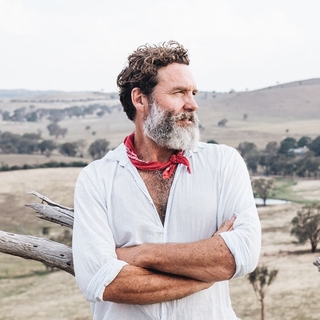
Every time you buy meat,
You vote for the system you want to produce it.
Not just meat,
Anytime you buy any food.
And that,
Because it can be very easy to be despondent.
There actually is a message of hope here,
And it is that you have an enormous capacity to induce and promote change.
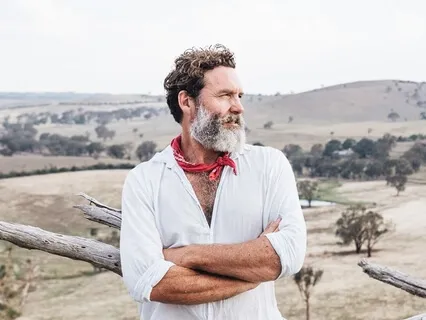
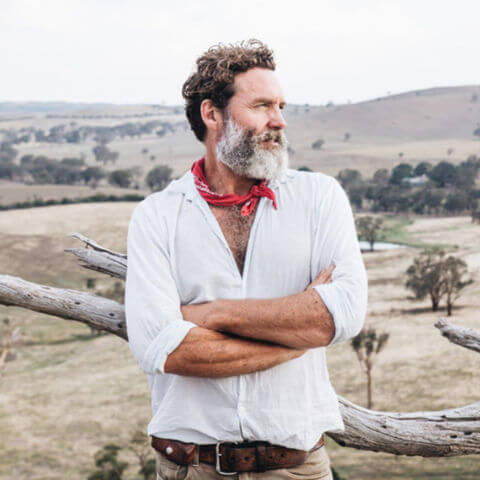
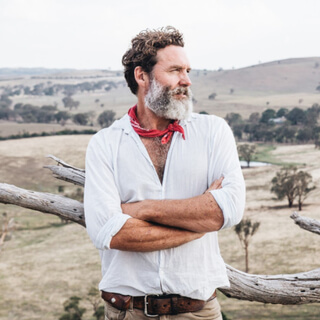
That was Grant Hilliard,
And you're listening to The Regenerative Journey.
We acknowledge the traditional custodians of country throughout Australia and internationally,
And their continuing connection to country,
Culture,
Community,
Land,
Sea and sky.
And we pay our respects to elders past,
Present and emerging.
G'day,
I'm your host Charlie Arnott,
An eighth-generational Australian regenerative farmer.
And in this podcast series,
I'll be diving deep and exploring my guests' unique perspectives on the world,
So you can apply their experience and knowledge to cultivate your own transition to a more regenerative way of life.
Welcome to The Regenerative Journey,
With your host Charlie Arnott.
G'day,
This episode is with Grant Hilliard from Feather and Bone,
Essentially a butcher shop in Sydney.
I met Grant in his factory,
As it were,
Or his processing plant,
So it was a fair bit of noise.
However,
What we did talk about was many things.
One of them was his new book,
The Ethical Omnivore,
He's put together with his partner Laura.
We talked about the environment and how it's subsidising the food system at the moment,
Government policy,
How that might be able to be changed,
His unique business model of sourcing direct from farmers,
Meat from farmers.
We also talked about actually how we can vote with our forks,
And that our food choices can actually inform not just our own health,
But the regenerative farming practices on the farms where that meat has come from.
I've known Grant for many years now,
And it's lovely to catch up with him in situ in his shop there.
I hope you enjoy this episode as much as I did with Grant Hilliard.
Grant Hilliard,
Welcome to The Regenerative Journey,
And welcome to your warehouse here in Marrickville in Sydney.
Sunny Marrickville.
Yes,
For our listeners you will hear,
Because we are in pretty much the heart of Sydney,
Airplanes above.
Not too many actually.
This is one of the good things about COVID,
Is that the air traffic over our place is dramatically reduced at the moment,
So we're grateful for it.
Real estate values have just gone through the roof.
Well,
It's a double-edged sword.
They've dropped enormously and risen in other ways.
And we'll probably also hear some trucks turning up.
I think we've,
Fortunately there's been eight deliveries today.
I think we've probably done with it now.
I think that was the last one.
And for those wondering where we are,
Grant,
Why don't you tell us,
What does this mean to be here in your warehouse,
Doing what you're doing?
What's the significance of this,
Where we are?
Well,
We're in Marrickville,
Which for those of you who aren't from Sydney,
Is sort of in a West industrial area.
And it's still one of the last areas near Sydney that you can do 24-hour industry,
If you wish.
Not that we do that,
But it's possible.
Because there's no residential here.
So this is the upstairs of our,
I don't like to call it a factory,
Because we don't manufacture as such.
It has connotations,
Doesn't it?
It does.
But workshops are the best thing that I can come up with,
But it also doesn't really reflect what we do.
We're a butcher shop,
Essentially.
But we do wholesale and retail here.
So while we have a small shop downstairs,
We also send out a lot of orders to private customers around Sydney and beyond,
And also lots of restaurants and third-party resellers,
Although we don't do much of that as well.
So we only buy whole carcasses,
And what we saw this morning just happened,
That a lot of trucks turned up with those whole carcasses all at once,
From chickens to lambs to goats and everything in between.
So we had a good look through the cold room there this morning.
There's lamb,
There's goat,
There's pigs,
Ducks,
Chickens,
And that's just what was sort of in there.
There was the breaking down,
I guess,
Floor,
As it were.
Yeah,
The workroom.
Workroom.
And your little kitchen,
And then your storage for the shop front.
Yeah,
So it's compact,
But we can get a lot in it.
So the cold room's a rail system,
So we can sort of shunt all the carcasses around,
Because some of these are very large.
We tend to buy bigger beef than you would ordinarily find.
Most of the beef we buy is three to four years old,
At least two,
Which is fairly unusual.
Most of the Australian beef market is built on yearling beef.
For us,
That's sort of not particularly interesting.
And we do buy grass and milk-fed veal up to about six,
Seven months,
And then we really don't buy much beef again in the life of the animal anyway,
For another two years.
So they're two really quite distinct products.
Mostly in Australia,
You'll find veal is yearling at about ten months,
And beef is yearling at about fourteen months.
The distinction between those two products is actually very small.
If you got veal from us and beef from us,
You'd see the dramatic difference between those two products,
Which is sort of how it should be.
But we buy directly from farmers,
And it's those relationships that have sustained the business,
And it's what our customers seek out when they come to buy from us,
Too.
Now,
I want to get back to that point of difference you have from all.
I mean,
I don't know anyone else who can get into it,
Anyone else who's doing quite what you're doing in this sort of format.
What I'm interested,
Grant,
Is understanding,
As the name of the podcast suggests,
Somewhat of a regenerative journey that you may have had.
I know we've known each other for some years now,
And so I've been stalking you,
I've sussed you out.
Stalking from a distance,
Tony.
Yeah,
That's right.
I've found that footage and video on the internet that,
I don't know where that came from,
You're obviously young and needed the money.
So,
But… I'm not embarrassed about that.
No,
We've all done it,
Don't worry.
Yeah.
Getting back on track.
So what I'm interested in is understanding,
You know,
I guess a journey from early days to where you are now,
And any points along the way that you had some epiphanies,
Turning points,
Because I understand you have had a journey,
And here we are,
I'm not sure whether this is what you thought you would be doing now,
20 years ago,
But just,
Yeah,
Give me a bit of an insight as to what your life was.
You can go back as far as you want.
You can go back to,
Let's start there,
Maybe,
Where you grew up,
To give us sort of the context of where you got to now.
Okay,
I'll give you a quick pot of history.
I grew up in Melbourne,
Very suburban,
Really had no contact at all with farm culture.
Our family didn't have,
You know,
A lot of people had relatives that had a farm.
That wasn't us.
So I spent very little time on farms,
Except there was one crucial exchange,
Which is when I was in year five at primary school,
And there were three of us chosen in our class to do exchanges with small rural communities,
And we spent a week going to school.
There's one now.
That's a very faint one,
Though.
That's the way to Ballina.
Yeah,
That's a light one.
That's just a very light one.
So I spent a week on his farm and going to school with him,
And then he came up and spent a week.
Where was the farm?
It was at Yanaki,
Which is almost the last southernmost town in Australia,
Just before you get to Wilsons Promontory in southern Victoria,
South Gippsland.
You know,
Famous dairy country because it rains there a lot,
And a lot of it's very rich country as well.
So it was a dairy farm,
But he also ran some sheep just for his own consumption.
And one day he said,
Oh,
Look,
Why don't you climb on,
This is the father,
And they'd just finished milking,
And he said,
Why don't you climb on one of the sheep?
And I sort of thought that was sort of a strange thing to do anyway,
And I was very tentative about holding onto the wool,
Thought I'd pull its hair.
And you were,
So you were 11,
Is that right?
A bit younger.
I was a bit younger,
10 maybe.
Yeah,
Okay.
And yeah,
I sort of felt too big for the sheep.
Anyway,
I fell off,
Of course,
Straight away,
Straight into where the cows had been waiting to be milked,
So it was a very slushy,
And,
You know,
Which was the whole point of the exercise,
I'm assuming.
The city kid.
Yeah,
That's right.
And,
But then he just sort of reached around and grabbed one of the sheep and pulled it back and slit its throat,
And completely unexpectedly,
Or at least to me.
And it was the first time I'd seen a large animal sort of bigger than a fish being killed,
And it had a profound effect on me really.
Because he then said,
We're only killing the sheep because you're here.
Oh,
No.
So you had to shoulder that responsibility?
Well,
That's what I thought at the time.
And sort of slightly unusually,
That boy who I sort of was billeted with is now a very good customer of the business here in Sydney,
And our paths have crossed again 45 years later.
And,
You know,
So it's funny how things go.
Anyway,
That was my only contact with farms,
But the killing of that was,
You know,
Formative in that now we're responsible indirectly or directly for the deaths of,
You know,
Hundreds of maybe thousands of animals a year,
You know,
From chickens right through to cattle.
So the real question is how do you account for that?
And,
You know,
I think you can,
Providing you confront all the realities of what it means to grow them,
Raise them,
Transport them,
Kill them,
And then eat them.
And if you can sort of account for all those sort of steps in the way,
Then it is a reasonable exchange.
But,
You know,
You have to be,
You do have to sort of confront it.
There's nothing pretty about killing things.
And when you lose the reverence for that and the importance of that,
Then,
You know,
It's time to get out of the game.
Only buying whole carcasses,
So my phone's going off.
Scott Morrison,
What?
What's your name?
Yeah,
Skymo,
Not today.
He's looking for some advice.
Or maybe he just wants some chops.
He's on the regenerative journey.
Let's hope,
Because that's something I really would like to talk about,
Is the importance of policy in this space.
Yeah,
Good.
I'm making note of that.
That's a bit further down the track.
So whatever you eat,
You have to account for it.
And everything has a footprint.
There's nothing that you can produce that doesn't produce a sort of consequence.
And that applies to animals,
And clearly the consequence for an animal is its death.
But it also applies to,
You know,
You're not immune from that argument or exempt from that argument just because you,
Say,
Have a vegetarian diet.
The impact of growing broadacre soybeans is profound.
And,
You know,
In terms of chemical use,
It's probably the highest chemical use,
You know,
For growing grains and crops is probably the highest chemical use in agriculture in the world.
And,
You know,
From my point of view,
That is a profound impact that you have to account for.
So it's not just a simple argument,
Oh,
Well,
You know,
How can you kill,
How can you eat things?
You know,
Animals are just another part of what is a very complex ecosystem.
If you only think of animals as the export from a farm,
Then you're misunderstanding what farms truly are.
They're complex,
Interconnected,
You know,
Matrix of living things.
And the best farmers understand that and nurture that relationship all the time.
And what we're really trying to sort of get to now,
I guess,
Is that that relationship that exists under the ground,
That industrial agriculture has largely,
You know,
Reduced and reduced the biological activity that happens under the ground,
That is also mirrored above the ground.
And the lack of connection that many farmers feel as a result of the industrial sort of agriculture process is mirrored in their extremely high suicide rates.
They're isolated in exactly the same way that the microbes in their soil are isolated.
What we're looking for is a food of connection.
And that exists at a microbial level,
But it also exists very strongly at a social level.
And that really is now our purpose,
Is to provide connection and in the sense that we connect consumers with the people who produce their food,
But also provide connection by stimulating farmers and sponsoring,
In a sense,
Farmers who are very interested in developing those networks of connection.
So,
You know,
It works at a metaphorical level,
But it also works at a very literal level.
I want to just go back to that experience you had there,
Because I imagine that could have and may have set up,
You know,
A particular or a number of different perspectives or sort of behaviours or thinking about what farming was and where your food's from.
I mean,
Did you go home and,
I don't know,
Stop eating meat or not want to think about what,
You know,
Animals as a food source?
Well,
From my experience as a 10-year-old?
Yeah,
Then,
Yeah.
Not really.
You know,
Like most people,
I had my vegetarian phase,
And that was probably because I had a vegetarian girlfriend for a number of years,
And it was just easier to eat,
Do all men do that?
I think so.
Oh,
Whoops.
The video's just falling over.
There we go.
And in fact,
It was only when I.
.
.
How long did you have to.
.
.
Oh,
It was fine.
It was like three years.
I ate a bit of fish at that time.
Did you sneak in a bit of red meat every night?
No,
I didn't,
Because we were living in a remote sort of country setting and on a wildlife refuge,
Which was formative in its sense in itself,
Because,
You know,
It was the first time I'd lived out of the city for any length of time,
And it was,
You know,
It was an eye-opener,
Really,
Being on remote country,
And that was only a very small area.
It was clear the rest was native forest,
And unfortunately it burnt down in last year's fires.
So we're talking Victoria?
That was far south coast of New South Wales,
So near Eden,
And it was a wonderful place,
Absolutely wonderful place,
But it also,
You know,
Sort of turned me on to living in the country,
Which I did for a number of years,
And then travelled for a number of years,
And then finished up in Sydney because I wanted to study here.
And what did you study?
And I know we're going to hopefully step into your career in the world of restaurants,
Which I'm really interested in.
So studying what were you.
.
.
I came to Sydney to do the communications course at the University of Technology.
You're right.
So I was majoring in film and sound,
And so I made lots of films and mainly shot them and made a few of my own as well.
Yeah,
Cool.
Can people source those?
Oh,
There might be some short ones still sticking around.
See,
I wasn't joking earlier on.
Yeah,
No,
It was pretty.
.
.
It was sort of the very end of analogue filmmaking.
We shot most of those things on 16mm,
Which was absolutely fantastic from a cinematographer's point of view.
It was great fun to work with film and light,
With 16mm film,
Because at the time videos just didn't have the quality that they have now,
Like the idea that you could film something like this on your phone.
I know,
Crazy.
So that evolved into a project that became an installation for the Australian Centre for Moving Image,
And that occupied me for a number of years,
And it was a fairly unsuccessful project by the time it finished,
Because literally the technology had passed it by.
The idea was that you would watch short films in a small area,
Like a booth,
Like a photo booth,
In fact,
And that the photos that it took were sent up to the internet.
Now that,
At the time,
Was a sort of radical proposal.
And now,
Of course,
It's like a four-year-old can.
.
.
We can't escape it.
Yeah,
So we took too long to realise it,
But the trouble was we were working with nascent technologies and trying to fit technologies that weren't designed like that together,
And that's a very time-consuming and expensive process,
So it was done all wrong.
The smell of an olive,
Really.
I'd always been working in restaurants when I was doing that work.
As a way to pay the bills?
Just as a way to pay the bills,
Exactly.
But I worked with some people that were very influential on me.
Can we name any?
Yeah,
Tony Bilson.
I worked at Finbooch,
And Tony Bilson.
.
.
There's a lot of people in Sydney who would say he still owes me money.
And there was that about it,
But the other thing was that he was a very committed chef and his attention to detail and everything was made on site.
Six different ice creams each day and all the bread and everything.
So he had,
Towards the end of his career,
He was at.
.
.
What was he up at the.
.
.
Well,
He started at Burral Waters.
That was where he began with Gay when they were still together.
And I think they split up at that point because he had Tony's Bongoo.
He started in Melbourne anyway.
I sort of worked for him near the end of his.
.
.
Not quite the end,
But nearer the end of his career.
But he was tremendously influential about what a restaurant could be.
But I did finish up at Sean's Panaroma in Bondi and worked there for nine years.
And that was probably the biggest influence because I was a sommelier there and was sourcing wine for that restaurant.
And visiting vineyards really sort of got me into the importance of locating something.
And it's sort of fairly obvious with wine because people always,
You know,
Sort of talk about that as an important thing with wine,
But they rarely talk about that in relation to any other product.
And for me,
That was really curious.
And also that lamb especially was never differentiated by breed.
It was always,
You could possibly get organic or milk fed.
So you might differentiate by age or certification system,
But you would never know the breed of that sheep.
And,
You know,
I knew that there was about 300 breeds of sheep out there and maybe 100 in Australia.
So why were they never labeled that way when beef certainly was?
Obviously fish were,
Maybe not accurately in the case of fish.
Although that's changed.
Well,
Wine,
I mean,
Wine,
You know,
Back to the source of your somewhat inspiration or sort of your curiosity.
I mean,
That's you don't get a bottle of wine without knowing the vine in which it grew.
Quite.
And it can reflect that place accurately.
So that's the French idea of terroir,
I guess.
But,
You know,
That's generally fairly thinly understood as just being like a chemical representation of its place.
But the crucial distinction in the French understanding of that is that it builds in the impact of people in relationship to it.
And that's the distinction that's really important because it's about how people interact with the land and the vine,
In that case the vine,
And what that produces,
What that interaction produces.
It's not just the sort of the vine as though it's operating.
You know,
It's the importance of the observer and the impact of the observer.
It can have an impact.
Isn't there some sort of science or even some philosophical thing around the,
You know,
Someone watching something else,
Observing it.
Well,
It's quantum mechanics.
So,
Yeah,
It happens in a very real sense,
But in a very,
You know,
Prosaic sense.
Obviously,
The decisions that a vigneron make will impact,
You know,
The rightness of the wine and how many bunches are left on the vine and whether you thin and all those decisions in,
That you make during the growing season,
Not to mention the decisions you make as a winemaker,
Which are two different things.
So,
Yes,
I went looking for lamb and I'd heard a story on Radio National about south down lamb and I didn't know anything about them.
And the woman on the radio said,
You haven't lived if you haven't tried south down lamb.
And I thought,
Well,
That's curious.
So I went and looked for some south down lamb and there's not many around to be honest.
A bit more common in Victoria,
But in New South Wales,
Virtually gone.
But after about six months of very sort of fruitless research,
And this is when the internet was very,
Very slow,
So it took a long time to find anything.
You couldn't dial up.
It was.
It was on 14.
4 and 28.
8 if you were lucky.
So everything took,
You know,
The changes in 20 years.
You could have walked to the farm quicker,
Probably.
Pretty much.
I found a breeder up in,
Between Oberon and Bathurst,
Who's still there.
And I rang him up and said,
I'm interested in buying three south downs.
And he runs a small south down and black Suffolk stud.
And for those who don't know,
South down is sort of the parents of all the sheep from southern England and certainly black Suffolk were bred from south downs.
And he said,
Well,
Why do you want those?
And I said,
Oh,
I heard they're better.
So there was a sort of a long silence and he said,
Well,
Yeah,
They are.
We sell the black South down and we eat the south down.
I mean,
Obviously not the sub sheep,
But the others.
And,
But he did agree to sell me three.
And so with my $300 steak,
Which is all I had,
So it was sort of convenient,
$100 each.
Yeah.
He agreed.
And the logistics were really difficult because I had no,
No sort of logistics set up of cold chain stuff,
But we did sort of work it out eventually with lots of going through lots of hands and three chefs in Sydney bought three different south down lambs.
So you were still working at Sean's and you went,
Oh,
You were just like the,
Not the middleman,
But you were just trying to facilitate lamb from central,
Where is it,
Tablelands?
Yeah,
Central Tablelands.
Into Sydney and keep it,
Go three ways with it.
Yeah,
Right.
Cool.
Where was that,
Where was that fellow selling them before?
Well,
It was all stud,
He really wasn't.
He was just,
He wasn't sort of selling them to just,
Just into a restaurant or a butcher or anything.
It was just,
It was the first time someone really approached him.
So his was probably going into the yards and going normal routes out of there.
Yeah.
He would eat,
You know,
They would eat what the excess,
The ones that they didn't want to sell as stud,
Stud animals.
You know,
It was,
It was just,
He was,
He and his wife were very sort of busy professional,
You know,
He was an obstetrician,
His wife was a nurse.
So they were very busy at the time and it was very much a side project to relatively small scale.
So,
You know,
He wasn't a large stud farm by any means.
But anyway,
It did,
The feedback from that convinced me that there was something,
You know,
People very positive about it.
And,
And it sort of went from there.
I was only going to buy,
You know,
It wasn't,
I'd already been sourcing garlic and oil and wine.
So it didn't seem that much of a move to,
You know,
Sideways shift to then start sourcing land.
And the idea being,
I just sold them whole.
So I only really needed the logistics of keeping them cool for a few days before I could pass them onto the restaurant.
The idea that I would break them up and butcher them hadn't really occurred to me.
You can see how deeply I'd thought about the business case of this.
It was,
It was a curiosity.
The best businesses are just the ones that happened,
You know.
Well,
You know,
There was a,
Adapt.
I didn't really have a view of whether they would be better or not.
I was just curious to see the react,
You know,
How people would,
Would find them and whether all the breeds of sheep in particular were better.
You know,
What was to recommend them or why don't we grow them anymore?
What's the point here?
Who else was doing that?
I mean,
Who else was supplying sourcing,
Let's call them heirloom breeds or sort of those rare breeds,
Unusual breeds.
I mean,
No one really.
No one.
So in all the restaurants at that time,
And I was eating in,
I've got to say anyone who hasn't been to Sean's panorama in Bondi,
He's probably in top three restaurants,
Just going in there and sitting there.
And I love the,
The,
The,
Everyone is there to eat and enjoy and,
And to talk to the other people they don't know about,
What have you got over there?
You know,
Like,
And it's just a most wonderful,
I've been there for years,
I've got to go back.
So,
So people just weren't doing it.
There was on a menu in restaurants in Sydney,
There wasn't the origin.
It was,
It was,
It was a steak or a chocolate.
There had been Ilebo lamb that had been sort of around for a little while before my time on those.
But that was,
That was a young lamb that was grain and milk fed,
As far as I know.
And from Ilebo and there's people who lived in the village next to it would say,
What's so special about Ilebo?
I live 10 miles down the road,
You know,
I went to Ilebo primary,
But I don't think it's any better than where we are.
But of course,
In the city,
Ilebo lamb sort of,
You know,
It was on a lot of resonated with people.
Yeah,
I think I think New Kerry might have picked them up early on.
And they're probably very good quality,
But their breed wasn't noted.
In Australia,
Because of the wool industry,
It's really sort of pulled the meat breed industry out of shape because it's been run from the front end of the wool industry,
Essentially.
And so a lot of it,
A lot of what you buy is,
Is a cross that will have merino in it somewhere along the line.
And so I was trying to find things that were not merino based.
Yeah,
Cool.
So Wilkshire horns,
Southdown,
Later Black Suffolk.
Texel?
These days I get Texels from Vince at Morelands.
Vince Hefner?
Yeah.
Vince,
You're on my list of people to interview too,
So if you're listening to this,
Get ready.
I'll tell him,
Seeing you in a week or so.
And visiting farms is,
I felt I couldn't sell a wine until I'd sort of been to most of the farms.
And so that's the discipline of what we do,
Is that we visit every farm that we source from,
Try and find out as much as we can from that grower.
We're not trying to trip them up,
We're just trying to extract as much information because that's the sort of stuff that our customers want to know.
And as it's grown,
What we've been able to do is provide links between farmers.
Because a lot of these farmers are operating in a vacuum,
Their next door neighbours aren't doing what they're doing.
And if you can provide connection with another farmer who's already tried something,
It saves failing at the same thing twice.
And that informational exchange is really,
Really important.
And I mean,
We both participated in that Australian Futures project,
And that was all about,
You know,
Basically every project in that was about,
How do you get information circulating?
They were all different versions of the same idea,
Which says something about the problem for Australian agriculture,
And relatively low population densities,
Vast distances,
And an emptying out of the landscape at a human level,
But also at a microbial level.
It's a reflection,
Isn't it?
The industry that is beyond the farm gate is a reflection of what happens inside the farm,
Isn't it?
There's isolation.
On a farm,
It's a monocrop.
There are individual things,
And there's not diversity.
And beyond that too,
Beyond the farm gate,
There's not the diversity of opportunities of people to sell to people like you.
Or there's just not,
You know,
It's such a,
You know,
The rule applies really from,
You know,
From internally and externally.
And the good news is,
I feel that,
You know,
You and Laura,
And what you're doing here,
You're sort of really reshaping the system,
Not just beyond the farm gate,
Not just because you're selling it to someone downstairs who's going to pop in today and get a bag of chops,
But as you just said,
You're influencing,
If not decisions,
At least the thinking of some of the farmers,
Because you're sharing it.
And the wonderful thing is you're creating something for people to aim for and to go towards,
Because I know a lot of farmers are changing their practices or want to change their practices because what they're doing is painful,
In some way,
Whether it's financially,
It's environmentally,
You know,
Socially,
Whatever it is.
And that's one driver.
What you're creating is something to aim for and something to move towards,
Because,
You know,
It's easy,
Well,
Not easy,
But it's one thing to sort of be going,
I don't want to do that shit anymore,
But where are they going to go to?
Yeah,
Well,
And it's a big scary world of marketing,
And a lot of farmers,
For very good reasons,
Aren't particularly good at marketing their own product,
And,
You know,
They're busy on their farm.
Too much to do.
Yeah,
That's right.
There's a handful of farmers that I know that can both grow and market.
It's really rare,
Though,
And it would rely on the proximity to Sydney that not many have.
It would also rely on a mastery of social media,
Which not many have.
And although that has changed it dramatically,
We were just talking about sort of doing the research with slow internet speeds,
What has changed since we started is that farmers now can talk to their audiences much more directly than they could before,
Through Instagram especially,
And talk to chefs much more directly than they could before.
So in some sense,
Some senses they're less reliant on what we do,
Except not many restaurants are interested in whole bodies of beef at 400 kilos.
So,
You know,
There's still a key role for us.
And so you have to keep,
You know,
Sort of inventing what your role is,
And also stay ahead.
We were focused on rare breeds initially,
And then in some ways that was too narrow a focus because it isn't just rare breeds.
While we're very much interested in genetic diversity,
That isn't the whole story.
It's part of the story.
I think probably what's happened and the change since we started to now is that we understand about the interconnection of things in a much more deep way,
And that genetic diversity is a part of that story,
Not just the whole story.
So while we're,
You know,
Extremely still very sort of animated by the idea that we need to keep these older breeds of sheep and pigs especially,
And chickens because the genetic cul-de-sac of industrial chicken and pig production is extraordinarily concerning.
And it's not just livestock.
This applies to food crops,
Fruit,
You know,
The reduction in the number of things that we eat or varieties of the numbers of things we eat is alarming.
And it's not just that we've reduced the number,
Which makes us much more vulnerable to a climatic change.
It also,
In a lot of cases,
Those are proprietary genetics.
And the people who own those genetics,
They're the pornographers of food.
They're not interested in feeding you well.
They're interested in profit.
And,
You know,
That's not the reason they're into it.
They're not saying,
Well,
This way we're going to feed the world's poor.
They're saying we can make a matzah on this by tying up the sort of industrial pig genetics for the whole of Europe.
And that to me is extremely concerning because we've inherited the commons of those genetics.
That's humanity's sort of work essentially in taking wild animals and sort of shaping their genetics to suit.
But it's not just that you're sort of producing a highly specialised creature,
And in many cases they are,
But you're producing something with vitality and,
You know,
That can breed by itself,
Which would be sort of a minimum,
But also have a resilience,
You know,
Because we're,
As it's quite clear,
We're going through,
If not changes,
At least more variable climate.
And if you haven't got species of foodstuffs that can handle that,
We're in deep,
Deep trouble.
And so,
You know,
That ties into sort of fertility and,
You know,
We now think that what we do is buy just a very small portion of what a farm produces.
It just happens it's a saleable quantity,
And that's what actually allows them to do the rest of their work.
So we just sort of function in the 10%,
Which is the exchange of what they can sell,
But their work is making a highly productive ecosystem.
And also in the importance from a nutrient's point of view,
You know,
Whether it's the rare breeds or it's just,
You know,
Looking at the genetics,
And as importantly,
And many would argue it's actually more important,
The phenotype,
You know,
The actual environment in which it lives and the food it eats and the harmony in which it sort of exists within that environment.
I mean,
That's,
And the diversity of the diet is then reflected in the diversity of the nutrient profile of that particular food,
Whether it's a carrot or a cow.
You know,
This is the stuff I think we're learning,
As you were saying,
You know,
If you've got to,
If everyone's using the same breed of pig,
And feeding it the same brain mix.
Exactly,
Like,
So we've got,
There's a huge different sort of,
You know,
In our population,
In any population,
You know,
Whilst as a human,
You know,
If the same species we need particular things,
We all have different requirements,
A little bit more of this and a little bit more of that.
And if our diet is so restricted to,
You know,
What,
I mean,
There's some great stats around it that of all the thousands of vegetables that one could grow,
You know,
There's five that we basically eat 90% of the time,
You know,
And so that must have some impact on our health,
You know,
Just from a like,
We're just not clearly getting the nutrients.
So you're obviously operating more in the meat world,
But the same rules apply,
Isn't it?
Totally,
And that's,
Yes,
It's a huge point and one I haven't got to,
But.
.
.
Do you want to talk about now or later?
Oh,
Yeah,
No,
No,
It's good.
I mean,
You know,
It's a thing about,
You know,
A lot of people will say,
Oh,
We market grass fed beef.
And,
You know,
For us,
That's a fairly thin understanding of it.
You know,
We're interested in what might be pasture raised and that sounds like a,
You know,
Like a nuanced and needless sort of differentiation.
But,
You know,
The species diversity in that pasture is absolutely crucial,
Not just for the health of the pasture and the things that live underneath and in it,
But for the animals that feed on it.
And,
You know,
If you are going to take any sort of meat into your body,
Just as that what it ate becomes its body,
It's going to become yours.
So,
You know,
All of those decisions are really vital.
And further to your point,
That's the problem with ration feeding,
Is that it's based on some notional average requirement for an animal.
And like us,
Every animal has variable requirements from day to day.
And if we listen to our body,
You give it a chance to listen to our body,
We can actually work out what we need.
And a ration system just doesn't allow that freedom at all.
They have to eat that.
And so what they tend to do is eat overeat because they're trying to seek out sort of one trace element that might be present there.
Just that,
You got to get up.
That might be present there.
And so,
You know,
They eat far more than they need to simply to get full.
You know,
They're way past full.
What they're trying to do is get,
You know,
It might be copper.
It might just be a tiny bit of molybdenum that they need.
And they know it.
Well,
That's what humans do,
Isn't it?
Exactly right.
But we don't give ourselves the credit.
You know,
We're so denatured and so divorced from food and it's so fetishized now,
Instead of it being like one of the most straightforward for those who can afford it,
And we're not talking about people who can't get food,
But for most people in Australia,
They're not food insecure.
It's changing,
Of course,
But they're not.
And so those choices are really crucial.
And of course there's a difference between food insecure and,
You know,
A prisoner is not food insecure,
But might want for an enormous amount within their diet.
So it's not just,
And that's how I think of those animals.
They're not in feed lots.
They're not food insecure.
They get enough to eat,
But do they get the right things to eat and do they get the chance to choose themselves?
Anyone who's watched any animals move around a diverse pasture will know that animals of different ages will target different crops or different grasses at different times through the day.
So standing back and letting systems work out is the biggest challenge.
For farmers who are used to intervening,
It's really quite confronting to think that you're not the biggest thing around here,
You know,
And that,
Which is a bit like child rearing in that you sort of think it's all about you.
If I do this,
I'm going to ruin them.
But standing back and letting them grow within an environment that gives them what they need is really your job.
But we think it's a much more,
You know,
Nowadays it's a much more interventionist approach.
And if I don't do this,
I'm going to ruin them,
You know.
In fact,
They'll go the direction they're going to go.
I mean,
It's the phenotype in them is going to express,
You need to allow it to express itself.
So and further to that,
You know,
That you see it in Angus all the time.
It's an example of how the phenotype expresses itself.
So Angus these days is so far removed from Aberdeen Angus that it gave rise to the name.
Because it's been to America and it's basically doubled in size.
Totally.
Long and leggy and… Huge,
Huge body structure,
Because they're used to getting enormous amounts of protein in a grain fed corn based diet.
So but when you bring and but their genetic structure then changes in generations.
If you keep feeding an animal corn,
It doesn't,
It loses the ability to effectively convert grass into meat.
The one set of Angus that we buy is very old genetics that come from,
They actually come from America,
But from a closed herd in Montana.
And,
You know,
In Montana they live,
That's a very cold place.
All those animals live outside the entire winter,
Except for the bulls because it is so cold,
The testicles would freeze.
Get out of here.
Yeah.
So they bring them inside because otherwise they need to little crocheted bag holders like a bowling bag.
Could be a bag.
Do you sell them downstairs?
Well,
A friend of mine does a lot of crocheted sort of penises and things and I think that's,
I can see a commercial application for what you know.
But those genetics,
You know,
I see them when I go to West Gippsland,
I see they're on the poorest paddocks and they get the best results.
And that's purely because the genetics haven't been fooled around with.
And that,
You know,
That's a line of genetics that we are in danger of losing.
There's virtually no Angus genetics around in Australia that still do that.
It's a great example of an industry and a breed that did a very,
Very good job of marketing.
And again,
Marketing,
And I'm not having a go at Angus breeders by any means,
It's just a fact that the marketing is very good.
It met the expectations of customers and,
You know,
That's another conversation about what customers' expectations are.
But it was really a good example of a well-executed marketing plan that really took over,
You know,
The cattle breeding world in terms of a dominant breed.
And I would argue not for all the right reasons.
Well,
That's right.
The commodity market,
Which is what it stitched into,
Always,
Because it's so focused on only one or two parameters,
It always ignores the idea of value.
And it recalibrates value to a very sort of strange,
You know,
They're saying the market's sort of setting the value.
It's not at all.
You know,
A good example is we're talking about the age of beef that we buy.
For most of our growers,
If they tried to sell those older animals at the market,
They would get way less money than they would if they sold them as yearling.
And that's not because it's less of meat,
It's way better.
It's because the abattoirs aren't interested in dealing with anything over 220 kilos as a carcass.
And what can be packed in a box at a reliable size.
It's totally what suits the commodity and the industry processes.
It's got absolutely nothing to do with the inherent value of the meat or the nutritional quality of the meat or,
As we mentioned before,
Or any other factor,
Or importantly,
The environmental consequences of how we raise.
So until we can build that in to the price of that meat,
You've got no accurate reflection of what the consequences are for producing that animal.
And that's the next challenge.
And that's a challenge of research and policy.
Please make your way to patreon.
Com forward slash the Regenerative Journey podcast.
We look forward to you becoming a member of the Regenerative Journey community.
Let's get back to this week's episode.
Let's talk about the value and the,
You know,
It's hard for someone to argue against the statement that the environment subsidises the cost of food,
You know,
At the moment.
Let's talk about that,
You know,
That,
I mean,
You know,
People often say,
I can't afford organic food.
I can't afford that type of whatever the definition of that type of food is,
But they can.
And I always say to people,
Well,
Don't just think about and look at the organic portions of what could be in your diet or in your shopping trolley.
Look at everything else.
So,
You know,
I guess what you guys are doing,
You're giving people a product that they essentially don't need to eat as much of because it's a nutrient dense type of product.
Well,
And also you can eat,
Because we're dealing with the whole animal,
Your selection of cuts can be much broader.
So,
You know,
You can just have a broth that has barley and a few vegetables in it and,
You know,
The bones have contributed in that dish.
It's,
Yes,
You're eating meat,
I suppose,
Notionally,
But really very little.
Or a summer lad chicken,
You know,
People look at the cost of that chicken and say,
That is just outrageous.
I'm not going to spend $50 on a chicken.
Yet,
You know,
We constantly get feedback from our customers who say,
I've just eaten four meals from that chicken and fed my family four times.
And then made a broth.
Yeah.
And that was the fourth meal probably,
You know,
So they've managed to make,
You know,
First cook,
Anyway,
I won't go through it.
No,
They do a roast and then we use the scraps and make a prickly chicken.
We do a samba and then we do a broth.
That's right.
And so that's actually pretty cheap eating.
And when people say,
Well,
You know,
This food is just for elitists,
I find that really difficult.
We sell something like goat breast or lamb breast,
Which is brisket,
Boned and rolled,
So you're going to get,
After cooking,
Maybe 90% of the weight of that you're going to be able to eat for $22 a kilo.
Is it goat brisket?
No?
You go,
Wow.
It's delicious.
I guess,
Well,
I've never even thought of goat.
I mean,
Everything's got a brisket,
I guess.
Usually called breast in lamb or goat,
But I like to call it brisket so people sort of can locate it better because they do understand brisket on cattle.
So it's the same cut.
And we sell that,
You know,
Often that will automatically be minced or you'll never see it in the shop,
Basically.
Is it similar to beef in terms of that sort of fat content and that sort of texture?
Yeah,
Fat content,
Long fibre,
Takes long cooking,
But you can do the ribs on,
You know,
For young lamb,
You can do the ribs on a barbecue as well.
So,
You know,
You can cook it in fast or slow.
But at $22 a kilo,
That's going to feed five people.
And if somebody's telling me that $4.
20 for that level of A-class protein is too expensive,
That's cheaper than a coffee.
Now,
You know,
Or a bottle of water costs $3.
50,
You know,
And it's just out of a,
You know,
I mean,
The costs of producing that bottle of water are ridiculous.
It's like four cents.
The rest is just in transport and all the other bullshit,
The advertising.
Or the refrigeration to keep it cool.
So I don't buy into that argument.
If you want to eat eye fillet all the time,
It is expensive,
But it should be expensive.
It's only 1.
4% of the body weight.
So we get a 400 kilo or 300 kilo carcass in here,
We'll get maybe four kilos of eye fillet.
And that's 1.
3,
1.
4%,
Roughly.
That's about how often you should eat it.
But people will want to eat it much more.
So if they want to eat it much more,
Then they're buying into the commodity market,
And all of a sudden the whole balance is changed and the costs of those are changed.
And as you were pointing to,
The costs are externalised.
You'll pay for that cheap cut in some other way.
And it won't be directly through what you pay to the retailer.
It will be through taxation for remediation.
It will be health crisis.
It will be having to manage the water systems,
Which are obviously breaking down.
I mean,
I think where we're at now is a really crucial and interesting sort of nexus.
Last year we noticed a huge change.
It was for the first time we felt that people were really getting the idea that what happens at an ecological level affects what they do to eat.
And the drought bought that home in a really sort of direct and potent way.
The imagery,
You know,
It's very hard to impress on people in the city just what that means,
But it actually did do that over a period of a year of quite sort of intense coverage from media.
You had people seeing the drought.
What it actually looked like,
Yeah.
And there were consequences in their food supply as well.
And then the fires sort of on top of that all of a sudden exposed just how fragile the veneer of abundance is.
It only takes one fire on the Princes Highway and every holiday maker on the south coast can't eat because their supermarket's got no power.
I mean,
Talk about a dependent relationship and fragile system.
So what was exposed was the lie that this is a really robust abundance.
It isn't.
It's built on the back of mining of fertility,
Which is unsustainable.
So what would make it more stronger?
What would make it more resilient?
What would be the better?
Shorter supply chains,
One,
And that's come home very much in COVID for us.
We have a sort of relatively,
As we sort of outlined at the beginning,
We have a relatively diverse business in that we sell to third-party shops,
Restaurants,
Cafes,
And private customers.
And we do spits and things.
So a third of our business,
Or more,
40% of our business,
Just literally vanished overnight.
But retail dramatically increased,
Which said something about having a diverse model and how that does provide resilience in a difficult time,
Which is something we preach for our farmers.
It was really interesting to sort of see it work in our own business.
And that our supplies actually were never really threatened because we buy direct from farms,
And so the relationships are about as short as we can make them.
And so short supply chain and diverse output kept us,
You know,
The business looked very different,
But we weren't threatened by it.
And do you think that your supply of the type of products you were sourcing in that time of drought,
Do you think it was because those particular farmers were doing a particularly good job,
You know,
In terms of regenerative agriculture or their landscape management,
Which meant the impact of the drought wasn't as much,
So their supply to you wasn't as affected?
Was that something to do with it?
Well,
The stocking densities are much more realistic.
Generally,
You know,
Farmers that have had holistic training are doing constant assessments of how much grass is on the,
You know,
How much feed is in their paddock versus how many animals and how many days feed.
They've got,
For a lot of farmers,
They just sort of get to the point where it's,
There's nothing left and go,
Oh,
Shit,
There's nothing left,
You know,
Like they haven't done the work to sort of,
And then they finish up selling 300,
Either buying in feed to hand feed them at cost they'll never get back.
For an indefinite period of time.
Yeah,
That's right,
For an indefinite period of time.
Or selling it when everybody else is selling and getting about $1 a kilo.
So,
I mean,
What,
You know,
What train do you want to be on?
You might forgo really heady profits when the season is good by having a moderate stocking density,
But you will,
You know,
This is about resilience and about change and about coping with change.
And that's why I think that people are making the connection now because they're seeing it in their own lives of just what's happening in the world.
And the last 18 months have been extraordinarily challenging in ways that people can't directly control.
But what you can control is what you buy to eat and how you feed yourself and your family.
And we are finding that our customers are making,
Have made many more conscious decisions than they had in the past.
You know,
People used to come to us because they thought,
Oh,
Well,
The quality of the meat is very important and stuff.
And that to me has never been a factor in what we bought.
By that I mean I've never sort of said we sell high quality meat.
What we do is sell meat that is imbued with a range of qualities which are to do with genetics.
All the things we've been talking about are built into that meat.
The genetics,
What it ate,
How it was managed,
How it was killed and what we've done with it since.
And if I know those things have been looked after,
I don't have to worry at all about its quality per se.
It's got acres of qualities built into it.
Yeah,
The quality is the outcome of all the choices.
Of all the choices that you've already made.
And so it actually takes a lot of pressure off because you don't sort of feel like you're competing.
You know,
When we started,
If people said,
Look,
I much prefer heavily grain fed beef and I think it's better,
Fine.
I'm not going to try and dissuade you of that idea.
All I'm saying is that's not what we sell.
And this is three years old.
It came from this farm.
It was grown by this guy.
And you make up your own mind about its deliciousness or not.
So starting from the ground and coming this way is much more helpful for us and for a consumer I think once you get the hang of it than starting from the idea of deliciousness and working back because one's a consequence of the other.
Let's – it's taken us how long?
Fifty minutes to get to your book,
Grant.
The Ethical Omnivore,
Which I was most pleased to receive a copy of in the mail there a month ago or so now.
And why don't you tell us about that,
As I said to you the other day,
It's a book that I've been waiting for you to publish,
So thank you.
And it's about bloody time.
And what questions were you trying to answer in that book?
Well,
Pretty much everything we've talked about today,
But in a much more direct sense.
How did this animal live?
How did it die?
Where did it come from?
How old is it?
There's a lot of focus on how it died.
And so there's a whole chapter that deals directly with what happens in an abattoir,
Which isn't to be ghoulish.
It's simply to say this is important,
That you have to understand it within the entire life cycle and death cycle of the animal.
And it's crucial,
Obviously,
But please keep it in context of a four-year-old steer.
What's happened for the previous three years and three and a half years before it got to the abattoir,
And it's sort of the Salatin idea,
A great life and one bad day.
And that's sort of a cliché now,
But it is true.
And if you can afford animals that,
This is the contract again,
That we were talking about before,
If you're going to eat meat acknowledging the situation that it's grown and produced in.
And so what we wanted to really do in the book was to document why we choose what we choose to sell,
How inspiring the farmers are,
And what we've learned from the farms.
And we feature a few of them in the book.
Vince,
Who you mentioned before,
Is in there.
Invincible.
And a number of others.
I mean,
It was actually hard to choose the ones to focus on in the book because at any one week we've got about 40 different farmers,
Their products represented here.
And so we didn't want to sort of say these are the exceptional ones,
We just wanted to use them as examples of different farmers working within their particular context and how important that is that they operate within their context.
So to take Vince's example,
He's on the upper Lachlan River,
A very old farm,
Sixth generation farm,
Which is very unusual in itself to be run by the same family and also for someone to then completely change the production method on that farm after five generations.
But it was an acknowledgement that really.
.
.
That's a low one?
Yeah,
It's got four people on it flying to Paris at the time.
I think it's that guy who's picking up his luxury yacht,
He got to get out.
I knew that.
Yeah,
He got an exemption.
Oh really?
Because really you need a yacht.
Especially now.
He's escaping the COVID,
He's sailing the seven seas,
He's safer out there.
Safer out there.
Not for the Ruby Princess though.
That's a different scale of disaster.
Anyway,
I lost my thread on that.
Oh I know,
Yeah Vince and.
.
.
Upper Lachlan,
Yeah.
So he has a particular location and one of the things that we focus on in the book is about his project around the Southern Pygmy Perch and providing habitat for that very tiny little fish that's in deep,
Deep danger of becoming extinct.
And the Lachlan River was originally known as the Fish River and for very good reason.
It was full of fish and obviously a great food source for the local Aboriginal people.
And there's many examples of the habitation on Vince's farm as well.
Which is the other thing we haven't even touched on,
Which is that we're on land that has been farmed or managed for 40,
000 years and if we don't start to get the lessons from that and how you manage fire,
How you manage water and how you manage the animals that live on that and the plants that are grown in there,
Then we haven't learnt a thing.
And that's really.
.
.
I said there were two challenges,
That's the third challenge.
Incorporating native wisdom,
Producing government policy which recognises that we can't keep farming with a declining fertility plan and recognising the true costs of production and building that into the cost of the product that you buy.
All of a sudden what we sell here won't seem expensive at all,
It'll seem goddamn cheap.
So with the policy stuff,
Grant,
How do you see that?
What needs to change here?
Where's not necessarily the low-hanging fruit,
But where will the most impact be had if something happened in that world?
At the moment the Department of Water Resources,
The Department of Agriculture and Soils and Environment would barely be in the same building.
They should be in the same office.
They possibly should be the same person.
The same department.
The same department,
Run by three people who work.
Until you can acknowledge that those three things are completely inextricably linked,
You won't be able to produce a coherent food policy because it's only out of that that you can produce a food policy that makes any sense.
It starts with humility,
Which is understanding that those conditions,
We're here but for the grace of those creative conditions and if we keep abusing them we're not going to be around for much longer to enjoy them.
So that is a big change in understanding and thought.
But as you were alluding to before,
There are so many farmers that are wanting to change because they are being forced to it and they can see declining.
It's just not adding up for them anymore.
They can see their input levels and they can see their output levels and they're realising that the gap between the two has diminished to the point where in fact they're spending more on inputs than they are on outputs or what they're getting back for outputs.
It's a definition of any sustainable system.
What does it take you to produce it and what are you getting out of it?
And farming is no different and it's a really important definition.
I mean a lot of people talk about,
Oh,
It's a very sustainable product.
But on what basis?
So what we would say is that measure the inputs.
People will trumpet their outputs endlessly but you will never hear what they did to get that.
Milk supplies from a whole stone,
How much grain did it eat to produce that amount of milk?
And how long did it live?
What were the problems with its feet?
How many times did you get the vet in?
I guarantee the vet lives on your product.
And it's a thing I didn't observe for quite a while is that all the farmers we work with virtually have zero vet bills.
Totally.
And that's a significant expense on a farm if you're running an intensive farm.
If you're running intensive piggery or chickens or dairy,
Man,
You've got a team of vets there all the time.
Propping up the system.
Holding the system up,
Exactly.
Which has a remarkable similarity to the human health system and how we think about it.
We think we can't afford this.
But if you look at what we spend on health and what we spend on water immediately,
How much did we spend on buying back water for the Murray-Darling?
How many billions was it?
Yeah,
Actually a lot.
Yeah.
So we do have the money.
It's just a matter of priorities and how we choose to approach it.
And if you want to approach it as a remedial all the time,
You'll just keep spending more and more.
If you want to approach it as a way,
How can we actually change the dynamics of this system so that our spend at the other end is going to be lower?
All of a sudden it will seem like a bargain.
I was listening to an interview I did with Martin Royds,
A farmer from Braywood,
Just yesterday and I did an interview a year ago.
And he reminded me that we spent,
Well,
The New South Wales government,
I think it was New South Wales,
Not federal,
Spent $2 billion on a desal plant.
And if that money had been spent with farmers remediating waterways and riparian zones,
That would have created a much more healthy hydrological system,
Which would then have been,
We still would have had water in those dams to supply metropolitan areas for drinking water.
Because we created such a wonderful drainage system.
It just all goes straight up.
It's out the door.
Back to health just quickly,
I reckon,
I love your new super department.
I think we need to throw the health department in there as well.
Yes,
That's right.
Health,
Water,
Environment,
Water.
Exactly.
That's what we want.
We're nearly,
Oh,
Look,
Grant,
You've got work to do.
I've got questions,
More questions for you.
What have you got?
Oh,
Look,
Okay,
Here we are.
You might,
Not that you're not the right person to ask,
But I'll ask you anyway,
Is tips for farmers who want a value add or are wanting to,
Not necessarily sell to you,
But they're just wanting to sort of value add.
Or control.
Yeah,
Take more control and get it into a different sort of food system.
What would you say to them?
It's sort of depressing,
But almost the first question I would ask them,
And we get a lot of inquiries about this,
People saying,
I'm starting a farm,
Do you have anything that you would want to buy?
And where is it?
Okay,
So where's your nearest abattoir?
I don't know.
Well,
You'll need to know,
Because if you're transporting small numbers of animals to an abattoir that's a long way away,
You will go broke very quickly.
You won't be able to charge what you need to charge to cover that cost.
And that'll be a full day off farm,
Which is a very expensive thing.
Or you pay somebody else to do that,
Which is,
Again,
A very expensive thing.
And so then you might want to look at an on-farm abattoir,
But for someone just starting farming,
That maybe is a long way down the track.
I mean,
We are getting,
There are alternatives now,
Provenir in Victoria,
And it's not quite as closed as it was before,
But still we're having abattoirs close,
You know,
The last 10 years,
10 abattoirs in New South Wales have closed to my knowledge.
A couple have reopened.
One is sort of teetering on reopening,
But it doesn't actually look likely now at Oberon.
And that increased distance not only is expensive,
But the stress on the animal.
And it's undesirable at every level.
And so it's a prosaic question,
But even if they're growing vegetables,
Well,
How far is it to the people who are going to distribute that?
And in Australia,
Those logistics questions are crucial and ever present,
Just simply because of the distances and the lack of density.
So,
You know,
If you were in rural France,
Your local town would have enough people to absorb what you produce,
Or your local city,
Which might only be,
You know,
30 kilometres away,
40 kilometres away.
And so the economics of that are completely different to what happens in Australia.
And so that would be the first thing.
And then obviously making sure,
And the importance of water,
Not just water obviously on their landscape and managing it in their landscape,
But that their animals get good water,
Because it's sort of rarely looked at weirdly by many farmers,
Is the quality of the water.
And so,
You know,
You'll have a cow standing in a dam shitting everywhere and drinking out of it at the same time.
I like cows,
But they're very thoughtless in that way.
And if you're not shipping water to them in a way that manages it and keeps out that contamination,
I sort of find it very strange that people don't address water quality when they're talking about animal work,
Especially if you're growing meat.
They take it for granted.
Highly.
They can get plenty of water down there.
Well,
They've got water.
Yeah,
They've got water.
But the quality of that water is crucial.
We have some ducks here that live at 1,
000 metres completely outside.
Why I think they're really good is that they're on top of the Wombian Caves aquifer.
So the water that's coming literally out of the ground at pressure is the purest,
Most alkaline water that I've ever seen on a farm.
And the quality of the ducks,
The same genetics are grown intensively,
And normally intensives will produce a faster growth rate.
His grow faster at 1,
000 metres in snow than what grows in a shed,
And with the quality of the meat is way better.
And I think it's got a lot to do with the water,
Because they're eating the same thing,
Actually.
Yeah,
Right.
Well,
Apart from grass,
But their main,
Their additional diet is the same.
So those variables are obviously very important.
We've got a little device on our bore,
Because we've got a lot of our stockings on bore water.
It's a Feon device.
It's sort of like a two and three foot long cylinder with magnets in it and some other spooky wah-wah crazy stuff.
And we put that on the bore,
And it basically keeps the water in a negatively charged state for its entire life.
So going into a tank and then going positive after 24 hours,
It stays.
And so we've found that.
.
.
That's because of the circulation of it?
Well,
I don't know.
It's Feon,
P-H-I-O-N.
And there's a magnet in it,
Or the magnets,
But there's also some other,
I think,
Vortex sort of.
.
.
Yeah,
So it's moving it all the time?
Yeah,
Just in the door.
It just goes through once,
So it goes out of the bore,
Through this device.
It's just a long silver cylinder,
And then it goes into troughs and tanks and so on.
So it's the biodynamic sort of side,
Keeping active water and live water?
Energetic,
Yeah.
And I'm sure that's improved the water,
Because we haven't had the cattle.
.
.
Depending on the time of year and the requirements,
Sometimes they would get pretty testy,
And we just couldn't work out what it was.
And then we did some water testing,
And we went,
Actually,
We got this bore water.
Originally,
A new bore needed something.
This seems to have solved the problem in a pretty simple way.
Now,
Grant,
Where can people find your book?
It's pretty widely available,
Actually.
I think you can get it online at the big ugly guys.
Sorry,
Booktopia.
We love you,
Booktopia.
Can I come into the shop?
We sell it here in Marikil,
In the shop.
Do you want to get people an address?
Oh,
It's hard to find.
Just look it up online.
It's easy to find it online.
Lillian Fowler.
Lillian Fowler Place.
But if you like good independent bookstores,
Better Read Than Dead have a really nice supply up in Newtown,
If you're in this sort of neck of the woods and you can't get to our place.
Otherwise,
If you're in Melbourne,
Readings have got a good load of it.
Great bookstores,
Yeah.
But otherwise,
You can order it online if you're in the country.
And to order it online,
They can jump on the Feather and Bone website and put an order in?
Yeah,
You can just order it online,
And we'll.
.
.
For meat as well?
Oh,
Sorry,
I beg your pardon.
Yes,
Go straight to the website,
And if you can't see exactly what you want,
You can always contact us and say,
Well,
This was out of stock or I've got a particular requirement,
And we'll do our best to handle that for you.
We're hoping to have distribution to Canberra and piggybacking on doorstep organics who already do this run to Canberra and Wollongong and Newcastle regularly every week,
Twice a week.
So that will increase our range and reach fairly soon.
It's been sort of tricky trying to get stuff out of Sydney recently,
But we're hoping that will work really well with them.
And they're already going there and they've got very good refrigerator trucks,
So that should work well.
And rather than duplicating a logistics department,
We don't own many vans really here,
But we try and get as much out as we can with minimal extra expense of the trucks and things.
Ideally,
Eventually our vans will be charged off our roof here,
But that's the next stage.
Yeah,
Good work.
Grant,
I know you've got to go and break down a buffalo or something,
So I'll let you go.
Thank you so much for your time,
And thank you for providing to the public,
To your customers,
To the world,
An opportunity for them to engage with their food in a meaningful way and to access the produce of farmers who are doing the right thing,
If I can say that,
Who are actually caring for their environment and caring for their ecology and caring for their communities around them.
And that's more power to you and more people like you,
I think that's a really.
.
.
More power to the farmers.
I mean,
That's.
.
.
Yeah.
Thank you.
I think the last thing I'd say is every time you buy meat,
You vote for the system you want to produce it.
Not just meat,
Any time you buy any food.
And that.
.
.
Because it can be very easy to be despondent.
There actually is a message of hope here,
And it is that you have an enormous capacity to induce and promote change.
And,
You know,
One person,
I know,
It's a thing of what can I do as one person?
Well,
You can do that.
You can change what you buy,
You can help a farmer who's doing the right thing,
Shall we say,
In a really positive and direct way.
And it's actually a really,
Really clear feedback loop that is amplified the more times you do it.
And we're just here to facilitate that amplification.
And also,
I think it's important just to conclude,
You know,
Parents with children,
You know,
To sort of set new standards of decision making in terms of what goes on the table.
The children are driving this,
Actually.
So,
You know,
A lot of our.
.
.
We have a lot of families that shop with us,
And it's kids that they always bring their children,
And it's a really key part of what we like to offer here.
So,
Yeah.
It's important.
So,
And the one other thing is the extension of that is that while farms,
You look at them and you think,
How's that farm going to come back?
Our experience is that in a very short period of time,
20,
30 years,
You can completely rehabilitate landscapes.
And so,
If you think something looks like it's sort of,
That's it,
You will never produce,
Get anything decent off that farm again,
It's actually not the case.
You can.
.
.
The ability of natural systems to recover quickly is astonishing.
If we just let it.
If we let them,
And if we provide.
.
.
Initially,
It's going to provide.
.
.
It'll require intervention,
And then once you have the engine ticking over,
Then you can stand back.
But,
You know,
Facilitating that intervention initially and then allowing it to work,
You know,
It's remarkable how fast the recovery is.
So,
They're the two messages of hope that I hope people can take from this because it's really easy to think that it's all fucked.
I'm glad you ended on that one.
Now,
Before we do,
I've got something to talk about providing.
A jar of my mother's sweet orange marmalade.
We literally made that only a couple of weeks ago.
Now,
The significance of this is,
Well,
A,
It's really yummy,
And B,
This is the recipe that Mum used back in the late 60s to win the Best Orange Marmalade Award at the Durrumbandy Show in about 1968.
And the prize.
.
.
Oh,
I can see why.
The prize was a plastic orange.
.
.
Squeezer.
.
.
.
Squeezer,
Which we still own and I use.
Well,
There you go.
So,
Some plastics are okay.
Well,
That was back in the day when they actually didn't think about,
Well,
We need this to fall apart in two years' time.
No,
This has got to last forever.
And it has,
And that jar is not going to last forever.
It's only quite small,
But it's killer.
Okay.
Well,
Thank you very much for that.
So,
Grant,
Thank you for your time.
There you go,
There you go,
Marmar.
That's your jam.
Mate,
That was wonderful.
Thank you.
Thank you.
Well,
There you go.
I had a wonderful chat there with Grant in his.
.
.
It's his workplace.
It's his creative space there at Feather and Bone in Sydney,
And really appreciate the time he put aside,
Because he could have been unloading trucks and doing all sorts of stuff,
Selling meat,
But he didn't.
And we had a really good yarn there,
And I trust you enjoyed that one.
Next week,
I'm very excited to announce that Kate Nelson,
The plastic-free mermaid,
Is my guest.
I caught up with her in a five-acre little farm just out of Byron Bay.
We talked about her sort of venturing into the regenerative agriculture space through her advocacy work and her consciousness of environmental issues,
Namely the use and the disposal of plastic into our environment and where it's insidious nature,
Really,
The way it's getting into everything,
Our clothes,
It's in our food,
It's all over the place.
We ingest one credit card worth of plastic a week,
Could you believe?
So that's next week.
We'll hear more of that then,
And I trust you enjoy the episode when it pops out.
This podcast is produced by Rhys Jones at Yeager Media.
If you enjoyed this episode,
Please feel free to subscribe,
Share,
Rate,
And review.
For more episode information,
Please head over to www.
Charlianet.
Com.
Au.
Thank you.