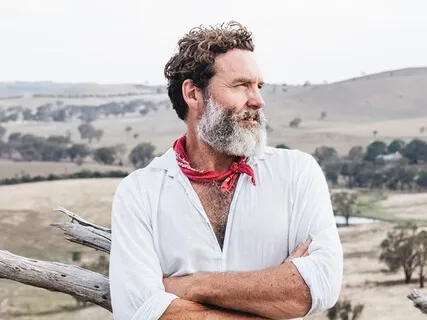
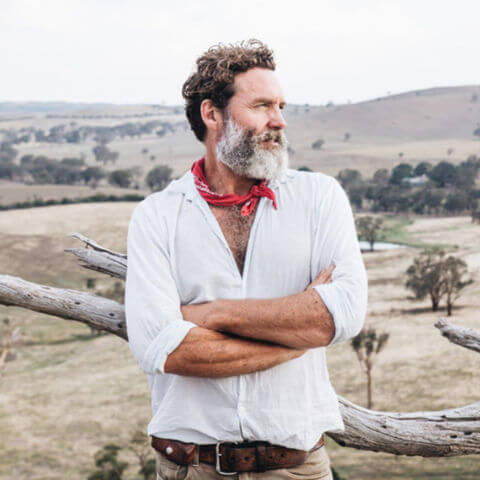
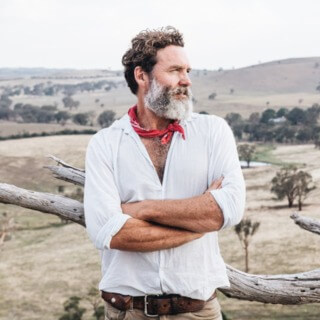
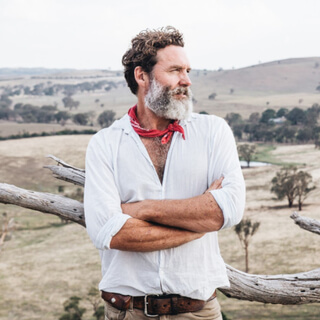
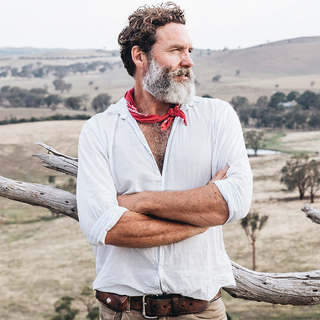
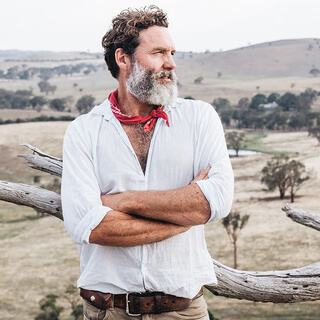
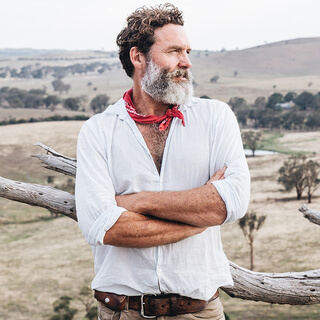
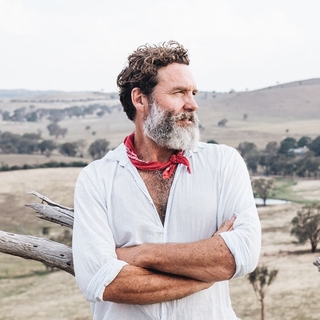
How do you truly start to belong to a place and to really call that home?
I think we're not going to fight for the places that we don't love and it's very hard to love a place that you don't know.
That was David Pocock and you're listening to The Regenerative Journey.
We acknowledge the traditional custodians of country throughout Australia and internationally and their continuing connection to country,
Culture,
Community,
Land,
Sea and sky and we pay our respects to elders past,
Present and emerging.
G'day,
I'm your host Charlie Arnott,
An eighth generational Australian regenerative farmer and in this podcast series I'll be diving deep and exploring my guests' unique perspectives on the world so you can apply their experience and knowledge to cultivate your own transition to a more regenerative way of life.
Welcome to The Regenerative Journey with your host Charlie Arnott.
G'day,
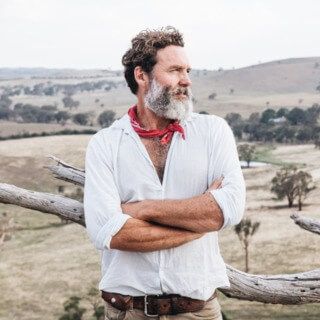
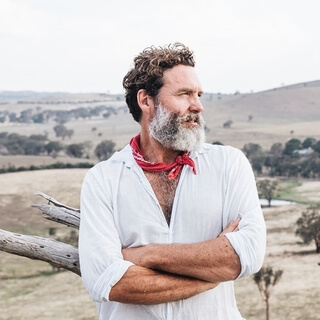
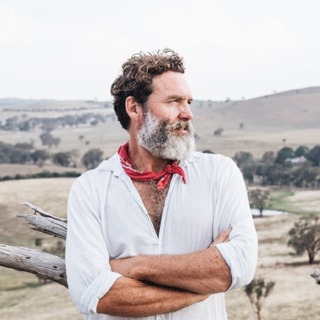
Very excited to have interviewed David Pocock for the next episode of The Regenerative Journey.
Most of our listeners would probably know David as being one of the wallaby captains,
Rugby union captain,
One of the,
Probably in his heyday,
One of the best rugby union players in the world and what a lovely bloke.
He's been here for a couple of days doing the introduction to bio dynamics workshop at Hanamino and I caught up with David talking,
Looking over the dam here at Hanamino and a beautiful landscape in front of us.
We talked about his life growing up in Zimbabwe,
Moving to Australia,
Playing rugby,
Not too much rugby,
Mainly about regenerative agriculture,
His advocacy work there,
His interests with some amazing community projects back in Zimbabwe,
His time there spent on a farm a couple of years ago and his learnings of that.
A book he's published with his,
With Emma,
His partner in our nature and a whole lot of other cool stuff,
Nutrition,
Health,
Mental health,
A really good yarn with David and a lovely bloke and as I said in the interview,
Really glad that he's part of life here in Australia,
Not just as a legend rugby union player,
But as one of the team advocating for regenerative ag practices and the principles.
And just before we head into the interview,
I just want to tell you about our upcoming Victorian introduction to bio dynamics workshops.
They're two days.
The first one is on the 18th and 19th of March.
It's not very far away in the Macedon ranges,
Just an hour or so out of Melbourne and on the 22nd and 23rd,
A couple of days later,
We'll be in East Gibbsland at a 2000 acre cattle farm there at Woodcott farm.
It's two days theory in the morning practice in the afternoon.
Go to charliearnett.
Com.
Au for all the booking details and I hope to see you there.
David Pocock,
Welcome to my mum and dad's loft house accommodation here at Hanamino.
Thanks for having me,
Charlie.
It's such a beautiful view.
Glad to see a bit of the farm.
It's a view I don't actually get to see very much because I'm usually up here.
I won't say I'm tidying for mum and dad,
But I'm certainly making sure that there's no rats and mice and stuff going on.
So I glimpse out this beautiful,
For those who can't actually,
No one can see.
We're the only ones who can see,
Even the guys watching the video,
You're just getting the back wall of the loft.
We're looking over a dam,
A lake,
I guess we call it a dam.
It's always been a dam to us.
Beside the house,
The home city here at Hanamino,
Looking south at mainly,
Well there's a few ornamental trees in the garden,
Beautiful willow hanging over the dam.
And then beyond that,
There's canola,
Not ours.
And there's been a fair bit of,
On our neighbours,
A fair bit of revegetation.
Some of the earliest,
See that big strip through there,
Dave,
That's quite big,
Just below the canola.
That was the first direct seeded project in Boorua.
So going back,
I think it's the late 80s,
Maybe 1991.
So in 89,
The Boorua community land care group was established.
I think it was the second in Australia.
And I think that,
Yeah,
That was the first one.
It's pretty thick.
They went hard,
They went right,
Let's do this.
So that's kind of cool.
I often look at that and go,
Well,
That was a significant moment in the history of the environment at Boorua.
Plenty of other ones that weren't so good.
Dave,
As the name of the podcast suggests,
We're looking and talking about regenerative journeys.
I'm really keen to sort of drill into yours.
So where do you want to start?
Well,
Maybe from the start.
Let's do it.
I'll give you a little bit of my background.
I grew up on a farm in the middle of Zimbabwe and very conventional farming.
What's in it?
Kind of high input,
Aiming for high output.
Didn't always happen with drought and all the rest that came,
But we ran a few sheep and some cattle,
But that really wasn't the focus.
We're mainly doing maize,
Tomatoes,
And then fresh cut flowers for export.
So pretty intensive.
We had,
I think three hectares of hypericum under lights to kind of extend the days and make them flower at the right time of year.
Are they native to Zimbabwe?
Not from England.
No,
They're not.
It's kind of the St John's wort,
That kind of red berry looking thing.
You'd know it if you saw it in flower arrangements.
So we did them and then Bopleurum,
Which is just a filler and they were exported to Holland.
Fresh.
Yeah.
I guess growing up in Zimbabwe,
Alan Savory was a well-known name and very controversial.
I want to get back to that.
As well as guys like Johan Zietzmann,
Who were really challenging paradigms.
Farming there,
I think a lot of places in the world are very conservative kind of mindset,
Knowledge passed down through generations and accumulated over a long period of time.
When you have guys like Alan and Johan challenging that,
It often didn't go down too well.
So I kind of,
Yeah,
Probably wasn't until after I left school.
I'd grown up loving nature,
Loving wildlife.
And kind of if I didn't get into rugby,
My thing was wanting to be a game ranger,
A park ranger.
And I guess as I started to do a bit more reading,
I was interested in ecology and then kind of got onto human ecology,
Like how do we think of our place in the world?
How do we interact with the environment we live in?
How do we construct the built environments?
And that really brought me back to agriculture and starting to read a bit more widely read some of Alan Savory's stuff.
I guess there's a bunch of good stuff out there and really started to see what an amazing role agriculture can actually play and has to play in changing our relationship to the places that we live.
If we're to actually pass on an exciting future to future generations.
And do you think being growing up on a farm and having the interest of not just agriculture,
Well I guess you're interested in agriculture.
Well I'll start again.
What's your interest in agriculture that you think and sort of turning into a regenerative approach?
Because you grew up on a farm,
What do you think that might've been?
Like if you'd grown up in the city somewhere,
Do you think you would have stepped into this space as much as you have?
I'm not sure.
Industry reaction is probably not.
Both sides of my family were farming.
My mum's side of the family were citrus farmers down in the Lowfelt.
My dad's side of the family were farming in South Africa and then also in Zimbabwe in the Midlands.
I think that was something that brought me back to it.
I remember as a young kid almost promising myself that I wouldn't go into farming just because of how precarious it was financially and seeing just the weekly struggle to pay wages and balance the books and try and squeeze out a bit of a profit.
As a kid it wasn't something that I wanted to do but I guess I've become more and more interested in it and really interested in the conversation that's starting to happen more and more in Australia around a different perspective on farming,
A different way of thinking about farming and starting to develop systems that are working with nature rather than a very colonial European view of beating the land into submission and mastering nature.
We are memories fond and I'm asking that question because given your previous and current involvement over there which we'll get to,
Apart from not wanting to be a farmer,
Did you have fond memories of farming and growing up on a farm?
Loved it.
I'm so grateful for the upbringing I had.
We had quite a bit of wildlife on our farm so as a kid I'd be off with the single shot shotgun just roaming the place.
You were shooting vermin I'm sure.
Yeah,
Trying to shoot a dove or a Franklin or a guinea fowl or something to try and come back and cook up for afternoon tea.
What's a Franklin?
They call them spurfowl now.
They're kind of smaller than a guinea fowl,
Brown.
Bird,
Yeah.
Probably it's like a really big quail.
Really?
Yeah.
Tell us,
Just to set the scene,
What's the duration?
How long had Europeans been farming in Zimbabwe?
I think only since the early 1900s.
Yeah,
Right.
Obviously the Europeans had been there for some time.
Had they not been,
Was it more cattle rearing and that sort of thing or was it really a frontier territory?
Yeah,
It was.
I think Cecil John Rhodes moved up into Zimbabwe with the,
What was it,
The British South Africa Company.
I think in the 1860s,
Don't quote me on that,
But I think around then.
Yeah.
Yeah,
And then I guess from then they kind of took over and really did some dodgy deals and cheated,
I think initially then,
To barely out of a bunch of land and then kind of kept moving north.
My favorite author as a child was Wilbur Smith.
And read every book.
And I was Sean Courtney doing all that cool stuff.
It was just,
And your reference to being a game hunter,
That's what I wanted to be.
I could see myself in my gear and my rifle and my leather and all that sort of stuff.
It was just an absolute dream.
And I've never been.
We'll have to get you over that.
Oh,
I'd love to.
I really,
It's sort of,
It's weird that this is a place I've never been to.
I feel a real affinity with it.
And I'd like to know more about the history.
Not necessarily,
We don't need to spend three hours going through it today,
But I'm just fascinated with the culture,
The history.
And I suspect the opportunities there,
Which we'll get to.
Dave,
So grew up as a farming boy there.
And then there was a time when you,
Your family decided to get out of there.
You came to Australia.
Yeah.
The Zimbabwe government started a land reform program in,
I think,
1999,
2000.
And terribly executed kind of political play.
And really just targeted white farmers and black Zimbabwean farmers who didn't support the government.
And yeah,
Thousands of farmers got kicked off their land.
So we were fortunate enough to,
After a long wait,
Get visas to move to Australia.
So I finished high school in Brisbane,
Did three years of high school in Brisbane.
And did,
Can I ask whether,
You know,
Did you have to walk away or was there some,
What happened?
Like,
Did you just do like,
We get a chance,
We're just going to walk out of here?
Or was it sort of resumed as it were,
Your land?
Yeah.
I mean,
I'd grown up never,
It never crossed in my mind that I'd leave Zimbabwe.
And then when the land stuff kicked off as a young kid,
You've kind of watching TV and the president is telling you that,
You know,
White farms are evil.
And I guess the hatred that I think that stirred up.
My dad kept trying to farm.
When things got hairy,
We moved into town for a bit and he'd go out to the farm.
And then a couple of farmers in our area got killed.
And after that,
They kind of decided that it really wasn't worth trying to hang around and started to look for other options.
And so I moved to Australia.
What was that culturally?
I mean,
How different culturally are we?
What was your experience of the culture?
I guess going to boarding school,
A lot of boys,
You know,
There's all that sort of camaraderie and so on.
But in some culturally,
Was there some barriers you had to sort of get through?
Or was it just like,
You beauty,
I'm in heaven?
I was super excited.
And you know,
Before we even got here,
I just felt so grateful for the opportunity.
But yeah,
Massive culture shock.
I mean,
At high school in Zimbabwe,
They were still caning,
Still using the cane.
And then you kind of arrive in Australia,
It's a lot more kind of casual approach to things in terms of relating to your teachers.
But yeah,
I kind of threw myself into sport.
That was the way I made friends.
Once you're on the field,
You're no longer a new kid with a funny accent.
You're just part of the team.
And if you can play well,
Then people want to have you around.
That's the beauty of rugby,
Isn't it?
Like you can be,
Speak of the funny accent.
Head like a drop pie.
Yeah,
All these sort of things,
But as long as you can play footy,
Then you're okay.
Yeah.
And so that really was my outlet.
And yeah,
Kind of threw myself into sport.
And growing up always wanting to play rugby for the spring box,
I was a big spring box supporter.
And so when we moved to Australia,
It was,
You know,
Wonderful for the Wallabies.
You've answered my question.
I guess I was interested to understand,
You know,
I guess what it's like playing for another country against your home country.
Was there a,
I mean,
How was that?
I loved playing the spring box.
I would have loved to have been able to play against Zimbabwe at some point,
But they're going through a bit of a tough patch.
I think they'll get back up there.
Yeah.
Always looked forward to it.
Dave,
How did you balance,
You know,
I guess you would have had your interest in agriculture and ecology and wouldn't have waned.
I mean,
I guess it's,
How did you find the balance between playing rugby at international level and also through maintaining your contact with your passion,
Your other passion?
In 2008,
2009,
I co-founded an organisation here in Australia and we were partnering with a rural community in Zimbabwe and really started to try and work on basic kind of food and water security issues.
Low input gardening was one thing,
Kind of trying to use water points as a place for community gardens for people to come together to learn,
I guess,
More climate adapted ways of growing vegetables and really kind of basic needs.
And then did a bit of work there with conservation farming where small scale farmers are digging basins and planting into basins that then trap the water.
It's been really successful in rural Zimbabwe.
That's still working?
That's still working?
Yeah,
Still working.
What's that called?
There's a few different,
Conservation farming.
There's a group that calls it Farming God's Way.
So that kind of kept me,
Gave me a bit of a link.
And then towards the end of my involvement there,
We were really starting to look at a value chain approach to that sort of development work.
Whereas if you can actually provide a better market,
Yeah,
Farmers are smart.
They'll figure out the rest.
And rather than go in there and be really prescriptive,
Telling people you need a fence,
You need to do this,
You need to be looking after livestock better.
If you can actually just say,
Well,
Actually if you can get your goat or your steer looking like this,
You can get two or three times more money for it.
And all of a sudden,
Farms are solving,
Solving issues coming together.
And a big part of that is just actually providing a market where there's more than just one buyer that comes and rips them off,
Creating a bit of competition.
Yeah,
I think there's,
In that sense,
Is probably parallels to Regenervag in Australia.
I think as consumers realise the value of food and are starting to be more willing to spend their money kind of either going direct to farmers or spending a little bit more for food that is actually better.
I think farmers aren't dumb.
We're going to see a lot more farmers suddenly take an interest and rethink a lot of the ways we've been doing things.
Meet the demand.
It's a great point.
And one I often bang on about is we go to school,
We do economics,
101,
Whatever it is,
And supply demand is what we're taught.
That's the balance.
And that works,
I guess,
To some degree.
And that's certainly the way that most of the first world countries sort of operate.
And I'm a great believer in exactly what you've just said,
David,
That if we can create the demand,
A demand-led economy will generate the supply.
Instead of farmers or anyone in any industry really just creating something to hopefully sell to someone,
That we as farmers,
If we can actually be growing products in the paddock and we know even before they're born essentially where they're going to go,
Who's going to eat that thing,
Who's going to buy that,
Then that's a much better business model than creating a whole lot of stuff and going,
Oh,
God,
Where am I going to sell it?
So generating that interest,
Which you said is absolutely growing.
People are keen to know where their food's from and they're much more conscientious about where it's from,
How it was raised,
Chemical input,
Nutritional value,
That sort of thing.
So yeah,
Big fan of that,
Of let's generate the interest,
Let's generate the demand.
As you say,
Farmers aren't dumb.
They're going to go,
Oh,
Really?
So if I just do this,
I tweak this and tweak that.
And I love what you said about,
I guess,
The old way,
If we can call that prescriptive farming,
Fences,
Whatever else.
But it's often the same small tweaks that relate and are adapted to a situation as opposed to someone going and going,
You've got to adopt this.
You've got to put your fences here.
Here's a recipe,
Here's a prescription.
It's a bit like health too,
Isn't it?
Prescriptive medicine,
Which is another conversation.
I guess that's the challenge is it really is about changing or challenging your paradigm and trying to think in a different way,
Which as humans is hard.
We often shy away from change.
To your question earlier,
I guess one of the things that struck me moving to Australia and for the first time living in a big city was how farmers in some ways are revered in Australian folklore and culture as these salt of the earth,
Pull themselves up by their bootstraps,
Make a plan,
Super resilient.
But then on the other hand,
We don't as a society,
From what I've seen,
Really look after farmers that well.
There's a big disconnect there with Australia generally being so urbanized.
Farmers are,
From my point of view,
Really forgotten in many ways.
Trying to think about that and see some of the big issues that farmers are facing in terms of debt,
Dealing with the changing climate,
Mental health issues,
Farmer suicides.
Then to throw a few other things in the mix,
Coal mining on ag land.
Fracking.
Yeah.
I think that,
Yeah,
For me,
That's something that I think is really important that more Australians start to get vocal about,
Is how we can support farmers who are standing up and trying to protect the places that they love and be able to produce food and fiber for all Australians.
A few years ago,
I went up to Malls Creek and got involved in a protest against a coal mine there and actually locked on and got arrested with Rick Laird,
Who's a fifth generation farmer in the area.
I guess when you actually meet farmers and try to understand the challenges that they're up against every day,
And then see this new coal mine four kilometers from his kid's school,
The impacts it's having on the water in the area,
Noise,
Dust,
Just ongoing issues.
I think we've got to be better at looking after farmers and putting more things in place so we can actually support them and ensure that a good farmer is able to actually earn a good living.
Dave,
We're sort of cutting to the chase already,
Which is okay.
Given that you brought it up,
How are you supporting or how will you support farmers?
What drives you to support farmers in that way?
To literally get arrested and go home in the back of the divvy van or down to the cop shop at least.
Are you going to do that again?
If anyone's got a mine nearby,
David is more than willing to.
He's got chains and locks and everything.
One of the things I've been thinking a lot about lately,
And it's probably just where I'm at,
Is how are we letting this happen to places that we love?
I guess as an immigrant to Australia,
Trying to grapple with how do you truly start to belong to a place and to really call that home.
I think we're not going to fight for the places that we don't love.
It's very hard to love a place that you don't know.
Actually getting to know this incredible continent and learning more about the history,
Learning from tens of thousands of years of Aboriginal knowledge.
The exciting thing for me is seeing farmers like yourself who are doing that,
Who are on that journey of entering into a genuine relationship with their land and learning,
Adapting,
Finding what works,
Becoming a true expert on their farm and not relying on the other so-called experts who will come in and prescribe something and then nick off for a month or two and then come back and check on you.
I think the Regenerag movement really provides an access point for people who eat food,
Which is most Australians,
I think.
On as a febrile theory.
The farmers who are producing it to start to actually connect and then join some of the dots and hopefully build something that's better than the current way we're doing things.
Dave,
How do you,
And I trust this,
You're reflective and representative of opportunities for others.
What are some of the ways that you connect with your,
Because this is a new landscape for you,
Not new as in,
Well,
New to Boorua.
Have you been to Boorua before?
Been through a few times.
Yeah.
I mean,
I'll have to get you to come to one of the rugby games,
The Boora Goldies.
Sounds good.
They'd love that you turn up at the top pub there.
What are you doing here?
We've had some legends there before and in the last years,
Lots of very funny stories.
Where was I going with that?
How do I,
I mean,
This is a new land,
This is a new country for you,
Not so much new,
But this is not where you grew up or you weren't born here.
How have you managed to adapt and connect to this landscape,
To this country?
Spending time outside.
Really trying to get out and experience some of the beautiful places that are literally on our doorsteps.
I think one of the things we're up against is that a lot of us no longer live here.
We're living on our phones,
On Instagram and Facebook feeds.
Water comes from a tap.
Food comes from the grocery store.
We've lost all those connections to what's actually important in bringing those things.
I'd say spending time in nature,
Reading more about the history of Australia.
I think someone like Charlie Massey in Call of the Reed Warbler does such an amazing job in weaving together so much of the history and the hurt and injustice that's there and trying to get people to think about what do we do with it?
How do we actually start to move forward?
I'll be honest,
For the first quite a while of living in Australia,
The birds are incredible.
I love the birds here,
But found the lack of the mammals coming from Zimbabwe strange.
I don't know,
The forest just felt a bit empty.
Then went down to Tassie and spent a bit of time in the Tarko in the Northwest a few years ago now and hearing Tassie devils seeing quolls.
I don't know,
It just sparked something in me about what this landscape must have been like and what it could be like once again.
Obviously,
Cats and foxes,
Invasive species are trashing the place at the moment.
That's a big issue that as a country we're going to have to start to put a lot more resources into.
If we want to see species like bilbies and numbats and all these other things that are kind of on the brink of extinction,
Get more of a foothold.
I want to go back to books,
Because you've got one,
You and Emma have got one,
I don't want to talk about.
But while we're on cats and foxes and so on,
Whenever that comes up in conversation and their impact on wildlife,
It sits very squarely beside the conversation around meat,
Eating meat,
I feel.
There's a wonderful book on eating meat by Matt Evans,
Who in that,
A very,
I have to say,
Very good read,
Very balanced discussion around the pros and cons of eating meat and environmental impact and ethics and so on.
In that he says,
And I've been quoting him ever since because I think it's just gold,
He says there's a lot of debate,
A lot of argument,
A lot of conflict around people's reasons for not eating meat.
They're environmental,
They're ethical,
They're nutritional as well.
Particular groups of activists release chickens from their enclosures in,
I think it happened at Taranaki Farm there in Victoria a couple of years ago because they want the chickens to go free,
Of course.
I think that was a good idea and then they just got maimed by foxes.
Or similar things,
Sheep stolen from places and tucked into apartments and just sort of really interesting ways to approach it.
And Matt said in there that most significant impact that we can make is if it's about suffering,
This whole argument is about animal suffering and how can we best reduce the number of animals and the degree of suffering.
Removal of feral cats,
Number one.
Hundreds of thousands or millions of native species in Australia alone,
Forget the rest of the world,
Are being tortured and killed every night.
If we can get those people who are really keen to see the end of domestic cow farming in Australia,
Actually get them focusing on something that's going to be effective,
Like getting rid of cats,
Feral cats.
It's a tough one because I guess maybe a lot of them have cats at home and they're fluffy and they're on calendars.
It's a really tough issue.
And for me,
It comes back to something that Charlie Massey talks about in his book is around ecological literacy.
And for me,
Part of that is trying to take more of a holistic view on things.
And a good example,
Which is incredibly controversial at the moment,
Is the feral horses in Kosciuszko.
You can take the view,
As many people do,
That horses are incredibly intelligent,
Beautiful,
An important part of cultural heritage,
Albeit five or six generations compared to 600 generations for indigenous Australians in that area.
Or you can take the view that they're not native to that area and they're doing horrendous damage.
I was in the Snowys about a month ago and just seeing the amount of damage that they were doing,
Particularly around streams and boggy areas.
It's a tough thing,
Making those decisions.
Does the health of the ecosystem come ahead of 20,
000 horses or should we allow 20,
000 horses to destroy an ecosystem for countless other species?
It's the balance sheet of suffering.
Take that one step further.
If we were to leave horses there and they weren't to be controlled,
Whether,
And this case horses,
Then at some point,
As you say,
That ecology is degraded to a point where other species are impacted and probably are.
Then those horses are impacted anyway.
What's better,
A horse to be destroyed humanely?
Let's hope it's always humanely as often as possible.
It's a very quick operation.
Or to starve or to die of thirst.
I think the pictures of that and the outcome of that is not clear enough.
How can those who don't appreciate,
Not that everyone doesn't appreciate,
But those who aren't on country and in a landscape,
How can they be more landscape literate,
Do you think?
Is that possible?
To then appreciate these issues?
I think there's opportunities for everyone,
Whether it's getting stuck into gardening in your backyard or a local community garden.
I think getting your hands dirty and starting to learn more about nature and the complexity of it and just how challenging it is to actually grow a few tomatoes and dealing with pests and frosts.
I think that's a great start.
How about backyard literacy?
That might be a good place to start.
That's a landscape of sorts,
Isn't it?
It's only small.
I think with COVID,
One of the things that certainly from the people I'm talking to,
There is a much greater appreciation for what we call the natural world.
People noticing trees and birds and all sorts of things that we have just taken for granted.
Seeing the wonder of nature and just how incredible life is and what a role as humans we can and we should be playing.
Playing our part rather than trying to sit above it.
I think that mindset has brought us to the edge of catastrophe.
If you're willing to listen to scientists.
Zach Boulish talks about the sixth.
We're at the beginning of our sixth extinction,
Is that right?
That's what he talks about.
It's pretty scary,
Isn't it?
Yeah.
Well,
I think we're on the way.
Are you looking for more information to assist you on your regenerative journey?
We've created an online community of supporters with exclusive access to interview transcripts,
Live online Q&A sessions with Charlie and his interviewees,
As well as the opportunity to be interviewed on the show yourself.
If you would like to be part of this community or would simply like to contribute to the development of the podcast series,
Please make your way to patreon.
Com forward slash the regenerative journey podcast.
We look forward to you becoming a member of the regenerative journey community.
Let's get back to this week's episode.
I want to just jump to your lessons learned,
I guess.
Where in sport have you or your experience with sport at that level,
Have there been some experiences you've had or learnings you've had that have helped shape your approach to your advocacy of regenerative farming?
Is there any,
Whether it's leadership or it's teamwork or is there anything that sort of that if you've been farming,
We can't change that you grew up on a farm.
If you hadn't done your sport,
You may not have learned some lessons.
I guess your sense of agriculture and ecology may have stayed the same,
But as having gone through that phase of high level sport,
Has that taught you anything about your approach to regen ag?
I think at the end of the day,
It's all about people and trying to reduce the barriers for people engaging in the conversation and being able to see themselves as someone who can risk the discomfort or whatever it might be in actually starting to learn something different.
My grandfather,
He passed away a few years ago,
But he died as a conservative farmer,
Climate denier.
There was,
I guess looking back,
There was really nothing that invited him into a different conversation.
I think as humans,
We kind of just get caught in our little silos and echo chambers and look for information that reinforces our worldviews.
I think for anything,
When you're part of a team or working in ag,
It's really trying to meet people where there are not judging what people are doing and having the,
I guess knowing that if things were a little bit different in your upbringing,
You'd probably be doing the same thing.
Yeah,
Really trying to think about how we engage people,
How we build more of a conversation,
Reduce some of the barriers to more people being interested in and getting involved and not making it into this kind of holier than thou club of people who think that they have the answers.
I think that's a great point and you're here,
Have been here yesterday and today,
I'm losing track of time.
Today is day two of our introduction to biodynamics course and we emphasise that a lot,
Hamish and I,
That we're not saying you should do this and what you have done is wrong.
It's about getting back to that very non-prescriptive approach to farming in which we advocate that biodynamics is.
There are different techniques and there's practices and there's a whole lot of philosophy and principles around it but if you can just pick up the pieces that you really enjoy and do then it's a sort of a step by step go softly approach which I think is,
We like to think that that works.
That people don't need to get bashed over the head and we certainly don't say that what other people are doing is wrong.
We emphasise the difference.
I think that's one of the barriers too is that the people stepping into the change,
That fear of change is that,
Does this mean that what I did was wrong or probably more poignantly what dad did was wrong?
What would dad think about that?
My experience was,
Well,
I've got to say is wonderful.
My father was,
He was very embracing of the changes we made and we went and set a cold turkey on a few things.
I didn't tell him everything we're doing.
But I think that approach works.
Yeah.
I mean when you're so invested in a certain way of doing things or belief,
You go out and spend a lot of money on an expensive car.
It's very hard to then admit that it's a lemon.
You want to keep trying to tell everyone that,
No,
No,
No,
It's actually good.
No,
It hasn't lost value.
Yeah.
Yeah.
I think the more you attack people and tell them what they're doing is wrong,
It's human nature to retreat and become more entrenched in that way of doing things.
I think what Charlie Massey and others and yourself with this podcast are doing is trying to invite people into more of a conversation about it and having briefly touched on biodynamics at uni,
I've enjoyed learning a bit more about it and meeting farmers who are doing it or thinking about getting into it.
Dave,
Let's jump back to books,
Your book,
You're on Emma's book,
In Our Nature.
Tell me why you wrote,
Well,
Put together in your account photographer.
Yeah,
I enjoy photography.
Can we talk about that?
Is that a secret?
No,
Go for it.
I took a year off from Australian rugby in 2017 and spent most of it on a farm in the south of Zimbabwe.
I'd have been working on a project in that area for the last few years trying to bring together some agriculture,
Conservation and community development work.
The seven months there was,
It was real kicking the guts,
I guess a really good reality check and a lot harder than I thought it was going to be.
What was hard about that?
The backdrop was the economy was grinding to a halt,
Politically unstable and then just things on the farm,
Everything was breaking.
There were no easy days,
Which I guess is farming.
At the end,
Coming back here,
Decided to try and write down some thoughts and think about the things I learned.
Some people were interested in hearing more,
So decided to do some writing and really try and tell some more hopeful stories.
I guess one of the things that it did allow us to do was meet and spend time with a bunch of people who I think are doing amazing things,
Dedicated their lives to building new models and different ways of doing things.
Tried to tell some of those stories,
Put a bunch of photographs in there.
I know a lot of people prefer photos to words,
Myself included at times.
Really trying to,
I guess the hope for it was that it would reach an audience that isn't particularly that interested in conservation or agriculture and try and tell some of those stories and get a bit of a conversation going.
It's like a carrot,
Just tangling the carrot.
With people who are more rugby focused.
It turned into a much bigger undertaking than we'd anticipated,
But we were really happy with it.
Where can people get that book,
The beautiful book?
It's available on my website,
Davidpocock.
Com.
We're posting them out as the orders come in.
I've seen photos of you and Emma with piles and piles of books signing away,
Pumping them out there.
It's fantastic.
Yeah,
We've got,
I think 300 copies left and that's them done.
Not forever.
I think so.
I think we're not going to print anymore.
Oh really?
You heard it first here.
By the time this goes out,
There might only be three copies left.
Has your signature sort of changed?
Did it become like more of a scribble than a well-rounded David Pocock signature?
Yeah,
It doesn't take too many signing sessions as a rugby player to come up with a much more efficient signature than when you leave school.
I signed a rugby ball once.
I'll tell a quick story back in,
Maddie Corki will help me here.
We played a game,
It was 2005 or 2006 and we played,
I'm going to forget the,
We were a sort of collection of ex wallabies and estate reps and a few farmers.
There's like a handful of farmers and I'm going to get slaughtered.
I forgot the name of our team.
Anyway,
So we were playing,
It was a charity game.
That's right.
We're playing at Bungendore,
The Mudchooks at Bungendore.
It was surreal.
Matthew and I were walking up the street of Bungendore one morning,
The morning of the game,
That's right.
And people were going and they could tell that we were sort of out of town and maybe part of this team that had turned up thinking we were like wallabies and looking and I turned to Maddie and I said,
Mate,
For the rest of our lives,
This will be our most famous day.
And at the end of the game,
We signed footballs because they thought we were like,
Most of them didn't know,
Well,
They didn't know us at all.
And I remember the greatest moment for me was subbing for David Wilson.
That's cool.
He ran off,
High five on a wench.
It was like,
Did that just happen?
Tim Gavin,
Tim Hoare?
It was a classic.
Dick Harry.
Yeah,
So I've only signed one football,
David.
Where was I going with that?
Oh,
Now tell me why that year,
Seven months on the farm,
What made you think,
I'm just going to go and do that?
I guess I wanted to get my hands dirty and I'd been involved with community development,
Work in Zimbabwe.
I'd been studying Ag at uni,
Albeit very slowly while playing and yeah,
Just wanted some time off and I guess the freedom to really throw myself into something for a period of time.
And yeah,
It was incredibly valuable learning experience.
And yeah,
I guess this has shaped some of the ways I think about trying to engage people and has really informed the project that we're trying to get going in that part of Zimbabwe.
The one,
Yes.
Let's talk about study,
Your current study.
And how that's sort of shaping up because where's that headed and how long have you got to go and what are you actually studying and why,
Probably more importantly?
I'm doing a Masters of Sustainable Ag through Charles Sturt and after the semester I've got a couple of subjects to go,
So hopefully finish mid next year.
Yeah,
I've really enjoyed it.
I think it's a good grounding in a lot of Ag study with some alternative production systems thrown in there,
Some human ecology,
Stuff which I really enjoy.
And yeah,
I've kind of been doing one subject semester,
Which is far too slow to finish something,
But I've recently just gone back full time.
Well,
Not back full time,
Gone full time for the first time,
Which I've really enjoyed.
It's certainly a different,
It's a change in pace.
And how reflective of your doing your,
I guess,
Your study,
You're also active in,
I guess,
Active in the regenerative space in terms of your advocacy and your understanding.
How are there parallels?
Are you seeing some good parallels between what you're studying and what you're seeing in your activities?
Is one keeping up with the other?
Where does it sort of all sit?
Yeah,
I think through the study I've met a lot of farmers who have transitioned their farms to a more regenerative approach or are starting to ask questions.
I think this last drought,
Yeah,
Obviously incredibly tough time for a lot of farmers.
I think there are a few that are questioning just how sustainable in the long term,
How kind of high input,
How high output approach is.
And yeah,
I've met some amazing farmers like Vince Heffernan,
Dalton,
Through the course.
So he did the course that I started back in 2013,
The Ecological Agriculture undergrad at Chelsea.
He'd done that.
So yeah,
I guess there's a lot of alignment.
One of the things I'm interested in is getting the conversation going with people living in cities.
What can they do?
And that's always the question.
When people learn more and are interested,
Well,
What can I do?
And if Australians just started to spend 10 or 20 bucks a week supporting regenerative agriculture,
That's going to start to make a really big difference over time.
What would that 20 bucks,
What would that look like,
Buying particular food?
Yeah,
So supporting your farmer's market or a bunch of farmers under direct market online.
Yeah,
Yeah.
People are generally doing it tough and yeah,
Really watching their spending.
So it may be unfeasible for some families to be doing all their shopping at the farmer's market,
But I think a little bit over time is actually going to start to make a difference.
And I'd suggest it's also,
You know,
Get onto nutrition.
It's what they're buying from a farmer's market,
From a regenerative farmer or understanding where it's from.
It's also what's in their shopping trolley at the supermarket or where they're shopping that isn't a farmer's market.
It's like,
Well,
Do we,
Do you actually,
Let's get the organic or the regeneratively grown,
Whatever,
But let's look at what else is in the shopping trolley.
Well,
I mean,
This is,
Yeah,
This is a much bigger conversation around the true cost of food.
Let's talk about that.
Yeah.
Michael Plant talks about how,
You know,
There is no cheap food.
It's a,
It's a total illusion.
Someone's paying the cost and whether that's through.
.
.
Or something.
Yeah,
Yeah.
Something's paying the cost.
Yeah,
Whether that's environmental degradation,
Public health costs.
Yeah.
It's being paid somewhere,
Maybe not by the person who buys it doesn't think they're paying the cost.
But I guess my hope is that we can move towards a system where farmers are realizing a lot more at the farm gate for the produce that they're producing.
And there's less being skimmed by processes and supermarkets.
I think it's a wonderful opportunity.
Just a few minutes ago,
Dave,
You know,
Saying,
You know,
What we have is city people living the city,
Hopefully buying some more,
Some better food directly if they can.
And as you've identified,
And there's much more science around it with Zach Bush and sort of Breathe Your Biome and understanding the significant health benefits of just being in nature.
Forget sort of eating that food or something,
Just the,
Literally the breath that we take and what we get from the environment and what the exchanges that take place and the epigenetics and all that sort of stuff.
That's something that is clearly getting more clearly understood.
And so if we can understand that and the city people can understand the benefit of that,
Well,
There's a whole lot of farmland out here.
Some are probably not as clean as others,
But there's a whole lot of farmland out here that they can access.
At the same time,
There are farmers with that farmland who have food that can be produced and have acres and acres of beautiful land that people can experience.
So it's actually,
I think it's really cool.
And if,
You know,
I'd love to get that connection even tighter,
You know,
That there's benefits for both,
There's the experiencing of nature.
And if those people come on farm,
Then they're actually going to be contributing to those rural communities.
If they're not buying direct from that farmer,
They might be walking around his hills and helping create the story of that farmer,
Which then may lead him to producing his own food.
But at least they're driving through town,
They're supporting those communities.
It's sort of like a,
You know,
Dare I say,
No brainer,
Isn't it?
There's not much downside to any of that.
Yeah.
And I think one of the things to add to that,
That I haven't heard a lot of people talk about is just the mental health benefits that are being studied.
And there's some pretty compelling stuff looking at this last big dry spell and farmers who were more involved in land care groups and farming regeneratively.
Probably got through in a far better mental health kind of way than farmers who were probably a lot more isolated and yeah,
Really up against it.
So I think that in itself is a really powerful thing to be working for,
Is trying to connect more farmers with people eating their food.
Yeah.
That alone could be powerful for rural Australians.
And hopefully with COVID more Australians will be traveling in Australia and actually seeing what country Australia has to offer.
One of the benefits of COVID.
Yeah,
Sure.
And I think just on that,
You know,
One of the sense of wellbeing and sort of getting through the drought,
I think a lot got a bit to do with regenerative farming,
Farmers and their practices being,
You know,
They make their decisions and their intuition is one of the ways they help make those decisions.
And I know as a conventional farmer,
I was looking for answers from other people.
I was looking for that recipe or that prescription.
And then when the answer wasn't there,
I wasn't happy with it or the results weren't as I was told they'd be.
You know,
There's a real sense of lack of control and the impact can be significant in many ways.
But as a farmer who's much more in touch with nature,
You know,
You're much more and there's a much more sense of being in control of the things and focusing on what is in your control and letting go of the things you're not in control of.
And so,
You know,
There's a just being more adaptable and being autonomous as a farmer.
You're not being reliant on so many people in that sense.
It literally does give you a sense of wellbeing because you're focusing on what you're in control of.
Things you're not in control of,
You just not dismiss,
But you just say,
Well,
I'm not going to get all worked up about that.
And you know,
It's a bit of a sleeping giant there,
The benefit of regenerative ag.
People talk about food,
They talk about the environment,
Those benefits,
You know,
And there's social benefits,
But the individual farmer benefit and their family.
It is,
I mean,
It's literally saving lives.
I mean,
I think that touches on,
You know,
For people who aren't farmers,
Just being human.
I guess you grow up and you're constantly kind of deferring authority to your parents,
To school,
To institutions.
And then at some point in life,
You decide,
Oh,
Actually I'll need to take some personal responsibility and become the expert on my own life.
Because at the end of the day,
I'm the only constant character in this drama.
And there's something really,
Really powerful in doing that.
Writing your own script.
Yeah.
Talking about scripts,
I just want to touch on any other books that you recommend,
Love,
You know,
Would suggest to people trying to track down it,
It's really inspired you?
I think in an Australian context,
Dark Emu by Bruce Pascoe and Charlie Massey's book called Read What Love.
Yeah,
Two very powerful accounts.
Yeah,
There's a lot in there.
I think very relevant to any Australian.
Totally,
Farming or otherwise.
I'm trying to think of other stuff.
A Sand County Almanac,
Aldo Leopold.
That's worth a read.
I reread Silent Spring the other day,
Rachel Carson,
And I think just it's timeless.
Just so relevant to the times we find ourselves in now.
Actually in the back of In Our Nature,
There's a reading list.
So it could be worth getting just for the reading list.
It's pretty extensive.
Don't find a mate and go to the back page and photocopy it.
Go and get the book yourself,
A Stingebag.
Remember there's only 300 left.
And Dave,
What about mentors?
Did you have mentors,
Whether that be in a sporting sense or a life sense or,
You know,
Anyone that sort of you're thankful that was in your life?
Yeah,
Incredibly grateful for the role my dad's played.
As a kid getting to spend a lot of time with him on the farm.
And then he loves birds.
He grew up big into falconry and yeah,
Was always just encouraging us to spend time in nature and kind of be a bit weird with our obsession with birds and trapping birds and whatever else we were doing.
So he's been a huge,
I guess,
Figure and mentor for me.
My mum's dad,
My grandfather,
Yeah,
Also probably in a very different way was someone I really admired and looked up to.
And then yeah,
I guess you look back and there's always,
You know,
A teacher or someone who saw something in you or encourage you to explore a part of yourself that you otherwise didn't have permission to.
And yeah,
So grateful for those sorts of characters.
But yeah,
I guess moving to Australia and not having any other family here,
A lot of it has been through reading.
And yeah,
There's a lot of good stuff out there by people with a lot of life experience and I think that's been a big part of trying to learn more and yeah,
Work out what it means to engage and get involved in things that you're passionate about and hopefully live a better life.
I've got an older friend in Perth who I catch up with once every two or three weeks and he's always good for a bit of wisdom or he's not afraid to tell you how he sees it.
Good sounding board.
Yeah.
Yeah,
No,
It's important,
Isn't it?
Having that,
I mean,
There's the mirror we hold up against ourselves,
But often,
You know,
Often we got to start by someone else has got to hold that mirror up,
Don't they?
You know,
And just call you out.
And I can't tell you how many,
You know,
Through interviews,
You know,
That has been a theme.
I don't know whether you've always talked about it on the interview,
It might've been pre or post.
So I may not necessarily have captured it,
But there's certainly,
You know,
I mean,
For me,
Mentoring is something I do for others.
But more importantly,
You know,
It's what I,
You know,
I guess my appreciation of what it is to be mentored and learn from others' mistakes.
You know,
It's really,
I can't,
You know,
Suggest strongly enough that anyone,
You don't have to be a farmer to decide on the sort of the benefits of mentoring and are confident,
You know,
Whether it's your partner or so on.
And that's,
You know,
It's good for mental health,
It's good for just growth and development,
It's good for your children,
You know,
That's a real motivator for me is certainly,
You know,
Having others that are far more important than me in this world and the legacy I leave them.
Talking about legacies,
Dave,
Alan Savory,
You know,
We know him,
Farmers know him,
And I guess the world is getting to know Alan through TED Talks,
You know,
He's becoming more widely known for his work over there.
You mentioned,
Tell us a bit more about him from the perspective of one of his countrymen,
You know,
That we may not know,
I'm not suggesting you dig up dirt on him,
I'm just saying,
You know,
What's,
As someone you've met and as someone you're aware of,
You know,
What else can you tell us about him that we may not know,
His history or his personality?
I guess his history in Zimbabwe,
He was a politician for a time and incredibly kind of principled and outspoken in his,
Against the Rhodesian government.
And eventually,
I think,
Just what kind of went into self-imposed exile,
Because he just wasn't,
Didn't feel like he could actually do anything there.
How long are we talking?
Sort of just a sense of.
.
.
Late 70s.
Yeah.
Yeah.
And I guess,
Yeah,
Like maybe less appreciated where you're actually from.
And so I think it probably took him moving away and working with people in other countries to really get holistic management and holistic plan grazing to a wider audience.
And now you're seeing in Zimbabwe a real embracing of holistic plan grazing on privately owned farms and in communally owned lands.
Really trying to address some of the land degradation and yeah,
Huge issues that farmers are facing there,
Particularly as rainfall gets less reliable and they're seeing a lot more drought and then that's turning into floods because the land has no,
Has kind of lost its capacity to hold water when it does rain,
Sponge.
Dave,
Do you think you're more appreciated because you're more appreciated here because you're here as opposed to if you'd stayed there?
I've got no idea.
Well,
Not so much appreciated,
It's probably the wrong word,
But I guess,
I mean,
Very different trajectories,
I guess.
Do you think you would have,
I guess if you'd stayed there,
I mean,
I don't know,
I guess you didn't stay there.
Yeah,
It's one of those things.
Yeah,
You might have played for the Springboks.
You never know.
And yeah,
It's a strange thing to kind of grapple with where you go back there and you don't necessarily feel like you're fully Zimbabwean anymore and fully welcome.
And yeah,
I'm very aware in Australia,
You're kind of welcome,
But if you question some of the unquestionable things,
You very quickly are told to chuff off back to where you come from.
You're sort of in a,
Not a no man's land,
But I think I can understand that that would always be an Aussies fallback,
It's like,
Oh,
You don't understand,
You're not from here.
You don't get it.
Yeah.
Well,
Mate,
We're all very glad you did come over here.
Thank you.
Lots of reasons.
I really love this place.
Yeah.
What about Legacy?
Tell me about Legacy.
What do you want to leave your family,
This world?
Lots of big questions.
I thought I'd save them.
One of the things I think about is,
Who are we apart from the places where we live?
As humans,
We've evolved in landscapes and through our technology now have like unimagined power to shape them.
We're at an incredible place in history where we now have an understanding of just how awry things have gone.
At the same time,
Have ways of changing and ways of actually being part of,
There's an author Joanna Macy,
And she talks about the great turning of this realisation that,
Hang on,
This way of doing things has brought a whole heap of what we might think are benefits.
But we're standing at a cliff edge and we can actually change path.
I think doing that provides us with so much of what we're searching for as humans,
For true connection with each other and with the places that we live.
To me,
It's incredibly exciting despite knowing how bad things are at the moment.
You're optimistic?
I think Zimbabweans are just,
It's just ingrained optimism.
You're very resourceful.
If you're not optimistic,
You've got no chance.
I am,
Having said that,
It's hard to see so many of the things that you love disappearing and knowing that if you look at things with an approach of viewing them as complex systems and some of the work around resilience theory,
It's often not the case that you can just go back to how things were.
There are thresholds that you can cross and the best you may be able to do is to look for an opportunistic time to transform or help that system transform into something that's more desirable,
That it's potentially never going to be like what you read about in some of the journals from a few hundred years ago and just what a paradise some of this landscape was.
It's a great point that Peter Andrews made many years ago and he keeps on making that this landscape is being wounded of many years and we need to put it in intensive care and we need to use any tool we have at our disposal,
Whether that's a physical tool,
Implement technology,
Whatever,
To heal.
He copped a lot of flack by encouraging the use of willows in waterways.
It's a suture on a wound.
We just got to use it whatever we can.
This thing's dying.
You don't have time to pick and choose and we don't have time either.
I'm a big fan of exotic species in the landscape.
We're looking at a willow.
Yes,
It's sort of aesthetically pleasing on a dam but there's plenty of other willows around and plenty of other oaks and things that we use to heal.
I totally agree that trying to get back to where we were,
That state is nearly impossible.
That's not to say we can't but I don't think we need to because it's not what this landscape requires.
It needs,
Again,
To be put into intensive care.
I'm not sure you actually answered the question,
Dave.
Is there a particular legacy,
Is there a project you're working on at the moment you're particularly proud of?
Well,
Not even necessarily a project but just a focus,
A passion that some years down the track you look back on and think,
You know what,
That was really worth my time.
I'm busy working on a project in southern Zimbabwe,
Really trying to build a new model around how agriculture,
Conservation and community development can meet really at that intersection.
Having been involved in community development work where you're working with incredibly poor communities and seeing genuine improvements in life,
Access to healthcare,
Education,
A whole bunch of human improvements but not necessarily seeing the land base improving,
Not seeing less degradation,
Not seeing less erosion around streams and rivers,
Less siltation of dams,
All those sorts of things.
I think the challenge for us as humans is to create models where we can meet our human needs and thrive as a species and those models ensure that non-humans and the ecosystems that we depend on are thriving.
I think it is possible.
It's not going to look like what we're doing at the moment and that's the exciting thing to me.
It's called harmony,
I think.
Yeah.
I think it's a different way of thinking about things,
Of viewing the world,
Of viewing our place in the world and it's going to have some serious trade-offs.
I don't think it's going to – not everyone can be a winner in that sort of world and it's going to have to be a lot more collaborative and probably a lot less about competition.
To me,
That's exciting.
That's what we need.
I think that's – at the end of the day,
That's what we long for as a species.
I think the tragedy of it all is that we have been searching for something and in the process kind of destroying the very thing that holds the answers for us,
Which is the places we live,
The people we love.
There's really something about being on land that is functioning and healing and yeah,
There's something incredibly grounding and sort of spiritual about that,
I think.
Dave,
I think that's as good a place to stop as anywhere.
We've probably got day two of the Biodynamics to learn more about that sort of thing.
Yeah,
Get into it.
Maybe I should have interviewed you this afternoon.
You might have had a whole different spin.
Yeah,
Maybe.
A whole different spin.
Dave,
As I said,
With sincerity,
Really glad that your life has taken the path that it has,
That you're one of us,
As it were,
In Australia and at the same time still contributing significantly to Zimbabwe and making a difference there because I know that's your love and to be able to contribute in both places is a wonderful thing.
And talking about contribution,
If you'd ever like to contribute to our workforce here at Hanamino,
You're most welcome.
We do.
I know Vince,
I'm going to steal Vince.
Is it okay if Dave comes and landmarks for us one day?
That sounds good.
Vince,
I have to give him a rap.
Invincible.
He was the one who,
He sent me a text,
Oh,
It must have been last year sometime and he said,
He said,
I've got a mate.
I think you should,
You should,
You should meet and be nice to him.
Something like that.
We're actually there next Saturday.
I think he's putting in a few more thousand trees.
Yeah,
Nice.
No,
He's in Moreland's,
Biodynamic Land.
He's I think he's at the,
Is he at the markets every week or every second week there in,
I was going to say Epic.
It's definitely not every week,
But he,
He is kind of active on social media and lets people know.
And yeah,
I think you can order through his website and just pick up.
Yeah,
No,
It's good stuff.
Good texts or land there.
Dave,
Thank you so much.
So enjoyed that.
I think it's sort of a appropriate spot looking back out over the dam and that beautiful landscape that I'm certainly in love with.
And I'm really thrilled that you've spent a couple of days with us,
A couple of days with us learning biodynamics and having the opportunity to have a chat.
Thanks Charlie.
Thanks for having me.
Thanks for having me.
Thanks for having me.
Cheers.
Well,
There you go,
David Pocock.
Love David as a rugby player and as an environmental activist,
Because that's what he is.
Sitting there after our Biodynamic Workshop.
But moving on to other things.
Next week is Cindy O'Meara.
She is a legend.
She's a nutritionist.
She's,
I wouldn't call her dietician.
She's an activist of some sorts and changing habits is her website.
She is fantastic.
Caught up with her at a beautiful little farm at Malaney in Queensland and hope you enjoy my little chat with Cindy as much as I did.
I look forward to seeing you next week on the Regenerative Journey.
This podcast is produced by Rhys Jones at Jager Media.
If you enjoyed this episode,
Please feel free to subscribe,
Share,
Rate and review.
For more episode information,
Please head over to www.
Charlianet.
Com.
Au