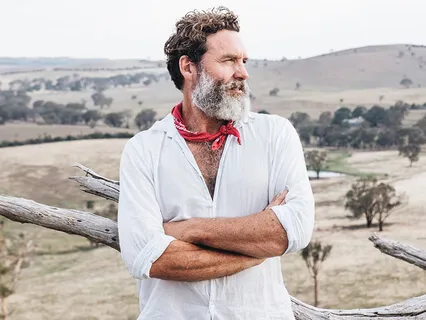
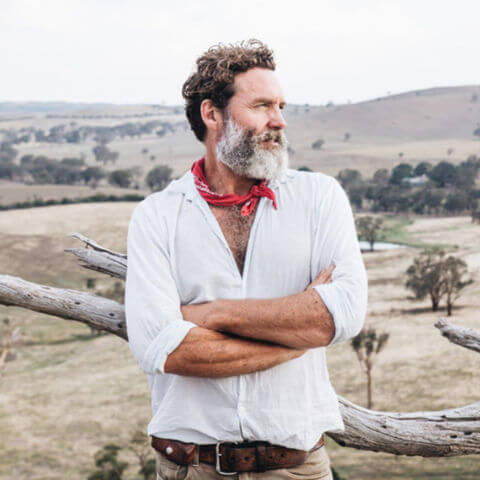
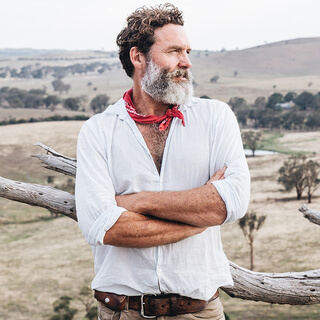
I often say to young people,
They say,
Oh,
Look,
I didn't grow up on a farm.
And I always say to them now,
That could be the biggest advantage you've got because you don't have any preconceived ideas.
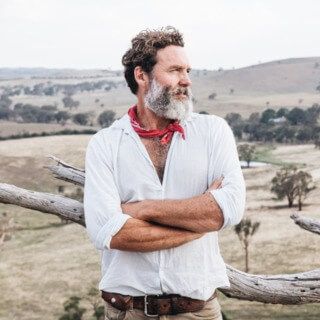
That was David Marsh,
And you're listening to The Regenerative Journey.
G'day,
I'm your host,
Charlie Arnott.
And in this podcast series,
I'll be uncovering the world of regenerative agriculture,
Its people,
Practices and principles,
And empowering you to apply their learnings and experience to your business and life.
I'm an eighth generational Australian farmer who transitioned my family farm from industrial methods to holistic regenerative practices.
Join me as I dive deep into the regenerative journeys of other farmers,
Chefs,
Health practitioners and anyone else who's up for yarn and find out why and how they transition to a more regenerative way of life.
Welcome to The Regenerative Journey with Charlie Arnott.
G'day,
Welcome back to the show.
Well,
Here's part two of my wonderful interview with David Marsh.
If you missed part one,
Just go back to your podcast platform and find it.
You could only listen to part one first,
Because there's a pretty good flow here.
David again regales us with his history and his learnings,
His epiphanies,
His turning points,
And I can't tell you how much I enjoyed the whole interview,
But here's the rest of the interview part two.
I'm getting a bit of a thrill watching all these little wrens jumping around while I'm talking.
Oh,
They're beautiful aren't they?
And just on that,
I guess a good example or a simple example of that,
David,
Is weeds or plants that we generally didn't used to want to be in a particular spot.
And if we stand back and consider what they're doing,
That is a sign of nature trying to heal itself.
That species,
That weed,
That plant has jumped in there to do a job.
And there's a wound that needs healing,
And that could be a nutrient deficiency or it could be a scar or a hard pan.
It's sort of a,
To me,
It's a simple example of what you just talk about.
I think it's a.
.
.
Well,
Yeah,
I think it's,
I mean,
It's convenient in a way to say,
Well,
Weeds are good because,
You know,
They're a part of the ecological succession process that leads to a more healthy community.
Because when you stop trying to control everything,
You do have some untidy looking paddocks.
We have certainly had some untidy looking paddocks and we're in a very visible place.
We've got a very big road running right through the mid-lives.
And the last three years,
You see weeds when the process of succession gets taken back through circumstance or management to an earlier state.
And when you start seeing lots of tap rooted weeds,
And there's lots of them around at the moment,
It's an indication that the last three years have been three week springs.
And so the effect of these week springs has been that we try to have 100% ground cover all the time.
It's a really worthy thing to do.
We don't always achieve it.
But we have had very good ground cover in the last three years when there's been a lot of bare paddocks in every district.
But still,
The ground layer where you have this protective layer of last season's plants that have died off when their lives have ended,
It's been eaten up by summer storms,
A lot of organic activity.
And that protection is not quite as good as it has been.
So ecologically,
The last three years have led to us moving into a state we're trying to get away from,
Which is we want to get in a state of more diversity.
But we've been forced in a way,
Even though we've been,
It was very difficult managing in the last three years,
And particularly this last 12 months,
It's been very difficult for everyone who's managing,
Regardless of whether they're holistic managers or regenerative farmers or conservation minded conventional farmers.
It's been extremely difficult.
But one thing that I found very heartening,
And I hate trying to,
It's very hard to talk about something that's going well when something is going badly all around you.
And I'm not trying to paint myself as a great hero at all.
But we have tried very hard by getting our animals matched to the landscape to retain high levels of cover.
And I think we have achieved that this year.
But when it started raining,
There were bare farms everywhere.
You know,
There were bare farms everywhere.
We had a,
It was about a 12 mil,
Quite a sharp little storm and bare paddocks around the place.
There was just water pouring off everywhere,
Knocking fences over.
And I took some pictures on our place and there wasn't any movement of water at all.
So we captured the whole lot.
So then when the next bit of rain came a month later,
When everything looked like it was about to die,
We were still in business because we had all that extra.
It wasn't extra,
But it was rain that had fallen like a gift and we were able to capture it on our farm.
And that's an interesting thing,
Isn't it?
It's something I pondered in when it did finally rain.
I'm thinking,
Again,
I guess we were in a similar situation where we were able to retain the rain where it fell.
And that was,
We'd been praying for rain,
As it were,
Or hoping for rain,
Looking forward to rain all that time.
And we were,
I guess we were in a position to accept the rain and then use it.
And it is a tragedy,
I think,
When every farmer in these dry periods,
They need as much rain as the next bloke.
And when it does,
And when it just scoots off and it takes some soil and it doesn't stay there and it's not going to help grow anything,
That's heartbreaking,
You know,
For the effort.
It is,
But,
You know,
It's incredibly forgiving land.
I mean,
You know,
We're pretty happy with the way our place is looking.
It was looking good before a lot of country was looking good because we had good cover and we had one mob of stock moving all the time.
So lots of paddocks,
We've got 104 paddocks.
Lots of paddocks had more than 200 days between grazing.
But,
You know,
The other day I was driving around between Boora and Yass,
I got into some country I hadn't seen before,
Knew the names of a couple of properties.
And I knew that it had been incredibly bare through some of this area.
And it looked absolutely spectacular.
I couldn't get over how good it looked.
And it was,
You know,
There was a lot of,
And there's a lot of this going on now with the value of lambs and meat.
There's been a lot of fodder cropping going on.
And some of these crops that were sown in a timely fashion a bit earlier,
They were absolutely stupendous.
And so I think somebody made,
We've got a little grazing group that I'm part of.
And we had a Zoom meeting the other day,
Like everyone else.
And one of the guys,
He'd done a bit of,
He'd put some stock in a sacrifice paddock and fed them.
And he was over the moon at how that country had returned with the rain.
And part of the reason for that is,
I mean,
I did that years ago.
I had a couple of sacrifice paddocks and they're well named,
I can assure you,
Because they do get very bare.
But there's so many nutrients in there,
You know.
You've got a large number of animals on a smallish area,
And you're pouring a lot of high nutrient stuff into them.
So they're excreting it all out.
And when it eventually rains,
It's just like a boom,
You know.
Don't,
Sorry,
Go on.
No,
You continue,
Charlie.
I was just going to say,
I guess we've been highlighting some of the good things about changing practice and holistic management type approach to land management and so on.
Some of those benefits are reasonably well accounted for and obvious,
And some are not so.
I mean,
To me,
It's a pretty compelling argument.
What are some of the,
I guess,
The hurdles that you've seen,
Heard,
Felt for people,
For farmers to,
In light of,
Call it evidence or observations,
For people to transition or consider it?
You know,
What are some of the things that hold people back?
Oh,
Gee,
This was the $64,
000 question,
Isn't it?
That's why I'm asking you,
Don.
I know.
I'd love to be able to tell you.
But.
.
.
We'll move on to the next question.
No,
No,
I want to talk about it,
Because I was a very conservative human being.
You know,
The notion of buying stock or running adjustment or putting in electric fences,
I was just so against all that.
I just thought that was.
.
.
I don't know why I thought it was so bad,
But I just thought it was the wrong thing to be doing.
But then I started to.
.
.
I went to a little.
.
.
It was a.
.
.
What would you call it?
A little demonstration day,
I suppose,
Up near Carkor,
A bloke called Sam Cook.
He'd been.
.
.
He was one of the early graduates of Grazing for Profit,
As it was then called.
I'd had it being called a kit day.
It was called a kit day,
To keep in touch.
No,
I hadn't thought of that,
Charlie.
Oh,
Before then,
Either.
Yeah,
Before then.
They'd had Stan Parsons out here,
Who was Alan Savary's partner in the holistic management stuff.
But they had a little bit of a parting of the ways,
And Grazing for Profit and holistic management became two separate entities.
So basically the same.
Some slight differences,
But pretty much the same story.
And one guy who was there,
Who was actually running it,
I think,
Was a young bloke called Terry McCosker.
And.
.
.
He'd like to hear you say that.
He would.
Some young bloke.
Yeah.
Young bloke Terry McCosker.
Yeah.
And there were quite a few people there.
I'm just trying to think what.
.
.
I don't know what year it was.
I can't remember.
But.
.
.
Well,
It's been in.
.
.
I think it's been in the.
.
.
It's been last.
.
.
This year is the 30th year of RCS,
Or Grazing for Profit.
I think I'm right in saying that.
So.
.
.
Well,
He'd.
.
.
What's that,
1990?
Yeah.
I'm not sure what Terry had been doing,
But he was.
.
.
I think he was working for Grazing for Profit,
Just starting,
Maybe.
And he was running this thing.
And.
.
.
Did he work for Hasseln & Associates?
I don't know.
There were Hasseln & Associates people there.
That was Graham Pitt and Co.
But anyway,
There were quite a number of.
.
.
We were builders,
Innovative.
.
.
What's the word?
Leading farmers.
Leading farmers.
Leading farmers.
That's what we were called.
Still are,
David.
And anyway.
.
.
But one of the things that came out of it was.
.
.
We went for a bit of a drive,
And we were up on this big bluff,
Looking down onto a.
.
.
Sort of a.
.
.
Flatish area down below,
Near a creek.
And Sam went down on his bike to a gate,
And there were a lot of livestock in this paddock,
And they were all just standing there.
We could see them.
And then they became aware of his vehicle,
And the whole paddock just slowly moved towards where the gate was.
And I found that quite captivating.
And I think I might have just had Alan Savary's first book at the time,
And I got very excited about this possible way of raising differently.
And it was more about.
.
.
Obviously,
The animals are an important part of trying to make a dollar out of animal-based agriculture,
But the basis of it is what's going on in the landscape.
And I did fiddle around with a.
.
.
You know,
I got some electric tape and put a big mob of weathers together and was moving them through a few paddocks.
And,
Yeah,
That was sort of the precursor to me,
Eventually,
After 10 years.
I don't know why I took so long,
But it took me 10 years to actually do the course.
I think the 90s were quite good cropping years.
They were quite good rainfall years,
I should say.
But of the eight years prior to 1999,
There were five events that happened that meant that the crops didn't reach their potential.
And they were all things that were completely out of our control.
And so that became.
.
.
Once I did this gross profit analysis thing and it showed that the cropping was not the wonderful thing I thought it was,
Plus it didn't match up with a whole lot of things we wanted for the environment,
Like ground cover and diversity and lower energy inputs.
It became very.
.
.
That made it very easy to make the decision to get away from it.
Now,
I'm meant to be talking about things that are barriers.
Look,
I think we're all basically lazy.
We're quite happy to pay someone to do our thinking for us.
I certainly was.
I was in a little agronomy group with other leading farmers.
And we paid some very good agronomists,
Good conventional agronomists from Cootamundra to advise us on how to spend our money and grow good crops.
And they were pretty successful at that.
But there were these other things that prevented the crops being as good as they should have been.
There was a year when we had.
.
.
There were five or six tonne crops sitting there looking at us and we got this devastating frost on the 23rd of October and turned them into one tonne crops.
We had a couple of wet harvests,
A disease event.
I can't think what.
.
.
But there were five things that absolutely made it not good.
And so,
Yeah,
That made it easy to do what I already wanted to do.
But I couldn't.
.
.
I think a lot of people get worried that.
.
.
There's a few things that worry them.
A lot of people are worried about what other people think of them and what they're doing.
I did get a phone call from one of my neighbours when I advertised my machinery for sale.
He rang me up to ask me if I was OK.
So,
You know,
If you do something different.
.
.
It's a bittersweet phone call,
Isn't it?
If you do.
.
.
Yeah,
He didn't buy any.
But if you do something different to your peers,
You know,
It can be isolating.
I don't.
.
.
It doesn't bother me.
And I didn't.
.
.
I had the good fortune.
.
.
Or partly good,
But partly bad.
I didn't grow up on a farm,
So I didn't have a father to pass on his wisdom about farming to me.
Now,
That can be.
.
.
I often say to young people,
They say,
Oh,
Look,
I didn't grow up on a farm,
And I always say to them now,
That could be the biggest advantage you've got,
Because you don't have any preconceived ideas.
However,
That's not to make light of,
You know,
The conservatism that's kept families in farms for five generations.
But for those who have to convince their brothers or sisters or parents and others that what they're about to embark upon is a good idea,
That is a.
.
.
That's not an insurmountable problem,
But it's a barrier I didn't have to pass.
However,
The.
.
.
I have always had a very open mind,
So I'm very able to explore other avenues and try and figure out if I can do it.
I think the biggest concern I had was that I didn't want to go broke trying to do something I thought was good.
So.
.
.
And I think that's a big thing for a lot of people,
I think,
There.
It's a lack of confidence.
You know,
I would have no hesitation to leap into what I've been doing for the last 20 years.
Now,
Knowing what I know,
I'm very confident that I could make it work.
So what would you say,
David,
To an individual or group,
You know,
I guess that were.
.
.
Oh,
I'm away from the mic there.
A group of people that were.
.
.
I don't know,
What sort of things could you say to an individual to give them confidence or to sort of.
.
.
I don't know,
Any pieces of sage advice that you would give?
Because I trust that some of the people listening to this at various times,
You know,
They're listening because they're curious about,
You know,
The journey they're on,
The journey that others have been on.
Yep.
Look,
It's incredibly hard.
It's such a personal thing,
Really.
It's a social question more than anything else.
It's got very little to do with information,
I believe.
I think the main thing is to.
.
.
I suppose what I did was I did a lot of thinking and reading and getting myself informed.
That's probably very important.
You know,
I've seen people do courses that should be fantastic and they are fantastic.
There's no.
.
.
You couldn't do one of those courses without it changing you somehow.
But I've seen people do that and do nothing else.
And,
You know,
Not keep learning.
I mean,
Keep on being a self-directed learner.
I mean,
A lot of the questions I wanted resolved,
There weren't answers from the institutions that should be advising us on this sort of stuff.
I had to go and find them myself.
And I did that by being.
.
.
I probably absented myself from my obligations around the household at times by having my head in a book too much.
And I apologise for that for any of my family who might be listening to this,
Which is probably unlikely.
But.
.
.
I'll make sure they get linked.
But they do tell me from time to time that they wish I would tell them what I'm doing.
But you know how that goes.
You get wound up and they get sick of it then.
But no,
I think.
.
.
Yeah,
Be a self-directed learner.
You know,
From time to time,
Not when I was managing the way I am now,
But I got into risk management.
So I got into,
You know,
Covering myself for a forward price with wheat contracts.
I got into.
.
.
I did do a little bit of wool futures stuff,
Which I look back on with absolute horror now,
Because I was holding quite a number of contracts,
Which would have been sufficient to put me out of business if the market had suddenly turned against me.
But it was at a point when the market was very stable and I had a very good bloke who was taking.
.
.
Getting advice,
Not direct advice,
But he was putting out a newsletter which had some very good stuff in it.
So.
.
.
But I was more with the wool when we were changing over from conventional management to what we're doing now.
You know,
The wool market was actually quite bad.
And I used to get this wool letter called Callum Downs,
A bloke called Malcolm Bartholomaeus from South Australia.
He was a financial analyst,
A market analyst,
I suppose.
He wasn't connected to a broking firm,
Which was his big advantage.
So he wasn't tied to anyone else's view but his own.
And he used to put out a thing with.
.
.
He'd have the spot price,
The long-term average and the various averages for various microns,
And you could work out where you were in the price cycle for all those particular.
.
.
.
.
Um.
.
.
.
.
Qualities of wool.
And he would at times say,
Well,
The market's historically high,
It might be worthwhile thinking about.
.
.
.
.
Um.
.
.
.
.
Covering a percentage of your clip at that price.
And we did do that a few times.
And it was like winning the lottery a bit because the market moved in the right direction.
We had ourselves covered for a price several dollars above the spot price,
And our wool actually came in a bit finer than the contract,
So that gave us a bonus on top of that.
So,
You know,
We did a bit of that.
That was a bit helpful because we quite quickly,
After we did the holistic management stuff,
Moved into a nine-year drought from 2002 to 2010.
That was the litmus test as to,
Um.
.
.
.
.
Can you prove.
.
.
And this is what you do when you do one of these courses.
It's like when you do anything differently.
You're actually trying to prove to yourself that what you think is good can be good.
And so I implemented what I'd learnt,
And most of that was about assessing how much grass we had and adjusting the numbers once I had an answer as to how much grass we had.
And that gave us cash flow.
We didn't spend any money feeding.
We were able to get back into stock.
We sold early,
So we got good prices.
We bought because we had grass.
We bought before the market got expensive.
It was all working for us,
And that's probably the highlight of this sort of management,
Is you're working with nature.
You're not fighting it,
You know,
And you're not spending money fighting it.
Um.
.
.
It's,
Um.
.
.
It's not something we sit around the table and pat ourselves on the back and say,
Isn't this wonderful?
But we have this.
.
.
You know,
We've both been through three very difficult years,
And we haven't gone backwards.
You know,
That's an unusual thing to be able to say as a farmer in eastern Australia,
I would think at the moment.
And I don't think I'm a particularly clever human being,
But I am quite observant.
And people who do this sort of management,
They get very observant.
And it just happens to you.
And the big thing that you observe is the landscape and the diversity that's.
.
.
You know,
I get so excited if I see a new species of plant on this place.
And,
Um.
.
.
So,
Yeah.
But,
Look,
It is a confidence thing.
I think there's a lot of.
.
.
There's a lot of people who are on the edge of thinking that they'd love to do something different,
But they're frightened to have a go,
Partly because they're worried about what people think of them,
Partly because of what they think they might embark upon that mightn't work.
Um.
.
.
I would say to people,
If that's the way you're feeling,
Go and find someone who you admire or who you think is a reasonable human being and ask them if you can have a look at their place.
I've shown hundreds of people around this place.
I've had lots of conversations with people.
And I've encouraged people to.
.
.
I had an email from a bloke in South Australia.
Last night,
Colin Sykes went down and.
.
.
And myself went down and ran a workshop down in Murray Bridge.
It was extraordinary country.
It was Sandhill country,
Really.
As you're flying in towards Adelaide,
You fly over the Murray River and the catchment beside it,
And it's all dunes.
You can see it from the air.
And it was incredibly dry when we were down there,
And this chap,
Lovely fellow,
We gave them a bit of a talk in the natural resources office,
And then we went out onto this guy's farm.
It wasn't a very big farm,
But he'd sold half his sheep.
He'd spent a lot of money feeding the rest of them.
And I said,
Now,
How are you managing those animals you've still got here,
Peter?
And he said,
We're moving them every day.
And I said,
Well,
How many paddocks have you got?
And he said,
10.
I said,
Well,
That's probably the opposite of what you should be doing in a way,
Because it means that you're getting back to the paddock where you started only 10 days after you left it.
And that's absolutely going to be.
.
.
That's about as bad as you can get it.
I'm not making it up.
I said,
Do you know how much grass you've got?
No.
So we went out,
This group,
We went out onto the paddock,
I said,
Righto,
We'll work out how much grass you need,
What area you need to feed a sheep for a day.
And we did that.
And I said,
Have you actually got enough grass for you to run these stock that you've got for 10 days in every paddock,
Which means you've got 100 days of grass here?
He nearly cried.
He was so.
.
.
.
.
.
Overcome that he didn't.
.
.
He didn't have to suddenly get rid of the rest of his stock and capitalise this debt that he'd run up feeding them.
So.
.
.
But he's been in touch with me a number of times.
I've had very hard offering advice from so far away.
But,
You know,
I think it was just such a lovely thing to be able to help him.
Just on that,
David,
I have to say,
Because we have to.
.
.
Well,
I guess we have to wrap it up just because.
.
.
You think so?
Well,
We don't have to.
It's the longest interview I've done so far.
And for good reason,
Because you love a yarn and it's fascinating stuff.
And just on the mentoring thing,
I just think it's worthy to note that back in January,
Which David alluded to,
This season,
Last three years,
And certainly last 12 months,
Has been a very tough time for farmers right across Australia,
Really,
Not just in the east,
In the west as well.
And certainly for us at Boora were here,
We had a very challenging January for a number of reasons,
And primarily through the season,
The dry and some personnel sort of changes.
And I have to say,
David was certainly very helpful to me in mentoring some decision making and some confidence building and came out for a drive,
Which was really a big turning point for me at that time,
Because it actually made me.
.
.
It clarified some thinking I'd had and some decisions I was making.
So thank you for that.
And I guess I use that as an example of,
As David had mentioned,
The value,
The importance of reaching out to people that you admire,
That could be.
.
.
Call them a mentor or a mate,
Whatever,
Share your experiences,
Ask them questions.
And to me,
That's some of the best advice you'll ever get or the best conversations you'll ever have.
So I guess if there's some takeaways from this that I can suggest people take away,
You know,
Whatever sort of state of farming you're in,
Or even if you're listening and not a farmer and you're,
God knows,
Doing something else,
You know,
Just reaching out to people at these sort of times is absolutely imperative.
Look,
I reckon that's a great comment,
Charlie,
But one of the things that's happened with this bit of isolation that we've been going through is we've started to value the.
.
.
No,
We've started to appreciate the value of Zoom.
I've had a number of Zoom meetings,
Quite a few of them with farmers,
Not individual farmers so much as I'm involved in a thing called Growing the Grazing Revolution,
Which is a mid-Lachlan Landcare project.
Scott Hickman's a bloke who runs it,
He and Peter Davis.
And he has a group of mentors,
One of which I am.
I'm on the board of it.
It's a great little group,
And Scott is a wonderful educator and mentor and connector with people.
He's just brilliant.
But we had a meeting the other day with the group of mentors,
And I think there was 10 of us,
Actually.
And it was extremely good.
And as a result of that,
We started a little WhatsApp group where.
.
.
And yesterday was.
.
.
I've never really posted anything on social media,
Unlike Charlie.
And I posted more things on that little site yesterday than I've done ever before.
And then I put a comment up this afternoon.
I said,
We're all sprinters,
I think.
Nobody's made a comment today.
But no,
Look,
I think there are lots of groups around that you can become part of.
And one of the things we try to do with our group is to.
.
.
You know,
If someone's showing a bit of interest,
To ask them along to a meeting,
And we have meetings in paddocks.
And there are four or five of these groups that are running,
And they're almost autonomous now.
They're doing their own thing.
So you can get involved in something like that.
It's non-threatening.
Nobody's going to make you feel uncomfortable.
And yeah,
They can,
I'm not saying degenerate into.
.
.
But there is a tendency for them to become farm management meetings.
Nothing wrong with that.
But the main purpose of what we're doing with this is,
Why are we doing what we're doing?
And how do we make the decisions that lead us towards the future we want?
That's the guts of it,
I think.
And that sort of,
Those groups and the whole concept is something that's highly repeatable,
Isn't it?
I mean,
There's some funding and,
You know,
It's a really solid that's been going for some years now.
But the concept is transferable to so many different things.
It is.
David,
Before,
A bit more land care talk.
So,
And I guess just from.
.
.
You're getting,
You probably haven't got mosquitoes getting through your.
.
.
No,
They can't.
No,
I pretty much stabbed them in my beard.
Yeah,
And I've seen a few around here now.
I'm not actually getting a bit agitated.
Um,
The,
Where was I going?
Oh,
You're harping back to the,
My earlier comments in the interview,
David.
I am probably here because I'm even here at Allendale doing,
Hang on,
Doing this stuff because of you.
Because in 1997,
I just had a couple of years working in a pub in Sydney,
Been in uni for a few years,
The RDR,
You rang up and said,
Oh,
I heard you're back in town.
Would you like to come to a meeting,
A land care meeting?
Right.
And I was the unsuspecting victim of an ambush.
Oh,
Gee,
I wouldn't have put it in those terms.
Maybe I should interview you about the turning point in your life.
Well,
If you listen to the first episode of this series,
David,
You're in.
Yeah,
I gave everyone a bit of a rundown on that.
Okay.
But my,
What was my point there?
Yeah,
So because of the ambush and then walking out of that meeting as the secretary of an organisation that we,
Well,
I guess my father,
Family had been there from the beginning and,
But I'd been away for some years.
So I was,
I had lost touch with it for a couple of years,
But back in there and fairly and squarely.
And then from that point on to this day involved very much.
So I have to thank you for that,
David,
For throwing me in the deep end,
Because that's pretty much the only way.
It was one of the few occasions when I recognised real talent before it was fully expressed.
Well,
I'm glad I didn't recognise the ambush and escape it.
It was actually.
.
.
No,
You were too polite,
Charlie.
Always too polite.
Too polite.
Oh,
I'll change that.
And David,
We might just finish on,
I guess,
Landcare.
We both received awards there in.
.
.
2018,
Charlie?
2018,
Yes.
Come on,
You couldn't have forgotten that point.
No,
No,
Because I think two years ago,
What year was that one?
2018.
Mine was the Bob Hawke Landcare Award.
And yours,
David,
Was the.
.
.
You were the People's Choice.
No,
I wasn't.
No,
It wasn't People's Choice.
I was the Australian Government Individual Landcarer for Australia,
Wasn't it?
Something like that.
It was.
And I say,
I use the words People's Choice because it was a.
.
.
You were nominated.
And then from what I understand,
And I stand.
.
.
I'm happy to be corrected on this.
It was a nomination and a.
.
.
I don't know if you'd call it a vote,
But it was certainly a.
.
.
It was almost a People's Choice type award.
You obviously impressed the Landcarers of Australia to do that.
Which is very.
.
.
I think your award has much more,
Dare I say,
Prowess because it's of the people.
I wouldn't show you that.
No,
Look,
I think if.
.
.
Probably I'd been around for a fair while.
I mean,
I've often said to people,
You know,
Because people get very excited about their capacity to make some change in the world.
That's a really worthy thing to feel good about.
And this friend of mine down near Gundagai said to me,
She's sort of reasonably reasoned in the regenerative agriculture game,
And she's very keen.
And she said,
I just feel like there's a lot of movement going on.
We're really making progress.
I said,
Rebecca,
I've been feeling that for about 20 years now.
But I said,
I think you're right.
There is quite a lot of movement,
But it's a long game.
But I mean,
The stakes are big,
Aren't they?
The stakes are massively huge.
If we,
You know,
I mean,
It's a depressing thing in a way for human beings to be responsible for the climate,
But our activities have had a big effect on it.
We could shift that by shifting what we do.
But I think everyone instinctively knows,
And particularly at the moment,
I think everyone instinctively knows that we have to do something different.
But I don't think a big lot of shift will happen until we realise that we've got to have a bit of sacrifice to achieve the difference.
So,
You know,
I think the various,
You know,
Over my farming lifetime,
The various solutions to the dilemmas of agriculture,
The unspoken message is that once we apply this remedy,
Whatever it is,
To the current dilemmas,
We can then go on living the way we live.
But it's actually the way we're living that's the problem.
So we've got to,
We've got to,
A,
Want to do something.
You need some thinking,
You need some activity.
But you might need to,
We're probably all going to take quite a while to pay for the financial situation that we might be in at the end of the virus.
So that could require some sacrifice of doing something a little different.
There could be a lot of people doing things differently.
I think that's a good place to finish there,
David.
I would suggest,
I would,
I'll put it out there that next time we sit here,
We get some mosquito repellent.
But it's been sitting off.
It's been off,
Mate.
I did offer.
You did and I just forgot.
This is the first series,
David.
And I think that,
I think I've done a lot.
I should probably just halve this and push the second half into the second series.
No,
No,
No.
I reckon we'll come back and come back to Allendale where a lot of this,
A lot of things have taken place in terms of your regenerative journey,
As I've alluded to,
My regenerative journey.
And I'm very excited to have sat here for this amount of time,
David.
We've broken all records.
I'm not sure whether that's good.
For good reason.
This could be a challenge for your bloke who edits.
Editing.
No,
He's up for the challenge.
No,
This will actually be a good experiment.
I think that because it's our first series.
You get any sense of when the podcast becomes something that people can get into.
Yep.
Do you get any sense of how many people persist to the end of a podcast?
That's a good question,
David.
I think that could be the measure of whether it's any good.
If anyone stays for an hour and 37 minutes.
They drop out at minute eight,
You know,
You've got to change your format.
We've heard all this before.
No.
Well,
Look,
I think I guess I mean,
I choose my interviewees for the,
Because I generally know most of them in some way.
And because of the variation of story.
How many in the group,
Charlie?
Well,
There's nine interviews in this first one.
Okay.
Right.
You're number eight.
Right.
I have to say.
And then.
No,
I was a bit curious as to who you would be interviewing,
But I thought it would be wrong to ask.
No,
I can tell you.
No,
I don't get it.
No,
I'm going to tell you because I'm going to remind myself.
So Joel Salatin.
Oh,
Okay.
Oh,
You got him down.
I got him.
I got him down at Albury.
I did.
Yeah,
Last year.
I said,
You're my first victim.
Damon Gamow of 24.
Ah,
Yes.
I've met Damon.
Yes.
I hope I don't forget the order here.
Sarah Schmude.
Oh,
Yes.
Oh,
Dear.
Corey Hancock,
The environmental cowboy.
Oh,
Yeah.
Fantastic.
Then we have Jim Garish.
Ah,
Yes.
You met Jim up there at Mya Grazing.
Wilmot.
Wilmot.
And then we have Lorraine Gordon.
Oh,
Yes.
Yep,
SCU up there.
Yeah.
Lorraine.
And then there's this fellow called DS Marsh.
Yes.
You might know.
Right.
He's sitting beside me.
And then Marie Lowes,
Who's next.
So I'll give her a quick clip.
Where is Marie?
Marie Lowes.
So she is Dirt Girl.
Dirt Girl,
The ABC Kids show.
Oh,
Righto.
Okay.
She's been her,
Her,
Her,
Her,
What's the word?
Alter persona.
I think that's the right way to put it.
She's been Dirt Girl,
Who's 10 years,
Won awards all over the world.
Fantastic stuff.
She's,
She sort of finished up that part of her career.
Very environmentally conscientious,
Doing amazing things still with kids.
We're working on a bit of a doco together at the moment.
Taking a bit of a bit of a break just through the COVID-19 situation.
And so for you listeners out there,
That is,
She is the next interviewee.
We talked,
Spoke,
Talked about her,
Her life,
Her history,
How she worked,
How she sort of grew up on a farm and then,
You know,
I guess essentially her regenerative journey.
Fascinating stuff.
And she has still a very big career in front of her doing some amazing things.
So she's a younger woman by the sound of it.
She is,
She's younger than us.
Right.
Younger than you anyway.
That makes her young.
What am I?
I'm younger than I look.
I'm not sure if I'll ever look.
You'd be 46,
Wouldn't you?
David,
I have to cut this bit out.
It's no,
What am I?
I'm 48.
Are you?
No,
Hang on.
I'm 48 in at the end of this year.
Oh,
That's right.
Skye's 47,
Isn't she?
Yeah.
Oh,
We were the same year.
Okay.
Yeah.
I think I'm right in saying that.
I don't have to always ask someone else for a day,
Joanne.
David Tinky.
I'm sure your wife will know.
Yeah.
You know?
No,
She forgets birthdays.
She won't buy me saying she forgets birthdays.
Not mine though.
Is this bit going to be in the.
.
.
We might morph into Roy and H.
Lee,
Our usual personas.
That's again.
No,
I like to leave these bits in because it's,
You know,
Let's leave on a high.
We must wrap it up.
We again,
We've broken more records since.
David,
Thank you.
That was fantastic.
Pleasure,
Charlie.
I won't shake your hand.
No,
I am.
We've violated every other regulation of government.
We can't even reach each other because we're one point five metres away.
But we're only 24 hours from being let loose,
Aren't we?
Yeah,
Maybe.
Sunday.
I thought there was going to be.
.
.
I thought today was going to be the day.
Do your mother a favour and don't visit her on Mother's Day.
I know.
Yeah,
I know.
Well,
We'll see on Mother's Day.
Actually,
Mary got a fantastic,
What was it called?
Tom Foulry,
I think it's called.
It's a New Zealand bloke and his kid wants him to read him another story or a story he's had just before.
And he doesn't want to,
But he ends up reading it.
It's absolutely riveting,
Important.
So where do I find this?
I don't know.
Is it a book or a.
.
.
No,
It's just a little video.
Oh,
Cool.
I'll get Mary to send it to you.
Good one.
We loved it.
Well,
I'm going to love it too.
Yeah,
I think you will.
David,
Thank you.
Pleasure,
Charlie.
We're going to sign off.
Yes.
And everyone look forward to Marie-Lars next week.
Do we just fade away?
What do we switch on?
I press that big red button.
Turn on,
Tune in and check out.
For more episode information,
Please head over to www.
Charleyharnett.
Com.
Au.
This podcast is produced by Rhys Jones at Yeager Media.
And as the recipient of the Bob Hawke Landcare Award,
Charlie would like to thank Landcare Australia for their support in the creation of this first series of The Regenerative Journey.
Thank you.