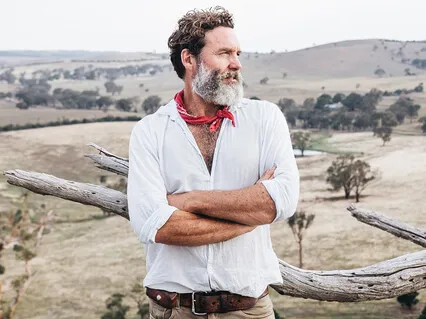
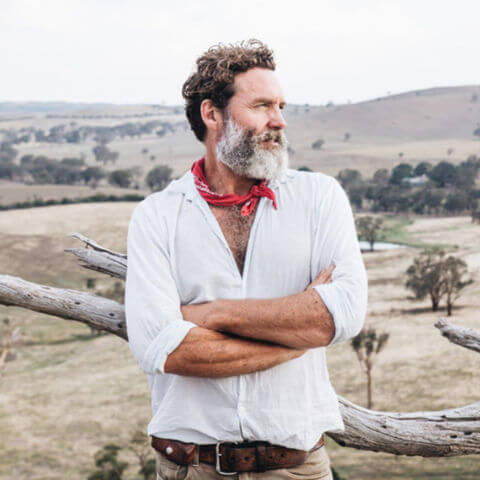
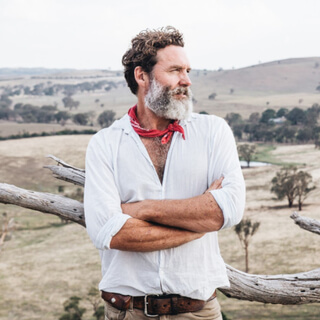
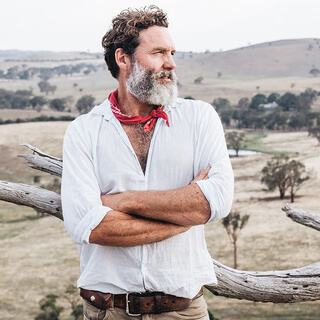
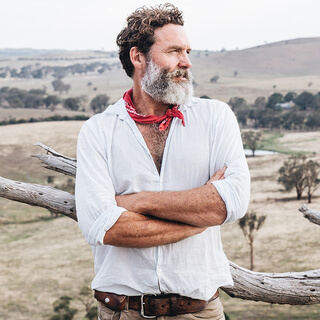
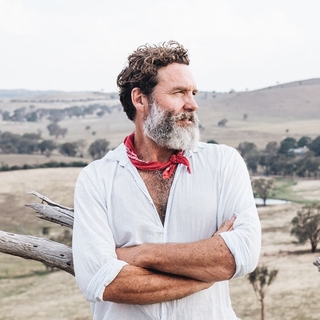
You know I think everyone instinctively knows and particularly at the moment I think everyone instinctively knows that we have to do something different but I don't think a big lot of shift will happen until we realise that we've got to have a bit of sacrifice to achieve the difference.
That was David Marsh and you're listening to The Regenerative Journey.
G'day,
I'm your host Charlie Arnott and in this podcast series I'll be uncovering the world of regenerative agriculture,
Its people,
Practices and principles and empowering you to apply their learnings and experience to your business and life.
I'm an eighth generational Australian farmer who transitioned my family farm from industrial methods to holistic regenerative practices.
Join me as I dive deep into the regenerative journeys of other farmers,
Chefs,
Health practitioners and anyone else who's up for yarn and find out why and how they transition to a more regenerative way of life.
Welcome to The Regenerative Journey with Charlie Arnott.
G'day,
Welcome back to the show.
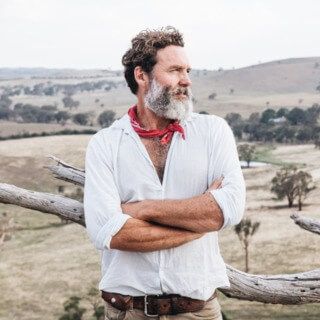
This week we're speaking with David Marsh here in the Allendale Garden,
A beautiful burrower.
David is one of I guess my favourite people in the world in that he helped me,
One of the reasons is he helped me fine tune my interviewing skills I guess over the last few years because it's here at Allendale where he and I often meet and I interview him in the paddock and we chit chat about all sorts of things.
In this chit chat,
In this interview we talk about David's life as a youth,
As a jackaroo,
His time here and his family's time here at Burrawah and you know,
Touching on a few of the events that took place that kicked him off on his regenerative journey.
He gives some sage advice I guess about,
To people thinking about transitioning and some of the things that one might think about in decision making and takes us on a wonderful ride through his career as a farmer and which is definitely not over.
He's got plenty more to offer and I suspect we'll be hearing from David in series two.
And the interview was a cracker and we've split it into two parts to make sure you can take it all in.
So here's part one and I trust you enjoyed it as much as I did.
Here is the legend,
David Marsh.
G'day,
We are in the wonderful garden of David and Mary Marsh.
Mary has just as David is demonstrating delivered a delicious cup of tea and some,
No it's not Christmas,
Some beautiful Christmas cake.
It just shows the conservative nature of this family.
We're still eating Christmas cake in May.
And that was Christmas 2017,
Okay from the end.
Well there's enough booze in there to keep it for that long.
Well let's kick off David,
Thank you for having us and being one of our interviewees on the regenerative journey.
How are you?
I'm well thanks Charlie.
I notice that we're probably violating every rule of the social distancing at this stage.
No we are,
Look I've got my hand fully outstretched there and it's 1.
5 metres at least.
I just want to start by introing David in so much as saying that my,
One of the bits of my little,
One of the journeys I've been on recently started here at Allendale.
In regard to the filming of interviews and interviewing you,
You were one of my first victims.
We've gone up quite a few gears in the technology I notice that you're employing today.
We're a little more casual in that we're not in the paddock,
We're sitting,
We're being a bit lazier.
But nonetheless the information will be as critical and as important and is riveting David,
The expectation is high.
So as is the name of the podcast David,
The regenerative journey,
I'm interested to know at what point in your farming career or life there were some changes in your life journey.
But before we go there perhaps you might take us through what you were doing before that point in time.
You take us back as far as you like.
Because if there's some sort of little snippets of your life before a turning point so to speak that may be relevant then we'd be,
We'd love to hear.
Well I,
You know,
I'm not that keen on saying this but I've been farming here for just under 50 years.
Was it 2020?
1971.
It's 2020 this year.
Yeah.
1971 I arrived here as a,
Probably the sort of bloke who shouldn't have been let loose on a farm I would have thought actually at the time.
Why's that?
I'd been away jack-a-rooing for three years.
Three wonderful years.
I'd look back on them with great fondness.
I left school at the end of 67,
January the,
February the 14th I remember.
I blew up a Volkswagen car on my way into Coonong Station at Yirrana and limped in there on about two cylinders.
And that began a wonderful time of two years out on the Riverine Plains which I loved.
Not a lot of formal learning as a jack-a-roo.
It was pretty much like learning to shear.
You know,
You picked up what you could if you were observant.
I hadn't grown up on a farm so I was hungry for absolutely everything that was going on.
So I had two years there and the manager there was a wonderful guy called Lionel Smith.
I became quite friendly with his family and kept in touch,
Still in touch with his daughter down at Wagga.
And yeah,
That was a,
I suppose one of the things that's been a bit of a threat in my life is the forming of relationships with other people.
And it was certainly an important relationship with Lionel.
Lionel was a former army guy.
He'd been a major I think in the army.
And Coonong was owned by Sir Roy MacCackey at the time.
And Lionel I think was seen by the fathers of the people who were sent jack-a-rooing to Coonong as a bloke who was going to knock their sons into shape.
He had a reputation for being a fairly hard taskmaster in a way.
But I didn't find him that way to be honest.
I thought,
Well,
Here's a guy with a lot of knowledge.
I was keen to pick his brains I suppose.
I wouldn't have put it in those terms.
But I used to,
On a Sunday afternoon,
He used to go for a cruise around the property in the Holden Ute.
And the bet between jack-a-roos was how many seconds it would take Lionel to get that Ute into second gear when he started moving.
And it was under three mostly.
But anyway,
He used to go for a big tour around the place.
It was a 40 odd thousand acre property so it was quite large.
And he'd do this tour every Sunday afternoon.
And I often used to go with him and open the gates.
So that was a really good opportunity to pick a few things up.
But as far as learning about the economics of running a farm,
No.
Didn't get into the office.
No,
There was none of that.
And I don't think,
I don't know anyone that went jack-a-rooing that had that experience.
We were out,
We weren't paid terribly well.
We were there to learn.
There were six jack-a-roos,
I think.
Overseer,
Couple of blokes out at the ram sheds,
A farming bloke,
Bookkeeper,
And the manager and some staff in the garden.
So it was quite a little community.
And yeah,
It was a revelation to me.
I just couldn't get enough of it.
And when,
So that was your,
I guess the first little dose of agriculture in that form.
And that would have been mainly sheep and was there cropping there?
A little bit of cropping.
Yeah.
Yeah.
Yeah.
They had a bloke who'd been,
Lionel knew him.
Lionel spent quite a bit of time on a property called South Yeranna as a young man.
And George Morris,
Who was the farming bloke at Coonong,
His father had run all the draft horses on a big property down near Oakland called Nowranny.
And I think they might have had something like 400 draft horses.
Anyway,
George translated his draft horse experience into managing the machinery at Coonong,
Which was minimal machinery really,
But sufficient to do a cropping program.
George was very keen to remove anything that he thought was unnecessary on most of the equipment.
What,
Like brakes and things?
No,
More like guards and stuff like that,
Charlie.
But no,
It was only a small part of the property really.
The main thing was the sheep stud,
There were 20,
000 stud used.
It was a medium to strongwall stud.
A lot of,
Big lot of rams used to go up into Queensland to Barcalden Downs and Inner Skilling.
And the old,
The classer was a bloke called Wilf Pennerfather,
Who was quite a fearsome character,
Big tall man,
Looked like he'd had a couple of scotches in his day.
But a very well respected classer.
And as the rams would be going down the classing race,
The call would go out Inner Skilling,
Barcalden down to Clark and Taiton,
The rams would be split up and then they'd go up on a train,
I think.
So that was quite an interesting experience.
As far as what was growing in the paddocks,
Probably,
We didn't,
I didn't know.
Compared to now,
And I'm absolutely obsessed with it,
I think I was very,
I think we got a good grounding in handling good stock and selecting,
Knowing what to look for when you're collecting stock,
That was pretty important.
Wasn't a great social life,
You had to hand your keys in,
Car keys got handed in when you drove in.
We used to go into Yerana to the Yerana Lawn Tennis Club,
Which had tarmac tennis courts.
And that was the social outlet.
No grog on the station,
It was a dry ship.
But we had a lot of fun.
We were a good bunch of blokes and good people to work with.
And David,
I guess an operation like that nowadays might have two and a half people running it.
Yeah,
Yeah,
It's been sold,
The Holtz bought it when the Macackie's sold.
And they ran the stud for a while,
But then the stud was dispersed.
And yeah,
There's,
I've been out there a couple of times and,
You know,
They had fantastic facilities for hand-sueing rams and had these big old covered in sheds.
They were originally thatched with lignum,
Which there was quite a lot of,
There was quite a lot of big swamps on Koonaw.
And they used to cut the lignum and it was done years before I ever got there,
But then they put tin over the top of that.
But you know,
When I went there last,
I can't think how many years ago,
Probably eight or ten years ago,
You know,
They were sort of falling down.
You know,
Nothing had been,
That sort of maintenance hadn't been kept up.
But yeah,
It's run on with contractors,
Like so much country,
Run with contractors and the owner,
Tom Holtz,
Does actually live there.
But yeah,
It was sort of getting towards the end of a big era down in the Riverina.
You know,
A lot of those big old properties were split up and sold,
You know,
The Aukners.
And yeah,
There were lots of properties that changed hands not too long after I left there,
Really.
And of course,
You know,
The wool market was abysmal.
You know,
When I came to Buruah,
You had to get a top-up payment.
You had to get,
I think it was 32 cents a kilo of wool.
And if you didn't get that,
The government gave you a top-up to make sure you did get it.
So it was,
You know,
A big heavy weather.
I remember selling a big mob,
Well not a big,
But a good sized mob,
Maybe 300 big heavy weathers,
Haddonrig type weathers,
To Jack Nunahoe in Buruah for $2.
50 and thought it was a good price.
Each.
Each,
Yeah.
No,
It was,
Things on the land then were pretty miserable actually.
So when you say then,
So 1971,
Early 70s,
Early 70s,
There was the cattle crash?
The cattle crash in 75.
But there was,
Before that,
I think there was Ian Armstrong,
Our near neighbour,
Who got involved in a thing called the Rural Action Movement.
There was a lot of unrest.
You know,
There were ratepayers,
Groups that were trying to get some rate relief.
Yeah,
There wasn't a lot of,
Not a lot of properties changing hands at Buruah,
As there isn't these days as well.
But this property came on the market and my father had an aunt who was reasonably well off and had no kids and she left her estate when she died to Dad and his sister.
And that's how the farm happened.
It's a bit bigger now than it was then.
But just to,
I don't know whether we want to get into the values of things,
But it's quite instructive to think.
We'll get into it early David.
Quite instructive to think that really the marshes were considered foolish,
Paying $114 an acre for this country in 66.
That was considered silly money.
And I don't know,
There hasn't been anything sold much around here,
But you know,
You'd be expecting probably three and a half thousand dollars,
Maybe more now if you were selling.
It doesn't mean we've changed our position on the financial ladder,
I don't think,
But just the value of the dollars altered so much.
It's an interesting thing to note,
David,
Speaking with Graham Rees there some time ago about the value of land and the change,
Capital growth and so on.
And you know,
People saying,
Oh,
Well,
If you,
You know,
Your property's worth this much now,
You know,
You're making a return on it.
And should you be selling your farm and putting your money somewhere else to get a better return?
And his argument,
I hope I'm sort of paraphrasing Graham,
Was that,
You know,
Really you've got to look at what you paid for it.
You know,
That's the return you're getting on it in some ways,
You know,
That's a whole other podcast series on finance and profit and loss there,
David.
That's not my strong point,
Actually.
We don't have to go there.
I'm glad you're eating that cake because the flies are about to take a play there.
So 1971 landed here,
Mid-70s.
I know that Ian Armstrong and John Carter and my father were involved with,
You know,
The cattle.
Cattlemen's union.
Cattlemen's union and some protests that resulted in shooting some animals on TV and on the news.
Where was that?
At Crookwall,
Wasn't it?
At Crookwall.
At John's.
At Lake Edward.
And that resulted in them getting a meeting with,
I'm not sure who,
What might have been the premier?
Would it have been Neville Rand back then?
I can't remember.
David.
No,
No.
Anyway,
Someone.
So that was the time.
So you were here then and then,
You know,
And farming as a burro farmer does.
Well,
Yeah.
Indeed I should have.
I mean,
That comes down to what was the philosophy of David Marsh back in those days.
And you know,
I think I was like every other young farmer.
I was wanting to prove that I could make a profit out of farming and do at least as well as my peers.
But it was pretty much all production oriented,
To be honest.
You know,
I hadn't heard of,
No,
I had heard of the notion of conservation because my father although he wasn't a farmer,
He was a wonderful,
He had a wonderful garden.
He had about four acres of garden in Burrell and he had,
He planted a very diverse area of Australian native plants,
Which he knew a lot about,
With a view to trying to attract birds into the garden.
There were birds there anyway,
But he wanted birds that were going to utilise the resources in this little plantation and it happened.
So you know,
I'd heard him talk about that and he's always talking about compost and he made a lot of compost.
And he really,
He was almost a permaculture farmer before permaculture had been coined as a term.
So I'd heard that,
But I wasn't,
I probably wasn't interested in it,
Like a lot of kids aren't when their parents are keen on something.
So I was more inclined to see if I could grow another kilo of wool and get a few more lambs than my neighbours,
And not that they were telling us how many lambs they got.
But you know,
We had a share farmer here,
There was a little bit of cropping,
Stubbles were burnt,
It was one way disc plough.
Remember the contractor,
One of his sons used to be the main tractor driver and they had a connoisseur 16 or 20 disc plough I remember.
And he used to,
There was a cabin actually on that tractor,
No air conditioning or anything.
Was unusual for a tractor to have a cabin on,
But this one had a tractor,
Had a cabin.
It was very fancy.
And he used to have his girlfriend sitting on his knee and she was quite an attractive young lady.
And,
And I remember watching them do the first lap around the paddock and the clods were going over the neighbour's fence.
That's how fast they would go.
So it wasn't great for soil structure,
But.
And he was exporting,
Exporting soil.
Exporting a bit of,
Yeah,
Yep.
We've had a little bit of it back over the years with dust coming back in when,
When droughts happen.
But yeah,
I think,
You know,
It was the time of,
Of showing that we had mastery over nature and you know,
A lot of that was to do with subsidies that were given after the war to try and,
You know,
There was a super phosphate bounty,
For example,
You get a,
I can't remember what it was,
But you got paid a subsidy to put super phosphate out.
You know,
That was seen as a wonderful thing.
When you look back on it,
It created a short burst of good stuff for a while.
But then after a while,
You know,
Acidity started happening and,
You know,
The long term effect of that policy is probably a negative,
Actually,
A lot of people wouldn't like me saying that,
But it is a fact.
And what was next then David?
What were you farming at the time?
We had a self replacing merino flock basically.
And like many,
We got caught,
Every time it got dry,
We'd get caught.
We'd,
We,
You know,
We were like most farmers at the time,
We didn't want to sell these things that we were breeding,
We'd spent money trying to make better and we're proud of our sheep,
Etc.
So when it got dry,
We got optimistic,
Like farmers do.
And we,
We hung on and hung on hoping for rain and then it didn't rain and then we were caught with too many stock in a drought.
That happened several times and we went backwards financially each time that happened.
And I didn't,
I wasn't switched on,
I was smart enough to work out what was going on actually.
I had no idea of working out how much grass I had or how long it might last.
We,
You know,
There would have been wise farmers who'd been on farms for generations who saw it coming and started reducing numbers.
I think further west,
The further western managers were much better at that than in here.
You often get out of jail in here where we are,
But out west you don't.
So they were very,
You know,
It was sell and repent but sell,
That was the mantra.
Whereas here it was hang on and hope you get lucky.
And mostly you did,
But sometimes you didn't.
And when that happened,
That was a big negative financially for us.
You know,
And I mean the big drought we all remember,
Even though we went through a nine year drought from 2002 to 2010 and we're just hopefully coming out of a very nasty three year rainfall deficit experience.
If you talk to blokes my age who were farming in Boorua in the 70s,
They'll always mention the 82 drought as the thing that was hardest on them.
And the reason was,
It was only a short drought really when you look at it,
But everything collapsed.
You know,
The stock market totally collapsed.
There was a sheep sale in Boorua where there was 3,
000 sheep in the yard and there wasn't a bid and everyone had to pay to get them taken home where they probably starved.
And the government exacerbated that because the farmers put a lot of pressure on the government to,
You know,
We couldn't have this wonderful breeding stock that we all had falling apart through lack of assistance by the government.
The government caved in and gave a 50% subsidy to buy wheat once you'd used any feed you had stored.
And of course we all thought,
Oh,
Isn't this wonderful?
So we'll hang on to them for a bit longer and turn the whole place into a desert,
Which is exactly what happened.
It was actually the last 12 months are the only time I've seen Boorua looking as bare as it did in 82.
But we didn't have nearly,
We had a couple of dust storms in 82,
But we had weekly dust storms over the last three years.
You know,
When it was really dry,
There was a lot of dust coming in,
But also a lot of local dust.
And David,
You were cropping,
Cropping then.
A bit.
A little bit of cropping.
Yeah,
But you did your fair share.
You used to win the odd Hanaminau wheat trophy.
I did,
No,
That was a little bit later.
I'm getting ahead of myself.
No,
Not really.
Yours like awards,
Charlie.
You like mentioning awards,
Especially when you're the person presenting them.
I'm going to get to yours soon,
Don't you worry.
But anyway,
No,
Look,
I got frustrated.
I mean,
The people who were growing crops as share farming,
I think it was a share farming deal,
I'm not sure.
But they were very nice people.
But you know,
They had quite a few clients locally.
And I was the last,
I was new chum Charlie,
So I was the last one in the queue.
And we all know that timing is pretty important when you're growing crops.
And so I got frustrated with the fact that I couldn't get people when I wanted them.
So I didn't really have financial control of what I was doing here.
We had,
It went through an accountant,
It was an accountant my father had,
Who turned out to be,
He was a very nice man,
But he was really only a bookkeeper.
And probably wisely keeping the brakes on D Marsh at the time.
But anyway,
I did buy some,
I bought a secondhand Massey Ferguson tractor and a secondhand Shearer twin disc plough and a scarifier and a combine for sowing that should have been put in the tip before I got hold of it.
And I had a bit of a go at farming and it was a bit of a,
Wasn't much good.
There were no chemicals to help you with weed control in those days.
It was all cultivation and there was lots of cultivating going on.
So were early 80s?
No,
Sort of mid 70s.
Okay,
Up to the late 80s probably.
It was mostly kept,
Mostly cultivating plough with the discs.
And then when you get a rainfall,
Put stock on it,
When it greened up a bit and then put a cultivator over it.
So basically you destroyed the soil structure.
And because of the long amount of time that country was exposed to the elements,
It was at risk of erosion.
And also when there was moisture about,
We thought we were conserving moisture,
That was the idea of fallowing.
But really when you do that and there is some moisture there,
What happens is there's a lot of biological activity in the soil and it's burning out all the organic matter in your soil.
So there was lots of times when there were,
Particularly when you'd had the cultivator over it and maybe the harrows and it was getting pretty fine and you're getting close to sowing and then you'd get a storm or you'd get a storm just after sowing when the paddocks would be like billiard tables.
It was so fine and there was nothing to impede the water.
It couldn't get into the soil because you'd destroyed the structure.
And so there were lots of,
And we used to make light of it.
You know,
We'd say,
You know,
You'd be in the pub,
How did your paddocks get,
Oh yeah,
We had a bit of wash,
A bit of wash.
But it wasn't,
We've had a bit of wash and that's an absolute disaster because we're probably destroying soil a thousand times the rate it's been created.
That wasn't in the conversation at all.
But we would have been worried about it,
But probably downplaying its significance.
And then you upgraded the machinery.
Yeah,
I was going to say.
What's your bed of machinery?
Because I used to see you getting around in some bit fancier gear than that.
Oh yeah,
That was a bit later though Charlie.
No,
We upgraded,
Got a new tractor and a new plough and a good combine.
And I can't remember when things like Roundup came along.
I think it was between the mid and the late 80s.
Prior to that,
Really the only weapons you had against weeds in a crop were,
There was nothing like glean,
There were no residual herbicides.
There was 2,
4-D and stuff like that for controlling broadleaf weeds in cereals.
And NOLA was,
Oh look,
It probably started in about 75 or 76.
I had a bit of a go at it,
It was miserable.
But I was going to make a good point there and I'd forgotten it.
But no,
We didn't make a lot of money out of cropping I don't think.
We didn't realise,
We were too stupid to realise that we weren't really making any money.
We were probably,
If you'd asked us or asked me then,
What was my point with cropping,
It would have been to do something to ultimately get a pasture sown at the end of it.
That was probably the reason we were cropping.
But that's what I was going to mention.
We had,
There were nobody,
I mean you couldn't,
I don't think you could buy a proprietary boom spray back then.
There was a guy at Moringo who had a boom spray that he'd made himself.
And I remember when Treflan first came up,
He used to fill his tank and he'd tip the Treflan in and then he'd stir it with his arm up to the shoulder.
Treflan?
Yeah,
Yeah.
It's true.
It was for controlling ryegrass prior to emerging wheat.
And can I,
I used to Treflan and Harrow and then Della and Canola.
It would create a very fine,
You'd incorporate it with the Harrow.
Anyway,
So,
But then to get the 2-4D on,
If it was wet,
You'd get the aircraft and you'd have a super bag so you were visible.
And every time the plane went over you or beside you,
You'd go another 20 odd paces or whatever the width of the swath was.
And was probably not advised to be doing that,
But we did it.
You were just with your… Yeah,
We had a raincoat on or dries a bone on.
Oh,
You did?
Oh,
I can't.
You took that,
You might have been there with your Terry Toweling and your… The Terry Toweling hat,
That was the hat of choice.
Yeah,
A great absorber of chemical too,
I guess,
On the melon.
But even when I was a jackaroo,
You know,
Anyone who turned up with a big hat,
We thought they were dickheads.
The big hat didn't come around until we got rid of the Terry Toweling and the white cricket hat.
There was a transition from Terry Toweling to cricket.
I did actually have a bloke,
I had an earlier kubra and a bloke who was a very nice,
Fair way up the road neighbour of mine pulled up and asked me if I had the place on the market.
The bigger the hat,
The smaller the farm.
That's it.
David,
And so where,
At what point in your travels,
You know,
Where was there a turning point,
A pivot,
You know,
What events unfolded that… Well,
Look,
I think,
Although I said earlier,
I wasn't really thinking about conservation,
In the mid to late 70s,
All of a sudden,
We noticed,
We used to have a big problem with Christmas beetles and scarab beetles grazing on the eucalypt trees.
And every summer they'd just be turned into sticks.
They'd eat all the leaves off these wonderful big trees we've got.
And a few of them started to die.
And this property only had 3% tree cover on it.
So it had been heavily cleared.
It would have been about 20% in its original state before agriculture.
And 3% was that the standard across Boora,
Wasn't it?
That's what you were saying.
No,
I think the Boora,
Remember the Boora Shire,
The eastern part of the Boora Shire has got quite a lot of remnant vegetation on it.
Round here,
Very little.
I think the total,
I think the average for the district was 15%.
Okay.
Yeah.
But so 85% of it has been cleared.
Yes.
Which is a lot.
So we didn't have a lot of trees and we were worried about them dying.
My father had planted a couple of plantations here very early in 66 and 67.
I probably ignorantly thought privately without ever saying it out loud that that was a lot of effort and why would you do that?
Why?
Because you thought more trees,
Less stock.
No,
I didn't.
No,
It was just an extra thing to do.
And Dad had this tree plantation going down from the house to the road and we had a rotary hoe and the deal was you were meant to rotary hoe the trees so the weeds wouldn't swamp them and I was a bit resistant to that because I was trying to run a sheep flock and I thought it wasn't real farming.
So however,
We noticed trees dying.
Mary and I went out and did some counts in a few paddocks where there were quite a few trees and yeah,
We calculated that at the rate they were dying in 70 years there wouldn't be many alive and that was the embryo of an awakening of an ecological conscience,
Could I say.
So we thought we'd better try and plant some trees.
Had no idea what we were doing.
So in 81 I think was the first time we started planting a few trees and I established a few plantations but they weren't that successful.
But I started putting these black polythene half inch drip lines on them which I only did that for a short while.
I thought that was the way to get trees to grow.
But anyway,
I got the bug in the mid to late 80s.
In the middle of that period,
In the early 80s,
My father had a mate who was one of the senior foresters in Victoria and he was very involved.
He was one of the blacks who kicked off the idea of whole farm planning and the Potter Farmland Plan.
He was heavily involved in that.
Bill Middleton his name was.
And not the Bill Middleton from Beinlung of sheep fame.
This was a tree man down in Victoria.
I met him.
He was a wonderful man.
And he only died two or three years ago.
Anyway,
He sent my father a draft I guess you'd call it of what became whole farm planning and I got a look at it and I thought,
Gee,
This sounds so sensible.
Because what it did and what the Potter Farmland Plan did was it,
In five years,
They gave a number of farmers who applied to be one of the Potter Farm Plan farmers,
They gave them enough resources to fully implement what would take a family a lifetime to establish on a farm.
You know,
Like they changed the fencing arrangement to fit in with the way water flowed in the landscape.
They fenced it to capability,
Land capability.
They did a lot of tree planting.
It was a great thing.
So I got a look at that and I went mad with changing fences.
I changed a lot of fences here.
We didn't make any more paddocks,
But we did fence to land type I suppose is what you'd call it.
Land class subdivision I think I called it in the books.
And then so all through this time we're sort of growing some crops,
But mostly we're running sheep and a few cattle from time to time.
But then the problem with the trees dying kept on going until I suppose it was Joan Kerner really who kicked off Landcare and then through her influence and the Potter Farmland Plan probably had a bit to do with it.
The CEO of the Potter Farmland Plan was Andrew Campbell who became the first national Landcare coordinator.
And now is the head guy of ACR,
Which is a cooperative project of the Department of Foreign Affairs and Trade.
They do cooperative agricultural research with countries to our north and we provide the resources and we share in the benefits.
And then this amazing conversation happened between the federal government,
Bob Hawke I think,
And the Australian Conservation Foundation and the National Farmers Federation,
Rick Farley.
I should remember the name of the Australian,
The ACF guy.
Another wonderful man,
An unholy alliance of people who probably wouldn't have had that conversation not too many years before,
But out of that came this notion that we needed to look after the country as well as make a profit from it.
And so this idea of Landcare began and it became much bigger than anyone expected I think.
There wasn't any money around at the beginning.
We formed one of the early groups at Boorua.
1989.
1989,
31 years old this year,
Charlie.
And I think it's fair to say that we Boorua were,
I think the first group was in Victoria that actually formed if one was to go back through the archives.
And I've been spouting that Boorua was the second.
And I'm yet to be proven wrong.
I'm going to run with it.
There were a few early ones.
I actually got asked last year to go up and speak at the 30 year reunion of the Burdekin Catchment Landcare Group.
Yeah,
Right.
So it's the same age as the Boorua Group.
That's in Queensland.
Oh,
They were a couple of days after us.
But no,
Look,
I don't know.
But we were certainly quite early.
And I can't take any credit for the starting of it.
I was the first president of it.
But I know I honestly can't.
No,
No.
There was a schoolteacher here called Nola McKeown.
She was a neighbour of yours.
That's right.
John's wife.
Yes.
And she was keen on the idea.
And Derek Mason actually mentioned it to me.
He was the local editor of the local newspaper.
And we had a little meeting and the rest is history.
But we had no idea what we were doing,
To be honest.
We thought we were – why did we form a group?
We thought we were forming a group because a lot of trees were dying at Boorua.
That was the purpose on that first bit of the Landcare Group.
But the trees were actually an indication of a whole lot of other things that were going on that we didn't recognise because we were ecologically blind,
I think,
The whole lot of us.
What were some of those other underlying – Well,
You know,
It was very tempting to say,
Like in the New England,
Trees are dying,
We must find out what's causing it.
And when you go to do that,
You find out that there's a multitude of reasons.
It's not just – it's too simple to say something's killing them,
The beetles.
No,
It was much more than that.
And actually what it came down to – I don't know whether I was early in this,
But I did read a lot of the research in the New England Dieback,
Et cetera,
And I knew one of the ladies who did a lot of the research up there.
She was – I can't think of her name now.
She was an absolutely fantastic scientist.
I'm very disappointed in myself that I can't remember her name.
But anyway – We can track it down.
We can track it down,
Yeah.
So I began to think,
Well,
Actually it's the change in diversity in the landscape that is the root cause of the problem.
And I don't know whether that was such a common thought at the time,
But that's what I began to think it was.
And when you think of it,
You know,
In this district and in many districts in Australia – well,
If you look at Europe,
For example,
In the development of agriculture,
You know,
There's 8,
000 years of history there,
Starting off from a small population,
Starting to become agricultural people,
And then gradually changing the landscape and society grew because of it.
But here we turned up with a few ships in 1788 and 230 years later.
In this district,
Apart from the remnant trees,
Which are old and getting near the end of their lives,
Most of the ground layer of vegetation has been completely replaced in 230 years and it evolved here over several million years.
I mean,
That's an astounding thing to contemplate,
Isn't it?
Now,
I'm going to jump ahead in my thinking a bit here because it sounds a bit depressing to hear that story that,
You know,
We kicked out the plants that we didn't try to kick them out,
But our management was such that they weren't able to withstand the onslaught of stock grazing them constantly.
And so they faded into the background in many areas,
And this is one of them.
They pretty much died out.
When I started what we're doing currently in 1999,
We had one hectare of native grass out of 814.
And I didn't really consider the enormity of that,
Actually.
Now we've got a lot of native grasses.
Some we've introduced.
We've introduced a bit of seed species that once occurred here but have dropped out over time.
But we've done a bit of that and that is spreading quite quickly.
But it's also spontaneously happening,
Which says to me that the ecosystems,
Because of the sweep of evolution,
Have the capacity,
They have an innate knowledge,
If you can call it that,
Of how to be more diverse.
And that can happen if we change what we do.
So that sounds probably far too philosophical for a lot of people who are thinking about whether they can afford another tractor.
But it's where I've got to in my thinking.
I was very excited about the farming program on Allendale.
And we did,
As Charlie mentioned,
We did grow a few good crops and won a couple of prizes for doing it.
But I thought that was our best enterprise.
But when I changed my thinking and decided to move in a different direction with agriculture,
I had to put the enterprises that we were running here through a thing called gross profit analysis,
Where you analyse each enterprise and you say,
Well,
What's the percentage of our overheads this particular enterprise is covering?
And the one that came out the worst was the cropping,
Because it's so energy intensive and costly.
Dollars up front in a very variable climate.
So it proved to be,
We wanted to get away from it anyway.
I'd started reading a whole lot of stuff,
You know,
An agricultural testament,
Sir Albert Howard,
And my father had Rachel Carson's groundbreaking book,
Silent Spring,
Which I read.
It came out in 1962.
I didn't read it then,
But I read it sometime between then and the 80s.
And if you haven't read it,
I suggest it's worth reading,
Because it's an absolute wake-up call.
But yet that was 1962,
Here we are in 2020.
That's 60 years later,
And we've done very little to – there's a movement against the things that she was raising concerns over,
As in,
You know,
The indiscriminate spraying of chemicals and what their long-term effects might be on life.
But we haven't really got serious about it.
There are groups,
And I guess I'm in it,
Who are trying to show that farming and letting ecology do what it is naturally trying to do,
Which has become more diverse,
Can solve a lot of the ills of things that we have thrown a lot of money and toxic products around trying to fix up.
So that's a big leap for a lot of people.
It's a hell of a leap for a lot of people,
And it's not surprising that it's not suddenly just happening.
But I think there's more and more – there's definitely more and more interest in – I mean,
This virus that we're coping with at the moment,
If it's done a whole lot of things,
I think there's probably a lot of things we're not going to go back to,
Perhaps,
After it's run its course.
But you know,
It's made people reconsider how they've been living and how dependent they are on so many things that are high energy products that maybe aren't that good for us or the planet.
And you know,
I mean,
You can't buy vegetable seeds at the moment,
Because everyone wants to plant a garden.
I mean,
That is an extraordinary thing.
It's a great problem to have,
Isn't it?
It is.
So I'm rambling a bit here,
Charlie.
No,
I like it.
You'd better get me back on tack.
No,
No,
No.
I'm glad you touched on the pandemic.
I might go back to that just to maintain some distance.
Would you like to move another metre sideways?
To maintain some chronological order there.
So David,
Was there a,
You know,
Event that might have made you – you've been reading some books,
You've been privy to a few things,
Your ecological consciousness was developing.
Were there some events that,
You know,
Really sent you in a different direction at that time?
Well,
Look,
There were a number of things that happened.
I started having contact with the university up at Orange.
They used to bring farm planning students down here.
And I got friendly with one of the lecturers there,
And he used to bring students down annually and I'd talk to them.
And then I had,
Finally,
Students from Sydney University coming up here.
And this is probably a little bit later,
Because I'd probably done a holistic management course by the time – I might have been just before I did the holistic management course,
I had these students coming up from Sydney.
And then I went in a slightly different direction with trying to make decisions that weren't just economic and having more than an economic relationship with the landscape.
But also considering the social part of it and the environmental,
Natural resource base.
In all our decision making,
We considered all those three facets,
People,
Business and landscape.
And when I was talking to these students about that sort of thinking,
It was completely foreign to them.
And quite a number of them came up to me and said,
You know,
Why don't we hear any of this at university?
And it's a real problem with education,
Because it takes a long time to develop a syllabus.
And then nowadays,
Government funding for universities has been wound back very,
Very tightly.
And so there's not a lot of research.
Look at things like CSIRO,
They don't have a lot of funding for doing research.
Core research at universities is funded now by industry.
And I'm not saying they're scurrilous characters,
But you can't help when you hand your university over to industry providing the funds for the research that obviously they want to pay off.
I mean,
They're running businesses.
And so the research,
The topics being researched get narrower,
And the issue is that the people providing the money for the research want to have a payoff.
In other words,
They want to sell something at the end of the research.
So the research topics get narrower.
That's a problem,
I reckon.
You know,
CSIRO,
I was on a group once,
And one of the guys on it was,
He was the head of the deans of soil science at all the universities in Australia.
He was a Scottish fellow,
Can't think of his name now,
Very nice man.
And I was talking to him about this issue with research and the CSIRO,
And he said,
When I was a graduate student in Edinburgh,
He said,
We used to hang out,
We'd be hanging for the next research paper coming out of Australia,
The CSIRO.
It was just they were so innovative and that far ahead of anyone else.
And he said,
Now they're almost irrelevant.
There's so little effort going into that.
So that's an issue.
So then Mary and I had a child who was born with a complicated heart,
And we decided that perhaps we might be well advised to get closer to Sydney and doctors and stuff like that.
And so I didn't have any formal qualifications,
So I sort of thought I'd better get myself,
If I'm going to try and earn a living,
If we're not farming,
I better get some qualifications.
So I did two things.
I'd heard about holistic management and I'd heard about it in 1989.
A friend of mine went to America on a Churchill Fellowship,
Scholarship.
Fellowship,
I think.
And he was looking at,
He came from just up the road,
He had family had two or three properties up there,
But they had a property way out at Engonia,
Which is about an hour north of Bourke.
And a lot of that country in the early days was very open country,
But then it got started to get absolutely covered up with shrubs.
And so this fellow did this Churchill Fellowship.
One of the things he did was,
It's a worldwide problem,
The encroachment of woody shrubs into semi-arid environments.
It's a worldwide problem.
It's a reaction to us and what we do.
It's a reaction to the way we've grazed those areas that were managed totally differently by people that we call primitive or have called primitive,
But whose societies have been much longer than any agricultural society that's been over the course of agriculture.
So anyway,
He came back with a book written by this guy,
Alan Savory.
And about the same time as he gave me that book to read,
And I tried to read it,
I found it quite hard to read.
I didn't pick up on the ecological part of it,
Which was probably the heart of it,
But I was very interested in the grazing techniques that this fellow used and the principles behind that in that grazing plants to mimic the way big herds of diverse grazers used to graze in countries where they existed without fences.
And the thing that's blindingly obvious,
If you think about it,
Is that they were moving the whole time.
Whereas we tended to fence country,
Leave animals in one place conservatively,
Sometimes for their entire life.
Now that's okay,
But there are huge consequences.
And the big consequences are that all the perennial plants that evolved in these places where you do that tended to disappear and get taken over by a whole lot of annuals.
And that was pretty much exactly what we were dealing with and are dealing with in Australia in many,
Many areas still.
So I got a bit interested in that.
But I was sort of,
The 90s,
That was 89,
I got that book.
In the 90s,
Oh sorry,
I also enrolled in the inaugural Sustainable Agriculture degree course up at what used to be Orange Ag College,
It was at that time part of the University of Sydney.
And so I was one of the guinea pigs.
And we did a,
Oh it was a graduate diploma because you couldn't go further than that until you had some sort of qualification.
I had none,
So I was enrolled in a graduate diploma,
Got through that,
And then they suggested I might do a Master's degree,
Which sounds very grand,
But it's an extra year of hard slog when you're working full time.
Unless you've got a very generous family,
You probably can't do it.
Anyway,
My family were keen for me to do it.
And it was a very,
It was a hard thing to do,
I've got to say.
I enjoyed a lot of the reading I did,
And it opened my eyes to a whole lot of other things than just having an economic relationship with the landscape.
And so then this wonderful young boy of ours,
Matthew,
Just to make life interesting for him,
His cardiac problem wasn't big enough,
So along came an abscess in his brain,
Which was related to the poor filtration system of his plumbing of his heart and lungs,
And he got an abscess in his brain,
Which threatened his life,
And he was in hospital for a number of months.
And so that sort of precipitated our desire to sell up,
And we put the place on the market for about a year.
I don't think we really wanted to sell,
We were a bit half-hearted about it,
We put it up for tender.
Anyway,
The upshot was it wasn't sold,
And the kids threw their hats in the air,
They were very excited to be continuing on as a bureau of people where they'd grown up.
And that was in 1986 that Matthew was unwell,
And,
Wait a minute,
Is that right?
No,
1996 that was.
So yeah,
And then within a couple of years I did these courses and started making holistic decisions.
So we've been doing that for 21 years now.
For half the time we've been making different decisions and doing things completely differently to what we used to do before,
Half of the time has been below average rainfall years.
And yet over those below average rainfall years we haven't spent one cent feeding livestock because we've learnt how to measure our grass,
Get the numbers right as the seasons start to fall apart,
And not get caught with too many stock.
So what has that meant?
Probably the biggest thing it's meant that people – we are starting to talk about it a bit now,
But the unsung part of this story is the effect on you socially.
The level of anxiety that goes on in rural communities when people are up against it,
Their farms are blowing away,
They're spending hundreds of thousands of dollars feeding stock,
That is an incredibly hard thing to cope with socially,
Let alone economically and environmentally.
So not having those levels of anxiety,
Obviously we want it to rain like everyone else,
But it's very comforting knowing that your farm's not falling apart and that you're not racking up this brightening debt.
Now the last three years have been very different from any other dry period we've been through.
Mostly what happens is the livestock market's collapsed and it all ends in tears really.
But this time around animals have been very high value the whole way through and they're extreme value right now because it rained a bit.
Well,
They were very high even before it rained.
So in some ways that's been a bad thing for the environment because the value of the stock has encouraged people to do the sums that say,
Yes,
We can afford to feed them and it'll pay and it has paid,
But it's come at a very heavy environmental cost.
Now a lot of people now have put in drought lots,
Sacrifice paddocks,
Not quite so good I don't think,
But putting stock into feedlots and feeding them,
Yeah,
It's a challenging thing to do.
People have done it for up to 18 months.
It's a pretty depressing thing to have to do I think.
I'm sure the animals aren't enjoying it very much even though they're being fed properly.
But we've found that we weren't really doing that well at farming economically.
We tended to be sort of marking time a bit,
Making the odd profit,
But then getting a big move backwards when we get into dry weather.
And since we've been changing what we do,
So matching our animals to the landscape,
We've almost got no debt,
Which is just something we never thought I'd be able to say that.
And I haven't really tried to get in that position really by thinking a lot about the money.
I think it's happened because we've made decisions that are supportive of the environmental side of agriculture.
And that means that your farm is incredibly low cost to run and it's much lower risk.
So yeah,
I think it's now being,
The term regenerative agriculture has been coined.
We thought sustainability was great,
But it got everyone's,
Everyone was sustainable after a little while in every walk of life.
And we as farmers have come to the view that sustainability is not good enough.
If you've got something that's damaged,
Sustaining it in that state is not,
It's no good.
You've got to do better than that.
It's got to be able to recover and it has this innate capacity to regenerate.
It's not necessarily what we are doing.
We're not doing something to make it regenerate other than allowing it to.
Now,
A few months ago,
I was thinking about this and I was talking to someone about this philosophical argument we're just discussing now.
And I said,
Look,
I used to see myself,
This was back when I was a conventional farmer getting involved with conservation with land care.
I used to see myself as the agent responsible for healing the land.
And there's nothing wrong with that.
But now I see myself as someone who's observing the landscape healing itself.
Now that is incredibly powerful thing for the psyche of a human being.
I think if you can get yourself a bit ecologically literate and what should happen.
I've found it incredibly,
I don't get excited and wave my hands around a lot,
But it's something that does really excite me.
I get a real boost out of going out every day and seeing what's going on in the paddock.
Well,
There you go,
Part one was a wonderful interview and you'll find part two of David's interview up next in the show episode list wherever you listen to this.
For more episode information,
Please head over to www.
Charleyharnett.
Com.
Au.
This podcast is produced by Rhys Jones at Yeager Media.
And as the recipient of the Bob Hawke Landcare Award,
Charlie would like to thank Landcare Australia for their support in the creation of this first series of the Regenerative Journey.
Thank you.