We don't need new knowledge,
We need to apply what we already know.
That was Jim Garish and you're listening to The Regenerative Journey.
G'day,
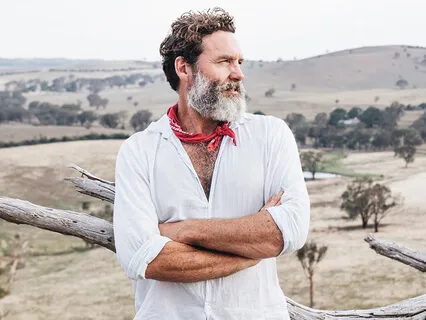
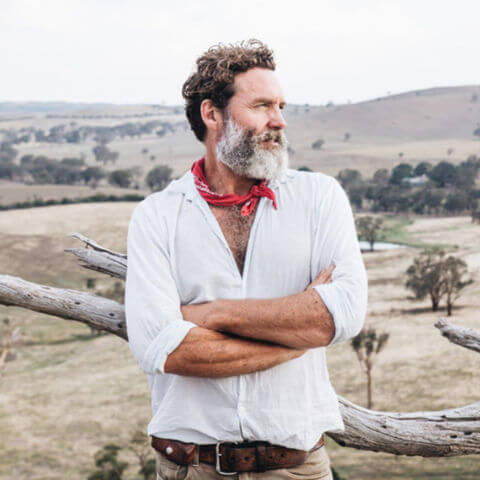
I'm your host Charlie Arnott and in this podcast series I'll be uncovering the world of regenerative agriculture,
Its people,
Practices and principles and empowering you to apply their learnings and experience to your business and life.
I'm an eighth generational Australian farmer who transitioned my family farm from industrial methods to holistic regenerative practices.
Join me as I dive deep into the regenerative journeys of other farmers,
Chefs,
Health practitioners and anyone else who's up for yarn and find out why and how they transition to a more regenerative way of life.
Welcome to The Regenerative Journey with Charlie Arnott.
G'day,
Welcome to this episode.
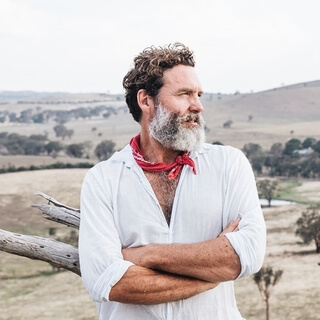
Jim is from the United States and what a font of information.
I was expecting to stay mainly in the regenerative ag space talking about I guess food production and grazing and some sort of business angles there but we spend a lot of time actually understandably and appropriately speaking about human health and the connection that we have with our soil through our food and our health being directly related to the state and the condition and the health of that soil.
We also touched on some really interesting sort of background on the grain fed beef industry and actually chemical ag,
The military origins of chemical ag.
You know,
He had some fantastic quotes I have to say.
Jim's got a very interesting addiction and I'm sure he'll be very interested to hear about.
We talk about pharmaceuticals and sort of agricultural pharmaceuticals and the effect on human health.
So I trust you'll enjoy this one and I also,
Big shout out again to Landcare Australia for their very grateful support for this podcast and enjoy my interview with Jim Garish.
Jim Garish,
It's a pleasure to have you on our show,
The Regenerative Journey.
We're sitting here at a cottage at Wilmot having had a field day put on by Myer Grazing.
Welcome.
Thank you.
Pleasure to be here,
Charlie.
Jim,
Tell me,
Just to give people a bit of context,
What's been your main sort of,
I guess your job here today as a presenter,
Talking at the Myer Grazing field day here?
Did you have a job?
You think you had a job?
No,
I did.
I have a job.
I had a couple of topics to cover.
One of them,
What I started with this morning,
Which actually wasn't the topic that they had asked me to address,
But because so many questions had come up over the last couple of days,
I just made that arbitrary decision,
Hell,
I'll talk about something else.
You switched it.
Yeah.
And so I talked about the basis of subdividing pasture,
Why we do it.
And I have a little different twist.
Most people,
When they think about splitting up pastures,
It's about the space.
You make bigger pastures into smaller pastures.
My view is that we create smaller and smaller increments of time.
Because in my view,
My evolving view over the last 40 years is that time management is actually the more critical piece of grazing management and what spatial management is.
So that was the first topic I covered.
And then the other one was seven things I've learned in the last 40 years.
And I could have done 11 things,
19 things,
But you get it down to seven.
And that's kind of seven key points about grazing management and the broad context of what we're trying to accomplish.
Jim,
I missed that bit.
I have to say I was getting set up here doing podcasts with someone else.
So I'm going to get back to that one.
Tell me,
Jim,
Where did your regenerative journey start,
Do you think?
In terms of the career path you're now on,
I know that you were a trained agronomist and cropping agronomist was your background,
I understand.
And then that sort of morphed into,
I guess,
Interestingly enough,
Advising,
One of your roles is advising graziers how to grow more grass,
Essentially.
I really wasn't a cropping agronomist.
I was always a pasture agronomist.
And I grew up a very conventional crop farmer in Illinois.
And I always say,
Well,
I got over that.
What got you over that?
So when you grow up a farmer,
There are certain things that you enjoy,
Like the aroma of fresh turned earth plowed ground.
And then at some point,
And I don't remember exactly when it was that I came to learn that that aroma that I loved so much is the smell of the earth dying,
Because tillage destroys microbial life in the soil.
And it's when you till the ground and disturb the established microbial network that you get that release of that great aroma.
So suddenly,
It didn't seem like the same thing to do.
And so crop farming went by the wayside.
I've never been a fan,
In my adult life,
A fan of using herbicides on weeds and pasture crops,
Anything like that.
And so I was already moving away from the idea of chemical based agriculture in by the mid to late 1980s.
What was really driving regenerative farming and ranching now is the increasing understanding of soil biology and its role in making everything work better in the soils.
And that's really 21st century science.
So I don't know when I first heard the term regenerative agriculture,
But it was certainly wasn't in the 1980s.
And I don't think in the 1990s.
So sometime in the early 2000s,
That term started being used.
But I would say my journey began sometime before the terminology came into common use.
In the mid 1990s,
We started doing grass fed beef research at the University of Missouri research station where I worked.
And I also remember,
I think in 1995,
On our own farm was the first time that we butchered a 100% grass fed steer and I hope my God,
I hope this is even fit to eat.
And it turned out to be some of the best beef I'd ever eaten.
And we got a little more skillful at it.
And the animal genetics were a little different.
We got better and better at it.
And I came to the realization that we don't need feedlots.
We just need people who have the grazing management skills to take a pasture and turn it into delightful beef.
Jim,
The origins of grain fed.
So that's,
I guess that's an alternative to a grass fed animal.
Tell us about the,
How do we get to the point of jamming all that grain into cattle?
Well quite frankly,
In the US,
It's a post World War Two phenomenon.
When the food production capacity of Europe was destroyed by war raging across that continent,
That's when American farmers were first told you got to feed the world.
And so in World War Two,
And immediately post World War Two,
The US really ramped up its grain production.
And that was literally to try to feed the world.
And then as the European farming scene and economy got back on its feet,
Suddenly we were sitting there in the US with this huge,
Huge surplus of grain.
And what are we going to do with that grain?
Somebody came up with the idea of,
Hey,
Why don't we beat it to stairs?
Because hogs had always been fed some grain,
Well always is a strong word.
Hogs had been fed grain for a long time to fatten down.
And so why not stairs?
And that is the origins of the feedlot industry.
In the US,
It was really just an avenue to get rid of excess grain post World War Two.
It's not too similar to the,
How we came to be using so much chemical in agriculture.
Oh,
There isn't post World War Two.
So,
Phosphorus is the,
Or the super phosphate fertilizer,
That's a byproduct of the weapons industry,
Ammonium nitrate,
Byproduct of the weapons industry.
Some of the herbicides,
Well,
I should say insecticides,
Insecticides,
Some of them are derivatives of poisonous gases created in World War One.
And so yeah,
There's a whole lot of the chemical industry,
Agricultural chemical industry that came as an offshoot of World War,
Of military technology,
And we didn't need the military application.
So let's make war on bugs,
Let's make war on weeds.
And there we found ourselves buried in pharmaceuticals.
And at what point,
Jim,
Did you think,
I'll ask a question,
Was that part of your farming journey or your involvement with agriculture,
Was there a part in your career where you were involved with the use of those herbicides and those pesticides as a practice or as an advisory role?
In the research role in Missouri,
Yes,
We did fly control research with insecticidal ear tags,
Feed-through larvicides.
We did parasite studies with ivermectin,
Cydectin,
A lot of the common dewormers.
And yes,
We did that.
And I would say one of the things,
Something that really opened my eyes,
We were also doing mineral cycling research,
Looking at manure distribution based on animal travel distance to water,
Stock density,
Size and shape of paddock,
Stuff like that.
And so we have students doing these assessments and they started bringing in numbers,
You know,
Manure count numbers.
And if you want to know how you do that,
And by the way,
In research,
We don't call that a cow pie or manure pile.
It's an S-E-E,
Which is a single excretory event because a cow can walk and string poop along or she can stand in it.
And you have to be able to distinguish what's one single excretory event.
It could be a trial.
It could be trailed out for eight metres.
There you go.
There you go,
Folks.
You're learning all sorts of good stuff.
So we were and we would we had pastures that were gridded out.
And so students would go out and count manure piles in a particular grid area.
And they were starting to come in with numbers that just seemed excessive.
Didn't make sense.
So I went out and looked and saw that they were recounting piles from the previous grazing episode and said,
Why is this why is this happening?
Why do we have these fully intact manure piles out here?
And this would probably have been around 1990.
And we had overlaid on that research,
A feed through larvicide study within the university,
Within the research system.
You really try to leverage your investment in research animals and research pastures to do multiple products.
And you do it under the guise of interdisciplinary research and stuff.
And so we were working with a parasitologist.
No,
Not in that case,
It was an entomologist,
Livestock entomologist looking in heat.
So he was looking at the effect of these feed through larvicides.
And lo and behold,
We were completely sterilizing all of the insect activity out of those manure piles.
And so they were rather than disappearing,
You know,
Over the one recovery period and largely being gone,
Say in 30 to 40 days,
They were persisting.
And so I started looking at that,
You know,
Marking piles and seeing when is this finally going to go away?
And we had cow pies out there that lasted two to three years because of the feed through larvicides.
So that was something that,
You know,
Triggered in my mind.
And this was before the research that was showing Ivermectin was killing dung beetles.
It was actually before that,
Took me a little while to put two and two together.
And so sometime in the early to mid 90s,
You know,
I started realizing that we had a real problem with the insecticides that we were using with the cattle,
The deworming agencies that we had a non-target organism problem.
And then the Ivermectin research started coming out and the list got bigger.
And now we know that there's thousands of non-target organisms being harmed in the soil environment and the plant canopy by these various pharmaceuticals.
And that probably that early to mid 90s research that we were doing with entomologists and parasitologists is really what started me thinking about the broader picture of what are we really doing here?
And I sometimes say that,
So I occasionally get introduced as being a retired university professor.
I'm not a retired university professor.
I quit when I was,
I just turned 47,
You know,
Tenured position and,
You know,
Got a paycheck at the end of the month,
Whether I did anything or not.
I realized that we didn't even know what the questions were.
And we do this research and we're generating these answers,
Answers that mean nothing in the real,
Of course,
At that time we were using the S word,
The sustainable word,
That we didn't know the right questions to be asking to actually try to develop sustainable grazing practices and then regenerative came along and we were a long,
Long way from doing research that actually addressed questions that really mattered.
And I have looked at a lot of the old grazing research in the second presentation I did today.
I finish it with a number of slides that just have some work quotes on them.
And it's going through basically talking about the same principles of regenerative ranching that we do now,
Except it was written by James Anderson in Scotland in 1777.
We don't need new knowledge.
We need to apply what we already know.
Jim,
What are some of the questions you think we should be asking ourselves as either researchers or as farmers or as consumers?
What questions did you ask yourself?
That's a good question.
And we can work this from way back soil biology,
Or we can look at human health.
Let's do it all,
Jim.
I'm going to start from the human health perspective.
I'm generally,
I'm a very healthy person,
But I had a kind of bad knees for a while and the hips,
Joints hurting.
And that was when I was in my 40s.
And I thought,
Man,
If I feel like this at 42,
What am I going to be like at 62?
And we started reading and my wife,
She had ulcerative colitis for 14 years being treated in the conventional medical industry,
Basically getting worse.
And finally,
She went to see a naturopathic doctor who suggested that this is just food reactions.
So she got a blood test to look at food allergens and out of 98 foods that they tested for,
She was like negatively reacting to 68 of them.
No one in the conventional medical industry,
The gastroenterologist ever suggested that diet had something to do with dysfunctional guts.
So we went down the naturopathic path.
She started eating according to what that food allergen test suggested.
And in two weeks,
She was a whole lot better.
In six months,
She was fully recovered.
And so that has been 11 years now.
She had one minor colitis flare up in that whole time.
And that's because we were traveling and she was eating horrible food,
Which very often happens when you travel a lot.
And she just put her diet back where it needed to be,
Recovered from it.
So that gave me a lot of,
And then my knees,
I quit eating some of those things and my knee,
Everything about me got fine.
And so we take the link between our health and our diet very seriously.
And so then the next step that you look back on,
And we are very much focused on eating real food.
So all of the meats that we eat,
And we eat a lot of meat,
We raise our own grass fed beef.
We barter for grass fed lambs from a neighbor.
One of our sons raised pasture pork and pasture chickens.
We get it there.
We hunt and eat wild game.
So about the only thing,
Meat that we eat out of the industrial system is bacon.
Because even if you have a 400 pound pasture hog,
You're going to run out of bacon in two months.
So we have to supplement our bacon addiction to the industry.
That's a sort of addiction you want though Jim,
Isn't it?
That's okay.
If you're going to have an addiction of anything,
Bacon is not bad.
You're going to have to taste our bacon one day Jim.
I don't know if you can take any of that back to the States.
I'm not sure how to get it to you,
But the people at customs would probably steal it and eat it.
Yeah,
But I suppose it could be shipped.
I don't know.
So anyway,
And we eat,
We completely eliminated processed foods from our diet.
All of our fruits and vegetables are fresh and it is just amazing how it changes your health.
So then from that point,
You look at how are we producing this food?
Why is it that some food is healthy and some is not?
And so we are very solid believers in 100% forage diet for ruminants,
No grain in there,
The fatty acid profiles.
And we keep finding more and more specific amino acids or fatty acid profiles that in the grass fed are just at a healthier balance than what it is in the grain fed.
So we go there,
We eat almost entirely organic vegetables and fruits now just to get the potential contaminants out of the diet.
And we simply find that the cleaner food that we eat,
The healthier we are.
So then that takes you from the standpoint of your plants and your livestock,
How do we ensure that those are healthy and functional and that takes you back to the soil.
And to me,
The sooner we get agricultural pharmaceuticals out of the food production system,
The healthier everyone's going to become.
And because we need to feed ourselves and those around us,
We have to make that soil healthy so we have healthy foods,
Our families are healthy,
And that brings you back to biological life in the soil.
And so my regenerative journey travels from some research that said,
Hey,
Putting these pharmaceuticals in our cattle is doing something to mineral cycling and minority composition and things like that.
And then on the other end of the spectrum,
We had some health issues that we fixed through diet.
And so I guess you could say my regenerative journey started on two ends,
My personal health and my wife's personal health,
And then the realization that we were doing bad things to soil life with the pharmaceuticals that we were using.
And here I am.
Here you are,
Happy and healthy.
Yeah.
Jim,
That to me,
As someone who I guess understands and has experienced parts of,
It just seems similar sort of journey.
Why do you think it's that what might sound to us is pretty common sense stuff and practical stuff?
Why do you think it can be hard to understand or hard for some people to swallow or get their head around?
And why is that,
Do you think?
This is where I'm going to come across as a conspiracy theorist.
Do it.
All right.
An acronym that I use,
I actually coined it.
I don't know,
It's certain sectors it's used now.
It's the GAMPI,
G-A-M-P-I.
G-A-M-P-I.
That's the Government Agricultural Medical Pharmaceutical Industrial Complex.
And that is the enemy of the health of the people.
That is the enemy of health of the soil.
The revolving door between the pharmaceutical and chemical industries and government oversight agencies.
The fact that medical schools are largely funded by the pharmaceutical industry and it is in their best interest to teach doctors only how to give drugs and cut people.
The worst place to go for advice on health and well-being is your doctor.
They're very good at putting together broken people.
They're very good at treating some of the acute illnesses.
They might not solve the problem,
But they'll get the symptoms out of you in a hurry.
But in terms of if you talk to most medical doctors about a healthy lifestyle,
They have no clue all they have is indoctrination by the pharmaceutical industry.
It gets me thinking about business models,
Jim,
And relating what you've just said to a farming business model.
You know,
I've said to people before,
And I'll stick by it,
The current industrial farming business model is a wonderful business model for everyone but the farmer.
I would disagree with that.
It's bad for the farmer because basically it's a feudal system and they become serfs.
But it is bad for the consumer.
It's bad for everybody because of the ill health that it creates.
And so our government,
Talking about the US,
The US government subsidizes the crops that create this ill health because it's the foundation of processed food,
Corn,
Soy,
Wheat.
And in and of themselves,
None of those crops is fundamentally evil.
It's just the way that the industrial complex that we have processes those foods and so many people who don't have a clue how to fix a meal from scratch,
You know,
How to prepare a simple vegetable or something.
They eat these processed foods and it's minimal nutrition and a lot of toxins.
Jim,
Let's jump back to grass fed beef for a minute because I know that's,
You know,
A lot of your talk this morning was on necessarily grass fed,
But certainly the process of grazing.
Tell me the difference between your sort of definition or your demarcation between a grass fed and pasture finished.
Okay.
I actually for a long time used the term pasture finished to indicate that it is entirely raised on pasture,
But rather than,
You know,
Just you run out of grass and you kill the animals.
That's what makes crappy beef.
When you actually understand human nutrition and the role of fat in the diet,
I want fatty beef.
I want USDA choice grade beef to get the fat,
But I want it to be 100% raised on pasture,
Completely forage diet,
No starch in the diet.
So we coined the phrase pasture finished to describe an animal raised entirely on pasture,
But actually truly finished.
Now there are people in the industry who have kind of bastardized that and they talk about pasture finished,
But what they really mean is what we used to would have described as a grain on grass program.
So the animals are out on pasture,
But they're getting an increasing amount of grain supplementation out on that pasture until they're actually almost on full feed,
But they're standing out on the pasture.
And some people are calling that,
You know,
Pasture finished.
And since we do not have an official label of what that terminology means,
There's a lot of confusion in the area.
So I've gone back to actually using grass fed as the terminology,
Even though I think there's actually a lot of pretty low quality beef around that is grass fed.
And it's because they are not trying to get the animals to a target quality grade finish point.
It's still,
Oh,
It's the end of the year is coming.
We're running out of grass.
Let's butcher these cattle,
Whether they're ready or not.
And that just does not create a quality product.
Jim,
A lot of our listeners are not farmers and they are interested in food.
And we'd like to think that non meat eating people would listen to this as well and get to know more about food and farming and the importance of,
I guess,
What farmers are doing for human health and regenerative farms for human health and global health.
Can you give us a sort of a simple explanation of the difference between a grass fed animal nutritionally and a grain fed?
Okay.
The things that we most commonly talk about are,
Would be a fat known as conjugated linoleic acid,
CLA.
And CLA has been shown in numerous research studies to have healing effects for cancer patients,
Preventive,
If you have enough of it in your diet,
Really reduces the risk of several different types of cancer.
Then there's the omega-3,
Omega-6 fatty acids.
We know that omega-6 fatty acids at higher levels are unhealthy.
They are the fats that can lead to various metabolic issues.
The hydrogenated vegetable oils,
Corn oil,
Soybean oil,
Those sort of things tend to be quite high in omega-6s,
Very low in omega-3s.
Similarly,
You want about a one-to-one ratio if you're consuming fat equal parts of omega-3 and omega-6.
If you're higher on the omega-3 side,
Nothing wrong with that.
A lot of grain fed beef will have 20 to one,
30 to one omega-6 ratio.
So they're very dominant in the omega-6 and that's because the animal's eating starch and the rumen is not really designed to process starch like that and so the product comes out omega-6.
A lot of grass fed beef will have a near perfect balance if it's 100%,
Never eaten grain in its life.
It'll come out very close to that optimal ratio of omega-3,
Omega-6.
Then there's some specific amino acids that are higher or in better ratios with grass fed than what it is in grain fed.
The interesting thing is all those fat compounds I'm talking about are contained in the fat.
What's confusing is some grass fed producers will advertise their meat as being lower in saturated fat.
You only have the total fat and they'll really push the low fat content of it on one paragraph in their promotional material and then in the next paragraph,
They will be talking about Ohio omega-3,
High CLA.
If you don't have fat in the meat,
You're not going to have those compounds.
If you do the comparison of a grain fed beef to a grass fed beef where the grain fed is actually we'll say USDA high choice grade and the grass fed is select grade which is low fat,
There'll actually be more omega-3,
More CLA in the grain fed beef because it just has more fat.
So that is a real contention with me is you can't,
As a grass fed producer,
You can't claim both of these things because they can't exist in that animal.
More and more grass fed producers are actually sending off meat samples to get them analyzed at a lab so that they actually have the data of what their product is.
The majority of them don't.
Jim,
There was talk today often about the use of animals in the landscape and what they can do and I think in the debate that seems to be raging about people who eat meat and people who don't and people who support the producing of meat and so on,
I think there's a lot of misinformation about the role that ruminants have in a,
The management of rangelands and grasslands but also how they're contributing to actually helping improve the health of the planet essentially.
Could you talk us through that sort of maybe dispel a few myths?
Okay,
So if ruminant livestock,
Cattle,
Sheep,
Goats,
Bison,
If they spend their entire life out grazing in well-managed pastures,
The pasture itself is a net sink for carbon including methane.
The whole idea that beef cattle are destroying the environment is tied only to the feedlot phase of it and if you have a feedlot,
There will be methane lost to the atmosphere from that feedlot but if the animals are out on a healthy pasture,
There's a type of bacteria that would be called methanotrophs so these are bacteria that derive energy from the use of methane and in a healthy pasture,
The methanotrophs out there have the capacity to capture and utilize more methane than the cows grazing on top of that land can generate.
So the methane thing is a real red herring with grazing cattle.
Feedlots,
It's a problem.
CAFO pigs,
CAFO chickens,
It's a problem and so I would tell the anti-meat crowd and I do,
It's the production model that is the problem.
It is not ruminant animals in and of themselves.
If you look at pre-industrial agriculture,
There were more ruminant wildlife in the world than there are domestic ruminants now and so if ruminant animals eating grass are a problem,
We should have had all of these global warming issues,
Whatever else happening for the last thousands of years.
It's the production model that's the issue,
Not the animal in and of itself and if we could move the whole world back to completely pasture-based beef production,
Lamb production,
Then the more meat that people ate,
The greater service they'd been doing to the environment.
And Jim,
I'm stealing from Diana Rogers,
It's not the cows,
It's the hound.
You know Diana over there,
Sustainable dish.
I cannot remember if I've ever actually met her in person or not,
Especially with the YouTube generation and all that.
I hope we don't run out of power on that one,
Did you?
There's people that you think,
Oh yeah,
I've met them and then you realise,
No,
I really haven't met them,
I've just watched seven of their YouTubes.
You know them vicariously.
Yeah,
I do.
I'm familiar with her work.
Yeah,
She's doing fantastic and raising money to complete her doco sacred cow.
Jim,
Let's jump to grazing.
What do you think are the most powerful tool in our grazing toolkit?
It's the management of time because as we shrink the time and space that animals are on grazing livestock,
We increase the stock density.
So we can talk about,
We often describe stock density as the most powerful tool in the grazers toolbox and the way you create stock density is through the management of time.
So they're inextricably linked.
What's been missing the last 50 plus years on the grazing management side is the realisation of how important limiting the time that any particular piece of pasture is exposed to grazing livestock.
And I describe it as during the grazing period,
Mostly negative things are happening.
The animals are eating leaves off the plants,
The photosynthesis is diminished,
Photosynthesis diminished,
Root growth has to contract.
If root growth contracts,
The direct feeding of carbon flow from the plant to the soil microbes is reduced and the whole system goes into a decline in production.
That's why we emphasize leaving ample post grazing residual because if we can graze the plant just with a single bite,
Leave enough leaf area out there to support active photosynthesis,
Then we don't necessarily have to have the root contract and we don't stop the flow of energy to the plant or to the microbes.
We've just reset the plant canopy to start another growth cycle to have active photosynthesis again.
Jim,
You prefer to,
Getting back to meat,
Eating meat,
Would you prefer lamb or beef?
Well,
That's interesting.
If I were limited,
Commandment came from high that said you can only eat one type of meat the rest of your life,
It would be lamb.
Why?
It tastes so good.
Just the richness of flavor.
It's interesting,
Literally,
Dawn and I,
We have eaten lamb all around the world and some places are much,
Much better than others.
The lambs that we get from our neighbor are as good as anything we've eaten in the world.
We're just happy to keep on doing it.
Just tell us quickly about where you are in the world.
You're Idaho?
Yeah,
We're in central Idaho,
Which is the northern Rocky Mountains.
We live and ranch at elevation 6,
000 feet,
So about 1,
900 meters,
And we live in the high mountain valley.
We do have real winter there.
Literally,
It can frost almost any day of the year.
Like right now,
We're completely under snow cover.
There'll be snow covered for typically three to four months,
But it's from four inches to a foot.
It's not like we get under three meters of snow like some places do.
But I enjoy winter,
So I enjoy being there.
Nice having that little cold break,
Because in some places,
A lot of it,
The United States,
Months of snow and meters of snow,
Feet of snow,
I just can't imagine how they manage that.
Jim,
Getting to the end of our interview,
You've had a big day.
I really appreciate your time.
One quick one to finish with.
What's one or two,
Again,
Missed your presentation there before about your lessons learned.
Can you just give us a couple of lessons you've learned along the way?
You can share with our listeners.
So I've already mentioned that time is more important than space.
That's an important one.
Some of the others are so obvious,
But we don't think about them enough.
And one of the really obvious ones is water makes grass grow.
And so our focus in grazing management really needs to be how do we get more soil into the water,
Excuse me,
How do we get more water into the soil?
How do we hold it there for future use?
Another key one is that ranching is really a land-based business.
The livestock are just incidental.
The easiest thing to change about a ranch is the animals on it.
It is the amount of land that we can control that dictates the size,
Scale of our operation.
Most of our costs are land-based costs.
So we tend to,
I don't worry about what the rate of gain on animals is really.
That turns out has not a great deal to do with profitability.
It's really the output per acre that's determining the profitability of the business.
Jim,
We'll leave it there,
I think.
I did want to talk to you about grass farming because I think that's such an important paradigm that as farmers we think we're leaf farmers or we're land farmers,
But we're really graziers,
We're grass farmers.
Exactly.
You want to leave us with little nuggets of gold there?
Oh,
I will.
Grass feeds the grass,
Grass feeds the soil,
Then grass can feed the livestock.
And so if you take the approach that you have to take care of the grass and soil first,
You will generally have enough forage and the animals will come along for the ride.
If you go in with your focus being just got to feed the cows,
Got to feed the cows,
You will run out of grass.
I love the expression,
I think Terry McOsker,
I'm not sure if he coined it,
But he certainly might have been a Bud Williams expression,
Learn to love your grass more than your cattle.
Love it.
Jim,
I've so enjoyed our little chat.
It's the end of the day.
There seems to be beers happening on the veranda out there.
So I think that's probably as good a time to finish as any we could do with one of them.
Thanks so much for your time,
Jim,
And enjoy the rest of your time here in Australia.
All right,
You're welcome.
And I hope to see you back.
Okay.
All right,
I hope to come back.
We'll do a part two.
All right,
Thanks,
Charlie.
Appreciate it,
Jim.
Thank you.
Well,
There you have it.
Fascinating chat with Jim.
Just so many angles that Jim can take us on,
Whether it be regenerative agriculture or human health or soil health or they're all related.
But Jim does a fantastic job of pulling them all together and presenting them in some very digestible little snacks,
Little portions there.
And I love some of his quotes are classic.
And next episode is with Lorraine Gordon.
Lorraine is the founder of the Regenerative Agriculture Alliance there situated at the Southern Cross University of Lismore up in the northern rivers.
She is a real dynamo.
Love catching up with Lorraine.
Again,
At the myograzing field day up there at Ebor in February.
We talk about her early,
Early years and how she got to be managing a large property up there.
Her connection with regenerative agriculture and her journey,
Of course,
How she's really paved the way for not just women in agriculture,
But just regenerative ag,
Especially in the government space.
I could bang on for hours about Lorraine.
Make sure you tune into the next episode and don't forget to subscribe to the podcast,
Share amongst your friends comment as you see fit.
We're really keen to get this information out there.
The more comments,
The more subscriptions and so on to this particular podcast,
The more people will hear about it and be able to share that on and let's get this movement going.
I trust you enjoy the next episode and speak with you soon.
For more episode information,
Please head over to www.
Charleyharnett.
Com.
Au.
This podcast is produced by Reece Jones at Yeager Media and as the recipient of the Bob Hawke Landcare Award,
Charley would like to thank Landcare Australia for their support in the creation of this first series of the Regenerative Journey.