Even though it brought out some of the worst in humanity,
It highlighted our bad parts,
But then it also brought out the best in each other.
I really believe that we need to continue that,
Encouraging that,
Bringing out the best in each other rather than the worst so we can move forward.
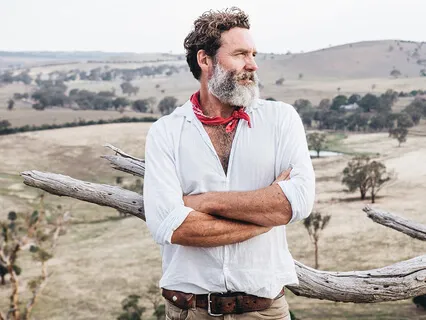
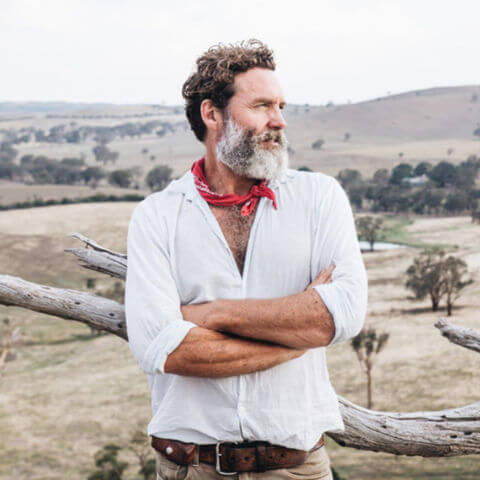
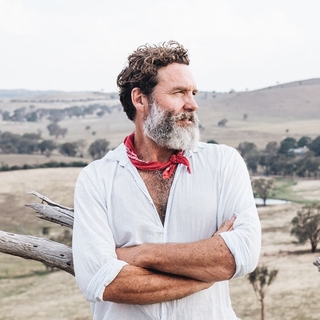
That was the environmental cowboy,
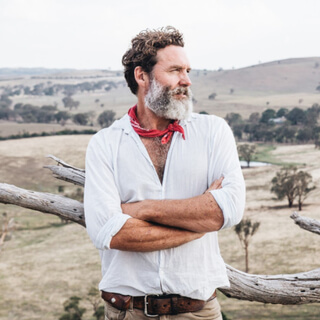
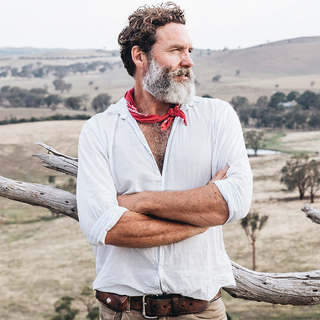
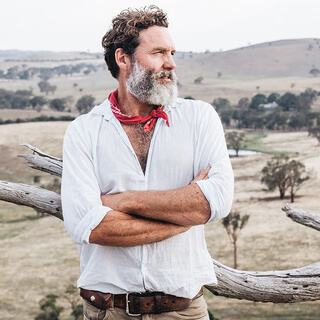
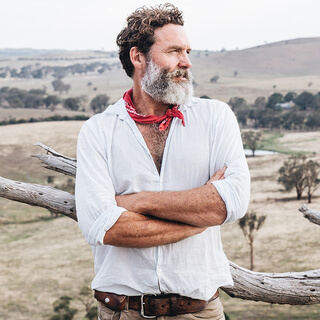
Corey Hancock,
And you're listening to The Regenerative Journey.
G'day,
I'm your host Charlie Arnott and in this podcast series I'll be uncovering the world of regenerative agriculture,
Its people,
Practices and principles,
And empowering you to apply their learnings and experience to your business and life.
I'm an eighth-generational Australian farmer who transitioned my family farm from industrial methods to holistic regenerative practices.
Join me as I dive deep into the regenerative journeys of other farmers,
Chefs,
Health practitioners and anyone else who's up for a yarn and find out why and how they transition to a more regenerative way of life.
Welcome to The Regenerative Journey with Charlie Arnott.
G'day,
Welcome to the show.
This episode of The Regenerative Journey,
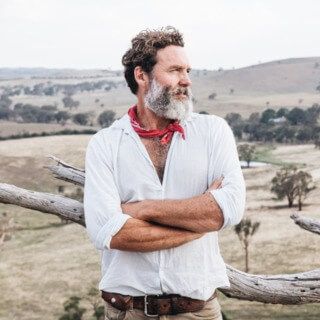
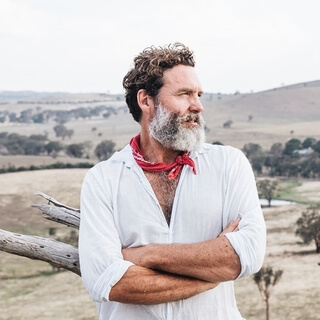
I'm joined by Corey Hancock.
You might know him better as the environmental cowboy.
He's got a big following on social media.
He is often heard and seen at conferences and on webinars talking about environmental issues and making us generally a lot more conscious about the impact we're having and the solutions that we can all apply to creating a better world for ourselves and our children.
We dug pretty deep about Corey's history and how he got to the point of wanting to make a big change to his life and the lives of others.
How he came up with the persona of the environmental cowboy and why.
His involvement with Landcare,
Which is extensive.
We talk about human compassion and resilience in this sort of time of crisis through the bushfire period and now in the sort of mid-COVID-19 world.
We talk about comparing responses of fear and anger versus compassion,
Inner happiness.
Corey's putting together a documentary as well.
We talk about that and why he's put that together and plenty of future projects and plans that Corey's got in the pipeline that we share,
That he shares with us.
So really excited to have caught up with Corey.
Fantastic fellow who's doing some really cool things and he's got a very bright future in front of him.
So I trust to enjoy as much as I did my interview with and chat with Corey Hancock.
Corey Hancock,
How are you?
Mate,
It's great to be here.
I am fantastic.
I came from Weeper yesterday.
So I'm very excited to be here,
Charlie.
I've been around like-minded people for the weekend.
Looking forward to this interview,
Corey,
I've been stalking you.
Well,
Actually,
I've been stalking the environmental cowboy,
Not actually Corey Hancock for some time now.
Do you want to tell us about the environmental cowboy and how he came about and where that all started?
Right.
So I'm going to go right back to the beginning.
I was brought up on a cattle station in central Queensland,
The Carnarvon Gorge near Roma,
If you know where that is.
And look,
I spent a lot of time in the creek as a kid,
A lot of time.
And from eight years old,
I had a bird watchers journal.
This is not a very cool thing to admit.
You're a twitcher.
A twitcher.
Fantastic.
I was anyway.
And yeah,
Proper scientific journal.
And I used to place myself on the edge of the creek on this particular waterhole.
And I never once hid from the birds.
I always loved to watch the way that they interacted with me.
And I wrote down those observations.
And so from a very young age,
I developed that not only that connection to nature,
But a real genuine interest in how we interact with nature.
And it was more strongly embedded into me at a bit of an older age when I became a teenager.
And we went through a really serious drought at the time,
Not anywhere near the droughts that we're seeing now.
But it was still hard.
And the people in the neighboring cattle stations,
Especially the men,
Would commit suicide.
And really close to us.
And I saw that ripple effect across the whole community.
So I saw that direct relationship between nature,
What was happening to nature and people.
And so from that,
A natural interest stemmed in wanting to teach people,
Wanting to learn more.
So I went into a university degree at the University of the Sunshine Coast.
I did environmental science,
Environmental planning.
I'm now a 10-year environmental professional working in industry across a number of different industries.
One of which I'm pretty passionate about agriculture.
And I really started to understand that people weren't really getting these messages because of that disconnection to nature.
And so I wanted to learn a bit of a different way to communicate those messages.
And it all stemmed from when I was working in carbon farming out on the cattle stations,
From Cobar,
New South Wales,
Up to Winton in Queensland.
And I was just traveling on my own.
So I always had a dream of starting documentaries and film and communicating what I was doing out there and how important it was to not only city people,
But country people,
And trying to bridge that disconnect.
And so I just started with a camera in the bush.
And I was terrible to start with.
I tried to make jokes.
And I wasn't funny.
But I was still releasing it online and still learning along the way.
And from that,
This environmental cowboy persona,
I just like everything,
When you're passionate about something and you just keep on going,
You're persistent,
Consistent.
I just got better at it.
And I eventually developed this whole persona called the environmental cowboy,
Which is just a more effective way to communicate scientific messages and have a bit of fun with it at the same time.
And draw a bit of attention to a cause that's becoming increasingly important in this day and age.
And Corey,
What are the most important messages that the environmental cowboy is telling,
Is spreading?
It's changed a bit from when it first started.
When it first started,
It was just climate change awareness,
Trying to get everyone up to date with the actual science.
There was a lot of miscommunication going on around about science and where it's up to,
Where the world's headed and the connection between the extreme weather events that we're seeing,
The droughts and everything,
And then the connection to people and how that's impacting people.
So to start with,
It was awareness.
Now it has changed over the last 12 months,
Particularly due to the increased awareness globally on this issue.
So my approach has changed to it.
I'm really solutions focused now.
So regenerative agriculture is one of those solutions.
Seaweed farming,
Renewable energy.
I'm focused on a number of different climate solutions and coming up with the actual strategy and creating a compelling vision for people to actually want to implement these solutions.
And there's a lot of barriers that we're facing at the moment,
A lot of people's fears.
And I try and delve into people's psychology and how we can actually overcome our own fears to implement these solutions at a faster rate.
And before we get to those,
Some of those solutions,
I know that you met David Ward many years ago.
How sort of influential was he in your trajectory from that point?
David is a huge mentor of mine,
A really good mate.
And I met him out on that same job that I was on at Carbon Farming.
And he came at a time where I didn't really,
Like obviously I was brought up in a cattle station.
I didn't really know enough about the regenerative holistic agriculture side.
He really introduced me to that side of it.
He brought me along on a journey.
And I think this is what we don't talk about enough in regenerative agriculture,
Is that it is a journey of self-discovery.
And it takes a very long time to get into it because our beliefs and our values have come from traditional culture,
Australian culture,
Which has been primarily about domination,
Dominating nature.
And regenerative agriculture is less about ego,
Less about domination and more about being more aligned with nature.
And so he brought me along on this journey,
This regenerative journey.
And he really.
.
.
That's the name of my podcast,
Of this podcast.
Yeah,
The regenerative journey.
The regenerative journey.
Well,
It is.
It's the fifth,
Charles Massey says it's the fifth principle of Regen Ag is that mindset shift.
And that mindset shift is extremely complex because we face our own individual internal challenges that we have to sort of overcome.
And it's all about going on your own journey and being around like-minded people,
Being open-minded and listening to people like yourself and just listening to their journey to try and implement the changes in your own life.
And so that's very hard because we've gone from culture to culture to generation to generation with the same beliefs and the same values and people don't like change.
But change is happening whether we like it or not.
Regenerative agriculture is one of those things that we can sort of really learn to implement along the way.
And everything that comes off the back of this mindset shift helps yourself as an individual.
Like I feel more free as I've gone on this journey.
I feel more aligned with nature.
I feel like I understand everything better.
I feel more connected to community.
I've met wonderful people through it like David,
Like yourself.
Everything is nothing bad has come from this change.
And we are so stuck in our ways at the moment and so stuck in an economy that's driven with demand and stuff that we don't get an opportunity to look into ourselves and into nature itself.
And so one of the solutions that I really talk about is to really spend more time in nature.
To really deeply understand it,
To get that connection back and then all the solutions will eventually stem from there.
I can't agree more.
We hear essentially talking about agriculture or that sort of bit of a focal point and we did on National Regenerative Agriculture Day at the farm at Byron Bay and there's a collection of wonderful advocates and educators talking this afternoon,
Getting messaging aligned.
What I found in this water of regenerative agriculture is it is so much more than that,
Isn't it?
It is about self individuality,
One's place in nature.
Personal development,
It's a unique form of personal development because it combines our love of nature and agriculture and our lives and our families and our businesses.
And I'm really personally passionate about indigenous culture.
And you look at the indigenous,
They survived for 70,
000 years.
70,
000 years,
There's evidence going back 70,
000 years that they survived in Australia and through climatic changes.
The only difference now is that it's happening a lot faster.
But they went through these climatic changes and they went through a 10,
000 year ice age.
And so with that 10,
000 year ice age,
Obviously resources got less and less.
And instead of groups becoming fighting over resources,
Like there were clans all across Australia,
And instead of groups fighting for resources,
They actually came together and in that time of hardship,
They started communicating with each other.
They went from tribe to tribe going,
Well,
Do you have water over there?
Do you know where that water place is?
Do you know how to get that?
And then,
Oh,
You guys have some nuts that we might be able to use.
So they started collaborating at a higher pace.
They started collaborating,
They started coming together rather than dividing,
Which was quite incredible because we're at a point in history now where we need to come together rather than divide.
Yeah,
Sorry,
I'm a bit.
.
.
No,
No,
You were just grabbing water.
I was grabbing you a bit more.
It was that coffee.
It was a wonderful coffee,
But it's given you a dry throat.
Yeah.
Corey,
Let's talk about dry things.
Let's talk about bushfires.
We've just been through an incredibly challenging month in January.
That's not to say there weren't bushfires in December and September,
Uncommonly early in the year and the bushfires for the season.
What do you think's been.
.
.
What have we learnt?
Because there's been so much in the media,
It's all dropped now.
There's been a heap of rain,
It's almost like it didn't happen.
What have we learnt as a nation?
I think that we have learnt that we need real leadership in a time of hardship.
We've been through it,
Really caught everyone off guard.
I don't think any of the climate scientists or anyone really expected something so savage to occur at such an early time.
We've been predicting these type of events for a long time,
But we didn't really expect that severity.
It's really,
Politicians,
They haven't had to be real leaders in the past and they didn't really know what to do.
Well,
They took off.
Yeah,
Well that's one.
When he even came back,
He just was lost.
I think that what this has really highlighted is it's bringing real leadership to Australia.
It's highlighting that we need real leadership.
It's highlighting the people that will be leaders in the community,
Like Shane Fitzgibbon.
How amazing was he?
He came up with a strategy,
A plan.
Then he also gave people the information that they needed,
He gave people hope,
And he stood up time and time again.
He was empathetic.
Incredible that he got years and years of training,
I guess,
But what an appropriate leader to be leading us through that at that time.
He brought people together.
It's not just that,
The whole world came together in a time of crisis.
Celeste Barber,
65 million or 70 million or whatever it was,
It's just incredible.
The whole world came together for this.
It gave me incredible hope because people actually came together in a time of crisis,
The whole world did.
I think that we are going to face events like this into the future,
But it gives me great hope that it brought out,
Even though it brought out some of the worst in humanity,
It highlighted our bad parts,
But then it also brought out the best in each other.
I really believe that we need to continue that,
Encouraging that,
Bringing out the best in each other rather than the worst,
So we can move forward.
Again,
What do you think some people can do?
Farmers I guess can,
I mean,
There's a lot of,
Bush was burnt,
So there's some regeneration projects going to be undertaken and using various methods to do that.
There are immediate actionable steps that farmers can take.
What sort of steps can those who aren't farmers,
Urban dwellers,
Who've been watching this on the media,
What can you suggest they can do to,
Apart from having already perhaps donated some money to Red Cross and WISE and so on,
What can they do?
I'm not just talking about the bushfire situation,
I'm talking about to contribute to the environmental issues we've got.
Yeah,
I think that one of the biggest things,
Well,
Straight away for the bushfires,
They can go on a trip out there and actually look into the communities and buy from there,
Buy from the shops.
That's one of the biggest things they can do right now is get out there then.
And then in general,
I think we need to be more aware of policies moving forward and implementing them and actually making change in their own company.
So I'm a big believer in going towards whatever job you have.
It doesn't matter if you're a doctor or an engineer or a mechanic,
You can implement climate environmental solutions into your job.
So for example,
A mechanic,
You can improve your waste process.
For a doctor,
You can put solar panels,
Encourage solar panels on your roof.
I guarantee there's an environmental solution for every career and it'll help.
And the biggest thing that I really believe in is that people will make a difference on the individual level because the individual adds up to billions of people.
So one person alone can't make a significant difference,
But 7 billion people all acting together as one,
That can make a statistically significant difference.
And that's where we need to get to,
But it starts at the individual.
So your own changed heart and mind can then influence others.
So we have to start at that internal journey ourselves.
We have to get there.
And it's uncomfortable,
Right?
It's uncomfortable to face our own egos and where we might be stuffing up in our lives,
Our own lives.
But once you do that,
Once you face that fear,
That uncomfortable side,
You start to feel more free inside yourself.
Like this whole regenerative journey I've been on,
It's not about ego.
It's about being more aligned with our natural selves,
Being more in touch with nature,
Being more in touch with people in the end.
So you have a better connection with community,
You have a better connection with yourself,
You have a better connection with environment,
And you're actually making a significant difference in the world.
I think that is one of the special things about this regenerative community that you and I are involved in,
Is that we are part of something that's actually making a difference in the world and we're striving to and we're influencing other people.
And it's a journey,
It's almost a spiritual journey,
I would say,
That you go on yourself and it's one of growth,
Personal and professional,
And love and connection for everything and everyone around us.
Let's talk more about that,
The psychology of it,
The psychology of change.
And I'm often talking to farmers about that,
Even urban dwellers,
As you were saying,
People living in the city,
Their attitude to,
As you say,
Waste management,
That sometimes can be quite a challenge for them to get their head around.
So how important is the psychology and what are some of the steps you think people can take to start,
As I say,
Changing the paddock between their ears first?
So as a culture,
We have become so disconnected from the natural world and that stems from living in a concrete building,
Right?
Like we go from our box in our room,
We get in our boxcar,
We drive to the box gym before work and then we go from there to the box office and we look at a box computer all day.
And then we don't ever have that physical connection to nature,
Which the indigenous had,
Right?
They had that physical connection.
So when we talk about country,
We talk about countries in,
So Australia,
For example,
We say it's a geographical location,
It's a place,
It's a thing,
Like you can see it.
Whereas when the indigenous talk about country,
It's so much more and so much deeper,
There's such a deeper level into their own hearts and minds.
It's talking about their ancestral history.
They can actually upload data from their ancestors.
They can talk to the ancestors through the land.
They are the trees,
They are the forest,
They are one with nature itself.
They are not above or below it,
They are a part of it,
But it also supports them in the present.
They are the past,
But it's also the present and they also can use that knowledge to propel themselves into the future.
It's like how to look after the land into the future.
All their values,
All their beliefs,
All their management systems to do with the environment comes off the back of that belief system.
So I fundamentally believe that we need to change our beliefs to change our management systems and reconnect ourselves back to nature because the solutions and the management will come from that.
So getting back into nature,
Getting connected with people,
Like-minded people,
Learning from the right people and learning more about the indigenous culture and why it is like it is.
Because I can talk about it so I'm blowing the face,
But unless you're actually involved with that,
Unless you understand,
Because it's at a depth that is so much deeper than what you and I can talk about,
It's something you have to feel.
It's something you have to go out on the land with them,
Talk to them and understand that belief.
Because everything that they did has stemmed off the back of that and they survived for 70,
000 years.
So we've got to have learnt something off them to move forward and incorporate those principles into our culture.
Because as a Western culture we've become completely disconnected from that.
As David Marsh,
One of my mentors and buddies,
He says,
Generally we have an economic relationship with our landscape.
That's essentially what defines industrial agriculture as we see it today.
So Corey,
What are some of the things that we can actually implement that indigenous peoples of Australia have actually been using,
Implementing the methods and so on?
And I'm not just even talking about the physical stuff,
Just the ways of thinking.
That's a really good question and that's something I'm quite passionate about.
That belief system that they had was a value on nature,
Which we don't value.
All our economic systems are based off the degeneration of nature,
The extraction,
The taking away of trees.
They based their value on nature on the regeneration of nature.
They wanted to keep it regenerating so it could keep on giving back to them.
So that's what we're missing.
And so when you talk about carbon dioxide going into the atmosphere,
We talk about it as a problem.
But what is carbon dioxide?
It's actually a natural resource like any other,
Like gold,
Like oil.
It's not poison.
It's almost like carbon dioxide.
It's just a natural resource.
There's just too much of it in the atmosphere right now.
But carbon is the building block of life.
If we place the same value on that building block that the indigenous used to have,
That same value on nature itself,
Then we can start to turn our economy around.
It's not based on degeneration.
It's based on the regeneration of nature.
That is just a perspective change.
That is just thinking about carbon the same way that we do gold.
And when you think of it as a life block,
Like as a building block to all life on earth,
Then that should be extremely valuable to us.
And so when you place a price on carbon,
When you talk about policy,
You can place a price on carbon.
And everything will stem off the back of that.
Systems will start to go down and then people will start to regenerate nature through industries like carbon farming,
Which includes regenerative agriculture,
Which includes forest regeneration,
Which includes ocean regeneration.
Like everything is made out of carbon.
So we can regenerate these systems if we change our mindset and our economy.
Our perspective.
Yeah,
Our economic models.
They just need to be switched.
Corey,
Who inspires you?
Who are the people in your world,
Past and present,
Who've really blown your hair back,
So to speak?
Yeah,
Well,
For you,
For one.
Thank you.
Namaste.
No,
Honestly,
People like yourself,
You're getting the voice out there.
You're really changing people's perspectives.
You've really done well,
Incredibly well in getting that message out there.
Huge influence in Australia and there's not many people doing that.
And that's what has that flow on waterfall effect.
And obviously that's what keeps me going because in what I do,
I have to like,
I mean,
You've seen my videos and the stuff.
They are hysterical.
If you haven't,
If you're not following Corey,
The environmental cowboy,
Instagram,
Facebook,
It's your last one on the old spice hand.
It's really clever.
No,
No,
Hats off to you for putting it out there because we've got to have a mix of,
You know,
There's a serious side of what we're doing,
But there's,
You know,
If we don't balance that with a bit of humour,
Then,
You know,
We're all,
It can be a pretty dry topic.
Well,
That's the other side of it is that if you incorporate humour into messages,
80% of more information is retained.
That's the study that's been done in the moment,
Which is pretty cool,
But that's why I do that.
It's beautiful for me to put myself out there like that.
Especially working for,
You know,
I work for a professional corporate company.
That's pretty hard.
I mean,
They love it.
They take it on board and they love the messaging as well as well.
But at the same time,
Like it's nerve wracking,
Right?
So to see people like yourself out there doing the same type of thing.
I'm not half nude,
I'm a white stallion.
Not in that way,
But you know what I mean?
I'll give it a shot.
Yeah,
You can give it a shot.
You and I'll do it next time.
Seaward horses.
Yeah,
Yeah,
Yeah.
That's right.
No,
But like it just,
It gives me great courage to think that there's other people out there like that.
So yourself,
David Ward in that space.
Definitely and probably like more,
My father definitely won one of the guys.
He started up a group for like a rehabilitation program,
I guess you'd call it.
That's why we went out to Carnarvon Gorge for young people,
16 to 24 year olds,
Which is quite recognized for his 2001 Queensland of the year.
Wow.
Yeah,
But it was based off that.
I said,
How were you so successful?
Like it was all about getting people's lives back on track,
Getting people's young lives on track.
And he said,
Well,
I let the bush do the talking.
I let them reconnect themselves back to nature.
And I think that's where my core belief has come from.
Like I saw him so successful in rehabilitating people's lives that were on drugs and went to jail and all types of things.
But he just used nature to do that.
That's all he did.
And I think so.
He's one of my heroes.
Tony Robbins is another one.
Yeah,
Just the way that he talks as a speaker and some of the stuff he talks about.
Hal Gore originally inspired me just for the fact that he started that global movement.
But I remember I also remember watching a video from Matthew McConaughey one time,
Actually.
And he said he was asked the question,
Like,
Who's your hero?
It's like,
Well,
It's me in 10 years.
Yeah.
Yeah.
And he goes,
I'm never going to I'm never going to reach my hero because when they asked me again in 10 years,
Oh,
Have you become your hero?
And he goes,
No way.
No way.
I'm always I'm never going to be the best that I can be.
So you're always chasing something better.
So I think that's what I try and do as well.
I try and get a mixture of everyone that I really respect and like and put that into myself and be authentic.
I like being authentic,
But trying to grow and always growing and learning along along the way,
I think is really important because Bruce Lee is really good example.
Bruce Lee was became the greatest fighter of all time because he took components of each style of fighting and put it into one style.
So he became the greatest fighter.
So I'd like to take that sort of perspective and just learn and grow all the way.
Talking about learning and growing mental health,
I know you've been involved with the naked farmer movement.
Tell us about that.
Yeah.
So Ben Brooksby,
That he's a bit of a hero of mine,
Too,
Actually,
Just because he he started that that movement and it really helped.
What is the move?
Explain it.
OK,
So can anyone be involved?
Anyone can be involved.
Anyone can be involved.
It's just a heap of bare asses on on on social media,
Basically.
But it's to be a farmer.
Oh,
No,
You don't know.
Well,
I'm not technically a farmer anymore.
And yeah,
I noticed a few city people getting in on it as well.
But because it's a really good way to take light of a hard subject,
Like especially with males right out in western Queensland,
Western New South Wales,
I don't talk about feelings,
Emotions like it's a culture that is not entirely the right culture just because they don't want to talk about their feelings.
But then the suicide rates are like three times as high as as females and especially in rural areas.
So to me,
It's quite passionate because I saw firsthand how damaging that can be to not only the family,
The direct family,
But everyone in the community like it just ripples.
And it stuck with me like I just remember that call to my dad at four o'clock in the morning where,
You know,
The wife couldn't speak.
And she just said,
You need to come here.
And her husband showed himself at four o'clock in the morning with no pre warning,
Nothing.
And that just stuck with me.
I was like,
If I'm going to be in this world,
I'm going to try and change that perspective that you can speak up.
It's masculine to speak up.
It takes balls,
It takes guts.
And we can do it in a fun way too.
And to listen to people because we all go through ups and downs.
I do all the time.
It's about helping each other lift up basically.
And that's one of the ways to do it to get naked on camera,
Take a photo of yourself and put it on social media.
So I'm very supportive.
So how do they do that?
You just you tag in Naked Farmer on Instagram?
Yep.
Just look him up.
The Naked Farmer and take a photo of yourself nude.
It is a title.
No,
It's got to be title.
Well,
I think the title I think it's just not like it is some fuzzy stuff.
Yeah,
Fuzzy stuff.
Yeah,
You can do whatever you want.
And then jump jump on that.
And I'll make a video if you want.
I made a couple funny videos for him.
So there's not many of them getting around.
But he's doing a horseback tour this this year or next year.
Just to raise awareness on mental health.
So yeah,
He's looking for sponsors as well as if anyone wants to jump in.
Now talking about sponsors.
The Regenerative Journey is not so much sponsored but supported by Landcare Australia,
Which we're very appreciative of you guys there in Landcare Australia.
Corey,
What's been your involvement with Landcare?
Look,
I back in when I was working in Melmerin,
I worked with Rebecca Kirby in Melmerin Landcare,
And she is equally as passionate as I am about soil health and pest and weed management and feral animal management.
She was a go getter.
And she used to organize these field days and workshop days for erosion sediment control.
Like I'm a certified professional erosion sediment control.
So I helped out I gave presentations there on how to fix gully erosion and that kind of stuff.
And so that was my involvement for two years in Melmerin with with Landcare.
It was a positive experience.
I just loved Rebecca.
She was I think the world of her she comes to watch me speak occasionally as well still.
So yeah,
That involvement with Landcare I just think is so crucial to farmers just having those community days those workshop days we just get speakers in and you learn you can all teach each other stuff because even with erosion sediment control,
Right?
And because I have been brought up in the traditional sense and trained in the traditional sense and industry where you use dozers to fix gullies and all that kind of stuff.
Yeah.
And then I went out to Derek and Kirily Blomfield's place on Colorado Station there.
And they had a completely eroded gully,
But they just used cattle to to write the make the batters better and everything.
And it was all grassed up.
And that to me was a completely new concept.
I was like,
This is this is a new concept in the international erosion control standards.
And so now I've introduced that element into my work,
Which is incredible,
Really,
Because because for so long,
It's been a certain standard.
But then I met other people on the way and they teach me different stuff.
So that all that stemmed off the back of Landcare really,
I think it was,
I think it's such a good movement and and such a good sense of community within which we really need right now in that those rural areas.
Well,
This year is their 31st year in existence.
And you know what,
One of the things that impresses me about Landcare is its consistency that over those 31 years,
It has maintained its integrity.
The you know,
Its its governance,
Its intentions,
Its agenda,
You know,
Throughout different changes,
You know,
Changing government,
Whether that be state or federal,
And even council.
And you know,
People coming and going,
It's volunteer based.
And they have,
You know,
They've ridden the wave and you know,
The changes that have taken place in Australia for all those years.
And they're also being relevant,
You know,
They're,
You know,
If you spoke to many Landcarers who've been at it for a few decades,
You know,
What what they've been doing for those decades,
You know,
20 years ago,
30 years ago is what where you and I are sort of talking about now.
Yeah.
So,
You know,
They're there.
If you're not in a Landcare group,
Please look them up,
Try and join your local even if you're in an urban group,
What I'm a big fan of is encouraging people to join a rural community,
A rural Landcare group and be involved pay,
It's like $10 for membership a year.
It's like it's nothing.
It's really worth it.
And also they're really getting the regen ag and holistic farming incorporated into their work now of notice,
Like Rebecca has been ringing me lately just talking about all that kind of stuff.
So they're really open to learning,
I feel new concepts.
And so yeah,
It's really worthwhile getting down just to get even just to get that community sense and have a beer with people.
Yeah,
Totally.
And talking about having beers with people.
20 years ago,
I think this is the 21st year a fellow was driving through Boora and he stopped at the pub and he was having yarn one day to a fellow who was in the local Boora community Landcare group.
And on the back of that conversation for the last 20 years,
A busload of people from the North Sydney Bushcare group,
In combination with North Sydney Council have come down to plant trees to restore superb parrot habitat of Boora.
It's a benchmark model project that has won awards and it's been replicated.
It can so easily be replicated elsewhere.
And it's a great example of a relationship that has been born in a pub in Boora that is bringing people year in year out to a country town and actually them having a tangible,
Tangibly contributing to the habitat there.
And they're not going to save the world by doing that,
But they are going to be making significant improvements to the survival of the superb parrot.
And that goes back to people thinking that they can't make a difference,
Right?
And it goes back to a saying that I really like is that never doubt that a small group of thoughtful,
Committed citizens can change the world because indeed it is the only thing that has everything as an individual.
You can influence other people.
And then Holly Richmond said to me one time,
Which I really liked this quote as well,
Is that your actions will create ripples,
Ripples will make waves and waves will change tides.
And I think that's what the Regenag movement and Landcare is all about really is making those ripples to change tides.
And I feel that change coming.
It's slow,
But it's happening a lot faster now because we actually need to change a lot faster.
And hope is out there.
It's out there in the solutions.
It's out there in the people.
The bushfire crisis highlighted it.
I really strongly believe that we have a strong future.
We just have to bring people closer together.
We have to find ways to bring people together.
Landcare is one of those ways that can do that.
Now tell us about your documentary,
Corey,
A Dry Hope.
What was the sort of the genesis of that?
Where does that stem from and where's it going?
What are we going to do with it?
Yeah,
So that was a documentary on my regenerative agriculture journey,
I guess.
And the properties that I visited along the way with David Waters,
My mentor,
To show solutions in the dry or to show hope in the dry.
That's why I call it A Dry Hope is to actually show the solutions that are going on right now.
About Australia's worst drought in history,
There are people implementing these solutions and still getting by.
Everyone's struggling,
But they're getting by and their properties are bouncing back now that we've had a bit of rain,
Bouncing back a lot better than the neighboring properties that are implementing these.
So it's about that.
It's changed a little bit as well because I think that we need to start thinking a bit more holistically,
Bigger picture.
And so some of that mindset stuff I want to go into a little bit more in the documentary.
I want to go into that indigenous,
I want to interview a few indigenous people.
I also want to go into water management a little bit better and carbon farming.
So I want to expand a bit past regenerative agriculture.
I want to start there,
But then grow.
How does that relate to everyone else,
To industry,
To city and to community as well?
Because we need to start thinking,
Even though we can start small,
We need to start thinking more bigger picture,
Like beyond agriculture in a way is as,
And we need to start seeing agriculture as part of the solution.
And so that's one of the big messages in my documentary is that agriculture is the solution.
It is one of the only major solutions for climate change.
And we have to change our perspective on that.
And once we see it as a major solution,
Then everyone will just go straight onto it.
And talk about everyone.
How can people help you,
You know,
You're looking for support there.
How can our listeners in the world help Corey Hancock make this 40 minute feature film?
Yeah,
I am looking for sponsorship.
It has been promised to be shown on the major film festivals such as the Transitions Film Festival,
Environmental Film Festival.
I also want to sell it to National Geographic.
So once finished,
It'll get a fair bit of publicity.
But I've self funded everything up until this stage.
And I'm just basically out of money.
You tapped out.
Tapped out.
And I would keep going if I could.
But yeah,
I just can't I need I need financial partnerships now.
So I'm definitely looking for the people who are seriously want to make a difference.
Want an education is that first step we need to educate the wider audience on on some of these solutions and film is one of the best ways to do that is storytelling.
And throughout history,
The only way that we've really learned and embedded culture and beliefs is through storytelling and film is one of the most effective ways to do that.
So get in touch with Corey Instagram,
I don't know Facebook any way you can DM him.
Yep.
If you if you're if you're up to help.
Corey,
Let's go to eating.
Yeah.
You know,
I know that you you sort of advocate eating less beef and even more kangaroos.
Yeah.
Talk us through that one.
Yeah.
So regenerative agriculture,
It's very important that you know where your meat is coming from.
Because it's not made that the problem as you and I both know,
It is the way that is farmed.
And the problem at the moment is that most of the farming,
Most of the beef farming is industrial.
It's almost not farming is it's beef.
It's like making factory.
Yeah,
Yeah.
And one of the issues there is that such high demand and,
And I've noticed in my job,
Even in the compliant environmental compliance world,
Is that when it's such high demand,
And you're just going from priority to priority,
You're just producing,
Producing,
Producing,
You don't ever get a chance to look at what's actually real,
What can make a significant difference,
You don't get that opportunity to slow down and go,
What can I do that will make this situation better?
Because you just use firing,
You're just going bang,
Bang,
Bang one after the other.
So I advocate for less beef,
Just for the fact that we need to reduce that demand.
And we need to slow ourselves down,
We need to slow the whole industry down so that we can start to think about things a bit better so we have an opportunity to change.
But the beef that you do eat,
Make sure that it comes from regenerative farms,
You can go online and search that stuff like Derek and Kirra-Lee,
The Conscious Farmer.
There's a Sunshine Coast called the Catalyst.
I know yourself,
You sell a bit.
So there are people.
.
.
Byron Bay Grassfed.
Byron Bay Grassfed.
Yeah.
Yep.
So there are people out there that are selling this stuff,
You just need to do a bit of research yourself but more kangaroo for the fact that they have exploded in population because we put in more watering points around the whole of Queensland,
New South Wales.
And so that population has spread out a bit further.
And so they do huge damage because it hasn't been managed properly.
So eating more kangaroo is definitely a more sustainable way to manage that population.
It's actually ethical as well.
When I was out there,
I saw a lot of.
.
.
In the drought,
I saw thousands and thousands of kangaroos starving and dying of thirst because we weren't managing them,
They were in high numbers,
Then all of a sudden they had no water because of the drought.
And so ethically,
We need to actually do something.
.
.
We have done that.
We have caused the kangaroo population to explode.
Now we have to intervene.
And that's the same with our beef management systems,
Our agricultural management systems in general.
It's not just beef,
It's crops as well.
That's industrial.
We need to make sure that we're not doing no tillage,
We're reducing our chemicals and fertilizers.
We need to do all regenerative agriculture practices,
As you know.
We need to change our entire systems and change our entire way of thinking.
And I know kangaroo is our national emblem,
So people are going to be a bit like,
Don't want to eat that.
But we actually have to change our mindset in that because what we're doing right now to the environment is cruel.
We can't allow thousands and thousands of kangaroos to perish out there.
It was horrible to watch.
So by eating less beef,
The beef that you do eat from regenerative and more kangaroo.
It's interesting,
And I agree that we have created the problem.
And so it's up to us to solve that problem.
At a time when,
Given the bushfires,
Millions of dollars have been raised and a large portion that would be going to,
Understandably,
And I agree,
To sanctuaries to save wildlife,
Including kangaroos.
I can understand as an eater,
As a member of the public,
Us talking about using a resource.
They are our national emblem,
And they're something that I think we can use better.
And promoting that in a humane way,
At the same time,
We're seeing footage of kangaroos burnt and maimed and so on.
I can understand that the general public is maybe a little confused.
Yeah,
Very much so.
But we need to realise that that was in the coastline area,
Mainly.
We've got a huge country out there that we need to manage these systems a lot better.
Corey,
Let's talk about learnings.
We as humans don't always learn from our experience,
But the way we can turn things around,
Our strategies and positives is to actually acknowledge the learnings from what we might call failures.
What sort of big challenges have you had and what have you learned from them?
A lot of the challenges and the learnings that I've had have been from myself and my mistakes personally,
And my reactions to stuff.
Everything that we do is based on survival.
We don't thrive,
We don't look to thrive,
We look to survive.
And that's all based on our own fears and reactive ways.
And so we are reacting right now to bushfires,
To crises.
We are not proactive.
And so one of the biggest learnings for me is to be conscious of that,
Be conscious of yourself and your own actions,
The way that you react to people and the way that you react to certain situations.
And that's one of the things about regenerative agriculture is we need to start being more proactive.
We need to start putting these processes,
These systems in place now,
Because in the future it's only going to get harder and we can't afford to react to situations.
We have to start being a bit more proactive.
And that's really difficult,
Right?
Because it goes against our very nature.
It's based off facing a sabre-toothed tiger.
You run from the sabre-toothed tiger right now because it's in front of you,
It's a threat.
But you're sort of saying like,
Oh,
You need to train to sprint from that sabre-toothed tiger that's going to attack you in 10 years time.
And like everyone goes,
No mate,
They'll be all right.
Don't worry about it.
You know what I mean?
So it's not being proactive about the situation.
You get run over,
You get chased down anyway.
So all these agriculture systems,
It's about being proactive.
And that's really,
It is really difficult to do that,
To change within yourself.
It's uncomfortable.
But the way that I kind of look at it,
Which makes me giggle sometimes,
Is that whenever I react to situations,
I get a bit cranky at someone or I get a bit egotistical or something.
I just think,
I don't want to act like Donald Trump.
You know,
I'm not him.
And it makes me giggle.
He's your benchmark.
Yeah,
He is.
Because he's just,
He's a perfect example of just a reaction.
He just reacts to situations.
I'm like,
I'm not him.
So I don't need to react like that.
I can think,
Breathe,
Step back and think logically about it,
And then go again.
Something I've learned,
And it's been highlighted to me,
And I guess when things are,
You can then put that into your own perspective.
But you know,
I know that when I'm at the point of getting cranky with someone or a situation,
I've found that being compassionate to that person,
You don't have to go and hug them and butter them up,
But just understanding they have their own story,
Their own lives,
Their own experiences.
And I was only having a conversation with someone the other day that someone was particularly cranky with this person.
And I said,
You know what,
Imagine being that person.
Imagine being essentially that mean.
And I love the quote that when people are scared,
They're mean.
It's generally a source of fear that creates the anger or the reaction to you in a less than appropriate way.
So showing compassion,
I've found,
Which just sort of,
It just squares it off.
It's like,
You know what,
That's their thing.
I actually feel sorry for them.
It's sorry,
But it's like,
Wow,
You know,
I hope they get over whatever they're going through.
I hope they're less fearful and I hope that in some way I can actually help them.
And then when we reframe the conversation or the situation like that,
It just totally changes everything.
And this is something I'm really passionate about.
If you look at good leaders in the world right now,
Jacinda Hearn is definitely one of them.
The New Zealand,
The New Zealand prime minister,
The way that she acted or reacted to that situation with the mass,
The shootings over there.
And she decided to be empathetic and compassionate towards people.
You watch the whole world come together and create love and not anger and division.
And that situation was pretty difficult.
That could have been a bit more violent.
That could have reacted a bit better,
But she brought people together in a time of crisis.
And that leadership is incredible.
Like that empathy,
That compassion,
That love that she showed for people is real leadership.
And also I was watching,
It's Valentine's day.
So I was watching a video recently from Matthew Hussey.
I noticed you walking today with a bunch of flowers.
I was hoping that for me.
Yeah.
So I was watching this video,
Matthew Hussey is a relationship guru for women.
And he had this video going and he said,
What do women want?
And the first thing he wants is,
Well,
I don't think women know what they want.
But then he went on to say is that they think they need to make a choice between a really nice guy or a bad boy.
And I think they have to make that choice.
I put you that there's someone in the middle,
A nice guy with an edge.
And I think that's what people like is they like that bit of authenticity,
But you know,
You're allowed to get angry,
But get angry and passionate and in the right way so that you're moving forward,
You're actually creating solutions.
You're creating a bit of energy,
But then always approach people with compassion and empathy.
And then you're going to move in different ways to the street,
I think.
And I guess there is a third option.
It's like,
Just have no one as well,
Isn't there?
Yeah.
In terms of it's like,
Oh,
It's not,
You know,
This or that it's actually and or it's,
You know what I actually don't,
You know,
You know,
Talking about relationships.
Yeah.
The thing we actually don't have to,
I mean,
And that gets back to,
You know,
Whether talking regenerative ag and the psychology of just being,
And also,
You know,
The world of biodynamics,
You know,
We,
We talk about the practice of,
We also talk about the psychology and the,
The being comfortable with your individuality and your place in nature.
So,
You know,
We don't have to essentially do things we don't want to do.
We know if we're comfortable with that and we're,
And we're,
We're being true to ourselves and we're living our values,
We don't,
We,
You know,
We,
We'll end up doing what we need to do.
Yeah.
And what we're comfortable doing.
Yeah,
Exactly.
I mean,
I've been single for five years,
Five minutes.
Five minutes.
No,
No,
No,
A few years now.
And it's really allowed me to come into myself,
Face my own fears,
Face my own fears of not just being alone,
But what can I do in this world that will make me happy so that whenever I do meet someone,
If I do,
That she will compliment me in a way where I will be okay doing what I do and,
And that we can grow together kind of thing.
So I really think that's important.
That's that you need to go on your own journey.
You can't rely on anyone else for your own happiness.
You have to go on your own journey of self discovery and personal growth and professional development.
And it is such a wonderful feeling.
Like before,
Before I started the Environmental Cowboy,
I definitely wasn't free.
I was definitely afraid of people's judgements.
I was afraid of,
Of,
Of failing.
I was scared of rejection,
But I faced those fears.
And now I feel free.
And now I couldn't imagine my life without have started that because I've met so many incredible people.
I've had so many incredible experiences that I never would have had if I hadn't have,
Hadn't have started that.
So to anyone out there that is thinking of doing something that has a big dream,
And this was always a big dream of mine to do this kind of stuff,
I was just too afraid to do it.
And I had a big event in my life where I had a massive breakup and it,
It broke me to the point where I was like,
I had hit rock bottom and I didn't know what to do.
And I thought I needed to find what made me happy.
And that's when I started,
I started with a video camera in the bush and I started the Environmental Cowboy from that.
And I found my inner happiness.
I found who I truly was from that young kid back in the bush.
I think that you can lose yourself along the way from other influences,
From culture,
From different beliefs,
From being around different people.
But ultimately who you are as a kid,
Or who I was as a kid anyway,
Is who I've become now.
And I'm very proud that I can say that,
That I,
I am true to myself always.
I'm always trying to grow.
I make mistakes along the way,
Everyone does.
But I think the important thing is,
Is just being authentic and being happy and fulfilled.
And once you follow your passions and your dreams and you're doing something that is meaningful to you in your life and that makes a difference that contributes to the world in some way,
Then you can't go wrong.
You end up feeling free and a sense of connection with everyone around you.
Corey,
Before we wrap up,
Tell me about the future.
What do you see that being?
Where are we headed?
Are you excited about the future?
Are we heading in the right direction?
We are heading in the right direction and it's too slow.
I've got to be real about this too.
There is incredible hope.
I think people,
When people come together,
They can be powerful beyond measure.
I think love is powerful beyond measure.
That feeling of love,
Being in love,
It can break down the dimensions of time and space.
That's what it scientifically can do.
So if we can really unite people with that connection,
The whole world can really come together on some of the issues that we're facing,
Not just environmental issues,
Like social issues,
Economic issues.
Humans are incredibly innovative and creative when we are faced with extreme challenges.
I think that that's the first point to make,
Is that we are powerful beyond what we think we are.
But the second point to make is that we really are running out of time now.
We have to be proactive about this.
We can't be reactive to events anymore.
These events are going to get worse and we are going to face some extreme challenges.
But I think if we all come together,
Unite and be positive and empowering,
Empowering to each other and remember our core values,
Remember who we are deep down,
Then we can overcome any challenge that we want.
Projects.
One last question,
Corey.
What can we expect from the Environmental Cowboy in 2020,
2021 up to 2050?
What's on the table?
I've got some big dreams in general.
I'll start with this year.
So this year I've got two major eco expos,
One in Sydney,
One in Brisbane.
That I'll be emceeing and keynote speaking there.
I'll probably get yourself there as a speaker for one of them.
Yeah,
So those are the two big events.
I'll just keep on doing keynote speeches as I do.
I'm trying to finish this documentary.
I would really like to finish that.
I'm actually going up to Torres Strait Island with Laura Wells for their Winds of Zenith Festival,
Which is all the different islands on Torres Strait come together and they do their indigenous dances.
It's like a community spirit sort of thing.
We're doing a film on sea level rise up there and what the islands are doing to face that.
In the future,
Charlie,
I have some big dreams,
Mate.
And they are far fetched,
But I'm reaching them.
I want to reach them.
I want to build a leadership center for young people.
And this is for the elite to train people to become leaders of the future.
So everything that we've been talking about right now,
We're going to need real leaders for the future because these events are going to get worse.
We're going to need logical people that are compassionate and empathetic,
But actually get the job done.
So I want to train people to be physically strong,
Emotionally strong,
Spiritually strong and also strategically strong so they can come up with the actual strategy.
So it'll be like an elite leadership camp.
I want to do that.
I want to start up a seaweed,
Open ocean seaweed farming company and then connect that back to agriculture.
So seaweed feed for cattle,
Which reduces methane.
So I still want to be heavily involved in the environmental carbon space,
But I'm trying to move more into that leadership coaching style space,
Which I'm quite passionate about in the end.
And I love film.
I really do love film.
So somehow I really want to continue on that because I do believe that storytelling is one of those big ways.
But yeah,
Lots of dreams.
And look,
It's a long road.
I've found a long road,
But I'm very passionate about this and it fulfills me.
It makes me happy.
So look,
I'll find a way no matter what.
And where can people find you Corey?
Like if they want to get in touch with you directly and directly follow you.
Where do we,
Where do they go?
Look,
Social media is a good one.
I've got an email.
I've got a website as well.
I think my phone number is on my website.
So website?
Yeah.
Website.
Yeah.
Www.
Coreyhancocks.
Com and Corey is spelled K H O R Y.
Yeah.
Yeah.
So it's a bit different.
Instagram,
The environmental cowboy,
Environmental cowboy,
Facebook,
Facebook,
The environmental cowboy.
I do a lot of information updates on the Facebook page.
That's my main sort of information,
What you can do to help individual solutions.
And just keep up to date.
Like if you want me to talk anywhere or anything like that,
I can always,
I'm always available to help out.
I love talking at schools as well,
Primary and high schools.
So I think young people are the future of this world.
And that's what I really enjoy doing is talking at,
Educating young people really.
They definitely are a future and Corey,
All the best for your future.
It's been a real pleasure and honour to have you here today.
And I'm going to keep stalking you on Instagram,
Facebook.
I'll just pop up here and there.
Mate,
Thank you so much for today.
And thank you for being so candid as well.
So really appreciate it.
No,
I appreciate you having me,
Charlie,
And we'll be catching up this weekend for sure.
It's been a blast.
Well,
What a wonderful conversation I was able to have there with Corey earlier this year.
Actually,
It was in mid to late February,
At a gathering of like-minded regenerative farmers and advocates and supporters at the farm at Byron Bay,
Organised by the wonderful Mike and Helen McCosker of Carbonate fame.
If you haven't heard about Carbonate,
Jump on their website,
Check them out.
Doing some fantastic things,
Rewarding,
Helping to reward farmers for their good work in sequestering carbon and improving the environment.
What a bright future I really feel Corey has doing some fantastic things.
And once we get through this stage of COVID-19 and this isolation where we're all in,
I'm sure you'll be seeing Corey at a whole lot of conferences and speaking engagements in the future.
Our next podcast interviewee,
Our next episode is with the wonderful Jim Garish.
He is from the United States.
I caught up with Jim at a my grazing conference field day up at Ebor in late February.
And what a wonderful field day that was.
Jim is fascinating.
We talked all things,
Regenerative farming,
Grass fed beef.
We also talked a fair bit about health and human health and the connection between planetary health,
Human health and the food that we're growing and the soil that it is growing in.
We're all getting to understand regenerative ag really stretches itself across quite a few different industries and professions and health,
Human health and planetary health sits squarely in there.
So I trust you'll enjoy as much as I did my conversation with Jim Garish.
And don't forget to subscribe,
Comment,
Share this podcast,
Any other of our podcasts.
Don't be greedy.
Don't keep it to yourself.
Help spread the word.
And the more we can get this podcast and the more,
More importantly,
We can get this information out there,
The more people will enjoy it and the more impact we can have on the world.
For more episode information,
Please head over to www.
Charleyharnett.
Com.
Au.
This podcast is produced by Reece Jones at Yeager Media.
And as the recipient of the Bob Hawke Landcare Award,
Charlie would like to thank Landcare Australia for their support in the creation of this first series of the Regenerative Journey.