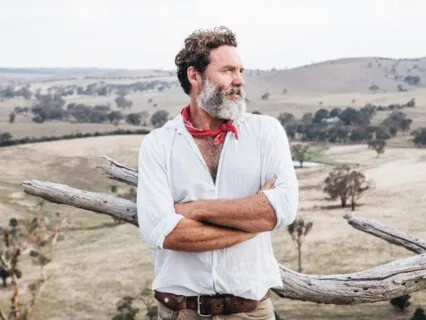
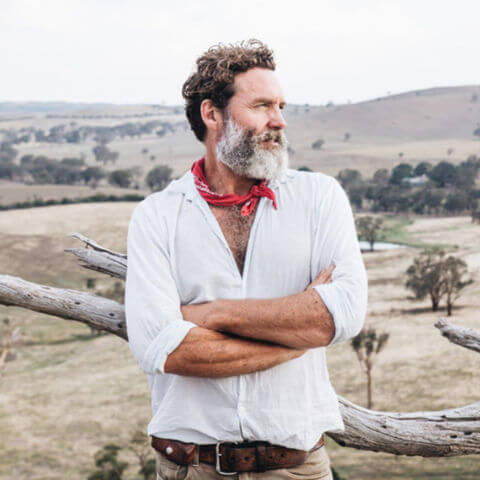
We cannot have this profound an abdication from a visceral link with food and expect food to be authentic That was Joel Salatin and you're listening to the regenerative journey G'day,
I'm your host Charlie Arnott and in this podcast series,
I'll be uncovering the world of regenerative agriculture It's people practices and principles and empowering you to apply their learnings and experience to your business and life I'm an eighth generational Australian farmer who transitioned my family farm from industrial methods to holistic regenerative practices Join me as I dive deep into the regenerative journeys of other farmers,
Chefs,
Health practitioners and anyone else who's up for yarn And find out why and how they transition to a more regenerative way of life Welcome to the regenerative journey with Charlie Arnott With multiple books and DVD learning resources under his belt Joel Salatin has an international following The inspiration behind numerous documentaries and the mentor educated to thousands of farmers This fella is totally the real deal and what a source of wisdom and experience inspiration he's been to me over many years I first came across Joel in the late 2000s online and then met him at a field day at Maloon Creek Natural Farms near Bungendore in about 2013 And it actually attended his very first closed mentoring workshop Probably five years ago now at the farm at Byron Bay And had the pleasure of sharing the stage with him at numerous events last year in 2019 Quick-witted,
Incredibly hard-working and with seemingly boundless energy Joel in our interview steps us through his regenerative journey from his formative years as the son of a chicken farming accountant in Venezuela Before being forced to flee to the US through the rehabilitation of his family farm in Swoop Virginia all the way to the prolific supplier of nutrient-dense food to his loyal customers from his family farm in Swoop An international legendary public speaker and mentor.
I caught up with Joel In May 2019 at the NutriSoil Sustainable Abundance Conference,
And we only had one microphone to share so He understandably got the lion's share of it.
So I apologize if I sound a little bit far away enjoy G'day and welcome to the show I honored and most grateful to be interviewing one of my I guess inspirations Not just an inspiration to me,
But many people around the world Joel Salton,
You're our first first victim on the show Welcome guinea pig Well,
You're very well versed in In interviewing so given we've been at the NutriSoils Joel Salton Abundance Conference here In Victoria for the last couple of days you've you've been drilled so It's been two days later and you're on the home stretch.
So I really appreciate that.
You're giving me your time today Joel So thank you for thank you for your time.
Absolutely.
It's an honor and a delight to be with you Joel.
Um,
Where do we start?
Probably at the beginning what what?
How You relate a number of stories over the last couple of days about your your childhood and I guess your your introduction to agriculture At a very young age.
Can you step us through that?
Interesting period of your life and where that then took you well sure Yeah,
I guess it would start with you know,
My dad who is a little Midwestern American boy wanted to farm but with no land and no money,
You know,
How do you how do you start?
I mean this is you know 1940s and so then of course World War two came and he flew flew in the Navy and survived and then After World War two,
He went on a GI Bill got his degree in economics from Indiana University and then went to Middlebury in Vermont for six months and studied Spanish and then hitchhiked from Vermont to Mexico spent six months and Then came back and immediately sat for the Foreign Civil Service exam In Spanish and What he found was he was great with numbers and at that time This is you know,
47 post World War two one of the hottest like today.
It's uh,
It's Information technology right IT.
That's the hot hot thing Well at that time it was bilingual accountants to go with American oil exploration companies that were working in the Middle East and in And in Venezuela and what what would eventually become the OPEC?
Countries to develop petroleum sources and the the heavy work was done of course by the indigenous folks in the country and management was American folks who spoke English and the the places of conflict were always between the workers and management regarding money payroll company store those kinds of things and So they really wanted a bilingual person handling the money.
And so this was this was a very specific Probably that run on those jobs only lasted maybe what five or six years but dad got in on it right on the on the front end and and went down as a bilingual accountant with Texas oil company in Venezuela and It took him ten years.
He got came back got married he and mom had met at Indiana University and Went back down took him ten years to save up enough money to buy a thousand acre Highlands farm in Venezuela and I immediately cleared some land.
I mean this was this was monkeys and pineapple and bananas,
Right?
It was the it was it would but it was upland tropics.
It wasn't down low and and Built a house and started raising chickens and The dream was dairy and meat chickens.
That was that was the dream that was what he saw the people needed or they didn't have very much and so Chickens was of course the quickest first thing started raising chickens and the the indigenous chickens there all had what was known as a mucus drip or a nasal drip in their beaks because they all had kind of a respiratory problem from unsanitary conditions and that created this snot nasal drip and And so there you know,
This is before refrigeration.
This is you know,
50s 1950s Venezuela and The way the food culture went,
You know,
The local farmers would come into the town square,
You know the Latin American food court town square vendors then would dicker with the farmers over,
You know buying stuff and then they and then those vendors would then take them into town and Go door to door and sell them to the to the people in town who would then buy supper basically Okay,
This happened almost every day or there was something like this happening every day and So,
You know,
You'd have the pineapple man the banana man the the chicken man the rice man that you know,
Whatever and The there was enough food knowledge that the señoras who would buy supper when the chicken man came they would run their finger down the beak of the chicken to check for snot snot for nasal drip,
Right and of course if the The cleaner the beak was the healthier the chicken was and that course made the price go up So of course,
You know,
There's no price tags dangling on chickens,
Right?
So it's all negotiation and And of course then this this knowledge backed up to the vendors who then dickered with farmers For the cleanest chickens because they wanted customers who could trust them to bring them the cleanest chickens this is all you know,
A pretty self-governing type of Automatic feedback loop if you will and and so Because all the indigenous chickens,
You know ran through pretty unsanitary conditions and had this condition we controlled ours and Kept them in pretty sanitary place and so ours didn't have any of this drippage and so very quickly dad Dad actually cornered the market the local market Because these vendors oh my these are clean chickens and with these dripless chickens these dripless chickens.
Yeah.
Yeah.
Yeah,
And and of course,
What's funny is the other Farmers that raised chickens that were selling chickens.
They lost market but instead of asking.
Well,
How do you do this?
They immediately accused us of witchcraft.
We were doing what they said voodoo we were doing voodoo because they didn't understand it didn't know how this could be done,
But they accused us of voodoo and So anyway,
We were you know,
We were rocking along here and then here came 1959 the junta Pettis Jimenez was you know under threat and from power and it was a revolution and because of this We didn't have support from neighbors.
In fact,
We were disliked by the neighbors Because of this and because we were Americans and we were not no longer were we affiliated with any,
You know diplomat corporation missionary,
You know,
We were just out there and So we became prime targets of the just the unworth the frustration in the countryside.
Everybody's mad at everybody Let's be mad at somebody and we were easy to be mad at and so basically we fled the back doors the machine guns came in the front door and lost everything of course,
They had to put all of his savings into that farm,
You know into that land and so we Fled and we went and lived in a couple of towns ended up in Caracas Toward the end as dad met with every Every sitting minute,
You know the agriculture secretary the secretary of the interior the secretary of the Treasury You got all these,
You know cabinet levels dad met with every one of them trying to get look,
You know I have a deed here.
You should protect me and of course they were afraid they'd be assassinated And and and The local constable and all those people all they worked on was bribes How much did you pay me,
You know,
Senor Saladin and dad said look,
You know,
I have a deed here You're you know,
You're supposed to protect me and it just didn't work that way And so finally after you know,
14 months or so of dead ends there was nothing to do but come back to the US and walk away from it and That affected dad never got over that He was 41,
You know when he did that when that happened Because he loved the people he loved the country.
He loved everything about it.
He left his heart there,
But today looking back I mean,
That's what's going on in Venezuela today You know,
I'm thinking with his genius capacity you know,
We probably would have been very successful and we would have whatever built a thriving business that today would of course just been demolished like so many businesses have so I'm very grateful that We were stopped early in the process and not late in the process and you know,
I think that has colored a lot of my a lot of my life in Looking at Whatever setbacks,
Let me just call them setbacks you could call them failures,
But we didn't fail it was just a setback you know,
There's nothing that we could or could not have done about it and And You know so many times when a setback occurs,
Oh,
You know,
The sky is falling how are we ever gonna recover?
You know,
It's it's a horrible thing But lots of times lots of times when you look back on it five ten fifteen years later You're that setback.
That was a tension point that that led us to a better place and so,
You know,
We just move forward in faith not in fear and And trust that that's going to happen So so we came we came back to the States we settled then in we came back Easter Sunday 1961 I was four I was four my older brother was three was eight and And my sister was in the oven We came we came back and dad was still actually hoping to go back he was open things settled down Maybe we can go back and so kind of reluctantly he said well,
Let's you know,
Let's let's look at farms within you know a day's drive of DC in case the ambassador calls us and And and you know then we can go and we can make changes real fast so we did that we looked at farms within about a day's drive of DC and It came down to two farms the one where we are and another one and and I said there we my sister was in the ovens Mom was what seven months pregnant with my sister and with all the turmoil we'd been through I mean it was it was okay.
I mean it was a bad situation and The one farm which you know Mom and dad always said I don't remember it.
I was just for you know,
We just looked at it,
Right No,
I said it was a it was a better place,
You know,
It was a man big old brick farmhouse and stuff But the man that was selling it was an 80 year old bachelor and he had like eight dogs living in the house and mom just you know said I Can't do it but the the farm where we are now within the house it was owned by an elderly kind of a Swiss couple and And it was you can move in tomorrow It was clean and and and so we so we picked that one and the farm itself The house was okay,
I guess the house was okay The house had been modernized in 1949 by a wealthy family who had bought it and And salvaged it.
It was an old American chestnut log cabin built in 1790 It was in serious disrepair.
One of the chimneys had three chimneys.
One of the chimneys had fallen off the end cows were living in it sheep were living in it and It was you know,
Probably another ten years.
It would have been unsalvageable but these folks you know they were monied and they Saw the potential and so they put a lot of money in it obviously put electricity in it plumbing yeah,
They they they saved the house and and but the farm The farm was the only one in the whole area that had gone out of its original family It was it was caught up in a state,
You know five-kid sibling deal 1890 and and these two pieces went Three pieces went to the three brothers and they each lived on their three pieces These two pieces went to the two sisters who married guys move out of the area and then eventually sold it And so for roughly 45 years there from 1900 and 1945 roughly the farm was What we have it was The the people who owned it did not live there.
And so they leased it to neighbors who just raped it I mean they you know,
They they had this deal where Where they would 50-50 share the fertilizer bill every spring and And of course all the local Farmers yeah,
They would they would get apparently take turns,
You know renting it for a few years and and anyway The joke when we got there and we you know got talking to some of the neighbors The joke was that these guys throughout the 20s 30s 40s Would take that fertilizer check.
I mean the landlord didn't live there so they would take the fertilizer the the 50% that the landlord was paying and they'd buy it for their own places and So our place just got nothing.
No It was just exploited for all those years.
So by the time we came There were 16 foot deep gullies.
There were large areas,
You know the size of a house that were just solid bedrock Between three and eight feet of topsoil had washed off you know over the you know over 200 years of European plowing and occupation and then finally that the final,
You know,
Exclamatory abuse of this 45 years of neighbor Exploitation and It was in rough shape It was in really in fact it we had so little soil when dad Started doing this electric fence stuff moving the cows around We didn't have enough soil to hold up electric fence stakes.
So he went to town and got used car tires Brought him home mixed concrete in a wheelbarrow Put it in the car tires pushed a half-inch pipe down in the middle of it and would make these stanchions Or you know like standards like like a volleyball court,
You know I bought it and I stacked those up on the tractor platform and my brother now,
You know we were what five five and eight six and nine and He would drive slowly and we could we could heave these off on the ground on the rock as dad drove slowly Then he'd go along and put the electric fence stakes down on those half-inch pipes and that's how we that's how we made electric fence so It was in No,
Not anymore.
No,
All those rocks are covered now with you know,
At least a foot of soil It's not three feet,
But it's a foot.
We don't use the tires anymore and there's soil everywhere You can still see them when we have a drought you still we have a drought you get it's just like a line It goes out those shale those shale Scallops and those banks and it's just like you took a pencil and you can see those those shallow areas and John What else is on the farm for those who haven't read your books and seen poly face is a wonderful documentary that?
Darren Doherty and Lisa Hain put together a couple years ago if you haven't seen it Grab a copy.
It's fantastic What else what else what are enterprises have you got there?
Yeah,
So so we do we do grass-finished beef We call it piggerator pork as we do pork pigs too and then broilers pastured meat chickens egg chickens and turkeys and ducks and lamb and rabbit I Think that's I think that's I said turkeys yeah,
Yeah,
Yeah,
So I mean it's no escargot No escargot.
No llamas ostriches.
You know nothing exotic.
It's all It's all kind of every man every man stuff and you caught there's a stacking you this expression you use it,
Right?
Yeah,
Right Yeah,
So so a given acre at different times of the year would have you know cows across it a couple of times and Egg We use egg mobiles This is these are portable chicken houses Where chickens free range out and they scratch through the cow patties and eat out the fly larvae and spread the cow pays out in The field so the egg mobiles follow the cows And then we'll use those same fields to raise the pastured turkeys Pastured broilers and the point is when you when you stack all those enterprises on You know you're up there into the you know twelve thousand dollars an acre That you're getting back from all those symbiotically complementary stacked enterprises Let's swing to regenerative agriculture Joel as a it's a reasonably new term I guess that sort of encompasses a number of different practices and you're you're utilizing quite a few of those practices What's what's your definition of regenerative egg is there a definition?
Well,
I think I think a lot of people are You know working on such a thing Myself I'm a pretty simple guy so my simple explanation is It is any kind of agriculture that?
Increases the commons rather than depleting the Commons The Lot of people some people will say well Commons You know we don't use that word very much,
But it's a wonderful British.
You know has its seat in in British Jurisprudence the the Commons was the area that was owned in common It was it was the place that peasants could actually go and graze a cow or you know pick some berries or whatever as opposed to the the nobleman's lands which were of course off limits and So the Commons speaks of air soil water,
And I would even suggest Community camaraderie There's there's more than just physical structure here in the Commons And so it speaks to the community social aspects as well But but that that that increases the common,
So this is stuff that was here before we're here It should be here before after we're here.
It's the stuff It's the ultimate wealth of a nation that our children inherit.
You know it's not Disney toys and and and whatever stock market pieces of paper it's it's the actual foundations of life and And so regenerative agriculture to me Simply is a system that leaves more of that behind Then was there when it started and Joel what I mean I?
Trust that You know I know there are a lot of farmers in Australia at least who are looking to transition that you know There's my sense of there's a push away from industrial conventional agriculture,
And I was one of those farmers as well And there's a push away from that type of farming and there's a pull towards this new kind of regenerative farming and that encompasses as you say it's regenerative communities and mental state and All those sorts of things have got what what are what are some of the the benefits?
You know that farmers who are transitioning who are thinking about this?
What's the carrot we can dangle you know this of I guess give them a sense of comfort that you know?
It's not all voodoo.
It's not there's actually some some great benefits in this well There are you know when you think about what the average farmer is frustrated about what what vexes your spirit,
Okay?
You know it's it's it's It's Feeling like you can't get ahead of disease That that's one vexation of the average farmer that you know whether it's in livestock or in plants There's always some new disease popping up.
You know I just can't get ahead of it Secondly I would say a frustration in in Normal farming is just a frustration that I I can't get ahead of my fertility my fertility costs too much It costs too much to get the same value of crop another one is that my my input costs are constantly escalating and my my sales Income is either flat or diminishing.
I'm on this treadmill You know and and and all this and and then of course you've got equipment.
You've got other things and so I For for me,
And I will tell you this for dad You know my dad was an economist that was what his training was in and so interestingly to me He came to this as an economist in the 60s.
You know back goodness in the 50s He saw the chemical approach as essentially a drug addiction.
You know I I'm on this treadmill.
I need a I need a more expensive hit to get the same whatever You know feeling benefit and so And so he came to this primarily not as an ecologist was as an economist saying how do we create a System in which the in which the difference between the inputs the cost and the income widens you know rather than you know gets closer and closer and So the idea of actually I think our carrot then is that when you actually build?
Resilient soil fertility it doesn't take as much to keep it up it It becomes a self-perpetuating system the biology grabs nitrogen from the air I mean the azure to bactere bacteria I mean there's all this stuff that starts to happen and it happens as a partner to you Not as an antagonist to you,
And that's a huge thing I think too that that diseases you know immunological function in your animals diseases in your plants as The soil gets better those things reduce I mean you know we have what we have 1,
100 head of cattle on our farm Which is you know not the biggest thing in the world,
But it's you know it's up there in the top in our area for sure And we probably don't see a vet once every three years We do not even have a line item for vet bills It doesn't even exist and and it's not because we're burying all of our cows It's because we don't have very much disease you compost them anyway We would we would if we if we yeah if we have a dead when we composted But you know it it's such a difference It's such a difference to wake up in the morning and not have the first thought be I wonder what's wrong Rather to be able to step into functional beautiful abundance And not have that little voice on your shoulder saying I'll bet something wrong out there I'll bet there's a fungus I'll bet there's a root rot I'll bet there's something And I think to me that is That's just incalculable And what about the economic benefits or the positive impact that it is for farmers operating this way Well obviously if you if you get if you get nature If you stop fighting nature and you and you see nature as a partner where you're you're you know you're kind of Hand in hand going the same direction It takes a lot less energy a lot less money to to fight nature than to get nature working with you in your favor And for a person you know hearing this who's in the orthodox paradigm That sounds like a pipe dream I know it does I know it does But you know just think about just think about how frustrating it was maybe when you were looking for a spouse And you said isn't there one out there for me and then you finally found the one And suddenly oh yeah this is pretty cool and I would just encourage people to let that metaphor you know work in you a little bit It is frustrating when things aren't right and you don't have that that that pairing yet But when you get to the right pairing it's it's it's a beauty it's a symbiotic thing So I guess there's cost savings because you're not calling the vet out as often and you know animal husbandry treatments may be reduced Because you're relying on relying on but you're partnered with nature to provide essentially the health you know through pasture and soil health The other side of the equation is the is the production the income the revenue from that when not every farmer who's who's even thinking about regenerative agriculture You know I want to be clear there's not that doesn't mean you've got to go and value add everything and that's part of the deal you know there's sort of there's lots of ways to do it But there's obviously for those who want to sort of really change the pattern of their income stream you know there's income Well yeah well listen listen you know I'm on the last day of a 26 day multi-country tour I've been in I've been in Germany,
France,
Spain,
Menorca,
Gold Coast,
Perth and now in Wodonga where we're doing this this interview And as I leave now and go home tomorrow from this extended trip and many countries I'm thinking what what have I seen what's the you know what's a thread what you know what am I going to take away from this trip And I think since this trip was done at the time of year when it was done of course Europe was in the spring here we're in going into the winter But if there's one common thread of every place I've been everything I've seen it's flogged pasture and a few cows in a great big field That is a consistent thread or cheaper but a few head of animals in a great big field and all the pastures flogged into the ground basically I mean they're like a golf they're shorter than a golf course that is a common theme through every place and so so by using high tech electric fencing and you know modern water piping we can actually create for the first time in human history We can create a simple cheap infrastructure that allows us to essentially put a steering wheel a brake and an accelerator on that four legged biomass pruner And we can steer that herd that cow that sheep we can steer them around the landscape with absolute precision to capitalize on the Well on the sigmoid curve grass growth of grass and how it grows in its stages of fast growth slow growth and senescence and we can work with that biomass expression if you will And a couple days ago I was in Perth and talking with a farmer and for example and they had 350 cows in five herds and he said his obstacle his weak link was time And I said I asked him I said so when all those cows are calving how much time do you spend checking cows well he spends most of the day every day I mean five herds he's got to go look at them find them check them all that and I can I can tell you if you put all of them together and put them in a mob In a small paddock with electric fence around it and you move them every day you will change that daily time to less than 30 minutes You can find your cows find the calves see what's going on you know you're not searching around you're finding them and so for me one of the this this is not organic regenerative in order this is this is this is simply This is simply a protocol of efficiency and common sense so yeah I think that that sometimes we let the discussion trail off into some sort of you know moral you know sanctity area When actually we have the technology to to become way way more efficient than we are and even if you're just in the trade you know you're just calving cows and you're just raising them and you're just selling them into the sale bar and trade It's worth getting this level of control not just for what it does ecologically but just as a major time saving Yeah a management tool.
A management tool you see everything every day doesn't take that long I mean my return to labor moving the cows every day people people say you know how do you how you can you take all that time to move cows every day I mean it takes 20 to 30 minutes And you know I see everyone go by you know but of course in our community the average farmer you know they've all got their little chaw of tobacco you know down in their lip you know they all kind of talk like this you know a little tobacco Have you tried that tobacco?
No I haven't I haven't it's awful it looks awful Don't swallow No don't swallow but but but you know they'll say they'll say move cows every day my goodness we tried to get the cows in last week and we we had three four he was to pick up trucks two dogs all my cousins and aunts and uncles we've been all day trying to get them in you know we never did get two of them they got stuck back here behind the old gully we never did get you me I can't imagine moving cows every day you know that's That's the paradigm that's the paradigm and and the thing is you know the animals respond to routine they respond to that you know and listen if you go out about the same time every day if you at four o'clock every day we try to move them around four o'clock every day and if you got called to a bowl of ice cream every day about four along about three forty five you know your ears would Twitter and your tail would twitch and you'd stand up and be ready you know for that call and so it's really not that hard And why four o'clock?
Is that defeating with other things or that's when the Well there are a lot of reasons for four.
One is that's the highest Brix reading in the grass of the day so it's a high Brix because the sugar goes up in the day and comes back down at night.
Number two there's no dew so you don't have a compromised digestion for bloat and things like that so everything is dry so you get really really good fermentation in the rumen And the third is that in the summer if you movement four you are trending into into cooler temperatures if you move in the morning when the sun comes up and it gets hot even if they're not full they're going to want to go ahead for shade tree and quit But at four it's just going to get more and more and more comfortable to graze all through and finally end you know nine ten o'clock the next morning well by that time they're chucked full they can't eat anymore anyway so they just go lounge and then you move them again at four They have a camp Yeah they just camp out till you move them again at four so you maximize the comfortable grazing time of the day Again sort of common sense stuff Yeah it is common sense And your example of the farmer in WA where she you suggested to putting those mobs together I mean I guess not even having to put new fences up just putting those mobs together which is opening a gate and moving them in without that doesn't cost a bit of time but that's actually that impact alone is enormous isn't it you know and then there'd be other subsequent paddock changes potentially but that just simple principle of high density Higher density Yeah higher density well I'll tell you we lease about 12 properties in the immediate community and so you know we've been we've been doing this now for almost 25 years where we've been leasing leasing land and and so we've developed what we've developed with fencing and water When I say fencing I mean a single strand of electric fence on a simple little post you know this isn't big high tensile expensive stuff it's it's it's really really simple and we've developed you know all these properties over the years and wet year drought year doesn't matter we have not yet come to a single property and developed it where we didn't double its production in the first 12 months Double.
Now that costs us in materials it costs us about $45 an acre to even if we have to build a pond or whatever you know to do to do water development and electric and the the the the permanent cell design now we use portables you know throughout but but the basic permanent design You know the laneways the waterways things like that fenced out cost about 45 to $50 an acre in materials and about the same amount in time if you want to pay for your labor so say 100 bucks an acre if you can if you can double your production for a for a one time capital expenditure of 100 bucks an acre so this isn't like fertilizer that you just have to keep maintenance maintenance this is a one time capital investment if you can double your production for a one time capital investment of $100 an acre that is equivalent to buying land for $100 an acre.
And I haven't seen any $100 an acre land for sale lately.
And that's every year like you double it in the first year and then you maintain that and then you maintain that yeah it doesn't go back it doesn't go back.
You're essentially farming vertically.
Yeah well you're you've you've you've taken you've taken a 500 acre place and you've made it equivalent to a thousand every single year.
With a one off.
With a one off capital investment.
Yeah.
Yeah.
Talking about investment and economics Joel.
What are some of the skills you think farmers need to learn or need to have to retain their relevance in the future economy.
You know the the the you know this I guess you know the we're we're this industrial agriculture is the main the main type of agriculture.
Those you know farmers thinking to transition and and really remain relevant in any in any context you know what do they need to know what are some of the skills they need.
Well I think it's no different than any other business.
I mean we farmers we tend to think we're in a special business because we deal with you know weather and all this stuff.
But but and I know farming is is more than a business store of course it's more than a business.
It's unique isn't it?
Living in our business.
Yeah yeah we are.
But but it is still a business.
So so so if there's a if there's an across the board business principle that applies it probably applies to farmers too.
And I would say you know some of the things that farmers need to know is first of all the ability to communicate.
You've got to communicate with your your spouse your children people your team your neighbors.
I mean and communication is typically not taught in Ag 101.
Absolutely not.
Farmers just what is that?
Yeah yeah yeah we farmers we we generally well we don't even like people.
And so so so just just learning to communicate to to appreciate how to you know wrestle over mission statements how to create expectations for each other and for the other members of the team these sorts of things.
You know communications just just huge.
And you don't have to be an orator.
But but you know you have to be I think the first step of communication is first you have to be comfortable in your own skin.
People that aren't comfortable comfortable in their own skin don't talk because that makes you vulnerable.
But if you're comfortable in your own skin I mean if you're if you're happy with what you're doing if you're if you're not trying to hide if you think what you're doing is whatever sacred if it's noble if it's good then then you don't have to be embarrassed about vulnerability.
You know it's all OK.
So so how does someone how does someone get comfortable with them with themselves like a lot like that is that is a major you know I guess you know my it's a mental hurdle almost isn't it.
Well it is one you know what work on themselves to get to that point any sort of insight.
Yeah well I think you have to find your soul and finding your soul means letting yourself be free enough to dream.
We don't we don't we don't encourage dreaming.
We encourage obligatory performance.
We encourage you know do your homework that I've assigned.
All right.
We encourage obey me or whatever you know we this is what we grow up doing.
We grow up you know trying to please mom and dad and and uncles and aunts and extended family and then teachers and then professors and then employers and and I think I think that discovering who what really floats my boat what what do I want written on my on my tombstone.
What if I could if I could say what I want my 10 closest friends to say about me.
What would that be.
I mean these are these are kind of pump primer questions.
But but what they do is they help us to discover who we are and and you know what.
It's OK to have weaknesses.
We all have weaknesses.
And so part of discovering who we are is where am I strong where my weak and and rather than you know be frustrated our weakness.
The idea is to leverage our strength and find partners who can help us where we're weak.
That's the whole idea of the the StrengthsFinder business protocol.
And I think there's there's a lot to that.
But yeah I think that this this really knowing who we are and being willing to wrestle with our inner our inner person.
What floats my boat what gets me up in the morning what what would I do if I never got a paycheck.
Those are things that can help us discover our soul which then helps us to move helps us to move to a place in our farm business.
That that is comfortable in that in that soul.
Look you know if if you don't like animals.
You shouldn't be raising animals.
You know if what you really like is trees.
Then.
How can you know how can you transition to trees.
I mean I'm just throwing something out there.
But but that's the kind of that's the kind of stuff.
And I'm convinced that.
Well in the in the in the 2012 book.
The regrets of the dying.
The number one regret in all the surveys the number one regret was.
I wish I'd had the courage to do what I really wanted to do.
That's a that's a profound regret and a profound insight into.
Deathbed wishes.
And so if that's the if that's the most common thing then you know let's see if we can fix that.
And I'd suggest that a farm.
You know nature is it is a ideal place to find one's soul.
You know like I guess it's I guess one of the things where people I find or I feel my senses people get lost is it just you know they've lost a connection with nature.
Which is really we are part of nature so we lose that connection with ourself but we're actually within we're in the perfect environment to tap back in and get a get a you know a direct injection of the good stuff of nature to then go right well who I am in this world.
You know I guess that's that's my sense so we're really blessed I think as farmers to be in a position to be on the spot.
You know I can imagine I totally get it you know people not on farms in cities urban areas who are a little lost you know and haven't found their centre because you know their centre my centre is being in nature.
Yeah well you know I'm sure I'm sure if I were a yoga instructor I would have a you know I'd have a protocol there too.
It'd be very stretchy wouldn't it?
Yes it would it would it'd be pretty stretchy.
But I think I think generally we we have to we have to let our our minds slow down.
We you know in business sometimes we talk about the difference between Whitby and Watby.
You know working in the business working on the business and our minds are racing with this with this with this list with this to do list right.
Our minds are racing with this to do list and it actually takes effort.
You actually have to put attention on putting a comma in your mental frenzy.
That's one reason I promote a lot for farm families rather than thinking about taking a you know a two week holiday and just putting all your attention frenzying throughout the year so you can take a two week holiday.
Rather find a spot on your place I mean it could be 200 yards from the house behind a little clump of trees I don't care where it is.
But find a spot that you can have a little campfire you can have a couple benches and you know once a month take the family out there cook some hot dogs roast some marshmallows whatever you know that you enjoy doing.
You know if you've got a campfire type popcorn maker you know do that but two hours two hours of undevoted attention in the quiet toward each other.
Will do worlds because it's a comma in your life and you have to schedule those commas in your life you have to you have to plan and take those times but they don't have the beauty of this is doesn't have to be expensive.
It just has to be time and you think about kids growing up think about your growing up.
What do you remember you remember those times when dad and mom seemed.
Unfriended.
Those are the most special times of children's lives.
And so we have to do that for families.
Well that was a classic.
Joel commas in our life.
Yeah.
You relate a wonderful story a couple times in the last few days about different venues when you were dropped from the baseball team.
You said that was a real turning point.
Why was that a turning point.
Yeah so you know my mom was a was a was a phys ed teacher you know athletic standout in high school and college.
My older brother was a real standout athlete.
So you know here comes a little brother coming along you know and there's this kind of expectation you know that okay you're going to at least compete you know there's going to be some sort of fair competition.
And so so I went out for the baseball team in seventh grade and I didn't make it.
I got cut.
And I went out for the basketball team in eighth grade and I got cut.
I didn't make it.
I was a what you call a slow boomer slow boomer slow bloomer.
I was kind of pudgy you know at that time it took me a little bit to bulk up and you know and get my get my muscles.
And and so anyway I had I had already previously had a little bit of success in reading poetry poetry contests spelling bees doing some stuff and I had I had a love a flair of writing and stuff.
And so I made a pretty pretty definite decision after that second cut hang this I'm never going to play another.
I mean sure you know sunny afternoon backyard football.
Yeah but but I'm not going to play sports at all.
I'm going to put all my attention on communication you know this this communication writing speaking all that stuff that I clearly had a passion for and a talent for.
And I'm so thankful that that happened because if it hadn't I wouldn't have had this wonderful background.
So I went and I was I was played the lead in all the high school plays debate team through college as well.
You know entered entered essay contests I never entered an essay contest I didn't win throughout high school and college got scholarships all this.
And so and in fact in high school then to 11th and 12th grades of high school I work Saturday nights at the local newspaper as the night receptionist.
I'd go in it was it was a Sunday morning paper.
So I'd go in Saturday afternoon and answer the phone do police reports write obituaries.
You know it was this humdrum but but if I'd have been playing sports I would have never been able to do that.
And so anyway all I'm saying I'm just telling young people hey you know if you get if you fail at something.
Don't be angry about it.
Simply simply make a little turn and turn your turn your attention onto what you're good at and let those let those be little signposts that help guide you to where your real talent is.
And you know I remember very well when I when I came back to the farm full time all my debate.
Buddies and forensics buddies in college and the professors you know.
Oh they just they just were so frustrated that I was throwing my life away.
You know all this all this communication talent going back to the farm.
And of course you know in reality I probably talk to more people today than any of them do as lawyers and doctors and all this stuff.
And and so I'm grateful for being cut from the teams because that helped to channel my energy in the place where I really was good.
And you're still farming as long as you turn into a bookworm or you know you are you still doing your you know your farm.
I've still got my calluses and my splinters you bet.
And what a what a privilege to be able to mix that hands on dirt under the fingernails vocation of farming with this communication ability.
You know most most most farmers wouldn't be able even if they had that talent wouldn't be able to exploit it because the industrial farming template is not conducive to that generally.
And so by direct marketing and and developing a brand I was comfortable in that spot storytelling you know messaging and all the things that were necessary to to present a brand an idea.
And I wouldn't trade it for the world.
After school I think it was you went to your forensic investigative journalist.
Is that right?
Yeah.
Did that did that stand you in good stead for the future because you wrote a wonderful book called Everything I Do Is Illegal because you're you're rubbing up against a few you had a few issues like that's that's sort of investigative.
Yes absolutely.
All of that I mean debate is is 90 percent research because you're researching evidence for your arguments.
And so you know I spent many many a day of debt.
I mean I didn't make the greatest grades in college and it wasn't because I was drinking.
It was because I was I was with the debate team and we were we were every spare minute we were researching so we could win the next tournament.
And and so you know I spent many many a day in the bowels of you know federal government deposit depositories you know researching getting information together.
And so that plus then the ability to formulate an argument and not be intimidated by a smooth talking opposition.
And then and then at the newspaper where I was an investigative reporter for two and a half years after college.
And of course tangled with with with government officials routinely I was covering meetings.
I was sleuthing the story behind the story.
You know what's really going on here.
And there's a lot of things behind the story.
And so all of those things added up to where when we did begin tangling with some regulatory pushback from the bureaucracy.
I didn't just cave like most people would and just be intimidated.
I was able to not only have the confidence but have the you know have the understanding of who to call you know the congressman the senator or the whatever you know needed to call in order to you know help navigate the labyrinth.
Do you think that farmers I mean I can take a message from that or you know that they have skills that they may they learn at university or school or in other jobs and now they're farming they're not using.
I mean my sense is that there's a lot of untapped history knowledge.
Oh absolutely.
Listen you know I love farmers farmers are you know we have to be expert a lot of things.
And and so yeah there's a lot of talent in the farming community.
But I think too often it's it's not leveraged.
And there are certainly farmers that could be you could you could be in the local theater group you know you could you could volunteer at the tourist center you could you know goodness you know read stories at the library for kids.
I mean there are any number of things that we can do and I just think that it's tragic that we have this.
I'll tell you that you know this is this is a I think a societal indictment that we I think as a highly developed sophisticated techno glitzy culture.
We have created this mystique of the the kind of the peasant farmer.
You know look if you know when's the last time you heard a rising senior go to the to the guidance counselor at school for curriculum you know a council and the guidance counselor looks and says wow Sally man you're you've got really great grades.
You are smart.
You should be a farmer.
When's the last time you've heard that.
We're laughing but it's sad isn't it.
It is it is sad.
It is sad.
And society sits here and complains about you know resources not being cared for and lack of innovation in farming and blah blah blah and all this stuff.
And and and then they expect the farmer to be the peasant and drive a jalopy and all this you know when I speak at urban foodie groups I say.
I want you to look at yourself in the mirror deep down and tell yourself that you're you really would like to see your farmer come to farmers market in a Mercedes Benz.
And if you can't honestly say that to yourself.
You need to examine what your problem is.
Now I'm not saying materials is everything.
OK.
But but that's the mentality.
That's the mentality.
And and I think that that we farmers have allowed ourselves.
I fuss it when I talk to farmers and they all come in like a bunch of hay seeds.
I say look guys I say if you want respect you have to dress like respect.
So when you go to farmers market.
Wear a tie.
Spruce up.
Spruce up a little bit.
Get a suit if you need to.
And and you know it's amazing I've done so many I've done everything from Bloomberg News to you know to ABC Nightly News to whatever.
And every time I walk into those those high powered you know urban studio TV studios in my suit and tie.
First thing I say is where's your hat and your jeans.
You know they all want you to come as this redneck hick.
This is I don't know.
I didn't get that yet.
You get disappointed when you turn up.
Yeah.
Yeah.
I say no.
I'm a farmer CEO and I'm standing toe to toe with any CEO in the country.
Bring them on.
And you know dress for success.
And so you know people people sense pretty quickly how you feel about yourself.
And so you know clothes aren't everything but they are something.
Well they're your brand.
That is the first thing you see.
Absolutely.
It's the wrapping.
Yeah.
Yeah.
That's right.
Joel what I'm talking about urban groups and so on and eaters as you know you and I we're feeders and there's a whole lot of eaters out there.
How how can eaters engage and make a real tangible positive impact on the environment on on and their food system.
I guess I'm really the environment side of it because you know we had a government a federal election and there's a lot of debate around the state of the environment.
Understandably but I couldn't help but sort of think the most vocal generally a non farmers and that's OK.
But I was thinking you know how can I focus that energy into something that's positive and tangible around environment.
Yeah well I have I have three three pieces of advice for the urban the urbanite.
First of all thank you because without without urbanites I wouldn't have any customers.
So I'm glad everybody doesn't want to be a farmer it makes it makes opportunity for some of us to be farmers.
So you know first of all I respect.
Three cheers to them.
Three cheers.
Yeah that's fine.
And frankly I like people that know how to build computers and you know make iPhones and stuff like that.
OK.
And that's probably not going to happen out you know commuting with nature in some place.
All right.
So good on you.
So the three the three things number one is is get in your kitchen.
You cannot we cannot have this profound an abdication from a visceral link with food and expect food to be authentic.
You can't you can't have authenticity in any sector of a civilization.
Where there is complete ignorance about that sector.
So so you got to get in your kitchen.
You got to you can't just you know get stuff in cellophane and nuke it.
You know single serving.
And and by the way my litmus test of if you're getting in your kitchen is are you eating leftovers.
Because the single service you know the single service cellophane wrapped thing today is the trademark of of non communal eating.
No dining room table and no relation to food.
And so using your kitchen to to prepare process package preserve food is the heart.
Home centricity is the heart of an authentic food system.
That is not a sexist statement.
Men and women can both get in the kitchen.
In fact Kevin Kevin Lehman wrote a book Sex Starch in the Kitchen.
And it's all about working together in the kitchen you know together.
And it's you know it's a it's a kind of initial.
It's for play.
It's for play.
Sure it is.
So so kitchens are central to the food system.
I think I think too often we we think that we can segregate again we can silo this thing.
We've got the farmers over here.
We've got the food manufacturers over here.
And and and we've got the kitchens.
They're really techno glitzy but we don't know how to use them.
And and I'm going to roar about the environment.
You know.
No no no no.
You've got you've got to come down off the bleachers and participate.
That's number one.
Number two is do something yourself.
Do something to engage in the mystical magic of biology.
It can be as simple as a vermicomposting bin under your kitchen sink.
It can be you know a hanging herbal one of these PVC pocketed you know herbal gardens on your patio.
A beehive on the roof.
OK.
Get rid of the dog the cat the gerbil and the boa constrictor and put in two chickens.
All right.
And the chickens will eat all your kitchen scraps and give you two egg treasures a day.
I mean what's better than that.
And if you've got teenagers there's no better role model for teenagers.
Chickens get up early in the morning happily work all day doing purring trash to treasure.
And as soon as the sun goes down they go to bed they don't go carousing down at night.
It's a perfect role model for teenagers.
So do something yourself that just helps you to put you in a humble position toward wow this is bigger than me.
OK.
And number three.
So first get in your kitchen.
Number two do something yourself to participate in the mystic the mysticalism of biology.
And number three is identify find your local food treasures in your community.
Every community has good farmers great farmers and there are more today than I've ever been for a long long time.
So does this mean you might not be able to go to the movies Friday night.
Yeah it might be mean that.
Does this mean that you might have to forego the you know whatever the entertainment square dance or whatever.
Well maybe.
But my favorite story of this was I was in Toronto doing a seminar and the other speaker was an attorney from Toronto lived in a sixth floor flat high powered attorney six figure income.
She had the baby her husband had something to do with it but they had a baby.
All right.
And that changed their lives.
And they said oh you know we're responsible for this little life what are we going to do.
And so they sat down and they brainstorm about it and I said you know what.
Let's take one year and every hour and penny that we would have spent on entertainment we're going to invest that for one year in finding integrity food.
And so instead of going to the football game instead of going on Disney World or whatever they went sleuthing.
They found their beef farmer they found a dairy they found you know grain by the 25 kilo bag.
You know they all this stuff.
And now this has been a few years back it probably wouldn't be maybe possible today.
But what she said was that it took us one year.
But at the end of the year we had no barcodes in our pantry.
That probably wouldn't be done today.
But you can appreciate 20 years ago how revolutionary that would have been.
And so to me she's my quintessential story.
If she could do this what am I waiting for.
What's my problem.
And so you know Einstein said the definition of insanity right is doing the same thing and hoping for a different result.
So many people they want to they want to change the trajectory they want to they want to they want a hydrating landscape they want you know nutritious food they want all this stuff.
But let me just sit and eat bonbons and watch the Kardashians and you guys just fix it you guys just fix it over here.
Well you know what there aren't any you guys there's just us guys.
And we have to fix it one at a time.
And the cumulative effect of participatory decisions made right over time moves the needle.
So get in your kitchen do something yourself.
Meet your food treasure in your community.
Find your farmer.
Find your farmer.
Recently prior to the election Joel there were lots of protests school children living in school hours and protesting and I totally understand why and their intention and I and I think it had an effect.
My wonderful mother.
She had a different not a different view an alternative or an additional view she looked at that and the wall.
You know what there's a lot of energy there not angst.
It was bordering on angst you know.
Sure sure.
And to this question about how can people make a difference.
And she very simply said well why don't those teachers and parents instead of missing school and going and protesting which has its merit put them on a bus go down to a reserve and plant some trees right or rehabilitate the waterway or actually join their local landcare group or bushcare group.
Chop some thistles.
Chop some thistles.
Yeah yeah yeah yeah.
I your mother is a wise woman.
I'll tell her that.
I agree with that 100 percent.
I mean we we love to.
Well it's back to the Stephen Covey three sphere you know the stuff that's beyond your control sphere of influence and what you can control and and we love to live in that beyond our control sphere instead of focusing on what can I do today.
What is something that I can do today.
And if we really get that done right actually our sphere of influence increases.
But if we live on this outer ring of flailing away at things that are beyond our control our sphere of influence actually shrinks.
And I think that's just a profound profound thought.
And I think she's exactly right.
Just just start start participating in something that's very practical that you can do today.
Go out in the school yard and and plant some green beans.
You know.
Yeah.
At Booroa we have a wonderful program called the BEAP program the Booroa Education Program and it's been going for many years award winning and children from Sydney come down year 10 10 I think it is and come down to Booroa and year five children from Booroa teach them about farming.
And they come and they plant trees they've been to Hanaminau and they've planted trees and I think that's such an invaluable invaluable exercise but such a good use of their time you know.
So yeah I think there's a lot of opportunity that's been missed.
And of course there's the just there's those children being in nature and you know getting a few calluses and you know a few thistle thistle bites.
I think that's a that's a that's a kind of good thing.
Joel you are a great collaborator on on on poly faces on poly face farm and you mentioned the three C's the other day.
Can you run us through those those little nuggets of gold?
Sure sure.
So when we look for a team a team member and I'm using that rather than an employee just because I don't want to I don't want to limit this.
But when we're looking for a partner a team member whether they're paid or a collaborator or whatever they're kind of three C's that every business develops as a business.
And and one is one is a a culture.
Every business has a certain culture.
It has it has a defining culture.
You know how it how it views the world its value statements you know those kinds of things.
It's kind of its persona its persona.
And then it each business has a has a community that it serves.
You know these are vendors these are you know other obviously vendors buyers neighbors.
I mean there's there's all this this community interaction interact.
Yeah yeah it's all the people you're interacting with.
OK this community.
And then the final is every business has has a certain character.
These are the things that define our our integrity our you know what what's what's important to us as a business.
And and so so culture community character those three have to fit.
So for example at Polyface if we're putting out a plea for a let's just say a delivery driver.
That's that's when we've had to do because our old one retired last year.
So and let's say we get we get you know 10 responses and we decide to interview four of them.
So we told him come out to the farm you know we'll do an interview and we go out and greet them and we look in and there's a McDonald's cup in the you know the car caddy.
Thanks for coming the interview is over.
You know that that that's not our that's not our culture you know our cultures our cultures clean food.
OK.
And so you know that's that's not being snobbish or elitist.
It's if you I've done this for I've asked business people what's the biggest regret you've ever had in business.
And you'd be surprised how many of them will say keeping a person beyond when I realized they wouldn't they wouldn't fit.
And you know you hope oh I wish I hope he'll learn to come in on top.
Oh I hope he'll learn to take care of the tractor.
I mean you know any number of things right.
And the fact is that when it when it gets to that what that that that tension point retreat is best.
Yeah.
Just just just it's not a fit.
And I mean they're not a bad I mean they're a bad person doesn't mean you're condemning them.
It's just we we like the word fit because it's a nonjudgmental term.
We even use it for the for the like the apprentice and intern applicants that we turn down.
We don't say we don't you know we don't write and say the rejection.
We don't say we don't like you or or you weren't good enough or anything.
We say at this time we just our sense is that you're not a good fit for us.
And you may be a great fit for somebody else.
But at this time we think it's not a good fit for us.
That's a very gracious way to tell somebody you probably don't you don't work in our community our character our culture.
Pretty straightforward isn't it.
Yeah.
And you referenced a book the other day Joel Meet Me at the Top by Zig Ziglar.
Where does that fit in.
What's the relevance of that.
Well you know Zig Ziglar suppose you know he was probably one of the next of where maybe Dale Carnegie.
He was perhaps you know the world's top salesman at the time.
And one of his outstanding and he had many zingers.
But one of them was if you get enough other people to reach their dreams you'll reach yours.
And that's just a really powerful one.
And you know if you if you know what your other family members and what everybody else on your team.
Where they want to go in life and then you begin serving them to help them get where they want to go.
You'll probably get where you want to go.
It's a good one.
Joel tell me about the state of regenerative agriculture here in Australia.
You've been here for 10 days.
Yeah 10 days.
And you've been this is your 16th trip.
Right.
So you probably had made some observations along the way.
Where's your sense of regenerative agriculture in Australia.
And you know how about how we fit into the rest of the world.
Yeah well all I can say is good on you and congratulations.
Good on you.
Good on you.
Yeah you know.
Yeah I do I do travel around the world and my sense is that Australia is probably.
If not the top certainly in the top right in the top two or three countries in the world.
Whose awareness is building in this.
There's a higher percentage.
Shoot on the bus today coming back from the Chestnut Farm you know a lady and a guy told me that the Canberra farmers market.
They get eight to nine thousand shoppers a market.
That's that's unbelievable.
I don't know that there's a market like that in the US.
Really.
Maybe the New York green markets maybe the New York green markets.
But that's a lot of people.
That's a lot of people.
And the thing is Canberra is only four hundred thousand New York is whatever fourteen million.
OK.
So.
So my sense is that Australia is leading the world in this regenerative space.
And it should.
I mean many of the icons in the movement have come from here.
I mean my mentors either in person or in word.
Many are from here.
I mean from P.
A.
Yeomans with Key Lines to Bill Mollison and Dave Holmgren with Permaculture to Christine Jones with Agronomy.
Colin Seiss now with Pasture Cropping.
Peter Andrews with Stream Remediation.
Darren Daugherty probably the best water landscape guy in the world.
These are all coming from Australia.
My personal sense is I haven't read this anywhere but my sense is Australia is a very fragile landscape but it's also a very wealthy country.
Most fragile landscapes are impoverished.
But because it's fragile the awareness is high.
It's drying out.
So there's a high awareness.
But there's financial ability to experiment,
To try,
To wiggle,
To have.
You know compared to a kid in the Sahara that's just trying to figure out how to stay alive for tomorrow.
He's limited in the experiments and trials that he can run.
Here in Australia it's fragile.
Awareness is high.
But the economy allows some wiggle room in the trial space.
And that's a wonderful combination.
And I think that that's one of the reasons Australia leads the world in this.
So I can tell you the world's eyes are on Australia.
So wear the responsibility seriously and continue to lead the world.
That's what I would say.
That's great news.
I'm really pleased to hear that.
And I hope that Colin Seiss and Peter Andrews and others will listen to this.
I'll send it to them directly.
Joel,
We are on the home straight and I'm conscious that you have been talking for the last 26 days pretty much nonstop.
But I do want to ask you about,
Back to your comments about communication and storytelling.
And you said the other day that storytellers will lead their trade.
What do you mean by that?
Well,
Because people who can communicate the heart of their vocation are the ones that inspire.
They're the ones that lead,
That encourage,
That lead their movement.
And so,
You know,
The communicators end up being the leaders in their industries.
It doesn't matter whether it's rocketry,
You know,
Biochemistry,
Whatever.
The names that are at the marquee of all of those vocations and enterprises are the people who can tell the stories about it.
And so,
You know,
It's funny,
Parents will come up to me and my little,
You know,
Johnny wants to be a farmer.
He's here,
Right here,
He's nine years old.
What would be the best thing I could do,
You know,
To help him?
And of course I blow mom's mind by telling her,
Well,
Join the local theater group,
You know,
Learn how to tell stories.
And of course,
You know,
They look at you like you're from Pluto,
You know.
But I'm serious about that.
I mean,
It's funny,
But I'm serious about that because if you can communicate,
You can market.
If you can tell stories,
You can market,
You can sell,
You can create excitement about your life and your vocation.
And so,
Yeah,
Communication is just invaluable in all facets of life.
But as farmers,
I think it's one of our weakest links and something that we should cultivate among farmers.
Maybe we need a farmer Toastmasters group.
That's a great idea.
And there's been talk recently and will continue,
I hope more than talk actually happened,
That sort of platforms for farmers to put stories.
You know,
To actually,
You know,
I guess,
You know,
Some training about social media and telling stories,
Whether it's a video and so on.
But then having a platform to actually express that and,
You know,
There's lots of ideas and technology is such an amazing thing now that these things are absolutely possible.
So just switching to decision making,
Joel.
You had a bit of a deal.
We're going to head off very soon because if you're as hungry as I am.
Decision making what you touched on it this afternoon.
What's a quick what's your quick set of tips on making decisions?
Well,
The first the first tip is you've got to have a mission statement.
You know,
If I if I could boil down Alan Savory's contribution to the world in one thing.
And I think there's a lot of value in boiling stuff,
You know,
In saying the one thing the one because,
Well,
It helps us to focus.
And so if I said if somebody asked me what's the one thing Alan Savory brought to the world that's most meaningful of anything,
I would say it's the mission statement.
Because to me,
The mission statement is is your is I call it the thesis statement for your life's essay.
And it's also your roadmap,
Your direction for where you're going.
Look,
If you want your spouse to go with you,
If you want your kids to go with you,
You want a broader team to go with you.
You've got to have a destination in that car.
They're not going to jump in that car.
If they say,
Where are we going?
You say,
Well,
I don't know.
Just get in the car.
We'll go.
You know,
Nobody's going to go.
And so a mission statement.
And that's a one sentence.
It's not a paragraph.
It's a one sentence.
Man,
My best comp teachers in high school,
Man,
They drill this into me.
Oh,
I love them to death.
Of course,
I was an English major,
You know,
So I did love my English teacher.
But but the good ones would say,
You know,
Until you can write your thesis statement in one sentence,
You're not ready to write the essay.
Otherwise,
You just you just ramble,
You know,
You go on.
And I can say after having written 12 books,
If you can't write the book in one sentence,
You're not ready to write either.
And so the mission statement is number one.
I think number two,
Maybe maybe another one would be to to expose yourself to as many things as possible.
Even stuff that you think is weird.
You know,
Innovation comes from the lunatic fringe.
It always does.
And we love to read what agrees with us,
What we agree.
You know,
And so I tell liberals to read the conservative stuff.
You know,
The the the organic farmers read some Monsanto stuff and and the industrial farmers read the organic stuff.
You know,
We we tend to you know,
We tend to not do that.
And and I would just say one more maybe.
And that is to cultivate brainstorming sessions in our family,
In our in our team.
Because farmers are generally family businesses,
Nobody comes to,
You know,
A meeting,
You know,
A discussion with an open slate.
They remember the judgmental statement that dad made and the whatever,
The mistake that.
So you're right.
And we come to these and we got all this stuff.
And so in the lean farm,
Ben Hartman writes about 10 things that are major leaks in a in a business.
And my favorite one,
I think,
Is failure to capture everyone's ideas.
And and so some of the most whatever roadblock,
Whatever,
You know,
Getting over hurdles sessions that we've ever had in our family and our farm is when I call brainstorming sessions with the caveat.
Nobody can say a single negative word.
Everything is great idea.
Everything is positive.
It's good because some people are more timid than others and they needed space to know that they're not going to come and get hammered and get halfway out with an idea.
Oh,
Come on,
Jane,
You know better than I don't know.
Right.
And and so so we come together,
We get them all on the table and then we eat our milk and cookies and leave and go about our jobs and let it simmer for a couple of weeks.
Then we come back for an analysis session.
And that's really a powerful technique for for for getting ideas on the table.
You can call them later on.
Exactly.
Exactly.
Call them later.
Let the juices go and get them down on paper.
Joel,
Last question.
What's what's your purpose in the world?
What's my purpose in the world?
Well,
Our mission statement is to develop economically,
Emotionally and environmentally enhancing agricultural prototypes and facilitate their duplication throughout the world.
Is that you as an individual?
I mean,
You're contributing to that.
Do you have your own tenant for Joel Sullivan?
Well,
I guess my my my personal one is to receive the combination.
Well done,
Thou good and faithful servant at the end.
Well,
That is the end.
And can you please not stop?
Can you not stop telling your story?
Because it is it's amazing.
And the books you've written,
The impact you've had on really the world.
I'm not pumping up your tyres.
Well,
I am.
But it's absolutely you know,
It's it's appropriate because,
You know,
It's been a real honour to have you here and spend the last couple of days and a day last last week with you.
And I wish you all the very best for your trip home.
And when you get home,
I hope that Daniel has got too many jobs for you.
Daniel,
If you're listening to this,
I hope you didn't know your old man when he got home.
You have a break.
And I hope to see you next time you're in your Australia.
Thank you.
I appreciate all the hospitality and courteousness that Australians always extend me.
It's always a delight to be here.
And having been here so many times,
It's wonderful to see people again and again and again and watch the progress and catch up as friends.
And it's been an honour to be with you as well.
Thank you.
Joel,
Thank you so much.
I trust you enjoyed listening to Joel Salatin as much as I enjoyed speaking with him.
He never fails in digging up more gold.
Just when I thought I'd heard it all.
He so articulately throws a few more nuggets our way.
Next week's podcast is episode three,
And it is with the man that brought us that sugar film and last year's compelling documentary,
2040.
It's Damon Gamow.
We talk about regenerative agriculture,
Renewable energy,
COVID-19 and how the world has changed now and how he sees the world changing at the other side of this crisis.
We talk about his epiphany,
His tension events that got to change his trajectory and send him on his current regenerative journey.
I love speaking with him.
What a lovely fella.
And I trust you'll enjoy listening to him too next week.
And don't forget to comment,
To share,
To subscribe to this podcast.
It's on YouTube as well.
And share it.
Anything you can do to help us get this message out and have other people enjoy the guests on the regenerative journey podcast.
Stay well.
So.