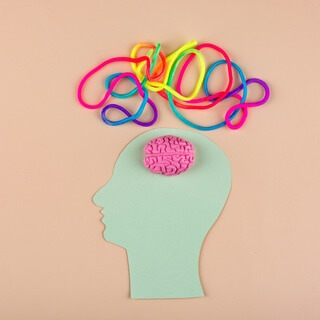
Hello and welcome and today's word is emotions and for those of you who know me or have listened to previous recordings you may know that I'm an emotional intelligence expert and I do a lot of facilitation and coaching work with a focus on emotional intelligence.
So today's word is a really really powerful one in my opinion.
So do your emotions control you or do you control them?
Emotions are a powerful force that influence our decisions,
Our relationships and overall happiness.
Imagine how much more fulfilling life would be if you mastered the ability to navigate and understand your emotions rather than being overwhelmed by them or bothered by them.
Emotional intelligence is the ability to recognize,
Understand and manage emotions and it's one of the most valuable skills in personal and professional life.
Learning how to regulate emotions allows us to make better choices,
Improve relationships and cultivate inner peace and we look at ourselves when we talk about emotional intelligence but equally we look also at how could we manage emotions in others and understand the emotions in others.
That's a pivotal part of the intelligence side of it and I should add at this point that all emotions that we feel are valid and it's important that we don't judge any of the emotions that we feel but it's also important that we understand that emotions will very quickly attach to thought processes and it's the thought processes that often hold negative emotions in our system far longer than they need to and so the next time you feel a negative emotion,
What you perceive to be negative or uncomfortable,
Just observe what thought you add to that feeling,
That emotion within you and it's that thought that you do have control over and can dictate whether it's going to bring you further into a negative spin or actually bring you out of it.
So what belief are you attaching to the emotion?
There's a lot of power in that question alone.
Now Daniel Goldman who's a psychologist is the author of the book called Emotional Intelligence and he really popularized the idea that EQ,
The emotional quotient,
Is just as important as IQ for success and I would go as far as to say that EQ is often more important than IQ for our relationships but also in business and his research highlights the importance of self-awareness,
Empathy and emotional regulation.
Now Maya Angelou,
The renowned poet and activist,
She used her deep emotional awareness to craft powerful literature that resonated with millions of people and her ability to channel emotions into her work made her one of the most influential voices in literature and civil rights and Winston Churchill,
Known for his ability to inspire through speeches,
He understood the power of emotional regulation.
Despite intense pressure during World War II,
He maintained a composed and resolute demeanor that uplifted an entire nation.
A study from Harvard Business Review found that 90% of top performers in leadership positions actually have high emotional intelligence and I can certainly speak from personal experience in the leadership realm that the one reason leaders don't have success is almost exclusively down to a lack of emotional intelligence in one way or another so it's a really important area to develop if you decide that that's important for you.
Neuroscience research from Yale University actually shows that emotional regulation techniques such as mindfulness and reframing enhance resilience and reduce stress that's something that I think is really worth looking more into if you want to become more resilient and more relaxed in such a fast changing world.
Studies also indicate that journaling about our emotions helps process difficult experiences and improves mental health and sometimes it's a question actually finding lots of words that could explain an emotion.
Many of us lack the language to express an emotion and therefore we cannot really release it that's another really interesting point there.
So three action steps for today number one please practice a little bit of mindfulness to just observe emotions within you without any immediate reaction without any need for judgment just to sit for a few minutes and just go within and feel within and feel what emotion is sitting within you at any particular time where is it in your body and just to watch just to be you don't need to do anything.
Number two keep an emotions journal to track patterns and triggers once it's down on paper we can let go of it in our mind and look at it from a much more objective perspective and start asking ourselves some important questions like what would I need to do to move on from that and how could I think differently about a situation and number three developing empathy and perhaps try and develop empathy over the next week or so by actively listening to others and understanding or trying to understand their perspective and today we're going to end on a quote from Elizabeth Gilbert your emotions are the slaves to your thoughts and you are the slave to your emotions.