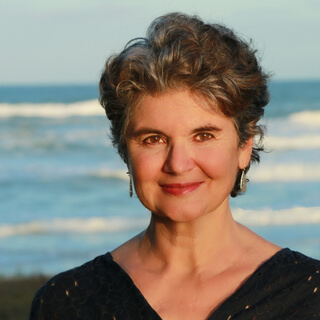
Welcome to In the Deep.
I'm your host,
Katherine Ingram.
The following is excerpted from a session of Dharma Dialogues held in Byron Bay,
Australia in July 2017.
It's called The Well of Nothingness.
Also,
Please consider joining us for our live online sessions,
Which are now happening several times a month and scheduled over several time zones to accommodate you wherever you are.
In the ancient practice of agriculture,
Probably thought I was going to say something else,
But another kind of practice.
In ancient practices of agriculture,
There's what's called crop rotation and fallowing.
It's an interesting word,
Fallowing.
Crop rotation,
Of course,
Is when you change out the crops.
Occasionally,
You make it a different field of a different plant.
This has the benefit of,
There's a symbiosis between the plant and the soil such that the soil is fed in a different way,
Has different kinds of nutrients.
But now and again,
It's also really good for the field to lie fallow,
To just rest.
That's also really good for the field as well.
In a similar way,
In a kind of rotation kind of way,
We bounce along,
We roar along in our lives,
We're in our groove.
There's a certain way we get through the day.
We've got our to-do list,
There's certain habits we're used to,
Certain ways that our mind is just on track.
But it's really nice to rotate it sometimes,
Have a different kind of program running,
Different kind of way that you're using the attention.
So I like to say that we're all subject to a lot of types of conditioning,
But there's a really wonderful kind of conditioning,
I call it a conditioning in freedom,
Whereby the attention is really floating very freely.
It's just at ease.
It's quiet.
It doesn't mean that you're not active in various ways.
Obviously,
You get up in the day and have a shower or whatever,
But there's a way in which the mind,
It's like it's getting the day off or the night off.
It's a different kind of rotation of the attention.
Now,
Very privileged people would be able to just choose that as a way of life,
But most of us have to work,
And therefore we do have to use our attention often in some form of employment.
But when you don't have to do that,
You can allow this kind of other rotation of the attention to start to become the habit.
Now,
In addition,
There's the fallowing,
Pure rest,
Just in rest.
And this is also extremely good for us.
That's when you're really unplugged,
Right?
You're really just doing nothing.
Now in our lives,
The way that our modern life has developed,
I think for many people,
There's just not any time in the day other than sleep that they can really let themselves do nothing.
There's a constant barrage of information,
Of entertainment,
Of news,
Of social media,
A constant hammering of mental noise.
And it takes kind of an act of will to unplug from it,
To really go to what my teacher Poonjaji used to call the well of nothingness,
Just drinking from the well of nothingness,
Just nothing happening,
Just really just staring at the sky good enough.
And in that fallowing,
There's a filling up.
There's an aliveness.
It's not some sort of deadening.
It's the opposite.
It's an aliveness that comes.
Just like those fields,
We need these kinds of understandings and experiences.
We need to rotate the attention out of this kind of monkey mind that is the norm now in our world.
We need to rotate it into reflection,
Into insight,
Into the wisdom channel.
And we also need the fallowing where it's completely off.
Tried and true,
These ancient practices.
So if anyone has anything you'd like to discuss on such matters,
Please feel free.
So I teach yoga,
And I teach the type of yoga that asks people to stay still for periods of time,
Five to sort of ten minutes at a time.
And like you say,
Fallow,
Just be still.
But I also find that people often have to have something at the beginning to anchor their attention to or to entertain the mind for a period of time to give permission for that stillness and that spaciousness to kind of arise.
And I feel that that's kind of a really helpful.
And I know in many of the Buddhist practices,
It's the same.
You start with sort of an anchor point or something to do.
And then would you recommend that as well for people if they're struggling to turn off the monkey mind?
Yeah,
Sure.
And I think in the context of a yoga class where there's movement as well.
And so sure,
That sounds effective.
What about in like,
Because I mean,
I know my partner,
For example,
We just recently had a child and he's taken on the full brunt of our business and is there all day and all night and I'm at home with the baby and he's finding mentally he's overstimulated and really struggling to switch off.
And he's finding that he needs to have almost something to do to bridge the space between the busyness and the stillness,
If that makes sense.
So in other words,
Some kind of calming transitional practice.
Yeah.
Okay.
And that was kind of what I was getting at.
Is there like a practice or something that you recommend or you teach or?
Well,
I don't give practices per se.
And I don't have any quarrel with people who are wanting to do a practice.
It's fine.
I,
You know,
Did my time.
But I do recommend,
If possible,
Just this very simple immersion in the senses.
Because they're always at hand,
Aren't they?
You know,
So that you can always let your attention just start to rest very easily in your own senses.
So to just let yourself kind of simply see,
You know,
Or hearing is occurring without notation,
Not with like some big mindfulness,
You know,
Just of jumping from this to that of notation,
But rather just sinking into the lived direct experience.
Simply feeling yourself in all the ways that you're experiencing life.
Right?
So really keeping it very basic.
Like I said,
Being a wake animal,
You know.
I often give this example,
But it's such a good one.
Where I was living in New York,
There were a lot of deer in my yard.
There was a whole,
Often a herd of deer would be in my yard.
And I would have a lot of occasion to watch them because they couldn't see in during the day into my house,
But I could see them.
And I was,
My desk was right in front of a bay window and often they would be right there.
So I could really observe them.
And I was always struck with how alert they were.
They're very alert,
You know,
They're sensitive creatures.
But sometimes I would watch them and they would just all be sitting in kind of a little grouping,
You know,
Alert,
But just sitting there,
Also relaxed,
Right?
Just beautifully elegantly being,
You know.
It's amazing how we as this type of animal have lost that capacity.
Right?
Perhaps our ancestors had it more,
You know,
They lived more in that way.
But we've come far from it.
I often say we're more like heads on sticks,
You know,
Just like a head that's got a lot of stuff swirling around in it,
You know.
Just a lot of noise and thrusting about future and wanting and grabbing and me,
Me,
Me and all of that.
Just a constant,
You know,
Motion inside.
There can be a habit,
This habit,
You know,
As,
Yes,
That is very different,
You know,
Where you really are kind of wandering about just like any other creature and not so much in your head and not so much reliant on trying to present somebody to the world.
Right?
I think there's so much fear though,
Like when I speak to people of feeling themselves and just sitting with themselves and their bodily sensations.
I mean,
The biggest thing that I encounter is absolute terror.
Yes,
That people have.
Yeah,
I know.
Right.
That can be,
I mean,
It's such an unfamiliar feeling,
You know,
And so that can quickly be gone through though,
That can quickly be adjusted if you just sort of hang in there.
I've seen it,
Of course,
In retreats,
You know,
Sometimes people come kind of in a neurotically agitated state,
But within a short time,
You know,
A day,
They're pretty well transformed into just another simple creature,
Right?
Just a little herd of awake animals,
You know,
Just wandering about,
Eating,
You know,
Walking,
Sleeping,
You know,
Being.
Playing in the sun,
I loved that.
Yeah,
All of that,
You know,
Just keeping it really very simple and not having to be a spiritual person,
You know.
Yeah,
Just being authentic,
Being an authentic,
Simple,
Ordinary person.
Thank you for teaching that.
That's a beautiful lesson,
I think.
We can all do that more.
Yes,
Thank you.
Thank you for your question.
I have no question,
But I just have to tell you how much I love you.
Just every single time it just,
I don't know,
I just adore what you say.
The whole animal thing,
It's all so practical and it just,
It reminds me of being with my grandmother who would just grow veggies,
Tend chickens,
Do the washing,
Sit outside,
You know,
Watch the blossoms,
Turn into fruit,
Harvest them,
Make jams,
Eat the toast with the jam.
Like,
You know,
And it was just,
It was simple and,
You know,
Wars happened and family strife and yet in it that simple attention back on what was true and what was loved on nature and that,
You know,
I just love you for that every time.
Yeah.
It just feels so good too.
It's so right in the body.
Yeah.
Last week in Lennox,
At Dharma Dialogues,
I mentioned that there's a wonderful Chong Su poem,
Prose versus,
It's called When Life Was Full,
They Made No History.
Right?
They came and went like the seasons,
Right?
And people were good because it was good to be good.
It was the only reason that it felt good to be good.
And there was,
I'm paraphrasing now,
But it was,
You know,
Those were cultures that whose ethos was to leave no trace.
Yes.
Right.
And so,
You know,
That what you're describing of your grandmother,
That is how people lived a lot of,
In a lot of our history of humans on the planet.
A lot of times,
A lot of those phases were just very,
Very simple.
And even today on earth,
Lots of people,
Billions of people are living incredibly simply,
You know,
Out of necessity.
In our more privileged cultures,
You know,
We have this other program running that is much more demanding and is sucking,
I think,
The life out of us,
You know.
It's not privileged.
Right.
It's privileged only in the sense of our wealth and our,
You know,
That we don't,
Not many of us are struggling on a daily basis for just the nutrient we need to survive that day.
So by that measure,
We're actually quite privileged given how many people are in that circumstance now.
Three billion people to be exact in terms of the estimates.
Three billion people who are nutrient deprived.
Some are starving and some are just deficient.
They don't get enough.
That's,
I think that's more people than were on the planet when I was born.
More people are now in the,
Close to starving.
So we are very,
Very privileged.
Our interests are on the higher stages of the hierarchy of needs,
As they're called.
The hierarchy of needs.
But it has come with,
It's like this weird perversion of,
Like you said,
This is not really privilege.
You know,
We're squandering it to a great degree.
Not necessarily us in this room.
We have some sense that there's another possibility.
But in the world in general,
You see it.
You see,
And it's very seductive.
It's very,
You know,
It's the agreement in our culture,
Right?
And in our sort of,
Our status quo of who we're being influenced by.
It's kind of the agreement.
To be part of that herd.
There's enough people herding in that way.
You join them.
Wanting always more.
And also this rather insidious pressure to,
Like I said earlier,
To be somebody,
To be somebody that is presented out there,
You know,
As a kind of,
I often joke about how it's really just,
You know,
People are looking at all these other people's little avatars on their social media,
You know.
And they think that that's their life.
They think that that's,
You know,
How their life is.
But we all know that that's not always the case,
Right?
So it's to really challenge these kinds of aspects about the culture and to,
In as many ways as makes sense to you,
Unplug and refuse to step to that tune.
And as one is quieter,
You know,
On that frequency more,
Your own body becomes a great barometer for you in terms of these kinds of decisions,
This kind of going forward.
Your own body starts to tell you.
You start to feel it inside,
Right?
That the yes or the no starts to come from almost a cellular place.
I've never done it before.
It's just been almost a fatalistic approach.
Oh,
The door opened.
I must be meant to go through.
And actually I can.
Well there you are.
Then you're using your privilege in a more intelligent way,
In a more wise way.
You're using the privilege.
Path time.
Yes,
Exactly.
I definitely recommend that for all of us.
You know,
Sometimes it may mean that one has less money than you might have had if you took a different type of path.
But you're still living in privilege.
The great privilege is to be able to sleep at night and,
You know,
Live in your own skin and not feel compromised.
That's a very great privilege.
Thank you.
I just had such an expansive meditation just then.
It was just so gentle.
We've been doing a lot of work in the last week here.
It was just really gentle and really sweet.
That's what I've always felt in the retreats with you.
I just sort of come and tap you on the back and before you realize it you're sort of really immersed.
And yeah.
There's an image that I use often.
It just came to me while you were speaking that let's say you're climbing up a mountain and you've got a backpack.
And you know,
You're just going on a nice long hike.
So you're climbing up this mountain.
It's kind of hot.
So the last few miles are a bit slow going.
You're pretty tired.
But you finally get up to the lodge.
And you sit down.
It's kind of cold up there at the height.
It's kind of cold.
And someone's got a fire going.
And you sit down and someone brings you a cup of tea.
And now you're just sitting in front of the fire.
And you're,
Because of the efforting of the body and to some degree the mind as well in the process,
You're really ready to stop.
And so you're just stopped.
And there you are.
And there's an aliveness to that.
We can feel that moment,
Can't we?
We can even imagine sitting in that moment in that way.
And it's a great little reflection to have because you can be sitting like that on a bus or at a traffic light or anywhere.
You can just be suddenly entrained into that moment as though you've just put down that big heavy pack.
And now you're just in front of the fire.
Right?
And like that it becomes a little touchstone to you.
Definitely.
To your own little.
Definitely.
Yeah.
It's just growing stronger and stronger.
Yeah.
Good.
Yeah.
So are the challenges.
Well,
Yes.
I mean,
You know,
The challenges keep coming,
You know.
The challenges keep coming,
You know.
And as we go on in life and get older,
You know,
I mean,
I often say I feel like there's now no longer any time in my life that I don't have someone close to me going through cancer,
Death.
I mean,
It's just fairly continual and usually several at once as is the case right now with two of my best friends having cancer and several of my other ones just having died in the last year of cancer.
And it's just,
You know,
It's the new norm in letting go and loss and living in very deep insight about the impermanence of this situation.
And at the same time with all of that,
The inducement to really,
You know,
Really celebrate,
Really carpe diem,
Seize the day,
You know.
It's all part of it,
You know.
As that becomes more and more clear,
And it does,
As you said,
The challenges,
That in a way,
Especially to a mind attuned to this kind of understanding,
It forces a sparkle of incredible appreciation and gratitude,
You know,
For whatever time is left to oneself and to whoever else.
So it's all of it.
You know,
I think sometimes people hope and perhaps even assume the Dharma perspective is going to really get you off the hook,
Right.
That it's going to somehow be peace forevermore.
And while it does give you tremendous clarity and agility in terms of letting go and so on,
It doesn't protect you from grief or hardship,
Right.
And in some ways,
Because you're becoming more and more sensitive in general,
In some ways you actually feel the sting of those things in an even greater way.
Yeah.
And I think I got into the whole thing just to try and get away,
To try and get my head.
Yeah.
Right.
There was a promise that we were going to get,
There was going to be an alleviation of the suffering.
But.
.
.
That was my strategy.
I read this thing.
I think I've told this story in here already,
But you weren't here,
So I'll tell you.
Okay.
So backing up,
Do you know who Patti Smith is?
Yes.
And did you know that she accepted the Nobel Prize on behalf of Bob Dylan?
I did.
And did you know that she flubbed the lines when she was singing?
Yes.
Okay.
So she flubbed those lines.
And then she wrote a very beautiful piece about this entire experience in The New Yorker.
And in it she spoke about,
It's worth reading,
Worth looking up,
But in it there's one part that it really struck me that she said that her father had said that time doesn't heal all wounds,
But time gives you the resources to bear,
To endure.
Right?
And I loved that.
And I find that that's very true with being in love with the Dharma,
Basically,
That it does give you,
You know,
Because the mind is just to become very well trained in hanging out in the deeper waters,
In the quieter places.
It does give you the resources so that when grief is happening,
You're letting grief happen,
You're feeling it,
But there's not a full collapse into depression.
And when letting go is needed,
There's letting go occurring.
And when joy is there,
There's,
You know,
Beautiful abandonment,
But not with the sense that that's going to be permanent either.
Right?
So there's a lightness to your touch with everything.
And you begin to rely on that as your way through,
Not to expect that there's going to be some steady state of blissful feeling.
Right?
But rather that you'll find your own internal gracefulness through it.
Yeah,
I mean,
I haven't had much bliss.
So definitely truth and insight and feel stillness.
But yeah,
So I guess that's a blessing in a way,
Because I've gone deeper in that way.
And also it may just be,
Listen,
Peace is good enough.
My Buddhist teachers used to say,
Peace was the highest form of happiness,
Right?
So when I first heard this when I was about 22 years old,
And I used to think,
I can think of others.
But it has turned out to be incredibly true,
Truer and truer and truer.
It's an incredible form of happiness,
Peacefulness.
We don't get to have it consistently,
As I'm saying tonight,
You know,
That there are challenges,
There are losses,
There are these shocking things happen,
You know,
That take your breath away.
But that the returning to,
You know,
You probably heard my podcast with Gangaji.
And in the very first thing I said to her is,
You know,
You know,
Something like,
How do you remain?
How do you stay calm?
And she said,
Well,
I don't.
She said,
But I returned to calm.
And that's really it,
You know,
That you basically return to calm quickly,
Or as quickly as possible.
And the habit,
The habit of defaulting to calm,
To ease,
To simplicity.
And basically giving up the big,
You know,
Presentation project,
The me project.
That's exhausting.
That's always a burdensome path to suffering.
Oh my God.
Yes.
I'm still trying,
Still trying it out.
Well,
Good luck with it.
Out of just perpetual.
No,
I know.
I know.
That is the conditioning for sure.
Kicking and screaming all the way,
But thank you so much.
Yeah.
I was just wondering how you met your teacher.
And did I hear it was Papaji?
Yes.
Yeah.
Just wondering how your journey took you there.
And yeah,
Just a little bit about yourself.
Well,
I had been studying Buddhism,
In particular mindfulness practice,
Starting in 1974.
But by about 1990,
I felt really done with it.
I was still going to retreat since that was sort of still my crowd.
But actually,
Even in the late 80s,
I was really getting,
I was really feeling done.
It was falling away.
But I didn't really have any replacement.
I didn't have anything else.
And it was my community also,
My friends.
And I felt very unfit for the world,
For worldly life.
I felt very uninterested and like I didn't fit.
I had been,
I had essentially grown up in monasteries and hanging out with Dharma people and being in Asia a lot.
And I didn't really fit in the workaday world so well.
I was working as a journalist,
Specializing in consciousness and activism.
And I was also setting up retreats for my teachers in those days,
In those early days.
So when all this kind of fell away,
I fell into a depression for about two years because I just felt I didn't belong on this planet.
So then this guy actually moved into my neighborhood in California.
And he began having teachings locally.
And he had come directly from Poonjaji.
Right?
He came directly from Poonjaji.
And he was only in that role for a short while because then they had an estrangement later.
But in that phase,
He kind of had come fresh from Poonjaji.
And so I began hearing about Poonjaji through him.
And then several of my friends started to go meet Poonjaji in India.
And it was a very tiny scene in those days and his place,
Very,
Very small.
And one of my friends was Gangaji.
I knew her as Tony before that,
Before she went.
She was Tony.
And I think I was the first person she called when she got back.
She said,
You must go.
At that particular moment,
I wasn't quite ready to go.
I was in a new relationship and my life had kind of turned around a little bit.
And I was kind of in a different rhythm.
But very soon thereafter,
I'd probably say within the year of her going,
I went.
And I got an assignment from Yoga Journal because I had been working as a journalist for many,
Many years before that.
So I could always have personal access to people because I could get an assignment to publish their words.
So my whole first time of being there,
I was there as a journalist.
And therefore,
I had lots of private time with Poonjaji.
In the first week I was there,
I had six hours of one-on-one private time.
Plus,
I was attending satsang every day.
And that was incredibly powerful.
It was a breakthrough because I really saw how there was nowhere to get,
There was nowhere to go.
All the practice I had done,
All those years,
We always had the sense that we were trying to get to some other kind of goal.
There was always,
It was like having homework all the time.
There was always somewhere else where you needed to be in terms of enlightenment or some other stage of insight and so on.
With him,
His big teachings were keep quiet and make no effort.
He said it in a thousand different ways,
Very brilliantly.
Keeping quiet,
That doesn't mean you don't ever speak.
It's a different kind of quiet.
And make no effort.
And as soon as you start to feel yourself making effort,
Let it be a wake-up call.
And then make no effort.
And you keep falling back into this simplicity of being.
You just keep falling back into it whereby you're just hanging out like the deer in my yard.
Right?
Like the birds on the branch,
Like,
You know,
All the rest of the creatures who are just hanging out.
They're not trying to get anywhere else.
They're not trying to be anything other than being.
Yeah,
Often one looks back at all the efforting and all the trying and all the philosophy and all the conversations and the practices and the effort.
From the vantage point of the simplicity of the making no effort,
Of just being,
Hanging out,
You know,
He used to say,
When you see this you'll laugh.
Like when you really get it how,
Oh my gosh,
It was just so simple all along.
As all the great teachings have said,
You know,
The really core mystical teachings have all said that same thing.
That it was,
You know,
What you were searching for is what was searching.
And so you find yourself,
You know,
There's a great image I always loved in Zen that you start out on the path and mountains are mountains and rivers are rivers.
But you keep going and you work and you,
You know,
You look at the world from a thousand different kaleidoscopic ways and suddenly mountains are no longer mountains and rivers are no longer rivers.
It's all a little different.
It's all changed somehow,
You know.
But you keep going and you come back to mountains are mountains and rivers are rivers,
Right?
The ordinariness.
And then even the whole,
The whole being interested in yourself as some sort of spiritual project,
Even having the who am I question becomes extraneous.
You're just living like in the book Siddhartha where he's just rowing across the river,
Right?
You're just living your life in a simple way.
You know,
Kind without having to make some big story about it.
Feels good to be generous.
Right?
You find yourself a servant to the greater good because this feels right,
Feels good.
And this whole question of being able to just sleep easily at night,
Not have to ruminate about a bunch of things you wish were different,
That you'd done differently or,
You know,
Not living in some kind of compromise,
As we were saying.
I was just intrigued what you said before about staying with the senses because we kind of take them so much for granted.
Right.
And I live in the country and I have a lot of wallabies around my place.
So it's this similar kind of thing,
Watching the interactions.
And when you were talking about that,
It just sort of occurred to me that it is so much about living from the senses because there's actually no sense of self there.
Good.
They don't have a sense of self.
I mean,
They argue over the food and there's a lot of argy-bargy and all that stuff.
But that's got no sense of self in it.
So,
Yeah,
I just was curious if you had any thoughts about that.
I feel the same.
I love what you're saying.
I agree.
That's why even my sense is that even any kind of endeavor in the spiritual realm starts to feel very narcissistic,
Right?
That when you really make no effort and you really sink into being,
You're off the project entirely.
You're not trying to self-improve any longer.
It's done.
You're not bothering.
And then you actually are living like a real creature and in the kind of,
I quote all the time,
And I'm sorry for the people who've heard me say this so many times,
But it's just the best line.
It's Krishnamurti said,
When you begin to understand what you are without trying to change it,
Then what you are undergoes a transformation.
Now that transformation that it undergoes is into deep relaxation and acceptance.
Right?
It's not that you become enlightened.
It's that you just give up the whole notion.
And then you're,
And it's like you said,
It's the fixation on self dissolves.
So then you are really living in your senses like the wallabies and like the deer and like the bush turkeys.
And,
You know,
We have more complex brains,
Right?
We have a lot more going on in terms of all of that.
And we are great manipulators of our natural world.
Unfortunately,
We've been a little too good at that over the years.
And we're going to pay that price.
But in any case,
We are more complex creatures.
So there's a resistance to actually dropping into just that sensory appreciation.
Yes,
That's exactly right.
Because you kind of think,
Well,
That's not enough.
That's right.
Yes,
That's exactly right.
Right.
Right.
So one ends up ahead on the stick.
You know,
Just swirling around in the head thinking that's going to get me somewhere someday,
You know.
Yeah,
Well,
You've got to have it for something.
Right.
But I think that,
You know,
The big thinking capacity that we have was advantageous for a very long time evolutionarily.
But I don't think it's serving us anymore.
I don't think that this level of constant thinking,
I think it's contraindicated to health.
And especially what most people are doing with the thinking.
So,
Yes,
To your point,
Absolutely.
You just see more and more.
You're just not self-referencing.
You don't really care what your opinions are.
They float by without you really recording them.
It's interesting that way,
You know.
You become much more almost a tabula rasa,
You know.
You become much more just a spacious way of being.
Yes,
And so there is a need for trust,
Like is that?
I would say that the trust is born of making the experiment.
Right.
So you realize that you're operating pretty well without all this self-referencing.
In fact,
I would propose you start operating more efficiently and more elegantly without the self-referencing.
Right.
How am I doing and da da da,
What have I got in my potential?
You know,
All of that falls away.
And then you're really,
You've got the full force of your own attention and your own intelligence,
Your own genius at your service.
And you don't care what other people are thinking of you because you're not,
You don't care what you think of you.
That sounds really good.
Yes,
Exactly.
It gets to that,
You know.
When you really sort of see the whole picture quite clearly,
That's what it comes to.
You're just like,
You're off the job of improving you.
And then isn't it refreshing to be with people who are not on that job?
And who are just being,
You know,
Don't we love the company of those?
Don't we love their company?
And it's not that they're just,
You know,
Lumps of clay.
They're interesting usually,
You know.
There's a certain freshness to the inside,
Freshness.
I see this,
I've led so many retreats where people dive deep.
And I often say,
I feel like I'm listening to mystical poetry when they speak.
Because what they're saying,
Coming from their own direct experience,
Describing their own reality,
Is so clear,
So darmically clear.
You know,
That it could be like Rumi or Hafiz,
You know,
Speaking.
And then it made me suspect that Rumi and Hafiz were actually not writing poetry.
They were describing reality.
So,
You know,
That that's really what it comes to,
That sitting in that ease of being,
It doesn't make you just some dolt,
Right?
I've known so many people over the years who,
You know,
One dramatic story,
I tell the story in my book.
There was a guy who came to one of my nine-day retreats in California,
And he was a stutterer.
Very badly stuttering.
And about halfway through the retreat or so,
He was speaking to me at some great length,
And he wasn't stuttering.
Right?
And I didn't want to say anything because I didn't want to make him self-conscious,
Right?
But then somebody else in the group mentioned it,
They raised it and said,
I noticed you,
You know.
And I said,
Yeah,
I noticed that too.
And then a few days later,
This same person said,
When I was coming here for the retreat,
He said,
My wife said,
Now don't you go and fall in love with anyone,
Because she wasn't coming.
He said,
Don't you go and fall in love with anyone.
And he said,
How am I going to tell you that I fell in love with everyone?
I said,
She's not going to mind that as much.
But that also,
To the point,
Is when you're just being in that kind of simplicity.
You know,
It's very beautiful.
People speak from a very true place,
And it's just lovely.
It's the real genius,
The real clarity of mind.
The mind becomes like a diamond.
And this is,
These are all like side benefits,
You know,
To the main one.
So is that just essentially because the mind is out of the way,
And I mean,
We accumulate language and all the rest of it.
So that becomes available somehow.
Yes,
Yes,
Because you're not using up a lot of your fabulous attention and energy.
And to,
First of all,
Constantly have to vet,
How is this going to seem?
What are they going to think?
Do I like this?
Do I don't?
All of that material that's often swirling in someone's head in the most simple of exchanges is not operative.
Or if it is,
The volume is turned so low that it doesn't matter,
Right?
So there's a way in which,
You know,
There's a kind of,
We probably understand this,
Like if there are certain people in your life who you're so comfortable with,
Right?
That you're not really,
It's almost like stream of consciousness when you're speaking with them,
Right?
Well,
It becomes more like that with everybody.
You find yourself just speaking freely,
You know?
You're not filtering things through the ego.
So that's the sense of self dropping away.
That's right,
Exactly,
Right.
And that includes the spiritual self,
Right?
Especially the spiritual self.
Because that one has a really strong filter,
You know,
When you're around people who are kind of phony holy,
We call them,
In the business.
But you know,
You can really feel it when you're with someone who's a holy roller,
You know?
And who's kind of,
Everything's a bit precious and,
You know,
You make the simplest comment to them.
And there was someone I hadn't seen in a long time.
I consider him sort of one of those.
And I said to him,
Oh,
It's been so long since I've seen you.
And he said,
There is no time.
That kind of thing,
You know,
That when you're at ease and simple and ordinary,
Right?
When I was young and in the Buddhist scene at our original monastery in Massachusetts,
There were a lot of very amazing Buddhist teachers from around the world.
And occasionally,
They would come and visit.
Because it was this new scene,
This new Dharma scene.
We had this fantastic monastery.
I don't know how this ragtag band of really kids pulled us off.
But anyway,
There we were.
So sometimes you'd find yourself in the,
I was always on staff in those days,
You know,
Back in the back lunchroom.
And there would be some famous Zen teacher and a famous Tibetan lama both there visiting at the same time having lunch.
So,
You know,
When we were these young Dharma students,
We'd think,
Oh,
Good,
They're going to have a big debate.
Because their various traditions have certain disagreements.
And,
You know,
It's like,
Oh,
Good,
Let's hang out and listen.
But they would always be talking about,
You know,
What route did you fly from Seoul to?
It was always like,
They were always just ordinary hanging out like that,
Right?
Just,
You know,
It was so great.
I understand that you actually interviewed Krishnamurti?
Yes,
I did.
Yes.
So that would have been quite some time ago.
Yes.
It was,
I think,
81 maybe,
1980 or 81.
Okay.
Because I spent a year in England at his school.
So I was intrigued that you'd had an interview.
Yes,
I interviewed him in New York City and it was a cover story for East West Journal.
Yeah.
Yeah,
I imagine that would have been quite fascinating.
It was incredible,
Really interesting.
What was also very powerful for me was,
He was,
I think,
90 or 91,
Something like that.
And his mind was so sharp,
Really sharp.
And that was a great inspiration to see that someone who's exercising their mind on a certain frequency,
You know,
Of the deeper truths,
That it's not a guarantee that it could stay sharp at all.
But I think that even,
Like I've heard of another case,
Not anything like Krishnamurti,
Because his mind was really,
Really working well.
But I know of another case of a Buddhist teacher,
A Cambodian Buddhist teacher who got Alzheimer's.
But he would still chant the Buddhist chants,
Because that was his habit.
That was his crop rotation.
He would chant the Buddhist chants perfectly,
And he relied on them a lot.
Apparently he chanted them a lot.
And he was still teaching,
People would have him still come and just lead chants.
I thought that was quite interesting,
Just in terms of the habit of attention,
What it can do.
Even whilst the mind is deteriorating.
That's right,
Exactly.
That it defaults to some sort of patterning,
You know.
So another good reason why we let the conditioning in freedom,
In deep quiet,
In being simple,
Become habitual.
We'll be back with another spectacular retreat in Italy next October of 2018.
If you're a regular listener,
Please consider making either a one-time or a recurring tax-deductible donation in any amount that is comfortable for you.
Till next time.