Welcome to In the Deep.
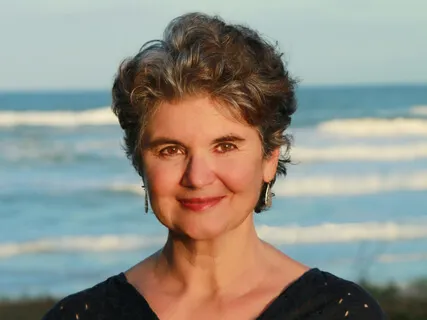
I'm your host,
Katherine Ingram.
The following is excerpted from a session of Dharma dialogues held in Lenox Head,
Australia in June of 2018.
It's called The Vacation.
This is from the great poet,
Philosopher,
Farmer,
Wendell Berry,
And it's called The Vacation.
Once there was a man who filmed his vacation.
He went flying down the river in his boat with his video camera to his eye,
Making a moving picture of the moving river upon which his sleek boat moved swiftly toward the end of his vacation.
He showed his vacation to his camera,
Which pictured it,
Preserving it forever.
The river,
The trees,
The sky,
The light,
The bow of his rushing boat behind which he stood with his camera,
Preserving his vacation even as he was having it so that after he had had it,
He would still have it.
It would be there.
With a flick of a switch,
There it would be,
But he would not be in it.
He would never be in it.
He missed his vacation.
His camera took his vacation.
The mediation of our experience,
Which has become so ubiquitous in our world,
The capturing of the experience disallows the full immersion in the experience as you're having it.
We've talked about this many times in here,
But there's another point I want to make,
Which is that the intentionality to constantly be capturing,
Whether it's your pictures for Instagram or Facebook,
Whatever it is,
Is also a conditioning that's going on in the mind that is a solidification of the sense of somebody.
It's the actual intentionality to have that going on all the time that's causing an entrainment,
A habit to want to present somebody to the world.
Just as the conditioned habit of feeling gratitude allows you to look through a lens in which you're looking at the world and looking for things that make you feel gratitude.
We can use our mind for all kinds of conditioning.
I always recommend these ways of being conditioned more in freedom,
Whether it's present awareness,
Sensory awareness,
Or gratitude.
But for people who are intent on presenting themselves to the world,
And there's a lot of people doing that now,
It's amazing.
Then the very notion that that is something on your to-do list each day,
And many people do it multiple times a day,
Is actually conditioning a habit of somebody-ness.
It's an homage to the self.
Some people mistakenly are thinking that somehow it's making them feel more connected.
But the problem is the very act of having to constantly reference this somebody-ness is itself a tyranny.
And it's going to never be enough,
Because there'll always be somebody out there who's doing it more and better and is having bigger success at it.
And even if you happen to be the top one for a minute or two in history,
You will quickly have somebody nipping at your heels that's going to be the top one next.
In whatever game you're playing,
In whatever role.
This past week,
Two big American icons committed suicide,
Kate Spade and Anthony Bourdain.
All of us knew these people.
If you grew up in our country,
My country,
They were huge names.
Kate Spade was a big designer,
But Anthony,
She's not as much in the news now.
But Anthony Bourdain had a huge hit show on CNN.
And I was just telling Michael,
He had a dream job.
He,
For years and years,
Went around the world.
He had been a famous chef,
But then he ended up with this job with CNN,
Had his own shows going around the world,
Sampling and having meals at the most exotic and fabulous restaurants or street vendors or in the most remote places or in the most gorgeous spots of Paris or Rome.
And had what looked from the outside like a pretty grand life.
Probably made millions and millions of dollars.
Would go to the most beautiful places on earth and embed in the culture and of course be hosted by the cool people.
And had a huge presence online as well.
So you've got to ask yourself,
Here's a situation,
Here's a situation where he would have been in a circumstance where his some body needs would have been well met.
He was a somebody.
And anywhere he went,
People treated him like he was somebody,
Right?
He didn't have a sense of being obscure.
He had a sense of being somebody.
And apparently that was not much fun for him.
It may be more fun for others for a while,
But really when you really watch them,
When you really know someone whose passion is that,
It doesn't feel like it's fun when you're around someone who's behaving that way.
So as usual,
In here I challenge so much of what the indoctrination is in the culture.
I just constantly have to challenge it.
I feel that it's I mostly just debunk stuff to leave us in our naturalness,
You know,
To leave us in a much more real place inside of ourselves.
So that when you go on your vacation,
You're actually immersed in your vacation.
And it doesn't matter if it didn't get captured,
You were in it.
I think when I had a crash and burn about just over 10 years ago,
Facebook was pretty new.
In the stepping back from it and then looking at it with fresher eyes,
Seeing how there is a lot of that presentation from people.
And maybe it's people that you know,
And then you look and you go,
That really is that how they see themselves,
Maybe in the selfie thing.
And how especially though the young ones are really always so fixated on how they've got to look flawless or super shiny and always at their best.
And then that's where I,
It was like,
Okay,
This isn't so healthy on a lot of levels and not much I can do about it except to disengage and just utilise it for if there's something truly that feels to be shared.
You know,
There's family overseas or something and maybe sharing some family photos.
And it was interesting again,
The self-inquiry,
Well,
Do I need to also post photos?
They've posted photos.
It was their experience.
Well,
I think with any kind of thing that is producing various forms of pleasure or feelings of connection at times,
Of course,
You can honour that.
But there's a possibility of knowing when enough is enough and really knowing,
Checking in in your being to know that this all feels really relaxed,
Really,
Really easy,
You know,
Really no big deal.
Right?
Not a kind of,
Because that has a very different quality than something that is starting to be addictive.
And so you can use technology,
Of course.
You know,
When you're the master of it and not beholden to it.
That's right.
When you're not beholden to it.
Yes.
Yeah.
I suppose the question comes up having the grandchildren in how do you not take responsibility for how they're going to go through all of that and yet maybe impart some healthy attitudes around to the younger ones who are so caught up?
I mean,
Because it is so,
Like I said,
Ubiquitous now in the culture,
I don't see any benefit coming from trying to repress it for them.
That just creates obsession.
I know a bunch of tech snobs who try to keep technology away from their kids and then it just becomes this full blown obsession for the kids and they might become even more addicted later.
I even remember this goes back a long ways,
Back way before any of those technologies were around,
But simply when I was living in Cambridge,
Massachusetts,
Down the street from me were some friends of mine and they had a son who was maybe seven or eight at the time.
Next door to them lived a family who didn't allow their son to watch television.
He wasn't allowed,
But he was allowed to play with his friend next door and he would come over and of course my friend's kid would want to just play,
But this kid just wanted to watch TV at his house.
I mean,
He would just spend hours and he would be in the room by himself watching the TV,
The next door kid.
And I could almost see the future in this child,
Right?
That it will become more and more his thing because it was being withheld.
So that's always a tricky thing.
But to impart one's own experience and life wisdom as an elder to young people and to just talk about how things were when we grew up,
Right?
And how nice it feels to be in nature and play and to not have to worry about,
You know,
Kind of how you look.
Exactly.
To just sort of talk about those things with a child or with younger people.
I mean,
That's all you can do.
You know,
It's very hard to change anybody else's life course.
And so you just,
You know,
You manifest as an option.
And being authentic to yourself in that with the sharing of the stories and then it's their process how they're going to go through all of that.
Yes,
Exactly.
Yeah,
You just can only give your own experience.
That's all you can offer in truth.
And yeah,
Fortunately,
I think there is a lot of conversation among young,
Kind of the young hip eco-crowd about unplugging.
You know,
I think that's certainly on the horizon.
But yeah,
But I think there's quite a lot of now technological addiction.
People are actually sending young children to be deprogrammed.
Yes,
I just saw a documentary recently about that.
Yeah.
And they were filming the young people like having absolute massive tantrums because their phone had been taken away from them because they had been on it for 15 hours.
Oh my goodness.
And their parents took it,
The parents took it away and the daughter,
She went crazy.
And it was these kinds of things that were leading up to this family and several others that they followed having to be taken to this camp.
So their identity is being taken up very quickly but in a false way.
Yes.
Because they're just,
They're becoming all the labels of who they are.
Yes.
And when that's gone,
They don't know who they are.
So that probably brings up the terror.
Yeah.
And quick,
I need my fix.
Yeah.
It's an addiction.
Yes.
Yes.
It's definitely being called an addiction now.
So anyway,
It's all to the point of,
You know,
The thing I bang on a lot about is the wonderful experience of living in your actual senses,
Right?
And in really living in your world,
You know,
Living in the brightness of the world,
You know,
And really noticing things and feeling things,
Tasting things and smelling all the,
You know,
The richness of the senses.
And then when you are meeting with someone from having had,
Living in that way,
Your senses are awake in the meeting with the human before you or the dog or the bird or whatever it happens to be.
Your senses are fully awake.
Awake.
And you show up in what is in shorthand called presence for your friend.
But presence is not just that you're there and not seemingly distracted.
It's that all your senses are there as well.
You know,
So you're just.
.
.
And yeah,
It's interesting how many people in the world now,
You know,
They're turning to meditation and the contemplative arts.
That's hugely popular.
It's become hugely popular and it's wonderful.
Some of it,
I feel,
Is it's almost like people are careening from one world to another.
You know,
They're in these intense urban situations and racing around like crazy.
And then they have to have their meditation practice to basically get them sane for half an hour,
An hour.
To go back out.
To go back out.
Yes,
Exactly.
And so,
You know,
Another way to play it is to have a more seamless kind of flow in the day where you're not just.
.
.
And a lot of the racing people are doing is because they're still caught in that game of somebody who they're presenting to the world.
So there's another level of this too for me that I feel.
One sense is like to stop that presentation outwards.
You know,
That's one thing.
Well,
I guess this is another flavour of the same thing actually.
But the whole inner work process,
You know,
The therapy and spiritual process of becoming someone on an inner level,
It really has the same flavour actually.
But I notice pulling.
.
.
When I sort of start to disconnect there,
That's actually more difficult.
Like,
Well,
Then what am I doing?
Do you know what I mean?
That I'm just not becoming anything.
Do you know what I mean?
Everyone else is kind of moving ahead in the inner world.
You know what I mean?
Going somewhere.
Are they?
Yeah,
Well,
This is the imagination.
And I'm sort of stagnating in some way because I'm not grasping.
It's just sort of some identity around becoming.
In any way.
Right.
It's still the I story.
It's still either I'm somebody in the world or I'm becoming more and more awake.
And it's really,
I know it seems hard to imagine that this is the truth,
But it's really when you give up any striving in that domain that the deeper relaxation and all the things that you're probably hoping would be the case start to become normalised.
Like all the things such as all the sort of spiritual qualities that one hopes for.
They don't become the habit through any kind of striving.
They only become the habit by completely giving up that search.
And they only become the habit now and again,
Even,
You know,
It's sort of just if they arise,
Like my book,
Passionate Presence,
Talks about different spiritual qualities that come through this process of relaxation.
They just arise.
But it's not as if they're always arising feelings of tenderness,
Crisp discernment,
Moments of joy,
Moments of wonder,
Moments of generosity.
You know,
Clear authenticity,
Real genuineness.
These qualities,
They just kind of cycle around in your being,
You know,
Not every minute of the day.
They're just arising through the process of just not having to be somebody out in the world and not having to be somebody that you think is important to yourself.
Yeah.
I liked what you said about generosity.
I've had an experience in the last week of an uprising in generosity and I've noticed how sweet that is to feel because I'm not in the practice of pushing for that.
But it is a relief that it still exists.
Yes.
That is encouraging.
Yeah,
Without so much force or trying to be a generous person.
Exactly.
That's my point on all those other qualities I just mentioned.
That's exactly the point is that they arise unbidden.
You're not trying to be discerning.
You're not trying to be generous.
You're not trying to be delighted.
They just arise organically and the ground for that arising gets more and more well fed by your not trying.
And then you become more and more and more.
You're just a creature.
You just become this simple creature.
And don't you personally love being around people who are like that?
Don't we love,
Those of us who love animals and dogs in particular,
Which have evolved to be our best friends.
There's a whole complicated theory as to why that came to be.
We helped each other survive.
But anyway,
We performed a lot of bonding with dogs in particular.
And isn't it amazing how intensely we feel love with a dog,
With an animal,
With an animal that's our housemate.
Just the intensity of that love.
Have you ever thought about that?
Have you ever thought about just why is that?
Several of my friends have told me who had lost their long time companion of a dog have told me how it was basically the biggest grief and loss of their lives.
And just that's so beautiful.
Because the love is so pure.
The love is so unconditional.
And it's not based on anybody being a somebody.
It's based on the most fundamental connection of being.
And being a gentle presence in each other's company.
And that's all we have to be with each other.
Just that.
But the conditioning and the culture and the thrust and all the social media and all of it is signaling constantly the opposite message.
And then now and again you have an Anthony Bourdain commit suicide and it wakes you out of the trance for a second thinking wow,
You know.
One projects on these lives,
You know,
That people want to emulate.
It's such a dance.
I feel such a dance in this particular element for me where I sink in and I feel the relaxation.
We've talked about this before.
I feel the relaxation and then I get scared and then I'll bounce out into trying to,
You know,
Wanting something to be make it happen.
And then nothing really happens.
Sort of a cycle.
There's definitely a layer of fear to meet around,
I don't know,
Being no one or rotting in the earth or somehow unemployed or do you know what I mean?
There's like a layer of,
I don't know.
I mean unemployed can become an issue if your finances are going in a direction that are going to make it very,
Very difficult for you to live in even just a reasonably simple way.
So that is a category I would say that does have with it anxiety and that needs to be addressed.
It doesn't necessarily have to have a big sense of somebody.
It just has to have with it a practical plan for having an income for as long as that is possible.
And so that I would say,
Yes,
I understand that part,
You know,
Having to kind of keep something going as a work that generates income.
But the rest of it's unimportant or rotting in the earth or,
You know,
A lot of that is this swirl of,
Again,
Connected to me,
Me.
What about me?
How am I doing?
How do they think I'm doing?
That one gets you,
Doesn't it?
You know,
Sometimes it's about how do other people see me?
And I always point out they're not.
They're thinking about them.
So,
You know,
You,
I mean,
Mostly what people are,
Mostly what people are responding to is the vibe,
Right?
Mostly people are responding to your vibe.
Like having the somebody playing the somebody card might get you in the door.
You know,
It sometimes will open a door for you,
Surely.
But then it becomes about the vibe.
And so why not just,
You know,
Relax into just hanging out being someone who really is like nice to hang out with?
Yes,
Indeed.
Yeah.
You know,
The famous saying,
It's very,
Very,
Everybody's heard it probably,
But someday I'd like to be the person my dog thinks I am.
And yeah,
Just the sweetness of those kinds of ways of being together,
You know.
Funny that we have to come here to remember that,
You know what I mean?
It's just so natural thing.
It's funny.
It was like there's a collective forgetting something so simple.
Incredible.
I know.
Amazing.
I was one time many,
Many years ago at a wedding,
A very,
Very private wedding on the beach in Malibu.
And at this wedding was Barbara Streisand and her date of the night,
Peter Jennings,
Who was one of our big news anchors in America.
He's since died.
But even though everyone there,
Almost everyone there was somebody she would have known,
Was connected to in some either direct or indirect way,
Maybe except me and a couple of other people,
I noticed that she hung out with the little girls the whole night.
She was,
I mean,
Every time I would see her,
She's running along holding hands with a little girl in the front and a little girl in the back and having a great time,
Seemingly at the wedding.
But I just noticed,
I just made a note to myself because probably with them,
Right,
She didn't have to be Barbara Streisand.
They didn't know from who Barbara Streisand was,
Right?
And everybody else,
Even though these were people she had worked with,
The people who were hosting the wedding or her longtime friends,
You know,
She still,
Still.
So it's these kinds of reflections,
Counter reflections that challenge,
You know,
And that debunk and that make you remember,
You know.
Yeah,
So this sort of thing of reifying the self,
You know,
Whether it's you're expressing it out there,
You know,
Image or just in your mind,
I kind of can see how that's reinforcing this idea that there is this self and how that's a burden.
But where I get stuck is what,
Like,
There's a certain amount,
This is my belief that I need to do for myself to function in the world,
You know.
So how do I stay healthy?
How do I survive?
How do I,
You know,
Take care of my relationships,
You know.
So all these little jobs,
You know,
Of the self,
Of the ego so the ego doesn't just,
You know,
Collapse and then go.
Is it the ego or is it your actual support?
Or the body or whatever.
It's sort of like there's a preoccupation with these things,
Which is then reinforcing this idea of a self and it's sort of taking up a lot of my time.
So I'm not really so bothered about the image out there,
But it's just like,
How do I keep this machine moving?
Well,
That's,
I mean,
I think a fair enough project,
You know,
That is if you're not,
At least you're not burdened by having to be a big somebody in the world and having to be important and all those things.
I don't have any time for that.
Yeah,
Well,
I think that it's fair enough that you have to spend a lot of energy just taking care of the creature,
Right?
Getting the creature fed and making sure there's a home for it and all those things cost money and money,
Unless someone is extremely lucky and inherited it or something or made it in some easy way,
Most people have to work for that.
And there is just a certain amount of life force that is required to do that and you just have to kind of suck it up,
You know.
You have to spend a certain amount of life force.
I wouldn't even add in the thought that it is part of your ego.
It's just,
You're just taking care of your beingness so that it functions and is healthy,
Which is a very smart play and is,
You know,
Managing to be sustainable.
I think I kind of have it like that's all I need to do and then I can be connected or available or here.
So I'm busy with this.
Like this is separate to that.
You know what I mean?
So then I feel kind of like it's a burden or it's like it's in the way or it's taking up my time.
I can't really be present because I'm too busy having to do these kind of.
.
.
One of my practical tricks,
I would say,
Is that I like to put space around things.
So in other words,
If I have a work phase and it's like an intense work phase,
I'll do it.
But then I want some space after that,
Some downtime,
Right?
And however that works out,
Whether it's a walk on the beach or watching something or fixing a meal or a cup of tea or sitting on my couch and looking at the,
You know,
And.
.
.
Or if I'm going,
Let's say I have a day off and I'm going somewhere,
I don't put in a whole bunch of things,
Right?
I don't hop from one thing to the next to the next to the next.
I put space around things.
It's just my way and I've always done it that way.
And then I find that it allows me to kind of stay in a flow,
You know?
I'm never pushing so long that I'm starting to get wired feeling or overly exhausted such that I can't quite manage my mind and attention.
Because when one is very exhausted,
It's harder to manage the mind's attention,
You know?
And sometimes you're in a circumstance where you don't get an option.
You're flying somewhere and you know,
You're tired by the time you get there and then you still have to get to wherever you're going.
You still have to get,
You know,
Figure out a bunch of things and so on.
You know,
You can end up exhausted.
I allow for all those kinds of circumstances,
But I don't make it a way of life as much as possible.
So I would just say as much as you can,
You know,
Figure in downtime,
Whatever that means to you,
If it's resting or if it's some form of exercise that is very relaxing for you or some activity that you enjoy.
Just so that the mind just kind of resets itself into calm and into what Poonjaji so brilliantly called the well of nothingness,
Which I've spoken about before.
The well of nothingness where you're just being,
Just hanging out,
Just nothing much,
You know?
And some people whose lives are very taxed and there's not much space in it,
Then for those people I would say just anywhere you can grab a few minutes,
You know?
Some people at work,
It's just when they go to the bathroom,
But at least there,
At least there let yourself have a few minutes of the well of nothingness.
Even just thinking about that phrase can stop the mind moment.
I really love that well of nothingness because in those moments it's the total opposite to what you feel.
They're so full.
Everything's so full,
You know?
So to access that sense of nothingness just feels like a million miles away,
You know?
So I feel like I've got to do everything and move through all this fullness and then I get to the reward at the end,
Which is this emptiness.
It just feels so hard to reach it.
Well,
It's like the thing I was talking about,
The urban dwellers who then get into intense meditation for an hour a day,
But then they're back out in the madness of a crazy life.
That's this sort of weird kind of lifestyle which is idealized now where you're either detoxing and then you're partying really hard or you're meditating and then you're working.
There's this whole kind of very healthy,
Spiritual,
Meaningful life that you're trying to achieve,
You know?
This rhythm that just feels like another goal that you're never going to get to,
You know?
Yes.
I agree.
But it doesn't,
Finding the answer to how you can,
Like I don't want to get caught up in striving for a lifestyle that's going to make it all,
You know,
Make my life somehow better or whatever.
But I don't,
Yeah,
It's just this managing it.
It's really challenging.
Yeah.
But I think another part of the challenge is thinking that you have to get everything done before you can finally dip into the well of nothingness and rather consider having that dip all through your day,
You know?
Just as a way of life,
All through your day,
You're just kind of checking in.
And then there's a way in which you can kind of meander through,
You know,
All the tasks and you suddenly feel like you're not,
You know,
You're not like swirling inside,
But that things are rather quiet inside and miraculously you're getting things done,
You know?
So that is all helped by this sense of many moments of just reminding yourself of the ease.
I've had this recognition over the last month that I,
When it comes to asserting a boundary or a no,
It's like I don't really have a tangible experience of how to do that with relaxation and ease.
That's when there's the most stress that comes up for me.
And yeah,
I don't know if there's anything you can offer on that,
But I just,
I've noticed that I,
Then I tend to disengage and not assert the boundary and then that becomes so uncomfortable to a point that it overwhelms.
So then I do assert the boundary because then that's less uncomfortable than,
And I'm not talking about boundaries.
Like of course,
If my children are stepping in front of a car on the road,
You know,
Like that just happens,
But more like,
You know,
They're jumping on the couch and jumping on the floor and the tenant below,
You know,
That's going to make a loud noise.
So I need to say no,
You know?
And it's like,
They don't listen and like I asked nicely,
You know,
Like,
And,
But they don't listen until I get to this like stress state and they hear that like,
That's an issue for me.
But by getting into that stress state,
Then I feel like in this,
You know,
Heightened state and then I resent them because I've had to go there and I can't unwind from that.
And I feel so pissed off that I've had to,
Why couldn't you just listen?
It's like calm and easy,
You know?
And so,
Yeah,
And I've had,
I've had recent experiences as well,
Working in high schools with groups of high school girls who just talk and talk and talk.
And so I have to do the same thing just to get the conversation,
You know,
To hold the container of the space and move on with the activities.
And so I get this same stress thing happening at trying to,
Yeah.
So particularly in those kinds of situations.
Yeah,
So ease and flow with boundaries.
That's my question.
Right.
That's a tough one.
I mean,
I could have answered it if it weren't about children and,
You know,
Containing their behaviour.
I was thinking as you were speaking,
Let me just take a sidestep.
If it's about sometimes with boundaries,
With friends,
In relationships,
Those kind of things where you're wanting to say no and you're feeling like there's a lot of stress arising because you're perhaps anticipating disappointment or whatever.
I was thinking that maybe you were going in that direction.
And what I was going to say to that is that,
Yes,
That might naturally arise when you're saying no to someone and you know that it's going to be disappointing.
You know,
It's not going to be an easy conversation,
But you have to do it.
I wouldn't lay on myself the pressure that I have to feel ease through this.
I would just allow the fact that this won't be comfortable,
But I have to do it.
That's what I'm speaking about in terms of those kinds of ways.
But if it's this chronic situation with trying to control those creatures,
The little creatures,
I suppose one way you might try,
I'm just going to throw something out,
But having no experience really in this,
Is go to the sound of the stress level without having it right from the first and just sort of pretend you're at that level.
Just give them a really big no,
You know,
And get off the couch or stop jumping,
You know,
Just whatever the big no usually sounds like when it's at the stress level.
Looking for the go.
Okay.
See how my acting is.
See how your acting skills are.
The theatrical dressing.
Try not to laugh in it though,
Because that's going to give it away.
But with other types of things where we have to assert boundaries that don't feel so comfortable to have to assert,
One can just acknowledge that,
Of course,
You as a human being in this initiation of a conversation that you know is going to be causing stress response in your friend,
You're going to pick that up,
You're going to feel it and have to allow it.
And to your point,
You're still a servant of the greater good.
Sometimes being a servant of the greater good doesn't feel so comfortable.
Right?
It's like this.
Yeah,
This interesting,
You know,
We have contained bodies and time and energetic resources.
Yes.
That's right.
Yes.
Yeah.
And sometimes it doesn't feel so comfortable to be in the position where you have to be the agent of somebody else's disappointment.
Whether even though you might be able to see that this is for everybody's greater is for the best for everyone in the circumstance.
And yeah,
You don't have to expect that that has to always feel comfortable.
But I've had the experience over the last month where I've been in doing mode.
Like I've gone from a period of having a lot of spaciousness and beingness to doingness.
And I got to the situation this week where I was just done.
I was checked out and I was doing things,
But I was not actually there.
And not wanting,
It was actually probably doing a disservice to the things that I was doing.
Because I just wasn't interested in being there.
I had nothing,
My tank was empty.
And so,
You know,
I was at work and people were asking me to do things and I was kind of like,
I don't really want to do that.
Or there were things that were being called from me in the situation,
But I actually didn't have the energy to do that.
So what it kind of,
You know,
And I went,
I've come from a long period of that being my way of modus operandi was,
You know,
Just that doingness all the time.
And I've given myself this space and then I found myself in that same position over the last month.
And I got myself into the position yesterday where I just was like,
I've had enough.
Like I kind of just wanted to check out.
Check out meaning?
Just,
It was just exhausted.
I was just completely exhausted.
Yeah,
I wanted to,
Yeah,
I felt like,
Oh,
This is too much.
All this pressure to do things,
Just pressure.
Yeah,
I kind of felt like I just enough.
And all this doing is part of your job or just?
Well,
It was just job and study and all different things that I kind of.
Have taken on.
Yeah.
Yeah.
And yeah,
So I had to have a few hours by the river yesterday just to give myself that time to be with nature,
To just get back into my body and into myself and recharge.
Good.
But yeah,
I guess there's sort of that in this,
You know,
In this milieu which we're in with the Facebook and just the world,
This just,
This feels like there's this pressure to just always be doing something,
To be attaining,
To be achieving.
And then do you feel the compulsion to let others know that you're doing and maintaining and achieving?
Only a select few,
Just the people that.
You're close with.
Yeah.
Yeah.
Yeah,
And I've had enough of it,
I suppose.
Good.
I think the last month is kind of a real wake up.
They're just,
Yeah,
You can't keep doing it.
Yeah.
I mean,
That's a lot of how wisdom comes is you get tired of suffering something else.
Yeah.
Right?
Yeah.
Yeah.
And seeing how that actually doesn't serve me or anyone around me really to be doing that.
No,
It doesn't.
For sure it doesn't.
To be doing favours or when it's not actually.
Or when you don't have the reserves to.
You need to have your own well full before it starts spilling over.
And so the first priority is to really keep this instrument nicely tuned.
And that means body and mind.
And then there's plenty to give.
It's a natural kind of spilling over.
It loves to do that then,
You know.
But you're,
If you're exhausted,
Then every single thing becomes this extra weight.
It's like another 100 pounds instead of just a twig.
Yeah.
You know,
It's a lot of extra on an already exhausted system.
And sometimes we get exhausted mentally to so many things you're thinking about.
So much swirl in the mind.
Yeah.
Like a storm in the mind.
And even if you're not physically doing much,
The storm in the mind is exhausting.
Yeah.
Yeah.
But add the two together.
Yeah.
And that is a real prescription for illness.
Yeah.
So,
Yeah,
These are all the kinds of things you just,
You step back and if,
I mean,
I'm not saying anything that everyone doesn't already know.
Yeah,
I suppose maybe the question is for me,
Because I,
And I see this a lot in my work,
I see people who are lacking meaning.
So maybe they don't have a job or,
And so they may take this kind of float in the world without a kind of daily purpose,
Something to keep them anchored.
And then,
Yeah,
It's the two extremes.
It's like,
I see,
You know,
I guess you get that kind of illness that comes from overdoing and then there's the illness that comes from underdoing is not kind of serving your purpose in the world and not,
And not having that meaning and structure.
Yeah.
Or feeling just lost,
You know,
Feeling,
Feeling kind of lost.
Yeah.
You know,
That can be very psychologically tiring.
Yeah.
So if someone is in that mode,
You know,
Just sort of floundering and confused and maybe not keeping their trip together,
All of that is exhausting after a point,
You know.
It's a fine balance negotiating this life,
Isn't it?
You know?
Yeah.
Yeah.
It's a fine razor's edge.
Yeah,
Yeah.
This has been In the Deep.
You can find the entire list of In the Deep podcasts at katherineingram.
Com,
Where you can also book a private session by phone or Skype and see my upcoming events such as our New Year's retreat at the ocean near Lenox Head,
Australia,
Or our residential retreat in New Zealand in May of 2019.
If you're a regular listener,
Please consider making either a one time or recurring tax deductible donation in any amount that's comfortable for you.
Or you could give us a review wherever you're getting your podcasts.
Till next time.