Welcome to In the Deep.
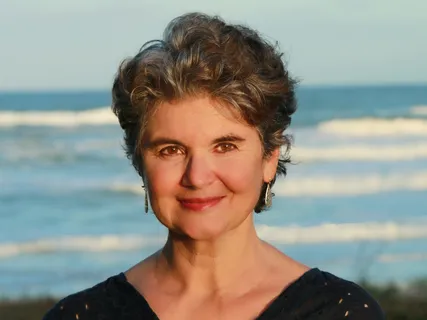
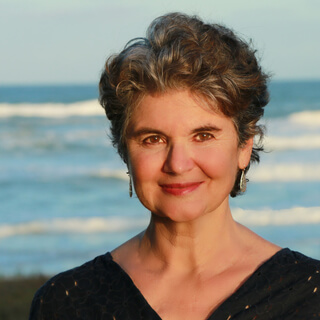
I'm your host,
Catherine Ingram.
The following is excerpted from a session of Dharma dialogues held in Lennox Head,
Australia in June of 2019.
It's called Regret as an Ally.
There's a Tibetan saying,
May your view be as vast as the sky and your actions as fine as barley flower.
May your view be as vast as the sky and your actions as fine as barley flower.
Now when your view is as vast as the sky,
Then automatically your actions are that fine.
Because it means that you have clarity and understanding.
And when you have clarity and understanding,
Your actions become very,
Very lovely.
Everything you do is informed by that.
Instead of being bogged down in some neurotic cul-de-sac,
Right,
Or closet.
So you can think clearly,
I like to say,
You're in your right mind and heart.
Your right mind and heart.
When your view is as vast as the sky,
When you continually widen the lens,
Instead of the very oppressive habit,
Which unfortunately is heavily conditioned in humans really,
To imagine oneself as the center of the universe.
And to be deluded in a kind of constant feeling that that is the case.
And it really is oppressive.
But when you have a wide view,
A vast view,
Right,
You understand your place first of all in the cosmos.
A tiny dot.
A star at dawn,
As they used to say in my Buddhist trainings.
A dream,
A star at dawn.
When your view is as vast as the sky,
You just notice the arising and passing of things.
You understand impermanence.
It's continually revealing itself to us.
And you begin to live more and more with that understanding.
And again,
That would inform the fineness of your actions,
The tenderness with which you act in this world of disappearings.
We've all had the thoughts,
No doubt,
When we've lost someone or something or situation.
But in particular when we've lost someone to death.
The ways that we might have regret about moments we could have been more tender,
We could have been more understanding,
Except that we couldn't because at that moment,
Those moments,
We didn't have our vast view.
Right?
But why it informs us now is that we go forward with that understanding.
Because those regrets actually contribute to having a vast view.
They do good work in that regard.
What I thought you just said was your regrets add or help to develop this vast view.
Can you talk more about that?
Yeah,
Because when you have a regret,
It works on you,
Doesn't it?
It loosens things up.
It makes you realize,
I didn't have to take my stand so strongly and so heavily.
What did it matter?
Right?
And it kind of breaks a chain in that moment of recognition,
Or it hammers at the chain at least.
And if you pile a few similar regrets on,
It will usually break the chain of the behavior that would lead to regret going forward.
That's how we learn,
Right?
We suffer along,
We learn.
So there's a few things around that word regret.
It seems like there's guilt,
There's shame.
And my sense is that they have different effects.
They do.
Do you think still as well,
Guilt and shame are still in the same category?
I make distinctions.
It's a good question.
I do make those distinctions.
Because let's take the word remorse.
Remorse is different from guilt.
They have very different connotations.
It's remorse,
Especially when it is experienced in a pretty healthy way,
Is your ally,
Is your friend.
Because it tenderizes you,
It makes you averse to doing that which is going to keep causing remorse,
Right?
So that you more and more are able to live in your own peace inside without having a lot of cleanup constantly to do or situations that are fractious or situations that you wish you could have a take back,
Especially if the person died along the way.
Oh,
You killed them.
Yeah.
You'd have a lot of time to have thought about remorse at that point.
But anyway,
You know,
So it becomes your friend remorse.
I have a section in my book,
Passionate Presence,
Called Healthy Remorse on this very point.
But it's very different from guilt.
Because guilt,
Guilt,
Not only does it have a heavier feeling,
But it's more of an identification.
It's like I'm a guilty person,
Rather than I'm a tender person who feels badly about causing suffering.
I feel badly about causing remorse.
I mean,
I'm having remorse because I feel badly about causing pain to someone.
So that's very different than being guilty,
Right?
And all of those kinds of labels that become strong identifications are,
I would say,
To set them aside,
Don't take them on if possible.
And you put shame in the same category?
Yes.
Yes.
It's another heavy kind of cloak.
One can feel,
I think a more healthy version of it is embarrassment,
Right?
Or regret,
Right?
But shame,
Even though the feeling may arise,
I would just say,
Be gentle with yourself with it and let it be your ally again.
It'll come with regret,
Right?
It'll come with regret.
When I feel into it,
My sense is that guilt and shame causes me to become more myopic and more self-focused.
And yet maybe the remorse helps me to become more like,
Do take that big of view.
And so it shifts my focus of attention.
Yes.
Yes.
Yes.
Words are very powerful,
Aren't they?
I mean,
We're very conditioned in our language to make associations.
And of course,
Guilt and shame have a kind of long time religious affiliation,
Which is pretty heavy,
Often came with various forms of punishment,
Either here or the afterlife.
And so we,
You know,
We eschew these kinds of conditioned words and belief systems.
And it's,
I do find it helpful to use different words to describe my experience,
You know,
And sometimes of course you're having experiences that are wordless,
Right?
Because actually in truth,
If you're,
Let's say you've had a circumstance and you've,
You've said something that really was hurtful,
Right?
And even though maybe you apologized or maybe you didn't,
But now you're left with the remorse of having said that,
Right?
But that remorse is happening because you're a sensitive creature.
That remorse is because you observed that that didn't go well and that it hurt the person's feelings.
And that hurt blew back onto you,
Right?
So in those ways of understanding this,
What you are left with is that you want to be such a tender person that you don't cause harm and therefore you don't have to experience the harm that blows back on you.
Another way to say it is that you,
You're constantly choosing peace in your life.
Like there might be certain circumstances that are just kind of gnarly and they keep consistently being gnarly.
It's fair enough to start to avoid those kinds of circumstances if possible.
Not everyone can,
But if possible to step aside,
Right?
Just sit out that dance,
Right?
And then there comes a point too where you're just simply not attracted to trouble.
When I'm,
Several of my friends in times of old were Aikido practitioners.
And one of them told me he's a five-dan Aikido practitioner at the time,
Which is a pretty high rank.
And he had studied with Washiba Roshi,
Who was one of the,
I think he was the founder of Aikido.
And he used to,
Apparently Washiba used to say,
Don't go where there's trouble.
That's the practice of Aikido.
Don't go where there's trouble.
I loved that.
But if trouble comes to you,
Here's some ways to deal with it.
And I love in fact,
The martial art of Aikido.
It's not an aggressive,
You don't aggress or throw people around except using their own attack energy.
So if somebody comes at you,
You just simply use your skill to redirect their violent movement,
Which will put them down,
But not actually hurt them.
Like there's a way in which they can just move the wrist a certain way so that the person ends up on the ground,
But without being hurt,
Unless they keep wanting to be violent and it will break their arm.
But their own resistance or their own battle will break their own arm.
So it's these kinds of ways that you start to move through the world,
Just not going where there's trouble,
Not being attracted to it,
Not replaying circumstances that keep leading into situations where you feel remorse,
Right?
And as we just pointed out,
The loosening of the obsession with oneself,
That is very helpful.
It leads to so much peace and so much contentment.
A few weeks ago I spoke about,
You weren't here,
But I spoke about uncaused happiness.
So often we think that our happiness has to be based in circumstances or relationships or whatever.
You know?
And more and more one can be experiencing organically what one might call an uncaused happiness,
Right?
Or just well-being,
Let's say that.
You know?
Where you just,
You're fine,
You know?
You're welcome.
Nice to see you.
I did Aikido for a while.
And one of the things that I loved is when somebody comes at you,
You actually take them to a place of safety so you don't trigger their innate need to come and get you.
So it's like you're not triggering their fight or flight response.
And when they're coming at you,
You get the movement is always getting out of the way of the attack and then helping them feel safe.
Yes,
That's great.
Which is actually,
You know,
It's a great metaphor for them.
They're the way we even speak to people,
Really.
Absolutely.
Right.
So often a situation can be diffused,
You know?
I one time was at a talk that Andrew Harvey was giving in San Francisco years and years and years ago,
Probably 25 years ago or something.
And it was in the afternoon and there were quite a few people at the hall and there was this person who just wanted to fight.
I mean,
He was being so aggressive and so disrespectful to Andrew in the question and answer part.
And I mean,
Everybody must have felt protective.
I felt protective of him.
And I mean,
This guy just was couldn't be calmed down.
But what was really quite amazing was Andrew didn't get angry back,
Didn't he kept saying things like,
Well,
I'm going to really consider what you're saying.
Right.
And after a while,
It really diffused the guy.
He had nowhere to go with it.
Right.
And of course,
We were all,
You know,
Totally on Andrew's side.
You know,
I mean,
He had a whole room full of people who just went,
Wow,
You know,
That was actually very beautiful.
I've never forgotten it.
You know,
When someone just out of the blue,
Some perfect stranger,
It just wants to have a fight,
You know,
And picks you.
You know,
It was very,
Very,
Very impressive.
I was watching quite closely and I didn't see any because sometimes you see teachers or someone in that circumstance.
You know that they're seething inside,
But they're sort of saying the right things,
You know,
And I've seen that a plenty.
But yeah,
I couldn't find any part of him that was was angry.
In the talk about a keto and the not attracting trouble.
It's almost like there's the thought,
Which seems to have a lot of evidence everywhere,
Is that that's not going to be possible in every way,
Where there's going to be a lot of trouble coming at you,
You know,
And I know the thought of that,
Given our current circumstances is not true.
So it's a way to be with just the truth of what is and the peace of that and the quiet of it and the resource of that.
And I notice in my own structure and the,
Without going into the story,
There can be a place of not looking for trouble that can become avoiding that we can come hiding out that not a participatory or useful or courageous stance in the just in the way of using this life to its best.
So yeah,
I've noticed some real,
You know,
Phenomena of stress and anxiety,
Freeze,
You know,
The freeze response.
And yeah,
I guess the whole consideration of what's future.
And so what do we know?
We look at the span of things and the trust I put in the wisdom of the scientists and the teachers and the big cycles of things.
So I hear you about the lucky life.
And also I'm still quite activated very often about the best way to be just like heartbroken is mostly not to be incapacitated by that.
Yeah,
That is a fine,
Fine line.
Because if you are,
Like I said last week,
If you're paying attention,
There's going to be some sadness,
Some heartbreak,
Definitely.
And yet it's a shame to miss all the beauty and the joy just,
You know,
Wallowing in the heartbreak.
So it's a real fine line that we all,
The more awake you get in this,
The more those contrast are just constantly operating,
Right?
And so you become more empathic.
So you feel the suffering of others,
You feel the suffering of little beings,
Of strangers you're never going to even meet.
And at the same time in your sensitivity and in your kind of aliveness,
You're privy to all kinds of little tiny joys and you get more and more strangely content and have an uncaused feeling of well-being.
So these two are,
You know,
Dancing around living as part of our spectrum all the time.
So one of the things I might have touched on it last week,
But it's something that I often speak about and that my Buddhist teachers used to speak about,
And that is knowing when you're out of balance.
So if you're hiding out too much or if you're in a kind of collapsed,
Fearful space,
Or if you're kind of miserable,
To really honor,
You know,
Honor the fact that this life and especially the more you're awake in it,
The more sensitive you are in it.
It's a massive range of emotions,
Of feeling,
Of love,
Of,
You know,
Sadness,
Of loss.
It's,
You know,
It's huge.
And I propose that when we see people who we feel are living in a kind of dulled down reality,
Right,
It's so understandable because part of what they may be hiding from or,
You know,
Dulling from is feeling too much.
And we see a lot of people who are incredibly armored.
I tell a story in my book Passionate Presence,
Many,
Many years ago,
I was in Hawaii with a friend of mine who he's quite wealthy.
And he had treated us to this resort on an island called Lanai.
And it was,
I'm very familiar with the Hawaiian islands.
I've been there many,
Many,
Many times,
Have lived there at different points.
But I had never been to this particular island,
Lanai.
I didn't have much interest in it because it had been a pineapple island.
It had literally been raised to the ground to plant pineapples for 100 years.
So,
And it has these two big resorts on it.
But just for fun,
And because he offered,
We decided to go.
So we went to one of those two resorts,
You know,
Like $500 a day or something like that.
And the only people at these resorts are these sort of like captains of industry,
It felt like,
You know.
So I'm walking down to the beach one day,
Down this pretty path.
And up comes this man,
He's literally marching.
And I looked at his face and I smiled and he didn't smile back.
But his face,
Everything about him looked like it had been carved in stone.
I mean,
It was like a stone face,
But carved in a way that looked very unhappy.
And I shuddered in a way,
You know,
Internally I shuddered.
But immediately afterwards,
I thought,
Oh,
My gosh,
You know,
Imagine being in that encased in that,
Right,
Encased in that armoring,
Encased in that somebodyness,
Encased in that whatever power broking.
And I felt genuine compassion for him.
Right?
Like what is going,
What would have to be going on that you would end up looking like that,
Right?
But I'm also aware that so many people,
They fear their feelings.
You know,
They just can't go there.
It's too much,
You know,
And it'll be like they'll crack apart if they feel a feeling.
So,
You know,
So that's often now what I see when I see people who are dulled,
Closed down,
Who you feel like,
You know,
A blowtorch couldn't get through.
And you realize they're,
They're deeply hidden in their,
Their little tender being somehow got lost or damaged or broken along the way and now is quite inaccessible mostly.
Sometimes people like that will have a breakthrough of sorts if they lose the one and only love of their life or something like that,
Or one of their kids or something.
But yeah,
For the rest of us who are living in the kind of raw expansion of feeling and of aliveness and of compassion and all those things and feel every little nuance of some like a loss,
Like loss has so many different flavors,
Right?
So many different components.
It's not just one thing.
It's,
It's,
You know,
It's so many things.
With some of my best friends who I've lost in recent years,
I've been noticing,
I keep discovering new layers what's missing,
You know,
The spot that they held in my life that's now not there.
It had so many different colors to it that sometimes take a while to even remember and feel.
And this is part and parcel of living in the open,
Vast sky,
Right?
It's what you,
The price you pay.
Yeah,
It was perfect.
The Tibetan quote you opened with.
The fine nuances of what action to take,
I guess,
Are revealed.
That's right.
In the moment.
That's right.
Exactly.
That is when they're revealed in the moment because each circumstance is new.
And you're relying,
You can start just relying on your own spontaneity,
Your own wise spontaneity to guide you instead of some kind of prescription or,
You know,
Religious edicts or whatever.
Yeah.
Thank you,
Gran.
It can be almost like a constant challenge not to close down in any way.
You know,
It's something that I'm fully aware of all the time,
When there's any closing or resisting.
Yeah.
Just becomes finer and finer,
You know,
The little ways you do that while I do it.
Yes,
Absolutely.
And just the noticing of the wise,
You know,
Okay,
If I really feel this,
It might be excruciating.
Yeah.
If I really feel this,
I might look weak or not in control or there's so many aspects to not feeling totally.
Yes.
Right.
Yeah.
There are.
Yeah,
That's right.
Yeah.
My niece and I were talking on the phone the other day,
My angel niece.
And so she's going every week to see her husband's grandmother,
Who's in a care home.
She goes every Tuesday to see her husband's grandmother.
And so she was telling me,
I think the woman is 90 years old and at the end of her life,
You know,
She's not well.
And so my niece was telling me that she just never wants to talk about death or the process she's in.
She never wants to go there and never wants to talk about it.
And,
You know,
She was saying,
I wonder if it would be helpful for me to talk with her about it or to bring it up or.
And I kind of felt into it and thought,
No,
If she wants to bring it up,
Let her bring it up.
But I said to her,
Because she's probably too young to actually know this,
But we know this,
Which is that as you get older,
It's not as if you're not thinking about it already on your own.
It's not as if it's escaped your notice.
Right.
Well,
Is that happening?
Anyway,
You know,
So I said I said to her,
You know,
She may just be enjoying,
You know,
Your time with her in a kind of like she gets a little break from the dying,
You know,
And a little break from the big talk and the big reflection and all of that.
That's,
Of course,
More useful when there's some massive denial happening,
You know.
But and she really liked that.
She really heard that,
You know,
It kind of freed her from thinking.
I need to be making these moments with her somehow more meaningful for her.
And in fact,
I'm sure my niece's delightful presence is as much meaning as she needs for the weekly visit.
I just read that Oliver Sacks said he had less fear of death than he had of life,
Wasting life,
Which I thought was pretty amazing.
And I just recently read the biography of Oliver by this lover he met when he was 70 and fell in love with.
Yeah.
And it's been so interesting for me because next month,
There's five years since my beloved Thompson died.
And this biography,
The timeline is kind of the same.
Some of it is in journal form and the days,
You know,
Of the year and the months.
And I'm remembering many things.
And then I have had some regrets at times like I remember the night when he died at two in the morning.
But right about seven or eight,
There was a huge storm.
And I just sat outside in this dorm and I thought,
Oh,
Maybe this is it.
And then I felt bad later that I hadn't been lying in there with him.
But then I think you can only do what you can do.
You know,
This storm just,
It was sort of sublime,
But it was powerful because it seemed like an omen.
Yeah.
And also your,
Your experience.
And then,
You know,
Just lying with her.
We didn't talk about death much at the end.
We were just really quiet.
We'd wake up in the morning holding hands saying,
Oh,
Another day together.
Such gratitude.
Look,
I don't know why I need to speak about this,
But it's kind of bubbling up in me.
You know,
They've made abortion criminal.
Again,
They've recriminalised abortion in America.
In all states.
No,
In some.
Just a couple.
But that activated such intense rage in me.
I mean,
It was very interesting to observe the level of rage I felt because,
You know,
I try to cultivate compassion and all those things that you talk about and those poor guys that are really close down,
You know,
But really,
It's feeling like murdering them.
Fire bombs into their offices.
I mean,
Yeah,
Just.
I was just telling a friend the other day,
It's like a lot of the so-called battles we fought and every inch of ground was hard won.
The Russian whalers,
I mean,
The Japanese whalers are back again.
They're now whaling again.
The Chinese are producing CFCs,
You know,
That destroy the ozone layer.
The abortion is being rolled back and other things will be rolled back as well.
The coal mines on and on it goes.
So there's a big umbrella.
The ignorance of humans,
Right?
The ignorance.
That's what it is.
Ignorance.
You know,
So when you see it as ignorance instead of wickedness,
It's softer in the heart.
Right.
And there's a lot of it.
There's a lot of ignorance.
It's amazing.
And I have contributed my own share.
You know,
I've spent,
I've done many,
Many things that were just born of ignorance,
Right?
Over the many years.
It's the way of this world.
Yeah,
I completely agree.
And I also perceive it as ignorance.
I think what was interesting for me was to observe in myself the level of rage and even thoughts of violence.
Not that I would ever enact them,
But it was actually like an insightful thing because I kind of went,
Aha,
This is how those guys feel,
Except they are ignorant.
They don't have my skills and tools and privileges and intellect and all the stuff that could be,
You know.
Absolutely.
No,
That's a great insight.
It stopped me from acting it out.
Yes.
It kept you from going around murdering when you were angry.
Yeah,
That's right.
It was kind of valuable to have that little.
Yes.
Yes.
Well,
There's a quote,
I don't know who said it,
But he said,
Nothing human is alien to me.
And you know,
And what you're pointing to that,
That rage can arise,
A feeling of murderous rage can arise in seeing something that you consider wrong.
And yes,
It gives you the insight as to how other people are walking around without any kind of wherewithal to resist these passions,
You know,
And who get triggered very easily,
You know.
Yeah,
No,
That's how it is here.
Good old samsara.
It's rough.
It's rough.
You know,
If you're a sensitive creature,
You're noticing,
It's just like we're saying,
You're noticing a lot of this kind of stuff.
And you watch the knock on effect of suffering,
Right?
Just on and on goes and yeah,
It's becoming more and more deadly as well.
And that's another component of it.
One of the triggers that I have is,
Is when I see big displays of ignorance,
It's also a reminder for me of,
You know,
How we're in this very,
Very dangerous moment.
It's like this,
It's not just the thing itself,
The abortion issue or the whatever,
It's not just that.
It's the bigger reminder of like,
And then at some point it's so big,
You have to surrender,
You have to basically say,
Okay,
This is just how it is,
You know.
And as we were saying here today,
Coming back to some kind of gratitude that one,
As you said,
That you were in a privileged position whereby you can let those feelings just drift away without acting on them.
I like the phrase and I don't,
I can't quite get there all.
Well,
I can get there some,
But it is something that I aspire to forgive everybody,
Everything.
Yeah.
Every once in a while I get the full,
The full feeling of it.
Like even when I think about the worst things and people who do seem to have very specific intentions to cause harm.
And even then I'll go into it and I'll have moments of relief in that I can see that it's just a creature that was either genetically or conditioned,
Designed in a certain way.
And they're just acting out that role.
They're acting out from that conditioning.
And it doesn't even mean that they were beaten as children because sometimes you get serial killers in a family where everybody else is okay.
It's like a genetic quirk,
You know,
Or some kind,
Something.
And yeah,
You know,
And mysterious.
Yeah.
And vice versa.
Yes.
And vice versa.
Oh,
From terrible circumstances.
Yes.
Just the worst.
Yeah.
Yeah.
Definitely vice versa.
Probably more of the vice versa in fact.
Yeah.
Yes.
One thing I was thinking of is you've been speaking was the other day of having a lot of these sort of conversations in up the lighthouse and back.
And then we were swimming and I came out of the surf and just said,
Remind me what's wrong with the world.
It was just so fantastic.
It was almost like I had to put on the cloak again.
And the people that I was,
We all just kind of laughed and went,
Yes.
Like sometimes it just all falls away and in that moment it's just such magnificence.
Yeah.
And to allow that and not to go,
Oh,
I'll put the cloak on.
No,
It's not that good.
It's fabulous.
Yeah.
And having those moments.
Yeah.
Certainly when you're having that moment,
When it is really,
Truly fabulous and you've just been swimming in the pristine waters of Byron Bay,
Yeah,
Then definitely let yourself have those moments instead of,
You know,
Having to grumble about how horrible it is elsewhere.
Yes.
It's certainly fair enough,
But like we're saying,
It's like this,
The awareness can be quite inclusive of lots of understandings and information,
You know,
And the more awake one gets,
The more inclusive it is.
The view is as vast as the sky.
So for myself,
For instance,
To your point,
I'm very frequently aware as I move around this paradise that we live in,
I mean,
It's just one of the best in the world.
I'm very aware of,
On the one hand,
Being so grateful to be experiencing this and really letting my senses take it in.
At the same time,
At least for me,
Just how I'm conditioned,
The awareness of how different that is for so many people in the world now,
For so many people who will never have one breath of clean air.
The only breaths of air they get that aren't fully polluted are inside buildings that might be have some kind of air filter,
But that literally they don't have a one time,
A one moment circumstance of breathing clean,
Fresh air.
And so for myself,
It's not that I'm obsessed about that.
I can,
You know,
The lion's share of my attention can be in the incredible beauty.
But yet there is some part that is seeing it in the vastness of the circumstances.
And this isn't just stuff I've read about.
These are places I've been that I'm talking about,
You know.
These are places I've been,
Places where there's just plastic everywhere and just trash everywhere and slums everywhere and polluted dark air and you know,
Visions of hell.
But yet,
Even there often,
I've been surprised at moments of incredible joy too,
You know,
And one of my friends years ago described being in some slum area in Bombay,
Mumbai is now called.
And he said that the evening,
It was like coming into evening,
It was dusk.
And he said it was so thick with pollution you could hardly see.
There were these kids with like a tin can and a string.
We're all squealing with joy running around the street having a grand old time.
And he was standing there,
You know,
In his contrast of how it seemed like hell compared to his beautiful place in Ireland.
You know,
He's contrasting in his mind,
But the kids aren't,
You know,
They're just fully into their joy.
But I think there is some balance and I live on that spectrum.
I'm frequently aware of what's going on for others.
And at the same time,
I really love being immersed in the joys that I experience as well.
For me,
Your opening quote of the vastness of the sky,
It just puts it all in perspective at times I've been thinking everything's not okay or like to find the balance in myself,
In the world,
In what I read or to look for the balance.
Yes,
Absolutely.
Yes,
Yes,
Yes.
And to know if you're out of balance like for myself,
Because I have a personality type and a conditioning that can get gloomy.
Like I can fall into sadness about the world and about what I see happening.
You know,
The news that I read and things that I hear about from friends and I can start to feel heaviness coming on.
And I've gotten really pretty good over the years about not indulging that not falling into depression,
But just,
You know,
Changing the balance as quickly as possible in that moment.
So allowing myself some sort of joy.
Yes.
However one can come by.
It's when I have gratitude for all the tools,
All the traditions and things that we've picked up over the years,
Ways of just going,
Now's the time to use them.
Do it now.
And not get into the,
I'm not okay,
Or the world's not okay.
Yes,
Yes.
And the word you used,
Gratitude,
Is the immediate experience of changing the movie.
This has been In the Deep.
You can find the entire list of In the Deep podcasts at Katherine Ingram dot com,
Where you can also book a private session by phone or Skype,
Or make either a one-time or a recurring tax-deductible donation.
Assuming you like these podcasts,
We would also appreciate a review wherever you're getting yours.
Till next time.