Welcome to In the Deep.
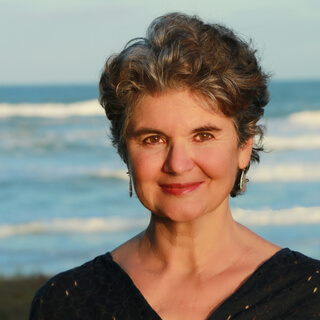
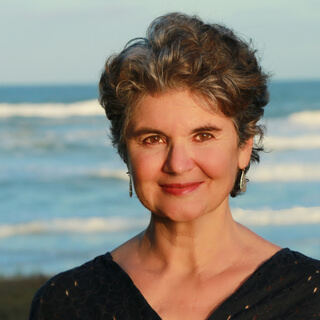
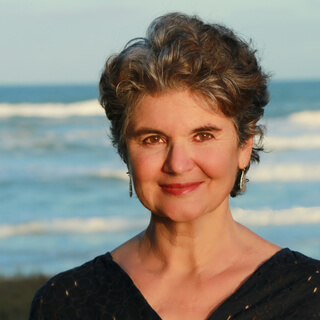
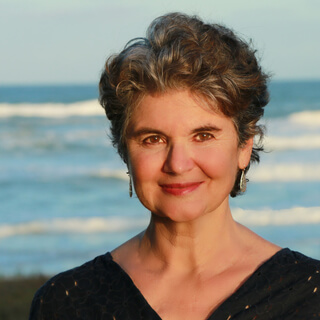
I'm your host,
Katherine Ingram.
I'm now in Australia and have purchased a car.
Some of you may remember the fiasco I had in selling my car in New York.
I eventually resolved it after many weeks of phone calls to various agencies and paperwork and money orders and so on.
So here I am in Australia and I've been driving around for the past couple of weeks on the left side of the road,
Opposite to what I'm used to.
And as at other times when I've been in years past driving on the opposite side,
I'm aware that my muscle memory wants to default to the right side of the road.
So driving thus far is an exercise in more vigilance than the usual vigilance required for road travel.
One's instincts are going in the opposite direction in nearly every aspect of the driving,
Even in simply using the turn signals,
Which are on the opposite,
They're in opposite order.
And thus one tends to turn on the wiper washers while trying to make a turn.
And then there's a great confusion as you're trying to turn,
The wipers are going,
It impairs visibility and confuses matters to an almost comic level.
Except that these antics when hurling about in a heap of metal through space are not that funny.
Yesterday,
I pulled off a two lane highway,
Not a freeway,
But a pretty fast road nonetheless,
And onto a more slow road where I knew there to be a green grocer.
I was intent on getting some coconut water,
As I knew that this place had fresh coconuts that they would open for you so you could drink the water.
After I drank the coconut water,
I hopped back in my car and I drove back over to the highway,
Pulling onto it from the slower road.
And now I'm going along at the highway speed,
Merely driving along when I glanced in my rear view mirror and to my initial bewilderment saw a car behind me driving in the same direction as I was going,
But on the other side of the road.
I then realized that I was in fact driving on the wrong side of the road.
No sooner had I realized this and quickly pulled into the correct lane,
Then a large truck came barreling over a blind hill in the lane that I had just left.
He was going downhill at a pretty fast clip and I just barely missed by a mere couple of seconds having a head on collision with that truck.
Although my adrenaline was spiked for a while after that incident,
My day went on as planned,
But it was of course a reminder that one's life can change in a moment.
How do we experience any kind of ease while living in inherently precarious situations,
In bodies that are so very vulnerable,
And in a world that is becoming increasingly sad and dangerous?
Here's the truth of the matter.
It is normal to experience stress in all kinds of personal situations and we live in a context in which our awareness cannot help but notice the stressful aspects of our time in history.
This is natural.
A certain degree of stress is to be expected.
Sometimes people in spiritual circles misunderstand the role of stress and think that stress itself should disappear if only one's awakening were strong enough.
There'd be a steady state of equanimity.
There would be peace in any circumstance.
It's an unrealistic expectation given that we are biological and emotional creatures.
The problem comes when we hold on to stress through playing images and stories over and over in our minds.
I'm a fan of the great neuroscientist and biologist Robert Sapolsky.
Sapolsky is a professor at Stanford and in addition to his life as an academic,
He spent several decades studying baboons in the wild in Kenya.
In particular,
He studied and has continued to study their stress responses in different situations.
Now of course,
Baboons are close to humans in this regard and often have stressful reactions to social situations,
Much as humans would.
But one of Sapolsky's books is called Why Zebras Don't Get Ulcers.
In this book,
Sapolsky explains that for most animals stress is episodic.
That is the threatening event occurs,
The animal reacts with whatever biochemical and hormonal stress response that is needed to get out of harm's way,
And once the animal is safe again,
It calms down.
We as humans,
However,
Often replay the drama in our minds,
Going over it from every angle or just having it as background noise and imagery in an ongoing sense of dread.
And this can produce all manner of diseases associated with chronic stress,
Such as ulcers,
Hypertension,
And many more.
So while it is useful to have a spike of adrenaline now and again when one is in danger or perhaps in the moments immediately following the incident,
It is terrible for our health to live in a constant state of mind-induced stress.
There are switches in genes,
In our genes,
That turn on and off in healthy systems when appropriate.
In an unhealthy response,
The switch can get frozen either on or off.
In the case of chronic stress,
This switch mechanism is stuck on a perpetual signal that affects the entire organism in a negative way.
Zebras don't get ulcers because they don't hang onto the stories and images of the lion chasing them.
We get ulcers and other stress-related illnesses because we hang onto all kinds of stories and images that worry us and cause our genes,
Our gene switches,
That might be healthy to turn on or off in a short-term stressful situation to instead stay in a chronically frozen position as though that circumstance were happening in an ongoing way when it is really only happening in imagination.
In that case,
It is very important to interrupt this pattern.
As I and others have said so many times,
Come back to calm in whatever ways you can.
When I had that near miss yesterday,
I drove on to where I was due to have a meeting,
But first I parked nearby and turned off the car.
I let stillness counterbalance my nervous energy,
But I had no quarrel that the nervousness was there.
I just let stillness engulf it.
I noticed the sounds of birds in the trees.
I let my eyes softly focus on the greenery of the neighborhood and the blue and white of the sky.
And I felt grateful to be alive.
After a few moments when I had calmed down,
I started up the car and drove the last few blocks to the meeting.
This has been In The Deep.
To support these podcasts,
You can subscribe to this channel on iTunes or post a review there.
If you'd like to know more about my work,
Book a private session or make a tax deductible donation for the ongoing production of the podcast,
Please visit katherineengram.
Com.
Till next time.