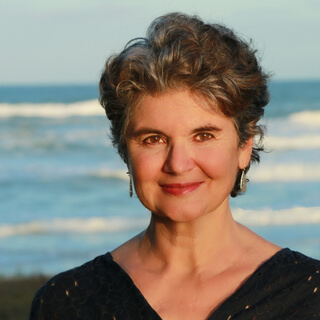
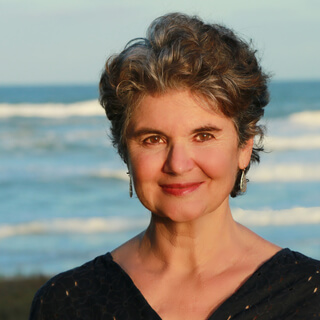
Welcome to In the Deep.
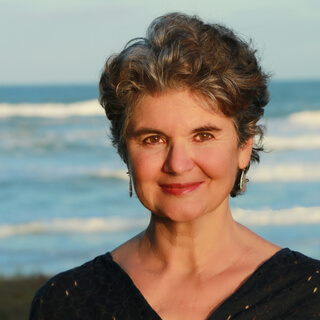
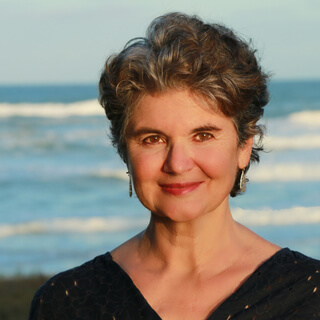
I'm your host,
Catherine Ingram.
The following is excerpted from a session of Dharma Dialogues held in Melbourne,
Australia in April of 2018.
It's called,
Keep Quiet and Make No Effort.
There's a strange phenomenon in life,
And that is that many of the simplest of understandings elude us.
It's amazing how many very simple observations and understandings are the very things that we don't see.
Our minds tend to complicate things,
And sometimes it's only when the complication has worn itself out,
When the mind is just exhausted from the complicated,
Labyrinthine morass that goes on in our conceptual thought,
That finally something is revealed in our hearts or in our mind.
Something pops,
And it's all so simple.
So as I was sitting here,
I was reflecting on my teacher,
Poonjiji's most essential instructions,
The way that he imparted a specific message over and over again,
And that is keep quiet and make no effort.
And he said it in a thousand ways,
But he mostly said it in just that simplicity.
Keep quiet and make no effort.
Now it's amazing how people will complicate those simple instructions,
Right?
But there's no trick.
It's not a trick phrase or anything like that.
Keeping quiet is.
.
.
It doesn't mean that you don't engage or that you don't speak or that you don't relate or sing or dance.
That's not what it means.
Keeping quiet is an inside job.
You're just sort of hanging out inside.
You're not on a big project.
You're not promoting a somebody.
You're not trying to attain some spiritual goal.
You might have other goals in life,
And that's fine.
You might be learning to play the piano or learning to bowl or whatever,
Learning to sew,
Any number of things that you might apply your mind to,
And that you do have a goal.
But in the domain of self-improvement,
It's really contraindicated.
So keeping quiet and making no effort in that domain is what's recommended.
Now people will make a big thing about making no effort.
They'll strain.
And it's almost hard for the complicated mind to believe that it could be that simple.
So there's an element of disbelief that people struggle with.
They'll hear the words.
They'll think it sort of makes sense.
But then the old habit will start up again.
I'm working on this.
I'm improving that.
And any kind of movement in that direction,
Any kind of efforting in a spiritual domain,
Is also signaling to yourself that you're not okay as you are.
It's not arresting.
It's agitating.
It's actually kicking up ego needs and ego presentation.
So keep quiet and make no effort.
If you really let that in,
If your complicated mind is tired of striving and attaining or trying to attain,
Really let that in.
Then you just live.
You just live like any other creature in the wild.
Like creatures in the wild live.
They're just living.
We are conceptual creatures,
Right?
We live in concepts a lot.
And this is just a habit.
It's a habit that can be broken.
It's not that you wouldn't still employ your mind,
But then you're only using the mind for what it's good for.
And you're not using up your life just thinking,
Thinking,
Thinking,
Thinking.
The mind just,
It's so exhausting all day thinking.
And a lot of it is thinking about this fabulous subject that is so compelling,
The subject of me.
And I always point out,
I say fabulous only as an ironic way of describing it.
It's actually a misery,
Right?
It is almost all.
As soon as the I thought arises,
There's trouble.
I want,
I don't want.
What about me?
What do they think of me?
What about that?
Where am I going?
Am I hitting my potential ever?
On and on.
All of those kinds of subjects that people are afflicted with,
Right?
It's a misery.
One can become very disinterested in the entire subject.
Like the deer in the forest,
Right?
Or the birds.
There's not a me story probably.
Now we have obviously a very much more complex brain.
We have a neocortex that is very,
Very powerful.
But I'm not sure our complex brain is serving us.
It seems that a lot of people are struggling just to stay sane.
Keep quiet.
Make no effort.
Just be like any,
Any little creature you see.
Just observe it.
A dog,
A cat.
If you've forgotten how to just simply be,
Take a look at those who are doing it very,
Very well.
Now I just wanted to say that the moment I walked in,
I was immediately conscious of my facial muscles.
They suddenly relaxed.
I wasn't aware,
Thinking that because one practices a spiritual path,
You think you're relaxed,
Right?
You don't realize,
Or I didn't realize,
That you can be overtaken by a tension that escapes your awareness.
Yes,
Absolutely.
Yeah.
And that all kinds of little weird tensions are being held somehow.
And a lot of those weird tensions that are being held in our bodies are inextricably linked to certain ways that our thoughts are running,
Right?
It has to do with a certain patterning of thoughts.
And it's amazing how sometimes you'll have a certain release of a concept or something you were holding,
And you can almost immediately feel a certain tension,
Whether in your back or your stomach or your shoulders or your face.
Yeah.
I just wanted to acknowledge that,
Particularly because the last few months I've put myself in a situation which I've been very happy about,
Where I've been doing just a lot of physical work and being quiet in the manner,
And being occupied in the moment,
All that stuff,
Right?
And yet something else going on where there's an absence,
A growing absence of the very thing that I suddenly was face to face with in this environment.
So that was a very powerful moment.
I just wanted to express that.
Well,
It's why we have these kinds of gatherings also,
Because there is an osmotic effect,
Right?
Anytime a group of people come together,
Because we're sensitive creatures,
We're pretty good receptors of information that's subliminal,
Right?
You walk into a concert hall or a church or a restaurant even,
Or anywhere,
Right?
There's a certain way that you're picking up cues from the environment.
But what's wonderful about this kind of gathering and why they've been effective for apparently thousands of years is that there's,
Like I said,
An osmotic effect.
There's a kind of amplification of the wave.
Yeah.
Thank you.
Yeah.
I've been thinking about what you said about what Poonchaji says as his main,
And if he says that as his main thing,
You obviously got to pay attention to it.
Yes.
And I just see how profound that is.
I remember going,
Quite a number of years ago,
I went to a seminar at the university here by a child development expert,
And he was talking about parenting and stuff.
And the one thing I remember from it,
It was a long time ago,
And he said,
Kind of the,
When a child does something or says something,
Whatever your first reaction is,
Is wrong.
It's the worst thing you can do,
Basically,
Whatever it is that comes up.
And that's what I hear,
That it's like,
If you're not quiet.
And I had that situation with my daughter today.
I said something,
She got angry,
And I just sort of lost it.
And it just went downhill really quickly.
And I was sure she was wrong and all the rest.
And then I was at the gym before,
And it was quiet.
So it was internally quiet.
And it was just obvious what the answer was.
And so at the time,
If I would have followed that,
If I would have been internally quiet and not made any effort,
The effort is to just rush out and do or say something,
There's a sort of wisdom that comes out of that.
And so,
And I think where a misconception can be is that no effort doesn't mean doing nothing.
So I think a lot of people think that.
That's right,
Yes.
But it's just not reacting from the mind and from your past and your conditioning and what your expectations are.
But if you can be in a quiet place where that isn't there,
You've got so many other sort of options.
Options,
Yes,
Exactly.
Right.
Yeah.
And as a double bonus,
Resting in the quiet brings with it a kind of clarity,
Right?
About like the whole,
You become so aligned with asking yourself the simple question,
What is the greater good in this moment?
So whatever then is spoken or not spoken is in service to that rather than a kind of perhaps true but not very helpful statement that is satisfying in a sense to one's sense of right.
It can be satisfying but it doesn't actually further any kind of real connection in the moment.
And it's very challenging.
It is challenging.
It's very challenging,
Especially in the heat of the moment.
That's usually when these things go awry.
But the more one is sort of trained in the quiet and knows so well how painful it is to step out of it,
Right?
Because peace becomes the highest priority,
Right?
You just want peace in your life.
Yeah.
I'm just remembering,
I heard Chris Rock.
Do you know who Chris Rock is?
He's a comedian in America.
Do any of you know Chris Rock?
Yeah.
So he just went through a really hard,
Really,
Really bad divorce and big custody battle and really hard.
And he's a guy who's at the top of his game and he's got a zillion women after him.
I heard him say and it seemed like he was being interviewed and it was like a true statement that he was making,
Not just a joke.
He says,
All I want is peace.
I so heard it.
It's like,
Yeah,
Right.
Just some peace.
But I mean,
I think in terms of the simplicity we're talking about,
That's what we all want.
It seems like it's a kind of obvious statement,
But whether we're choosing it on the sort of micro level or the macro level,
Right?
Where it's momentary or it's about our culture or about our whole world,
Our planet,
There's this impulse for that because without it,
We go mad,
Right?
So it has to be,
Because the world keeps falling apart and things keep happening and there's a lot of sorrow and confusion out there,
We're thrust upon ourselves to experience peace.
So keeping quiet is another way of saying stay in your peaceful heart,
Right?
Just stay with that.
And adhere to it basically,
Just refuse to take any other path.
Now that's not to say we don't fall off of it and we don't get rattled or we don't have reactions.
And especially if we get,
If there's an agitation that keeps going,
Like it's not just one or two times,
It's many,
Many,
Many,
Many times,
There comes a point where we can lose patience and we can't be expected to be perfect in this,
But you just sort of double down again each time.
Basically each time you make the experiment and it ends up being worse than if you said nothing,
Right?
Then you get sort of like a little training you get.
Training,
Yeah,
You get immediate feedback whether it works or not,
And then next time you may be a bit less likely.
That's right.
But I think what you said before about,
Sorry,
What you said before about that from that inner peace you can access what's the greatest good for others and yourself,
Because ultimately that's what will give us the most satisfaction.
Of course,
And the most peace.
Yeah,
And that's not accessible from the immediate experience,
But it's not accessible from the immediate effort reaction,
Which is more about,
As you call it,
The me project,
Which is all about I,
Which doesn't really get you what is the most important thing,
Is what we really want.
Right,
I know,
Yeah.
I mean,
It's often the dedication to that project is actually causing you all the problems in your life,
All of us,
You know,
And it's this open secret that a lot of people just don't know,
You know,
That a lot of people's entire days is centered around the productions of the me project.
It's more hardwired,
And that's why we're here,
To try and sort of impact that.
Yes,
To see through it and to see how,
You know,
Dangerous a path it is in terms of it's the opposite of peace.
And it,
You know,
It interrupts love,
It trashes relationships,
It's exhausting,
It's,
You know,
It's a Sisyphusian project,
You know,
You're just,
It's never enough,
You know,
It goes on and on and on,
You know,
And you look at the people who,
You know,
You who you have a sense that their lives are dedicated to that aggrandizement of themselves,
Right,
Just some desperate need,
You know,
And you can see how miserable it is,
Even when they,
You know,
Win a little bit for a little while.
I love Leonard Cohen's,
I know if you've heard me quote it,
But some people haven't.
The ponies run,
The girls are young,
The odds are there to beat,
You win a while and then it's done,
Your little winning streak,
And summoned now to deal with your invincible defeat,
You live your life as if it's real,
A thousand kisses deep,
And kisses deep,
You know,
And I just love that,
Your little winning streak,
You know,
And it's basically people are,
You know,
Playing this,
You know,
Me,
Me,
Me,
What do I like,
What do I think,
What do they think of me,
The whole thing,
They want a little winning streak,
And sometimes you get a brief one.
I always found though,
Sometimes when I was really sort of chasing ego needs,
That even when I would get something based on that,
It would be tinged with,
It would be tinged with all kinds of sort of unpleasant emotions,
Right,
You know,
Just something felt a little icky,
Or there'd be an awareness that this isn't going to last,
This isn't going to,
This is like,
You know,
This is.
I think it's a bit like the poker machines,
The slot machines in America,
Where you get a win and you get all excited,
And then you wind up having a lot of troubles afterwards,
Losing a lot more,
But you're kind of sucked in,
Going for that little pleasure.
Right,
You get a little serotonin hit maybe,
You know,
But yeah,
On the back of it,
And even when there's a sort of a more of a consistent,
Pleasurable thing,
If you find yourself glomming onto it in any strong way,
Like we spoke about last night,
You know,
If there's any intelligence operating,
You know that it's time limited,
You know that it's impermanent,
Right?
So when you're heavily identified with your little win,
Even when it's a genuine little win,
You know,
When it's a really nice thing,
If you're heavily identified with it,
And you're putting all your eggs in that basket,
You know,
You're in trouble,
And if you're paying,
If you have any awareness whatsoever,
You know you're in trouble.
So it's hard to enjoy it on that basis alone.
So to really keep falling back onto your own experience,
Just the simplest of tastes of existence,
And gratitude for that,
And whatever else comes is welcome,
You enjoy it,
But it's not defining actually your sense of well-being or your sense of peace.
You hear like top athletes or people when everything's going really optimally,
They'll say they're kind of in the flow,
And that will have a similar experience where they're not kind of thinking or even making an effort,
And they're being the most,
And I find that as well,
And I find that if you're presenting,
The more you're talking about it,
The more you're thinking about it,
And the more you're talking about it,
The more you're thinking about it.
And I find that as well,
And I find that if you're presenting,
The more you try and kind of force it and try and get a certain outcome,
You kind of lose that effectiveness,
That connection.
Yeah,
I once read that Nureyev said that Nureyev dances best when Nureyev is not there.
It's like that,
You know,
When there's not this self-referencing and,
You know,
It's just paralyzing.
Yeah,
Keeping quiet,
Making no effort,
You know.
Which is what you do,
You don't prepare anything,
I believe.
Right,
No,
I don't.
You just,
So it's a similar type.
And,
You know,
I think I've maybe said this to you before,
You know,
Sometimes when I'm sitting here at the beginning,
I don't know that I'm going to be able to say anything.
So far,
Every time I have,
And despite that,
Despite that,
Every time I have,
Often I'm sitting here and I don't yet have anything to say.
And so I'm thinking,
Well,
This could be the night that I have to go straight into questions,
You know,
And usually why I don't,
Like why I don't just open it up to questions without having an opening talk is that I'll open my eyes and I'll look around and I'll realize there's some new people.
And I don't know if they've ever been to a gathering like this.
And it's that that will inspire words to come.
It's basically I look out and think,
Okay,
Well,
You know,
It wouldn't be,
You know,
People would be confused if they just come to a gathering like this and you open it up for questions.
So.
And the reason you don't then prepare anything for,
Is for the reason of wanting to be kind of connected and spontaneous and in the moment,
Is that right?
Well,
I mean,
Occasionally I'll have been thinking about something,
You know,
So I don't,
I can't say that I've never in all these years,
There's sometimes a little something that I've been reflecting on in the day or I'll think,
Maybe I'll speak about.
Or thinking of something off by heart or that's.
Oh yeah,
No,
No,
Right.
Yeah.
Because it really kills that,
You know,
The effectiveness and the flow.
Yeah.
Well,
And it's a really good habit to get into to,
You know,
Just let the quietness be where you're sort of trusting your responses to come from.
Whether it's to give a talk or to speak to a friend or to,
You know,
Whatever you do.
You know,
You start to rely on that habit of not necessarily having any kind of prepared script about anything,
Unless it's,
Unless it's,
You know,
You have to train somebody in a particular program or,
You know,
Something like that,
Where you have to pay,
You have to do a little study.
We talked about that yesterday,
Where someone asked about how you could be with someone to help them.
And I found that often a lot of people are uncomfortable just being in the moment and have to come up with solutions.
And I think that's another example of where,
You know,
It's in,
I saw with my wife and what she went through with cancer that,
You know,
Just the pull is so strong for people to come and probably with their own discomfort,
Come up with solutions all the time and just not just be there,
Find out,
You know,
What's the best way to be,
Listen,
That sort of thing.
Yeah.
It's just not that common.
Yeah,
One of my friends was trained in hospice care and she told me that the main focus that her trainer,
You know,
What he offered to his students was to be a non-anxious presence.
And when someone is on their,
You know,
In their dying phase that you're sitting there,
Be a non-anxious presence.
Isn't that beautiful?
It's similar to what Poonjiji talked about as well.
Yes.
And what you don't even have to,
You know,
Have that apply only to people who are dying.
Just to always be a non-anxious presence,
You know.
Often people are going through all kinds of troubling things and to just have someone there,
You know,
To be with them and not need to sort of solve some sort of problem or,
Right,
Just be a non-anxious presence.
It's always so nice to have around.
Yeah.
Yeah.
Being quiet and making no effort I think is the tenor of what you're talking about.
That the effort is in being quiet.
I mean,
For me to be quiet,
I've got to make an effort.
So I'm just trying to work out how that all works because it is very hard for me to be quiet.
Okay.
Is that always true?
Yeah.
Yeah,
Pretty much.
So when you wake up,
You start blabbering?
Well,
Not to myself,
But if there's anybody else in the room,
My mind starts going.
Yes.
Yes.
Yes.
But,
You know,
That's what I do.
And I don't know how you divorce yourself from that pairing of those two concepts in my mind anyway.
Yeah.
Yeah.
I mean,
It truly is experiential.
So you,
One,
Would have to try to make the experiment on your own in any way that you can.
So I would,
I'm inviting you actually to see if you can remember any moments,
Whether you were in the shower or you're walking in a park or,
You know,
That you're suddenly just struck by just being with no conceptual,
No Greek chorus talking about the situation you're in.
The only time is when you're doing,
From my point of view,
Is a meditation of some sort.
And even then I tend to just fall asleep,
So it doesn't work either.
But that's as close as I get to just trying to totally not to think about doing something.
Yes.
Strong conditioning,
You know.
That I have.
That a lot of people have.
Yeah.
And it sounds like you have.
So you have a very,
Say,
A busy mind.
You don't have to make any trouble with the fact that you have a lot of thoughts.
You know,
You have a lot of thoughts.
They're going through.
They're really not sticking,
By the way.
None of your thoughts are sticking.
Do you know that?
No,
I don't.
Because quite a few of them do stick.
If they stuck,
They would be there all the time,
Right?
What,
24 hours a day,
Seven days a week,
You're saying?
Even more than a few seconds.
Even more than a second.
All of my thoughts are there for more than a second,
I can assure you.
It may be that they're similar thoughts returning that are similar to the one that you've already had.
But take a really close look.
None of the thoughts are sticking.
You're making me,
It's an effort for me to think of that,
And you tell me not to make an effort.
So I'm just getting very confused.
I'm asking you to just make an experiment right now.
Yeah.
Okay,
So none of your thoughts are sticking,
I can assure you.
They're not sticking.
And define sticking as staying with me for more than a second,
Is that what you're saying?
Yeah.
And just imagine all of the billions of thoughts you've probably had,
Where are they now?
They've gone.
They can't all be there at the same time.
Right,
Or even one that stuck.
Pardon?
Even any at all.
You may be having one right now,
But it's gone like that.
And there may be another one coming that's similar,
Gone like that.
So it's a really good experiment because you begin to experience your own awareness through which all of this material is coming and going.
All of this empty phenomena rolling along.
All these thoughts.
And I don't know about your percentages of relevant thoughts,
But I know that I have a very low percentage of relevant thoughts.
Right?
What I mean by relevant is having to do with functionality or some kind of insight or relational kindnesses.
It may be a low percentage,
But it's still a thought of relevance.
I mean,
Low percentage of relevance.
Low percentage of relevance.
And so let's say that there's a tiny low percentage of relevant thoughts and there's this big massive swirl of thoughts going by.
Right?
So mostly you can just let the swirl of thought go by.
It goes by anyway.
I'm not good at letting things go by.
Yeah.
So that's my issue.
You can't really make the thoughts stay.
I mean,
You may be interested in certain types of thoughts and that actually calls more thoughts like them.
That's what we know,
Right?
From neuroscience.
And because your brain is sending out a lot of chemical reactions that are causing similar tracks to start getting more strong in the brain.
Right?
So certain patterns of thoughts will cause similar patterns to keep continuing,
But none of it is sticking.
So I'm inviting you to start to experience,
You could call it a coexisting awareness of a kind of quiet calm or just a clear awareness,
Right?
Just an open expanse of awareness through which all this material is running.
It's just running like a ticker tape just going by.
And see if that helps any sense of feeling a little bit of wiggle room around this swirl of thoughts.
And why I mentioned the relevancy is that it's important to start to notice that you don't have to pay attention to most of it because it's not relevant.
So you're letting it,
You get more easy about just letting it be almost a background murmur.
Thanks.
Yeah.
And then what happens is as that becomes more habitual,
You do start to,
I can't guarantee it,
But a lot of people will start to have many more moments of just a real simplicity of just being.
And even if there's whispers of thoughts,
They're not impeding on the moment at all.
And that more and more you find yourself when you're walking down the street,
You're just walking down the street.
I tell a story in my book.
One of my friends,
He's not anymore,
But he was a big executive in the film industry and he had a huge job and he worked really long hours and very important job.
So he was used to working 60,
70 hours a week.
So he took his family on a vacation to Hawaii and they were staying at a gorgeous resort for a week.
And every evening he would walk his,
His boy was just a toddler at the time.
He'd walk him in his stroller on this beautiful path along the ocean.
So he'd do it at the time of sunset.
So on about the fourth or fifth day,
He becomes aware of the sounds of the birds,
Which sounded so loud.
Suddenly he realized how loud the birds were.
And he also realized in that moment,
He hadn't heard them before on all the previous days of the walks.
And he said to himself,
Did they just get here or did I?
Right.
So it's like that,
That you start to develop a sense of more space around the thoughts,
The irrelevant,
You know,
Swirl,
Whirl of thoughts that are not sticking.
You start to feel a little wiggle room around them.
And pretty soon you start noticing things like the birds and the awareness starts to be able to track the immediacy of your own experience.
And it's,
It becomes more habitual that you start to live that way.
It's a brightness of your awareness,
Right?
And less of a conceptualized life,
A kind of commentary that's running,
You know,
You begin to lose the commentary and you begin to see that it wasn't that useful all along.
It's a habit that a lot of people have.
A kind of running commentary.
It's just that when you get to a certain age,
Changing all of that seems like a big job.
Well,
I hear you,
The conditioning is strong,
But you're advantaged by,
First of all,
This that I'm suggesting is very pleasurable.
And so the habit can actually switch faster than you think because it's pleasurable.
You understand that,
Of course,
The pleasure principle,
Right?
Also,
You start to realize how much more true it feels that you start to feel like you're living more in reality rather than in a conceptualized dream-like imagination of life,
Right?
You start to feel that you're more engaged with life.
So it starts to feel more true and it's definitely more pleasurable.
So although the other habit may be very strong,
And it is,
We give it its due,
This habit can start to form.
And it doesn't have to even be,
Like you don't even bother tracking how you're doing.
It doesn't have to be taking over a whole new way on the first day.
It can be very incremental and it also never needs to be fully consistent.
You don't have to worry about that part.
You just start to feel better.
You just start to feel more times of really being in a simple way and of tasting your food and of your friend is talking in front of you and you're just there,
Right?
You sort of,
The information,
The exchange of communication is going on so effortlessly,
Right?
And all those things,
And it tenderizes your feelings about all the creatures you're interacting with,
Right?
You experience everything on a different level because you're not also self-referencing.
A lot of the conceptualization is self-referencing.
How is this relating to me?
And that also starts to drop away.
So yeah.
Give it a shot.
Why not?
Why not?
You could make the experiment,
You know?
Even in small ways,
Just decide that at breakfast,
You're going to really just taste the coffee.
You're going to watch yourself cutting your toast or whatever it is,
Buttering the toast,
Tasting everything you're tasting.
Just give yourself little tiny moments through the day,
You know,
In the shower,
Just that,
Right?
Walking to your car,
Just walking,
Just feeling the breeze on your face,
Just like any animal,
Right?
And one begins to,
You know,
Like I notice in my life,
If I have to be in a circumstance where there's a lot of thinking and a lot of conceptualization,
You know,
Whether it's traveling and having lots of details to handle and,
You know,
Juggling a lot of bits of information,
I notice how weary that is to the mind after a full day of it.
You know,
We're not an infinite energy machine here,
You know.
We get tired.
We get mentally and physically tired.
And I feel very,
Very attuned to my mental exhaustion because I'm kind of used to letting my awareness float around.
So whenever it has to be employed too much,
Like on details,
I notice the cost of it.
Now,
I used to be able to handle a lot of bits of information when I was younger.
And it was just a habit of how I lived.
I also was a doer,
Right?
I did a lot and I figured out a lot.
I managed things and I,
You know,
And I juggled information.
I was good at it.
But I know that there was a way in which I look back on those phases and it's almost like a blur.
Like,
I hardly even know what happened except that I filled out a lot of to-do lists,
You know.
And in the times of my life where I'm living much more in this free-floating awareness,
Life is much more drenched for me.
It's much more,
It's like richer in color,
If you know what I mean.
I do understand what you mean,
But I won't take over in the sense of my issues.
But I,
For example,
Often think about things that I need to do at work.
And I will,
When I'm at the gym,
Come up with an idea about something,
About a file of mine.
And that ability to have a file of mine,
I think,
Is helpful.
And that ability to have thoughts come into your head is also helpful,
Too.
If I just thought about the rolling machine going backwards and forwards or whatever,
I wouldn't,
I find that having my mind open to other things has a side benefit.
And I don't know whether I can wipe all of that out.
No,
No,
You don't have to wipe it out.
What I'm proposing is that you're creating a lot of space so that relevant things,
Relevant thoughts that come through,
Are noticed and are,
Have,
They're actionable.
You act on them.
But you're not now a slave to just being battered around by constant thinking of mostly irrelevant thoughts.
Right?
So yes,
Sure.
I have,
You know,
Occasional inspirations myself,
You know,
Creative aha moments.
And I propose that the more quiet and at ease you are in your being,
The more clear those will be and the more brilliant they'll be.
Right?
Sure.
Towards the end of that conversation,
A thought comes in.
And what I was thinking when you first mentioned the creative thoughts can come in when there's not too much noise going on.
So it's quite likely,
I thought,
When you're on the rolling machine and you're just thinking of the rolling machine and nothing else,
Then you can think of something that's creative or work related that's quite brilliant,
I imagine.
But when I'm thinking of nothing and just being,
That's when I can be creative and I can enjoy the idea of painting or something.
But when I'm in thought and working,
I'm just utterly stressed and cannot function particularly well.
And I propose that sometimes,
You know,
What one might call ticks of genius arise.
But if they arise when you're in the swirl of just constant thought and conceptualization,
They sometimes don't get noticed.
They're like diamonds among the rubble and they're just not being noticed.
So I use an actual visual image for this sometimes when I speak about it and I wrote about it in Passionate Presence.
If you have a whiteboard and you scroll all over it,
Right?
You just put doodles and you know,
Just cover almost every inch of it.
But somewhere along the line,
You put in a beautiful calligraphic,
You put in a beautiful calligraphy image,
Right?
You can't really see it because of the,
It's hidden.
It's hidden in the morass.
If you put that same image on a whiteboard,
You see every stroke,
You know,
You see the little splashes of the ink,
Right?
And it's the same with our minds.
As it gets simpler and clearer and not fixated and not identified and not obsessed with the irrelevant,
You know,
Content,
There's space for the genius to be noticed,
Right?
It's that you're,
Whatever your power of perception is,
It will be,
It'll be noticed as it arises.
Yeah.
And you hear this from artists and mathematicians and everybody,
You know,
I was walking along the beach and suddenly the formula just arose and it's like that.
We all know how that is in our own case,
You know?
So this is another side benefit actually in keeping quiet and making no effort.
Is it your own genius?
Is it accessible?
So much of what you say I can feel,
I don't just think about it,
I can actually feel and I've realised quite recently how irrelevant most of my life's thinking has been and destructive and perpetuating separation and suffering and so on.
Anyway,
And I've been thinking,
Because I work in mental health with youth,
On how to get people to these little moments that we talk about and how to create that.
And I've likened it to,
Not something I've done,
I don't feel it's any great effort,
But it's just come through repetition and I liken it to playing the guitar.
When I was 11 years old I picked up the guitar and my guess is,
I can't quite remember,
But I probably wouldn't have been able to really play it even the 50th time.
And I really think one of the key things with this is repetition.
You may disagree with me,
But when I went to my meditation class I really didn't know what they were doing.
I actually thought there was something a little bit wrong with them.
And I'm not kidding,
I would look at them,
They'd be sitting there smiling and I'd be thinking,
What on earth are they doing?
And people would say to me,
Just go with the feeling,
Just go with the feeling.
And I'd say,
What feeling?
Because the feeling was boredom.
But my guess is the only way I got through it was repetition,
Repetition,
Repetition.
And it's a bit like guitar and it's probably a bit like Leonard with his poetry.
Repetition,
Repetition,
Repetition.
And eventually,
You don't know how it happens,
But it just little inklings seem to come.
And I may lose them again,
But I don't know.
But I just thought,
I hope that's useful.
It is useful,
Yeah.
I'm using the word habit.
It's a similar thing.
I like to suggest a light intentionality.
Yeah,
Everything light.
Right?
Nothing heavy,
Just a light intention.
You realize how this feels better to just be more simple and easy about things.
And I don't have to strain so much to prove myself here in this world.
Right?
And all those kinds of reflections.
And it's like a light background intention.
And then.
.
.
Everything gentle.
Yeah,
Everything gentle,
The middle way.
You can observe your mind.
This is amazing because I used to read about observing your mind and so you intellectually try to observe your mind.
But I found with this practice that eventually you actually can.
You can see how it's happening.
And you can see how it's happening with this practice that eventually you actually can.
You can see how your mind latches on,
Even sitting here,
How it makes comparisons and judgments and do I know this,
Do I know that?
And then you.
.
.
Look at this.
All irrelevant.
Right,
Exactly.
And you bring yourself back to a bit of space and simplicity.
Beautiful.
I'm grateful.
I don't know how it's happened,
But so much of what you say resonates for me.
Oh,
Well,
So much of what you're saying resonates for me.
Yeah.
And I just think really to anyone who hasn't sort of felt these things,
Repetition.
Yeah,
Well,
Just kind of returning to,
You know,
Just keeping it simple.
Yeah.
Yeah.
I agree.
And I'll say with the guitar,
Probably the hundredth time I picked it up,
I probably couldn't play that well,
But I had to keep.
.
.
How are you doing now?
Are you.
.
.
Now I'm okay.
You're a pretty good guitar player.
But those little things come and you go,
Oh my God,
I can play that.
How the hell did that happen?
Yeah,
I know.
And I think the same thing for me has worked with the meditation practice.
Yeah,
Yeah,
Yeah.
I hope that.
And,
You know,
And also really if you wanted to reframe it one more step,
It's an immersion in just simply being.
Yeah.
Right?
It's just immersion in being.
Yeah.
When I say that to my sister now,
You know,
We're just being and she looks at me as if,
You say,
Being what?
Being what,
Right.
And I say,
It's practice saying I am and nothing else after it.
I am.
Yeah.
It's not I am what?
What do you mean?
I am.
What am I?
What am I?
Anyway.
Yeah.
I was thinking about my life and what I truly want is to rest in my own skin.
Yeah.
Yeah.
Yeah.
Yeah.
And I'm grateful.
I'm grateful that I've,
That it was my passion to do that.
Yes.
For probably my whole life.
Yeah.
Yeah.
Yeah.
Yeah.
Some people have that passion,
Right?
And,
You know,
It's the impulse that starts a sort of spiritual search,
Right?
And the,
Of course,
The great irony is that,
You know,
You end up just coming back to,
You know,
It's like all the great teachings around that.
It's the musk deer searches the world over for the source of its own scent.
Yes.
You know,
It's kind of that.
Yeah.
The earth where you stand is the pure lotus land and this very body,
The body of Buddha.
The Sufis apparently say it is hidden in its own outward manifestation where it doth appear as veil upon veil made to cover its glory.
Right?
All the great teachings,
Kingdom of Heaven is within you.
It's always,
They're always saying kind of the same thing,
Which is that the recognition,
Ironically,
Is the you don't have to go anywhere else.
That that's just an illusion.
You don't have any other thing to do.
It's a recognition of this gift of life,
Of being itself,
That we so overlook,
That people overlook the world over,
Right?
They're busy with other things.
Like John Lennon said,
You know,
Life is what happens to you while you're busy with other things.
And that's the only way to live.
Life is what happens to you while you're busy making other plans.
Yeah.
And,
But busy also doing all kinds of other things,
Right?
Not just only making plans,
Just somehow thinking you're going to get to the living part at some other time or when some certain confluence of things come together.
That's when the real life starts.
And that may never happen at all.
Yeah.
And maybe even if even if that imaginary thing did happen,
That's not going to give it to you either.
It's,
You know,
Whether you're sitting in the car or you're brushing your teeth or all of the ordinary things,
That's your,
You know,
That is your pure Lotus land.
Right?
Yeah.
It's ordinary.
And it's beautiful in its ordinariness.
And we so overlook it.
So yeah,
It's the recognition of this,
This gift that was already given to you.
Yeah.
Right.
You already won the lottery.
You know,
Richard Dawkins,
The great biologist,
Talks a lot about the infinitesimal odds of your being here.
I mean,
They're just,
It's like you had the,
The,
The evolution had to thread,
You know,
A million tiny,
Tiny,
Tiny,
Tiny needles to get to make a you.
And everything had to go exactly right.
All those ancestors,
Right?
Yes.
All the way back.
Yeah.
Not only just not only the human ones,
You know,
Yeah.
You know,
Just every single turn had to work out exactly perfectly.
Yeah.
And then you're here for this little moment in time.
Right.
And how are you going to spend?
Yeah.
How are you going to spend this glorious attention that you also happen to have?
Yeah.
Right.
Here you are in this little blink of time.
Wow.
This creature that has all these abilities.
And in a world that we've kind of,
You came into it and it was already sort of set up for comfort by a lot of other people that went before who weren't as comfortable.
Right.
Fortunately,
We have dentistry and many other helpful things.
And so here we are.
And,
And,
You know,
We're here for these years.
And how are we using our attention to really maximize the appreciation of this gift?
Right.
I often ask myself that question in the day.
I know that I have a certain amount of energy for the day.
At some point the system has to shut down.
And I have a certain amount of awareness or attention that I can employ during the day.
And I'm aware of the prioritization of how I'm using my attention and how I'm using my body,
My energetic body.
Yeah.
Yeah.
My life seems to get simpler and simpler,
But fuller and fuller.
Yeah.
There's a simplicity,
But it's almost like,
It's like I have a fragrance in that simplicity.
It's like something has woken up and I can smell this fragrance of my life.
That's beautiful.
Yeah.
Good.
Yeah.
I've noticed when you're talking before about the space and thoughts and I've,
I think looking at life going along with kids,
Business,
Family,
It's,
It's either thinking about what could have worked or what to do and busy.
And that's all changed in the last two months when my sister died and everything ground to a halt.
And I just found that that space has actually appeared because everything stopped.
So there's grief,
But for me,
I'm finding it's had a profound effect on what's important and my thoughts and even my interactions with my kids and my wife and family and what's important and what I actually want to do.
It's sort of,
It'll be what it is in a way.
And when I think about the thoughts,
I'm finding I'm not attaching as much meaning.
It's more they just come in and it's still there.
They still come all the time,
But they're not,
The meaning doesn't hold as much.
Now I don't know,
I'm interested to know if,
Given that this,
The grief associated with that,
If it's a process of that or if it's just something that sort of is clicked or.
.
.
Well the grief sounds like it is,
You know,
Instigating the reflections and the prioritizations,
The reset,
If you will.
But I would also propose from my own experience,
I can't say necessarily for yours,
But from my experience,
It's like you become changed by this process.
You become,
Actually it's almost like your cellular structure gets somehow rearranged and changed.
It sounds,
It may sound terrible,
But it's actually,
It's been a,
There's a lot of grief around my sister passing,
But at the same time,
I'm actually feeling more alive by not having had,
I say death being confronted by death before,
All of a sudden your own mortality or other mortality comes into it.
And it's just been profound,
Just what it's brought me a bit more centered,
I think,
And focused on being a bit more present.
Beautiful.
Yeah,
It's been,
It's been,
It's a pity that it's taken that,
But it's,
Yeah,
I've just found myself wanting to be there more for my family and not so worried about my own stuff or getting the house fixed up,
Which it should be.
Yeah,
Zach,
That's really beautiful.
It doesn't matter as well.
Yeah,
Well that's certainly a very intelligent use of that kind of grief,
You know,
Is to remind you of what's important and who's left and how much you love them and how much you want to.
I didn't plan it.
No,
I know,
I know,
But I'm just saying it,
The intelligence arose.
And yeah,
You know,
That's a very,
Yeah,
That's a beautiful outcome.
That happened in my family with the death of my brother.
Everybody became a lot more gentle with each other,
Actually.
And that's been quite a few years now,
And that still holds.
And the death of my brother,
I mean,
It was like a demarcation,
The prior to his death and after his death,
That for me,
It's like I'm a different person.
You know,
Very,
Very changed in many,
Many ways.
Yeah,
That is true.
Yeah,
And part of it also is the aliveness and the understanding in a very visceral way,
Because it was a sibling and there's something about it being a sibling,
You know,
That's huge,
Because your sibling is closer genetically to you than even your parents,
Because you're a mix of the parents and so are they.
So it's almost like losing a limb or something even closer.
And yeah,
The aliveness that that represented and the understanding of the inevitably ability of the death of my own death came with it.
And what you said,
The quiet,
You know,
You just simply don't sweat the small stuff as much anymore.
It still comes out.
Yeah,
But not as much.
It's no longer running the show.
And I also find with,
You know,
You're talking about just the nature of the types of thoughts,
It's like the volume gets turned down.
It's not that the thoughts go away.
It's that the volume,
They're not as loud.
I sometimes call them whispers in a cathedral.
This has been In the Deep.
You can find the entire list of In the Deep podcasts at KatherineIngraham.
Com,
Where you can also book a private session by phone or Skype and see my upcoming events,
Such as our New Year's retreat at the ocean near Lennox Head,
Australia,
Or our residential retreat in New Zealand in May of 2019.
If you're a regular listener,
Please consider making either a one time or recurring tax deductible donation in any amount that's comfortable for you.
Or you could give us a review wherever you're getting your podcasts.
Till next time.