Welcome to In the Deep.
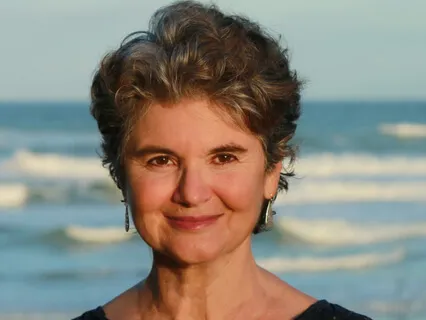
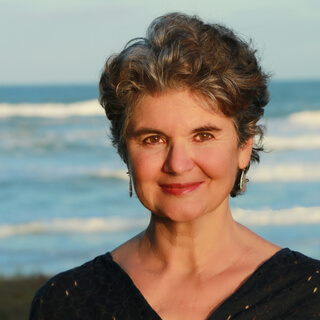
I'm your host,
Katherine Ingram.
The following is excerpted from a session of Dharma Dialogues held in Melbourne,
Australia in November of 2019.
It's called It's Not Fair.
My great nieces have all kinds of pecking order activities that go on in their sibling rank.
So the third of one of the families,
The third child in the sibling birth order,
She has a very intense focus on whether things are fair or not.
We tease her that her constant refrain is,
It's not fair.
There are so many things,
By the way,
That are not fair when you're a little kid playing with your older sisters and all their older friends.
She keeps very accurate accounts as to who got to decide what game they're going to play and who got more of the pancakes.
It's all properly accounted for according to my little great niece.
It's kind of adorable.
You can feel the pain in it because she's discovering that the world is not fair.
You want to say to her,
Yeah,
It isn't.
But it's an interesting lament because as we grow older,
We live with that feeling a lot.
It comes in all kinds of forms.
There's a kind of wine inside.
It's not fair.
It's not just.
This one and that one got away with something.
Essentially,
You're confronted over and over and over again with it's not fair.
It's not until,
And maybe it never occurs fully,
But it's really not until you surrender to the fact of that and stop looking for fairy tales that might get you out of it or explain things in some way that makes it more fair.
I think a lot of the bill of goods that we get sold through religion and through new age belief systems and magical this and that is to address this problem of injustice.
We want the playing field to get leveled.
When I first heard about the law of karma,
I was quite young when I heard about that.
I had somehow,
Even as a teenager,
I was searching and when I heard in Asian philosophy,
They have the belief in karma.
I thought,
Great,
Fabulous because everything is going to get taken and squared away.
No one's going to get away with anything.
The good are going to get rewarded.
The bad are going to get punished.
If not in this life,
Clearly not happening in this life,
It's going to happen next life or sometime.
Now,
Eventually that belief system fell away for me in the face of no evidence.
The whole belief system fell away and I was left with this shocking understanding and surrender to it's not fair.
It happened actually in a very acute way one night.
I'll tell you about this night.
It was in 1982,
I was in India,
Where I was going to Bodh Gaya,
Which was the center of Buddhism in India.
It's the place where the Buddha was allegedly enlightened.
It was a place I had been several other times beginning in 1976.
I was going there with two of my friends,
Jack Kornfield and his wife at the time,
Liana.
We had arrived at midnight on a train from Benares to this town called Gaya,
Which is in the state of Bihar which is one of the most,
If not the most dangerous,
Almost lawless state of India.
We arrive into this crazy train station in this awful place called Gaya.
You get out of the train and because we're Westerners,
There's just a gaggle of people all around wanting to have our fare.
Where can we take you?
We say Bodh Gaya and they just back away and they would shake their heads,
No.
We wanted to get onto Bodh Gaya,
Right?
We couldn't figure out why everybody was saying no.
Finally,
They would say words like dakots.
We didn't know what that meant.
Finally,
Eventually,
This old man steps up and says,
Yes,
Yes,
Come in his way.
He's motioning.
We go pile into his horse cart with our luggage and off we go into the night.
It's about a half an hour ride by horse.
After we've gotten out of the city limits of Gaya,
We begin to realize that this horse is not well and he's having to whip the horse quite a bit to get it to go.
This became of concern to us,
But now we're out in the night and we want to get to Bodh Gaya and so we don't say anything.
But now as we go,
As we're going further and further along,
He's beating the horse more.
At some point,
We're halfway there,
So it's useless to be turning around at that point.
It started to become for me like the lashes of the whip.
It was almost like I was feeling them.
Of course,
I wasn't feeling them.
The horse was,
But it was going through my system in this very painful way.
I realized in those moments in that night that this belief system that I had been holding on to,
This belief system about karma and justice had fallen away because I had no story that could get me out of the pure suffering of that horse and the proximate cause being ourselves.
I had no way to get off the hook and that was a very profound journey for me that night,
As you can imagine,
Because it wasn't only the experience of this sorrowful situation and watching an animal suffer.
It was the death also of a belief system that had made things more fair.
Then I was left with the rawness of this,
Right?
The rawness of life and of what happens.
The question becomes,
Can you witness this with real courage?
Can you witness this without a story that's going to alleviate the suffering for you?
Can you have empathy in situations where it's just going to hurt?
It's going to hurt and it's not going to be fair.
I propose that in so doing you come to a deeper kind of love.
You come to a purer kind of love where you actually have to forgive everybody everything and even forgiveness is not even,
It's really deep understanding.
Even forgiveness is extra.
It's deep understanding that this is how it is here.
Things happen right out of the blue.
Randomly it seems good people die,
Terrible situations.
People who've been criminals sometimes get to live out their days and die of an old age with lots of riches.
Animals suffer mainly at our hands.
All of this is hard to look at without any kind of mitigating fairy tales.
And yet if you do,
If you can,
It throws you into a quiet and an openness of heart that simply says,
And I say this a lot,
Ah so such as it is.
When you said unfairness comes in many forms,
When you said unfairness comes in many forms,
I've been dealing with that quite heavily recently.
I spent four years caring for my disabled husband and having no time and he died just after Christmas.
And I had dealing all the usual things that you do when that happens.
But in addition,
All these things from right and left field,
Three lots of fraud,
Two lots of cyber attack,
Burst water pipe in my house and mold remediation going on for months.
I'm just recovering from shingles and that's due to extreme stress and I know what the stress is about.
The stress is every time someone,
I hear someone saying retired people in their spare time,
It's like our spare time has been stolen from us by all this paperwork.
I think of my parents.
My parents in their retirement didn't deal with all this cyber crime and fraud and stuff.
It's all totally new to our generation.
And particularly people of my generation are vulnerable because we don't have the energy to go to the shops and so we buy online.
I know why it's happening.
And I realized when I got sick that I brought it on myself by not being warmly okay with what is.
And there is no such thing as fairness and why should my generation have it as good as the previous generation or whatever.
And of course there's always other things that they didn't have as good.
Yes,
That's a good thing to recognize as well.
This is right.
So it really resonates as the so many things,
So it's so easy in so many different ways to shake your fist at the heavens and get annoyed or irritated because really just about anything you get annoyed or irritated at is the same thing,
Isn't it?
Yes,
Exactly.
Right.
And it's that ability to just stand back and be in that inner heart and just notice that's what is.
Yes,
Exactly.
Right.
But everything you're describing of course and your reactions to it are very,
Very human,
Especially when they pile on.
It's one thing.
If only one thing happened,
Then you can kind of gently lighten space around it and say yes and be a good sport.
But when it's a whole bunch of things and you just feel like you're drowning and you can't get a breath of air from under the waves,
Then there can be a lot of resistance that arises and has these feelings almost childlike like my little great niece.
It's just not fair.
That's right.
And it was a bit over a week ago when I was in the height of the shingles pain and the bank,
I got a message from the bank,
Contact with the bank and for the third time this year,
Fraud.
And this time I said,
Well,
I have to laugh this time.
It's just unbelievable.
Yes,
Except that it happened.
Yes.
Yes.
And yes,
So I have a sense that we get whatever we need for our growth to connect us more deeply with the divine.
Well,
I would say it's a tiny bit differently,
If you don't mind,
Only because that belief system,
It has a magical element to it.
Do you understand what I'm saying?
As though there's some plan and you're getting the lessons that you need to have,
You need to learn.
But rather,
Another way to see it is that you with your own attention,
Whatever comes your way,
You understand what's going on,
Right?
That you yourself with your own attention,
Your own intelligence,
Your own awakened intelligence can process.
So the views that we never get more than we can handle is just part of that magic you're talking about.
Yes,
Because some people do get more than they can handle and they die or they go crazy or they become violent or they turn to addictions.
Yes,
Not everybody.
It actually,
Even on a logical investigation,
It doesn't actually work,
But I actually don't believe it for other reasons as well.
The Indians talk about,
Believe something if it's useful rather than some kind of,
Well,
Nothing we can say is absolute truth,
Is it?
So it's like if it's useful,
Believe it.
Now,
To me,
To believe that we don't get more than we can handle,
It actually gives you the confidence to believe you can handle the most incredibly challenging situations.
But it just comes down to whether you're a lover of truth or of comfort.
So I interviewed,
Do you know who Krishnamurti was?
J.
Krishnamurti?
I've heard of him.
He wasn't one I followed closely.
Yeah,
He died a long time ago also.
But anyway,
I think I might have heard him.
Yeah.
I interviewed him in 1980,
Maybe 81 or something like that.
And in one of my questions,
I started out with the phrase,
Sir,
Do you believe?
And he put his hand up and stopped me and he said,
I don't believe in anything.
And we actually titled it was a cover story for East West Journal and that's what we titled it.
I don't believe in anything.
Now that's an arresting thing to say.
But his point is,
I don't just believe in things.
He wanted evidence.
He wanted evidence.
He wanted to make the experiments himself.
And that's my recommendation that we make our own experiments with truth ourselves.
The truth keeps changing,
Doesn't it?
I don't see any concept as eternally true.
There are a few,
I think,
That are.
For instance,
The law of impermanence.
Right?
Yeah.
And suffering is pretty eternally true.
Yeah.
So there are a few that are.
I mean,
I'm not talking about truth with a capital T.
I'm talking about just,
You know,
There's mathematical truths.
There's all kinds of truths,
Actually,
That we can experiment with and experience.
Well,
Even mathematical truth keeps being changed as they go deeper into all kinds of exotic mathematics.
Well,
It gets more and more understood in different ways.
But the fundamentals of mathematics are pretty consistent.
It's a defined system.
Yeah.
But in any case,
In your own case,
In your own life,
Right,
You can say with great confidence,
I had shingles.
It's painful.
Right?
Now,
Somebody else might have a case of shingles where they say,
Oh,
It wasn't that bad.
But you know,
For you,
For you,
Your experience of it was that you had pain.
You had physical pain.
I also had a bad case of shingles a few years back,
And that was extremely painful.
So I'm saying to you,
I just don't,
I don't find it useful to have any kind of sense of that there's some plan floating around in the universe.
That there's some will,
That there's some intentionality,
That there's a,
I don't even see it as having some big purpose.
But I guess I see some unseen,
Well spirituality in a way is the unseen,
Isn't it?
The unseen dimension that there are,
Just like there are physical laws of physics,
There are laws in the subtle realm that things,
There's an action,
A reaction to every action,
And there's multiple interactions,
And the whole of all that creates something.
And you know this.
Titan?
You know this through some direct experience.
It seems to be a knowing.
Maybe I could,
Look,
I've got a background of having studied physics donkeys years ago.
And it's my way of seeing the spiritual dimension,
I guess.
Okay,
Fair enough.
And I understand the impulse.
I'm going to only just give you my own direct experience.
I'm not claiming ultimate truth.
I'm just going to speak about my own experiments with truth,
Right?
With a small T.
And I just don't see any evidence for what you're calling the unseen spiritual realm.
I think it's here in the lived life that is the sparkle,
And that is the beauty and the horror all here on the ground.
And we don't know about any other realms.
We don't actually know.
And people have all kinds of subjective experiences,
You know,
That they have them through drugs or some sort of meditation thing or whatever.
They have very subjective experiences that they might attribute to other realms.
I'm not talking about,
I guess,
A lot of that psychic stuff.
Yeah,
Yeah,
Yeah.
But even whatever you mean.
Why I'm saying this to you is that I'm suggesting a simpler way,
A simpler path,
A simpler understanding.
Well,
The simpler the better,
I agree.
I am a retired psychologist.
And often I would work with someone who says,
Oh,
I can't,
Like,
For example,
I can't stand my brother's girlfriend and she comes to dinner three times a week.
And I'd work on the holistic level with this person,
Not a verbal level,
Just because all that,
Her patterns are in the central nervous system of the body.
And she'd come back the next week and say,
Oh,
That woman's changed when it was her that had changed.
So you see,
This is what I mean by interactions.
Oh,
Definitely.
Yes,
Yes.
And certainly,
You know,
Everything that happens has an influence on everything else that happens somehow.
I'm not talking about anything kind of weird,
But something that you can really observe.
And I've had a lifetime of observing people.
Yeah.
OK.
Yeah,
I get it.
Well,
If it's nothing particularly esoteric,
Then yes,
Of course.
Yes.
People's behavior affects other people and that all gets adjusted and so on.
But it's like unconsciously they pick up on other people's energy.
Yeah.
Like unconsciously.
I work with a lot of abused people and abused people have an energy about them that lets an abuser know.
And it's the abused person who gets their handbag stolen,
For example.
But not always,
You know,
Not always.
Well,
There's so many variables and that's the thing,
I think.
Yes.
The opportunity may not be there.
Yeah,
But I think it's also a kind of dangerous belief system.
It's almost like you're re-victimizing the person who was not,
I'm not saying you,
But I'm saying that that kind of belief system has with it a certain,
I think,
Unfounded blame.
Well,
I wouldn't call it blame exactly.
I've seen that kind of thing over and over.
And so the best one can do is help these people shift their energy so they don't draw that to them.
That's what I used to do.
And I felt I was contributing something useful.
Okay,
Well,
I think we have to disagree.
We have to agree to disagree on certain matters about these things.
I'm sorry.
Yeah,
I see it very differently.
Yes,
In some cases,
Sure.
I think a lot of people who are not at all energetically putting anything out become victims in different ways,
As have you,
With having your fraudulent stuff happening.
So I just think that it reminds me of,
One of my friends once told me,
Only psychotics create their own reality.
The whole sort of you're creating your own reality,
You're drawing things to you.
It's the reverse story about the secret,
Which I find reprehensible,
The secret program.
It's the opposite side.
I just find all of that kind of thinking.
Personally,
I find it kind of mushy minded and with no evidence,
No good evidence.
So the only way you could make that statement is if it were consistently so.
It may be sometimes so.
So maybe we're just losing slightly different language for the same thing.
Yes,
Possibly.
Yes,
Yes.
I'm being very specific,
Not just for everybody else,
Actually.
I want to make very,
Very clear my point on this that I've known a lot of people back long,
Long ago.
For instance,
There was this whole meme that always went around.
So somebody would get cancer and there were all these systems and belief systems and programs that were approaching the person with cancer as though they had somehow given themselves cancer.
And now they have to get rid of it.
And if only they could see why they had done it.
Why did you?
I mean,
I just always saw that as a very cruel and pretty ridiculous thing.
Yes,
I agree with that.
Because there might be lots of reasons why people get cancer.
Sure.
And it may be,
Of course,
There may be a psychological component,
But there may be many other triggers in the mix.
And so anyway.
I like what Stephen Levine says about that,
Healing into life and healing into death.
And it's a mystery.
Yes,
Exactly.
And we never know the outcome.
Yes,
I definitely like the mystery part.
Thank you.
Yeah,
Thank you.
I love that about it's not fair.
I,
Because I was a little girl who,
That it wasn't fair,
You know,
And it was very much,
I think,
From a social justice,
Even as a young kid.
I grew up with a sister with an intellectual disability.
So,
And that was at a time when disability wasn't so accepted.
So I,
As a young kid,
I had no choice but to observe the observations of the general public towards my sister,
Who had a profound intellectual disability.
You know,
I always wanted everything to be fair,
And I always wanted everybody to be equal.
And I think that,
That wanting to be everybody to be equal,
Because I watched my sister,
And I wanted everybody to see her as equal,
But I was getting very different message from the public that she wasn't equal because she had this disability.
And I suppose I tried to wheel everything,
Every things being fair and what have you,
And thinking that it could be possible that things could be fair,
And there was a beautiful naivety in that.
And slowly throughout my life,
You know,
I've had to come to terms with that it's,
That life isn't fair point.
I love the way how you talk about directing your attention,
Because I'm like,
With coming to see you,
Katherine,
I've been learning to direct,
Direct the attention.
And I think that,
Like everything is not fair.
My attention is kind of in the true for things,
But when I move out of and think things should be fair,
That even that then starts to cause a lot more pain.
So then it's,
I suppose then it's about bringing the attention to direct oneself back to it.
So that's what I've been learning.
And acknowledging that things aren't fair.
Things aren't fair.
A surrender to that,
Just like,
You know,
As they have not been for billions and billions of circumstances,
People,
Animals,
All of it,
You know,
That.
And just one last thing,
This year,
I've got a new job,
I started the year unemployed,
And then got a new job.
And I got a little bit more than what I bargained for.
And I knew before I started this job that maybe it wasn't a good idea.
But I've been working with people who,
You might say,
Experience the most disadvantage in our communities,
People with psychosocial are labeled as people who experience psychosocial disability.
And so I've had to revisit the not fair again.
And I feel it's been like going through the eye of a needle.
Because before I go out and meet people,
I get,
I may sometimes have a bit of notes on what they've been experiencing.
And I go out and I thought that I had been opened up to the trauma that people could experience,
But this year's opened me up directly to people like who have lived the unbelievable.
And it's broken my heart.
And I'm okay in it now,
I think.
You know,
I've seen myself in them.
I don't like to see myself as separate from them.
And I don't know,
It's like it's not fair.
What the people that I've been with,
Their life,
It hasn't been fair.
And the trauma that they have experienced,
It's not fair.
And I kind of like you just to hear that maybe I might like I think I've said to some people,
It's not fair to them that your situation's not fair by just when they tell you is just going,
Yep,
I hear that.
That's,
That's tough.
I guess then it does become,
As I said,
Can you love this circumstance,
This life,
This situation,
Right,
With all of that?
Can you basically say at least can you say okay to it?
Can you accept?
I don't think I fully have.
Yeah,
It's hard to.
It's really hard to.
And you don't have to fully accept forever more.
But even to have glimpses and moments where you just say this is what's so here.
Yeah,
This is how it is.
Right.
And where you're basically bowing to the reality of the circumstance.
Yeah,
Right.
Some people are born blind or just all kinds of,
You know,
They're going along,
Minding their own business and get hit by a truck or,
You know,
It's the permutations of the possibilities of suffering are pretty endless,
You know,
And,
And of tragedy,
As we are sitting here,
Right now,
It's happening.
But we are sitting in this beautiful safe room having this conversation,
We can hold it in our awareness,
We can hold in our awareness,
A greater picture,
You know,
And as I said the other night,
I don't think you were here.
There are limitations for each of us just physically and mentally as to how much we can hold.
You know,
So if you start to get to the point,
And it sounds like with your work,
It would be very taxing.
You know,
You get to the point where you start to feel you're just,
You're going down.
Yeah.
You know,
Then you have to really find some adjustment of the attention or just take some space.
Yeah,
Of quiet and go to silence,
Even just go to silence.
Yes,
Yeah,
Go to silence inside,
Where there's just a,
Like I say,
A silent bow to okay,
This is what is.
It's sometimes just damn hard.
And this is how it is.
And then in that silence,
You take a breath,
You know,
And even if it's,
I've been telling people,
Even if it's like the times when you go to the bathroom,
Where at least now you're in a stall by yourself,
Right?
And even just use that,
Even just use that experience to just take a little mini retreat inside.
Yeah,
A little breath of silence,
Doing nothing,
Going right into beingness.
And it's like this little refresher,
Like you've just been,
You know,
Had a dip in a beautiful sea.
And let yourself have as many of those moments as you can.
Yeah,
I think that that's great.
Great advice.
And I don't regret this experience.
I don't regret it.
But it's busted me open in a way that,
Yeah,
It's taken me a little bit by surprise in some ways and in other ways not.
And yeah,
Things are.
.
.
Well being busted open is beautiful.
And yeah,
You know,
One of my friends long,
Long,
Long ago,
He was a poet,
He died.
He had a Toulon poem.
I put it in my first book,
In the introduction of my first book.
His name was Rick Fields.
His Toulon poem was,
My heart is broken,
Next line,
Open.
Someone came along later,
Years later and sort of stole that without giving him credit.
She wrote a book called Broken Open.
But it was originally his.
My heart is broken,
Open.
And the other thing I notice with this perspective,
Which has no story and makes no fairness out of any of it,
Is that it has,
It has taught,
That understanding allows me to love in a different way.
It's like I have to love a lot of the darkness.
Yeah.
Yeah.
And then it's all sort of forgiveness in all of that too,
Isn't it?
And understanding,
As I said,
Primarily understanding.
To not even entertain the notions about equality necessarily,
But about that this person has worth as a being,
Just by birthright as a being who can suffer,
Just like any other creature has worth,
You know.
And so by that measure,
Then it is all equal.
So just the last thing before I hand the microphone to someone else.
I'm interested about Krishna Modi's comment when he says,
I don't believe about anything.
I wonder whether that because he always was pointing back to.
Because he was pointing to direct experience.
What he was saying to me was,
I don't have a belief system I'm operating from.
I mean,
He was indoctrinated.
Do you know the story of him?
Yeah,
With the Theosophical Society and how he renounced it.
But he was found on a beach in Indio,
You know,
By the theosophists.
And they moved him to like high society in England and indoctrinated him from the time he was a little kid and brought him and his brother out of poverty to live as royalty,
Really,
With an incredible program of belief and of structure and of here's how the world works.
And he did his best.
He did his best to represent that until he saw through it.
And he had to stand in front of the world,
In a sense denouncing those very people who had taken him out of what would have been a very different life.
And that was his famous speech,
Truth is a pathless land.
So he did not take on belief systems.
He famously rejected one that had been,
You know,
Had done him quite a lot of good in terms of comfort.
Yeah,
I never sort of thought about it from that point that actually he was also rejecting that life of great comfort that he'd been given.
He didn't even have to reject that life because of what he said and because of his willingness to speak that way and to start speaking directly from his own experiments with truth and from his own direct experience.
That was very compelling to a lot of people.
So it's not that he was rejecting his way of life necessarily,
Although that could have happened.
It would have been that he wasn't rejecting it,
But it could have been that he lost all of that.
But as it turned out,
It didn't work out that way.
But it was a very brave thing to do,
To walk away from the riches and the power and the world of followers and so on.
And not to mention the gratitude he must have felt to those who had helped him and his brother.
So my point in speaking about that moment with him,
Because it was a very powerful moment for me when he said it.
Must have been amazing.
Yeah,
And I was so young when I was having this interview and it stopped my mind.
It's like I went,
What?
How can you say that?
How can there be no beliefs?
But I then got it in furtherance in our conversation that what he was meaning was,
I'm not living by some program.
I'm not taking on any religious or new age beliefs or philosophies or any of it.
Mmm,
Extraordinary.
Yeah,
And I'm not either.
I've tried on a lot of things and none of them fit.
So I was like,
All I can do in this case,
In these kinds of conversations is speak my own experiments with truth.
They resonate for you well and good,
But it doesn't have to.
Yeah,
I can remember a podcast,
You're hearing a podcast you did on magical thinking.
And that was good because that popped,
Like that's one of your words,
Pop.
It popped it for you.
It popped like I went,
Oh,
Like I went magical.
Oh,
Okay.
And yeah,
It was like a,
Like a It's amazing.
It comes in so many forms,
Not just in the spiritual form.
It comes in so many ways.
Magical thinking.
Yeah.
Given I'm the youngest,
I have three sisters.
Okay.
My third sister had this kind of third child syndrome.
So I,
Because the tension was put on me and I came much later.
So,
And then suddenly Lisa would say,
It's just not fair.
Okay.
Because,
You know,
My mother would dote the tension on me and then of course she would feel neglected.
And so it just was not fair.
Okay.
So that's all I heard.
And so I kind of grew up with Sati was I never kind of really experienced the unfairness,
You see.
I see.
Right.
And then,
Exactly the small child.
So,
But so you never kind of,
I've never really experienced the sense of it is unfair to me,
But I've really experienced the social injustice,
What is unfair to others.
So I think,
And I think when I have kind of experienced what is unfair to me is when I'm taken out of my comfort zone.
And suddenly when I'm taken out of my comfort zone,
You think,
Ah,
You know,
I've become the center of attention.
My rights,
My privilege has been taken away from me.
And then suddenly,
Ah,
It's just not fair.
And I think when you have that sense of what is right,
And I think it's interesting how I kind of have that sense of what is right for others stronger than I think that what is right for yourself,
Not in all cases,
But I react when something is not,
When something is not right for another person.
And there's real social injustice happening like those with disability or those who are kind of seeking freedom within a kind of authoritarian political system and they've been jailed as a consequence and they've been,
And then they're about to be executed or threatened with execution.
So,
Well,
The great,
I would say the greatest,
And this is not my idea,
It's just one that I happen to agree with.
The greatest injustice I think that has ever occurred in all of history is happening now,
Which is that the people who are suffering most from climate chaos were the people,
Are the people so far who had the least to do with it,
Who had the least agency in it.
And the people who are suffering the least from climate chaos,
Although this can definitely turn around fast,
But,
But so far are the ones who caused it in terms of,
In terms of putting all these carbon emissions into the atmosphere and warming the planet.
So it is on a scale of injustice that is,
That is unprecedented.
And so even just living with that,
Like living with that fact,
Which I do take on as fact,
I feel that that's an observable fact.
I have had to really go deep with,
With finding the yes in it.
And in,
In terms of shingles and to your point about stress,
A number of years ago,
When I began to really feel into all of this and realize the situation that we're in,
I got this horrible case of shingles.
I ended up in the hospital because it was in two zones and covered a lot of my body.
Based on the,
The resistance and the,
The it's not fair.
And especially when I thought about all the little young people in my life and you know,
It was so painful to look at,
Just impossible.
And so,
Yes,
That's those kinds of things.
There is injustice.
I don't say that there isn't injustice.
I say that I have to somehow say,
Okay,
Yes,
There is injustice.
I have to surrender to what is.
This is a moment in time,
Our moment in history here that is very unique.
And,
And also if we're not comforted by a lot of the things,
A lot of the stories that did comfort people in the past,
Then we have to find a new way to be calmed down,
To be,
To stay strong,
To be courageous,
To do what you can,
To keep loving,
To keep loving what you love,
All those things.
See,
From my point of view,
That's the Dharma life.
There's nothing magical or esoteric about it.
It's very,
Very ordinary.