Welcome to In the Deep.
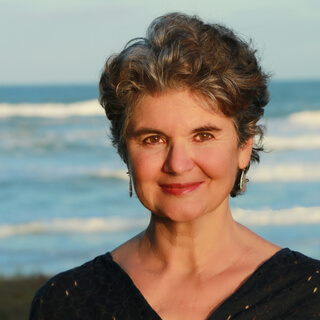
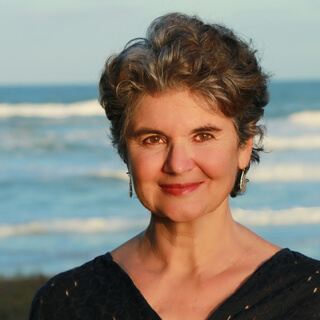
I'm your host,
Katherine Ingram.
The following is excerpted from a session of Dharma Dialogues held in Lenox Head,
Australia in January of 2019.
It's called,
Go to Your Own Quiet for Guidance.
It's only when we're quiet that we can hear the murmurings of our heart.
Even though they may be broadcasting at other times,
It's kind of like when a tree falls in the forest and there's no one around.
And sometimes you realize at the point when you are quiet,
When you're still for a moment and you hear a message that's been trying to get through,
You realize it's been there.
You just weren't really listening.
So it's another advantage to cultivating a general sense of quietness of the heart so that you can actually hear the whispers from your own wise self.
Because when the attention is just constantly jumbled,
You might have extraordinary access to wise perception,
Wise decisions and so on,
But they're clouded,
They're occluded by the noise.
So it's a way of understanding that you begin to rely on this quietness of the heart to be your guide.
You don't have to even strategize much in your life.
You don't have to sort of figure everything out.
You start to rely,
You know,
Step by step on this,
On the murmurings of the heart,
The whispers,
The first sign if something doesn't feel right or the first sign that it does feel right,
Right?
Instead of being all the way into the morass of a problem that there were a thousand messages beforehand that somehow you ignored.
And sometimes we ignore things out of fear or out of greed,
Typical human things.
We ignore,
We want,
We want something and we ignore all the messages because I want this thing.
Or on the other side fear does a lot of work in that way as well.
We ignore.
When you rely more and more on this sense of quiet,
You begin to direct your attention,
As I always say,
You direct your attention there,
Not only because it feels good,
Which it does,
But because it's your guidance system.
So for me,
When there's a trouble in my life or some gnarly problem has risen,
There's some response,
There's some kind of habitual response that says,
Go to quiet,
Right?
Go to quiet.
I bypass the figuring it out and I go to quiet.
And that becomes my well of where I wait for the information to arise.
And sometimes the wait can be uncomfortably long,
Right?
You want to know right away.
You want the decision made.
You want to know where are we going?
Which step am I taking?
But until the murmurs and whispers of the heart have said it clearly enough,
It's very good to wait.
These are all the ways that living in a kind of awake awareness benefit the life in your relationships,
In your work,
In your creativity,
In your travel plans,
Every component is enhanced.
Keeping quiet,
As Poonjaji said,
Doesn't mean you don't speak or engage.
But we all know what that means,
Doesn't it?
Don't we?
We understand what it means hanging out in the easy space.
No big productions of the presentation of me,
Which will drive you crazy,
Drives people crazy.
This is an innocent question that came up while you were talking about waiting,
Waiting in the silence to get the message.
And you mentioned something about don't need to strategize or anything like that.
But what came up for me was a question was,
How do you know the message that you get from your heart is trustworthy?
And what if you get more than one?
You mean contradictory ones?
Potentially,
Or there's a lot of options.
How do you know which one is trustworthy?
It's instantly asked.
Sure,
Sure.
I mean,
Of course,
Sometimes the range of decisions is incredibly innocuous in terms of,
Should we go to the beach first before we have tea?
Those things.
I'm really not talking about that category of decisions.
The deeper and more,
What's the word,
Influential decisions of a life,
I'm talking about those.
And what I do with that is that I go to how is it feeling?
So the murmurings of the heart are connected to how does it feel in my body?
How does it feel in my mind?
Does my mind relax in this decision?
And does my body relax?
Does it feel calm?
Or is there a flutter?
Is there a nervousness?
Is there a little anxiety with it?
Now some situations we're in,
They will come with anxiety and there's nothing to be done about it.
But I'm talking about those decisions or leanings toward some path in life that are the sort of bigger structure decisions,
So-called decisions.
Leanings is a better way to think of it.
And that can be very clearly messaged from the murmurings of the heart and from how's it feeling in my body?
How's it feeling in the mind?
Yeah.
Thank you.
Yeah.
And it's quite a privilege,
Which we mostly we have,
That we can actually just move along that gauge,
Right?
A lot of people in the world don't have that privilege.
They have to do things that are terrifying in order to survive.
That probably their whole system is screaming,
No,
And they have to somehow override it because survival becomes the predominant value.
But we,
In our privilege,
We get to tune in to what is the more gentle way for myself,
My mind and my body.
And I always say that because we are in this privilege,
It's incumbent upon us to actually use these tools of attention.
Well,
Because then it makes us that much stronger as being of help to others,
Being as clear as we can be and as steady,
Calm and steady,
Right?
And that's a gift not just to you,
But to everyone you're around.
Like a big shade tree,
I like to say,
Where people can take refuge or have a moment of just a breath of fresh air of beingness,
Remind them of their own.
So yes,
While we're in this privilege,
To really use our time well,
Use these privileged resources well.
I liked your,
Like when you need to make those decisions,
You say,
Go to quiet.
That's really helpful.
Yes.
Yeah.
It's a phrase I use a lot,
You know,
Just go to quiet.
Go to quiet.
Yeah.
And sometimes it's not even about a decision.
It's about having to look at something that is painful to look at and that I can feel a rising fear.
So as you know,
I studied climate science and there's a lot of very hard things to look at.
And often in the midst of it,
I have to say,
Go to quiet.
Such a,
It's almost beyond words to speak about the gift of this quiet.
It's just so beautiful.
And I'm so grateful that this is here today because it's so pertinent in,
I have an opportunity of something new and it's amazing how what has been wants to flavour.
There's something new.
The unknowable of the mystery of this,
What is new.
And speaking of this quiet,
Like go to quiet.
I find myself doing it a lot and it gets reflected sometimes that,
God,
You're so deep.
And I just have to go,
Yeah,
I know.
Yeah.
Yeah.
And,
You know,
Like sitting with someone the other day,
You know,
I said,
I don't mind if we don't even speak.
Yes,
Sure.
And it's just really delicious.
But what I am particularly grateful for is just feeling where that discomfort,
Actually that edge of the discomfort of full permission to really be here in the quiet.
Like really here with no distraction of the fragrances of what has been or what could be or… Yes.
And it's such a fantastic thing to consider.
It is.
It's a great thing to just pepper your day with and then have it become more and more your habit so that it feels really natural and normal.
Yes.
Yes.
And it's not to say,
As I always want to point out,
It's not that you need a steady state of it.
You don't need a steady state.
I wouldn't recommend demanding that of yourself,
But that it becomes just more habitual.
Good enough.
It's funny,
You know,
I feel like I'm only just starting to be able to really experience that I am actually allowed to be fully in life.
And the challenge of being fully in life is,
Are you really going to follow what you love?
Are you going to give everything that your heart absolutely knows it came here for to be,
To do,
To do-do-do-do?
It's a great,
Great question to have as a little koan that you live with.
Yes.
And especially,
You know,
As time's a-wastin',
You know,
Of a certain age you realize,
You know,
If not now when.
And what I,
What sometimes I can sometimes think is wanted.
It's actually not even it either.
Yes,
Yes.
That's another thing about the murmurings of the heart is that as you get deeply quiet,
You know,
They get louder.
And if there's something that's been not quite a fit,
But that you thought it was going to be or it used to be,
But now it's starting to be like a too tight shoe,
Right?
The message comes through loud and clear.
And then on the other side when there's a love affair,
Right?
A love affair with whatever one might be having the love affair with,
Whatever or whoever.
There's,
There's a full surrender.
It's like you can't help but be surrendered.
It's that your whole being is being lit up in the,
In the expression of it,
In the thought about it,
All of those things,
Right?
It's,
It's like a fire is burning in your heart.
So you start to really,
It takes a certain boldness actually.
It takes a willingness to know that any time you're having a grand love affair,
You're subject to loss.
The grander the love,
The bigger the loss.
And anybody who's awake and paying attention knows that that's the,
Those are the rules of the game.
So you're constantly on this razor's edge of like,
It's just very poignant.
That's why I say it takes a boldness because you have to endure the poignancy of the damn thing.
So,
So whatever it is,
Whatever it is,
Right?
That's the truth.
Yeah.
Yeah.
Yeah.
I was walking,
I was walking by the ocean the other day with a friend and I was watching these children that I love playing.
We were about to have a picnic.
You know,
It was just one of those moments of just perfection of,
And at the same time,
Like I was feeling all this changes,
Right?
No,
It all just floats away somewhere.
And of course,
One falls in love with the new as well,
You know?
But it's like that in this,
In this journey.
The point,
And I love what you're saying about asking yourself,
Giving yourself permission to really go for what you love.
The point is that you do risk,
What's that great line in Rumi?
Gamble everything for love.
That's it.
Gamble everything for love.
Right.
It's that basically.
Yeah.
He said it better.
It is a gamble.
That's a good description.
Yeah.
Yeah.
Yeah.
And I also love that metaphor of the shoe that's too tight.
I can feel it on one of my feet and it would ultimately love to be kicked off,
But it's also informing of what I don't want to do.
Yes.
And it's not comfortable.
Right.
So that's exactly what I was saying about tuning into the messages from your own body and your own mind whereby you're realizing in order to maintain the status quo,
Right?
I can feel a certain closing down,
Closing down on my heart,
A little dampening of my energy and a kind of weariness of mind that when you wake up in the morning,
It's like one of my Buddhist teachers used to say,
Because they were very big into the first noble truth,
Oi ve,
Another day.
And we just had one yesterday.
It's a little like another that,
Oi ve,
Another day.
And it's a low grade depression.
So the gamble everything of love for love program and the sparkly willingness to be bold and to really kiss the joy as it flies and to really be fluid in yourself about what is working and be honest about it and what feels good.
And by the way,
This may sound to someone listening kind of selfish.
If they're not listening from the deeper place,
It could sound selfish.
So I'm going to say one more time about why this is,
It is very,
Very lovely for oneself to live in this way.
But it's also lovely for everyone you're in contact with.
And it keeps you on the straight and narrow in terms of what you're doing and what you're saying.
It keeps you pretty well attuned to being a servant of the greater good.
It keeps you attuned to thinking about others when you make your various decisions or when they arise in your heart.
It keeps you very gentle in the words that you speak,
Skillful in the words that you speak with others.
Also,
You're not a doormat either,
Right?
You understand very well the line between turning the other cheek and repression.
There's a fine line and it's a really important boundary so that you don't let bullies just get away with bullying and you don't let people get away with conning and so on without speaking up or trying in some way to alleviate the circumstance.
So you don't repress either.
And all of these,
All of this is you can just simply rely on your own good guidance system,
Which works very well from the quietness as it turns out.
That's where it works the best.
And that becomes really your only thing you have to remember.
Often people will ask me about,
Should I do this or should I do that?
I'm facing this big decision.
And I always say,
Let the silence give you the answer.
And it may be completely something you never even considered or thought about wasn't even on your list of options.
Thank you.
Yeah,
You're welcome.
Thank you.
So beautiful to be here.
With the breeze.
Yeah,
And just like this is like music to my heart.
Hearing this very nourishing.
I'm very happy at the moment.
Lovely.
I'm really appreciating how things change.
Just sitting with and not doing and so very in appreciation at the moment.
Beautiful.
I can see that on your face.
Lovely.
Something sitting there about comfort and then the kind of calm or peace that comes from no perturbations.
Just this when everything's going really well.
And I guess the curiosity is does one need to search for quiet within that?
Is it okay to just be in the flow and be there?
And then is it important to make time to meditate?
When you're having a great life and you don't really want to meditate.
The idea of meditating is just like,
Oh,
I'm just saying.
When the whole life is like a kind of flow of meditation,
So called.
I mean,
Yeah,
Certainly not.
Thanks for that.
But for some people in very busy,
Chaotic lives and with juggling hundreds or thousands of balls a day,
Etc.
,
Many of those people are very benefited by having an enforced time of quiet where they get to have their mind gets to have time off or at least it gets to focus on one little thing that keeps it quiet.
So certainly for some people,
It's very,
Very healthy.
But what you've just described is very similar to how I live as well.
So I don't need to have so-called formal daily practice.
And I mean,
I count laying on the couch,
Watching the turkeys with their antics as a form of meditation,
You know,
And all of it making the tea and all of it swiffering the floor.
And that's a single thing is there's a kind of flow to a present awareness,
Nothing forced.
If my mind is drifting around or remembering something or imagining something doesn't matter.
Right.
I don't have any kind of Uber taskmaster that is saying,
Go to quiet and stay there.
It's not that.
Right.
It's not that.
It's much freer and lighter than that.
But I'm talking about the go to quiet signaling to myself is when there is something up that's big and that I can see that the mind is now starting to become agitated,
Is starting to spin,
You know,
Kind of feeling of spinning inside.
That's when the instruction to my own self comes through and it can actually shift fairly,
Fairly quickly,
Depending on the intensity of the situation.
Especially if it's just thought cluster,
It's a thought cluster.
It can go to quiet pretty quickly.
If it's an imminent problem that I'm in the midst of,
You know,
I've lost the phone or whatever,
Then there may be still lots of ramifications running in the awareness.
But yes,
I'm so glad you brought that up because I think it's another misconception in spiritual circles,
This kind of fascist thing of either lots of formal practice or this sort of continual mindful uber program that's like having constant notation that you have to be doing.
So I don't subscribe to that.
This is such a great topic.
I've been really,
Really struggling with decisions and I'm really,
Really resonated with what Linda said about I'm finding it really hard to trust my heart.
And if I think about it,
There's a deep issue of just sort of trusting life,
You know?
And so I have all these decisions to make,
It's just overwhelming.
And then I'm meditating fair bit in order to come to that quiet and I'll have a message and it'll be like very clear and then I'll make a decision.
Two days later,
Another message,
I'm making the opposite decision and making an absolute mess of so many things by changing my mind.
And then not doing anything has consequences.
That's actually a decision.
So it's just,
I realise the two things are connected by not trusting my heart to having this experience of being all over the place.
But I just,
I think that the lack of trust comes from having taken bold decisions or taken risks and it just leading to a lot of suffering.
And I don't want any more suffering.
I don't want any more learning experiences.
It's not that I expect to get everything right,
But I just feel like,
You know,
I feel this samsaric thing and it's so tiring.
And then I have this sort of thing of just drop out of everything,
You know?
Is that really an option?
Well,
It's not a good one because when I,
You know,
Obviously you've got to live.
But I can feel the impulse.
So you just sort of just drop out.
Well,
There may be some version of it that could work.
But partly that's because I don't want,
Because I can't see the way and I don't want to play anymore.
You know what I mean?
Yeah.
Yeah,
It's a really,
Really confusing time.
I mean,
What's coming through and wanting to be said,
I don't know why.
But is,
I bet there's a deep,
Deep,
Deep knowing.
Right?
And then there's a lot of other voices of other stories.
But there may be some deep resistance to that deep knowing of what that message is based on other stuff,
Conditioning,
Old stories,
Old past things,
Missteps that you perceive.
So sometimes one has to surrender to that really hard truth in a sense or even,
Let's call it a deeply out of the box truth that just makes no sense in a way.
And then part of this surrender to that is you have to have an attitude of come what may.
Right?
I don't have that right now.
Right.
Right.
I want it to be easy.
Yes.
I want it to work.
But it might be that the really deep,
The deep yes comes with come what may.
It often does.
Right?
It often does.
I mean,
Sometimes people literally lose their lives in the come what may and still would have chosen that,
You know,
Like Martin Luther King Jr.
In the United States leading up to his death.
He was predicting it basically.
And he was clear that,
I had this line,
I always get chills when I say it,
You know,
He's talking in one of his speeches about how he may not,
You know,
We will get to the mountaintop,
I may not get there with you.
And he said,
Like any man,
I would like to live a long life.
Longevity has its place.
Right?
But then he went on to say that that is probably not his destiny.
And he was right.
So it's like that level of come what may,
I have to do it because I can't live with myself if I don't.
There's going to be no,
So as hard as it may be,
You know,
The alternative is a kind of death by a thousand cuts,
You know.
So it's that recognition that sometimes you've got to get really quiet.
You know,
And I mean,
That was the kind of thing that had to happen for me to move to this country,
You know,
In my 60s,
You know,
And leave a lifetime of connections,
You know,
Who were not happy about it.
It didn't get much support.
So,
You know,
It was that kind of thing of like,
I have to do this because staying is going to be going against those deep murmurings,
Those deep whispers of the heart.
It's going to drive me crazy.
So it's that,
You know,
The come what may.
Thank you.
That really speaks to me.
So I totally get the quiet,
Practicing that.
I'm also a big believer if I don't know what to do,
Do nothing.
That works.
But what I discover in myself is my body betrays me in that if I'm faced with a shock or a trauma or something painful,
My body numbs out and I lose my ground.
So I can go so far along with the quiet and then I lost myself.
And when I lose my ground in that place,
I lose my sense of knowing and self-trust,
Which I usually have very strongly.
I'm usually very grounded and clear and have a huge capacity.
As I've got older,
It's better and better.
But that numbing out and that leaving my body is really painful.
Well,
You know,
As I said a while ago,
We're not asking for a steady state.
So you said that when something very painful or shocking happens,
You numb out,
Your body kind of numbs out,
Which is in a way a kind of protective mechanism that our psyches and our bodies sometimes do,
Not always,
But sometimes.
So I should just make a little change in the instruction here about sometimes when you're saying go to silence,
You can't actually do that at the time because there's,
It's like a,
It's like you've had a body blow and there's a huge repercussion,
A reaction that's happening now that you can't really deny and you can't just override it and say,
Go to silence.
So one can just wait that out.
But there comes a point when things have calmed down enough,
Even if there's still some turmoil left that you can then bypass finishing out the full turmoil and go to silence.
Are you following me?
So you can do it in stages.
But in the initial shock of something,
That might not be the time to be giving your mind anything else to do.
It's really just surviving the moment,
Right?
So lots of times when there's a very big,
Something painful,
Physically painful,
Or psychologically shocking,
It takes some time of adjustment,
Of healing,
Of calming down before then you can start to use your own attention to be your guide and ally in this process and to speed up the adjustment.
Not to demand ever that you have to have a steady state.
And what you've described is that as time has gone on,
You're more and more in a really good clear state that you can rely on as your home base with allowing that there are times when you just kind of are barely hanging on to any stability.
That's just how,
That's how it is in this,
You know,
Minefield that we're walking on.
Things happen.
All right.
So I never have any big assumption that I'm protected entirely.
Right?
I don't have that.
I know that this system,
This psyche and this body could get really taxed and really off balance.
What I'm relying on is that,
You know,
Certainly most of the small stuff and the usual warping wolf of people's neurosis and people's bad behavior and all of that stuff and the,
You know,
The garden variety problems that come along,
There's a very quick going to quiet amidst those.
But I also know and I'm a bit,
You know,
Wary of some of the bigger stuff that could come down the pike that I don't know how it'll be.
I'm hoping that this habit will really be helpful.
You know,
I think it will.
Yeah.
So this kind of perspective where you're recognizing in an authentic way that,
You know,
Something that Poonjaji once said,
I've mentioned this many times,
But you haven't been here,
But for those who've heard it,
Sorry,
You're going to hear it again.
You don't mind,
Do you,
Meera?
Something he said once to his then assistant who's living in the house.
And she told me,
He shook his head one day and he said to her,
Sometimes I'm not in satsang.
And that was the most wonderfully liberating and of course,
Very authentic and very big and bold thing to say is so beautiful and gave me permission to be authentic when I'm being crazy and neurotic and in fear and jealousy and whatever,
You know,
That sometimes I'm not in satsang.
Sometimes I'm not in truth community.
I'm not in my clearest space.
And that's when the thought arises,
Go to quiet,
Where things calm down,
Where the murmurs of the heart are very loud.
Yeah,
I guess for me,
It's just trusting that,
Trusting it will pass.
Yes.
I get clarity.
Yes.
I think my habits in the past have been to run away or,
You know,
Numb out artificially.
Calm out or try to sort of spiritually up level or transcend it or give some little spiritual pep talk about.
.
.
I've never done anything that good.
I'm talking about drugs.
Yeah.
I see.
Things that actually work.
A bit more fun.
Yeah.
No,
I see what you mean.
But probably not a.
.
.
A long time ago.
Yeah,
A long time ago.
Yeah,
Of course.
Right,
But not a sustainable path.
Right.
Yeah.
Better to just make friends,
Right,
With the craziness,
With the fear,
With the moments,
With the times of,
You know,
Just the body blow and the pain that comes.
Just to basically.
.
.
Yeah,
The shock.
Just to say,
Okay,
This is what it is to be a human.
Yeah.
We mostly get spared,
By the way.
We who are.
.
.
I'm still here.
I'm still here.
Yeah.
Well,
We're even more than still here.
We're incredibly privileged.
We don't get as many body blows as lots of other people get.
People who are.
.
.
A billion people are hungry.
You know,
If you've ever been actually hungry from not being able to have food,
Like no food to be had,
One of the things that happens with that,
Not that I've had much time in that state,
But I'm told and I've read enough and talked with enough people to know,
One of the things that comes with that is extreme agitation.
Right,
Before you go into lethargy,
Where you have no energy to even be agitated,
That's like real starvation,
But before that,
On the way there,
The system is highly agitated.
Right?
So,
A lot of people are living in very extreme conditions on planet earth.
We are not.
So our body blows,
So called,
Usually are of a psychological nature or of physical pain,
But we also have access to manage physical pain through medications.
So we are still living in such,
You know,
With high class problems.
And it's good to remember that.
It puts it in perspective a lot,
It lessens the scariness of it.
Right?
Okay.
And fair enough to have them.
We're humans.
I'm so appreciating the structure of this conversation and the opportunity to hear from people and have that reflected back and it's just,
I just want to acknowledge how precious that is.
And I think for me being around the spiritual teachings and teachers,
I've really missed the intellect,
You know,
Whether it's metaphor or art or poetry and it's just really,
Yeah,
Just to swim kind of in the waters of that and have that,
There's such deep appreciation and I'm very glad you came to this country.
Me too.
And I want someone to ask another question because I don't want this to stop.
Well,
That could be you.
I think I'd like to hear from someone else.
I did want to respond to you as to what I wanted to accept what you said and tell you how much that means to me because I am aware that teaching in a different style attracts a lot more people in terms of,
You know,
In kind of classical invite to talk and all of that stuff,
That a lot of people are very dazzled by that.
And so doing this the way that I do it,
I'm aware that not as many people can quite even follow it or certainly appreciate it.
So I'm grateful that you said that.
Something I find,
If I haven't been quiet for a little while and I come here,
The first thing that happens,
I just get really tired.
So that's just where I've been today.
It's just like a dropping,
There's not much action.
Yeah,
Good.
Yeah,
No,
That's a very clear thing to see that when you're in a context where the permission is to relax,
That your body immediately does that as a good sign and your mind,
Moreover,
That your body and mind go,
Okay,
Safe place to just drop it all,
Like you say,
Drops in.
It's a disciplined relaxation here,
You know,
Because I could just flop on bed.
It's not the same.
Yeah.
I know Poonjaji used to say when people would fall asleep in satsang,
He would be so delighted because it indicated how deeply relaxed they were in this company.
And he used to often say,
Be as you are in deep sleep.
When I first heard that I was much younger and I'd think,
Huh?
I don't even know how I am in deep sleep.
But over the years,
It's becoming more clear,
Right?
Be as you are in deep sleep,
Just nothing.
This has been In The Deep.
You can find the entire list of In The Deep podcasts at katherineingram.
Com,
Where you can also book a private session by phone or Skype,
Or make either a one time or recurring tax deductible donation.
Assuming you like these podcasts,
We would also appreciate a review wherever you're getting yours.
See you next time.