Welcome to In the Deep.
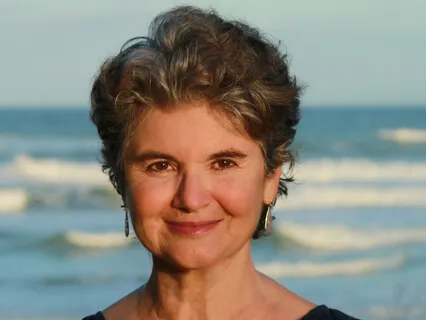
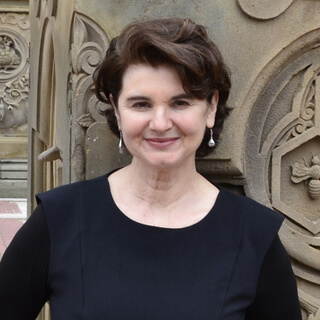
I'm your host,
Katherine Ingram.
The following is from a Zoom session broadcast from Australia on May 1,
2021.
It's called Gifts from the Lockdown.
I'm going to ask you to consider what your sort of,
If not your deepest,
Because that might put too much pressure,
But one of your most profound insights about this time we have been living in and through of late.
I think there's a way in which we've all been very deepened by it and deepened and stretched and pulled into our own mystery of even who we are in watching ourselves handling it and watching our world handle it.
So let it reveal itself perhaps in the moments of quiet.
If it does,
No pressure for just a few minutes.
I want to read something,
A poem by W.
S.
Merwin.
He was poet laureate,
Congressional poet laureate toward the end of his life,
The last part of his life.
It's called Thanks.
Listen,
With the night falling,
We are saying thank you.
We are stopping on the bridges to bow from the railings.
We are running out of the glass rooms with our mouths full of food to look at the sky and say thank you.
We are standing by the water thanking it,
Standing by the windows looking out in our directions.
Back from a series of hospitals,
Back from a mugging,
After funerals,
We are saying thank you.
After the news of the dead,
Whether or not we knew them,
We are saying thank you.
Over telephones,
We are saying thank you.
In doorways and in the backs of cars and in elevators,
Remembering wars and the police at the door and the beatings on stairs,
We are saying thank you in the banks.
We are saying thank you in the faces of the officials and the rich and of all who will never change.
We go on saying thank you,
Thank you.
With the animals dying around us,
Taking our feelings,
We are saying thank you.
With the forests falling faster than the minutes of our lives,
We are saying thank you.
With the words going out like cells of a brain,
With the cities growing over us,
We are saying thank you faster and faster.
With nobody listening,
We are saying thank you,
Thank you.
We are saying and waving,
Dark though it is.
I think for myself,
The most profound experience for me in this time,
In this whole,
Not just the time of COVID,
In the last phase of time for me,
It is an increasing sense of gratitude,
Of appreciation,
And an awareness of how people have had to live and cope and carry on and say thank you in the Warsaw ghetto,
Right?
In the arrivals to new shores where they have come as refugees or like in the old days coming to America,
What you had to do to get there.
In all the ways that people have struggled but carried on and found reasons to live and reasons to be grateful.
I have spoken about this quite a bit.
I think we in our ways of life,
We have become quite spoiled and soft in terms of having a kind of metal to carry on.
It is understandable.
It is so understandable.
I suffer with it as well.
But I am very aware of it.
I watch it carefully when I notice a kind of whining or a grumble in the midst of what is still considered extreme privilege planetarily and historically.
So I just keep focusing on the little things.
Saying thank you in my own way.
It is more silent than that.
But it is just a little shift of attention.
And then things get quiet again.
It gets quiet when you are feeling gratitude.
And when you are feeling the privilege of being alive.
There is a line that Leonard had in one of his songs.
You ditch it all to stay alive.
Right?
If your house burned down,
You know,
You would run to stay alive.
You are not going to stay back and try to get the paintings off the walls and all of that.
You ditch it all.
You would be immediately confronted with your love of life.
Preference for living at least.
So as I usually do,
There is this emphasis on just being and on gratitude.
Just being.
I just came from the state of Victoria back to my state.
I have to go back in two weeks to Victoria.
But I ran a small private retreat there for three days.
It was the shortest residential retreat I have ever led.
I don't usually do them just so short.
But even so,
The people who were there,
All their activists and very busy and engaged and,
You know,
Very,
Very interesting work.
But to the one,
They just dropped into being in silence.
They just dropped into being and gratitude.
It got very simple.
It was yet another confirmation for me after many years of such confirmations of what's important here and what matters and how easily accessible that is.
Now,
Granted,
A retreat intensifies that experience.
But you can have a lot more of that in your lives just by using your attention in such a way that you land there a lot in your day and that you choose it.
And then when you find yourself grumbling and whining and moaning about how awful everything is and how dark though it is,
As he said,
And it is in many ways yet.
These are your precious moments.
How will you spend them?
I have a slight sensation of tears in my eyes.
When I heard the words you said at the end,
Which were something like,
These are my precious moments,
How might I spend them?
And there was a line in a Mary Oliver poem which resonated with that,
Which is,
What are you going to do with your one wild and precious life?
Something like that.
And so I had that same,
I wasn't expecting that.
And I just had a bodily sensation of sadness,
Not necessarily,
Oh,
Am I doing nothing with my life kind of sadness.
But you previously invited us to consider the times we've lived through and what I might have disowned from that.
And I guess it does relate to that precious moment thing because I'm not sure really,
I've learned much,
But I've certainly experienced things very differently.
I think my learnings might come later as actual,
Oh,
This is what I've learned.
But it's the kind of polishing that I did prior to this period of more restriction.
I use that word polishing because it seemed like there was a little background program running about,
Oh,
Should I now go to that little social or is it time to go and visit that person?
Or,
Oh,
Is it,
There's a cathedral there,
Shall I go in there?
It was like this sort of a background program.
And a lot of it was about,
This word polishing,
I just came to mind whenever you invited us to reflect on it.
And it's that kind of buffing up of,
Oh,
Do we need to learn something else or be somehow different?
It was like that kind of buffing and polishing of the me project,
I guess.
I was just thinking that phrase,
Exactly that phrase,
The me project.
It's just sort of there,
It was there.
And when it dropped,
Necessity dropped.
I really was much more in uncomfortable times.
When the me project dropped,
You were more uncomfortable?
I felt,
And it's,
The quality of that discomfort was something like,
Oh,
This is a bit pointless.
I was kind of left with the bigger questions.
Like a what now,
What to do.
The what now,
The what now.
I didn't actually have a bucket list.
I'm not a great bucket list person,
But still there were bits and bobs.
Yeah.
Yeah.
Well,
It can take a little getting used to,
But it's not very hard to get used to not having the me project.
Because that one's pretty oppressive and it's unrelenting.
I mean,
It's the urge that there needs to be constant improvement,
Constant aggrandizement to the self,
More experiences,
More adding on.
Always probably this engine running that's actually looking for peace,
But the engine is the problem,
Right?
It's not landing in peace.
It's still always going towards something else.
I heard someone say,
Some teacher said,
Something like the pursuit of awakening is the greatest impediment to it.
And it's something very much like that with regard to the pursuit of peace,
The pursuit of somehow adding on enough to the me story,
To the sense of self,
To the importance of the self,
Such that you might think,
Finally,
I'll get to relax.
I'll hit the target.
I'll do all the things,
Even on your non-existent bucket list,
But just the bits and bobs.
And then I'll relax.
Then I'll feel at ease in my skin.
But that is never going to happen that way.
Your rest is all downstream.
It's all in the relaxation.
It's all in the letting go.
It's all in the saying yes to this very moment,
Whenever the moment,
Whenever the moment.
It's the full acceptance of that present experience.
And that can carry you.
Now,
Obviously,
We're very conditioned creatures and lots of things will arise,
Lots of conditioned thoughts and emotions and desires and all those things arise.
And that's not really a problem because you don't have to go chasing all of them.
Just that they arise isn't the problem.
It's the chasing.
It's the hypnosis that happens when they arise.
It's the Manchurian candidate that you become.
I don't know if you know that reference,
But it's a famous reference of a program of people being conditioned to respond by certain triggers.
In Manchuria,
It was the original reference from this fictional story.
They're trained as killers,
Essentially.
And these guys were taken and they were trained in these very brutal ways,
But also,
I think,
Drugged in such a way that they were mostly forgetful of how they had been trained.
But certain triggers would make them do these actions and behave in these ways of assassinating a president or this and that.
Kind of a science fiction thing from the old days,
Although getting more true all the time.
But anyway,
We're very conditioned in similar ways.
We get triggered.
We get triggered by different things sometimes so subliminally,
We don't even catch what triggered us.
I've used this example for instance.
I used this example probably 20 years ago and maybe a few times since.
Let's say you had a breakup at a certain point in time and there were certain songs that were playing on the radio during that time of the breakup.
Now it's years later and you're standing in a store and there's music in the store and there's one of those songs playing.
You're not even really listening to the music,
But suddenly you're feeling a wave of sadness coming over you,
Right?
We're very easily triggered because we're so complex and we have so many memories and experiences from childhood and this and that.
So all of that is allowed.
We can't do much about it.
These things arise and arise and arise.
But the question is,
And it's similar to the question of how will you spend your precious moments of this life or what's left of your precious moments?
That clock is ticking down.
How will you spend it?
Another way to say it is how will you direct your own attention in the moments you're able to?
That doesn't require having to be constantly on guard directing your attention all the time,
Only as needed.
I always say that you only have to do it as needed.
Like if you're going into craziness,
If you're going into whining,
If you're going into poor me or the aggrandizement of me,
Let's add on to me,
Then I might feel better.
Let's get the engine running.
If all that starts up,
Then redirect your attention in a simple way.
Grab hold of something to say thank you about.
And usually they're just all over the place around you.
Even just being away there in Victoria and then coming home.
I walked into my place and I just felt these waves and waves and waves of gratitude.
When I had a wonderful time there,
I felt much gratitude there as well.
But what was in why I'm mentioning the coming home part is that you live in your own home and you just take everything for granted in a way.
You forget to think about how nice it is to be able to just sleep in your own bed and have your stuff in your closet and get the food you like and have it there to eat it and all the most simple,
Basic things.
One of my friends just had cataract operations on both of her eyes,
But at different times as they do it.
And so we were talking,
We were walking on the beach the other day and we were talking about how,
You know,
At first when that happens,
You're like,
Wow,
It's like you've been given sight.
She doesn't have to wear glasses anymore.
She has perfect vision.
You know,
It's like amazing.
But you quickly adjust,
Right?
And you sort of forget about it.
You don't go around saying,
Gosh,
I can see,
I can see,
You know,
After a while,
It's just part of your experience of life.
And you sort of forget to be grateful about it unless you think about it,
Unless you sort of put the attention there.
So this is all by way of saying that you are the captain of your ship in that you can use your own attention the way you want to use it.
Maybe not at every second of the day,
Which is fine.
You can't control every emotion that arises,
But you can direct your attention a lot.
And that's all you need.
It changes the life when you get used to that,
When you get habituated and how you use your attention.
Thank you.
You're welcome.
Hello to everyone.
Yeah.
Yeah.
Well,
The poem you read was very much in line with what I have been looking at the past year.
Maybe I see actually two things maybe for myself.
One is that my inner peace is not very much affected by anything that's happening.
Wow.
But in my mind,
There can be quite a bit of,
Well,
Not only in my mind,
I mean,
I can feel quite a bit of sadness about the climate and about the fact,
I think that really nothing much has changed in politics and policy in the past 50 years.
And looking,
For example,
At politics,
What they try to do in Holland to have less cattle and less meat production.
And that you see that even 20,
30,
40 years ago,
They have voted for bills to cut down on cattle and it just hasn't happened.
And every time there are forces that just don't make it happen.
And I was talking about that also with a friend and he's with friends and they said,
Well,
Look at everything that's going well and look at everything that's going right.
We have dry feet in Amsterdam because the water management is so good and all that is true as well.
So there are these truths of this incredible luxury and wealth and at the same time,
Seeing that us humans are not really capable of solving any big problem,
It seems.
And I'm not an activist in practice,
But I'm pretty much an activist by nature in my mind.
And what do you do with all that?
What do you do with this precious time?
And for me,
I try to move to what warms my heart,
What is true to my values and what feels like flowing,
What feels like just right.
And it's just in my small life,
It's flooded with these moments and possibilities.
I have such freedom to do what my values feel like and what warms my heart and what feels like deep connections with people and with nature and all that.
But sometimes it feels a bit,
It's all happening there and it's all happening at my feet that many things are not solved and many problems are not solved here in the world.
And that I have this beautiful life.
I don't have it,
But I see,
Well,
I still got more time.
Yes,
Yes.
Yeah.
To enjoy it all and extra bonus and extra bonus.
It's fantastic.
Yes,
Beautiful.
I love that.
Yeah.
And I hear the dichotomy perhaps of should you be more active about the things you're passionate about or that you care about in terms of what's happening with the world and all the different missteps that humans make and fumbling along here,
Or just surrender to your real passion,
Which is that warmth and that sharing and that love bath.
That would get my vote because the world and the forces in the world are so massive and so many of the forces that are driving the show are motivated by greed and power and consolidation of power.
And there's a huge destructive force that's going in many directions.
It's hard to ignore it.
And I don't recommend ignoring it at all.
But I'm talking a lot about acceptance.
And this poem,
In the faces of the officials and the rich and of all who will never change,
We go on saying,
Thank you,
Thank you.
We co-exist in this circumstance with these very people whose values may be absolutely the opposite of our own.
And they may have much more power than we have.
And that is how it is.
And yes,
Things can inch forward here and there,
And they do.
But I'm at the point now with all of this,
I'm really just watching this show.
I'm knowing that the only real stand I can take,
As much as you've just described,
Which is to be as gentle and as supportive and as loving as I can to everyone around all of this,
Because everybody's kind of scared.
When they look at the future,
The so-called future,
You can't really see it,
Obviously.
But the sense of what is coming based on the trajectories of where it's going now.
And there's a lot of worry and anger,
You know,
And I think a lot of diversion of that anger into all kinds of other dramas that are pretty sideshow dramas to me,
Given the bigger ones.
So you know,
That's all happening.
And how does one keep going?
That's another part of this.
How do you spend your precious moments when this sort of a sword hanging over things?
Well one could argue or propose that you seize the day.
It's like,
You would seize the day.
I sometimes do this little experiment in my mind.
I mean,
I have mentioned it a lot,
But I'll say to myself,
Well,
What if I knew I had a year to live?
Would this issue,
Would this stress be that relevant right now?
What if it was a month?
What if it was a week?
What if it was a day?
And when you do that little exercise,
Things really snap into clarity.
And it comes down to what you said.
Just wanting to share kindness and be a safe haven for anyone and for yourself.
I suppose,
You know,
Your earlier questions and how this time has been,
And I think what you just said actually really resonated with me,
Struck a chord within me.
And that is just about,
You know,
Taking the time and the space when I can to just kind of tune in and find the safe haven within.
And it's almost like,
You know,
We're doing retreat,
Isn't it?
You know,
We just kind of let go of all of the pressures,
The external,
Perceived external pressures and just sort of tuning in and soaking a bit in that place,
You know,
Just to build the resources again.
And I was thinking it's been a busy time in my life the last year or so.
Days are busy,
You know,
Work days are busy and having had to change the way we do our delivery of psychological services and things like that,
You know,
We had to jump at it and we had to do it and then we had to review it and look at the consequences of it.
And so it's been busy.
And so these times of just stopping and being within myself,
Like letting,
Disconnecting from all of that.
And then just,
You know,
The sort of going within and breathing deeper and taking in nature and it's a beautiful morning here in Dublin and I'm looking out at the trees around where I live and,
You know,
Just aware of this is,
We've had all four seasons now in COVID and with the,
You know,
With the level of restrictions that we've had here,
It really has been a time where if we weren't natural introverts,
We certainly got the experience of being in some way thrown into that space.
So,
You know,
Now I quite like that myself,
But having said that,
Sometimes it's felt a bit,
A bit too much.
So I suppose,
You know,
For me,
What's the deepening and the sense of myself,
I suppose it's a stark reminder of the importance of that time of retreat,
Even if it's on a Saturday.
And for me,
Nature helps you see,
Hence the mentioning of nature.
Like it's great for me looking at and seeing the trees again,
Coming into bud and nature waking up again here,
Which is great because I think at times like this when we're exhausted,
That's quite an important source of energy and just about that connection back,
You know,
Reconnecting from the busy-ness and the madness and connecting in is a conscious decision,
I think,
For me.
It is.
It's a conscious decision for all of us,
Really.
It's all about kind of knowing when you're off balance and redressing it,
You know,
Not letting it just keep running on and getting more and more exhausted or depressed or anxious.
Redress it however you can.
And I think what you often say is an expression,
Something like,
How will I direct my attention?
And I think it's like that.
It's like literally disconnecting from,
It's like,
I'll be telling my age now when I say this,
But when I was very young and trained,
One of the things I trained in,
My first point of career after school was as an administrator.
And we had these telephones where you plugged in,
It's going back a bit,
But,
And it's a bit like that.
It's unplugging from all of the distractions,
The busy-ness and actually not plugging into anything actually.
It's just a back to being.
Hello,
Dear.
Hi,
Catherine,
Another Dublin person.
Another Dublin.
Yeah,
I really liked your poem.
It's Merwin's poem,
But yes.
How do you pronounce it?
It's W.
S.
Merwin is the person.
Yeah,
I suppose I'm thinking,
Well,
If I stick with the question of,
You know,
My own,
Have I had,
You know,
What's the most profound thing?
I'm not really sure,
But I think I've spoken about it with you before.
I've noticed my own life was already restricted,
You know,
Due to a health condition.
I'm acutely aware of so many other people with that same scenario.
So it's been really interesting to see how the world had to change really quickly and make things,
You know,
On Zoom a lot more accessible.
So I'm acutely aware that although I've been impacted by being on my own more than I would have wanted to be,
But there's also this benefit,
You know,
To how quickly things can change.
I mean,
It's what I was thinking before I spoke was that Jacqueline said the truth can only be half said.
So everything I say,
You know,
It's almost like trying to find a conclusion in speech and I'm going to leave something out.
So it's hard to even speak about gratitude because I'm really aware that running alongside that is this,
You know,
Non-gratitude as well.
So when you were talking about the precious moments,
I've asked myself that a lot,
You know,
If this was,
If I only had a few months or a week.
And sometimes I think I do nothing different.
I'm not sure that I would feel any different.
Maybe that's because I'm in that zone a lot.
I'm not sure.
But when my father had a few months to live,
He knew he had a few months to live and he was somebody who,
His favorite thing to do was to watch the news.
You know,
That's what he liked to do.
And that's what he continued to do.
And he had no vocalist.
And he didn't like this whole thing of,
Oh,
I need to now rush out and do all these things because I don't have long to live.
So it was something for me,
It was so simple.
But the other thing that stayed with me that that was what he wanted to do.
He was interested in the world and he remained interested through this process of dying.
That that's what got him,
You know,
Through.
And I sometimes I feel it's a little bit of a pressure if I think to myself,
What,
You know,
What am I going to do at this time?
Because sometimes there's nothing I can,
There's not much I can do beyond.
I mean,
Just to be clear,
When I say how will you use your precious moments?
How will you spend your time?
Your attention.
Yeah,
How will you spend your attention?
I'm not presuming that you have to be in some kind of profundity.
If you groove on watching,
Like one of my friends years ago,
Zen teacher,
Many years ago,
His mother was in the hospital dying.
So he traveled some distance,
I forgot where he had to travel from and to but anyway,
He had to go on a plane to be with her.
And he thought to himself,
He was younger,
We were all younger,
35,
40 years ago,
He thought to himself,
Okay,
Finally,
I'm going to have deep conversations with my mother because she's dying.
So she'll,
She'll really understand what I've been doing with my life,
You know,
Sitting in Zen temples,
And,
You know,
We'll have we'll get there,
You know,
We're gonna have a Dharma experience.
But he got there.
And here he is sitting in her hospital room with her.
And all she wanted to do was watch the soap operas that she'd been following for years and years.
She wanted to see what happened next.
And he surrendered.
I mean,
At first he had a resistance and he thought,
Wow,
She's going to spend her last what turned into her last week of time.
But he knew it was going to be soon,
You know.
And he,
At first,
There was this kind of bewilderment that this is what she wanted to do with her precious moments.
But he surrendered,
Which is a really loving act.
I loved hearing this story he just rendered and he watched,
He spent a week watching soap operas with his mother until she died.
So it's not to say that using your moments has to be some kind of contemplating the pink,
You know,
Eternities.
But rather,
I would just recommend not grumbling about everything.
It's sort of like,
Why spend them in a big inner tragedy that actually hasn't happened yet?
Because then you're just inducing a sense of trauma and tragedy.
So it's,
Again,
You move your attention as needed.
If you're having fun,
And enjoying something,
Even if it's nothing that's that great to anybody else,
They may not think it's all that great a way to spend time,
But you do well and good.
Another part of this is that you get really honest.
When you really say,
Like,
If you did really think I don't have much time here,
You get really honest with yourself.
I think that's one of the things about the pandemic,
That it took the obligation to have to go here,
There and everywhere.
And I never want to go back to that.
That sense of,
From the perspective of strain,
I don't mean from a selfish perspective,
But I mean from an actual self-care perspective.
I'm nearly,
There's the dialogue at the moment I hear that things are opening up and people are like,
Woohoo!
But I'm a bit skeptical of all that.
And it almost sounds a bit narcissistic.
Hooray,
We can go and really enjoy ourselves.
And there's a sort of childishness to the dialogue sometimes,
I think,
Around this.
And there's also the discussion,
And I'm not qualified to say,
But about whether young people are going to be really damaged.
And there are different viewpoints.
There's a part of me that thinks,
Well,
This is life.
Nobody did this.
It's a natural disaster.
And you just got to get on with it.
Yes.
And also through most of history,
Actually,
Children had much tougher lives,
Really tough lives.
And it's not to say that that's a great thing,
But it's just that there's a certain way that it forges a kind of strong character.
So maybe it hasn't been so bad for many,
Many of the children,
Certainly of the West,
Who you know,
Let's face it,
They've been addicted to a lot of stuff that I don't consider healthy at all.
Maybe there's a little stopgap there.
My great nieces have been,
Of course,
They've been at home being,
Not exactly homeschooled,
Because they've been doing school things online,
But a lot of homeschooling by their very,
Very excellent parents.
And lots of just fun things that they did as a family.
And they've actually thrived in this period.
And also,
Another interesting thing that my niece told me the other day about the children is that because they've been disconnected from being in a social environment with all the other kids at school,
There's been a lot less social media drama going on and a lot less sort of backbiting and things that kids get into,
You know,
Clicks in school and all that stuff.
She said that that is just not happening.
They do talk to each other,
But the kids do on social media,
But it just doesn't have that doesn't because they haven't been live together.
They don't have all these little skirmishes and dramas going on.
Her kids weren't so involved in that anyway,
But it was going on around them.
And this friend doesn't like that one.
And,
You know,
It's just so who knows?
Yes,
You know,
People are saying there's been a lot of depression and suicides and stuff among the young,
But I'm with you.
I feel like this has some hidden gems in it.
And some of those have to do with a flexibility in letting go,
Letting go of all our big demands.
That's been a really,
Really interesting part of this,
I think for everyone.
That life should be a certain way.
I should be enjoying myself.
I should be doing this.
And so,
Yeah,
The mental health question is a complex one.
I don't know what the statistics are.
I heard something on the radio this morning that old people have forgotten how to communicate.
And I'm thinking,
Really?
Because they've been cocooning for so long that now that the idea is opening up,
They don't know,
Some people don't know how to have a conversation anymore.
And I just found myself thinking,
Really?
You know,
What's the truth of this?
Yeah,
I don't know.
But it just makes it sounds like somebody's idea of an article that would get noticed or something.
I'm not sure it's true.
I would believe it more if it was young people,
Because they're so used to doing it all through media.
But I think there are some things,
Though,
Like for older people,
They might have some agoraphobia about going out and being out among,
Thrown down with people and things like that.
Yeah,
I suppose that's complicated,
Isn't it?
Yeah.
I feel as you do the whole thing about,
I don't mind feeling kind of contained.
There's a kind of freedom in it,
Weirdly.
One of the things people love about living in,
Say,
A monastery or in a Zen center is the containment.
It's like you don't have to think about anything you're missing.
You don't have any fear of missing out.
This is what your life is.
That's one of the jumps for me in this.
Yeah,
Permission at some level.
Yeah,
Exactly.
Thanks.
Hey,
Catherine.
Hello,
Dear.
How are you doing?
Very well.
How are you doing?
For me,
I can say it quite clear,
This COVID time,
Mainly,
Personally,
Is a present.
It's really a present because I have so much time.
I have time with my girlfriend and a lot of time for myself and find back to myself.
So,
Mainly,
I realize all around me that it's hard for a lot of people in my country and a lot more in other countries.
I know that.
I see the circumstances in the world.
Of course,
I do.
And not everything is easy.
I have very old parents and a difficult relationship to my father.
He was 93 and still difficult.
I have planned exhibitions.
I had last year a single exhibition on the Canary Island,
La Palma.
I was really looking forward to it.
It was canceled and everything was ready and planned.
And now it's an exhibition in Cologne with some works of Josef Vois and some other artists.
I'm there and it can only happen online.
It's all not easy.
But for me personally,
It's a great time.
It's a present.
I can go in my atelier and work.
I can be in springtime and look at everything growing.
It's a fantastic time.
Has it affected your art?
Do you find you're moving from a different place in your work?
Yes,
I think the most important thing is that this one thing,
What is actually the most important thing anyway,
The act of painting itself,
It gets more important.
So,
It's not thinking about exhibition and how we get ready and this and that.
Only go there and paint.
Watch it painting.
That's the best.
Let it go.
Sometimes I only sit there and say,
Oh no,
I don't like it.
It's not a terrible painting.
I just eat something,
Drink tea or coffee or whatever.
This is one of the most important things.
There's something going there.
In one way,
It's senseless.
In the other way,
It's sensible at the same time.
Something personal here.
This is a time when I walk around.
When it was wintertime,
We were walking and I saw some water there and it was frozen.
I looked at this water and said,
It's so amazing and beautiful.
These leaves frozen there in the water and all this.
I never could do something like that.
This is my connection to nature.
Oh my God,
It's so beautiful.
Of course,
When you go here through the cities,
It's the opposite of the things you would forget.
But still,
At the same time,
It's beautiful also.
Yeah.
And also,
You could see those leaves in frozen water on the street.
Right.
I have this feeling of time out,
Of giving a chance.
In Germany,
You have this sabatier,
You call it a sabatier or something like that.
A magical?
Yeah,
It's a magical year.
You have something.
You like a present.
You have time now.
Beautiful.
As you were talking,
I was remembering,
Leonard has all the great lines,
But I was remembering another line from his work.
You lose your grip and then you slip into the masterpiece.
His whole point,
And he often spoke about this as an artist.
He didn't consider himself as an artist,
But he was an artist.
Like you just described,
When you're just doing the art,
When you're just doing it,
You're not doing it for something else.
It's this pure act for its own sake.
You lose your grip.
You're not gripped to produce something.
You lose your grip and then you slip into the masterpiece.
It's a beautiful line.
I realize it all the time in the world.
When I'm in the concert,
I'm in the future.
I'm not in the present moment anymore and the work itself changes.
I lose the connection to that that's flowing out of me in the moment.
Most of the time,
The work does not get as good.
It's made a little.
It's very important that I lose the future and just do.
It doesn't matter.
It must be so much more enjoyable for you as you do it then.
Hello.
Hi everyone.
First of all,
Thank you so much for your Zoom meetings and for the possibility to take part in it from all over the world.
I want to share something.
I think in March you said one sentence that became very important to me.
I don't remember the exact words,
But it was something like,
Everything in this world happens the way it happens and you can change it.
You have two possibilities.
You can be angry about it.
You can be sad about it.
You can suffer and so on.
On the other hand,
You can just try to accept it and also find chances in it.
I realized that I remember this sentence more and more often in my daily routines.
It's not working every day.
I also suffer a lot,
But I remember it more often.
It becomes more and more easier to just let it go like it comes.
I don't know if that's the right word.
I also have a feeling that it's a great gift that we have a lot of time together and we can change it.
Yes,
Absolutely.
Yeah.
No,
It's still our precious life.
So many people in history hit a slot of history that was really stressful through most of it.
We don't know how long this so-called world stress will go on.
We don't really know,
But it's already gone on this amount of time.
It is manageable and we can find some gems in it.
In any case,
We have to accept it or else we just suffer more.
There are stages of acceptance.
I've been thinking a lot about this.
There are stages of acceptance.
Sometimes the acceptance isn't really just sort of saying to yourself,
Just be logical for a moment and realize you can't do anything about it.
Right?
Like that's the first stage.
You notice,
Okay,
I'm not going to be able to make a gigantic change in this picture worldwide.
Then there's more subtle layers that start happening where it's a deeper kind of acceptance.
But finally,
And I only hit this now and again,
You're not even thinking about the thing you have to accept.
The acceptance is so complete that it's no longer even a question.
You don't even think about it.
There's this spiritual teaching.
A guy is walking down a street and there's a hole in the street and he doesn't see it and he falls in.
Okay,
Next time he's down,
He's walking down the street,
He sees the hole this time but for some reason he still trips and falls in.
Right?
Next time he finally sees the hole and he manages to walk around the hole.
But then the last line of the story is he walks down a different street.
So the fourth time he just goes down a different street.
In a way,
This kind of acceptance is you're not even dealing with the hole anymore.
You're not even in the fight.
You're not even thinking,
Oh god,
How long is this going to go on and the variants and it might keep going on and it might.
But you stop that story.
You become uninterested in that story.
You start to realize,
Let's just let it play out and meanwhile,
Get back to my own life here and make the adjustments that need to be made as I go.
So different phases of acceptance.
Yeah,
For me,
I don't know how to explain.
It feels a bit like a restart of my own life.
So we both had COVID.
We survived.
I lost my job but at the end,
I have a feeling that was the best thing that could happen to me.
So it feels like life is starting again and yeah maybe in a better way.
Yes,
Yes.
It can seem to be in a better way according to how you frame it.
You can actually make that choice.
Thank you.
You're welcome.
I don't know if we've met before.
Hi.
Hi.
Yeah,
We've communicated by email and I listen to I think every podcast my first time attending and I feel very alive being here and listening and it's just lovely.
And where are you dear?
Where are you?
I'm in the center of Amsterdam.
It's been a gift here in many ways also,
Particularly last year when the hordes of tourists disappeared and you could move in silence through this beautiful city that I have never had the opportunity to experience in that way.
Especially as spring woke up last year.
It was a beautiful spring.
The architecture,
The silence,
Listening to church bells.
I could hear each hour go all night long.
From stepping back in time.
Yeah,
Beautiful.
And it's been a time of just extreme slowing.
I'm very grateful and privileged to have a job that is flexible and allows me to coast,
I guess,
In many ways,
But still being stimulating enough.
And I suppose the whole time coincided with some major life changes but also going deep into a mindfulness practice.
And so,
Yeah,
Really becoming deeply sensitized to the moments when,
Like you say,
You're making a prison out of your paradise or a hell out of your heaven.
Kind of watching those moments and going into,
Yeah,
First going into present,
Then going into gratitude.
And having the time to do that is incredible.
And this spring also,
I just watched the David Attenborough new Colors series on Netflix.
So all of these fantastic birds of paradise.
And well,
I'm in the center of Amsterdam and we have pigeons.
And actually on the roof of my building,
I witness beautiful mating dances of just simple pigeons.
They spread their wings and they do their dance.
They try to impress the female and then they mate.
And I watched these from my balcony.
Also the mallard ducks,
The way they are funny little couples.
The female is feeding,
Feeding,
Walking in circles and the male is following behind her,
Watching and he's not feeding,
But he's clucking.
It's like he's instructing her constantly.
What are you doing?
What are you doing?
What do you mean?
And I never,
Yeah,
Never before have been so in tune to small kind of insignificant things that they would have been before.
Those are the positives.
What are their huge positives?
And I would even say,
I would add those things that maybe would have been labeled as insignificant when one is galloping in life and has so many things going on in your head and in your life and with people and you know,
All those little beautiful sort of natural miracles that are going on.
We often overlooked them.
We lived in conceptual ways and instead of looking at our world,
The world in which we are embedded.
So I really feel the same.
I've spent so much time just watching things going on in my yard,
You know,
Like birds,
A lot of have a lot of birds around here and also all kinds of other creatures too.
Or even just looking at just the clouds passing through the sky and the colors.
And I mean,
I've really,
It's been very retreat-like.
These are very,
These are experiences one has in retreat.
And there's something about those experiences I'm starting to think that transforms something almost in a cellular way.
It calms you down weirdly in a very deep way.
It's just sort of yeah,
The surest way to get to get into a present that's just present.
Yes,
Yeah.
Watching animals like like you've said many times before,
Who don't have an agenda who are just just existing.
Yeah,
Yeah.
Why can't you know,
Why can't I be like that?
And we're just animals.
We're these thinking animals,
But we don't have to only be thinking animals we can circumvent that program to a great degree.
And I think that's exactly what you're pointing to.
It's just when you're looking at some pigeons,
You're just seeing the pigeons or doing the art.
You're just doing the art.
Much of our lives can be much more of that.
You're just drinking the water.
You're just cooking the eggs.
And also you're just laying on the couch looking at the sky.
Yeah.
Yeah,
It's really nice to be here tonight.
And I feel like I might be processing a lot of what people may have processed during the lockdown in Melbourne or,
You know,
Around other parts of the world.
My work didn't stop and I felt like there was a sense there was a part of my life which slowed down and I was so grateful for that.
And so now I'm in a space of having a lot of space to reflect.
Another part about the frenzy of our world prior to COVID.
I mean,
It was starting to feel like if you spin a wheel too fast,
It falls apart at some point.
And it was feeling like that to me.
It just felt like everything was on steroids.
And there was just this blur of motion and speed and more speed and more stuff and more everything.
And,
You know,
This was a screeching halt for the world.
And it gave a lot of people a pause to think,
You know,
Maybe you don't like being,
I don't like going that fast.
Having every second of my day filled up with a to-do of some sort or having my attention spoken for every single part of the day until I go to bed at night.
And I think that this did give a lot of people because they were enforced in a way to have more space in their lives,
They began to realize that's not such a bad thing.
That's not such a punishment.
And,
You know,
Maybe coming back into a more normal time,
If that is to be,
Maybe part of it will be that we've all gotten a good look at another possibility of just going slower.
And I really recommend that I know some people in this world,
I've known a tiny few who can be very still inside and go very fast outside,
But only a tiny few,
The majority of us need to go a bit slower to feel ourselves.
It's the power of retreats because we just slow down and we're silent and suddenly a lot of revelation starts to happen inside.
A lot of your deep material and your deep love and your deep clarity and your authenticity,
All of it becomes very,
Very strong when you give it space and some slowing down in time.
And this is something I find very important in life.
Maybe not everybody finds it important,
But I do.
What I do see with people who consistently have that kind of experience or choose it and use their attention wisely,
I say wisely because I do think it's wise,
Their lives get easier.
It's not that they're protected from loss,
But they ride the waves of loss more elegantly with great grace.
And they also are very susceptible to joy.
So it's a double reward.
And yeah,
I feel that these are some of the gems we've all spoken about it.
Those who've spoken here tonight,
I think we've all said very similar things about what the treasures have been.
And it's a reminder of choosing treasures as we go,
Whatever is to be.
Thank you.
Thank you.
With nobody listening,
We are saying thank you.
Thank you.