Welcome to In the Deep.
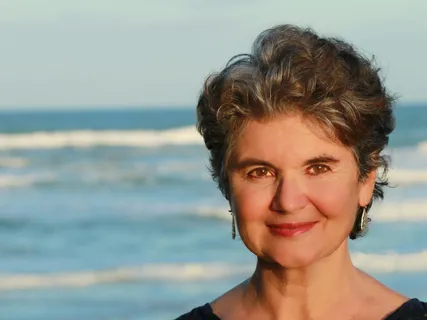
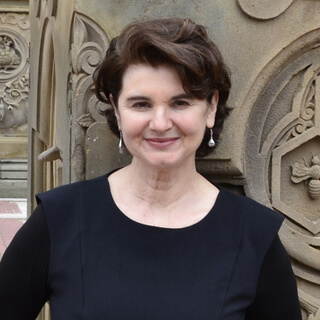
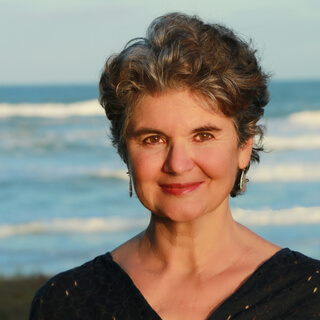
I'm your host,
Katherine Ingram.
The following is excerpted from a session of Dharma Dialogues held in Lenox Head,
Australia in January 2018.
It's called Eros Anthanatos.
Yesterday I took my nine-year-old neighbor to the beach,
Actually to this rock area where I've been snorkeling a few times.
He'd never been there before.
So we went and we climbed down the rocks and we got in and he was very timid about going out very far,
But after a point he ventured further and further out with me.
And we were happily snorkeling for about an hour.
And we'd gotten further out to a sort of faraway set of the reef,
Rocks at the reef.
And I thought I saw an eel.
I pointed it out.
That kind of freaked him out a bit.
So we were headed back when suddenly he started screaming.
But I mean,
Really screaming.
Just the most blood curdling sounds.
Everyone on shore is getting,
Were obviously very,
Very freaked out not knowing what's happened.
So I'm trying to get him to tell me where were you stung,
Knowing he'd been stung by something.
And finally in his screams,
He said,
All over.
So I then thought,
Okay,
It's a blue bottle.
It's probably a blue bottle thing.
What are they called?
Tentacles or something.
Blue bottles for those who don't know are similar to,
Well,
I think it is the same thing as Portuguese Man of War.
So he's screaming and screaming and screaming.
And we're trying to get to shore and then we have to climb over rocks,
Which you have to be very careful on these rocks.
Some friends of mine happened to be there and we're helping get our stuff together,
Get me out of the rock area and him and he's inconsolable.
He screams all the way in the entire drive home.
He's screaming that they're in his skin,
That it's in his skin.
And I'm saying,
Don't worry,
It's going to go away.
You're not going to be in pain for long.
Don't worry.
He's screaming,
No,
No,
It's in me.
It's in my skin.
We drive up here.
He leaps out of the car,
Barely stopped the car,
Goes running,
Screaming into his house.
I had to park the car and get in to talk to his father about what had happened.
His father was pretty nonplussed.
He's an ocean guy and so he knew immediately that it was probably a blue bottle.
Okay,
So about an hour later,
My young friend comes over.
He's much calmed down.
He's now wearing these patches,
These icy herbal patches that his dad put on him.
And I'm giving him lemonade and toast.
And we're chatting.
So I said,
We talked about the incident,
You know.
So I wanted to kind of shift his attention,
As is my want.
I wanted to shift his attention into something pleasant.
So I said,
But tell me,
Because we'd had all these adventures out before the screaming incident.
I said,
Tell me,
What was the best part of your day today?
And to my surprise,
He says,
Getting stung.
I said,
No,
The best part,
The best part of your day.
He said,
Getting stung.
I said,
Why?
Why would that be the best part?
And he said,
It made me think about things.
So he then went on to elaborate in his nine-year-old way.
And I'm going to have to only paraphrase this because it was a little bit hard to follow.
But I understood that he was saying that the boy he is now is different than the boy who went into the water.
I know it was very philosophical for a nine-year-old,
I thought.
That's kind of what he was saying,
That he was a changed man.
I started thinking about the Freudian perspective of eros and thanatos,
Eros being the pleasure impulse,
Thanatos being the death or destructive impulse,
And how powerful that is in us.
Both of them,
Both of them are powerful as conditioned impulses in us.
The impulse toward pleasure,
The impulse toward life,
Creativity,
Sensuality,
Et cetera.
And thanatos,
Weirdly,
Our fascination with death or with destruction.
Think about,
For instance,
Well,
Think about the world of entertainment,
So called,
How much destruction we watch,
How many crime things or murders,
Or even in real life the fascination,
The kind of mesmerizing effect of,
Say,
Watching the Twin Towers come down,
How many times you saw those images and there's something very,
It's horrifying,
Of course,
That goes without saying,
But there's also something kind of weirdly captivating about watching that kind of stuff.
Or how people in older times went to the Roman Coliseum to see just the worst of humanity being destructive.
It's interesting to feel into those impulses within ourselves,
Right?
It's interesting to acknowledge them and to not try to,
You know,
Sort of spiritually up level too much to realize that that is part of the conditioned human way that certain things fascinate us in a strange way,
Things that we might find abhorrent.
But of course,
Even though that is allowed,
Even though that's understood,
There's also a possibility of also allowing a disinterest,
Even though the conditioning is there,
Even though there's an impulse to it,
Allowing one to incline the attention elsewhere.
So I notice even in my own case,
In watching certain things,
Certain series or movies or whatever,
I'll notice a certain attraction,
A fascination initially to watch something very dark and very troubling,
But I'm noticing also an overriding coming to play that's basically saying,
No,
I actually don't want to put these images in my mind.
I don't want this as the memory roll out.
And you can do it in big and small ways,
Whether it's focusing on troubling imagery,
Memories,
Future pictures,
Or just simply in whatever it is you're being so-called entertained by.
You can instead choose peace.
So more and more that is becoming for myself,
The choice I make,
Just even with wherever my attention is landing,
I'll redirect it if it doesn't have a fragrance of something peaceful.
It's not to say I certainly can't deny a lot of the things that occur or the troubles that come visiting,
But when left to its own devices,
When the mind is just floating about freely and it's not required to be on any particular subject,
If it drifts into,
By conditioned force,
If it drifts into a dark alley,
I'll redirect it,
I'll choose peace.
I was just having a,
I was just being curious that noticing how easy it is,
Or comparatively easy it is,
To choose peace and to make that choice about images when I'm feeling peace and quiet.
But if there's something disturbing or something that's on my horizon that's not so peaceful or that I'm feeling anxious about,
It's easy for me to feel the pull or the distraction of that image and that thing that then starts a thought process which creates a feeling which goes into a thought and feeling and then it escalates very fast.
And I really love the story of the wisdom of your nine-year-old friend because recently,
I've just noticed that some things that have happened recently to me which feel traumatic in some ways,
There's such an opportunity for great growth in that if I can stay calm with the thing and see myself through and then look back and go,
Would I have chosen the easy way on that?
And I wouldn't be who I am now without making that choice and going,
Actually,
That wasn't a pleasant experience for me.
It was kind of traumatic.
But actually,
I stayed with it and then looked back and went,
Wow,
There's this piece of transformation there for me?
Yeah.
Yeah.
Yeah.
Indeed.
That's,
I think,
If one allows it or one has that sort of lucky nature in a sense that just keeps,
You know,
When there's a shock to the system of any sort or a loss or difficulty or that it's all kind of grist for the mill,
Becomes very,
You know,
Trungpa Rinpoche once said something like,
Suffering is the manure for the ground of wisdom.
You know,
And so it's that kind of inclination to use it or allow it to be seen as experienced as insight,
You know?
Yeah.
I'm really appreciating that young boy's wisdom.
I mean,
Imagine having that wisdom at night.
I know.
To get that.
Exactly.
I know.
That's stunning.
It's just a stunning thing.
And to be supported,
You know,
Like not just news supported,
But obviously his father must have held him in such a way where it was possible for him to make that connection,
You know,
Whether it was a word or whether it was just a space held for that child.
So he was able to see that so clearly.
Yes.
Yes.
It was actually very touching with regard to the father because in his screams on the way,
All the way,
He was screaming,
I want my father.
So it was a very sweet and touching thing to see him in the arms of his father at the entry of the house.
Yes.
But to not resist when there is something very,
Very painful,
When there's a deep loss,
When there is,
You know,
To really let grief and difficulty be your allies.
Right?
Use them.
So previews for the big one.
What did he say changed for him?
I'm interested.
It wasn't that he said specifically what had changed.
It was like he was saying he himself was changed.
Like literally that the boy who went into the water was not the same boy who is now around.
I mean,
He said this in his own language,
And I can't really remember exactly how he said it,
But that was the message he was saying to me.
I was so surprised by that answer.
I thought he had misunderstood what I had asked.
I thought he had thought I had said what was the worst thing that happened when he said I'm being stunned.
I said,
No,
The best thing.
I told my brother this story.
And before I could tell my brother the answer that the boy had said,
So I said to my brother,
I had asked him,
You know,
What was the best part of your day?
And my brother said,
Was it the part before he saw you?
Yeah,
I wondered if he was,
Yeah,
If he was upset about coming there in the first place.
Well he did say during the screams,
I'm never going to enter the ocean again.
I'm sure his dad will coax him a bit.
Amazing.
I'm not sure how to ask this question.
I'll just try.
I mean,
I've been feeling very,
I kind of live with this constant state of anxiety that,
You know,
Just about,
Is this the right thing?
And are these the right decisions?
And am I making the right decisions?
You know,
And it feels like there are so many decisions and choices to be made that it's almost paralyzing.
And then,
You know,
I'll just let the choices kind of happen in a way because it sometimes feels so,
And I kind of alternate between either letting the choices just happen or then trying to kind of manufacture something that will make me feel safe and some kind of system or structure that will make me feel safe and at ease.
And so there feels like a tension there,
I guess,
Between kind of going with letting life happen and,
You know,
Having some sense of mastery or control.
And I'm wondering if you have any thoughts on that kind of tension.
Yeah,
Well,
I think that's a very common experience,
Really,
You know,
That we try to control a few things that,
You know,
Might make life easier and more pleasant.
And yet we also recognize that so much is out of our control,
Right?
And if you're someone who's a little prone to anxiety,
That can produce quite a state of discomfort.
I would say my recommendation,
My primary recommendation is to not fight with the fact that you have anxiety arising.
Let it arise.
If it does arise,
It's coming on its own.
But again,
To try to direct the attention a bit when you're in the midst of the anxiety arising,
Just because it's an unpleasant experience.
And so if you can alleviate a bit of it,
That's recommended.
And the way that is helpful,
I find,
Is a kind of,
Even just the word surrender to what is helps.
So in other words,
You begin to realize,
Okay,
I had a plan for how things,
I would prefer things to go,
But they're not going that way now.
Let's say,
You know,
We're confronted with that situation quite a bit.
If there can be some just little adjustment in that moment where you realize it's actually not going to go the way that I want it to go,
That moment is the moment of sweet surrender,
Right?
Where you basically say,
Okay,
It's going the way it's going.
Now I can either fight this and make myself more upset and more anxious.
Or I can start to just allow that feeling of I'm going to go the way that it's going to start to sort of wash in.
Not to make it a big fight about having the anxiety arise,
But that those two things can coexist.
And that the attention starts to subsume the old story of I wanted it to go another way and now I'm very anxious about this into,
Okay,
This is how it's going to be going.
That's especially useful in situations that are not sort of acute biological threat.
If you're in an acute biological threat,
Everything in your system is in rebellion and that's just how we're built.
I'm not talking about those.
I'm talking about,
You know,
You wanted a certain job,
It didn't happen.
You wanted a certain something you were trying to purchase,
You're not able to whatever,
Those kinds of things where it's not an immediate physical threat.
It's an idea of how you wished it would go.
They're putting in a new horrible development somewhere.
You fight the good fight,
You go to the council meetings,
You do all those things.
They're still going to win.
You know,
Those kinds of adjustments whereby you can either make yourself sick or you can surrender.
Not in apathy,
But in reality.
If the deed is done,
Right?
One of my friends who's an anti-war activist,
When the U.
S.
Invaded Iraq,
She and her small cadre at that time of anti-war activists were going to Iraq a lot prior to the invasion and they were trying to speak back home to the media here,
Trying to stop it,
Blah,
Blah,
Blah.
Anyway,
As it led up to the invasion,
I'm not even going to call it a war,
I won't signify it as a war,
It was an invasion.
As it was leading up to it,
One of the team was crying,
She was just crying,
And she was saying to the leader of this group,
You know,
We're going to lose this,
We're going to lose this,
We're not going to prevail.
And her friends said,
Yes,
We're going to lose this one,
We'll fight for the next one now.
And I just thought that switch was so brilliant,
You know?
So you just give all,
You know,
You're constantly just on the side of the good,
You just give all your acts over,
You do your best,
Right?
And then how quickly you can make that switch.
One other thing that comes to mind to say also though is that there's a possibility of tuning into an okayness in your life whereby the pictures of what you thought would be the ultimate okay,
And would allow you to really rest,
Are surrendered.
Those get surrendered as well.
Yeah,
Well,
I think,
I mean,
I've been thinking about it whilst we've been talking that I think one of the things that come up is I'm not who I thought I was.
These things are happening and I'm doing these things and they make me think,
Yeah,
Maybe I'm not who I am or who I think I am and then I get really anxious about that.
What am I doing?
Who have I become?
And can you imagine coming to a peaceful feeling about just being much more mysterious to yourself?
Like releasing those pictures,
Releasing how you thought it should play out,
How your life might look at this moment or at this stage,
Really releasing it.
And,
You know,
A lot of what we're,
What we labor with is the conditioning of how others see us and how,
How,
What kind of importance we might feel about our life or how it's looking or there's a way in which we feel that the world is judging us.
And it may not be the case.
It may not be that you're being judged by the world.
It may be mostly in your imagination that that is happening.
Right?
I always like to point out to people,
Other people are really not thinking about you that much.
So to really free yourself of that burden as well,
You know,
That you,
It doesn't have to look any particular way.
It really matters not in the big scheme of things and to be more and more a mystery to your own self.
Hi,
Catherine.
Hi,
Dear.
So the biggest point of resistance,
Ongoing for me in my life,
I have two young children,
Age three and six.
And it's like,
It's like I'm trying to escape them,
Not physically.
Well sometimes physically as well,
But it's like my nervous system basically feels fried.
Yeah.
Do you have help at all?
Do you have a partner?
Yeah.
Yeah.
So I don't have them all the time and I work and I have space from them.
Yeah.
But it's like,
You know,
Even just three or four hours in their company and I'm like,
Oh my God,
Like what time's bedtime,
You know,
That in itself.
And then all the judgment that gets layered on top of that as well.
Yeah.
Like I had them for like four days on the school holidays and that was just like,
You know,
But it's just massive.
It's like the craving for space,
Silence,
Quiet,
Stillness.
Yeah.
Yeah.
It's a huge job to be a full time mom and be working.
It's huge.
No wonder you're tired and want quiet and want space.
I see other people manage it though.
I see other people have spaciousness with their children.
But they're not you.
Right?
And you know,
The thing with,
We're each built very differently and some nervous systems are just more sensitive,
You know,
And some nervous systems get tired more easily.
Right?
And it sounds like you have one of those.
It probably has nothing to do with how much you love those children.
It doesn't signify that you love them less than other mothers who were with them all the time and juiced by it,
You know.
It's that you're a different creature.
Right?
So how do I survive?
I would recommend that you have to be,
You know,
Just put aside the story about you being in some way failing as a mother or any kind of comparing to other mothers,
But rather just address the situation as best you can.
That means you're going to have to find ways to get time out for yourself.
So that has that just use all the attention and energy for that purpose.
Just acknowledge the situation and know that that is actually going to allow you to be much more present with them when you're with them.
Right?
You're not going to be the exhausted version of yourself.
You're going to be the,
You know,
The excited version of yourself,
Happy to be with them.
So I would just say,
Handle it on a very practical level.
If you can,
Ask your friends.
Find places that you can go where it takes them,
Where they can be kind of running about on their own with other kids or just have it as your new focus that you acknowledge.
You happen to be a mother that needs a bit more time out,
Especially as you work.
Because I find I naturally,
It's like I'm always looking for the escape hatch in some way.
Like my house is spotless when I have my children.
I'm cleaning just so that I'm not,
So that I,
That can be a barrier of I'm doing this so you can't constantly,
I can't engage in those demands or something like that.
Yeah.
Well,
It's too,
You have to come to terms with your own authenticity in this and not make it wrong.
Right?
You're feeding and clothing and loving your children,
Right?
Yeah?
And it sounds like they live in a clean house as well.
So you know,
You have to also take,
The caretaker has to be taken care of as well.
And you have to acknowledge this is how you are.
You don't have to make an apology about it.
This is how you are.
And you have certain needs that you have to address in order to do your job.
Yeah.
Yeah.
It's those layers of judgment that's actually the most suffocating.
Yes.
And they're exhausting.
They actually create a kind of tension that is like a slow leak inside of you.
It leaks out your energy.
It also leaks out your ability to express love.
Right?
Not that the love is not there,
But just that there's not much energy for it when there's an internal battle of sorts and self-judgment like that.
So I would say surrender that one and work with what's true.
Right?
I do that in my life.
I always have done actually.
My question feels a bit lightweight compared to some of the sharing,
I think,
But nonetheless,
It's where I am.
So in terms of dealing with anxiety and the darker,
I'm sorry,
Anxiety and the darker feelings,
If you like,
At this current point in time,
It might be different tomorrow,
It might be different next time,
Who knows,
But at this current point in time,
I actually feel like I have some capacity to move away.
Right?
More capacity than I ever have had.
Yeah.
But something else is happening and it's hard to describe because when I'm saying it,
When I'm saying it,
It's going to sound like a good thing,
And it sort of is a good thing,
But excitement.
Right?
So you know what I've been doing.
Yeah.
And it's like I can't put it down.
Yeah.
So it gets me and it winds me up and it's exciting and it's good.
You know,
It's this hobby that I have.
Right.
And it gets me going.
And then it's like,
Sometimes I can't sleep.
So days go by on two hours,
Three hours sleep.
Like,
I can't sort of settle myself.
I'm completely not used to dealing with excitement.
That's the truth.
To hold,
It's a new thing.
You know,
I'm very,
Like,
I don't have my hands on the controls at all.
Right.
Right.
Well,
What's the problem part?
Well,
Because I feel like I may be exhausting myself.
I feel like I'm worried about my adrenals.
Like,
I'm not suffering yet,
But I'm wondering if I'm going to get really whacked.
I'm not used to sleeping so little and being so obsessive,
You know.
So I'm concerned about,
You know,
Maybe it's twofold.
Maybe there's two aspects of this.
One I'm a little bit concerned about my health and maybe there's a little bit of a spiritual voice.
You should be being calmer.
You know,
Calm is the right way to be.
And I'm too excited.
You know,
This excitement is sort of not very spiritual.
Do you know what I mean?
It's very worldly and not very spiritual.
I mean,
It could be that too.
There's a bit of two angles on it.
I see.
Yeah.
It's uncomfortable.
It's like exciting,
But it's uncomfortable.
Yeah.
All right.
All right.
Well,
Of course,
You know,
I'm going to say,
You know,
Surrender the spiritual pressure.
Enjoy.
I know what you're speaking about and it's a happy excitement.
So enjoy.
Those don't come along so easily in the world.
Definitely enjoy.
Of course,
You know,
Everything's impermanent.
So,
You know,
Everything comes to an end at some point.
But enjoy the ride.
With one eye knowing,
You know,
With one part of the awareness,
Knowing that this is a ride.
It's not a forever ride.
Yeah.
And if you get tired,
Most likely you're I mean,
At the point of real exhaustion,
Your body will want to sleep.
You know,
I understand the dilemma that you're you know,
I can understand that there would be these voices of,
You know,
Am I getting too wrapped up in something quite worldly?
But definitely surrender those.
You know,
It's a play.
It's a Leela,
You know,
And it's,
You know,
It's some version of falling in love,
Isn't it?
It's the kind of way that falling in love becomes it takes over the whole screen of the attention.
That's very true.
You know?
So,
It's kind of like that.
And it's understandable and appropriate that you would be feeling this kind of excitement.
Yeah.
So,
Just enjoy.
Yeah.
Yeah.
Yeah.
Yeah.
There is such a voice in me around who I'm supposed,
You know,
That's who I'm supposed to be spiritually.
I know.
It's such a,
It's like,
Comes to,
It's always there sort of.
Yeah.
It's so boring actually.
I know.
Yeah.
It's definitely,
Having to be spiritual is incredibly boring.
And having to be around spiritual people also.
Oh my God.
Yeah.
No.
You know,
You've heard me say,
Speak about how Alan Watts talks about being a divine rascal,
You know?
And I just love that.
I love,
I think I'm more embracing the rascality part over time.
Yeah.
Just enjoy.
Wherever you can find something that gives you,
That lights you up,
Right?
I say,
Just celebrate it.
The thing is,
You know,
You've lived long enough and have been paying attention long enough to know how fleeting it is,
You know?
Like Blake said,
Kiss the joy as it flies,
You know?
You're just,
That's all we can do.
You kiss it as it's flying by,
You know?
And there's something incredibly poignant when you are experiencing very intense pleasure or an intense moment of love or an intense phase of something exciting happening.
It is this double-edged sword that's piercing your heart.
On one hand,
It's like just blasting it open into like,
Wow.
And suddenly the world looks different.
And then there's this other part,
The wisdom part that knows I will have to say goodbye to this fun fair.
I'm really curious what Michael's hobby is.
You can talk to him later.
I've been thinking,
What is he doing?
I know,
I'm sure everyone wants to know.
You can ask him later.
Yeah,
I will.
And I was thinking about times when,
You know,
I've been like that.
I've got into a project.
It's often something like,
You know,
Doing some computer music thing late at night or something,
And you will wait where you lose time and you just go on and on and you think,
Oh my God,
It's three o'clock.
I have to go to bed.
Or something like that.
I mean,
It's just relating to the things that have excited me and how thinking about that and seeing that and remembering that like you're so sort of into it for a while,
But then it comes to a point where suddenly something occurs and like it's just over and somehow that's it.
And somehow it's not so much what you're doing,
But it's the fact that it's giving you this energy for life.
The energy.
The euros.
And it can be many things,
Not just a project,
Just an idea about,
Oh,
We're going to do this holiday and oh,
Let's start doing research and preparing and all that stuff.
We've got this idea,
Oh yes,
That'll be a great idea.
Let's do that.
And then suddenly you've got this project suddenly and then you're getting excited about that and it's just giving you,
Or giving me,
It's giving me life somehow and the excitement.
It's very human,
Isn't it?
That we like to have things to look forward to.
We like to picture things,
Ourself in certain situations where we imagine we'll be feeling great and perhaps happier or excited or whatever.
It's very,
Very human to engage in all of that and there's really nothing wrong with it,
Especially if you can reserve some portion of your attention to be truly enjoying exactly where you are at the moment,
Right?
I was thinking about my turkeys the other day,
My bush turkeys,
My little teachers and how their life is really just basically that forest.
They don't travel too far afield and it's a fairly contained geographical space of a life.
And how different we are as humans,
How different,
How big our appetites are,
Right?
How big our needs are,
How many,
Especially in our modern time when people are able to travel and so their bucket lists are very,
Very long about all the places they want to go and the things they want to do and what they want to see and all of those things,
You know.
I was just reflecting on the difference of the two species,
You know,
How in a way hard it is to satisfy humans in any kind of ongoing way.
And some sort of recognition of like,
Okay,
Well that's so,
That's how it is with we humans.
Can that little program or that big program be overridden or tempered in any way?
I say yes,
It actually can.
You don't really have to fulfill every single thing on the bucket list,
Right?
Or you could even take some things off and really get into whatever few things might be left,
Right?
Really,
You know,
My point always is to love the life you have,
You know.
Just really love your life,
Really know this moment is as precious as any other,
Right?
That this moment is pretty fabulous and to really have that inclination to keep that in the awareness somehow lightly so that even though there's something you look forward to and there's,
You know,
Pictures of that eventuality or that possibility,
You know,
That that's okay,
That's allowed in the big scheme of things,
But that a great preponderance of the attention is hanging out right where you are,
Enjoying.
And maybe even a little insight that says,
Actually I don't know that that moment is going to be,
You know,
What I imagine it to be,
Right?
That other moment in the future,
Right?
Haven't we had that experience where something we were looking forward to didn't turn out exactly like our pictures of it and that the place we were sitting when we were picturing it might have been just perfectly fine,
You know?
Yeah,
I think a lot of the times the enjoyment is actually in the acquiring.
Once it's acquired,
Then immediately you're looking for the next thing.
It's shown in neurochemistry and neuroscience.
They actually show that the anticipatory chemicals for the brain chemicals that are in anticipation are actually,
Like whatever the happy chemicals are,
Whether it's dopamine or serotonin or whatever,
They're actually just as high as the eventuality of the experience.
Or even better.
Yeah,
In some cases they do are higher.
It's fun to experience,
You know,
Where one can see that it's often better that.
.
.
Yeah,
Right,
Right.
But then it sort of makes the case for having anticipatory things that you're looking forward to,
Which I say is fair enough.
It's fine.
We as humans do that.
And,
You know,
We don't have to be chained to the now,
You know.
Like one of the things,
One of the tropes in spiritual scenes,
Of course,
Is be here now,
Right?
And some people have,
I think,
Misread that into this almost like this fascist thing of like,
You know,
Just a constant reduction of only that,
You know.
And any other straying out of that is not okay,
Right?
Whether it's in excitement about things or just future looking,
Right?
One of the treasures of my material existence is a letter that Poonjaji sent to me on the back of a letter I had sent to him,
As was his way.
He would sometimes,
If you wrote to him back in the days when you actually wrote letters or faxes,
He would often write you a letter back on the back of the letter you wrote.
He was a kind of natural ecologist,
Poonjaji.
But anyway,
He wrote me a letter that started,
The first line of it is,
My dear daughter,
Catherine,
Do you know how much I miss you?
And what's so dear about that is that obviously he wasn't sitting around missing me in the days,
Right?
He wasn't,
That wouldn't have been likely.
But in the moments of him writing to me,
I imagined that there was just some picture of a time past or a possible time to come where we might be in the same room together again.
That's what we mean when we say we're missing someone,
We're missing their company,
We're missing being in the room with them.
And so it was either a little past memory of our pleasant times in the past or a future picture of another possibility of time together.
And I so loved that,
You know,
I so loved the honesty and the sweetness and also,
Of course,
The freedom of him being able to just say it that way,
Knowing that it was probably just a momentary passing in the moment,
You know,
In that particular writing of those lines.
That's very nice.
Yes,
That's lovely.
Yes,
It's true,
Because he wasn't thinking about you,
But when you contacted him,
He just said,
Oh,
Yes,
Of course.
I remember her.
I like her.
I like her.
Yes,
I'd like to see her.
You have your eyes,
As you say,
In the moment.
Yeah,
Exactly.
Yeah.
And something about that interchange has given me a kind of freedom to say those kinds of things often with people.
I often will be writing to someone and say,
Grace,
I really miss you.
And it's that I'm missing them right then.
It's not a general state.
I've got a question,
But I don't know if I'm going to be able to get it out right.
I'm very interested in what you were talking about with the Eros and the Thanatos.
And I work with a lot of people who are in that destructive and even often the death impulse.
Addicts.
Addicts,
Yeah,
Yeah.
And of course,
I've had my own journey there too in terms of understanding those impulses.
And I like what you say about finding the peace.
Of course,
There is a deep manure and insight and things like this.
But I find,
I guess my question is partly to do with myself.
Like,
Am I putting my attention on that death impulse by continuing to work with people in that cycle?
Like,
How do I bring that peace in when the people I'm with can't find that peace?
So I'm continually,
And then even if they do,
The next person's waiting in line to bring me back.
Yeah.
Are you finding it is dragging you down or are you finding,
Or is your question that how can I dare to have peace when so many,
It's not that.
No,
I'm daring to have as much peace as I can.
Yeah,
Okay.
It's more how can I abandon these people and shouldn't I be trying to bring them to that and cultivating that?
And certainly that at times happens and that's really beautiful and precious,
But a lot of times it doesn't.
Yeah.
So are you asking- Maybe I'm asking,
Should I be trying harder and is there a way that I can bring people to that more?
I would say not trying harder is a better way to go.
To really understand that all you can do is offer your insight,
Your understanding,
Your compassion.
You offer it without expectation of change on their part.
That part is not your business.
You only have to be a flower that's exuding its own fragrance.
You don't have to do anything more than that.
See,
If I had the idea that I had to help people and change them when I come in and sit in these kind of chairs,
I just wouldn't want to do it.
Right?
There would be way too much pressure and too much investment that would impact and would actually interfere with anything that would be coming through.
There would be too much pressure.
There would be,
There's a fantastic poem by Chong-Tzu,
One of the great Chinese Daoist philosophers.
The translation that I like the most is called The Need to Win.
And it's about an archer when he's shooting for a goal as opposed when he's just shooting for the clear target.
If there's a goal in mind,
According to this poem,
He almost becomes crazy.
Right?
So if your goal,
If you have a goal of changing this person,
Helping them,
At least that they don't get worse,
Even that,
Right,
Is too much.
It'll skew your aim.
Right?
And it will,
It becomes paralyzing.
And disappointing.
And disappointing often.
Because you've taken too much on as your responsibility.
It's hard enough to change oneself,
As we know.
Right?
So all you can do is,
Your existence offers a possibility.
Your very existence.
Right?
Offers a possibility and in addition offers compassion.
That's well enough.
That's enough that you have to offer.
Right.
That's very helpful.
Thank you.
Yeah.
If there came a point when,
Maybe not for those reasons,
But for other reasons,
You start feeling drained,
Dragged down,
Start feeling off balance yourself,
Then that's something to look at in terms of making a change.
But if the only issue is that you have this wish or hope or,
You know,
Frustration,
That I think can be addressed.
I also have an aspect of whether I'm really growing in that,
Or whether I'm just repeating the same thing,
You know,
And doing that kind of work.
Like,
You know?
Yeah.
So I think there's a kind of entropy in it,
Repeating.
And then you'll know when that,
If that becomes acute and you feel,
Okay,
My work here is done,
Then you will make a change.
Yeah.
I had a situation,
It was a long time ago,
Very long time ago.
I was in my,
I guess I was in my late 20s.
And I had gone through a hospice training at a hospital in Boston.
And at the end of the training,
We were,
All the students were being assigned to various facilities to start working.
So I went to the psychiatrist who was the head of the training.
I went to him and I said,
You know,
I want to be assigned to children's,
To the children's ward.
So he said,
Oh,
You want the easy one,
You want the easy way out.
I said,
Dying children is the easy part.
And he said,
He said,
Actually working with dying,
It's the parents that's hard around children,
But actually the children themselves are not,
They're not as freaked out and depressed.
And they're,
He said,
You know,
You'd be surprised,
But that's just how it is.
Everyone around them is off the rails.
He said,
No,
No,
I'm going to assign you to a different group that I think is more appropriate.
So he signed me to a facility where there were all people my own age in their 20s who had terminal illnesses.
So I started going to that hospice care place and it was so intense for me and so depressing.
And I started to develop physical aversions when I would drive up to the place.
I started feeling nauseous.
It came to a point where my body was basically just in rebellion.
And as I'd be walking into the facility,
I'd be feeling a headache coming on and nausea.
And as soon as I got in and smelled the place,
I was just battling with my own physical symptoms.
Now,
I was much younger and I don't know if that would be the case now.
I suspect not because there's been a lot of letting go in the interim.
But at that point in my life,
I wasn't ready.
And I had to quit.
I had to quit after having done that training and I quit the whole thing.
And I was driving back from that facility having made the decision.
And as I was driving back that last time,
I literally went deep inside myself and I said to myself,
Well,
What would you love to do?
What would you want to do?
And this thought came through.
I want to pick my own mentors in this world.
I'd like to be able to find my own mentors and have one-on-one conversations.
Like get private mentorship.
And I thought,
Well,
That's a ridiculously ambitious thing.
But how could it happen?
If it were to happen,
How could it happen?
I thought,
Well,
If I were a journalist,
Maybe if I was a journalist,
Then I could have access.
So I thought,
Okay,
Well,
Then I'll become a journalist and I'll specialize in the kind of conversations that would give me access to those kinds of people.
So I just backed into it.
And I remember I began telling people I was going to be starting to do this.
And everybody was discouraging because I was in my late 20s.
I hadn't gone to college.
I mean,
I remember one of my friends clearly said,
Do you realize you're in competition with all the graduates from the Columbia School of Journalism that are way younger and have just graduated from,
I mean,
And every other school of journalism in the country.
But,
You know,
I just said,
Well,
You know,
I'm going to do this.
So weirdly,
Some opportunities came along.
And of course,
I had to be watching for them and seize them.
This is back in the 70s.
And along the way,
I had started using spirulina,
Right?
And hardly anyone had ever heard of spirulina then.
And I had gotten signed up on a,
What is it called,
A pyramid thing of sales,
A sales pyramid thing as a spirulina representative.
And somebody down line from me had gone just wildly crazy with it and was selling it off the shelves.
So I was getting these checks in the mail for,
You know,
To my time,
A good amount of money,
Like $1200 checks out of the blue.
And in the 70s,
That was a lot of money.
And so I knew there was this conference coming up in Bombay and that everybody in the day was going to be there.
It was a convergence between science and wisdom.
So all these new scientist types like Rupert Sheldrake and Fritjof Capra and all these guys who were thinking in new ways about science and the merger with spirituality and then all these heavyweight spiritual teachers were also going to be there.
And so I thought to myself,
Well,
If I went to this conference and did a bunch of interviews at the conference,
If I could get access,
You know,
That could be the start.
So I knew some friends at New Age Journal.
I contacted them and told them I was going to go to this conference and would they be interested in an article or some interviews.
And they said,
Yeah,
Yeah,
Maybe.
Let's see what you can bring back.
I said,
Okay,
Can I get a press pass?
I mean,
Can I get a letter from you to get a press pass?
So they wrote me a letter on New Age Journal stationary.
And I showed up at the conference,
Which was,
It was an expensive conference.
And I showed up at the press table and showed them my letter and they gave me a press pass and of course a free entry.
And so with this,
I just was wearing a press pass.
I had access to anyone there,
Everyone there.
So I was able in one fell swoop to do lots of interviews right there at this one conference,
Which I then took back and started publishing.
And then I started doing more and more and more interviews and it just rolled out that way.
You know,
It was this weird kind of transition into this new career.
But it all kind of started from that day,
That recognition of me saying,
Okay,
What would I like to do?
What is my heart calling at this time in a real way?
And it was just step by step by step.
Yeah.
And trust.
And by the way,
I mean,
This was not a money making venture.
It was,
It was my life in all the years of my being a journalist,
12 years,
It was really hand to mouth.
It was really hand to mouth,
But I had private access to any mind on the planet that I really wanted to be in the room with alone.
I had access,
Including,
You know,
Krishna Murti and Desmond Tutu,
The Dalai Lama several times,
One on one.
Poonjaji,
When I decided I wanted to study with Poonjaji,
I just,
I got an assignment from Yoga Journal.
I went there,
I had six private hours,
You know,
It was like that.
It was just,
I really,
Whenever I wanted to be studying a new thing,
That gave me the kind of access I was looking for.
And then it was a privilege to then publish the ideas.
When I first met Poonjaji,
There weren't that many people there,
But after the article that I did about him came out,
It exploded.
So,
Like that,
It was a privilege to be in that kind of catalyst position.
So I'm saying this long story by way of saying,
To keep attuned to your own well being,
To your own feeling,
It's not dissimilar to what I'm saying to you as well,
To keep attuned to your own authentic need,
Without an uber judge saying,
Oh,
But it's the good work and I'm helping.
Believe me,
I was struggling with that when I was there doing that hospice work and thinking,
Well,
If I don't do this job,
Who's going to do the job?
Right?
Right?
There's loads of people who actually do it.
Yes.
But in your head you don't do it.
That's right.
And there's loads of people who can do it in fullness and be lit up by it.
I couldn't.
But I found something that I could be and in a different way to serve.
This has been In The Deep.
You can find the entire list of In The Deep podcasts at katherineingram.
Com,
Where you can also book a private session by phone or Skype and see my schedule of upcoming events such as our spectacular retreats in October of 2018 in Italy or in New Zealand in May of 2019.
If you're a regular listener,
Please consider making either a one time or a recurring tax deductible donation in any amount that is comfortable for you.
Till next time.