Welcome to In The Deep.
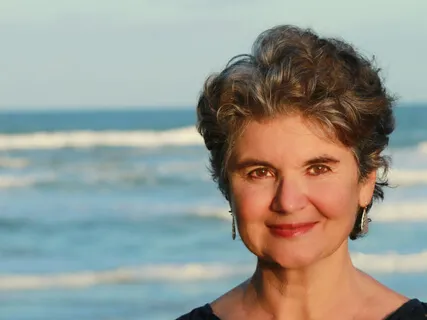
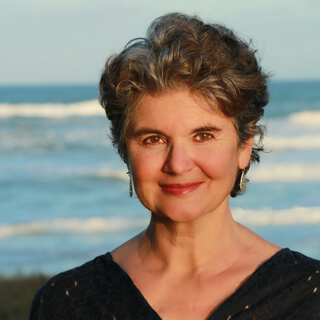
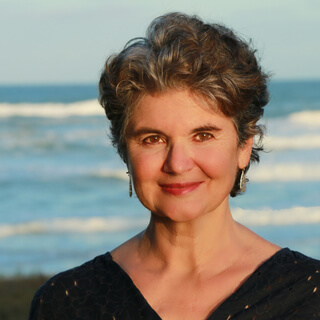
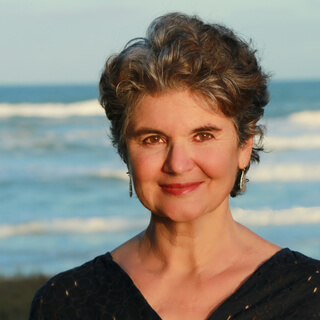
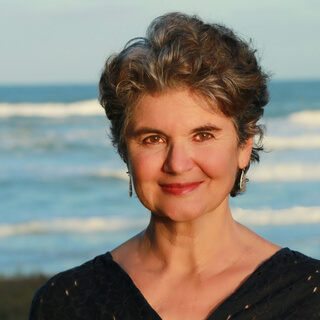
I'm your host,
Katherine Ingram.
The following is excerpted from Dharma Dialogues held in April 2017 in Byron Bay,
Australia.
It's called Emotional Creatures.
The Emotional Typically for most people,
When there's a dramatic weather event,
Such as a cyclone,
And it produces all kinds of weathery kinds of havoc,
There's a surrender that comes.
You kind of,
You know,
You don't fight the weather.
Sort of a pointless exercise.
There's a surrender that naturally comes when you're confronted with weather.
Things get canceled,
You change plans,
Everybody understands.
There's nothing much to discuss about it.
But not so with a lot of other things that are also out of our control,
But that we fight.
All kinds of things,
Little and big,
All through the day.
Wouldn't it be nice and easier to really surrender to a lot of those kinds of things that are like the weather that you can't really do anything about?
We'd be surrendering a lot all through the day.
And one of the things we'd be surrendering to that would be very,
Very peaceful would be surrendering to the particular programming that is running through your mind.
There's a certain conditioned programming that runs through certain types of thoughts,
Certain ways of perceiving certain reactions very familiar to you.
And often we're fighting those as well.
What if you just surrender to that too?
You said,
Okay.
It's a little boring at this point,
This conditioned program,
This big long story.
I often call it,
You know,
The soap opera of me.
But fighting it,
Wishing it were different,
Thinking something's wrong with you,
Thinking somehow you shouldn't be as you are.
What a cruelty really to oneself.
And again,
Pointless,
Like the weather,
No point in battling it.
Can you make peace?
Can you be at ease?
Can you say,
Okay,
Dear.
Just as you are.
And thereby discover a much deeper peace that isn't about your personality or the conditioning.
A much deeper,
Simpler sense of being that doesn't mind how you are or even how the world is.
The poor old world.
And then certain types of reactions or thoughts or what ifs and ifs onlys and regrets and silly thoughts and all of it runs through,
Comes by,
Comes visiting in a conditioned way.
And you don't mind.
You keep sinking into this deeper,
Sweeter sense of being.
And it's so amazing that we overlook this,
Right?
It's so amazing.
That this lovely experience of our lives,
This very precious taste,
Is somehow the thing we often overlook.
And we're dancing in our heads with all kinds of,
You know,
Sort of scary skeletons or dream lovers that never seem to show up.
Still hoping.
Still hoping.
Still hoping.
The night is young.
And meanwhile,
You know,
Meanwhile the feast is here,
Offered by existence,
That you get to experience in your precious life.
You get to experience this as frequently,
As often,
As much as you want.
And fortunately the good news is you don't have to go anywhere else to find it.
And you don't have to practice some program or some,
You don't have to do anything else.
Program or some,
You don't have to do anything with your mind at all.
So in this evening,
We're just going to be hanging out in that,
In that simplicity of being,
In these deep,
Quiet waters.
And your thoughts are like these drops of rain that we're hearing,
Coming and going and not needing to be or can even be controlled.
There's a direct knowing of what you're saying.
And yet it's quite,
I don't know,
It kind of,
There's moments where the desire,
The force can be so great.
There's this,
Like when you're speaking and we're in this room,
No problem,
Yes,
Get this.
But it's also really curious how when you know this and yet the resisting or the fight or the desire,
It's got such a powerful momentum like thunder or,
You know,
There's such a power to it.
And for me,
It's very physical.
It's like there's a process.
It's almost like I get images of icebergs,
You know,
Being ripped away.
It was a bit dramatic.
You know what I'm saying?
Yeah.
Yeah,
But I think I just want to bring that in,
You know,
Because life is hard for so many people.
And that surrendering is sometimes incredibly painful.
I don't know what else to say.
Yeah.
And there feels like there's a,
You navigate through quite a density to kind of dissolve.
But when you bring the teaching in,
But it's also really powerful,
That force,
It's like a force.
Yeah.
That fight or the desire or wanting it different to how it is.
Yeah,
Right.
But that's very painful.
And that's really painful.
Yeah.
And one starts to,
You know,
Recognize how painful that is after a point,
You know.
Right.
I loved that Pranjaji used to always say,
Whenever anyone would say to him,
Oh,
But it's so hard and some things similar to maybe what you've just said,
He would always very sweetly say,
But I'm telling you the easy way.
This is the easy way.
You know.
And there's a process.
There seems the appearance of a process of,
Like the other night,
I'm coming to you and I feel like there's profound shifts and awakenings and remembering and confirmation.
And then I just cracked up inside.
I had the biggest cry.
Like I just,
It just gripped me in a way.
I was just a mess in that moment.
But why is the crying,
Why would that be considered a mess?
That you were overcome by?
It's not a mess.
No,
But it just kind of took me to quite a deep place,
Which was the unbearable lightness of being,
You know,
That raw place.
But I don't see a problem with that.
I don't see a problem with visiting that.
No,
I know you don't.
I do.
You didn't talk about this aspect when you came here.
But I know it sounded so lovely.
Why am I suffering?
But the thing is that there's a sense that whatever is arising is welcome and is coming on its own,
Right?
So sometimes we are overcome by emotion.
Sometimes we are overcome by grief,
Right?
And to really just let those tears flow and also experience directly the silence in which is occurring,
Which also one can observe or experience directly.
So,
You know,
Then you're really free to,
You can hold on to it in case you have anything else to say.
I just cry now.
It's welcome.
Then you're really free to experience whatever comes through.
But it comes through,
I like to say,
Like a thunderstorm in an open sky.
It was like thunder.
Yes,
And I even have an interview that was titled that,
That someone interviewed me,
And that's what we called the interview,
A thunderstorm in an open sky,
That anything is welcome.
And actually,
When you're sitting in that quiet,
When you're sitting in that depth of being,
You feel things very profoundly.
I sometimes wonder if,
I mean,
I don't have any idea that this is the case.
I just wonder if sometimes people stay in the more shallow waters all the time in order to avoid the depth of feeling,
In order to avoid feeling things profoundly and intensely,
Right?
Because when you wake up at this level,
You share joys,
Right?
You exponentially share joys with others.
You feel their joy,
But you also feel their pain.
And you feel the pain of the sorrows of the world as well.
You do feel it,
Right?
But then there is this,
As I always say,
This coexisting awareness of quiet that is handling it,
That isn't even,
You know,
That isn't shaken by it,
That is just witnessing in a way,
Not in a detached way,
But there's a way in which there's this deep acknowledgement that such as it is,
Right,
Such as it is,
Just like that Cyclone Debbie,
You know?
So practically,
When the thunderstorm comes,
You know,
Just really practical,
You know,
And you're really feeling tremendous grief pouring through,
You're also holding the space around,
Or not holding,
But your attention is also aware of the space around as you're fully giving yourself to the grief in a way.
That's what's been happening.
But I think what it does is it touches a personal mythology in me of something's wrong.
There's a panic,
You know?
But if I take that label off,
It just is that,
And that's fine,
You know?
But it's just interesting how,
You know,
What you were talking about the other day about one thing happens in the brain and then it kind of attaches to another cluster and another cluster,
You know?
So I think that's where the doubt or the hook,
You know,
Something happens in that.
But you can make experiments with this and see that,
Oh,
I was able to just cry freely in a kind of big open space without any extra story about it not being okay,
And it was fine.
I'll be really honest.
I've done a lot of that for years.
Yes.
Okay.
I can't feel fit.
I've been years in India,
Years.
So it's not new,
You know?
Right.
Good.
And I can,
It's like,
Here I am again,
Waves of grief,
You know?
Yeah.
Do you know who Eve Ensler is?
Who?
Eve Ensler.
Do you know who she is?
No,
I think I know the name of her.
She's wonderful.
She's a friend of mine.
She's famous for this particular play that she did,
The Vagina Monologues.
Yes,
Yes.
But she's got this YouTube clip I recommend that you see.
Okay.
It's short.
It's a poem that she sort of performed,
And it's called I Am an Emotional Creature.
And it's fantastic,
You know?
And it's just,
She is an emotional creature,
And you are probably an emotional creature.
Yes.
Not everyone is.
Yeah.
Right?
And it doesn't mean that they're necessarily repressing their emotions if they're not.
Some are just not as emotional.
But you maybe are.
And okay,
That's how it is.
Right?
Yeah.
And just say,
Okay,
It's fabulous.
Right?
It's beautiful.
Own it.
Right?
It's wonderful.
And then you manage it.
And part of this awareness is that you know when something's being overindulged into,
You know,
Just sort of morbid wallowing.
Right?
You start to really track that.
And it's not that you have to beat yourself up about it.
It's just that you don't need to needlessly suffer,
You know?
That you don't need to kind of extend the suffering,
Extend the crying jag.
Right?
I mean,
I was driving to Lismore to help clean up,
And at Clunes I opened the paper and saw the mother,
Heard about the mother holding her babies.
And all that happened was tears,
You know?
Yes.
So I don't know if that's indulgent.
It's just that that was a response in the moment,
You know?
So there is this deep- It's hard to watch the news without tears in your eyes these days or any days.
And it's curious because one of the twins,
I would say he's highly empathetic.
One of your boys.
One of the boys,
Yeah.
And sometimes I have concerns because I feel like he's so,
He picks up on everything.
And then such space- When do we worry about that?
What's- When do we worry about it?
Yeah.
So it's just a kind of interesting thing that I'm looking at,
Inquiring into.
Yeah,
But again- Just feeling it.
If that's his nature,
Then so be it.
So be it.
And basically just,
You know,
My position with that is to just love him for it,
You know?
Just the thing that you give a child as a parent,
I think,
Is full acceptance,
Right?
Of just saying,
You know,
However you are,
You rock,
Right?
Yeah.
However you are.
You know,
If it's a shy kid,
Then they're shy.
If they're highly emotional,
Then they're emotional.
If they're withdrawn,
Then so be it,
You know?
Right?
You know,
Just- Wouldn't that have been nice for us?
Yeah,
I see the conditioning that I'm supposed to feel a certain way.
And sometimes I act in the way that I've been conditioned and then I go,
Why?
You know,
I don't have to do that.
It's,
You know,
I'm finding over time I'm getting less imprisoned by the conditioning,
But it's taking a while.
It's taking time.
But yeah,
You know,
Through all the things that are happening to me,
I feel surprised at how happy I can be,
You know?
And I'm just really grateful for that as well,
You know?
It's such a great discovery,
Isn't it,
In that you've lost so much in this last phase.
You've lost a lot.
And these moments of happiness that are arising that are not based on having of those wonderful things that some of which you still have in your life,
But that you have lost a lot.
And to really find that,
You know,
It's like the old spiritual cliché that,
You know,
That the important things of life are not things.
Right?
Yeah,
There's just a sort of presence there that is totally fine.
Yeah,
Good.
Yes.
Not affected and I just go,
Whew.
And I remember having,
You know,
I remember stumbling on that when I was about 17 and I got myself into some trouble and I was really scared because I had some people who wanted to,
You know,
Kill me.
And I remember just suddenly,
Like,
I just felt this peace that didn't make any sense.
You know,
And it lasted for about four or five months,
You know,
And I could see the people around me sort of change towards me in a way sort of thing.
And then it seemed to sort of go off and then I became normal,
You know,
Neurotic and all those lovely qualities.
And I always wondered what,
You know,
What that was and I wondered if it was something that happens to everyone,
You know,
When they're 17 or 18,
If they,
You know,
Like a peace sort of just descends on you and you just go out.
But I couldn't work out where it had gone.
But it was always there.
I just put everything else on top of it again,
You know.
Yeah.
But it's great that you have,
First of all,
That you had that experience as a touchstone,
As a kind of memory,
As something that was possible.
And that in this phase now where again you are at the point of loss and of the reliance on a lot of things that you had in place for your happiness and your sense of well-being are not there.
So then you have to find it in a much deeper place,
You know.
There's a line that I like that you'll appreciate,
I think.
It's a Zen line.
Now that my house is burned down,
I have a much better view of the moon.
Yes.
That's cool.
So it's not to always be having to reframe everything but to really come to a deep and honest assessment of what gives you a sense of well-being.
Right.
Yeah.
And I noticed that,
You know,
What you were saying about the struggling with things that are out of our control.
And I can see that I don't have the energy to struggle with these things a lot of the time now.
Yes.
Brilliant.
Yeah.
They seem to just sort themselves out anyway,
You know.
And probably I'd have made the right mess of it if I'd have tried to,
You know,
Get involved.
Yeah,
No,
It's really true that there comes a point where you're just weary of suffering.
Your crazy mind,
Your crazy impulses,
Your wishing things were different,
Your battle with reality.
You get tired.
And that's a very good moment is when you get tired of it.
Yeah.
Thank you.
You're welcome.
So you were talking before about surrendering to emotions.
What about reactions?
You know,
Sometimes it involves another person.
Yeah.
And so you really don't want to react but they've triggered something.
They've what?
They've triggered something.
Triggered something,
Uh-huh.
Like you don't really want to surrender to getting angry with them or you want that to over time evolve so that you're peaceful.
So what would you say about that?
Well,
In this quiet that I'm pointing to,
There is a naturally,
You can hold on to it in case we have more,
There's a naturally arising discernment.
And that discernment understands that though you're not fighting with the fact that you're having a reaction in your mind and that a lot of thoughts are triggered due to some interaction you're having,
There's an awareness that knows that further engagement that is of an angry nature is going to be problematic,
Is going to intensify the already existing suffering and reaction.
There's just that awareness that comes with this relationship to understanding and sitting in your own quiet place.
What I was saying is that you don't,
Let's say someone does something that is mean to you,
Right?
You perceive that they're doing it to you.
Maybe they're just acting out their nature.
But in any case,
You feel put upon,
You feel put upon by their behavior.
And now you're having these feelings,
These thoughts,
These reactions,
And a kind of maybe a palpitation of your heart and your nervous system.
That's all natural.
And so be it.
You're having this reaction.
But there's a big gap between having that reaction and you taking revenge.
Right?
Sometimes it doesn't feel right.
Well,
There really is.
You can have all kinds of grumbles arise.
And that's what I'm saying,
That we're humans and we're conditioned.
We're highly conditioned.
You don't have to have a battle and a big transformation project of your own mind stream.
Right?
But you also don't have to be at the effect of,
It doesn't have to dictate your behavior and your words.
It really doesn't.
And the more that you're okay with how it is and your own patterning,
The more space you have around it to discern clearly when it is time to speak.
Sometimes there are moments that you have to speak up.
But a lot of times you can let things go.
Right?
And that all feels fine.
So just to be clear,
I'm not saying surrender to your crazy impulses that are going to mess up your life.
I'm saying there is a recognition of conditioning.
And as the conditioning rolls through,
You're not fighting with the conditioning.
But you're also very,
Very discerning about what you're going to be acting on.
Yeah,
Well,
I'll give you an example.
Okay.
So I might be going through my day and I'm completely happy having a great day.
And then my partner will come home and he's in a mood.
So I can tell he's in a mood straight away by the way that he enters.
So I'll be like,
Right,
He's in a mood.
And I just stay calm,
Stay happy.
And he'll say something like,
Grumpy.
And I'll manage to stay calm,
Stay happy.
But then he'll say a few more things and I can only stay calm,
Stay happy for a certain amount of time before it gets to me.
And I feel like this is not fair.
Like I was in a great mood before.
I was happy in my little bubble.
And after a few different grumpy things he said,
Now I'm getting annoyed.
So it's,
And then I'll react.
Oh,
Okay.
You react by saying things back or saying?
Yeah,
Then I just can't help myself.
And how frequently does this happen?
Well,
He's got a high pressure job so.
Every day?
No,
It doesn't happen every day.
It's getting better over time and I'm biting my lip a lot more.
Okay.
Big sore lip.
Yeah.
I mean,
This sounds to me like something that does need talking through and maybe a therapeutic talking through.
That's just my opinion and,
You know,
Because for myself,
If I were being exposed to someone who's,
As you say,
In a mood such that it's kind of,
You know,
Putting a very unpleasant frequency in my living space,
I would do something about,
I would change that somehow.
Right.
I would either change it or leave it.
That's me.
Because for me,
Peace is incredibly valuable.
I agree.
And peace in my own home is necessary.
Right.
I mean,
One can't have,
One can't expect to have peace out in the world because there's just a lot of madness and a lot of sorrow.
You know,
There's a lot of what Eckhart Tolle calls the pain body operating and wreaking havoc.
But in one's own home at the very least,
Right,
If there's any way you can do anything about it,
Then that's the place to make sure your home is like a temple.
Yeah,
I agree.
Yeah.
It's easy to be peaceful when you're by yourself.
Yes.
Right.
Because there's no one there to irritate you in any way.
Well,
Especially if someone is being,
You know,
Irritating.
So,
You know,
It's not to assume that every other person would be,
But if that is the case,
Then I really recommend that you get some help with this rather than you just constantly biting your tongue.
And hoping that it's going to get better and hoping that,
You know.
Well,
It's hard to know what part you're causing and what part,
You know,
If you're causing it,
If it would be there.
I don't know.
Yeah.
Okay.
Well,
I'm taking you at your story that you're having a lovely time and in a good mood.
Generally.
And feeling happy.
If that is a provocation to him,
Then again,
I would say move out of the way of this or get help or something,
You know.
Thank you.
But to really understand that you're,
You know,
Tignot Han says something brilliant,
I think,
That if you're in a relationship that is highly stressful,
That stress carries with you even when you're not with the person.
It permeates.
When you're in an espousal kind of relationship that is stressful and not happy,
It's very,
Very difficult to be happy anywhere.
And he makes a distinction,
Like if you have a job and your job is hard and your boss is tough and you don't really get along,
Okay,
That's hard when you're at work.
But typically,
You have plenty of other time and you're weak that you're not with your boss.
And you can have a good time.
And lots of people have this kind of life whereby they have difficulty at work,
But then you see them on the weekends with their families or having barbecues with their friends or whatever,
And they're having a good time.
But not really so with a relationship that is stressful.
There's some way it's like a worm eating in your heart all the time.
It's very,
Very hard to really soar,
You know.
It's like an anchor.
So to be really clear on that and be willing to choose your own peace and freedom no matter what the cost.
Thank you.
You're welcome.
Hi,
Catherine.
Hi.
It's lovely to be here.
I feel like I've been listening to you.
I subscribe to your podcast and so I go walking and I listen to you.
And do you live here in Byron?
I live in Brisbane.
In Brisbane,
No?
Did you come from Brisbane for the same thing?
Yeah,
I came down to visit some friends and realized that Thursday night was your night,
So I rushed for a bit.
So it's lovely to be here with you.
And I loved what you said and it made me cry as you were talking about surrender.
And I had a Thursday night when it rained,
I just,
It was so lovely to be indoors all day.
I just,
It's like I was given permission by the world to have the day off.
Yes.
From everything,
From the three jobs that I do and the kids and everything.
It's just like,
Oh,
I didn't even leave the house.
It was just raining.
And even when the rain stopped,
I didn't want to leave the house.
And I was really struck by that experience because it was like,
I wish that would happen regularly.
Every day is cyclone.
Well,
Not every day.
I don't want people,
Liz Moore,
I'm thinking of you.
I don't want death and destruction.
Exactly.
It just struck me how the world bears in on me.
And,
You know,
When you talk about surrender,
I found that day,
It was so easy to surrender and we just stayed indoors and I think I baked and all of these lovely things that you do and I do when I feel that the world isn't bearing down on me,
Expecting something from me.
And I feel that it's really the world that,
I don't know,
I was writing,
I have a blog on Instagram,
I'm a psychotherapist and a doctor and I have started trying to blog about my work because I really want to get it out there,
These themes that arise.
And I wrote something about the squeeze,
You know,
This sense that,
I mean,
I feel it in my own life and I certainly hear it from my patients and my clients,
The squeeze that life has on us,
Whether it's work,
Friends,
Jobs,
Money,
Too much,
Too little,
But this sense of being kind of squeezed from the outside and the overwhelm that goes with that.
And so that day of rain was like a blessed relief and a blessed day of surrender.
The internal Zen garden in my mind was inhabited,
You know,
It was lovely.
But generally in my life I find it very difficult to surrender to the external judging and things should be like this and you should have more friends,
You should,
I don't know,
There's an endless stream of shoulds that kind of intrude on my capacity to surrender.
And I just wanted to share that with you,
I don't know what you would say about that.
Well,
I mean,
Where are these shoulds arising from,
Do you think?
Well,
They're arising from my conditioning,
My sense of the way,
What it is to succeed in the world,
To be successful.
And,
You know,
I have a son who was very sick as a baby and as a result is deaf and has learning difficulties and,
You know,
He struggles to even speak and be understood and to understand what other people say.
And that's been a huge journey for me to reinterpret what succeeding in life might look like from his perspective,
Because he's a very special kid,
You know,
He's 14,
He's very funny,
He's,
You know,
Yeah,
He has difficulty with language in and out,
No doubt about it.
But he's got a cochlear implant,
You know,
He can hear quite well,
You know,
He's a very interesting kid,
But in the school system,
It's a problem,
You know,
And we're constantly,
You know,
Failing maths and all this sort of stuff.
And he got a D for his maths test and came home and said,
Oh,
Mum,
You know,
It's not good,
I got a D and a C minus and I went,
Oh,
Fine,
Well done,
That's great.
Yes,
You considered it a success.
I considered it a huge success,
Absolutely.
Yes,
Well,
I mean,
All that I'm hearing in your description here is,
I mean,
The only thing I could think to say to tweak a bit is challenging your own conditioning that is driving all this activity,
All the shoulds,
To really give yourself more of those kinds of days,
You know,
To really put them in and to,
You know,
One of my closest friends,
She said this at a retreat many years ago,
Nearly 20 years ago.
She had a best-selling,
New York Times best-selling book at the time,
She's since actually had another one,
But anyway,
At that time,
She'd only had one.
And she's been very,
Very driven by voices in her head,
A lot to do with conditioning from her parents.
And she described,
She had this memory in the retreat that her father had said to her when she had the New York Times bestseller,
He said,
But it was only on for five days.
Yeah,
Well,
That brings,
I mean,
That's certainly the conditioning that I come from as well,
When you're a doctor,
But when are you going to be a neurosurgeon?
Yes,
Yes,
Exactly.
So to the degree one takes on those voices,
And of course,
It's strong conditioning,
Let's face it,
But it's really good to challenge it and to make experiments whereby you're not doing the thing you're supposed to do in the should of your mind,
You know.
You're not,
You know,
Ticking off all those boxes,
You're not getting the thing done that is pressuring you,
You're being kind of a slacker sometimes.
See,
That's making me anxious,
Just listening to you say that.
Yeah.
Well,
The type A personality that's hearing this,
If you're hearing it through that personality stream,
Of course,
You know,
But I'm speaking to another part of you.
Yeah,
And there is that part of me,
And you know,
I started reading Donna Orange,
Who's a very interesting woman,
And she talks about,
You know,
The life lived for the other.
And the first time I read that,
I had a real response to it of,
Oh,
My God,
And then I thought,
Yeah,
That really speaks to me.
Like I,
You know,
And I feel tearful when I talk about this,
But it is like,
I'm called to live a life for the other.
Yeah.
And that can be quite beautiful,
As long as you are being taken care of as well.
Exactly.
And so that is a really key point that often people who are sort of caretakers and do get pleasure out of being caretakers overlook that you have to also take care of the caretaker.
So,
That is a component,
Again,
It comes in discernment that sits quietly and knows without,
You know,
Beyond a shadow of a doubt,
That in order for you to really function beautifully,
To really be in your highest magnanimity,
To be the most generous and clear,
You have to have plenty of filling up your own well,
Whatever that may mean to you.
If it means having a day at home and baking,
You know,
Pies,
Or,
You know,
Taking your son on a walk or whatever it is,
Whatever your version of time out of time looks like.
Yeah,
It's like,
You know,
There's an internal compass that tells me what's good.
And then there's an external compass that pulls that north away.
That's how it feels.
And,
You know,
There are lovely times when I feel that I'm really on track with,
You know,
This is what I need to do,
And I'm okay,
And we're okay,
And Leo's okay the way he is.
And,
You know,
Within,
Like on a day like Thursday within our house,
You know,
Everything's okay.
Yeah.
And then it's like the north gets pulled away,
The compass gets distorted.
And we do live in a time where things are being sped up in every direction exponentially,
You know,
Every,
The expectation of response,
The amount of information flooding in,
The demands on our attention,
The demands to keep up.
The amount of maths.
The amount of maths you have to learn.
Yes,
Right.
Yes.
And new technology,
And constantly,
You know,
You no sooner get one thing handled,
But it requires an upgrade.
And do you do the upgrade,
And that breaks something else.
You know,
And it's just,
It's a swirl of to-do that we're.
.
.
A never-ending swirl of to-do.
And so it takes an act of will,
Really,
To step out of it,
And also to really challenge it.
It's good to have this conversation with you.
Yeah.
Yeah.
Because now you'll be in my head also allowing me to challenge,
Do you know what I mean?
I think,
You know,
That's why I listen to you when I'm walking.
Because it's like the voice of reason.
Ah,
The voice of reason.
And sometimes I go walking,
And I'll go up,
And there's a guy who waters his lawn,
And he says to me,
He says hello on the way up,
And then as I'm coming down,
He says,
Did it work?
I'm like,
Do I look that stressed out when I walk past?
It's quite funny,
I go,
Yeah,
It worked.
It worked.
Thank you.
It's good to have this conversation with you.
You're welcome.
Very lovely to meet you.
I'm 18.
I'm still in high school in Bali.
And I'm just curious,
Sort of to do with Surrenda,
I have a lot of projects.
And some of them I've made commitments to,
To people that I will complete.
And some sometimes don't feel right,
Some are difficult,
I mean,
Even school itself.
Like whether or not I want,
Yeah,
Basically eight months ago I decided to leave the school that I was going to,
Which I was about to graduate,
And go to a totally different one in Bali,
Basically.
And so that was one form of,
I guess,
Like freeing myself from something.
But I don't know,
I'm just curious what your opinion is on the discernment of the stuff that you should follow through on,
And even if maybe you've made a commitment to something.
It has to do,
If you've made a commitment,
You have to weigh off how much,
Like if you've made a commitment and you don't really feel like doing it,
And you don't really feel it's your,
You know,
Your business to be doing it.
Let's say there's that,
That starts to arise in your awareness.
But then you have to weigh off how much trouble is it to other people that you're not going to come fulfill your commitment?
Because that has a blowback if you back out and you leave them all dangling,
And now they're upset,
And that has consequences,
That has cost.
So you do sort of a cost-benefit analysis.
And what that teaches you as you go is it makes you much more careful about what things you do commit to.
And so you try to commit as best you can,
And you can't be a seer of the future,
But you try to only commit to what you can accomplish,
And leaving yourself a little wiggle room that there may be things that you did commit to that at some point you realize,
I just can't do it.
I simply can't,
Right?
For whatever reason.
And it might be that the truth in your heart is demanding you don't do it.
You know,
That you begin to see that it's,
You can't,
Within your own integrity,
Continue.
So those are the ways that you sort of parse out,
You analyze as you go in life.
And I think,
Of course,
When you're young,
You have a ton of energy,
Right?
So you can envision doing lots of things.
You can have a lot of balls in the air,
And maybe you can keep them all going,
Right?
But what also happens as you go,
As you get older,
Is you start to become more realistic about how much you can do well,
Right?
How many of these balls you can actually juggle well and not have a lot of them dropping around.
So those are the kinds of insights that just come with making the experiment,
Right?
But I really appreciate that you're asking that question.
A lot of people don't even have that wondering about keeping their commitments.
A lot of people who are even older,
A lot older,
You know?
So it's very,
It's beautiful that you have that understanding already.
Thank you.
Yeah.
One more is,
When do you find it,
The play between keeping integrity to yourself and integrity to other people?
What,
Yeah,
Would you speak on that at all?
I'm going to quote Gandhi.
He said,
My commitment is to truth,
Not to consistency.
Get that?
My commitment is to truth,
Not to consistency.
So sometimes there's been an assumption or there's been some promise of something,
Right?
Or sometimes you change your mind about something,
Right?
That you have an opinion,
You see it one way at one point,
But then more information comes in and you change your position.
It's a kind of violence,
The way that people stay committed to consistency when truth is going the other direction,
Right?
I mean,
We see on the earth,
The earth is plagued by belief systems that are just completely ridiculous and mad and violent,
And yet people are indoctrinated in them and will not budge on it.
And we see the cost of that.
So with regard to,
Again,
Coming back to how that plays out in human relationships,
In relationships with friends and family and people,
It's very good to be sensitive to keeping your word,
Showing up when you've agreed to,
To the best of your ability,
And to know that there may be times,
There may be circumstances.
I'll tell you one in my own life.
I years ago,
Many years ago,
I got involved in this project,
Which was an alternative UN.
I was just telling Salilah about this the other day,
So it's fresh in my mind,
Because it's been 25 years or so since this happened.
But anyway,
It was an alternative UN.
It was called Unrepresented Nations and Peoples Organization,
UNPO,
And it was to serve the people who had no voice in the United Nations,
The indigenous people,
The nations in exile,
The tribal peoples who are unrecognized.
So I and this friend,
We raised a bunch of money from my then boyfriend,
Actually,
Raised all this money,
And we put on two general assemblies in The Hague,
And we ended up representing 20 million people in exile.
I was involved for,
I think,
A year and a half or so,
Probably more like two years,
If you count all the fundraising and all the efforts at first.
But after that point,
I realized I can't do this anymore.
It was just no longer true for me.
I was just dreading going into the office,
And I felt dead inside with it.
And even though it was an incredibly good thing to do,
And it certainly was a kind of cool thing to do,
And it sounded good when people asked you what you did,
All those things,
You know,
I had to walk away from it.
You know,
I had to just say,
I can't continue this.
So there are times like that in life,
You know,
Where you just,
You have to live with you.
You know,
You have to just be with you at night and sleep with you.
You know?
So if there's a whispering in your heart that is saying,
I feel out of alignment,
Then there's no peace.
Like I was saying about having a spouse or a kind of relationship that is stressful,
Then you just have no peace.
And if you're in a circumstance in your life,
And we all know this,
Don't we?
You know,
Something that's just,
You know,
You're just not playing it straight inside.
It's like a thorn in your shoe,
You know?
And you just,
At a certain point,
Truth wins out,
Stops the compromise.
And one gets very courageous in that,
You know,
You start to rely on your own lionheartedness.
You start to rely on the fact that,
You know,
You are,
That you bow to living in peace in your own case.
That that's the surrender,
Right?
And then that's the fragrance that you're offering.
And then when you say to someone,
I really can't do it.
It doesn't feel true inside.
They then can hear you,
For the most part.
Some people may react and they may not like it.
But if you're saying it from that purity and they know that you're one who stays by their word as best you can,
Generally,
And that when you say,
I can't do it,
Then they know that you can't,
Right?
Just as you know,
When someone who you trust and who you know is basically a servant of the greater good,
When they say to you something that you find disappointing,
Some part of you also bows to it.
Right?
Thank you.
You're welcome.
This has been In the Deep.
You can find the entire list of In the Deep podcasts at katherineingram.
Com,
Where you can also book a private session by phone or Skype,
See the schedule for Dharma dialogues and retreats,
Or make a tax deductible donation in support of this work.
Till next time.