Welcome to In the Deep.
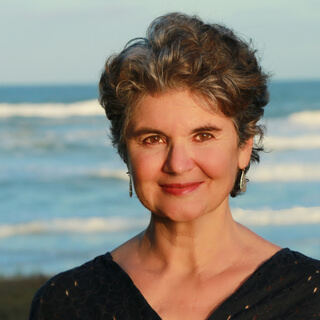
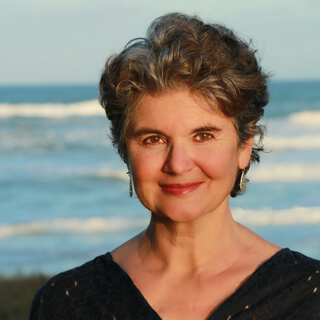
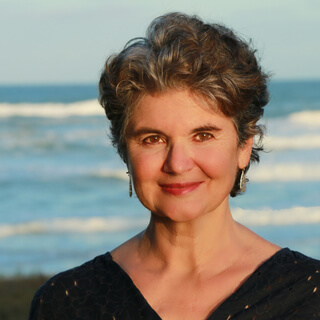
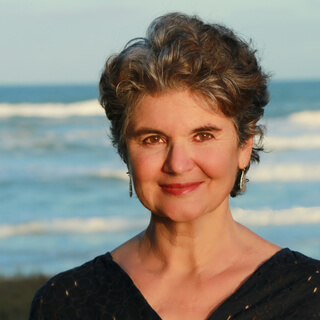
I'm your host,
Katherine Ingram.
The following is excerpted from a session of Dharma Dialogues held in Lenox Head,
Australia in August of 2018.
It is called Choose Peace.
One of the tricks in not living within the roar of your head is to become disinterested in most of your thoughts and opinions.
And it doesn't take a lot of discernment to figure out that that would be actually a rational thing to do.
Because most of your thoughts and opinions are irrelevant.
Some of them are unnecessarily troubling.
And it's amazing how we obsess,
Right?
Everyone has their pet obsessions.
Those change even with time,
Of course.
I'm sure you've been through quite a few over the years.
You look back.
I'm just having a memory.
Back when I was playing in the realm of romantic relationships,
Which was a very long time ago,
But I did have a few decades of that.
Dangerous garden,
As my friend Leonard used to call it.
So I went through this massive,
Wild,
Crazy love affair with this guy.
I was completely obsessed.
And I lived in Boston at the time,
As did he,
But he ended up moving to Vancouver and then out to this remote island.
I even,
For a time,
Moved out to that place and lived there as well.
And then I was back in Boston and on and on,
It dragged on.
During the period that I was crazy in love,
I would say that probably not a five-minute portion of my day during my waking hours would I go without thinking about him.
Maybe some of you have had these kinds of experiences.
I read a quote the other day.
This is an aside.
The love that isn't crazy love isn't love.
I sort of agreed and sort of didn't agree.
Anyway.
So there was this wild,
Passionate love affair.
Anyway,
Fast forward now a little bit.
I got over that.
We were friends,
Friendly.
I was in a new relationship,
And he came to visit about two years after our relationship had ended.
He came back to visit Boston.
And he and I and my new boyfriend actually went out to a theatrical event one night.
But then a few days later,
I was walking down my street,
And I saw him.
He was shopping at a place across the boulevard.
He was on the other side of the boulevard.
And in that moment,
I knew that I didn't need to cross over and say hello.
Like,
He was just another guy on the street.
A friend,
But I felt like we'd already seen each other,
And we'd had a nice.
.
.
It was like,
I saw him,
And I stood there,
And I just had this moment of thinking all of that time that I was obsessed.
Like,
This was,
You know,
To imagine that I would be standing on the other side of the street.
And not go and say hello.
It would have been impossible to think back in the time I was obsessed.
But like with many of these kinds of obsessions,
Whether it's about that or getting the car that you thought you wanted,
Whatever it is.
The lists that we have ticked off of,
I want that,
And then you get it,
And then you realize,
Okay,
Well,
That obsession is over.
You know,
Prunjaji used to say that getting the object of desire or having that experience,
That the relief you feel is actually in the cessation of the desire.
You get a little break from the craving and the yearning and the hunger,
Because now you've got that thing.
But you think it's in the object.
It's actually in the cessation of the desire.
And with so many of our obsessions,
Not just the good things,
But lots of the troubling things as well,
Right?
We obsess about all kinds of troubling things that didn't come to be.
Or if they came to be,
You realize that all of the obsessing and the gnashing of teeth wasn't helping.
So in these simple ways of reflecting,
You begin to see that you are not just in these simple ways of reflecting,
You begin to see that a lot of what your mind is up to is just a labyrinth of nonsense.
And even though it continues,
The nonsense conditioning continues,
There is this facility to be disinterested.
And in the disinterest,
What happens is,
I like to talk about co-existing awareness,
What happens is an immersion in your actual lived life in the moment,
In your senses and in your feelings,
And in the smell of the jasmine and so on,
That becomes predominant.
So it's like a shape shift whereby when you're living in obsession,
You don't notice,
You're not living in your senses and clear mind.
You're living in imagination or fantasy or fear or something.
You're painting pictures in the mind and those pictures are obscuring your beautiful life.
Even though beautiful life peeks through,
You know,
You have a moment of tasting something delicious and then you go back to the obsession.
But it's a shape shift whereby you're mostly in your beautiful life and the background noise occasionally comes to the foreground and takes over,
Some particularly troubling things,
Some particular desire or whatever.
But for the most part,
You are disinterested.
Now this goes against,
As you all know that I speak about this quite a lot,
This goes against the thrust of the culture.
Because the culture is on,
The Western culture,
And it's actually becoming the world culture,
Their program is the homage to the self,
Right?
It's this gigantic fixation on the presentation of the self.
And that comes with a lot of self-referencing.
So it kicks up the very kinds of thoughts that I'm saying you could become disinterested in if you'd like some peace.
It's just the complete opposite.
And it's why so many people who are engaged in those programs are depressed and anxious and feel that their life isn't going anywhere.
Someone recently was talking to me about,
They were saying that I should get on Instagram.
Someone who doesn't know me well.
And she was trying to be helpful,
Trying to kind of consult with me on a free consult about promotion and things like that.
I didn't ask for this,
But one of my girlfriends suggested to her that she talk to me.
And so she's telling me all these different things that I could be doing.
And I just finally said to her,
Well,
The problem is I don't want to ever do any of those things.
Not even one on the list.
I don't want to take a single photograph of anything.
And then I explained to her something that even though she's in the business of being a social media consultant,
But I explained something to her that she apparently hadn't thought of,
And I could see that it really was a moment for her.
But what I said was,
I don't want to interrupt the moment I am having for some other moment in the future.
There's nothing I want to collect for some other moment.
I want only to be in the moment I'm in.
And also,
I said to her,
I don't want to have my mind be used in any kind of acquisition.
I don't want to be in a program of acquiring something.
Not only do I want to not interrupt my attention for living in the now in which I'm living and in my own senses and in my own delight,
But I don't want to ever have to employ my mind for anything else.
So it's all those kinds of things that our culture is just racing forward in this other way of life.
And it's ubiquitous now in the world.
It's just expected.
But what if you challenged all of that?
As we were just sitting here in silence,
I was reflecting on a conversation I had with a woman friend last night.
She came over for dinner,
And I made a very slow meal.
She watched me roll all these spring rolls,
And it was very delightful,
Very slow meal.
But during this conversation,
We both were reflecting,
Remembering our own childhoods.
And we both grew up in what would be considered privileged homes.
Not only privileged in the world,
Very privileged by world standards,
But even privileged within our privileged countries.
And yet,
Our homes,
When I think about it,
When she was thinking about hers,
They were pretty simple.
Like,
We didn't have a lot of things.
Not a ton of objects around.
And we were both saying,
We only ate meals at meal times,
And not a whole lot,
Not an overabundance of food,
Even though my parents could have afforded ten times that amount of food every single meal if they wanted,
But it just wasn't how we lived.
There was no sense of deprivation about it.
It was all just simpler.
The phone rarely rang.
If it rang,
It would be a local call.
We watched TV about two hours a night.
There were very few channels.
It was very,
Very low technology,
Let's say.
Very,
Very low.
I had a transistor radio,
I remember,
That I treasured and didn't pick up many good stations,
But I would listen to it.
But mostly you read books,
You played outside.
Somehow,
We managed,
You know?
It felt like a really rich,
Really rich life.
Like you were speaking about looking at the woods in your homeland and so on.
And one of the things I have loved about my life here is that I'm choosing that way of life a lot more.
Somehow,
This circumstance lends itself more to being more unplugged,
To being slower,
Right?
To letting the rhythms of nature be your rhythm instead of the rhythms of the crazy world,
Right?
Which is burning itself up.
So here in these moments together,
See if you can just notice how irrelevant most of the thoughts that are flying by.
They go by,
By the way.
They don't land.
They just fly by.
And let your awareness come predominantly into the sensory experience that you're having.
The visuals,
The sounds,
The smells.
That's very uppermost at the moment with a number of people I've been talking to also.
Something's going,
Can I give everything up for that for peace?
And just noticing it seems sort of empty in contrast to all the trouble and,
You know?
And yet I love that peace and the textures and the sounds and the birds and the peace.
It's beautiful.
I could stop there actually.
Well,
What is,
Is that just a statement or are you asking any kind of question?
I suppose I'm just noticing where it's like you were speaking a choice there to value that over so-called valuable objects of accumulating or as you were speaking.
Yes,
Yes.
It's very important to value it,
To value peace.
And if you start to notice something is stealing your peace,
Right,
Some kind of obsession or some kind of circumstance or whatever,
Then have a really good look at it and see if there's a way to extricate your attention or your actual physical presence.
Sometimes people are in circumstances that are inherently difficult and that are not so easy to get out of without perhaps causing a lot of trouble for others,
You know?
And some people are in prison actually,
You know?
One of my really old and close friends went to prison for growing marijuana a long time ago.
He had to go to prison for growing marijuana.
And he had to find peace in prison.
And it was hard.
It was hard.
One of the things he told me that you kind of don't think about so much in addition to all the other horrors of prison that you hear about.
He said it's never quiet.
He said 24-7 people are screaming and there's noise and shouting and all,
You know,
It's really noisy.
I had never thought about that component of prison.
But what's amazing in his case is that he just got into meditation practice and yoga and breathing practices that he already knew.
And he now refers it to his time at the monastery.
But that takes a certain kind of wherewithal,
A certain strong kind of character to turn the prison into the monastery.
But anyway,
People are in all kinds of circumstances that are difficult.
For most of us though,
We're just imagining most of our difficulties.
We live and we're so lucky.
And we could,
If we just moved our attention in such a way,
Really notice that.
And notice that I can have a really peaceful run here.
There is something about that,
About valuing that.
I mean,
I've been aware of that for a long time and been sort of reinforcing that by going to teachers,
Reading and meditation,
All that.
And still there's,
You know,
There's how,
It's like where is the authority,
You know,
That says this is valuable and that's not valuable.
That's sort of.
.
.
Well,
That would have to be your own clear seeing.
That's the authority.
You're the lab,
You're making the experiment,
Right?
And only you know some things that,
You know,
Feel right to you.
It may not be exactly the same for someone else,
Right?
You might love being alone in the wilderness.
I wouldn't love that.
I'd like to walk next to the beach,
Or on the beach rather,
Next to the ocean.
But,
You know,
But that said,
You as a creature,
You know when you feel at ease.
Simple as that.
And you start to notice when you're not feeling at ease.
And some of the time when you're not feeling at ease is simply because of your thoughts,
Because you're interested in certain types of thoughts.
And you can develop a habit that when these troubling thoughts start to arise,
You notice it right away.
And you can basically,
You can say to yourself,
Or you don't have to use words even,
Not going to go there.
And it's not like cheating,
You're not cheating,
Because it can sometimes,
You know,
There's a kind of misplaced irrationality,
Of course.
Thinking that you have to keep following that troubling thought for some reason.
Like there's going to be some payoff,
Or you're going to figure something out,
Or you're going to be brave through it,
Or whatever.
But in fact,
My recommendation is don't get yourself all agitated.
Stay in as peaceful a place as possible for as long as possible.
And then from that,
There's a kind of,
There's a strength and a clarity that comes from you being mostly in a peaceful way.
You see more clearly,
You don't go looking for trouble,
You get out of the way of trouble.
And if difficulty comes,
You've got some space inside of you to just handle the difficulty without adding on a lot of extra,
Other difficulty.
In resistance and in anger and in confusion and all of those things.
So it's like a habit.
It's a habit.
I like to call it a habit of freedom.
Nothing fancy by that word,
By the way.
Nothing exalted particularly.
Just,
You know,
You're in a funk,
You're in a weird story or whatever,
And you say to yourself,
Either snap out of it or something.
Just move the attention off of it.
You don't have to have a fight with the fact that it arose.
There it came and went.
And you redirect the attention.
So my life circumstances have changed quite considerably.
So like most of my 20s,
I know there's times,
I used to meditate,
Yoga,
And you know,
What you speak about,
You know,
Choosing this piece was very evident for me.
Yes.
But then when I sort of got married and then had a little girl and then everything changed.
Moving up here,
New jobs,
My wife starting a new job,
You know,
Buying land,
Building.
It's like,
It's just totally,
My whole life has changed.
And so this choice of freedom that you talk about,
I know it inherently,
But however,
At the moment,
It seems like my life is so busy.
I'm so much engaged with whatever I'm doing that I don't have that same sort of level of peace and experience just because I'm just constantly on the go.
Yeah.
And so it's like,
If it's not for my clients,
It's for my wife,
It's for my child,
You know,
My own survival needs are,
You know,
Sort of often neglected sometimes.
Sure,
Yeah.
And so I find it more difficult or,
How should I say it,
It's less evident,
This vast ocean of peace that's always available,
You know.
And so it's like,
I'm finding it sort of difficult at times to shake the obsessions.
Yeah.
Yeah.
It's very hard when one is in a really busy phase of life,
It can be very hard to,
As you say,
Shake the obsessions because one is tired.
When you're tired,
There's less clarity of mind available to redirect the attention even,
You know.
So I would say on a very practical level,
It sounds like you need to put more rest into your schedule,
More downtime,
However you can do that.
And I hear you,
I hear it's not easy and that there aren't a lot of options for it,
But there might be circumstances that you could adjust,
Which will mean giving something up.
Not the wife or the child,
Of course,
But some other extracurricular that is in there somewhere that you could,
Because you really kind of have to make a priority of having some time for yourself so that you start to fill your own well,
Rather than it just be constantly drained.
And to really see it as that you're actually doing that for the greater good of your family and for your own clarity going forward in your work and in building and in everything.
So I'd say that that's the first order of business is finding some quiet time.
And it might be,
It doesn't have to be some huge,
Grand thing like going away for a weekend retreat or anything like that.
It could be just an hour of the day is yours,
Where you're unplugged,
Where you're either in nature,
Whatever it is you love that fills your heart and recharges your batteries.
Because the rest of what you're describing,
It sounds like it's all about love.
It's about,
You know,
You love your family,
You want to have a good life for them,
You want to have a lovely home.
All of that can have peace in it.
You know,
You're basically dedicating your life force for this greater good of the people you care the most about on earth.
And that's beautiful.
And what a privilege to be able to do that.
Right?
Many,
Many,
Many fathers have done that,
You know.
So I would say just put yourself on the list of people you're taking care of and really be very,
Very,
Give it high priority.
And then there's the guilt coming up then,
You know,
When I'm thinking about taking some time.
And then I'm anticipating that my wife will say,
Oh,
You know,
You're being selfish and etc.
Like that.
So I guess it's more,
Yeah.
Well,
If you could explain that you're doing it for everyone and that you don't want to hit burnout,
Right?
Because that's not the time to,
You know,
Try to make an adjustment is when,
You know,
You don't want to be burned out.
Right?
It's better to do it well before then.
And perhaps just say you have to do this and maybe she'll see that things are running more smoothly when you did.
You know,
Another story I have,
It's actually about the very same person I just spoke about.
I met him when he came out of prison.
He came to Dharma Dialogues in Portland.
He'd just gotten out of prison.
And I'd been hearing about him from other people in my sangha because he was really quite a character,
An amazing person that everybody kind of admired.
And there was an excitement about him getting out.
But he came out and he came to Dharma Dialogues and he was quite skeptical about what we were up to,
But within one session he had a quite profound experience.
And I was doing a retreat,
Something like a seven or ten day retreat soon thereafter.
And he announced to his wife that he was going to be going.
He'd just gotten out of prison and she's been holding down the fort with two little kids.
And now he's going off on a ten day retreat,
So you can imagine what her response was to that.
But off he went.
He went anyway.
And however he was when he came home,
She was like my biggest fan actually.
She said,
Please have another retreat soon.
And she invited me to dinner and I became the godmother to their children.
And a very long story,
They became my very,
Very close friends in Portland.
This is going back a really long time ago.
Anyway,
His wife would just jokingly say,
When is the next retreat?
We've got to get him to the next retreat.
Because she saw,
They saw.
So have confidence that you're doing this with your own knowing,
Your own clarity,
Your own discernment.
That knows what this physical,
Mental,
Psychological system needs.
And you are getting hints already,
Aren't you?
That you can't keep going at this pace without checking in with the,
Into the deep well.
Right?
What Poonjaji called the well of nothingness.
You've got to visit that well of nothingness.
And,
You know,
Especially for one who's been sensitive and who knows it,
Some people are built in just a different way.
Their psychology is different as well.
And perhaps their level of sensitivity is not such that they get worn down by life.
But for many of us,
Especially Dharma people,
One of the characteristics I observe is high sensitivity,
Extreme sensitivity.
And it's beautiful.
It's amazing.
And it has a weird double-edged component to it.
On one side,
It's the very thing that allows you to tune into the truer sanctuaries that are available to you.
That is your own deep,
Deep quiet and ability to let go as needed.
Right?
That is an incredible gift.
And people with this kind of high sensitivity can find that.
But on the other side,
Living in this rough world in high sensitivity can be very,
Very challenging.
And living in a world that's just speeding up in all directions can be very challenging.
So,
You know,
You have to manage it.
You have to honor that and not be seduced by any kind of spiritual fairy tales that think that you're going to be somehow enlightened and protected from any of this.
It's nonsense,
You know,
That one has to acknowledge when the system needs rest.
And be smart about it.
Right?
And I'm sorry to have to add this part,
But to also stand your ground and not let anyone else tell you that you can't do that.
Or it's like,
You know,
You have to basically state your need there and have it.
So that's the challenge.
I think that's where really it's like being assertive and being true.
And not buying into a story that you are doing something selfish.
But knowing full well that you're not doing something selfish.
You're doing something for your family that is needed.
Right?
It's not like you're abdicating all responsibility and running away.
It's that you are tired and need a break of sorts.
Or an ongoing way of living that allows that to be built in.
Yeah.
Thank you.
You're welcome.
I would like to add to that by coming back to where you started.
Because being one who's very familiar with being stretched very thin and juggling the busy life with wanting to be there for the husband or wife,
The children,
Friends,
The family,
The work.
The one thing that doesn't take any time is really letting go of all of the obsessive thoughts about showing up,
About being able,
About not being able,
About the guilt,
About the shame,
About any of the obsessive thoughts around whether I can or can't give myself the time or whether I can or can't manage or whether I can or can't find peace.
Right in the middle of it.
Yeah,
Beautiful.
Yes,
That doesn't take any time.
Because as the pressure builds,
So do those obsessive spirals.
Because no matter what you do,
You feel like you're not able to really do any of it well.
And so cutting through those thoughts,
Then you're still just doing what you physically can do and you're moving through it.
And you're present with the family,
With the partner,
With the job,
With the dishes.
Yes,
Yes,
Yes,
Certainly.
If the nonstop component continues to run and one doesn't have much chance really to create a lot of space in it,
Then you've got to find the space within the busyness,
You've got to find the quiet and the peace.
But I do,
As you know,
Sal.
Oh,
I know.
I wanted to say that absolutely too.
You've been the biggest champion of creating the space.
So I really don't see that as an either or.
It's like it's and,
So totally and.
Yeah,
Take the time when you can.
And being willing to step out of that time loop as well.
Just being really present with the thousand things that you're going to do before breakfast.
Yes.
And also,
And also,
If you only have 20 minutes to go for a walk,
Then let those 20 minutes be timeless.
You know,
Just I'm just as you were speaking,
I was thinking about a phase in my life a few years ago when I was living in New York City.
And that's an intense place,
Of course.
And how in the midst of a busy life there and sometimes a feeling like I'm just running from one thing to the next to the next.
I was just remembering walking in Central Park and how timeless it would be just how like even if I only had sometimes I would just walk across the park to go from one place to another.
I would just walk through the park.
And while in the park,
It was like I was time out of time.
And so to really let whatever moments,
Even if they're just a few here and there,
Let those be really drenched in a sense of,
First of all,
Full presence.
Because I do think a lot of what drives people to stay busy and to keep filling up whatever little tiny bits of space they have is a misguided sense that that's what life should be.
That that's real full life,
That this is rich life,
That this is happening.
And I just see it the other way around,
That it's in the slowing down and the relaxed having a slow meal with a friend,
Very memorable,
Very rich,
Very rich life.
Going for a while.
I mean,
All those kinds of ways of living slow where it feels like this is the luxury.
But even people who could have that,
Who have means to have that,
That's often not how they live.
Mostly not.
It's just amazing to watch as one who is bewildered by that,
By choosing that.
I mean,
I get it for people who don't have the luxury to just kick back and not race from one thing to the other.
Many,
Many people have to live that way.
They have jobs,
They have children,
They have obligations,
They do have to cook the meal and get the food and do all those things.
They have to,
They're on the go.
And I get that.
But even for people who don't have that demand,
You know,
There's this way in which people just fill up the space minute by minute.
Yeah,
It's so nice to be here,
Actually.
You know,
Just even sitting in silence,
Like a long deep breath.
It's interesting hearing you talk,
As always,
But,
You know,
I've done a lot of,
I realise since I've been sitting here,
I've slowed down a lot and I've let go of a lot.
I realise how much that has seeped into my choices and that's wonderful,
But I still feel it's not enough.
Like just sitting here,
I have this feeling of,
Like to really be in the senses,
To not be engaged with this kind of busyness or the thoughts.
I almost feel like I need to completely unplug and completely withdraw.
You know,
It's like it's not enough just to manage that part of myself.
I feel like I'm still,
You know,
It's like a compromise,
Not doing it as much,
But still doing it,
You know.
And as you're talking of this feeling of like,
God,
I just love to,
It's so,
It's such a deep kind of thirst.
It's almost like,
Oh,
I really just need to completely pull away,
You know,
In order to satiate that thirst.
And then I have this fear of that,
The well of nothingness,
I'd pull back and just drop right down the well and that'd be the end of me.
I just wouldn't come back out again.
Like if I wasn't busy with connecting with my friends or thinking what am I doing in the world or my guilt trips,
Whatever,
That I might just disappear down this well.
But if you were,
Let's say,
Pulled back and you loved the feeling of it,
What would be then the problem?
Because if you didn't love the feeling,
You could always jump back into the fray,
You know.
Yeah,
I guess it just,
It feels scary.
It just feels,
And even maybe if you could just talk about the well of nothing,
I mean,
When you call it the well of nothingness,
It sort of sounds.
.
.
It sounds bleak,
Doesn't it?
It sounds a bit Lord of the Rings.
For me though,
It sounds like an isolation tank,
You know,
Kind of like,
It just sounds like it's quiet and still,
You know,
And nothing much happening.
And,
You know,
Where the,
Poonjai used to say this line,
Be as you are in deep sleep.
Like imagine how you are in deep sleep.
Well,
You don't really know because you're not this,
You're in deep sleep,
Right?
But there's something very still about the situation that presumably you might have a few minutes of every night.
That there's some part every night that goes into total stillness.
The whole system is on shutdown,
Right?
And imagine how just some of that now and again in the waking hours,
How that would be,
Where you just,
It's just pure beingness with nothing else.
None of the other programs are operating,
Right?
So it doesn't have to be an all or nothing,
You know,
You don't have to necessarily completely extract yourself from the world and from all engagements and interests.
But as you're experiencing the ease and the delight that is coming with just some,
You know,
Disengagement from the busyness,
You'll find your own balance through that attraction and through that knowing.
And if it goes into too much stillness,
You'll know that too.
Your system will say,
No,
This is,
I need to move,
I need to do something,
I want to create something or whatever,
You know.
It'll automatically re-engage itself because your own sensitivity is tracking it.
I'm aware of the effort it takes,
Like how the mind sort of grasped,
Like in order to keep yourself in the world and with other people.
I realize in my mind there's this continual thing in order for me to exist in that world,
I need to keep thinking about it or being in touch with it,
Whether it's my relationships or my friends or my work.
There's this sort of little cycle and I feel like if I just stop and drop,
Then I've got to start it all up again,
You know,
I've got to get back in,
You know.
So it's this kind of how to.
.
.
You feel that they will move on and that you won't be part of the.
.
.
Yes,
It's not like I'll disappear and they'll forget me,
But it's more the momentum,
Then I have to kind of get that momentum going.
Yeah,
Right.
Well,
If you're enjoying the momentum and if you're enjoying the engagement,
Then well and good,
There can be peace in that.
But if at some point you start to feel it's getting to be too much,
You know,
Then you just readjust here and there.
You know,
It can be just little adjustments along the way where more and more it's like this shape shifting I'm talking about where more and more,
You know,
You're just at ease and very content.
And these other activities become more like garnish on the meal rather than the main meal.
And yeah,
I think that the Italy retreat is going to be very interesting in this regard because you will be in an immersion of being unplugged and quiet.
But I think also what can happen is insight arises as to how you'll be living your life when you go back home.
It may not be that you think to yourself,
Oh,
I'm just going to live and retreat from now on,
But it may be that some kind of knowing occurs to you as to how to integrate this in an easy and clear way.
And I guess you can't have a whole picture of how it's going to be before you do it.
No.
You've just got to start letting go.
That's right.
Of course,
Yes,
Step by step.
You feel it as you go,
That's all you need.
But I say that about the retreat just because I've observed that with so many people over the years,
Literally thousands of people over the years.
And in my own case,
Knowing that my way and my well-being kind of relies on living a life that has a lot of retreat component in a way.
I kind of consider myself living in a sort of modified retreat-like way.
So,
And that,
I mean,
It's certainly not for everyone.
It just happens to be comfortable for me.
So it's just to find your own sweet spot.
And I know lots of people who live with people or with family,
But also manage to find their way in terms of keeping themselves balanced,
Which is what I'm saying to you as well.
Yeah,
Thank you.
And you've been a big influence in that,
Actually.
A real encouragement.
Yeah,
Good.
You don't often get encouraged down the path of letting go and relaxing and resting and dropping,
You know.
Right.
You normally get encouraged to achieve and to take on and blah,
Blah,
Blah.
I know,
Right.
And even in the spiritual scenes and in all these programs of just building up and piling on and finding your,
Realizing your potential and all these things,
You know,
It's like,
Ah.
Yeah.
I feel like there's going to be a number of people hate me when I share this,
But I've had the capacity in the last year,
As you know,
To have a lot of time.
Yeah.
Yeah.
To have a lot of free time.
You know,
A number of things were behind the move to unplug.
But actually,
Connecting with source is not any easier.
Having a lot of time.
Yeah.
There's another missing component in there.
Because I notice,
You know,
When I come and sit with you,
It's always the same.
It's like,
Ah,
You know,
Like,
Oh,
The bush is just the bush,
You know.
Right.
Let's look at the bush,
You know.
But I have a lot of time to look at a bush,
You know what I mean?
I could do that a lot more than I do.
But I think one of the things that happens when I'm on my own,
I find it much easier to do this in connection with you or with other people.
There's some part of me that gets scared of it.
I can't even say why.
But it's like nothing.
Nothing.
No movement.
You know,
When I connect and when I'm really dropped in,
There's no movement.
And then there's something scary about not going anywhere,
You know,
Psychologically or emotionally or physically or not,
You know,
I'm not achieving.
It's just that stillness,
Which is very sweet when I'm with you,
But it's hard to touch the sweetness.
Not never,
But rare little pieces of the sweetness on my own.
Yeah.
And I'm not sure what,
You know,
I'm learning more about this as I go,
But this is my increasing realization.
Well,
It is occurring to me to say,
Because we've talked about this a bit in the past,
But there is something that just came to say now.
And it's the phrase the power of sangha.
So you are perhaps someone who does need that component.
And it has been a tried and true method over the centuries,
You know,
That people,
That's why people love being in retreat and being in monasteries.
And,
You know,
As you know,
I was friends with Leonard for a long,
Long time,
And he spent quite a lot of time.
He spent five years as a monk in Mount Baldy monastery.
You know,
He could have been living this incredible high life,
And eventually he had to go back to that in order to make back the money that had been stolen from him.
But anyway,
But he could have,
You know,
In all those years that he was hanging out at the monastery,
He could have been just all over the world if he wanted to do anything.
But he was comfortable and it was necessary and delightful for him to live in a very strict regime of the monastic life.
I think it's the right kind of sangha too,
Because I've been connected with other sanghas that have been full of doing.
I know,
Yeah,
It has to be,
And that is an issue because there's not that many situations that I know of that,
In knowing you,
That I think would be the right circumstance for you.
Another option I just thought of,
Though,
Is that I wonder if it makes sense for you to start a little weekly meditation group or something like that.
And I mean,
Even just to add that in,
You know,
And whether one or ten or whoever comes,
You know,
To just have that as,
Because that's also powerful.
And it's also this weird phenomenon,
Which is that,
You know,
I often tell people,
The retreat begins when,
As soon as you sign up,
Because there's some way in which it's in your awareness as to.
.
.
So we've been on a retreat for months already.
You are,
Yes,
But probably there is an awareness that you're headed in that direction,
So there's some little part of yourself that's moving in that way,
It's just on that,
Is getting ready for that pace,
You know.
But in a more weekly way,
If you're having a weekly group,
A sitting group,
There's also that,
Just kind of a little touchstone that is just there that can be helpful.
And people will bring friends and strangers will be,
You know,
It's,
I quoted last week,
I think,
Ajahn Chah said,
Become as a still forest pool and then all kinds of strange and wonderful creatures will come to drink of you.
And so it's like you're creating a still forest pool,
You know.
And that gives you,
Because you will be,
If you do decide to do this,
If you were to,
Because you would be hosting it,
There's a way in which,
I sometimes talk about the Beckett Effect.
So Thomas Beckett in history was friends with King Henry.
There is a movie that came out in,
I think,
The 60s.
Richard Burton starred as Beckett.
It was called Beckett and Peter O'Toole was the king.
And they were,
I don't know the real true historical story,
But the movie version of it was that these two were the best of friends.
The king loved Thomas Beckett more than he loved anybody on earth.
And they were kind of carousing around the,
You know,
The kingdom.
It's nice having the king as your buddy.
And,
You know,
They would be whoring and drinking and just,
And talking about everything.
Thomas Beckett was very brilliant.
So when the Archbishop of Canterbury died,
The king wanted Beckett to become the Archbishop.
Beckett said,
This is madness,
You know.
No,
Please don't do this to me.
And the king insisted,
Made him do it.
You know,
He begged his king not to put this on him.
He was totally unfit for the job.
But at least in the movie version,
The day that he put on the robes,
He then answered to a higher power.
And he could no longer,
It ended up splitting him from his king because their motivations were going in different directions.
And he had to honor the position that he was now in.
So putting on those robes is why I call it the Beckett Effect,
Is that even just being,
You know,
Hosting a gathering like that,
There's a way in which it calls upon your own attention to live in a certain way.
Because it'll be a little uncomfortable if you're not,
Right?
It's sort of like it bumps up the level of your consciousness about it.
And it's one of the great gifts of ever taking that kind of seat,
Which as you know as a therapist as well,
It kind of,
It's a way in which you have to stay a bit on track more than you might if you were just left to your own devices.
It is one of the gifts of it.
I sometimes liken it to the role of a parent,
You know,
How parents,
A good parent,
Can't let their crazy out too much,
Right?
And therefore can't indulge it.
This has been In the Deep.
You can find the entire list of In the Deep podcasts at katherineingram.
Com,
Where you can also book a private session by phone or Skype,
Or make either a one-time or recurring tax-deductible donation.
Assuming you like these podcasts,
We would also appreciate a review wherever you're getting yours.
Till next time.